

The great Gunpei Yokoi, Gunpei-sensei. We talked about him in the article (and video) about the Game Boy, as he was the co-creator of the Nintendo handheld. He was also the creator of the Game&Watch before that, and the Game Boy Pocket and, finally, of the Virtual Boy. After leaving Nintendo in 1996, after 31 years of service, he then formed a new company: Koto. From here, he led the creation of yet another portable console, the Bandai WonderSwan.

The WonderSwan was a Japanese-only handheld console, released in 1999, posthumously after the unfortunate death of Gunpei Yokoi in 1997. This console followed Gunpei’s design philosophy of utilising mature technology for a cheaper device. Indeed, just like the Game Boy, also the WonderSwan had a black and white screen, without any illumination.
I didn’t even know the WonderSwan existed in 1999, but I got to know it during my first trip to Japan in April 2001. I still remember seeing this weird little console, being puzzled by the many buttons but also attracted by the clever design. I never really owned one though until much later, around 2010, when my Japanese knowledge became much better (before getting worse again, today), and I could play some of the Japanese-only games. But let’s roll back the time and get the whole story…
In the late 1990s, Nintendo’s Game Boy reigned supreme in Japan’s handheld gaming arena. Bandai, supported by the success of its Tamagotchi virtual pets and eager to have its own hardware, saw an opportunity to enlist Gunpei Yokoi, after leaving from Nintendo. The result was a device that prioritised efficiency and affordability while still delivering fun, a stark contrast to the flashier, power-hungry consoles of the day (see the Game Gear, the Atari Lynx and the Neo Geo Pocket).
When Bandai unveiled the WonderSwan in Tokyo on October 8, 1998, they chose a name evoking elegance and power, the swan, symbolising a blend of aesthetic grace and strong capability. Bandai promised a 30-hour battery life, a low price of ¥4,800 (around half the cost of some competitors), and around fifty games in development for launch. This ambitious plan was Bandai’s direct challenge to Nintendo’s dominance, at least in the home Japanese market.
Play it vertically or horizontally
The WonderSwan’s hardware was modest yet cleverly used. It ran on a 16-bit NEC V30MZ processor at 3.072 MHz, using a different architecture from the Game Boy Color and SNK’s 16-bit Neo Geo Pocket Color. True to Yokoi’s philosophy, it wasn’t cutting-edge silicon but smart design that set the WonderSwan apart. One AA battery powered the system for up to 40 hours, an astounding feat in 1999. This thriftiness came from an efficient black-and-white LCD (later models added color) and thoughtful engineering. The original screen displayed a selection of greys from a 16-shade palette.
Perhaps the most distinctive feature was the dual D-pad layout. The WonderSwan had buttons arranged for both horizontal and vertical orientation play (similar to the Atari Lynx). Developers could design games to be held like a traditional handheld or turned 90 degrees for a tall “book-style” display. This opened the door for novel gameplay: from arcade-style action to Tetris-like puzzlers and reading-intensive visual novels, all on one device. Bandai even built personal touches into the system: players could input their name, birthdate, and blood type, which certain games would read for customised content (a quirky nod to Japanese pop culture’s interest in blood types), similar to the Neo Geo Pocket.
Personally, a great design feature I really like is the decision to insert the battery (one single double A, btw, amazing power consumption optimisation) in the battery cover itself, and not in the console. How many Game Boys today are without the battery compartment cover? Soooo many! While without the cover the WonderSwan cannot be operated, because that’s where you insert the battery. In this way, people put a lot more attention not to lose it.
WonderSwan Color and Crystal upgrades
The WonderSwan officially launched in Japan on March 4, 1999 with a strong line up of titles to showcase its capabilities. Despite the Nintendo Game Boy Color having debuted just months earlier, Bandai was confident that the WonderSwan’s lower price and legendary battery life would attract buyers. Early sales were promising, by focusing only on Japan, Bandai captured as much as 8% of the Japanese handheld market at its peak. Encouraged, Bandai even struck a deal with Mattel to explore a North American release. However, they ultimately cancelled Western launch plans, likely realizing the market was too crowded with Nintendo and others (the exact reasons remain unclear).
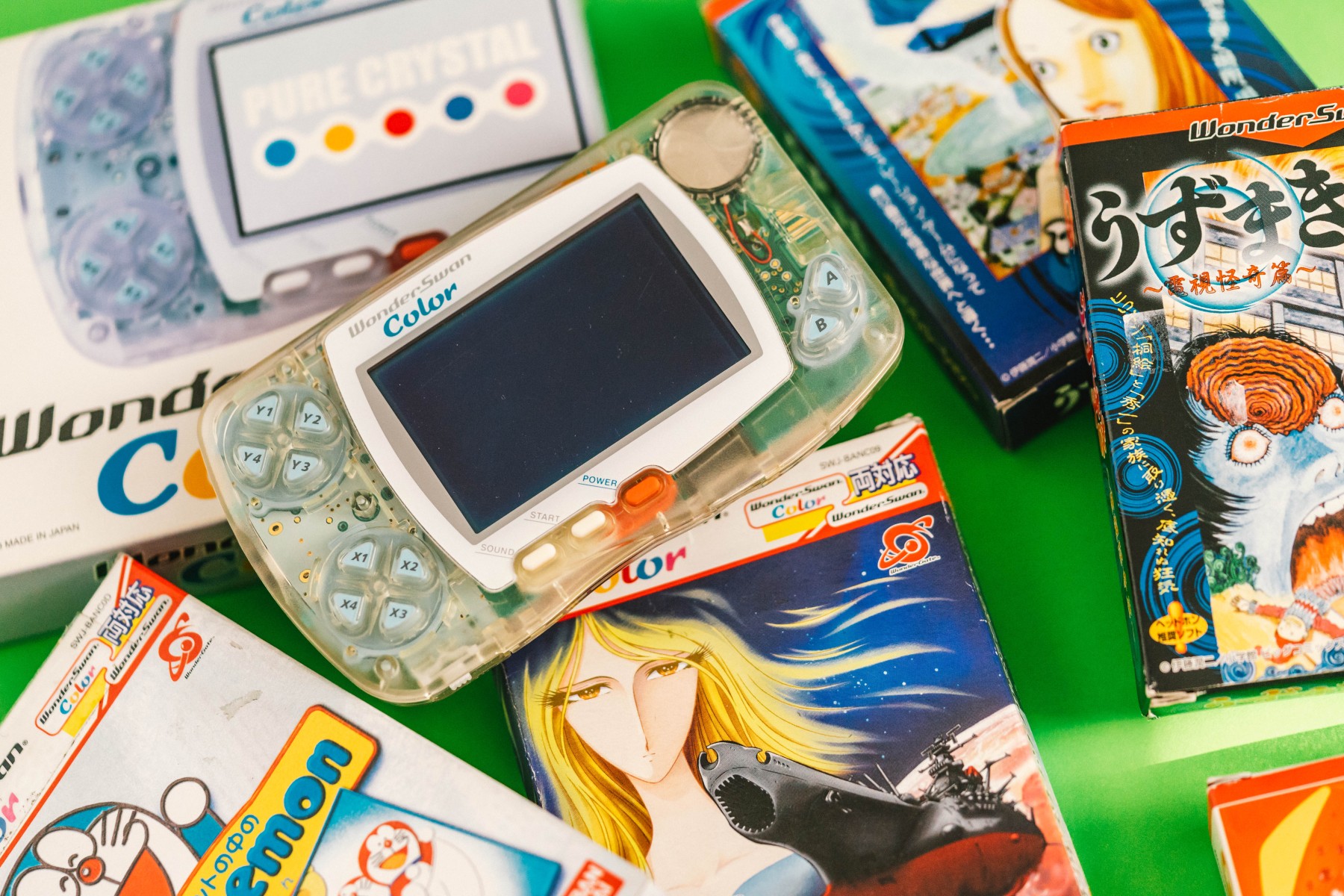
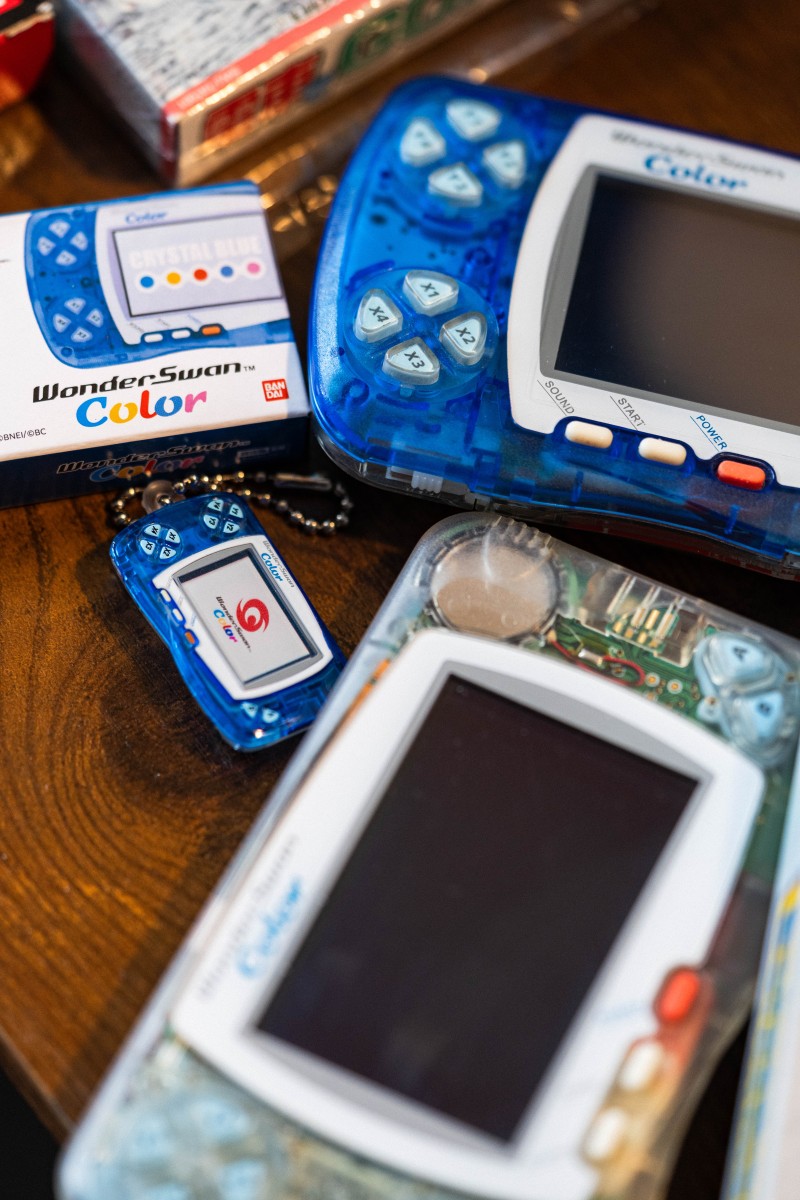
Bandai doubled down on Japan and swiftly developed an enhanced model. In December 2000, the WonderSwan Color (WSC) arrived. It sported a larger reflective colour LCD capable of 241 colours on screen from a 4096-colour palette, bringing the device up to par with rivals visually. Importantly, the WSC maintained backward compatibility, so the existing library of monochrome games worked on it. With 64KB RAM and a slightly heftier 96g frame, the Color model was still comfortable and only required one AA battery (though battery life dropped to ~20 hours due to the colour screen).
The WonderSwan Color’s launch was a moderate success, selling over 270,000 units in its first month. By early 2001, Bandai had momentum… until Nintendo’s Game Boy Advance (GBA) was announced. The 32-bit GBA, released in March 2001, drastically outpowered the WSC. Bandai tried to compete by undercutting price (¥6,800 vs ¥9,800 for GBA) and boasting that quality games and cost-efficiency mattered more than raw specs. Indeed, at one point the WonderSwan family held 8% market share in Japan, a notable dent in Nintendo’s armour. But once GBA hit the shelves, WonderSwan sales slowed significantly, never fully recovering.
Undeterred, Bandai released one more iteration: the SwanCrystal in July 2002. This final model improved what fans had long requested, a better screen. The SwanCrystal used a sharp TFT LCD that eliminated the motion blur and contrast issues of the WSC’s old screen. It also had a sturdier case and came in new colours like Blue Violet and Wine Red (chosen via fan poll). The SwanCrystal was priced slightly higher, but by 2002 the writing was on the wall. Nintendo’s GBA was dominating, and Bandai struggled to entice new buyers. In February 2003, Bandai announced it was discontinuing the WonderSwan line and would exit the video game hardware business. In total, about 3.5 million WonderSwan devices were sold (1.55m original, 1.1m Color, ~0.85m SwanCrystal). These numbers were respectable for a Japan-only platform, but small next to Game Boy’s tens of millions.
Legacy and significance
Looking back, the Bandai WonderSwan’s story feels like a “what if” chapter in gaming history. It is often praised as an innovative underdog. It showed that a newcomer could capture a slice of the market with the right mix of price, battery life, and beloved content. The WonderSwan also stands as a testament to Gunpei Yokoi’s design genius. Features like the dual orientation and extreme power efficiency embodied a design philosophy that still resonates; in an era of ever more powerful portables, Yokoi proved that smart engineering could achieve great results without brute-force tech. The console’s influence is subtle but present. Later handhelds also offered vertical or book-style play: some Nintendo DS games, for example, asked you to turn the machine. That’s a family resemblance, rather than proof of a direct influence.
My game collection
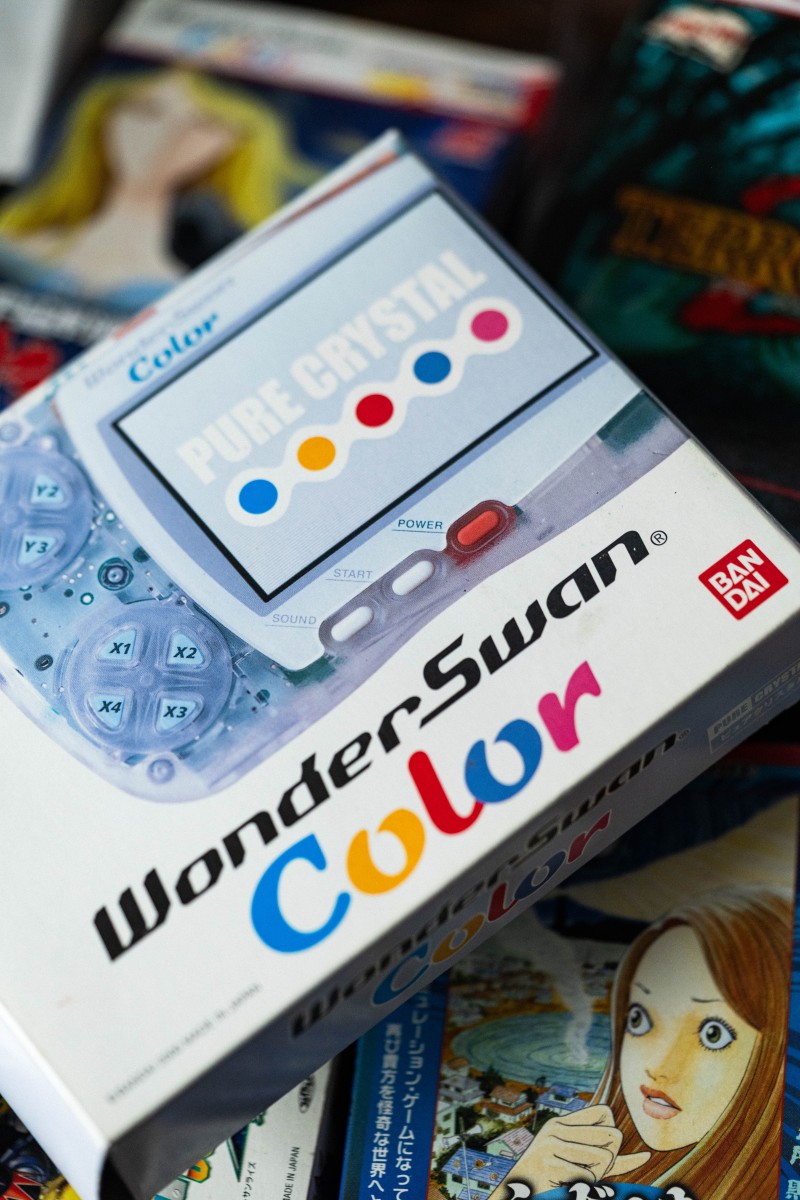
I don’t have a lot of games for the WonderSwan, and the WonderSwan Color backlit modded I had, well, decided to die while I was recording. In the video you can see basically my whole collection, but I chose what I think are particular games, that also align with my interests in anime and horror manga and stories… without further ado, here’s the list!








Clock Tower (1999), horror hide-and-seek
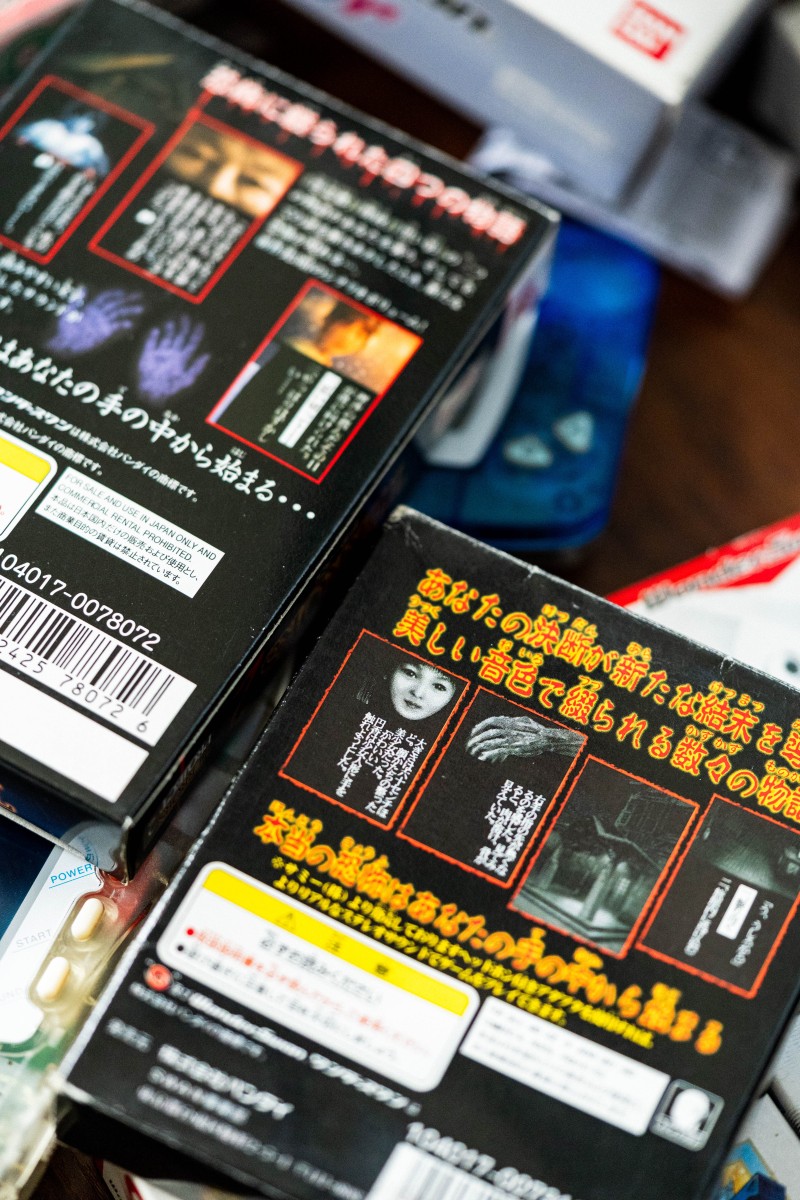
I love horror, and horror games in particular. And Japanese horror games even more. Then, well, I had to have this. A port of the cult-classic survival horror game by Human Entertainment, Clock Tower brought point-and-click terror to the palm of your hand. Released in December 1999 for the monochrome WonderSwan, it closely adapts the 1995 Super Famicom original. Players guide young Jennifer Simpson as she evades the murderous Scissorman in a creepy mansion, all rendered in moody black-and-white graphics on the tiny screen. Remarkably, the developers managed to capture the tense hide-and-seek gameplay and multiple endings. Clock Tower on WonderSwan reached Japan in 1999. Trivia: The game’s scenario was inspired by Italian horror film Phenomena by Dario Argento (which is why Jennifer’s character design resembles a young Jennifer Connelly). While never released outside Japan, this handheld version remains a unique way to experience Clock Tower, arguably one of the earliest portable horror games.
Densha de Go! (1999), all aboard on launch Day
Always been a fan of this train simulation series. Especially because it’s so well done, that it reminds me of being in Japan. One of the launch titles on March 4, 1999 was Densha de Go!, the famous Japanese train simulation by Taito. On WonderSwan, this game let players become a train conductor on various Japanese rail lines, managing speed, schedules, and passenger satisfaction. Despite the hardware’s simplicity, Densha de Go! on WS retained the addictive “just one more route” gameplay of its arcade and console counterparts. It utilized the system’s sound and visuals cleverly, you could hear the rail clacks and station chimes in simple PCM audio. The WonderSwan’s button layout handled the throttle and brake controls via its directional pads. Released by Taito (who both developed and published it) in 1999, it proved that even niche simulations had a home on the platform. The game’s success led to a sequel, Densha de Go! 2, on WonderSwan later that year. Trivia: Enthusiasts sometimes rigged up makeshift controllers, but officially no special train controller was made for the WS, unlike some console versions that had lever peripherals.
Doraemon: Pocket no Naka no Doraemon (2001), a mini-adventure
The robotic cat Doraemon is a pop-culture icon in Japan, and Bandai brought him to the WonderSwan Color in Pocket no Naka no Doraemon (“Doraemon in Your Pocket”). Released in May 2001, this title is a strategy/virtual life game by Bandai that lets players interact with Doraemon’s world on the go. The game features various mini-activities and gadgets (the famous dōgu tools from the manga) as Doraemon helps his friend Nobita through challenges. It’s somewhat akin to a digital board game mixed with pet simulation elements, on a portable scale. Being on WSC, it uses color graphics and charming sprite art. Pocket no Naka no Doraemon was backwards compatible, so it could also run (in grayscale) on the original WonderSwan. Trivia: The title “Pocket no Naka” alludes to Doraemon’s fourth-dimensional pocket from which he pulls out futuristic gadgets. The WonderSwan game cleverly incorporated this by having players collect and use gadgets to solve puzzles, essentially making Doraemon’s pocket the menu for power-ups.
Mobile Suit Gundam: MSVS (1999), a portable war in vertical view
Bandai capitalized on its Gundam license with Mobile Suit Gundam: MSVS, a unique strategy/action hybrid released in August 1999. Developed by SIMS, MSVS (short for Mobile Suit Versus) took an uncommon approach for a Gundam game: it played in vertical orientation and featured a top-down perspective of the battlefield. Players would deploy mobile suits and command them in real-time battles with a fog-of-war effect covering unseen areas, essentially turning the WonderSwan into a mini command terminal. The gameplay mix of tactical positioning and burst action sequences set it apart from typical side-scrolling Gundam shooters. MSVS was published by Bandai and remained a Japan-exclusive title. Trivia: To celebrate Gundam on WonderSwan, Bandai released limited-edition console bundles, one in Federation blue and one in Zeon red, each packaged with the MSVS game. These special WonderSwans came themed with Gundam insignia, making them coveted collector items today. Also, elements of MSVS’s story and design were later folded into other Gundam games, but this vertical play experiment remains unique to the WonderSwan.
Super Robot Wars Compact 2 (2000–2001), trilogy of mecha crossover epics
The WonderSwan became the stage for an ambitious three-part saga in the Super Robot Wars series. Super Robot Wars Compact 2 was released as three separate titles on WonderSwan (which together cover an overarching narrative). Developed by Banpresto (with TOSE as a developer) and released from March 2000 to January 2001, these turn-based tactical RPGs feature giant robots from various anime teaming up to battle evil. The parts were titled Part 1: Earth Crisis (March 30, 2000), Part 2: Cosmoquake (Sept 14, 2000), and Part 3: Galaxy Showdown (Jan 18, 2001). Each game could be played on its own, but together they formed one grand story, so players could even carry over some data from one part to the next. The monochrome sprites bring Mazinger Z, Gundams, Getter Robo and many more mecha into the same battles, accompanied by iconic theme songs in chiptune form. Trivia: The Compact 2 trilogy was later remixed and expanded on the PlayStation 2 as Super Robot Wars Impact, reaching a wider audience. Also, Compact 2 Part 2 was one of the first games to support the WonderGate online feature: players could download bonus content like extra missions via a mobile phone connection, a novel idea for 2000.
Tekken Card Challenge (1999), the king of iron fist… in a card game?
One of the more surprising titles on WonderSwan was Tekken Card Challenge, a spin-off of Namco’s popular fighting game series. Released in June 1999, this is a turn-based card battling game featuring the cast of Tekken 3 reimagined in card form. Instead of direct joystick combat, players duel by playing cards representing attacks, blocks, and special moves, a bit like a hybrid of a fighting game and a collectible card game. The WonderSwan’s link cable allowed two players to face off, while a single-player “Adventure” mode let you move a character around a grid, encounter opponents, and unlock new cards and fighters. Impressively, Tekken Card Challenge includes all the Tekken 3 fighters plus one exclusive character: a ninja named Crow, who originally appeared only as a minor enemy in Tekken’s story mode. The game came from Namco, years before the Bandai Namco merger. Trivia: Tekken Card Challenge is notable as the first spin-off title in the Tekken series (predating later spin-offs like Tekken Bowl). Its rock-paper-scissors style card system (attack beats throw, block beats attack, etc.) was likened to the Pokémon Trading Card Game mechanics and even the Yu-Gi-Oh! card game, making it an interesting crossover of fighting franchise and card genre.
Terrors (1999), sound novel chills in your hand
The WonderSwan carved a niche in horror sound novels, and Terrors (テラーズ) was a prime example. Released in August 1999, Terrors is an anthology of interactive horror stories (five main scenarios in total) presented in a visual novel format. Developed by Megas and published by Bandai, the game leverages the WonderSwan’s ability to be held vertically and uses text and simple images to spin spooky tales. Each story in Terrors is unrelated, offering different settings and scares, from haunted inns to ghostly encounters. As a “Novel Theatre” game, it emphasizes reading and making the occasional choice that can lead to different endings (good or bad). The device’s lack of backlight perhaps even added to the atmosphere, imagine reading these tales under the covers with a flashlight, Game Boy-style! Trivia: Terrors is noted for its strong presentation (including ambient sound effects and music) on limited hardware, though critics at the time felt some stories were predictable. The game’s length was decent (several hours to go through all scenarios), and it spawned a follow-up (Terrors 2). Interestingly, both Terrors games have recently been fan-translated, allowing horror enthusiasts worldwide to experience these handheld scares.
Terrors 2 (2000), nightmares in colour
Building on the first game’s concept, Terrors 2 arrived in December 2000 for the WonderSwan Color. Like its predecessor, Terrors 2 is a collection of horror visual novels, now with three initial stories and a fourth bonus story unlocked after completing the others. The WSC’s color capabilities are put to use at the start, the game showcases some full-color photographic backdrops, but most storytelling still relies on moody monochrome images (fitting for the horror mood) with text overlay. One notable feature is the optional use of the WonderGate internet accessory in one scenario: by connecting a mobile phone, the game could change the in-game time of day for the “Black Shadow” story, altering certain events. While not essential, this was a clever bit of connectivity, almost a precursor to later games that use real-time clocks. Terrors 2 was also vertical orientation and really played up the idea of the WonderSwan as an e-book reader for scary stories. Trivia: The bonus fourth scenario in Terrors 2, titled “X Night,” is hinted at in the manual from the start, an unusual move, as it essentially told players that an extra tale awaited them once they finished the others. Perhaps the developers wanted to ensure players knew there was more content. Also, Terrors 2 remains one of the few WonderSwan games to utilize the WonderGate, making those sections a rare treat for those who owned the peripheral.
Uzumaki: Denshi Kaikihen (2000), Junji Ito’s spiraling into horror
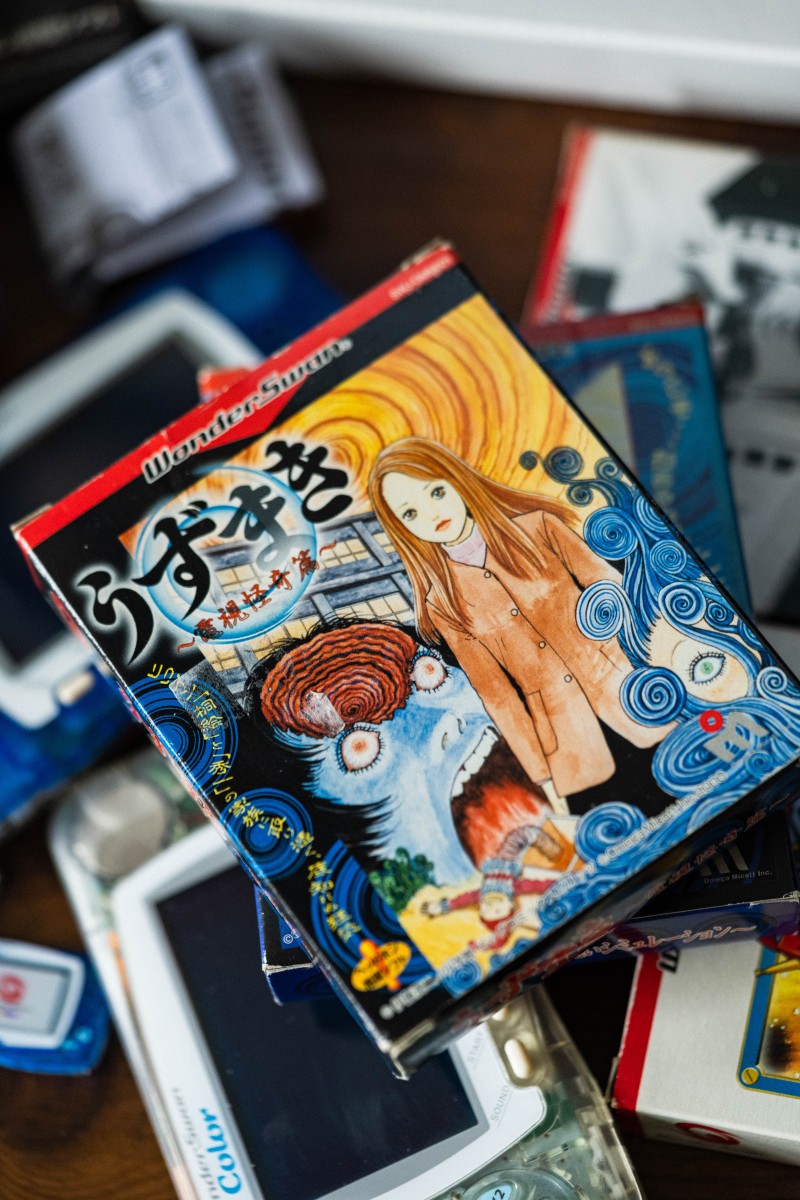
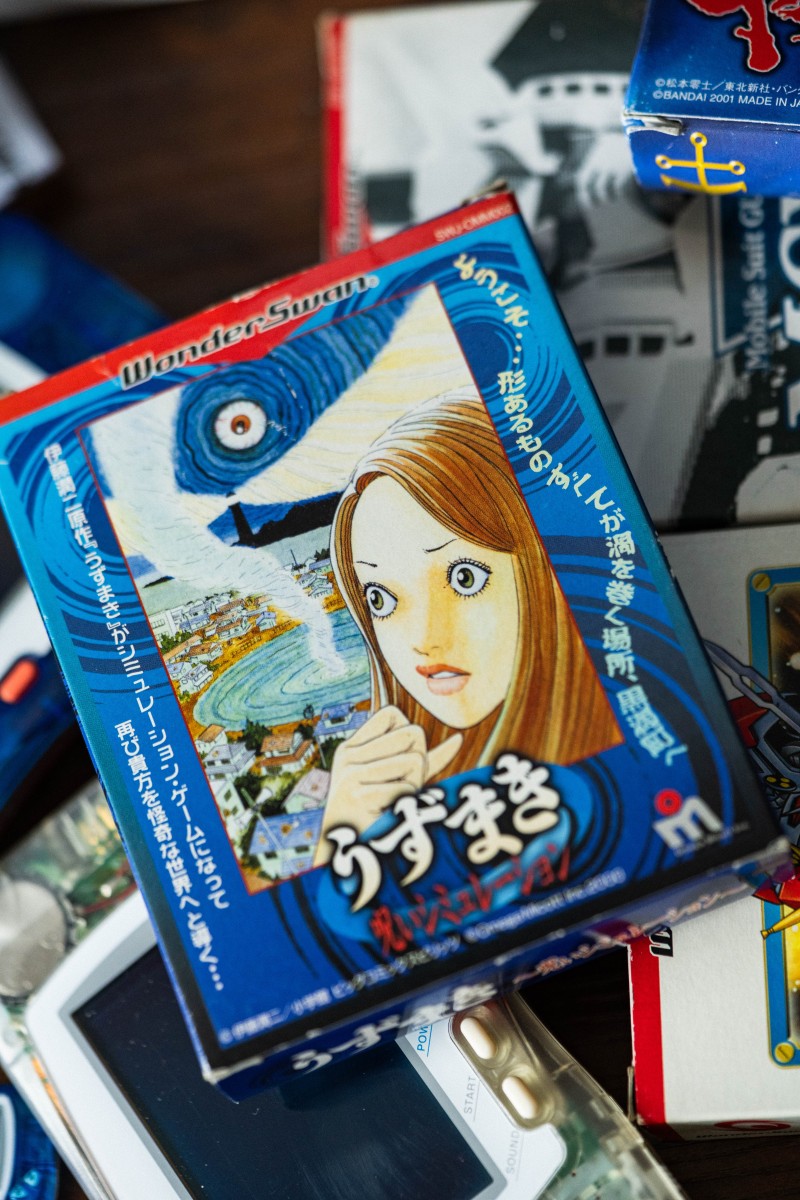
In early 2000, the WonderSwan became home to Junji Ito’s famous horror manga Uzumaki (“Spiral”). The first of two games, Uzumaki: Denshi Kaikihen (Literal translation: “Electronic Strange Tales Edition”) was released on February 3, 2000. It is essentially a visual novel adaptation of the Uzumaki story, allowing players to experience the eerie tale of a town cursed by spiral patterns. The game follows heroine Kirie Goshima through key events of the manga, from creepy spiral-infested houses to the infamous human snails and beyond. Impressively, it features artwork and scenes closely mirroring Ito’s grotesque style. The live-action film was another part of Uzumaki’s presence at the time; an actress cameo in this game needs separate confirmation. Gameplay-wise, it’s a narrative adventure, you read, witness disturbing imagery, and occasionally make choices or interact to advance the plot. Trivia: Both Uzumaki WonderSwan games were developed and published by a company called Omega Micott. They are notable for having cover art drawn by Junji Ito himself, which makes the physical cartridges quite collectible. Also, Denshi Kaikihen closely retells the manga’s events, albeit in a slightly shuffled order to fit the pacing of a game. This title, being text-heavy, really shows off the WonderSwan’s strength in handling manga-style storytelling on a small screen.
Uzumaki: Noroi Simulation (2000), become the spiral
Released just a month after the first game, on March 4, 2000, Uzumaki: Noroi Simulation (“Curse Simulation”) offers a different take on Ito’s Uzumaki. This second game is a simulation/strategy experience rather than a linear novel. Players are actually cast in a sinister role: you’re tasked by the mysterious “Uzumaki Master” to spread the spiral curse across the town of Kurouzu-cho. In gameplay terms, that means you move around town, triggering spiral phenomena and infecting citizens with the curse. The challenge is to maximize “Spiral Power” – a measure of how deeply the curse has taken root – without getting caught or stopped. You’ll encounter key scenes from the manga but from an antagonistic perspective, which is quite unique. Noroi Simulation also includes a quirky mini-game involving a snail-human hybrid (a nod to one of the manga’s infamous characters), adding variety to the gameplay. Trivia: The idea of a “curse simulator” is pretty meta and innovative, effectively letting fans play the villain behind the scenes. This game’s approach to story is more open-ended, giving it a bit of replayability as you experiment with different ways to spiral-curse the town. Like its predecessor, it never left Japan, but together the two Uzumaki games give a surprisingly comprehensive and immersive journey through Junji Ito’s nightmarish world on a handheld. Fans often cite these as spiritually similar to later horror indie games, and they remain some of the WonderSwan’s most intriguing titles.
Space Battleship Yamato (Uchuu Senkan Yamato, 2001), classic sci-fi strategy
Bringing a classic 1970s anime into handheld form, Uchuu Senkan Yamato launched on the WonderSwan Color in February 2001. Developed by Tom Create and published by Bandai Visual, this game is a turn-based strategy adventure retelling the epic journey of the Yamato spaceship (known as the Argo in Star Blazers). Players command the Yamato and its crew in grid-based battles across space, managing resources and tactical combat against the alien Gamilas forces. The game follows the plot of the original Yamato series: the desperate voyage from Earth to planet Iscandar to save humanity, battling along the way. Cutscenes with dialogue and anime stills help drive the narrative between missions. The WonderSwan Color’s abilities are on full display with this title’s rich sprite graphics and even voice snippets for famous lines (though limited by the 4-bit sound). Trivia: Space Battleship Yamato on WSC is essentially a portable counterpart to the PlayStation Yamato games of the era, even sharing some assets, but with simplified mechanics to fit on a handheld. It holds the distinction of being one of the longer games on the system, user reports indicate it can take 40+ hours to complete, given its strategic depth. This speaks to the WonderSwan’s capacity to host “big” games despite its small package. For fans of the franchise, the game was a treat, complete with the rousing musical score (in chiptune form) and the need to make poignant decisions like when to fire the Yamato’s devastating Wave Motion Gun. It’s a fitting swan song (pun intended) for the kind of content Bandai’s handheld excelled at: niche, story-rich titles for the dedicated anime and gaming enthusiast.
Ring Infinity (リング ∞, 2000)
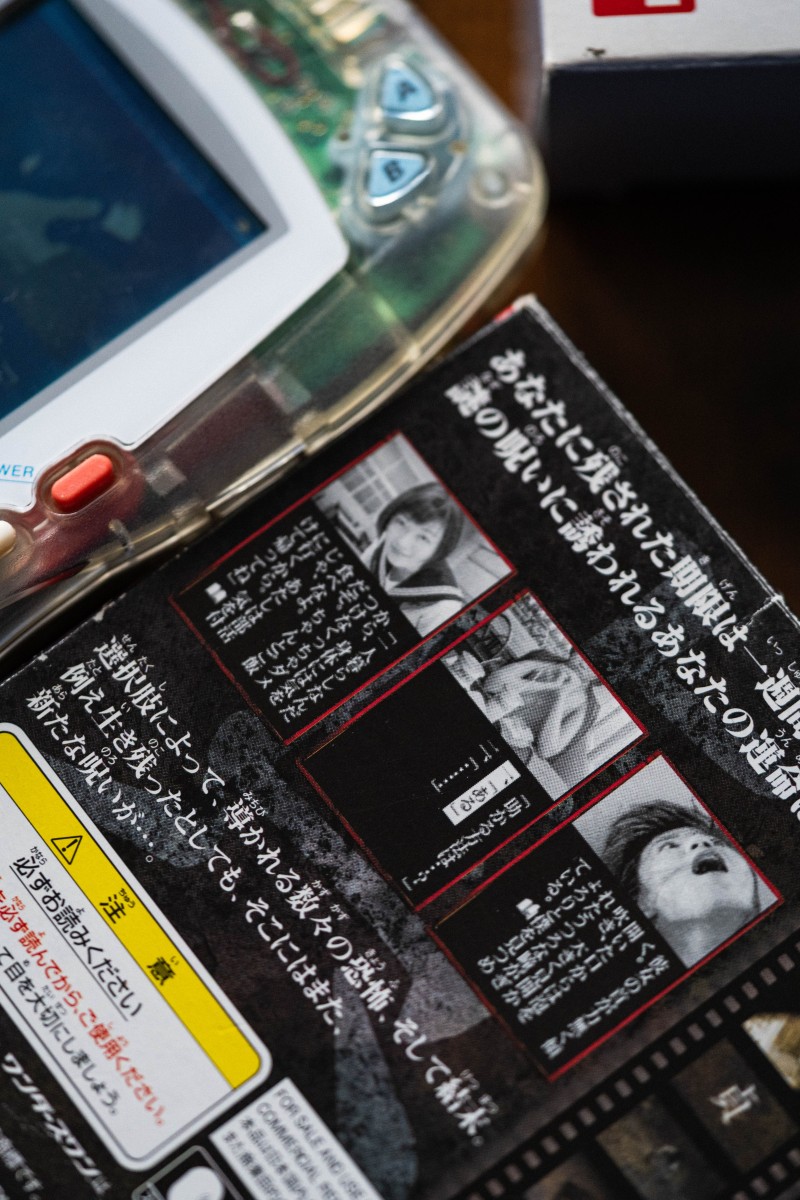
Ringu ∞ (2000) is one of the more unusual titles released for the WonderSwan, expanding the universe of Koji Suzuki’s famous horror saga into an interactive form (so, not a direct adaptation of the movie, more like an interactive side story). Rather than relying on action or jump scares, the visual novel leans heavily into psychological tension, presenting itself as a narrative-driven experience where players uncover fragments of a mystery tied to the cursed videotape mythos. Much of the gameplay revolves around reading, investigating, and making choices, creating an almost novel-like rhythm that feels surprisingly mature for a handheld of the era. The limitations of the hardware actually work in its favour: the sparse visuals and restrained sound design leave space for the player’s imagination, amplifying the sense of unease. Released exclusively in Japan, Ringu ∞ remains a fascinating example of how the WonderSwan catered to niche audiences willing to embrace slower, more cerebral experiences, and today it stands as a collectible curiosity for fans of both survival horror and Bandai’s underrated handheld. Trivia: The visual novel arrived at a time when Ring had already reshaped Japanese horror culture. After the novel (1991) and especially the film adaptation in 1998, the franchise became a phenomenon. Bandai saw an opportunity to extend the universe onto a handheld, which tells you how culturally dominant the property had become in Japan.
Conclusion
The WonderSwan feels like one of those consoles that existed slightly out of time. Its Japanese release gave it a different shape from the handhelds I knew in Italy. It was quiet, efficient, and closely tied to its Japanese library. For many of us, it wasn’t part of our childhood, but discovering it today almost feels like uncovering a parallel history of handheld gaming. One where imagination, battery life, and thoughtful design mattered more than raw power. And maybe that’s why the WonderSwan still feels special: not as a missed opportunity, but as a reminder that there were many different ways the future could have looked.
I hope you enjoyed this article and video as much as I did writing and recording them. Let me know if you have or had the WonderSwan, and what is your favourite game!
Stay curious. Stay nostalgic.
Because retro never dies, it just respawns.

Leave a Reply