

Introduction
SNK’s Neo Geo Pocket arrived in Japan in October 1998, followed by the Neo Geo Pocket Color in March 1999. I wasn’t aware of either at the time. I found them years later, and discovered something I wish I’d known about: a handheld that made SNK’s arcade games smaller without trying to make them identical. This is a look at both machines and the games that give them their character.

SNK’s entry into handhelds
By 1998, Nintendo’s Game Boy (and the new Game Boy Color) dominated the handheld market, while other contenders like Sega’s Game Gear had come and gone. SNK, famous for its Neo Geo arcade and home consoles, decided to try its hand at portable gaming. The original Neo Geo Pocket launched in Japan on October 28, 1998 with a monochrome display. It was SNK’s first handheld system, intended to target a “slightly different” audience (and probably a bit older) than the Game Boy. The monochrome NGP debuted with 8 launch titles (including King of Fighters R-1 and a handheld Baseball Stars) and even won a Japanese design award in 1998. However, its timing was unfortunate, it hit shelves just as Nintendo’s Game Boy Color (with a colour screen and the Pokémon craze) was taking off, making the NGP’s black-and-white display feel outdated. Sales of the Neo Geo Pocket were lower than expected, and SNK quickly went back to the drawing board.
Only months later, SNK unveiled the Neo Geo Pocket Color. Announced in January 1999, the NGPC featured a full colour, non-backlit screen and was fully backward-compatible with original NGP games. It launched in Japan on March 16, 1999 (several months after the Game Boy Color’s Japanese debut) and came to North America in August 1999, and Europe by that fall. The colour model received the broader international launch; distribution of the original monochrome machine was much more limited. The Neo Geo Pocket Color had a modestly successful start: it launched at a budget-friendly US$69.95 with six titles in the U.S., later expanding to major retailers like Walmart and Toys “R” Us for the 1999 holiday season. By May 2000, SNK managed to grab a tiny 2% of the U.S. handheld market, minuscule next to Nintendo, but enough that SNK’s American branch turned a small profit on the device.




Hardware design and features
Physically, the Neo Geo Pocket consoles took a different approach from Nintendo’s brick-like Game Boy. Both the original NGP and the Color model have a landscape (horizontal) orientation, reminiscent of Sega’s Game Gear or the later Game Boy Advance. This gave them a comfortable, wide-bodied feel with rounded corners that fit well in the hands. On the back, a finger grip groove made it easier to hold during long play sessions.
One of the most distinctive features is the controls. SNK departed from the standard D-pad and instead equipped these handhelds with a microswitched thumbstick: a tiny 8-directional joystick that clicks satisfyingly with each tilt. This clicky stick, often cited as one of the best handheld controls, was perfect for SNK’s arcade-style games (especially fighting games) because it offered more precise inputs than a mushy D-pad. The stick registers eight directions and gives tactile feedback, making moves in fighters feel natural on a handheld. The system had two main face buttons (A and B), which might sound limiting, but they were responsive with some games distinguishing a short tap from a longer press. Additionally, “Option” and “Power” buttons were on the face for menu access and on/off functions, and a standard stereo headphone jack was provided for audio.
The display was a 2.7-inch reflective TFT LCD (non-backlit) with a resolution of 160×152 pixels. On the Neo Geo Pocket Color, this screen could display up to 146 colours simultaneously from a palette of 4096. The original NGP’s screen was monochrome (8 shades of gray). Because neither model had a backlight, you needed decent external lighting to play… but in return, you got extraordinary battery life. The Color unit could run about 40 hours on two AA batteries (the monochrome NGP managed around 20 hours, on 2 triple A batteries), far outlasting many competitors. This longevity, even with a colour screen, was a major selling point. By comparison, the Sega Game Gear and Atari Lynx (earlier colour handhelds, but with backlight) chewed through batteries in mere hours. In fact, SNK’s efficient design meant the NGPC became known for both its vibrant display and its stamina: “two batteries, forty hours” was a proud spec. It’s worth noting that modern modders have developed backlit LCD replacement kits for the NGPC to make the screen brighter, but these tend to drastically reduce the battery life. The stock screen, while not lit, is exceptionally clear with proper lighting and doesn’t drain your AAs so quickly.
Both models required a CR2032 lithium coin cell as well, used for the clock and system settings; game saves are stored separately on compatible cartridges. Yes, these handhelds had a real-time clock, SNK even included some built-in mini applications like a calendar, alarm, and horoscope reader as Easter eggs in the system menu, underscoring the late-90s PDA-esque trend of adding extra non-gaming functions to consoles.
For multiplayer and connectivity, the Neo Geo Pocket had a serial link cable port. You could link two units for head-to-head play in supported games (vital for trading cards or fighting games). Uniquely, SNK partnered with Sega to create a Neo Geo Pocket Color-to-Dreamcast link cable. A handful of games on the NGPC could connect with certain Dreamcast games to unlock content or exchange data, for example, King of Fighters R-2 could link with The King of Fighters ’99 Dream Match on Dreamcast, and SNK vs. Capcom: Match of the Millennium linked with Capcom’s Capcom vs. SNK on the Dreamcast. This cross-system synergy was cutting-edge for its time, though it required owning both systems and the special cable. SNK even showed off a wireless communication adapter for the NGPC at the Tokyo Game Show in late 1999, but that peripheral never saw mass release.
In terms of raw specs, the Neo Geo Pocket Color was powered by a 16-bit Toshiba TLCS-900H CPU (with a secondary Z80 chip dedicated to sound), making it quite powerful for a handheld of its day. It wasn’t as powerful as SNK’s Neo Geo home console, of course, but it was comparable or superior to the Game Boy Color and Bandai’s WonderSwan. The system’s solid technical design, coupled with SNK’s arcade know-how, set the stage for some excellent software.
Adapting arcade action to pocket size
Rather than attempting impossible ports of Neo Geo’s arcade titles, SNK wisely chose to reimagine their games for the small screen. The result was a library of titles that captured the essence of SNK’s franchises without overextending the hardware. Many of the fighting games, for example, adopted a charming chibi (super-deformed) art style, shrinking characters into cute, cartoonish versions, which totally suits the device and its limitations. This stylistic choice meant that games like The King of Fighters R-1/R-2, Samurai Shodown! 2, Fatal Fury: First Contact, and SNK Gals’ Fighters could maintain smooth gameplay and recognisable special moves, even if the characters looked like tiny adorable brawlers. It was a successful translation of full arcade games into pocket form: the gameplay depth was there, but the presentation was tailored for a 2.7-inch screen. Thanks to the tactile joystick and SNK’s fighting game expertise, pulling off combos and special moves on the NGPC felt great – fans still praise titles like King of Fighters R-2 and The Last Blade: Beyond the Destiny for how brilliantly they play on the handheld.
Of course, it wasn’t all fighting games. SNK and its partners delivered quality titles across genres, often leveraging their arcade IPs in creative ways. Here are some notable games and features from the Neo Geo Pocket library:
- SNK vs. Capcom: Match of the Millennium (1999). A crossover fighting game that was a dream collaboration at the time. It packed 26 fighters (13 from each company) in a single title with multiple play modes, mini-games, and tag-team or single battles. Critics and fans consider it one of the best handheld fighters ever made, an impressive feat for a two-button portable game.
- SNK vs. Capcom: Card Fighters’ Clash (1999). Instead of fighting, this spin-off focused on card battling. It became one of the most beloved NGPC titles, essentially a collectible card game where you build decks of SNK and Capcom characters and duke it out in turn-based card duels. With over 300 cards and two versions (an SNK deck and a Capcom deck, sold separately), it offered endless replayability. Card Fighters’ Clash is often cited as the Neo Geo Pocket’s killer app, and it was popular enough to see sequels and, decades later, a re-release on modern platforms.
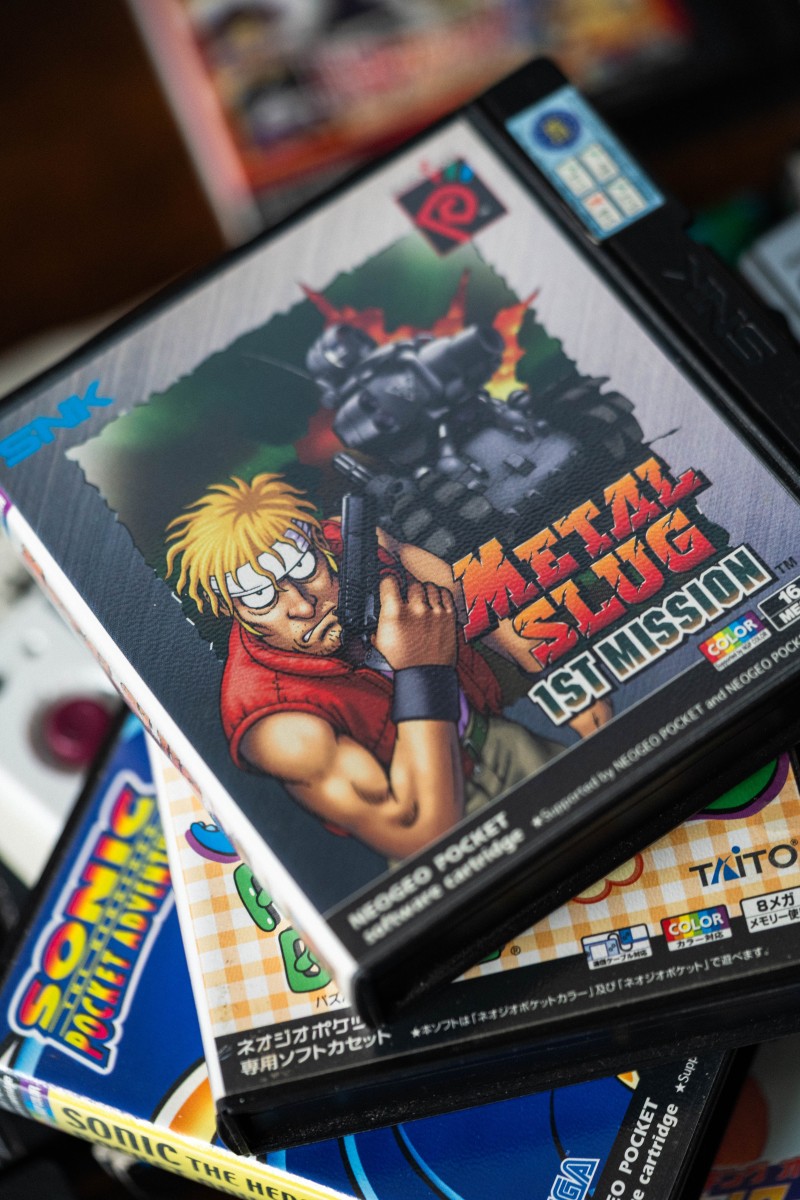
- Metal Slug: 1st Mission (1999) & 2nd Mission (2000). SNK managed to bring their famous run-and-gun Metal Slug series to the handheld with original entries. These games weren’t direct ports of the arcade Metal Slugs, but they retained the classic side-scrolling action and humour. The graphics were toned down significantly for the small screen, but the run ‘n gun gameplay was intact and smoothly transitioned to the Neo Geo Pocket. 2nd Mission in particular is a highlight, featuring 30+ levels, multiple playable characters, and even vehicles like a submarine for underwater missions, a ton of content for a handheld game.
- King of Fighters R-1 (1998) & R-2 (1999). These were portable installments of SNK’s flagship fighting series, with R-1 on the monochrome NGP and R-2 on the NGPC. They offered team-based fighting with a roster of popular KoF characters rendered in mini form. King of Fighters R-2 expanded to 23 fighters and even let you create a custom character in “Making Mode” to play through the story. Using the link cable, friends could face off in KoF on the go. These titles demonstrated how a complex fighter could be distilled into a fun portable experience without sacrificing the series’ spirit.
- Samurai Shodown! 2 (1999). A chibi-fied version of SNK’s weapon-based fighting series, Samurai Shodown! 2 on NGPC was another showcase of the handheld’s prowess. It included many characters from the arcade Samurai Shodown games, complete with their swords and special moves, adapted to two buttons. Fluid and surprisingly tactical, it proved even weapon fighters could work on the platform. (This was actually the second Samurai Shodown on NG Pocket – the first one was a monochrome-only title in 1998, one of the nine original NGP games).
- SNK Gals’ Fighters (2000). A lighthearted all-female fighting game featuring SNK’s heroines (Mai Shiranui, Nakoruru, etc.) in cute form, which later inspired the modern SNK Heroines console game. Gals’ Fighters was praised for its responsive combat and humour. It’s a great example of SNK having fun with their properties on the NGPC.
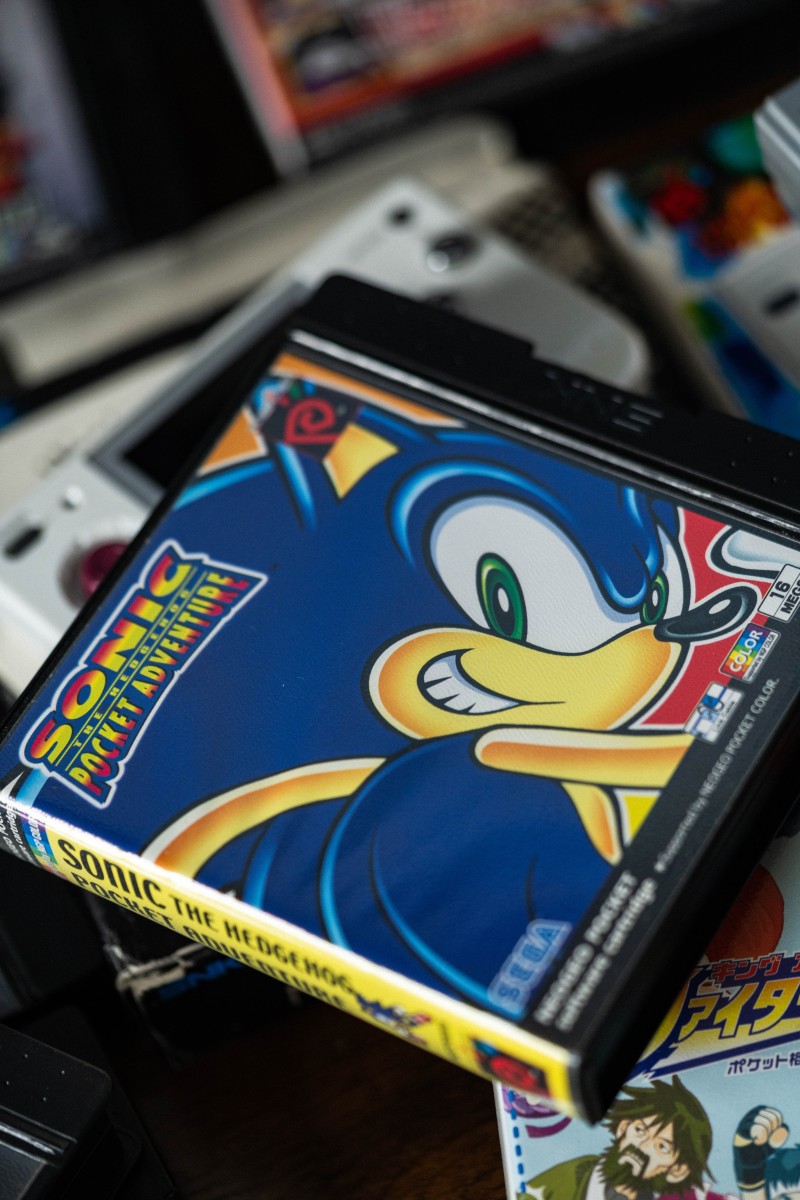
- Sonic the Hedgehog Pocket Adventure (1999). Yes, Sonic on a Neo Geo! In a surprising partnership, Sega allowed SNK to produce an original Sonic game for the NGPC (Sega was an early supporter, even distributing SNK’s console in some regions). The result was Sonic Pocket Adventure, a fast-paced platformer that borrowed level themes from Sonic 2 but was built from the ground up by SNK with oversight from Sonic’s creator Yuji Naka. The game managed to capture the speed and feel of a classic Sonic title, and even added extras like time trial modes and a 2-player race (via link cable) to see who could finish levels faster. It’s widely praised by both Neo Geo enthusiasts and Sonic fans as a high-quality handheld Sonic – quite an achievement for SNK.
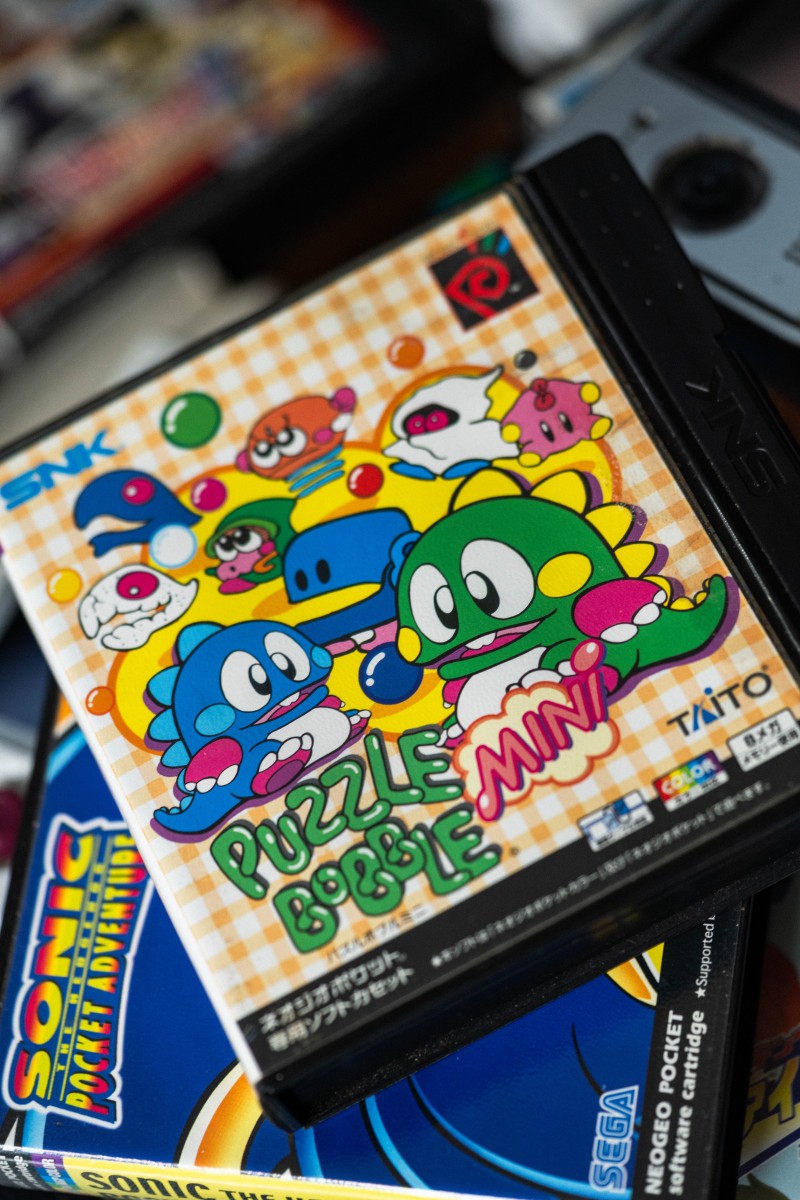
- Other highlights: The Neo Geo Pocket Color’s library, though only around 80 titles total across all regions, was impressively curated. SNK brought out Fatal Fury: First Contact (a portable take on Fatal Fury/Garou), The Last Blade: Beyond the Destiny (a handheld adaptation of The Last Blade series with added modes), Bust-A-Move (aka Puzzle Bobble), Pac-Man (a faithful port by Namco), Neo Turf Masters (a brilliant golf game scaled down from Neo Geo), Crush Roller (a quirky puzzle-maze game), Dark Arms (an action-RPG, within the universe of Beast Buster), Biomotor Unitron (a mech-themed dungeon crawler RPG), and Faselei! (a tactical mech strategy game famous for its late rarity in English). There was even a portable version of Capcom’s Mega Man, Rockman Battle & Fighters, compiling two Mega Man arcade fighting games into an NGPC cartridge. In short, almost every title on the system was designed to play to the system’s strengths, quick pick-up-and-play fun, with colourful graphics and tight controls, rather than straight ports of 16-bit arcade games.
The Neo Geo Pocket Color can play the original monochrome NGP games. Compatibility in the other direction is more limited: some colour games also work on the older machine, while others require the Color hardware. Check the individual cartridge rather than assuming that most of the library will work on both.
Commercial performance and demise
Despite positive critical reception and a lineup of quality games, the Neo Geo Pocket Color faced an uphill battle in the marketplace. Nintendo was an entrenched rival, and by 1999 the Game Boy Color (with the Pokémon phenomenon in full swing) was practically unstoppable. In Japan, SNK also had to contend with Bandai’s WonderSwan (another handheld developed by Bandai with Gunpei Yokoi’s Koto team) which grabbed its own share of the market. The NGPC simply didn’t have the same retail presence or third-party support. In North America, SNK was a relatively small player; initially they sold the NGPC mainly online (through eToys) and only later got it into brick-and-mortar stores. Even though SNK did invest in marketing, about $4 million on TV ads on MTV, Comedy Central, Cartoon Network,etc, the impact was modest. By mid-2000, that 2% U.S. market share meant the NGPC was a niche product for enthusiasts.
In early 2000, the company hit a major financial crisis, SNK was acquired by pachinko machine maker Aruze in January 2000. The new owners weren’t particularly interested in the console gaming business. Internal conflicts led to SNK’s founder and key staff leaving the company by mid-2000. As a result, SNK pulled the plug on Western operations in June 2000, just about a year after the NGPC’s launch abroad. Stock of Neo Geo Pocket hardware and games in U.S. stores was recalled and liquidated. The handheld continued to be sold for a while longer in Japan (and enjoyed a cult following there), but with SNK’s bankruptcy filing in October 2001, the Neo Geo Pocket line was discontinued worldwide. In total, the platform had roughly two years of life (late 1998 to late 2000 outside Japan, and until 2001 in Japan).
It’s estimated that around 2 million Neo Geo Pocket Color units were manufactured in total, a far cry from Game Boy’s tens of millions, but not the worst showing for a “failed” console. The original monochrome NGP is much rarer, since it was quickly replaced (only about 9 games ever came out for the mono version). The NGPC’s library ended up small but remarkably high-quality, there were very few outright bad games on the system. Even so, with the Game Boy Advance looming in 2001 (a 32-bit handheld from Nintendo), SNK’s little console would have faced even tougher competition had it continued. The Neo Geo Pocket Color thus stands as the end of SNK’s original handheld-console project.
Legacy and modern revival
Although the Neo Geo Pocket Color was a commercial flop, it left a lasting impression on those who owned or later discovered it. In many ways it’s now considered a cult classic handheld, prized by collectors and remembered fondly for doing what it did very well. SNK’s decision to shrink their arcade hits down to size paid off creatively, and the NGPC is often cited as one of the most “lovely” handhelds ever created, boasting a fantastic (if limited) lineup of mostly original software. The hardware design, especially that clicky joystick, still feels great to use today; some even mod the NGPC with modern backlit screens or better speakers to improve it, though as mentioned, the original screen is quite sharp and usable with good lighting.
For years, the only way to experience these games was on original hardware or via emulation, but recently there’s been a bit of a Neo Geo Pocket revival. SNK has re-released many of the NGPC’s best games for modern platforms. In 2020–2022, they put out Neo Geo Pocket Color Selection Vol.1 and Vol.2 – compilation packs for Nintendo Switch and PC that include classics like SNK vs. Capcom: Match of the Millennium, Samurai Shodown! 2, King of Fighters R-2, Last Blade, Metal Slug 1st & 2nd Mission, Dark Arms, Biomotor Unitron, Mega Man Battle & Fighters, and Card Fighters’ Clash (which even includes both the SNK and Capcom card sets). These collections, complete with features like rewind, save states, and even a 3D view of the original game manuals, have introduced NGPC games to a new generation of players – and let older fans relive them without hunting down expensive cartridges.
Meanwhile, for the purists who love original cartridges, there’s a modern solution as well. Analogue’s cartridge adapter set, documented in February 2024, includes support for its Analogue Pocket device. One adapter allows the Analogue Pocket to play original Neo Geo Pocket and Pocket Color game carts. This means you can take your NGPC collection, pop the carts into the adapter, and play them on a razor-sharp modern LCD with an FPGA implementation of the original hardware. It’s a fantastic way to experience the games as they were meant to be played, with that authentic feel, but on a contemporary handheld (especially helpful if you don’t have a modded backlit NGPC). The Analogue Pocket’s adapters give these cartridges another way to be played by giving them new compatible hardware.
SNK’s little handheld has also seen its influence persist in other ways. Some characters and concepts that debuted on the NGPC have made their way into other games (for example, SNK’s later titles have nods to Card Fighters or the tiny sprite style). The idea of simplifying fighting games for portable play can be seen in later handheld titles as well. And that thumbstick, to this day, many retro gamers wish modern handhelds had something as satisfying for fighting games.
Conclusion
In hindsight, the Neo Geo Pocket Color was a victim of circumstance, arriving at a time when Nintendo was untouchable and when SNK as a company was on the brink of collapse. It never got the chance to flourish commercially. Yet, it’s incredible how well-regarded the NGPC is among those who have played it. SNK managed to carve out a unique identity in the handheld space: a console that delivered “arcade at home… in your pocket,” not by raw power, but by clever design and thoughtful adaptation of games. From the delightful SNK vs. Capcom crossover titles to the pixel-perfect Metal Slug Missions, the Neo Geo Pocket Color proved that with the right approach, even a tiny 16-bit handheld could pack a hefty punch of fun.
I don’t have memories of owning one in 1999; I missed it entirely. The affection came later, through the stick, the little fighters and the care put into adapting those games. That is its place in my collection: a console I wish I’d met sooner, still capable of making a good first impression years after its short life in the shops.
Stay curious. Stay nostalgic.
Because retro never dies, it just respawns.

Leave a Reply