
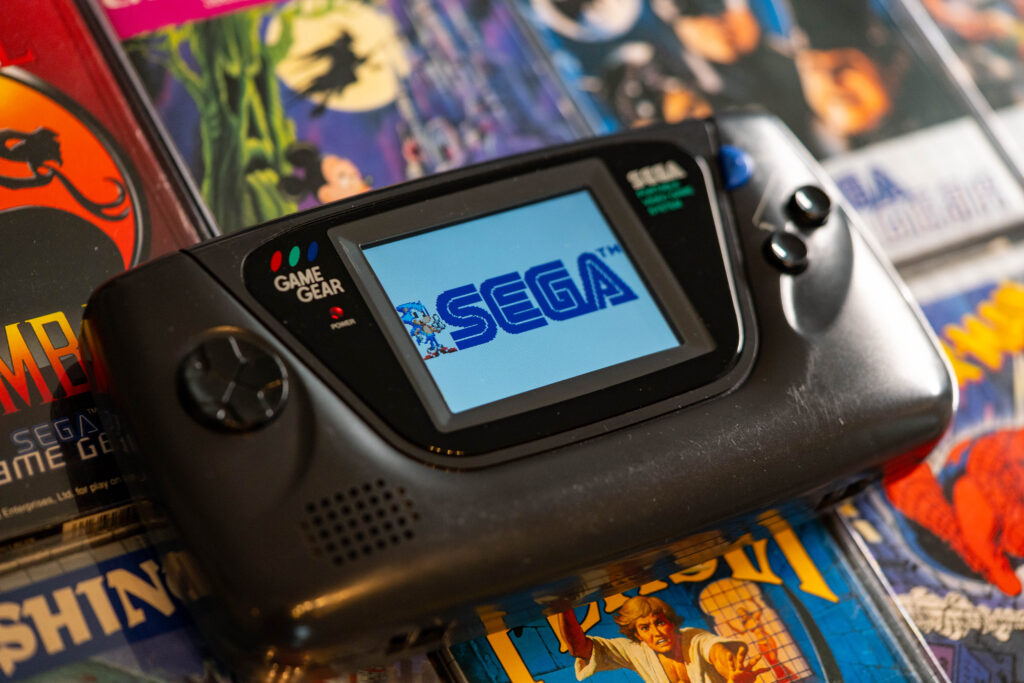
Celebrating 35 Years of the Sega Game Gear
Introduction
In October 1990, Sega released its first handheld console, the Game Gear. I wrote this retrospective for its 35th anniversary in 2025. The colour screen was the attraction; the battery changes were part of the deal. Here’s the hardware, the games and the memories attached to the one I bought after selling my Game Boy.
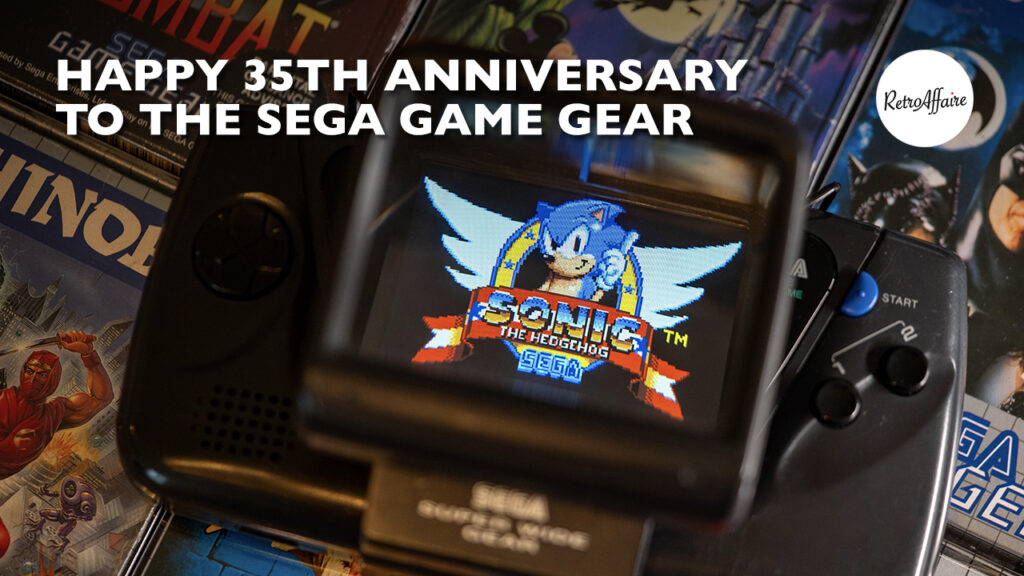
The history of the Game Gear
The Game Gear debuted in Japan on 6 October 1990, priced at ¥19,800. Columns was one of its early puzzle games and appeared in some bundles. North American and European launches followed in 1991. Sega’s advertising made the colour screen central to the comparison with Nintendo’s Game Boy.
Sega supported the Game Gear through most of the ’90s, officially from 1990 until 1997. In total, 364 game titles were released for the system over its lifespan, including portable entries of major Sega franchises like Sonic the Hedgehog (which saw six 8-bit outings on Game Gear) and adaptations of Streets of Rage, Shinobi, Ecco the Dolphin, and more. By 1996, worldwide sales had reached 10.62 million units. However, by the mid-90s the momentum slowed. New challengers to Nintendo’s throne struggled as Nintendo introduced the sleek Game Boy Pocket (1996) and phenomena like Pokémon breathed new life into the Game Boy line. Sega’s attention was increasingly diverted to home consoles (the Genesis/Mega Drive, then Sega Saturn), and the Game Gear became an afterthought as the company wound down its support.
Sega discontinued the Game Gear in April 1997, ending the original Game Gear’s main production run… sadly. How cool would have been to get a 16-bit handheld by SEGA? But maybe, cough NOMAD cough, we did! Interestingly, the device got a brief second wind: in 2000, third-party publisher Majesco Entertainment re-released the Game Gear at a budget price of $30 (WOW!), under license from Sega. Majesco’s version was essentially the same console (compatible with all Game Gear cartridges) but with a cheaper screen and a few omissions, for example it could not use the original TV Tuner or certain Master System adapters. A few new game cartridges even trickled out at that time, but by 2001 this last run ended. The Game Gear’s official story had concluded, yet its legacy was just beginning to ripen in retro gaming circles.
Hardware details
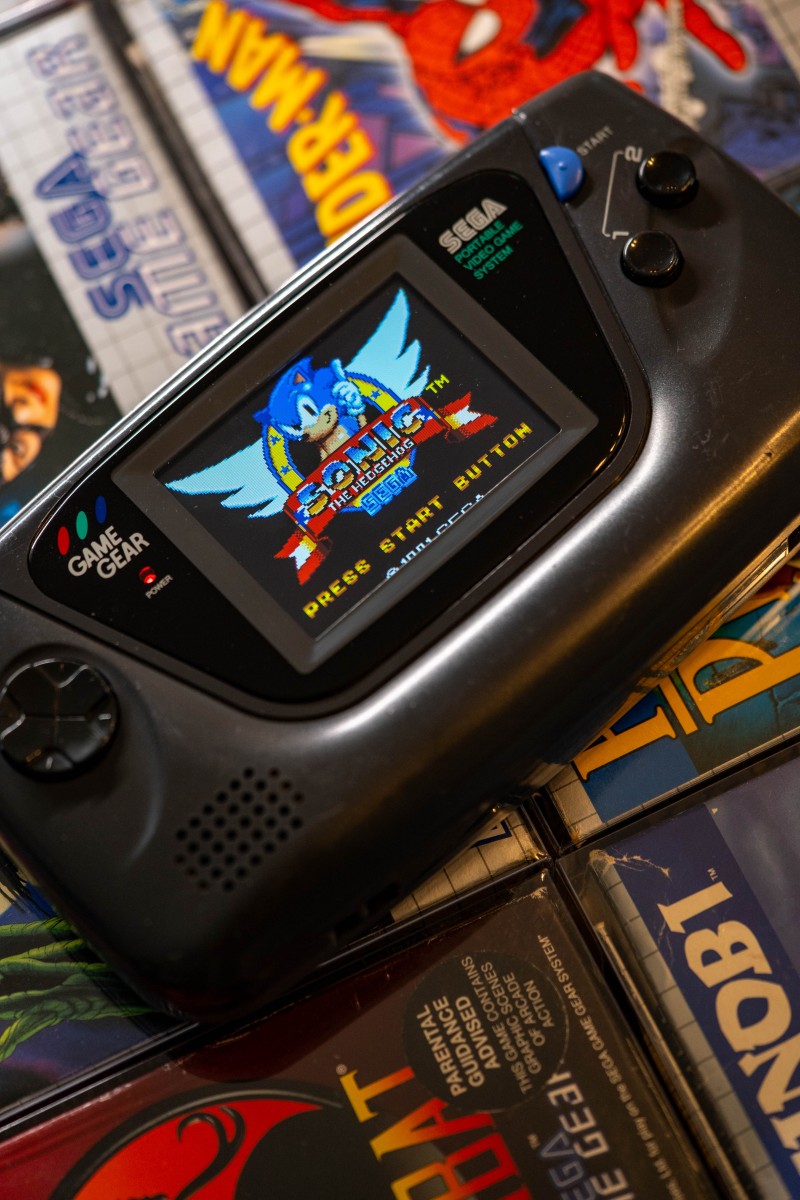
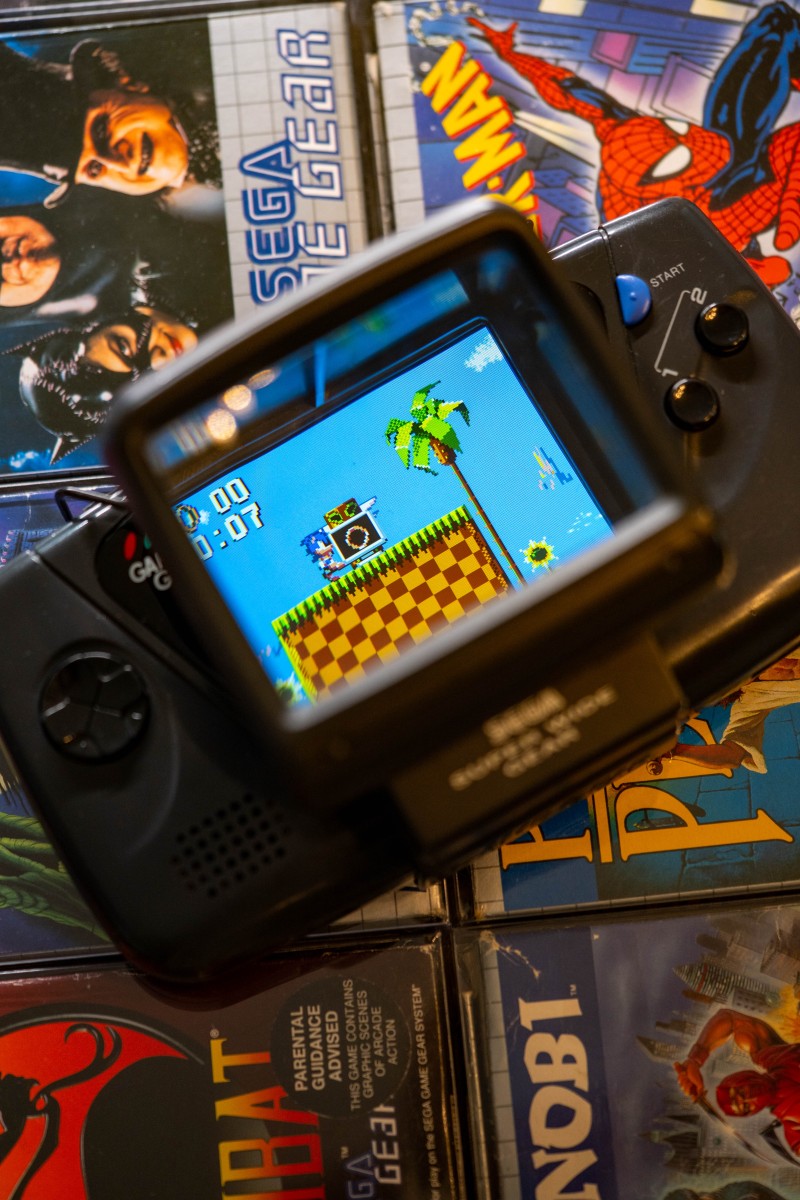
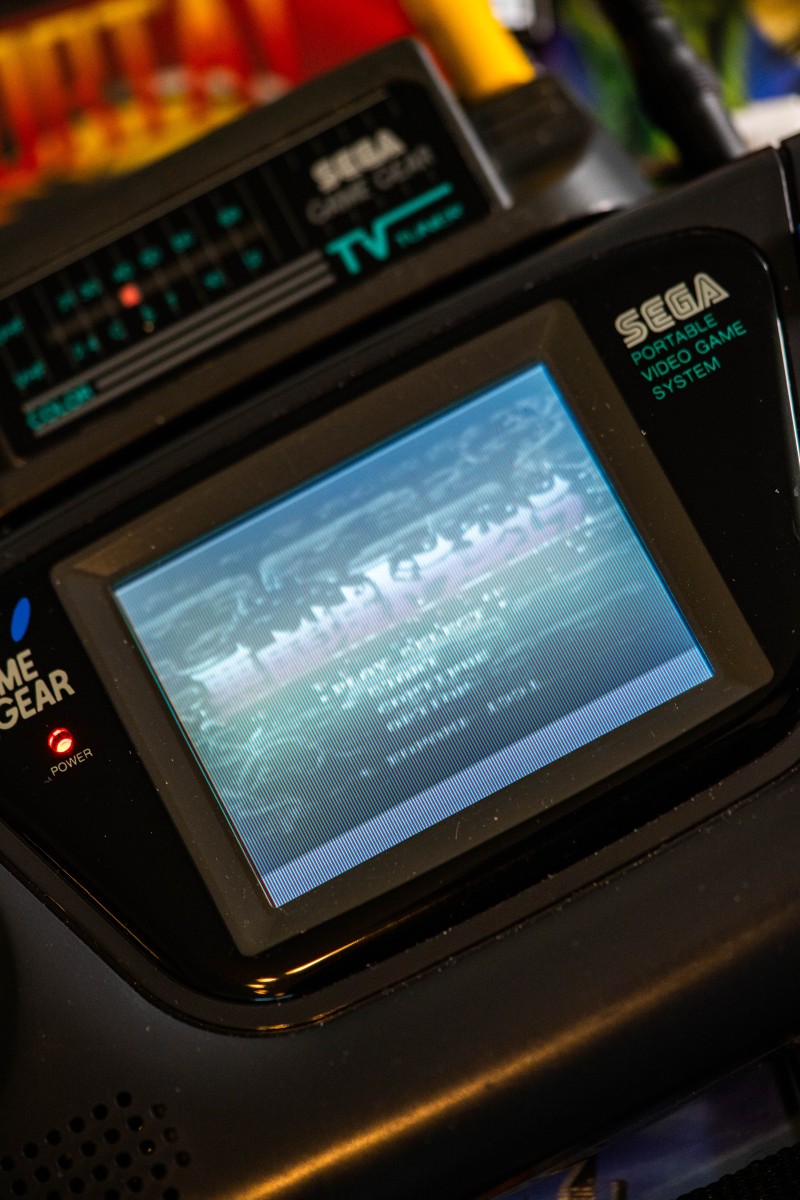
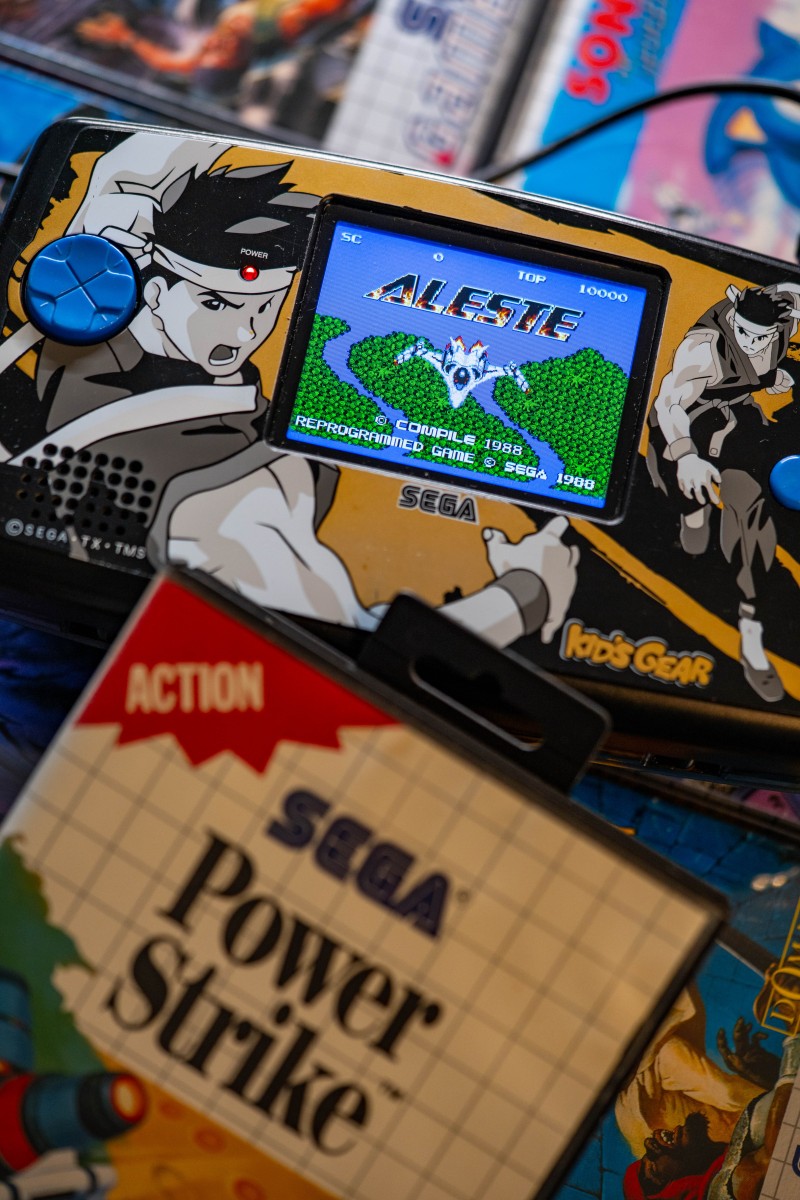
At the heart of the Game Gear was an 8-bit Zilog Z80 processor (the same CPU used in the Sega Master System) clocked at 3.5 MHz. In fact, the Game Gear’s architecture was very close to a portable Master System and it even used the same Texas Instruments SN76489 sound chip, giving it comparable audio capabilities (with one mono speaker built-in and stereo sound via headphones). The system included a mere 8 KB of RAM and 16 KB of video RAM, typical for early ’90s handhelds. This allowed it to run scaled-down versions of popular console games and a library of originals crafted for portable play.
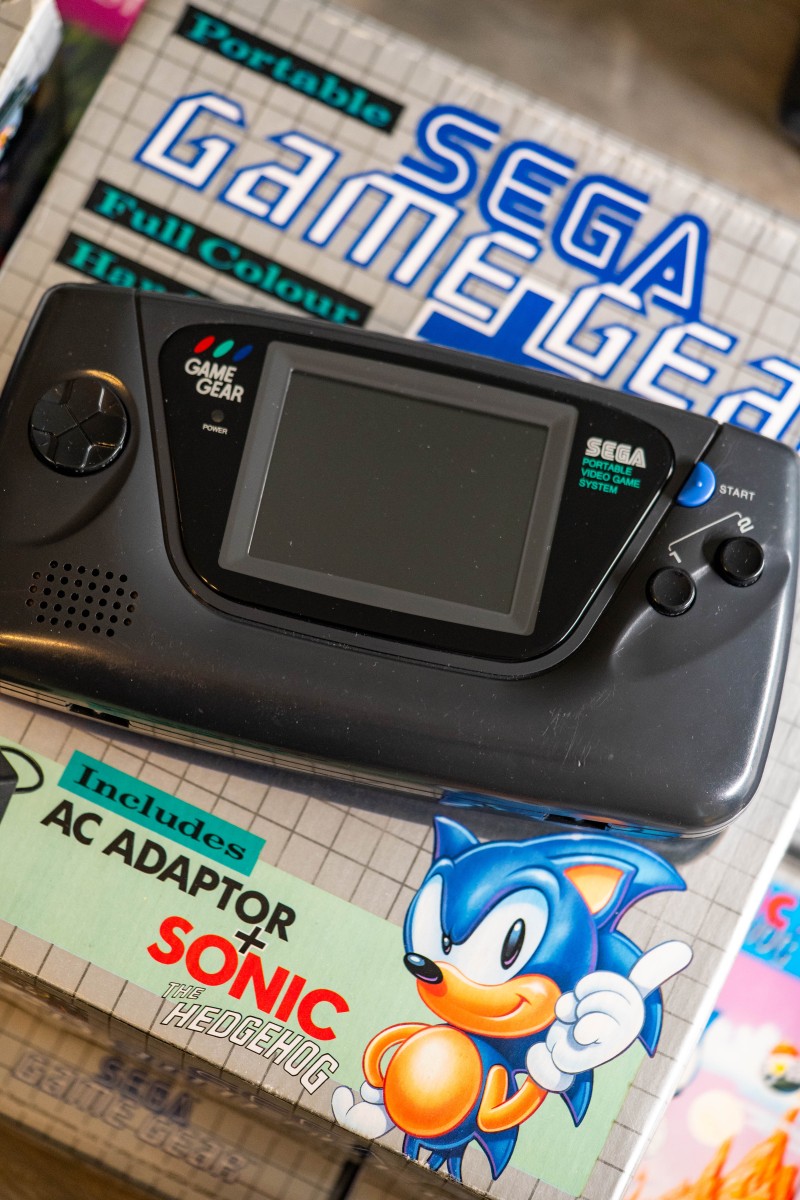
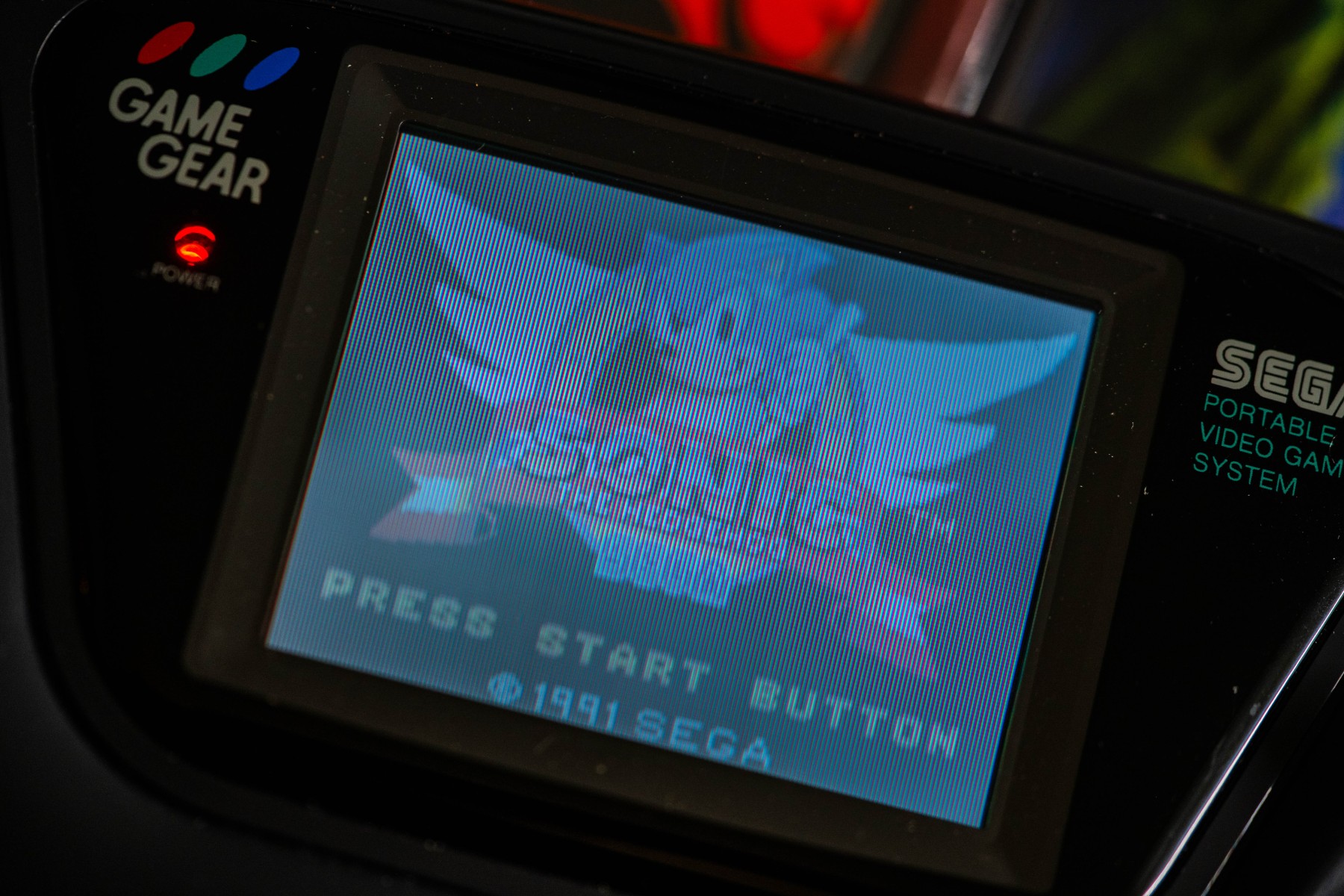
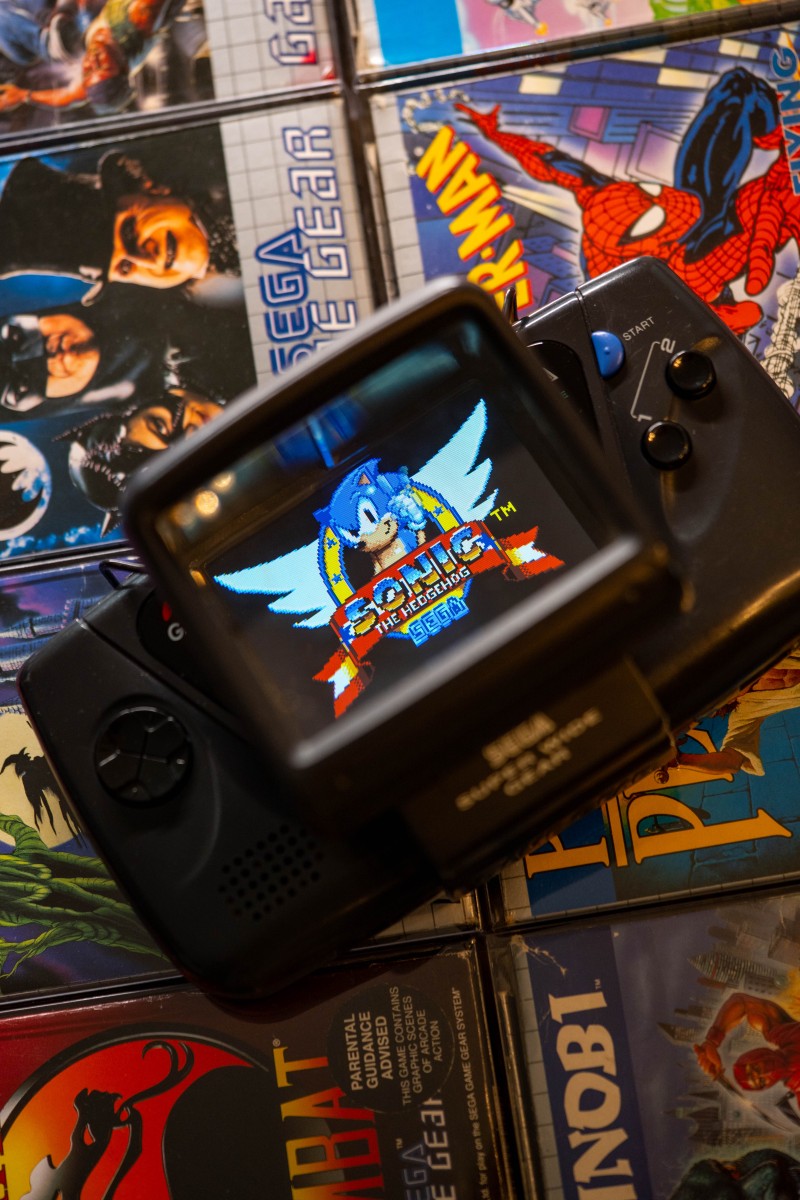
One of the Game Gear’s standout features was its backlit colour LCD screen. The display measured 3.2 inches diagonally and could show up to 32 colours on screen from a palette of 4,096: a huge leap over the Game Boy’s 4-shade green monochrome panel. Resolution-wise, it matched the Game Boy with a 160 × 144 pixel grid (albeit with non-square pixels). The screen’s backlighting, provided by a small fluorescent tube, made it possible to play in any lighting conditions. Graphics were vivid for the time, and seeing games like Sonic the Hedgehog or Streets of Rage in full colour on a handheld felt almost magical in the early 90s.
All that colour and lighting, however, made the Game Gear a power-hungry beast. The console required 6× AA batteries to run, and would exhaust a fresh set in roughly 3 to 5 hours of gameplay. In contrast, Nintendo’s Game Boy sipped on 4× AAs for upwards of 30 hours. This discrepancy became the Game Gear’s most notorious flaw, many kids have memories of carrying around spare batteries (or even an AC adapter) to keep the action going. At about 210 mm × 113 mm × 38 mm in size (8.3 × 4.4 × 1.5 inches), the Game Gear was wider and a bit heavier than the pocket-sized Game Boy, though its landscape orientation with rounded grips made it comfortable to hold for longer sessions. It truly felt like a shrunken Sega Genesis controller in your hands, with a nice D-pad and buttons that were responsive and built for action.
To mitigate the battery life problem, Sega offered a couple of official rechargeable battery packs that you could plug into the Game Gear. One was a clip-on pack that attached to the back of the unit; another was a larger external battery pack that you could use like an external power source. These accessories could extend play time and were a must for serious Game Gear aficionados (and for parents who got tired of buying AA batteries in bulk!). In terms of visual output, the Game Gear didn’t have a TV-out by default, but some modern mods (the Gear-to-Gear cable described below is for multiplayer, not video output) expanded what it could do. Overall, Sega’s hardware design for the Game Gear was ambitious: it crammed a lot of tech for 1990, essentially delivering a portable console experience, but pushing the limits of battery technology of the era.
Variants and accessories
One thing longtime fans remember fondly is the wide range of accessories Sega produced for the Game Gear. Some were practical, others downright quirky, but together they made the Game Gear a versatile little system:
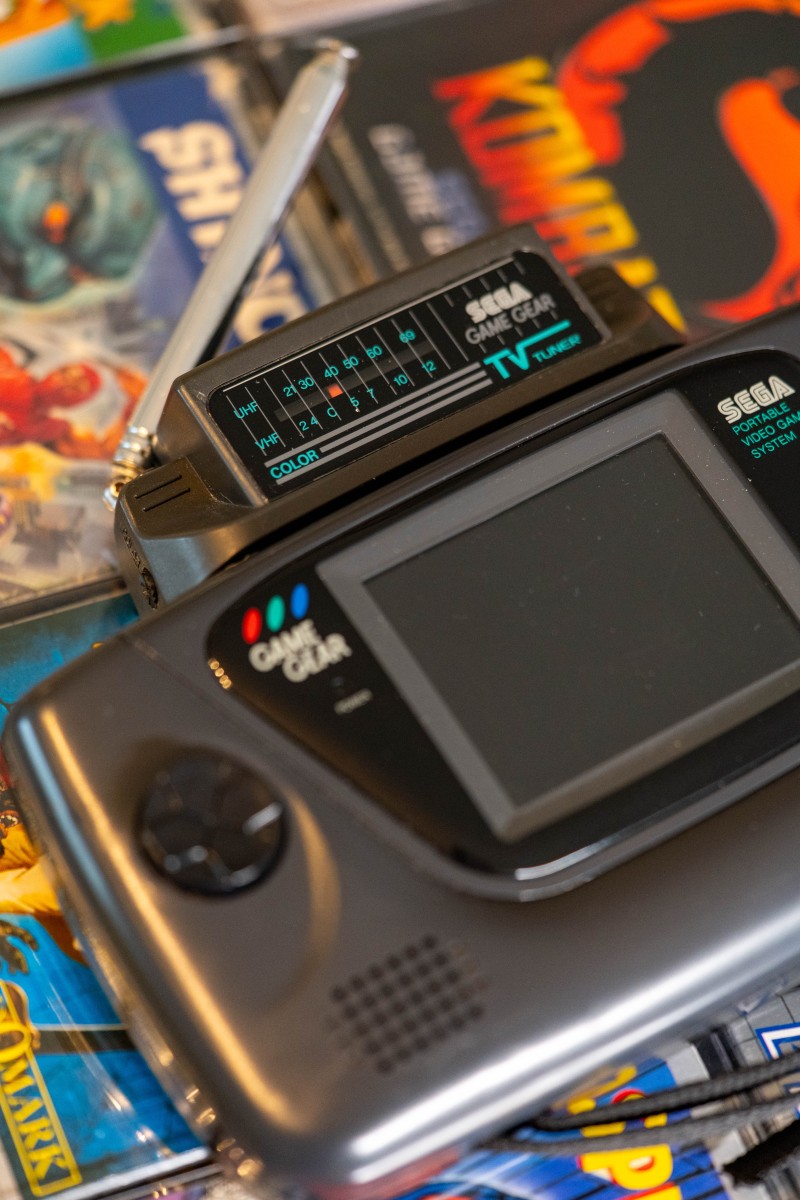
- The TV Tuner! Perhaps the most famous add-on, the TV Tuner was a cartridge-like module with a telescoping whip antenna that turned your Game Gear into a portable analogue TV. You could literally watch broadcast television on your Game Gear’s screen (quite mind-blowing in the pre-smartphone 90s!). The tuner even had a coaxial input for cable. Though expensive at £74.99 in the UK (about $130 USD at the time), it was a unique gadget that contributed to the Game Gear’s popularity among tech enthusiasts. I had one of these back in the day, I remember watching (or trying to) the TV on the Game Gear on the bed. Pretty cool. But also… I had a TV at home with my Mega Drive attached to it, so…
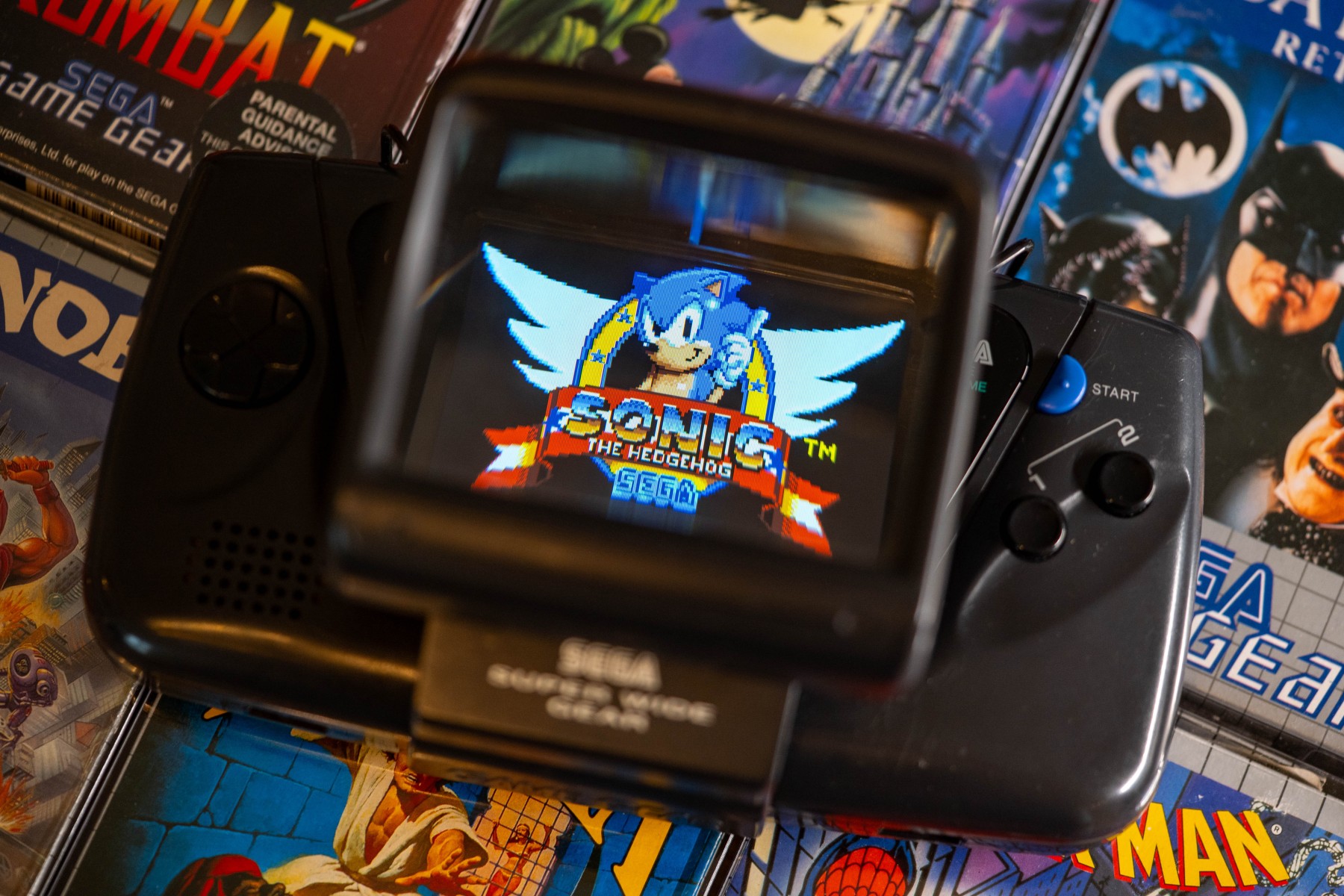
- Super Wide Gear. This was a clip-on screen magnifier lens that enlarged the Game Gear’s display. It folded over the screen like a big pair of glasses, making the 3.2-inch screen appear bigger (with some distortion). It was an answer to the Game Boy’s various magnifier/light accessories, and helped reduce eye strain for some players.
- Gear-to-Gear Cable. Also known as the Versus Cable (in Japan), this link cable allowed two Game Gears to connect for multiplayer action. Only certain games supported it (e.g. Columns, Puyo Puyo, and competitive titles like Mortal Kombat), but it was great for head-to-head gaming on the go, essentially Sega’s equivalent to the Game Boy Link Cable.
- Car Gear Adapter. A simple but useful accessory, the Car Gear was a 12V car cigarette lighter adapter. You could power your Game Gear from a car outlet, which was a lifesaver on long road trips. Considering the battery appetite, many kids found themselves gaming in the back seat with the Game Gear tethered to the family car’s dashboard.
- Master Gear Converter. This add-on let the Game Gear play full-size Master System cartridges. Since the Game Gear’s hardware was so close to the Sega Master System, this adapter bridged the gap, and amazingly, Master System games played quite well on the small screen. It opened up a larger library of games, from Phantasy Star to OutRun, increasing the Game Gear’s value for Sega fans.
- Battery Packs. As mentioned, Sega sold rechargeable battery packs to extend play. One version clipped onto the unit; another (“Power Back”) was a brick you could plug in. They added weight but were pretty much essential for any serious playtime away from an outlet .
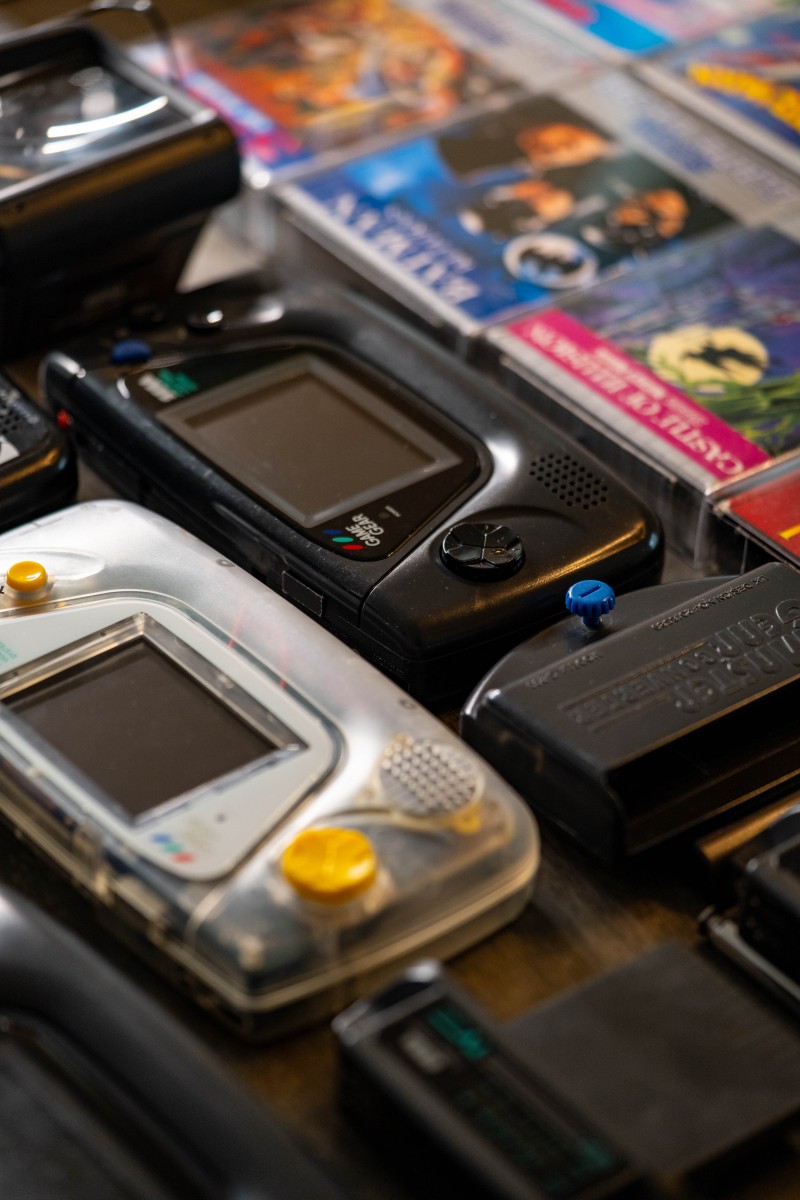
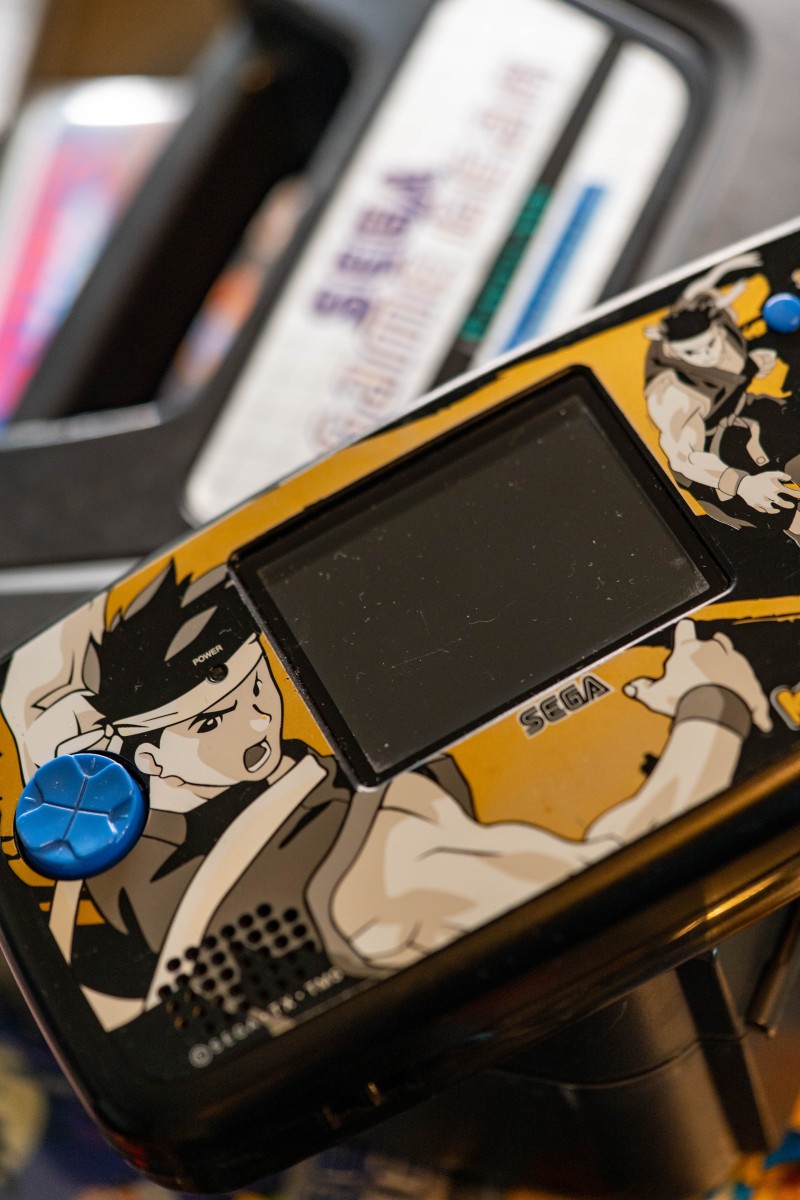
In addition to accessories, Sega and other companies released several hardware variants of the Game Gear. The standard unit was black/dark grey in most regions, but special editions included: a blue Game Gear (“Sports” edition) in North America (bundled with sports titles like World Series Baseball ’95), a light blue Game Gear, a red Coca-Cola branded Game Gear in Japan (a tie-in with the game Coca-Cola Kid), other red and yellow variants in Japan. A white Game Gear was released in a package with the TV Tuner and is quite rare today (also, my favourite, still looking for one).
Fast-forward to 2020, and Sega celebrated its 60th anniversary by releasing the Game Gear Micro in Japan, an absurdly tiny, keychain-sized Game Gear that actually plays games (each Micro model has four built-in games). It was more of a novelty collectible than a practical console, but it speaks to the Game Gear’s enduring charm that Sega revisited the concept decades later. The Micro even has a matching tiny “Big Window” magnifier, a cheeky nod to the original Super Wide Gear! I refused to buy them since I was hoping for a proper Game Gear mini console… I don’t think my protest reached SEGA’s ears though 🙂
Competitors: Game Boy, Atari Lynx, NEC TurboExpress (PC Engine GT)
When the Game Gear hit the scene in October 1990, its primary competition was the Nintendo Game Boy, which had launched in 1989 and was dominating the handheld market. There were also two other colour handheld consoles reaching for a piece of the pie: Atari’s Lynx (1989) and NEC’s TurboExpress / PC Engine GT (1990, essentially a portable TurboGrafx-16/PC Engine). Each system had its own strengths and weaknesses and the Game Gear found itself in the middle of a three-way technical battle, but a one-sided war in terms of sales.
Nintendo Game Boy
Launched in 1989, the Game Boy was simpler: no colour, no backlight. But that simplicity worked in its favour. It was compact, affordable, and could run for 30+ hours on four AAs. Sega marketed the Game Gear as the “cooler” and more advanced option, with a backlit colour screen and TV add-ons, even poking fun at Game Boy users in cheeky ads. Despite an early boost in sales, the Game Gear couldn’t match Nintendo’s unbeatable combination of battery life, price, and iconic franchises like Zelda and Pokémon and a much larger game library. By 1996, the Game Boy had sold tens of millions, while the Game Gear reached about 10 million units.
Atari Lynx
The Lynx beat Sega to the punch as the my first colour handheld (1989) and boasted impressive 16-bit (kinda) graphics and screen effects. However, it was large, expensive, and devoured batteries even faster than the Game Gear. Sega’s broader library and lower price gave it the edge, selling around 10 million units versus the Lynx’s 1–2 million, cementing Game Gear as the Game Boy’s main rival.
NEC TurboExpress (PC Engine GT)
Released in 1990, the TurboExpress was a technical marvel. A portable TurboGrafx-16/PC Engine with a sharp colour screen and full compatibility with home console games. Unfortunately, its $250 price tag, short battery life, and reliability issues limited its reach. Only about 1.5 million units were sold, making it a cult favourite rather than a mainstream success.
In summary, Sega’s Game Gear was the most successful Game Boy rival of its era, even if it ultimately couldn’t topple Nintendo. It struck a balance of price and performance that the smaller competitors couldn’t match. Players who owned a Game Gear often talk about how impressive it was to have a “Sega Genesis in your pocket” (not literally, but it felt that way at the time). The handheld wars of the early ’90s were the first real tests of portable gaming beyond Nintendo’s dominance, and the Game Gear’s legacy is forever tied to that fierce competition.
Cultural and market impact
Culturally, the Sega Game Gear earned a reputation as the “cool kid’s” handheld, aligning with Sega’s general marketing vibe in the 90s. Sega had cultivated an image of being edgy and aimed at a slightly older audience (think “Sega does what Nintendon’t!”). The Game Gear fit that mold, it was flashy, in colour, and had gadgets like the TV Tuner. Playground debates between Game Boy and Game Gear owners were common: one side boasting about color graphics and Sonic, the other retorting with battery life and Mario. In the UK and North America, Sega’s cheeky advertising made the Game Gear a part of pop culture, even if briefly: commercials with the iconic “SEGA!” scream and direct jabs at Nintendo made their rivalry easy to recognise.
The Game Gear also put pressure on the idea that a handheld had to be monochrome. Nintendo took a different route, improving the original design with the Pocket before adding the Japan-only Game Boy Light and then the Game Boy Color in 1998. That doesn’t prove a direct response to Sega, but it shows how much portable hardware changed during the decade.
For Sega, the Game Gear’s market impact had two sides. On one hand, it was the best-selling non-Nintendo handheld for nearly a decade, proving Sega’s brand power and giving them a foothold in the portable market. On the other hand, Sega’s attention to the Game Gear vanished as the 16-bit console wars heated up. By the mid-90s, Sega was juggling the Genesis, Sega CD, 32X, and Saturn, the poor Game Gear didn’t get much love in corporate strategy. As a result, many Game Gear owners felt the library started drying up in later years (especially outside of Japan, where fewer new titles were released after 1994).
Nonetheless, the Game Gear did have some exclusive hits and memorable games that impacted gamers. Titles like GG Shinobi, Defenders of Oasis (an RPG), Crystal Warriors, and Ax Battler provided unique experiences you couldn’t get on Game Boy. Sega and Disney also partnered for excellent 8-bit versions of Castle of Illusion and Land of Illusion on Game Gear. Sonic the Hedgehog on Game Gear (an original 8-bit version) was many kids’ first exposure to Sonic if they didn’t have a Genesis. These games contributed to the Game Gear’s fond legacy, a mix of Master System ports and exclusives that, for a time, made the Game Gear feel like a legitimate “portable arcade”.
Culturally, the Game Gear is remembered with a lot of nostalgia and a little bit of humour (yes, we all remember the battery jokes!). It’s frequently referenced in “remember the 90s” pop culture lists, and original units are a common sight in retro gaming collections. Sega may have lost the handheld war, but the Game Gear won a lasting place in the hearts of those who grew up with it.
Modern Mods and fan community efforts
In the decades since the Game Gear was discontinued, a passionate fan community has kept the console alive and kicking. In fact, the Game Gear has experienced a renaissance among retro gamers and modders, who see it as a fun system to refurbish and upgrade. One of the first issues tackled by the community was the notorious capacitor failures due to aging components, many Game Gear units from the 90s eventually suffered dim sound or no power. Hobbyists developed recap kits to replace all the old capacitors, often bringing dead Game Gears back to life. Installing a recap kit (and occasionally replacing the sound amplifier chip) is now almost a rite of passage for Game Gear enthusiasts.
The most popular modern upgrade is undoubtedly the LCD screen mod. New TFT or IPS screens have been developed to replace the original blurry backlit LCD. For example, the McWill LCD mod and others like it allow a Game Gear to output a crisp, bright image (often with VGA or TV-out capabilities as well). These modern screens draw far less power, massively improving battery life. With an updated screen, the Game Gear’s graphics truly shine, no more motion blur or washing out, just vibrant pixel art, fulfilling the promise it had back in 1990 but with today’s tech.
Beyond screens, the community has created new custom shells, buttons, and even FPGA-based boards to modernize the Game Gear. It’s possible in 2025 to build a kind of “ultimate Game Gear”: original shell (or a new custom-painted one), modern LCD, USB-rechargeable lithium battery pack, even flash cartridges like the EverDrive GG to hold the entire library in one cart. Enthusiasts have also taken to 3D printing accessories that are hard to find now, or consolizing the Game Gear to play on a TV.
There are even extreme projects like one modder’s “Game Gear Classic Edition” using a Raspberry Pi and a Game Gear shell to emulate games and pack hundreds of titles into a portable device. The creativity and dedication of the community is remarkable. Even if at some point it’s not a Game Gear anymore… just like a pizza is pizza no more with a pineapple on top of it.
On the software side, fans have engaged in translating and hacking Game Gear games to give them new life. Many Game Gear titles were Japan-only, and groups of ROM hackers have worked on English fan translations. For instance, the JRPG Eternal Legend (1991) received a full English fan translation patch in 2020, finally making this early Game Gear RPG accessible to a wider audience. Other projects have translated titles like Ninku and Sakura Wars spin-offs on the handheld. Homebrew developers have also created new games and demos for the Game Gear in recent years, keeping the software library growing slowly but surely.
The Game Gear community today is a subset of the retro gaming scene that is incredibly active on forums, Discord, and social media, where people share their latest backlight mod or show off a recapped board. Sega itself has acknowledged the enduring fandom by including Game Gear titles in compilations and digital releases (for example, Game Gear games were released on the Nintendo 3DS Virtual Console, and Sonic Triple Trouble got a reimagined fan-made PC version). It’s a great time to be a Game Gear fan, the 35th anniversary is not just a moment to look back, but to appreciate how far we’ve come in making these old handhelds better than ever.
Personal anecdotes
As a lifelong Sega fan, I can hardly believe it’s been 35 years since the Game Gear first hit store shelves. Thinking back to the early ’90s, I remember how mind-blowing it was to see a portable console with a colour screen. The first time I held that Game Gear, it felt like holding the future. We crowded around it on the school bus to marvel at Sonic the Hedgehog running in full colour in the palm of someone’s hand. It’s one of those gaming memories that stays with you, a true “Wow!” moment for a kid in the 90s.
When I finally got a Game Gear of my own. I had sold my Game Boy and games to finance it (I often did that, also with home consoles) and I was over the moon. The Game Gear was also my little nighttime companion, unlike my Game Boy I didn’t need to sit under a lamp or fiddle with a light attachment, I could play in total darkness under my blanket because of that magical backlight. The battery life was the Game Gear’s only real party pooper, which is why that AC adapter got so much use in my house. I basically had a wall socket designated for Game Gear sessions.
One of my fondest memories is actually using the TV Tuner. I could watch Saturday morning cartoons on my Game Gear, I felt like I was living in the future. I’d carry it around the house, watching cartoons on the very device that played Sonic games… it doesn’t get more cool to a ten-year-old than that! Of course, the novelty was greater than the practicality; the reception was finicky and the tuner sucked down even more power. Still, that blend of technologies, gaming and TV in one, blew my young mind.
Fast forward to today, I don’t have my original Game Gear but I bought a few versions. Mostly, they have been repaired and modded so that they work like a dream: recapped (this is really a must) and with a modern LCD. Occasionally, I’ll pop in Mortal Kombat or GG Shinobi and relive those moments and it’s amazing how the muscle memory and excitement come right back. There’s a real, palpable nostalgia every time that power light glows red and the Sega logo appears in full colour.
In reflecting on 35 years of the Sega Game Gear, I feel a mix of joy and wistfulness. Joy, because the Game Gear gave me and many others so much happiness and a lot of cool “firsts” (my first colour handheld, first portable TV experience, first time playing console-quality games on the go). Wistfulness, because it represents a bygone era of Sega hardware brilliance that we just don’t see anymore. The Game Gear tried so hard to push the envelope and even though it didn’t “win” the war, it gave us some incredible gaming memories.
🔴🟢🔵 Happy 35th Anniversary, Game Gear… you were truly ahead of your time in more ways than one and your legacy lives on every time we pop in a Game Gear cartridge and flick that power switch. Here’s to the colour, the fun, and even the batteries. We wouldn’t change a thing about our Game Gear memories.
Stay curious. Stay nostalgic.
Because retro never dies, it just respawns.

Leave a Reply