

Sega once put a Mega Drive on an aeroplane.
It’s called the Mega Jet, and it’s one of the oddest pieces of hardware in my collection. In 1993 Japan Airlines introduced it on selected flights: a full Mega Drive squeezed into a chunky controller, with no screen and no battery, because it plugged straight into the seat’s monitor.
When Sega put it in Japanese shops in 1994, it became something even stranger: a “portable” console that needs a TV and a wall socket. Mine is complete in its box, and I still smile every time I read the specifications on the back.
Then Sega finished the thought
Two years later, in America, the idea grew a screen. The Genesis Nomad, 1995, released in North America. Same concept as the Mega Jet, but self-contained: a small colour screen, six buttons, a full-size cartridge slot on the back, and an A/V output to play on the TV at home.
A handheld that plays the home console’s cartridges and connects to your television. Sound familiar? The resemblance to the Nintendo Switch is hard to miss. Sega tried that combination in 1995, but the Nomad had a limited release and an appetite for AA batteries that made taking it out a commitment.
Quackshot, on the small screen
For the short I filmed, I loaded Quackshot on the Nomad. 1991, Donald Duck with a plunger gun, and for my money still one of the best Disney games Sega ever made.
Seeing it run on that little screen felt right in a way that’s hard to explain. A game I knew from long Mega Drive afternoons, portable at last, 30 years too late and exactly on time.
A story for another day
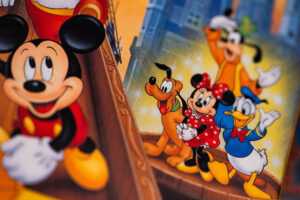
QuackShot on that screen was a deliberate choice. Those Sega Disney games defined so many of my Mega Drive afternoons. I’ve written more about them in Mickey and Donald’s 16-bit years; this short is a small glimpse of that bigger story.
Stay curious. Stay nostalgic.
Because retro never dies, it just respawns.

Leave a Reply