

In 2002, during my second trip to Japan, I walked into Tokyo Disneyland and recognised it. I’d been there before, ten years earlier, on a Sega Mega Drive and Super Nintendo.
That feeling is what this article is about. Between 1990 and 1995, Disney’s classic characters, Mickey, Donald, Goofy and friends, starred in a run of 16-bit games that were as good as anything on the Mega Drive and the Super Nintendo. Disney was living its Renaissance at the cinema in those same years. Those console games are the part of that period I keep returning to.
A quick note on scope: I’m covering 16-bit console games with the classic characters only. No 8-bit titles (so no DuckTales), no Game Boy, no film tie-ins like Aladdin. And no minigame collections, which is why Mickey’s Ultimate Challenge didn’t make the cut.

The animated-movie structure
These games share something I’ve always loved. They open with a prologue that tells you why our hero ended up in this mess, your playtime is the story in development, and if you finish, there’s a proper conclusion with “The End” on the last frame. Like a proper movie.
The setups are gloriously thin. Minnie was kidnapped. There’s a treasure to find. Where is Pluto? I fell asleep reading a book. It works. You don’t need more than that to get started. The real value is the journey.
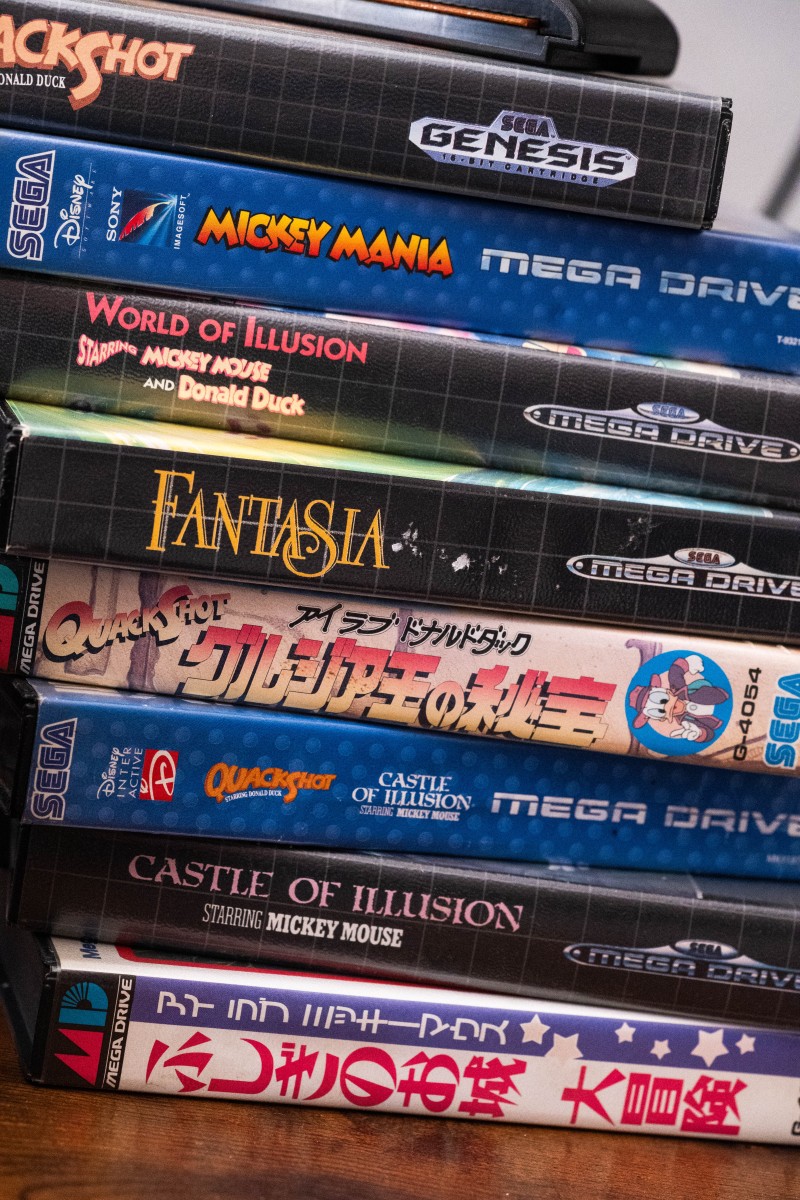
Castle of Illusion (1990)
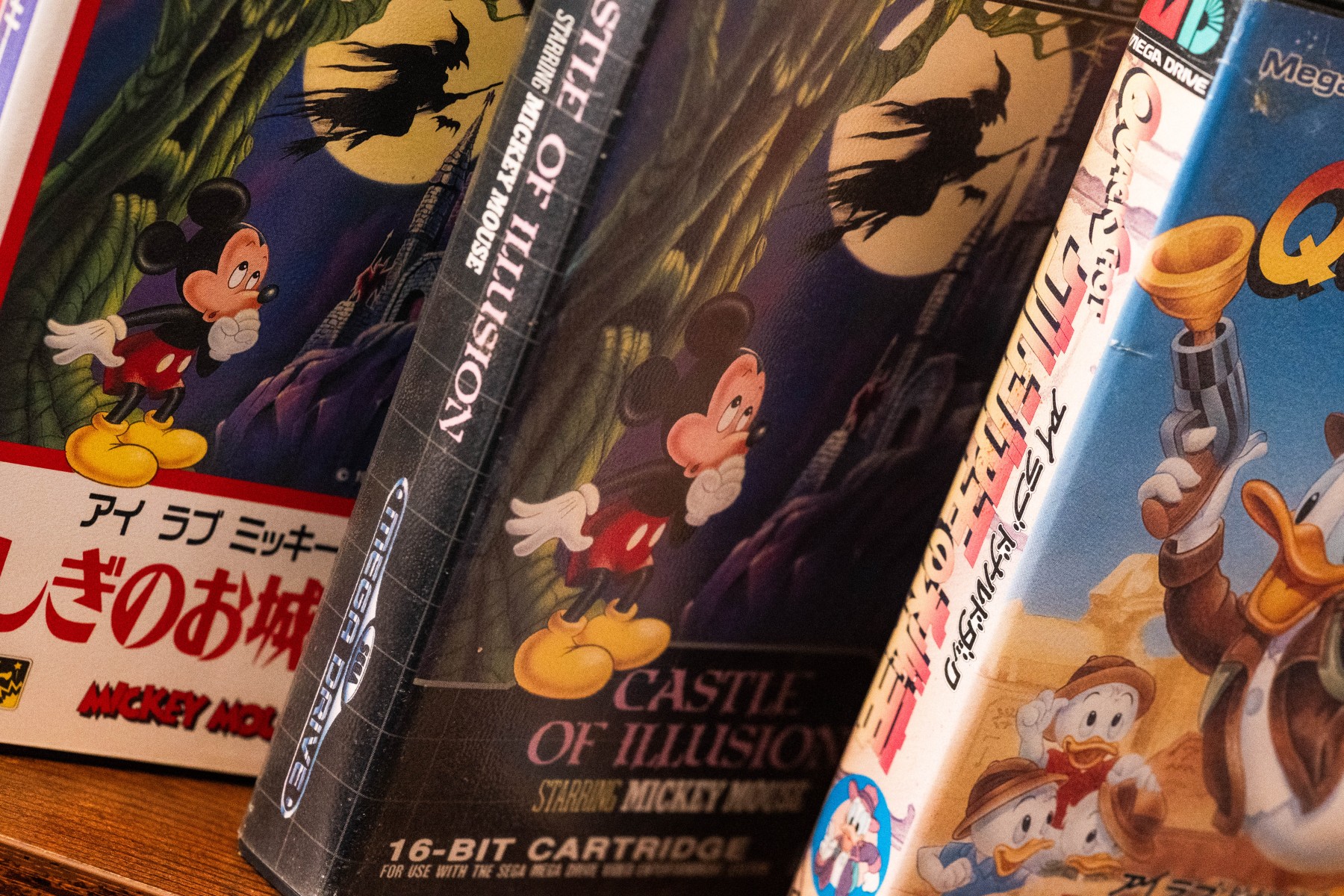
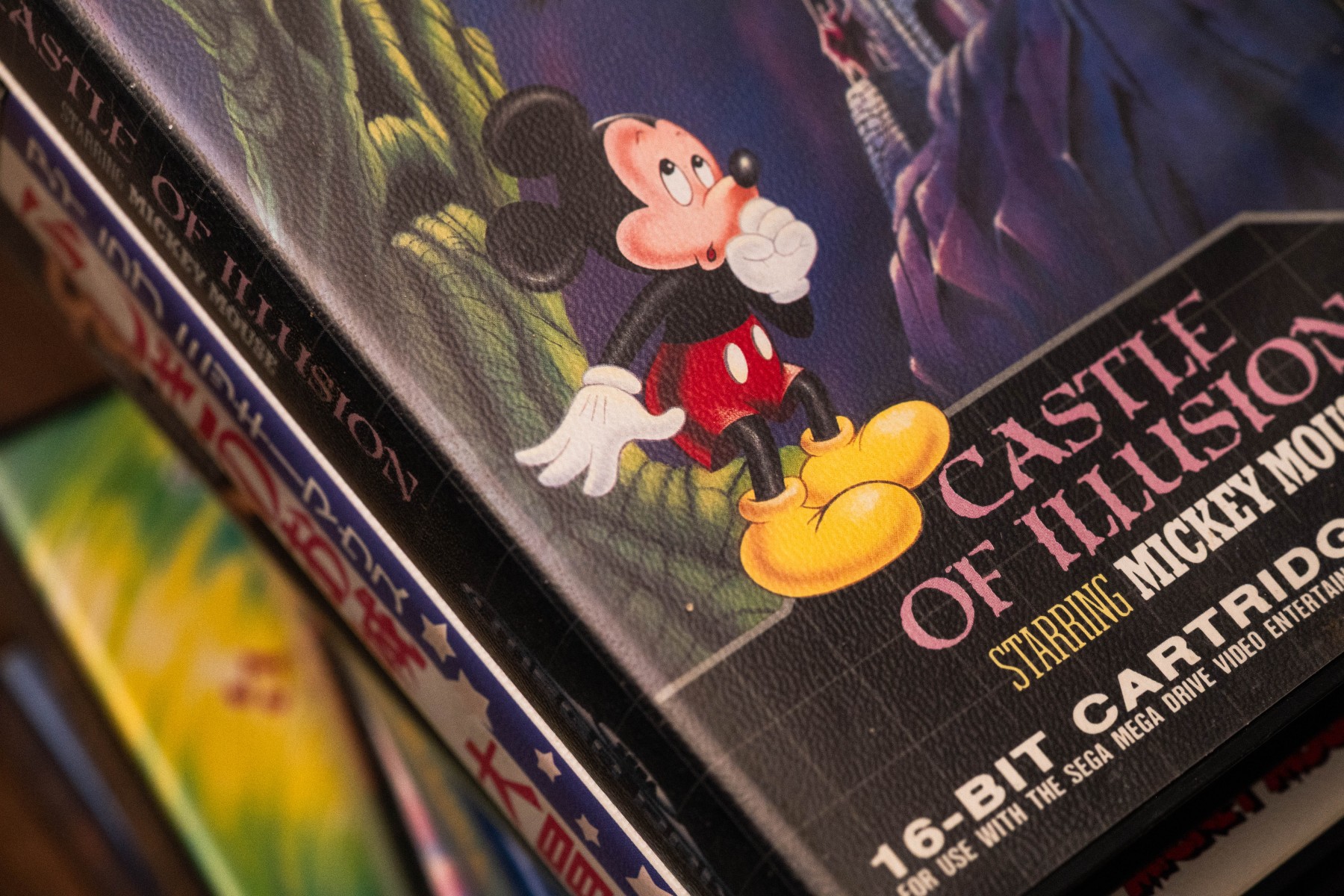
It starts here. November 1990, Sega puts Mickey on the Mega Drive and proves a licensed character can carry a first-class platformer. In Japan it was called “I Love Mickey Mouse”, and it kicked off the whole Illusion series.
Confession: I think the Master System version is better. That’s the one I had as a kid, and it’s not a cut-down port. Sega built the 8-bit version as its own game, with different level layouts and its own ideas. Nostalgia may play a role. I stand by it anyway.
My favourite detail: the HUD doesn’t say “lives”, it says “tries”. Disney supervised the development closely and decided Mickey could not die. So he doesn’t lose a life, he gets back up and tries again.
It’s a short game, and brutal in that specific early-90s way: tiny cartridges meant difficulty was the mechanism that stretched 45 minutes of content into a month of attempts. We all grew up repeating the same level because we didn’t jump in the right nanosecond. We’re still paying for the therapy.
Sega loved this one enough to rebuild it in 2013 with Sega Studios Australia: new 2.5D graphics, full narration, familiar settings rebuilt with new layouts.
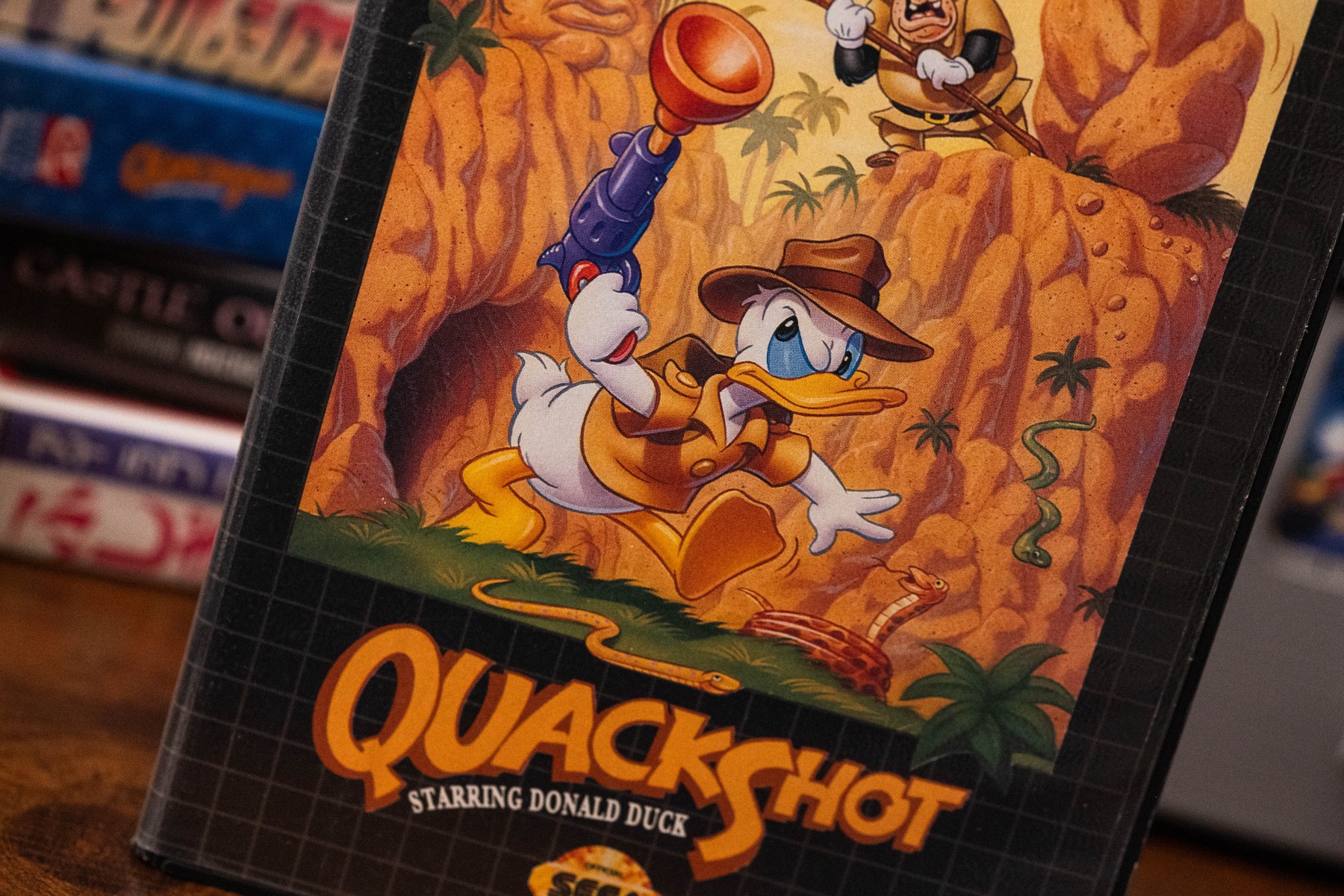
QuackShot (1991)
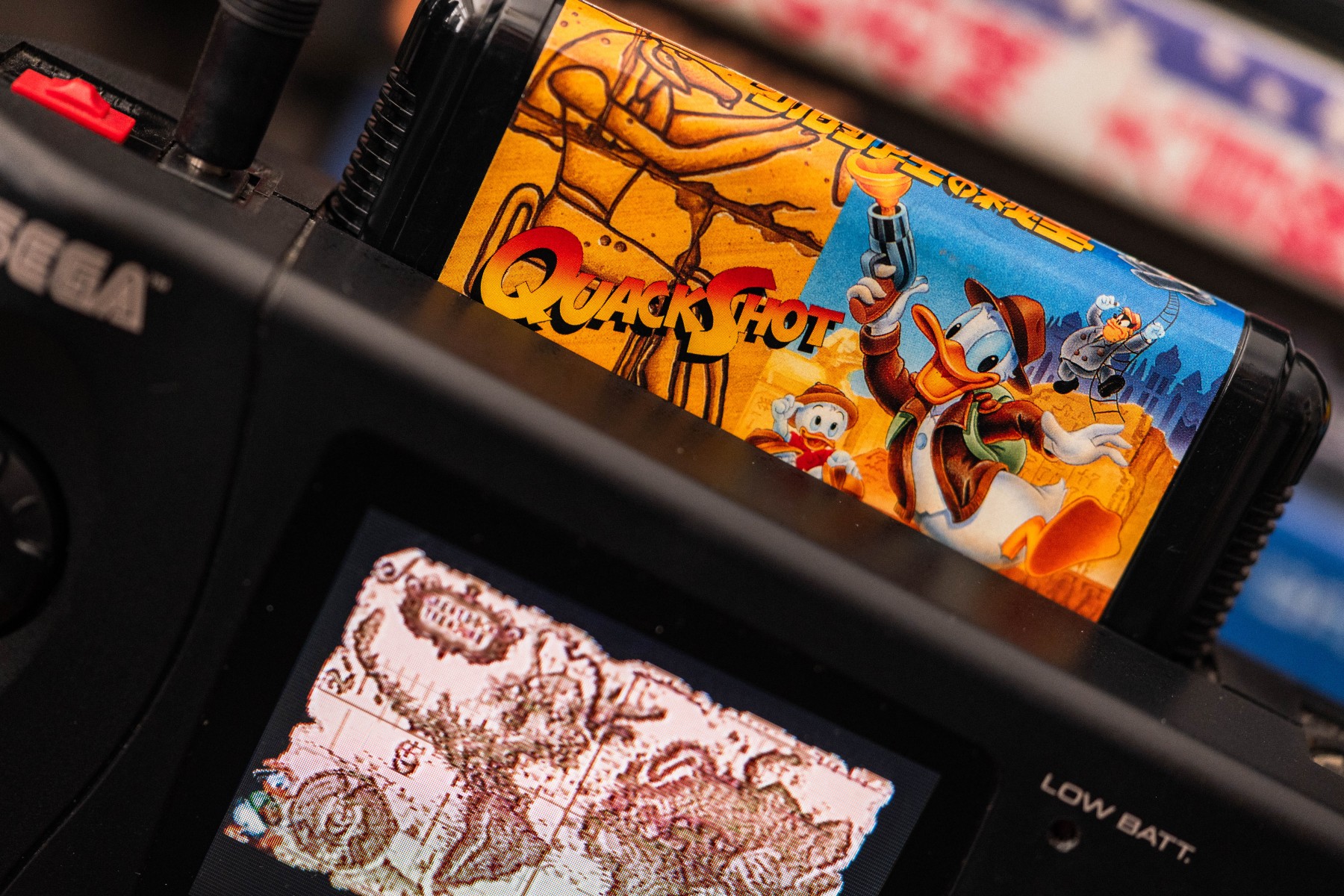
December 1991, “I Love Donald Duck” in Japan, made by the same in-house Sega team as Castle of Illusion, with a similar feel. It shows: some enemy designs, like the bat, are nearly identical between the two games.
This one is a gem, and my personal favourite of the whole era. Donald as a treasure hunter, part Indiana Jones, part duck, armed with a plunger gun. You pick destinations off a world map, Duckburg to Transylvania to a lost Viking ship, and you go back and forth unlocking areas with items found elsewhere. A simple loop, but in 1991 it broke the linear mould of the genre.
The Indiana Jones influence isn’t hiding. There’s a diary that points to the treasure, exactly like Henry Jones Senior’s in The Last Crusade, and right before the final boss you get an almost shot-for-shot Leap of Faith: step onto nothing, and the path appears once you commit.
And the music. Every level has its own track and every track is a hit, with a soundtrack I enjoy as much as Castle of Illusion’s. Both games were later bundled together in a Mega Drive compilation, and in a Saturn one released only in Japan.
The Magical Quest (1992)
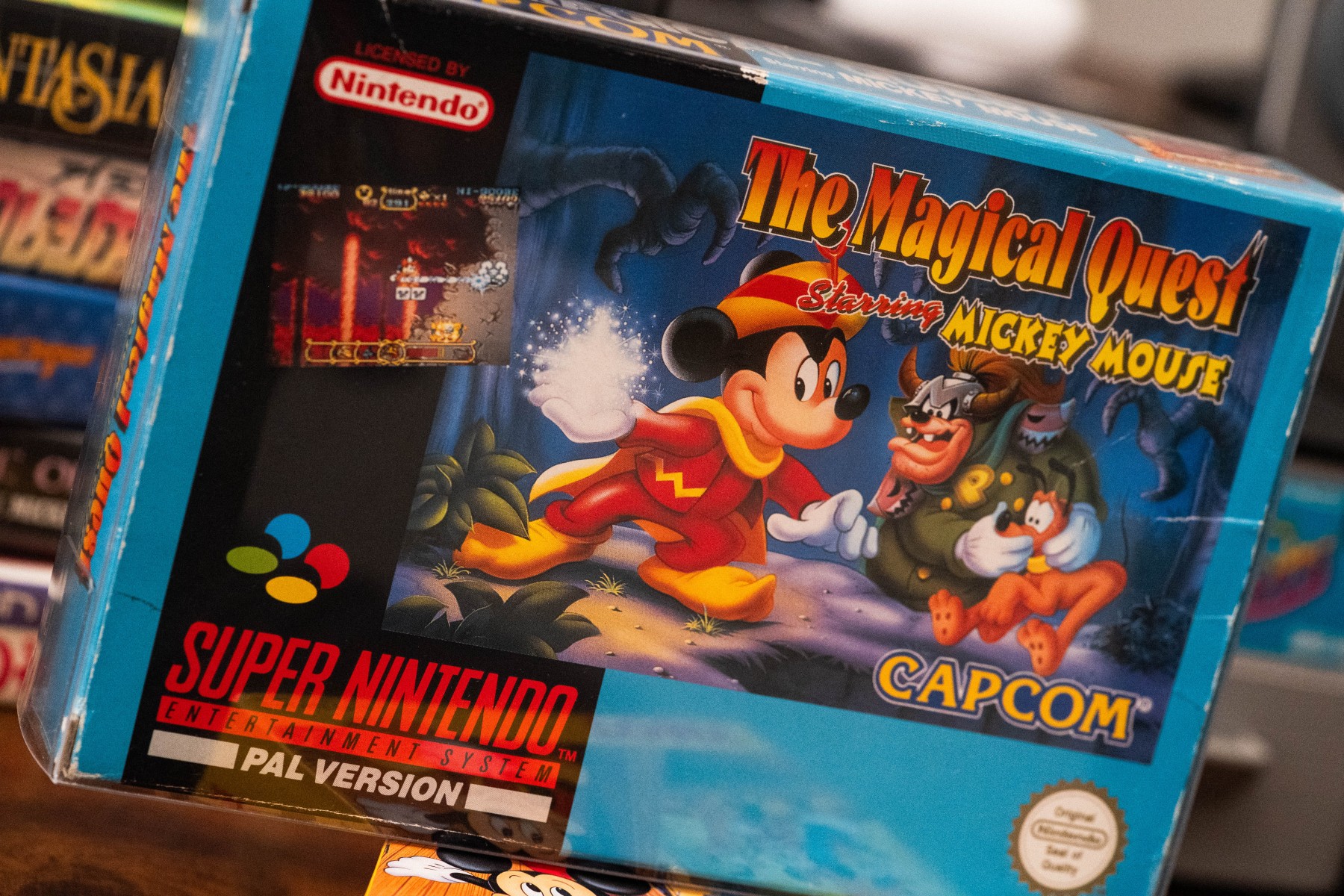
Capcom’s answer, November 1992 on the SNES. I had it during my Super Nintendo period between late ’92 and ’93, and it gave me the same feelings QuackShot had given me on the Mega Drive. The game feels like a dream, and the costume system was the invention: wizard, firefighter, mountain climber, each one changing the rules.
The music is by Mari Yamaguchi, known inside Capcom for Super Ghouls ‘n Ghosts. And here’s a piece of history most people don’t know: after the SNES success, Capcom started a Mega Drive port. Footage was shown at the Winter CES in January 1994. Then the project was quietly abandoned, and Sega owners only ever met this series through its sequel.
The follow-ups: good games, same formula
What came next was a wave of titles that were mostly good and rarely surprising.
Fantasia (1991) is the cautionary tale. After Castle of Illusion I bought it full of confidence, and it was a disappointment: imprecise controls, rough where Castle felt right. Sega had outsourced it to Infogrames and rushed it for the film’s anniversary. The magazines of the time agreed with my nine-year-old self almost word for word.
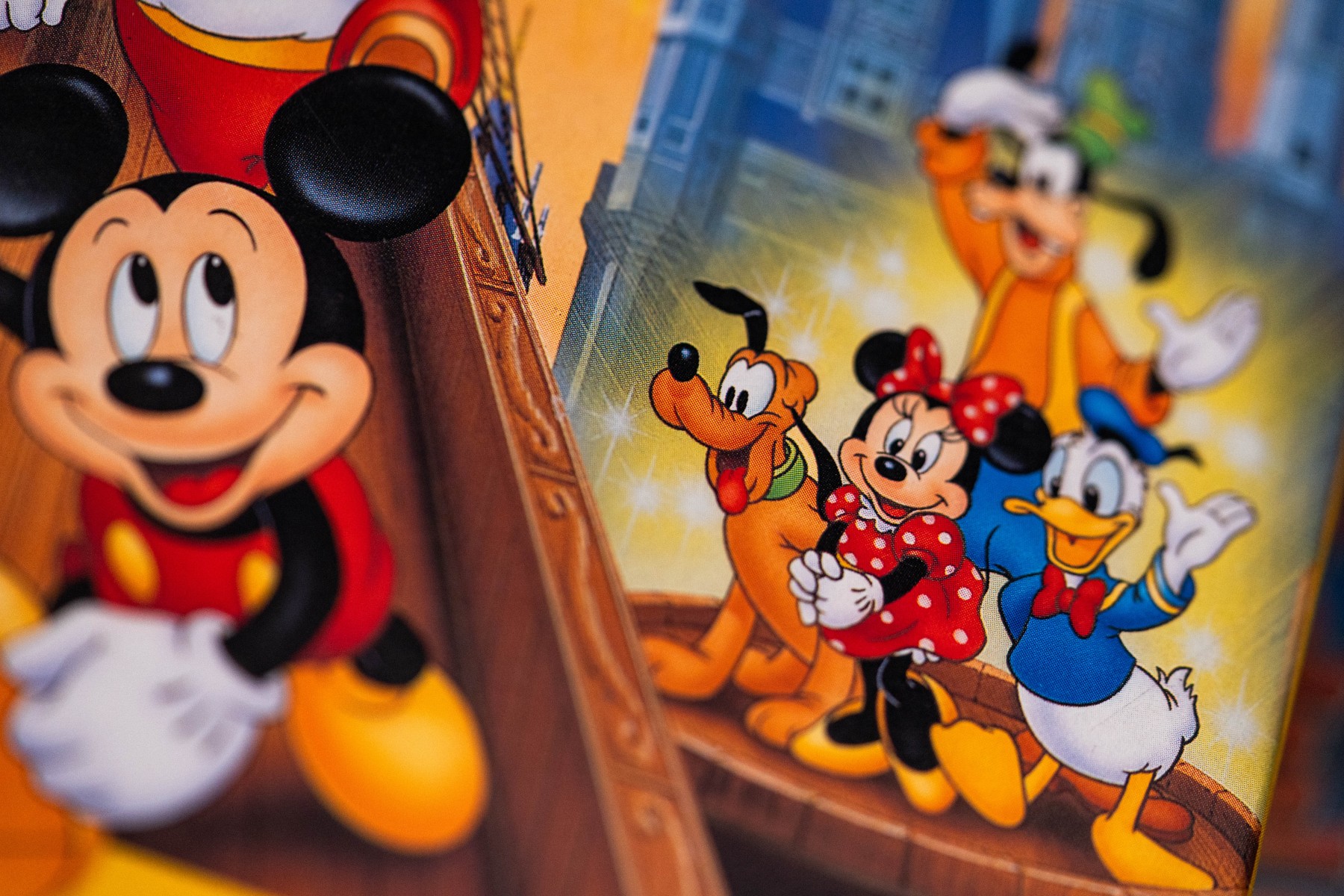
World of Illusion (1992) put Mickey and Donald together, two players, one controller each, with routes that only open for one character. Gorgeous, and essentially Castle again with more of everything.
Mickey Mania (1994), by a young Traveller’s Tales, is a tour through Mickey’s own filmography: its levels revisit cartoons beginning with Steamboat Willie (1928). One of its designers was a debut kid named David Jaffe, later the creator of God of War. The Sega CD version has its own score, voice acting and an extra final sequence, worth tracking down.
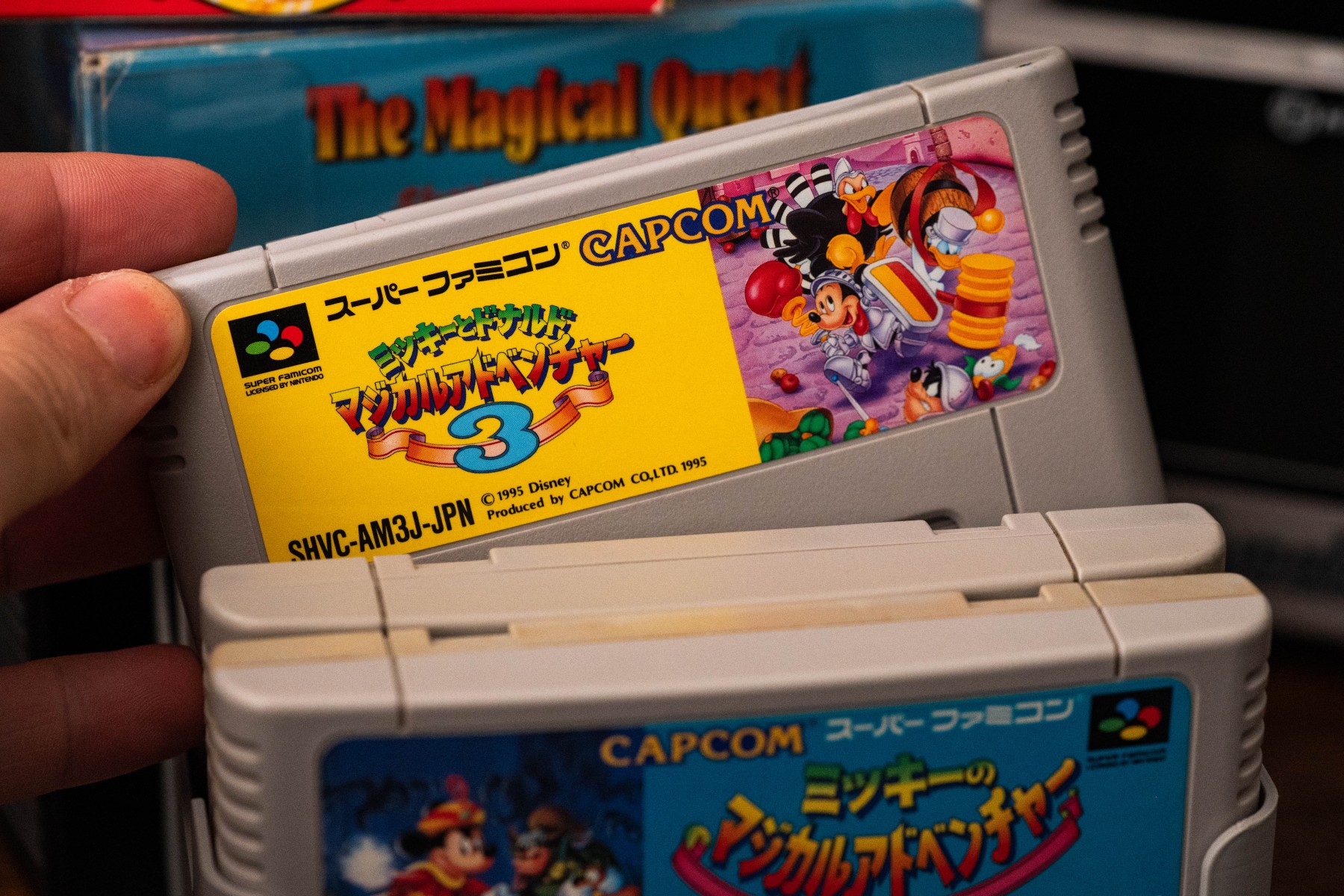
The Great Circus Mystery (1994) is Magical Quest 2 in all but name, released simultaneously on SNES and Mega Drive, where Capcom quietly dropped the “Magical Quest” subtitle since that console never got the first game. Magical Quest 3 (1995, Super Famicom only) is the one that actually tried something new: Mickey and Donald get separate costume sets designed to combine. Donald’s barrel floats, Mickey’s armour sinks, so Mickey crosses the lake standing on Donald’s head. The rest of the world waited ten years for the GBA port.
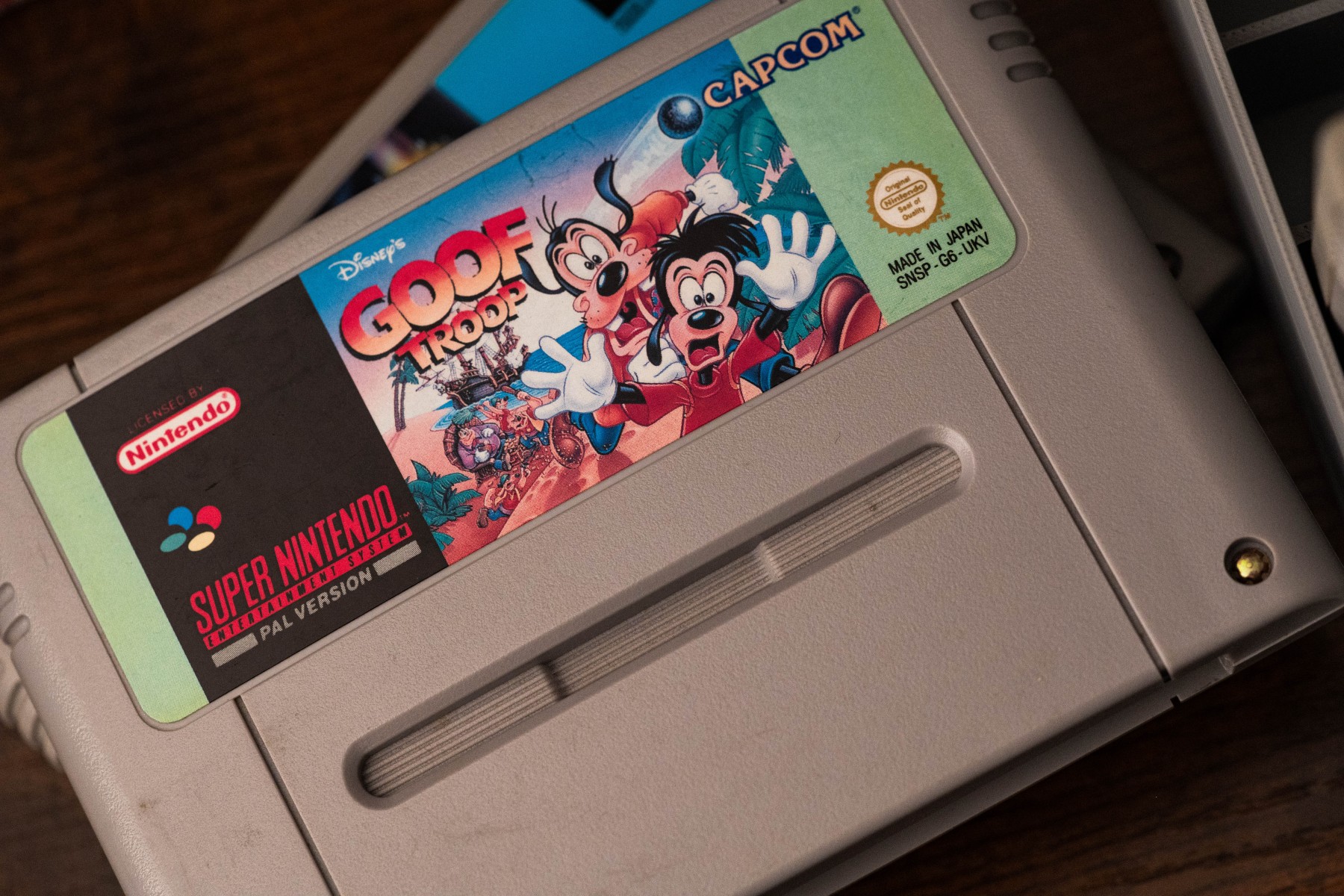
Goof Troop (1993) barely belongs here, and that’s why I love it: The Legend of Zelda minus the weapons plus a second player. It’s an early Shinji Mikami game, three years before Resident Evil. Its room-by-room puzzles make the later connection tempting to see. On a Goofy game.
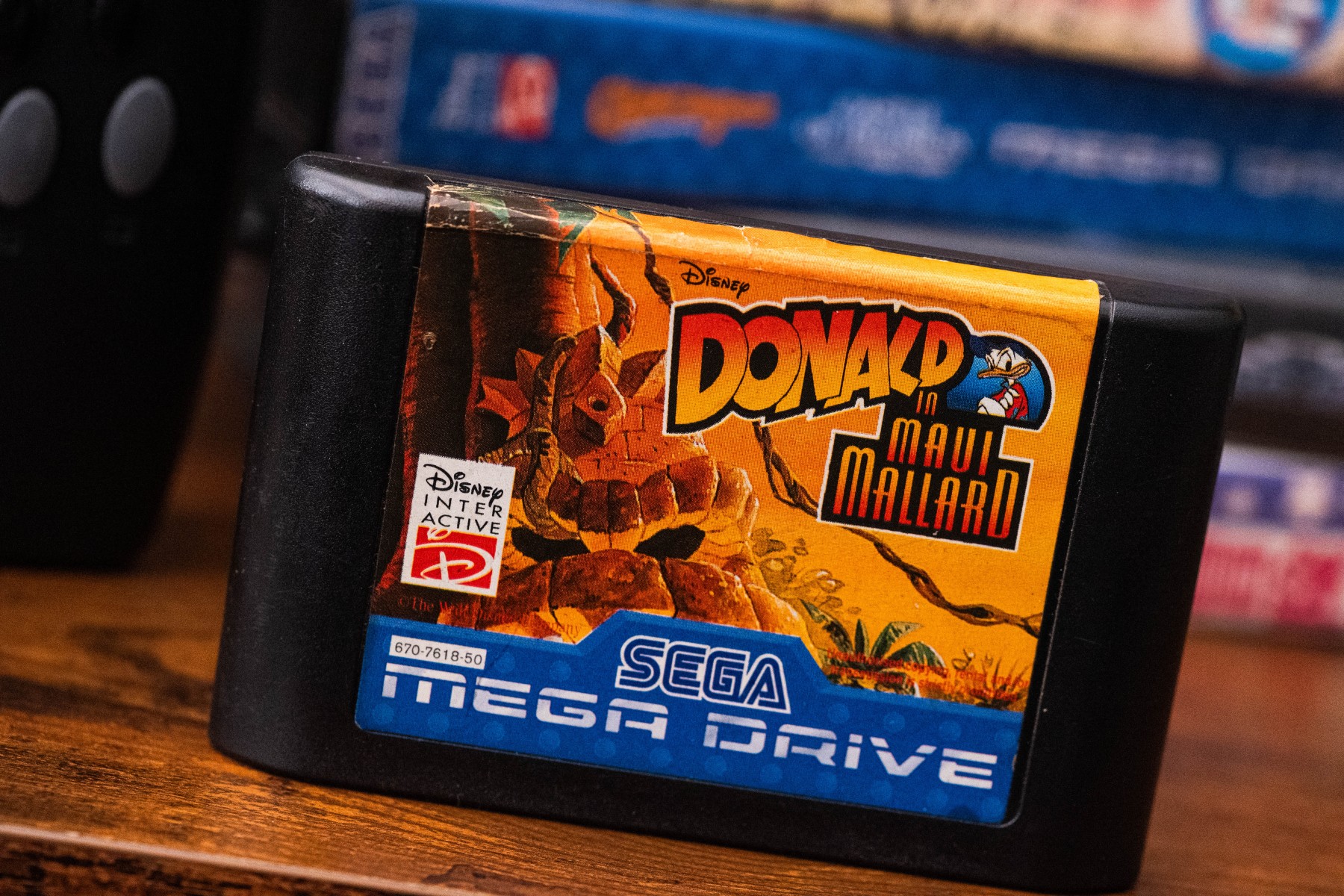
Maui Mallard in Cold Shadow (1995): Donald as a ninja detective in a noir mystery, patterned on Magnum P.I. Good game, terrible timing, and a marketing choice that, for some releases, dropped Donald’s name from the title. On the Mega Drive it only came out in Europe and Brazil, which makes the PAL cartridge the original release for once.
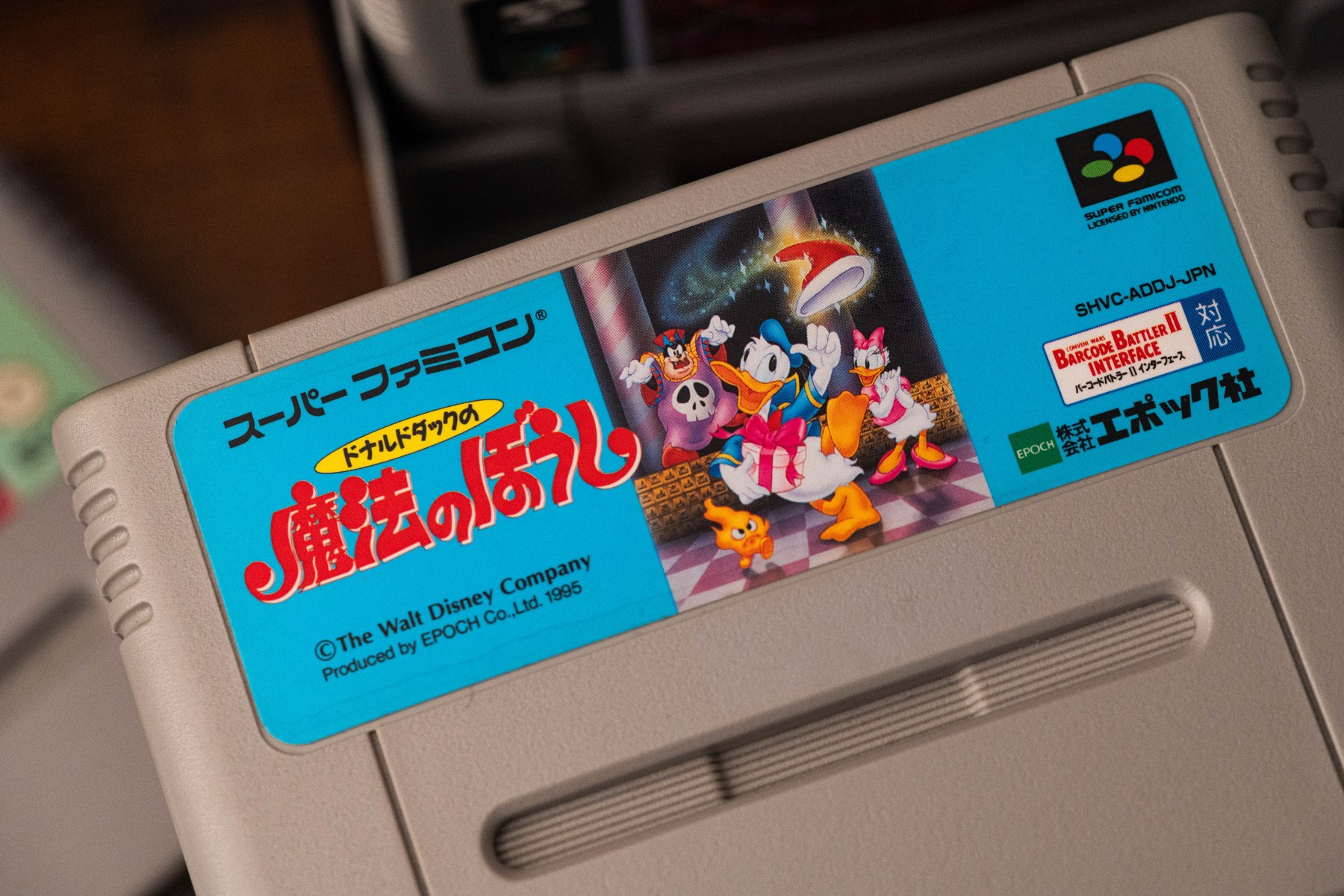
And Donald Duck no Mahou no Boushi (1995, Japan only, by Epoch), the strangest of all: with the right adapter it connected to Epoch’s Barcode Battler, so you could scan barcodes into the Super Famicom to unlock extra content. Peak Japan.
Tokyo, 2002
By the end of 1995 the era was over. It lasted about five years.
Which brings me back to that day in Tokyo. Standing in the park, ten years after those games, felt like seeing those worlds in real life. I felt something similar in 2024 walking into Super Nintendo World in Osaka.
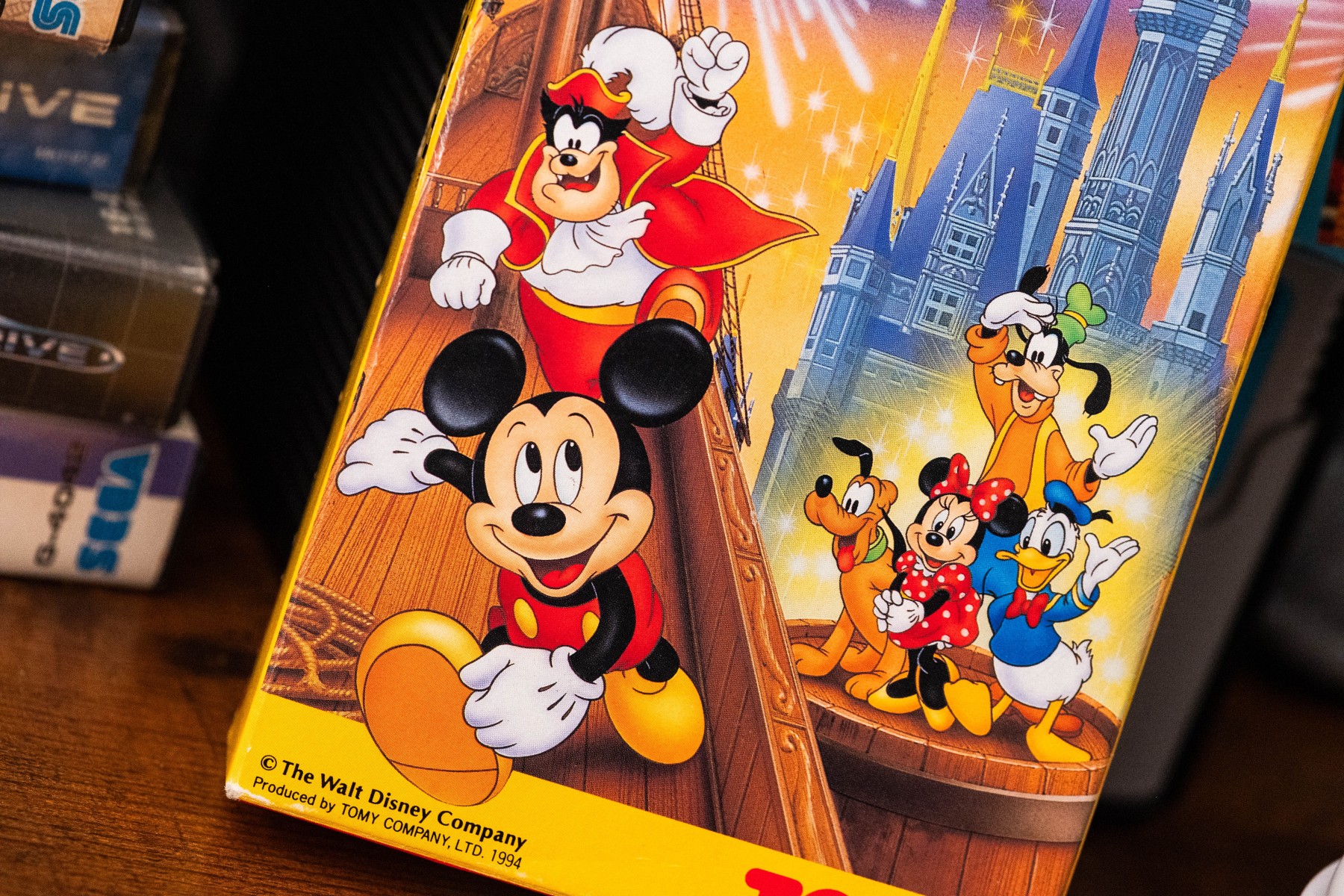
There’s a game set inside that exact park: Mickey no Tokyo Disneyland Daibouken, made by Tomy in December 1994, Japan only. You walk Mickey through the park’s real areas and attractions, armed with water and helium balloons, chasing Pete through a place I’ve queued in. It was the last game missing from my collection, and playing it now, with the memory of the real park in my head, closes a circle I didn’t know I’d started as a kid.
Back then, Disney felt like an artisan workshop building worlds of dream for children, and not only for them. These games are what that workshop did with 16 bits.
Which one was yours? Tell me in the comments, or come find me on the socials.
Watch the full video on the RetroAffaire YouTube channel.
Stay curious. Stay nostalgic.
Because retro never dies, it just respawns.


Leave a Reply