

This second part is about the Game Boy games I played and the ones I found later. Part I covers the handheld itself. Here I’m also looking at the Super Game Boy and its Japanese successor: two ways of bringing those little cartridges onto a television.
These aren’t full retrospectives of every game, but a curated slice of what made the Game Boy special, personal, nostalgic, and surprisingly ambitious for its era.

If you haven’t, you can watch the first part of the video here, about the Game Boy itself.
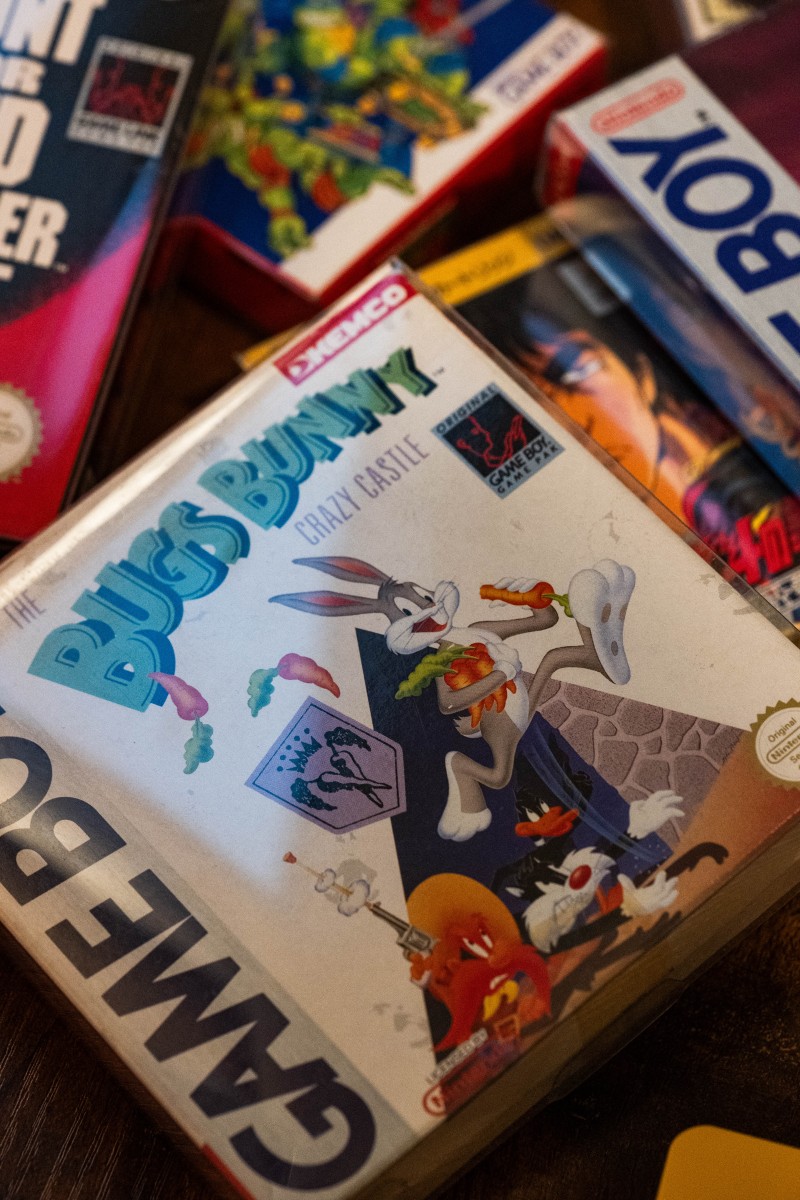
Bugs Bunny Crazy Castle
This was one of my first games for the Game Boy back in the day… I played it a lot. Released in 1989, this early Game Boy title combined puzzle-solving with platforming. Playing as Bugs Bunny, you navigate a maze-like castle collecting carrots while avoiding classic Looney Tunes enemies like Daffy Duck and Yosemite Sam. The gameplay is more strategic than it first appears, with a slower pace and no jump mechanic, which forced players to think ahead. Simple, addictive, and surprisingly challenging.
Though simple, Crazy Castle stood out on Game Boy for its strategic design. You use wits and the occasional ACME-style weapon – boxing gloves, safes, flower pots – to outsmart enemies. With 80 stages (20 more than its NES counterpart), it offered substantial content without needing a cartridge save (a handy password system let players resume progress).
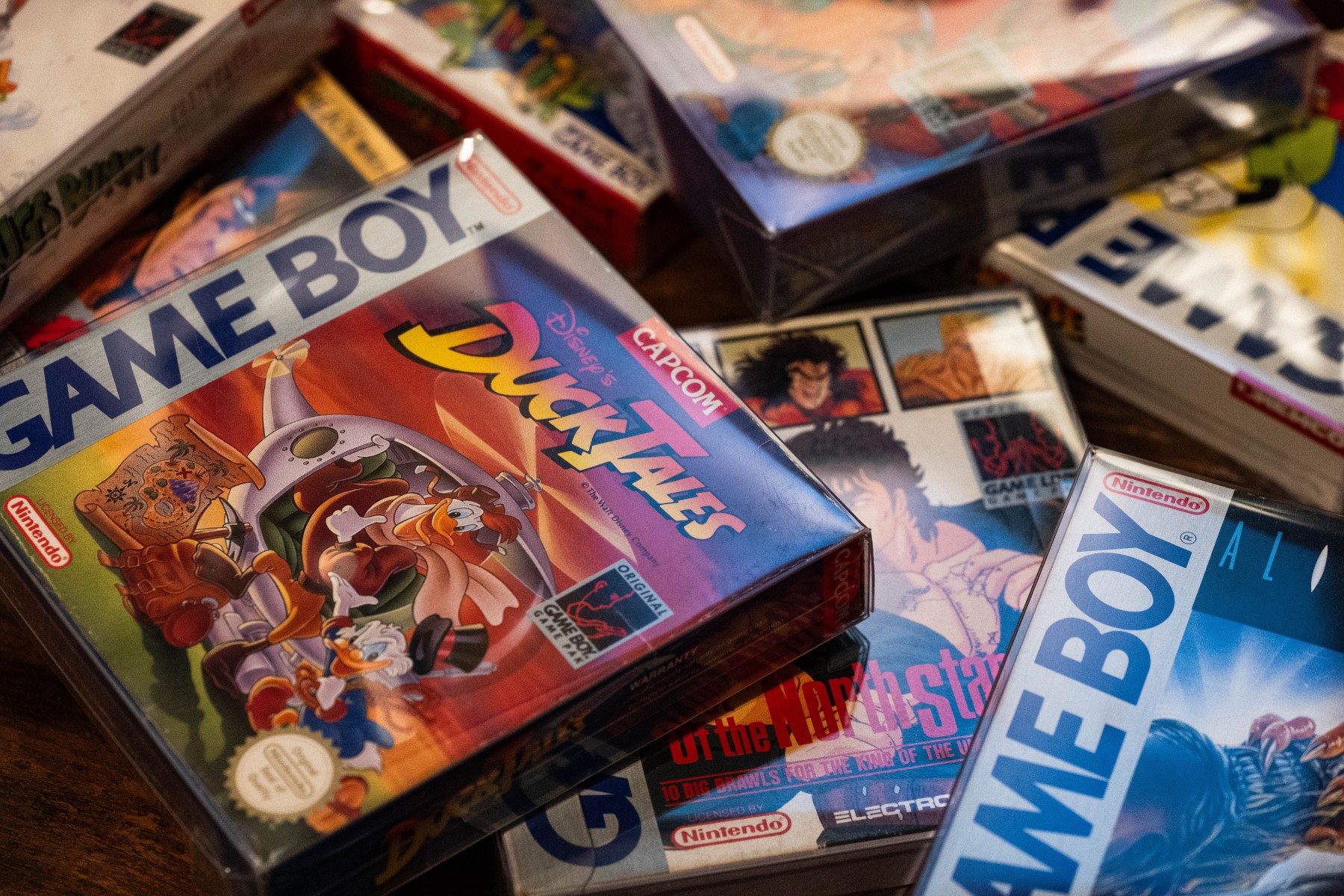
DuckTales
Capcom’s Game Boy version of the beloved NES platformer kept the essence of the original intact. With vibrant levels, responsive controls, and Scrooge McDuck’s iconic pogo-cane mechanics, this portable version stood out for its impressive music and fast-paced action. Though the screen size trimmed some elements, it retained the tight gameplay and remains one of the system’s most charming licensed titles.
What made DuckTales stand out on Game Boy was its polished feel. The controls were tight and responsive, and the level design, with hidden gems and tricky bits like the Moon’s setting, felt ambitious for a handheld title.
Fist of the North Star (Hokuto no Ken)
Fist of the North Star is a one-on-one fighting game, rather than a scrolling adventure. The English title also appeared outside Japan. Kenshiro and the other fighters have been squeezed onto a monochrome, two-button handheld; it’s a rough little fight, but an interesting part of this collection.
It was also one of the first Fist of the North Star games many Western players ever saw (since the series was still niche outside Japan, except for Italy and a few other European countries). While Fist of the North Star on the Game Boy is admittedly primitive compared to later fighters, it earned a small footnote in history for proving that even a monochrome, two-button device could host a head-to-head brawl.
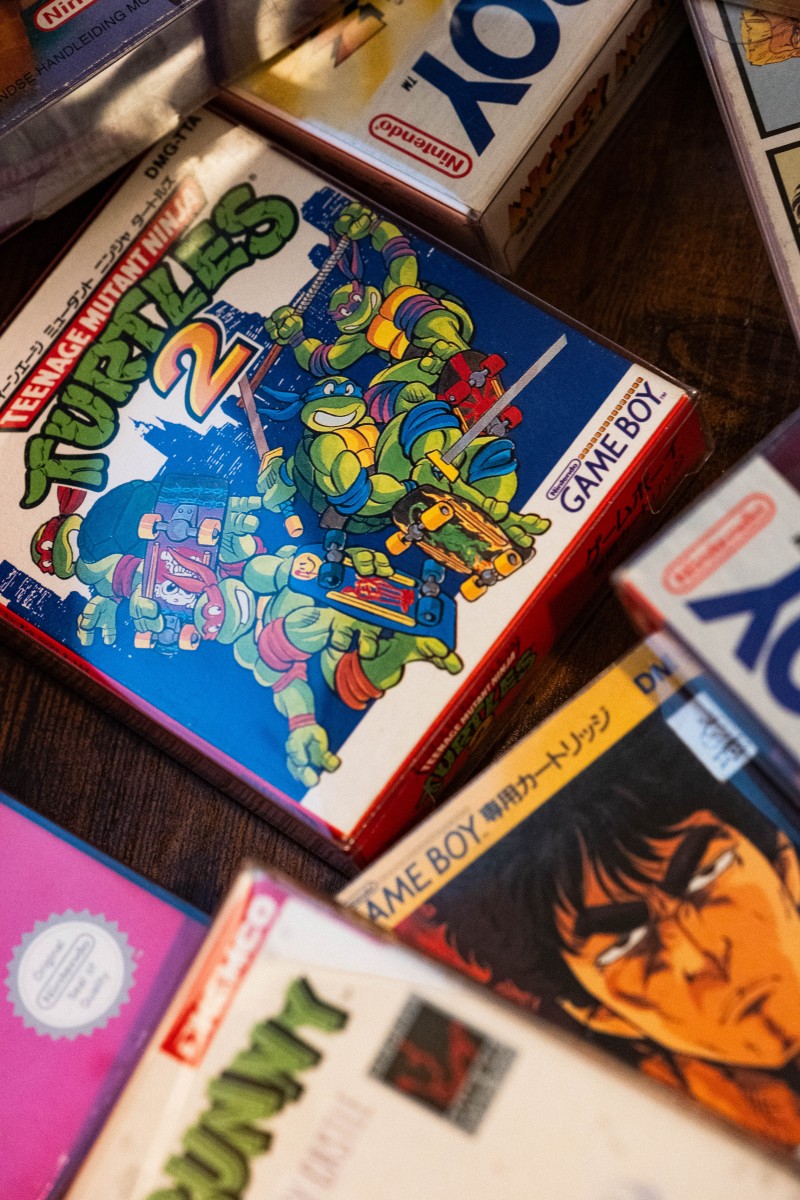
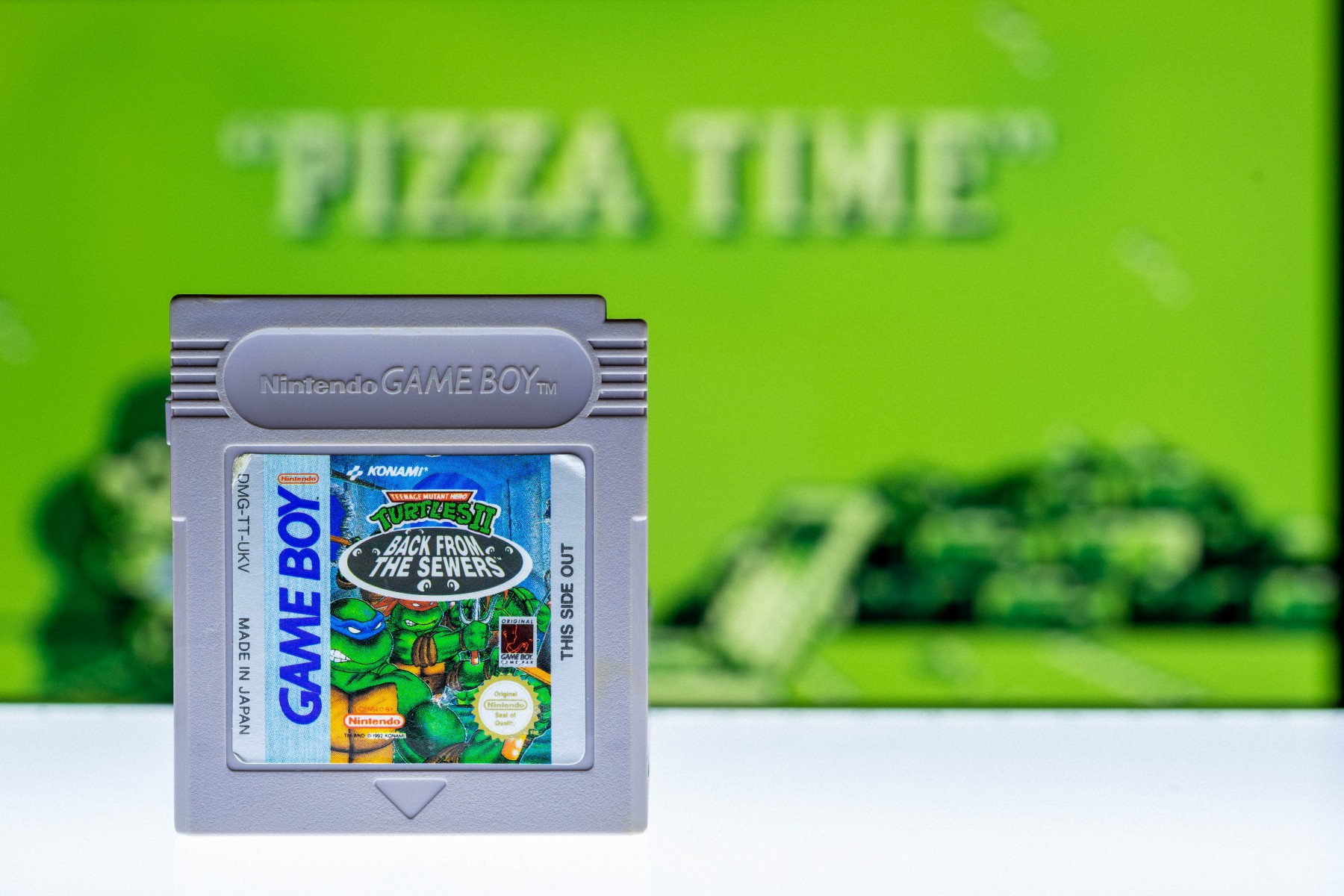
Teenage Mutant Ninja Turtles II: Back from the Sewers
Another title I owned back then. I had a lot of fun with this, being also a fan of the TMNT cartoon, of course! An improvement over the first TMNT Game Boy game, this 1991 release featured fluid animation, large sprites, and the ability to play as all four turtles. Each had slightly different attributes, and the game alternated between beat-’em-up and platforming stages. With catchy music and polished visuals, it’s often remembered as one of the better TMNT handheld titles.
Back from the Sewers was praised for squeezing fluid animation and detailed sprites out of the Game Boy, each Turtle even has unique idle animations and victory poses. I prefer this second episode of the trilogy games of TMNT for the Game Boy, it’s a testament to how the Game Boy, despite its technical limits, delivered authentic TMNT action on the go.
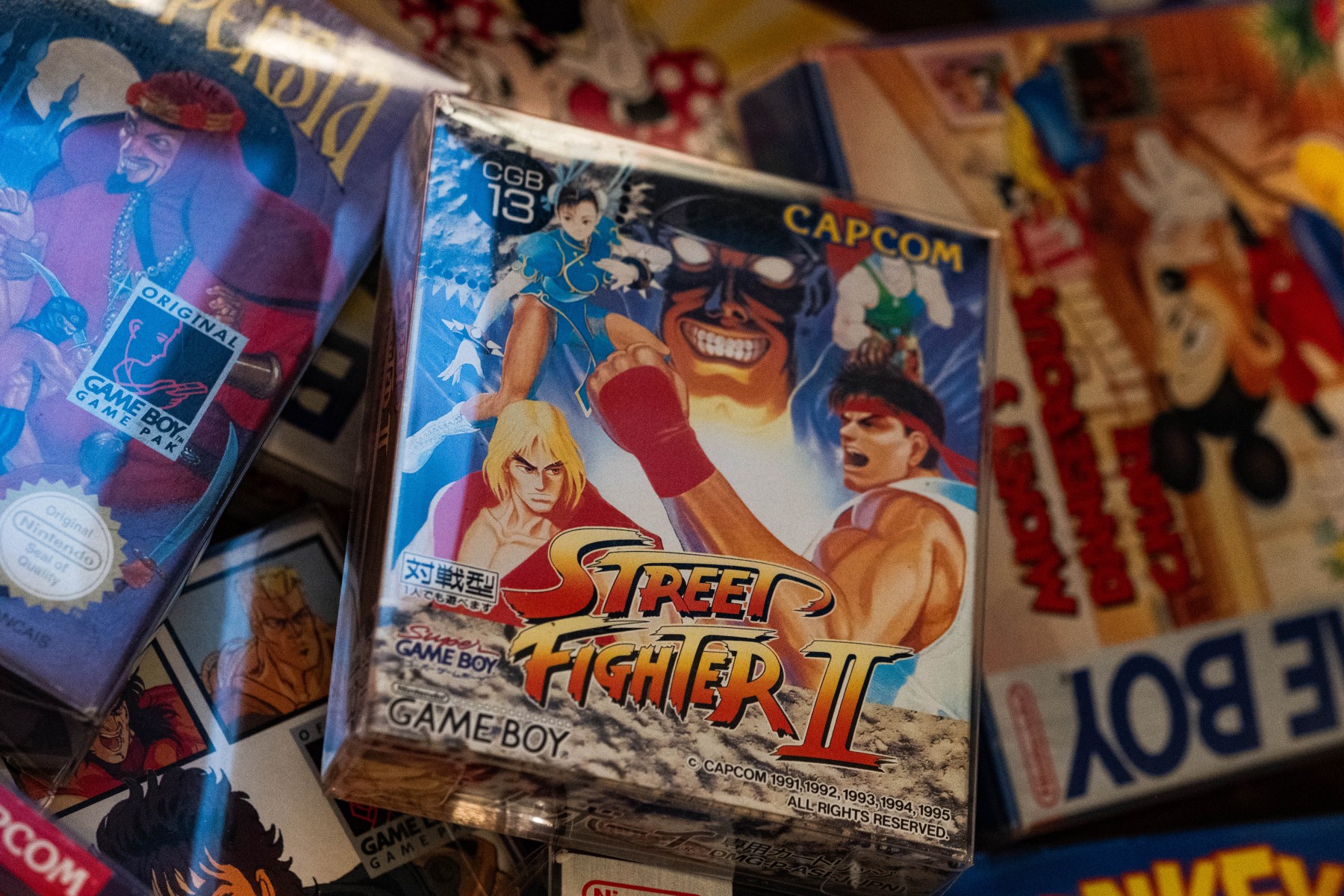
Street Fighter II
Yes, Street Fighter II really did come out on the monochrome Game Boy… one of the most ambitious ports on the Game Boy, it stripped the arcade classic down to its essentials. With fewer characters and simplified controls, it still managed to deliver recognisable gameplay. The graphics were sharp for the system, and while it’s no match for the SNES version, it’s an impressive effort and a sought-after cartridge for collectors.
The game pushes the Game Boy hardware to its limits. The character sprites are impressively large and detailed, and while the action’s speed and frame rate can’t match the arcade (or SNES) smoothness, it’s still very playable. Still, this 1995 release showed the Game Boy could deliver serious fighting action on the go.
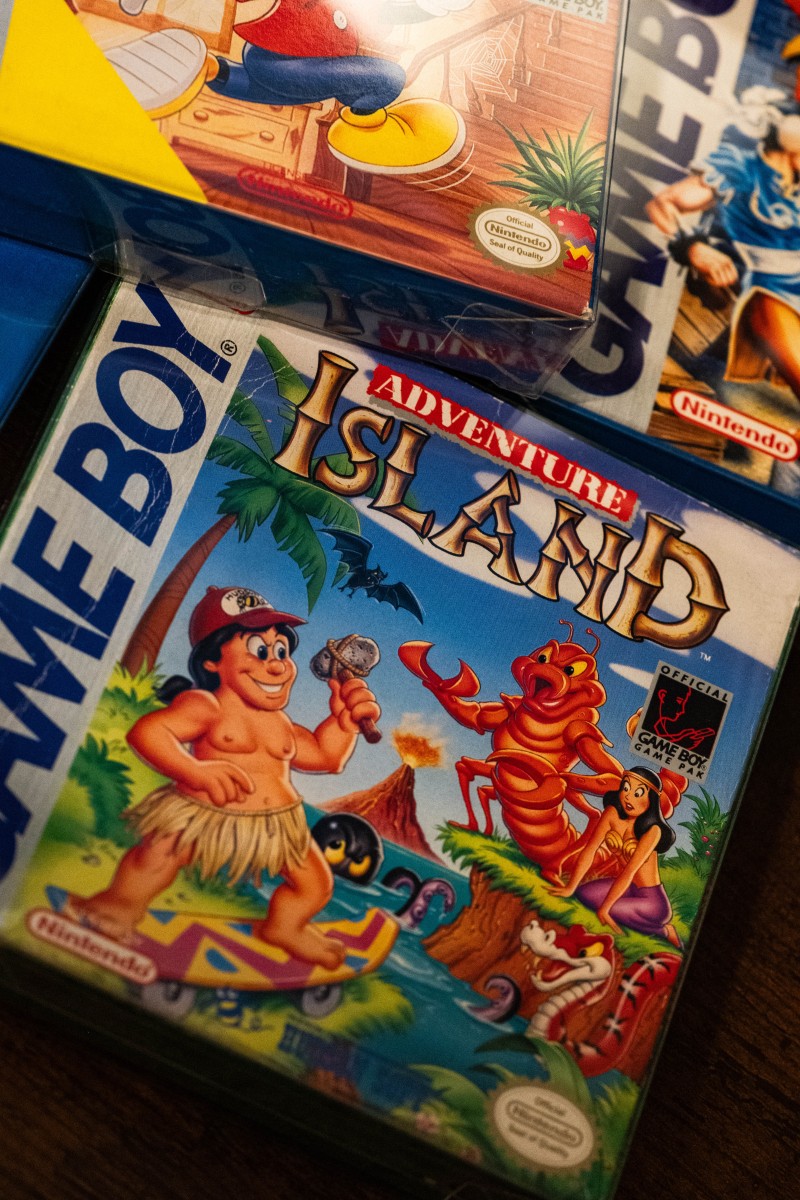
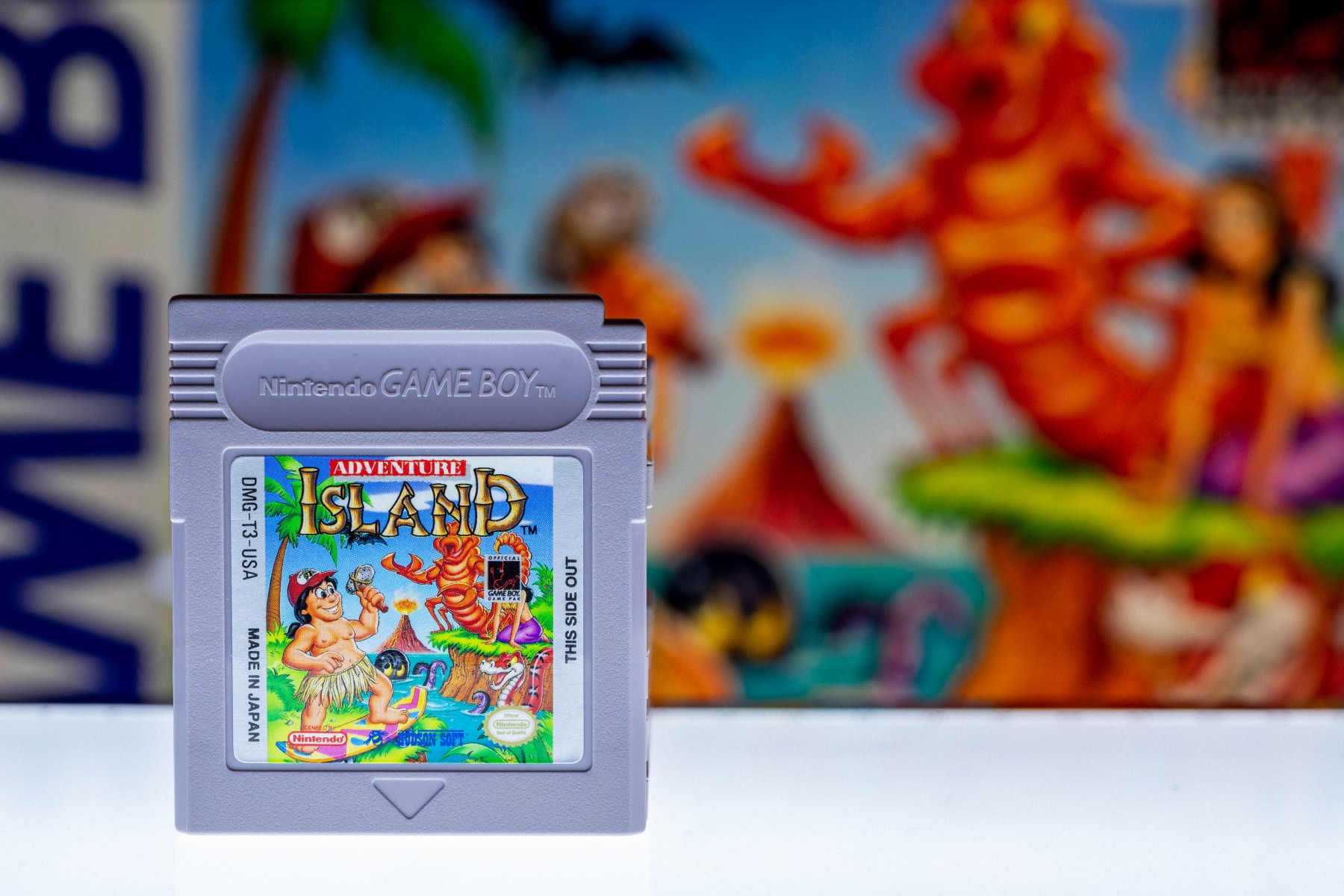
Adventure Island
I had this game, in 1992… loved it. At the time I didn’t know, but it draws on Adventure Island II for the NES, Adventure Island brought fast-paced platforming and item collection to the Game Boy. The game features Master Higgins riding dinosaurs, avoiding obstacles, and collecting fruit before the timer runs out. Tight controls and colourful design (despite the monochrome palette) made it one of the better action platformers of its time.
A fun bit of trivia: despite the Western title implying it’s the first in the series, it’s really a “lost sequel.” Hudson Soft left off the number in North America, effectively giving us an unnumbered Adventure Island II. They even hid a secret level-select cheat (a button code at the title screen) that lets players jump to any island, likely a leftover from development. All in all, Adventure Island on Game Boy stood out as a feature-rich platformer that showed the handheld could deliver an experience on par with an NES title.
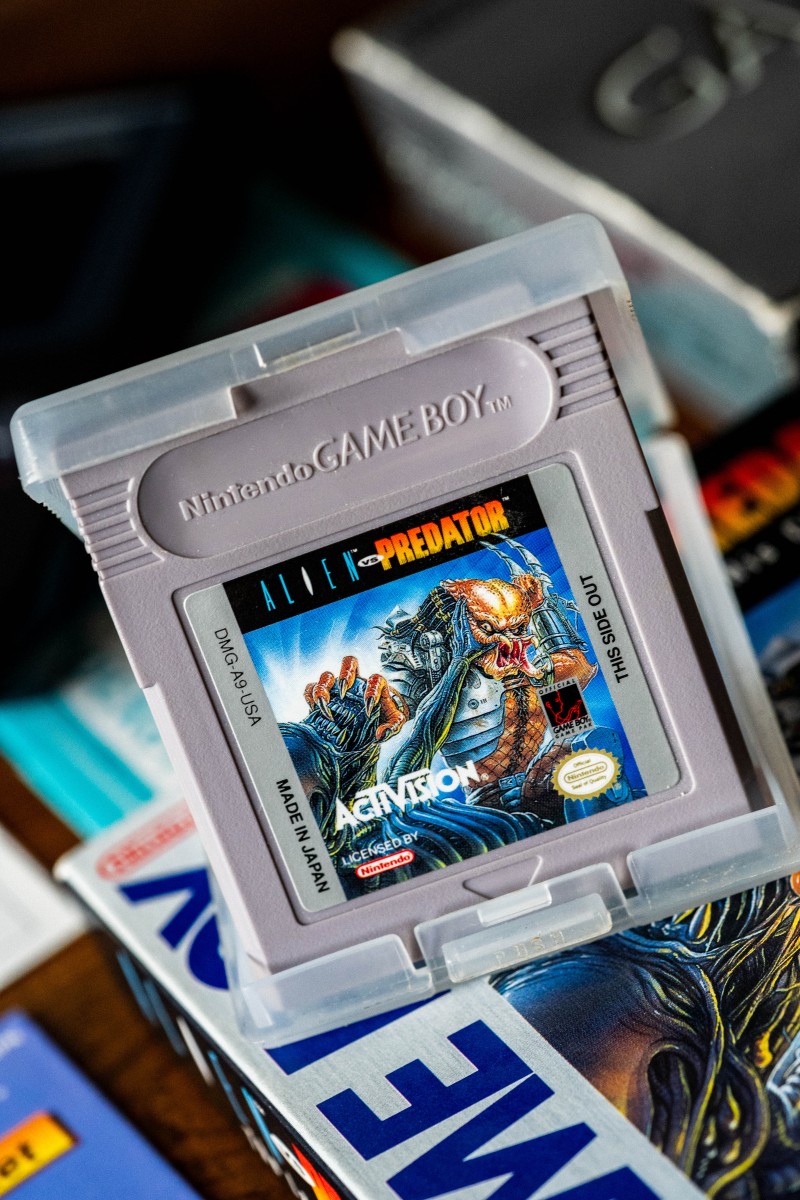
Alien vs Predator
A relatively obscure title, this side-scrolling action game delivered gritty visuals and a dark atmosphere, fitting for the sci-fi horror source material. Playing as a Predator, players face off against Xenomorphs in tight corridors. Though gameplay is basic, it offered a unique premise and stands out for its theme and presentation. It’s a side-scrolling action game with our favourite aliens, rather than a Metroid-style exploration game.
The game spans seven stages that take you across jungles, Alien hives, and beyond. As you progress, you’ll face bigger challenges – later levels apparently even have an Alien Queen to contend with. It’s a tough game, but for fans, it was thrilling to stalk prey as the Predator. Who doesn’t love the novelty of playing as a Predator on your lunch break?
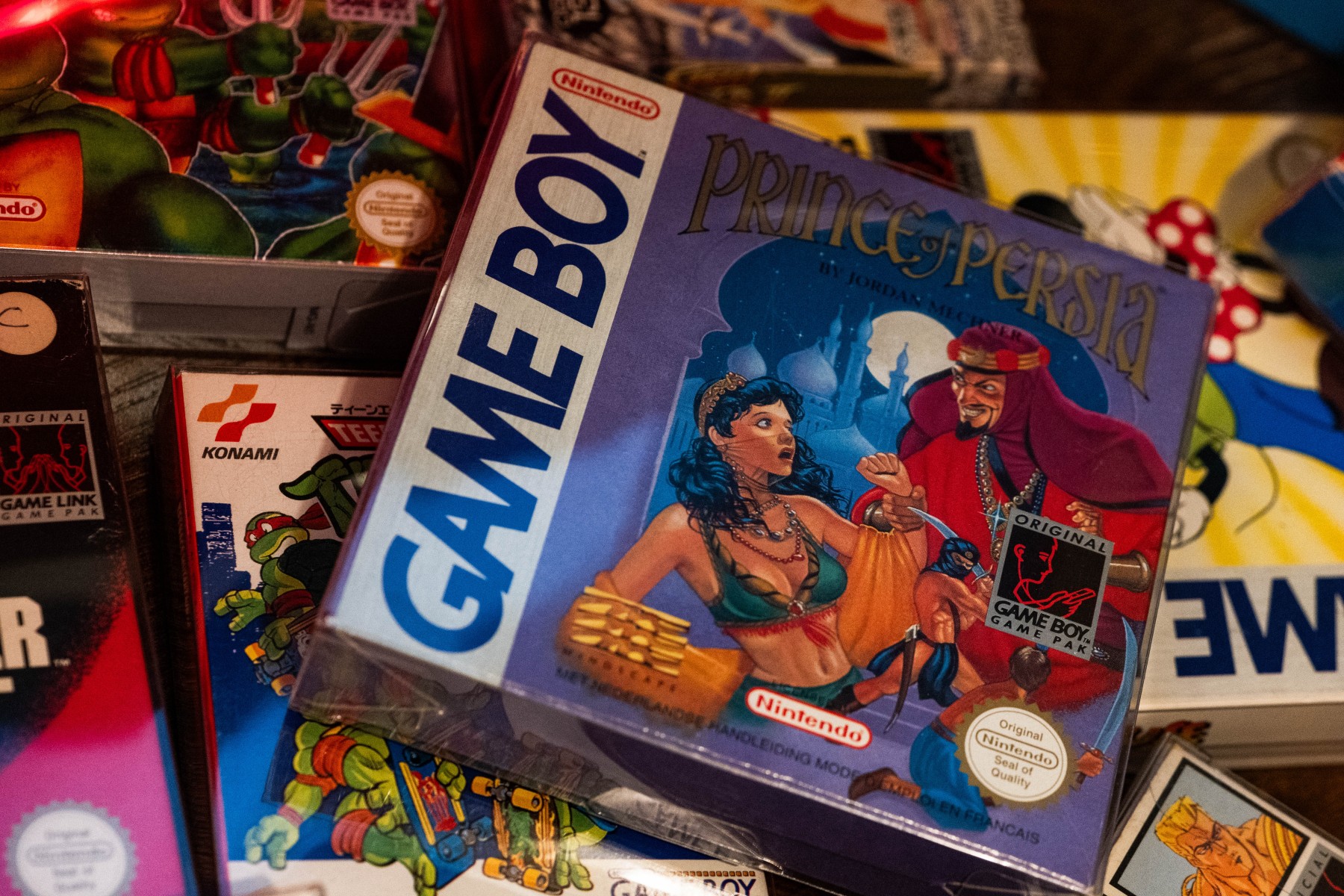
Prince of Persia
The original Prince of Persia is famous for its fluid rotoscoped animation and cinematic platforming on PCs and consoles. In 1992, that experience came to Game Boy. One of the most technically impressive ports on the Game Boy. It preserved the rotoscoped animation and trap-filled level design of the original. The precision platforming and real-time countdown added tension, and it pushed the hardware impressively far. A perfect example of cinematic design on a small screen.
The Game Boy adaptation changes parts of the presentation to suit the smaller screen. Any comparison of cut-scenes also needs to distinguish the Japanese and Western releases from versions on other systems.
Donkey Kong (1994)
Deceptively starting as a remake of the arcade classic, Donkey Kong on Game Boy quickly revealed itself as a deep puzzle-platformer. It introduced a modern version of Mario with new moves, such as handstands and backflips. With over 100 levels and clever mechanics, it’s widely considered one of the best Game Boy games ever made, and I tend to agree!
This game is essentially the progenitor of the Mario vs. Donkey Kong series. In the extended game, Mario pursues Donkey Kong (who keeps grabbing Pauline and fleeing) through cityscapes, forests, an aeroplane, a ship, a jungle, and more. Each level is a one-screen puzzle: figure out how to grab the key and get to the exit door, using switches, springs, ropes, moving platforms, and various enemies to your advantage. What really shines is Mario’s move set. This game dramatically expands Mario’s acrobatics beyond anything seen in Super Mario Bros, he can now do handstands, backflips, and high jumps off trampolines.
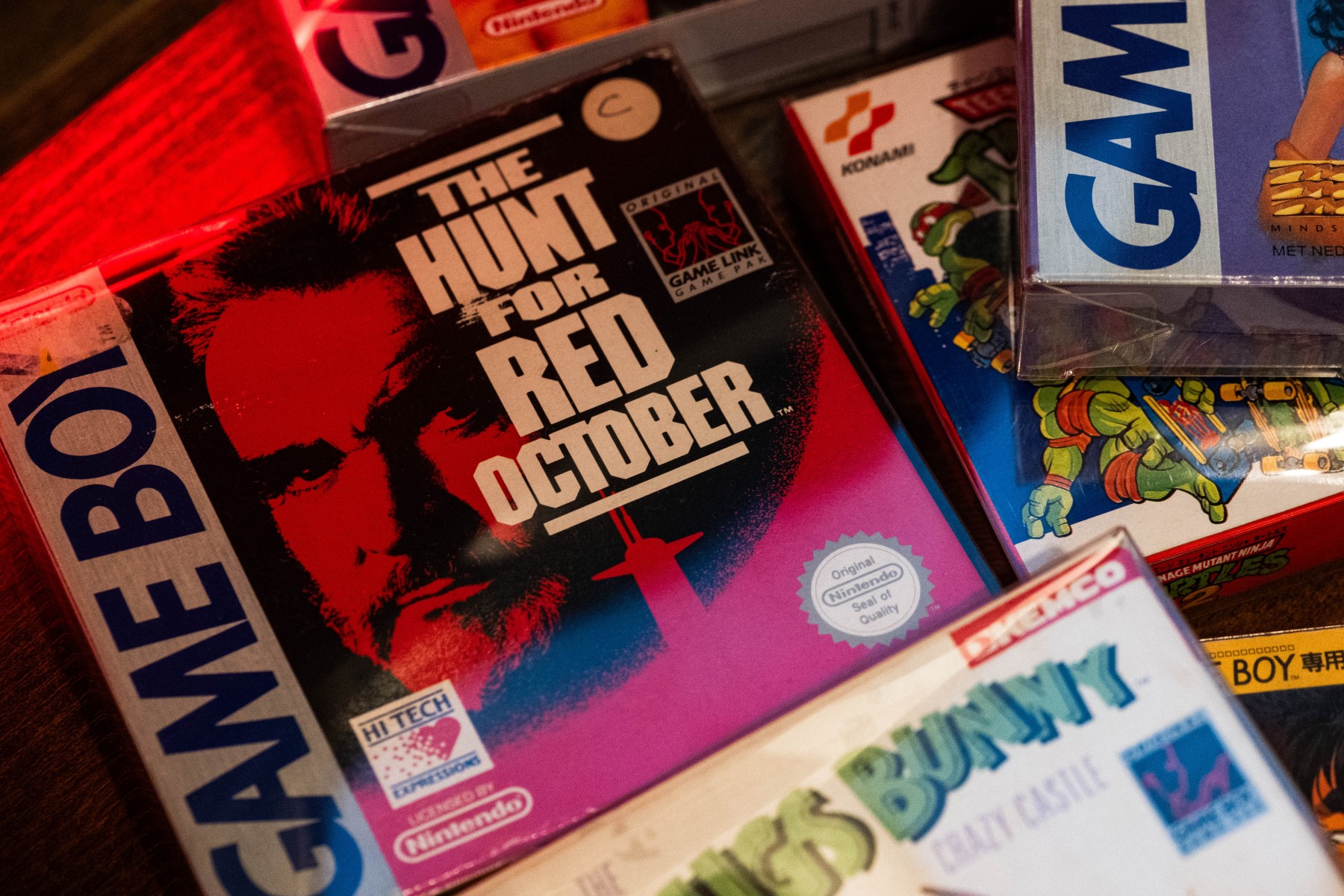
The Hunt for Red October
I have some sweet memories attached to this game because it was a present from my grandfather and I remember playing it during the hot summers in Florence. Based on the film, this game mixes submarine simulation with action sequences. Piloting the Red October through enemy-infested waters, the player must navigate sonar, torpedoes, and even side-scrolling platform sections. An odd mix of styles, but a memorable one due to its cinematic ambitions.
Gameplay involves navigating side-scrolling undersea levels filled with enemy ships, depth charges, mines, and other dangers. The Red October is equipped with torpedoes (fired with the A button) and special weapons/countermeasures (fired with B) – including the famed “Caterpillar Drive,” a stealth mode from the story that lets the sub evade detection for short periods.
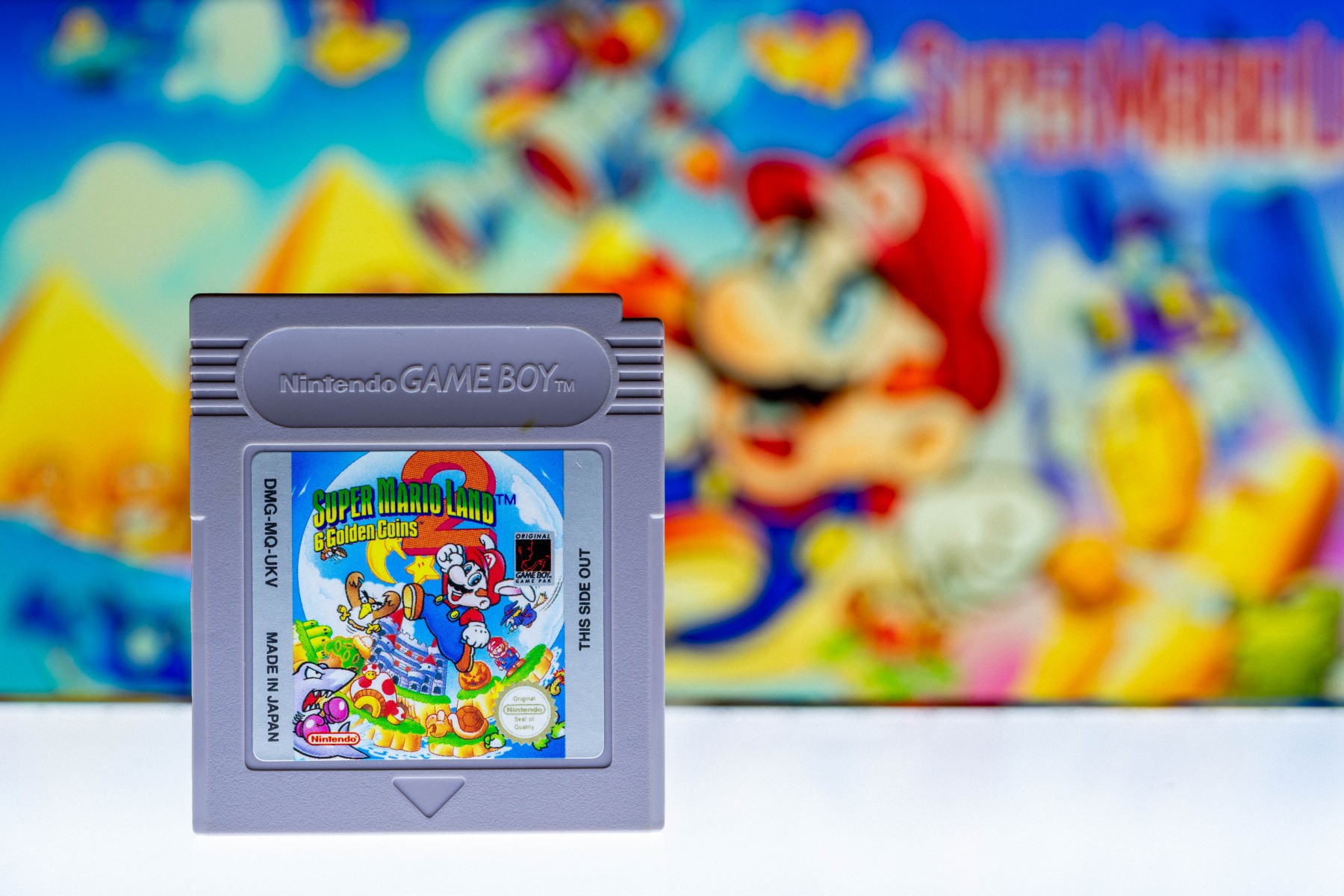
Super Mario Land 2: 6 Golden Coins
This was the first introduction to Mario for me, apart from playing Super Mario on a friend’s NES before… A major leap forward from the original Super Mario Land (that is a bit of a weird Mario game). With bigger sprites, a save system, and the introduction of Wario, this game felt like a true Mario experience. The worlds were creative, ranging from haunted houses to space zones, and the music and controls were top notch. It’s still one of the most beloved Game Boy titles, it was by far the game that I used to play the most on my Game Boy.
Today, 6 Golden Coins remains a beloved classic, frequently cited as one of Mario’s top 2D outings and a shining example of the Game Boy at its best. It came out before the Super Game Boy, so it doesn’t have any custom SGB enhancements, but if you plug it into a Super Game Boy, it’ll display in a basic colour palette. The later colour release wouldn’t come until the fan-favorite Wario Land II on Game Boy Color a few years later.
Super Game Boy
By the mid-90s, millions of gamers had grown up squinting at the Game Boy’s tiny greenish screen. The Super Game Boy changed everything, a cartridge adapter for the Super Nintendo that let you play Game Boy titles on your TV in colour. Released in 1994, it essentially contained Game Boy hardware inside a Super Nintendo cartridge. Plug in your Game Boy game, insert the Super Game Boy into your SNES, and your portable games came to life on the big screen.
The Super Game Boy could map the Game Boy’s greyscale to selectable colour palettes and even displayed decorative borders around the gameplay screen. Some games automatically loaded custom palettes and borders. Titles like Donkey Kong ’94 featured arcade cabinet frames and used more than four colours. Others took advantage of SNES hardware to enhance sound or allow for multiplayer using a second SNES controller, Street Fighter II and Wario Blast were examples. With the SNES Multitap, even four-player Game Boy multiplayer became possible in select games.
One notable limitation was the lack of link cable support, making it impossible to trade Pokémon or battle with others via a Super Game Boy. But despite this, it became a beloved accessory that refreshed the Game Boy library, offering a new way to enjoy handheld games. Many fondly remember using the SNES mouse to draw on borders or recolour favourite titles. The Super Game Boy blurred the line between handheld and home console gaming in a truly nostalgic way.
Super Game Boy 2
In 1998, Nintendo released the Super Game Boy 2, exclusively in Japan. It addressed the original version’s two biggest shortcomings: no link cable support and a slightly incorrect game speed. With a translucent blue shell and updated internal timing, it ran games at the exact speed of a real Game Boy and finally added a link cable port, making multiplayer and trades possible, huge news for Pokemon fans.
The SGB2 retained custom palette and border support and introduced a fresh set of default borders. It also included power and link status LEDs for a more authentic handheld vibe. While it arrived late in the SNES’s life cycle and never saw release outside Japan, it’s considered the definitive Super Game Boy version by collectors and purists alike.
Super Game Boy Hori Controller
Hori created a custom SNES controller specifically for use with the Super Game Boy. It mimicked the layout of the original Game Boy, with a D-pad and buttons positioned to feel more authentic. It also included turbo and slow-motion functions. For players who wanted the truest handheld-to-console transition, this controller was the ideal companion.
Conclusion
Hope you like this list, a mix of strong titles and more niche games, with a lot of nostalgia in common! Over its lifespan, this little grey brick hosted an incredible variety of games, from platforming adventures and movie tie-ins to ambitious ports of arcade hits, and even spawned innovative accessories that pushed its capabilities.
Stay curious. Stay nostalgic.
Because retro never dies, it just respawns.
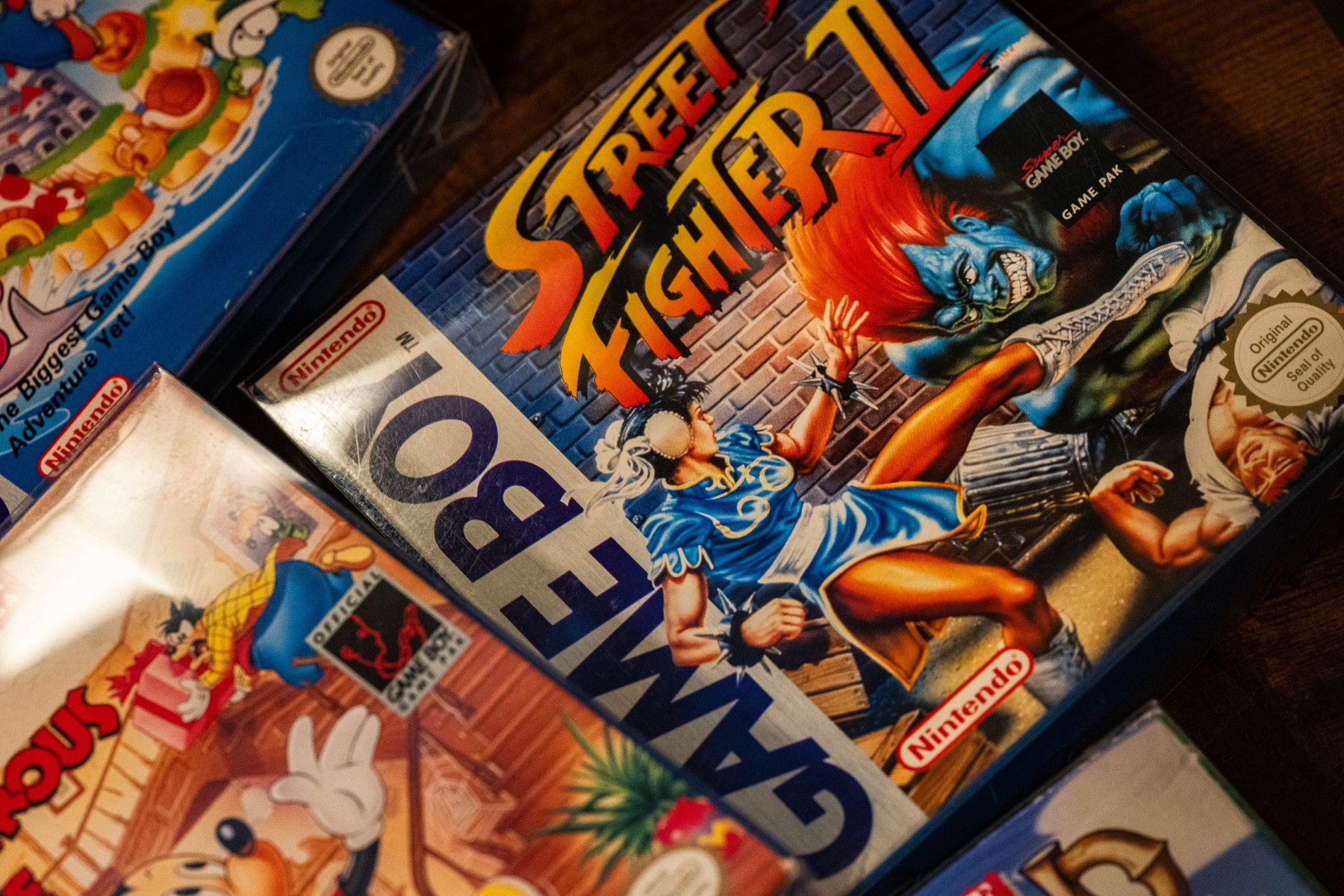

I would have bought Street Fighter II if I had only seen the photos of the game, big sprites and pretty accurate backgrounds. But too bad the gameplay isn’t half as good as the original 😀
Indeed man 😀 if it came out a year or two earlier I would have bought it 100%, but I had already moved away from the Game Boy in 1995, embracing the new gen at home with the Saturn 😀