

I had this grey brick of a console as a kid, it was my first handheld console (while my first console, was the Sega Master System). I had it with a bunch of games, and it’s been a great companion of the long Italian summer break, together with friends, beachside holidays and a lot of homework… Let’s revisit it today, and discover why it is the most important handheld ever in the history of video games.
From concept to phenomenon
In the late 1980s, Nintendo’s R&D1 team, led by Gunpei Yokoi and Satoru Okada, set out to create a handheld console following the success of Yokoi’s Game & Watch LCD games. Nintendo president Hiroshi Yamauchi tasked them in 1987 with developing an affordable successor to the Game & Watch, targeting a price under ¥10,000. From the very first meeting, the team envisioned using a dot-matrix LCD and even codenamed the project “DMG” (Dot Matrix Game), a code reflected in the final model number DMG-01 for the Game Boy. Yokoi championed his famous philosophy of “Lateral Thinking with Withered Technology,” meaning they would use mature, readily available tech in creative ways rather than cutting-edge parts. This approach promised reliability and low cost, aligning with the need for a cheap, durable device.

However, there was initial tension in the design approach. Yokoi imagined a simple toy-like device (essentially a more advanced Game & Watch), whereas his younger colleague Okada pushed for a more powerful system with interchangeable cartridges, effectively a portable NES. Some at Nintendo joked that Yokoi resisted a cartridge-based design just to avoid overlap with the NES (a project of the rival R&D2 team). Ultimately, Yokoi relented and gave Okada the green light to pursue the cartridge-based vision. This compromise birthed the concept of the Game Boy: a portable console with swappable game Game Paks (as they were called at the time), marrying Yokoi’s knack for fun gadgets with Okada’s desire for a versatile game library.
Technical collaboration played a key role in development. Nintendo initially considered using a Ricoh CPU (like the NES) for potential cross-compatibility, but R&D2 objected, they needed Ricoh focused on the upcoming Super NES. The team instead partnered with Sharp, which provided a custom all-in-one chip (Sharp LR35902). This chip contained an 8-bit CPU (a hybrid of Intel 8080 and Zilog Z80 instructions) running at ~4.19 MHz, and it fortuitously featured a serial communication capability. Okada, recalling a past Nintendo mahjong game that linked two devices, realised this could enable head-to-head play. He personally developed the Game Link Cable technology to connect Game Boys for multiplayer, a decision that would later prove vital for games like Tetris and Pokémon.
Selecting the right display was another challenge. Early prototypes with Sharp LCDs suffered terrible motion ghosting. The team solicited other manufacturers; Citizen offered an innovative STN (super-twisted nematic) LCD and even quoted colour displays. They could produce a colour screen, but at triple the cost and with higher power draw. True to Yokoi’s philosophy, the team chose a monochrome screen with no backlight to maximise battery life. Yokoi famously argued that once players get absorbed in a game, their imagination fills in the colours, colour graphics weren’t necessary. Nintendo executives were initially hesitant about a monochrome device, but Yokoi used his clout to push it. His bet paid off: when a worried staffer told Yokoi about a new rival handheld launching with a colour screen, Yokoi laughed and reassured them: “If it’s colour, then we’re fine.” He knew those colour competitors would likely suffer short battery life and high costs.
The Game Boy (DMG-01) debuted in Japan on 21 April 1989. North America followed that summer, with an introductory price of US$89.99, and European launches began in 1990. The monochrome screen did not stop it becoming a familiar machine far beyond Nintendo’s existing audience.
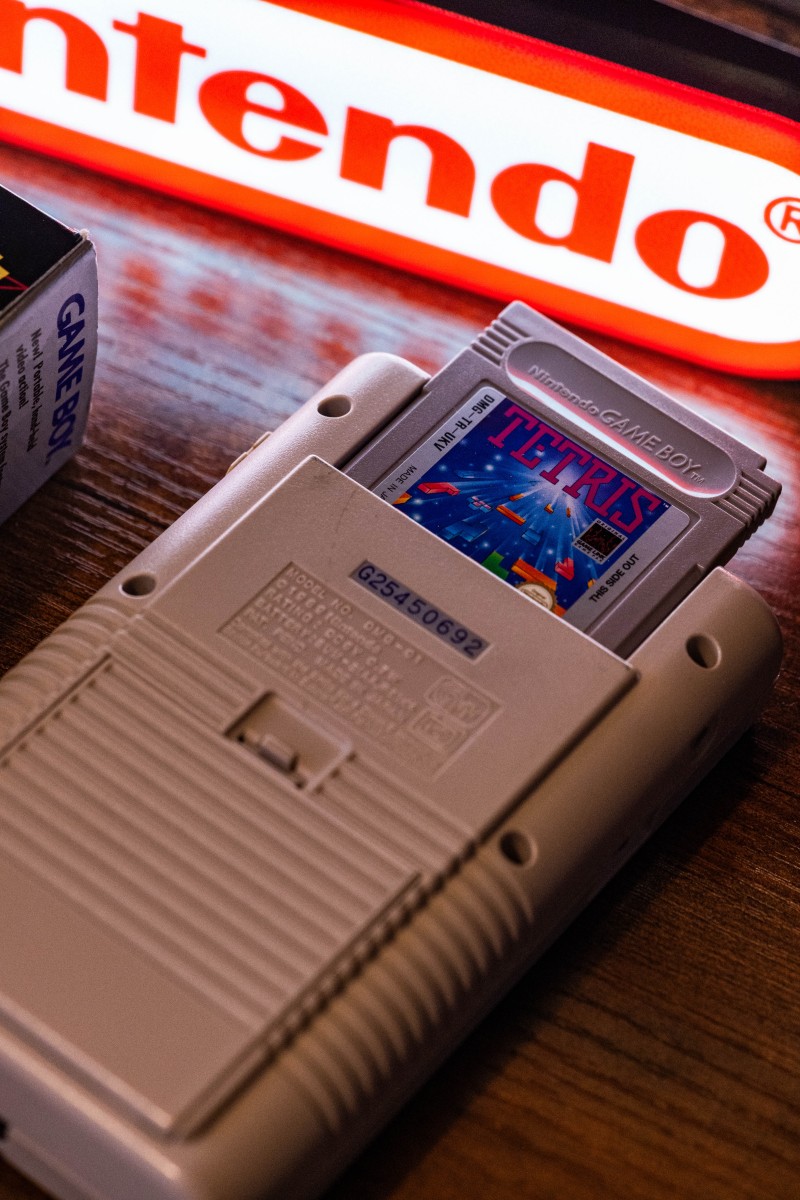
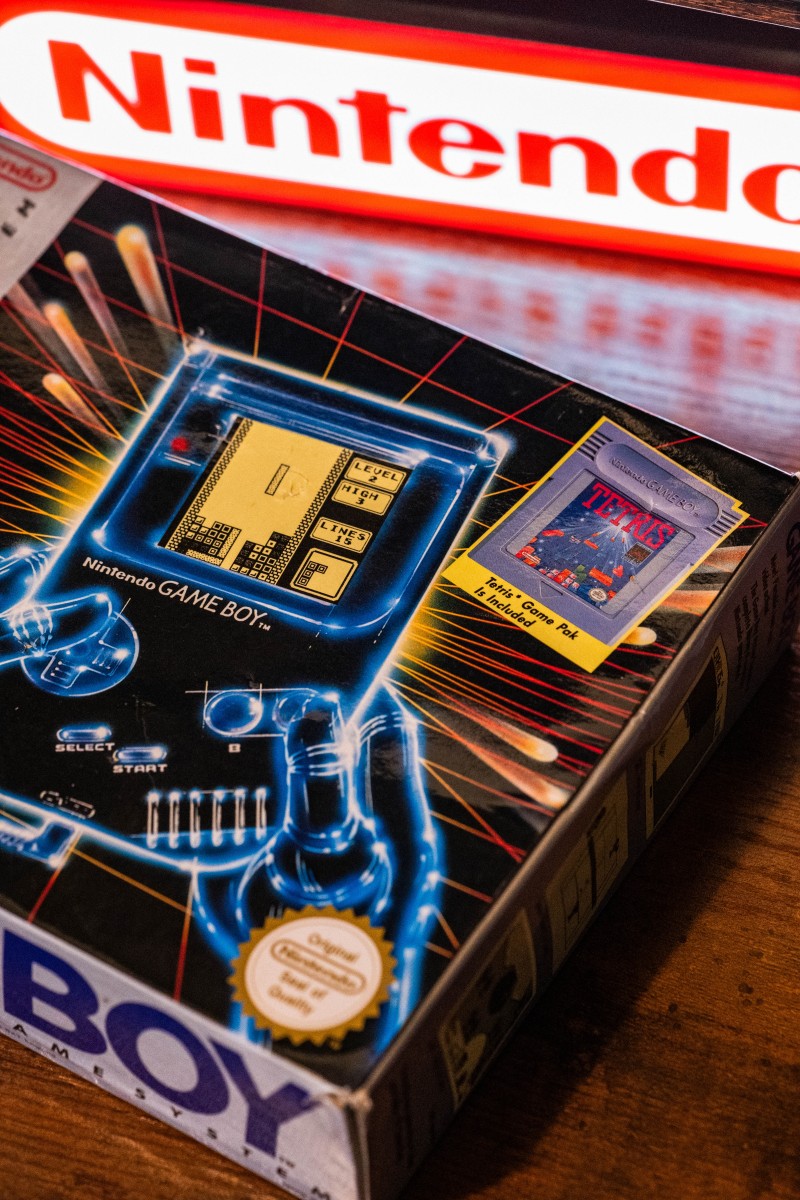
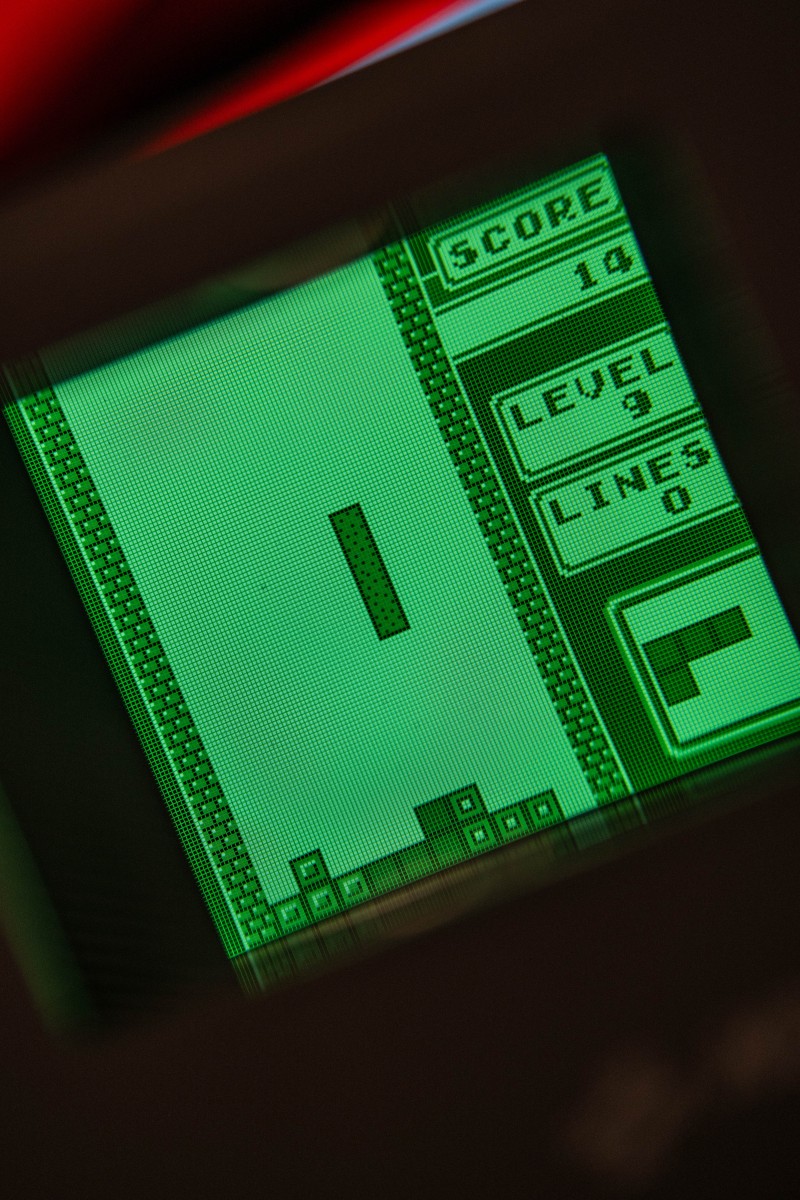
A huge factor in this success was the software. R&D1 had developed Super Mario Land as the flagship game, but Yokoi and Okada recognized the immense potential of a puzzle game called Tetris for the handheld. Tetris was simple, addictive, and, unlike Mario, appealed to all ages and genders. Henk Rogers, who secured the rights to Tetris, famously convinced Nintendo of America’s president, Minoru Arakawa, to bundle Tetris with Game Boy instead of Mario. He argued that Mario would sell primarily to young boys, while Tetris would “appeal to everyone.” He was right, Tetris became the Game Boy’s killer app, turning the device into a cross-generational phenomenon. (In fact, Tetris was the familiar pack-in for the original Western launch; Japanese units initially came without a game.) Millions of players who never touched a console before were suddenly hooked on clearing lines of falling blocks. By packing in Tetris, Nintendo ensured that many adults, parents, and even grandparents picked up the Game Boy, expanding the market beyond the typical young male gamer.
The original Game Boy enjoyed robust sales throughout the early 1990s, boosted by continual hit games. By 1995, however, the hardware was aging. Nintendo was in no rush to replace its golden goose, as of 1994, executives noted Game Boy sales were still so strong that a true successor was delayed. Instead, Nintendo opted for incremental updates. In 1995 they launched the “Play It Loud!” series (in Japan, Game Boy Bros.), which offered the Game Boy in new case colours like red, green, yellow, black, blue, white and even transparent casings. These were purely cosmetic changes for style-savvy gamers.
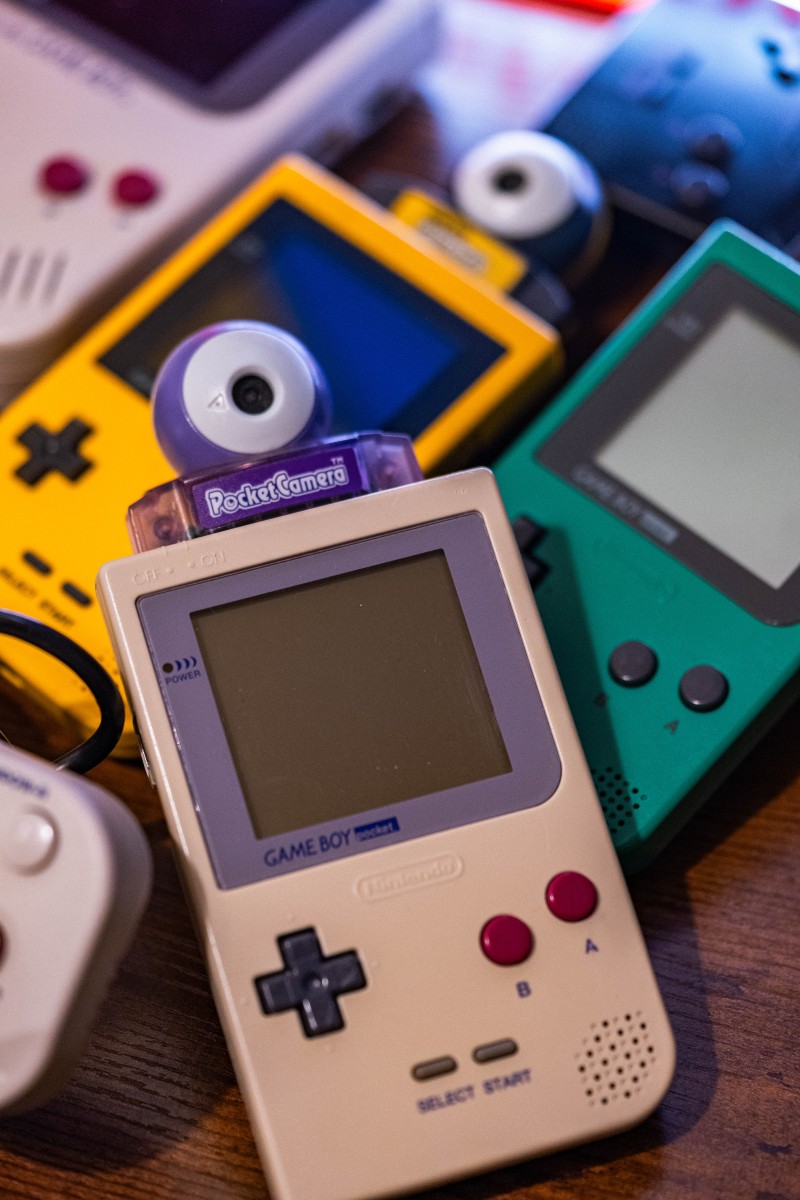
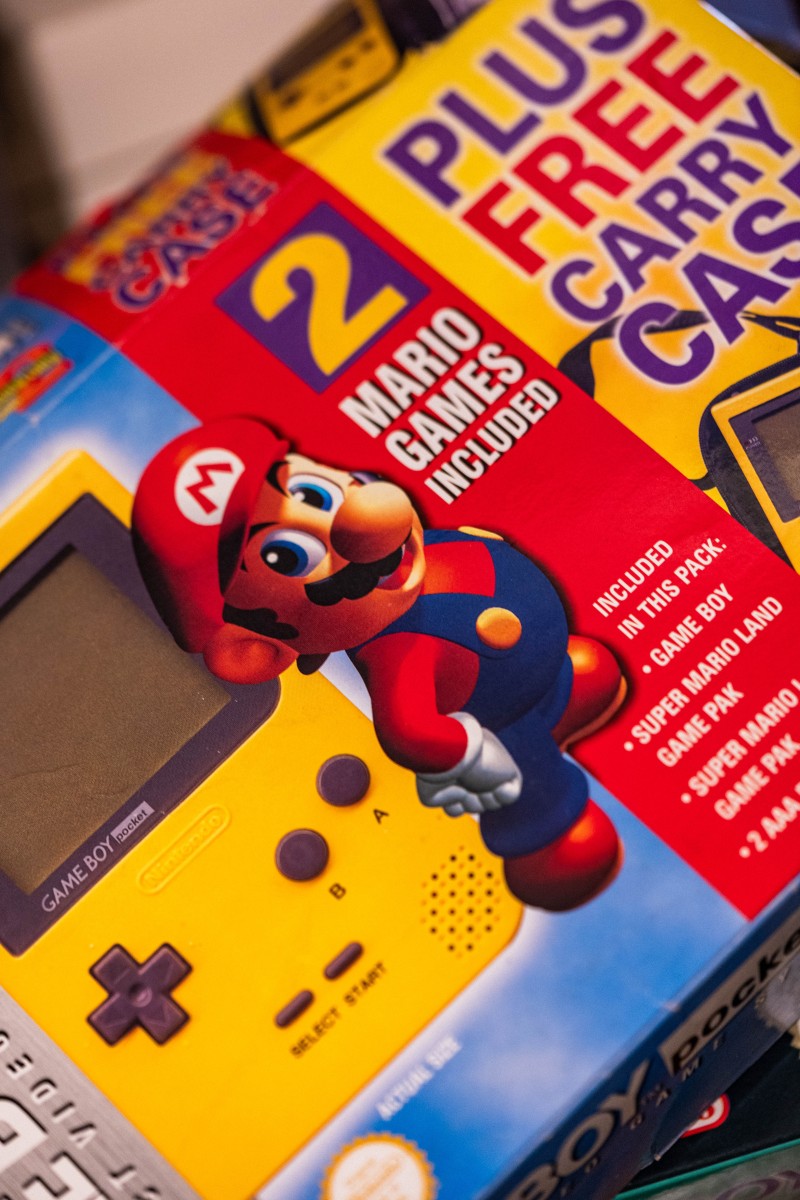
It wasn’t until mid-1996 that Nintendo released a major redesign: the Game Boy Pocket. This was a smaller, lighter version addressing a few of the original’s shortcomings. Launched in Japan July 21, 1996, and in North America September 1996, the Pocket sold for ~$69.99 USD. As the name suggests, it was far more pocket-friendly, roughly 30% smaller in size and almost half the weight of the chunky DMG-01 (125g vs 220g). It required only two AAA batteries (instead of four AAs), significantly reducing weight, though battery life dropped to about 10 hours on a set of AAAs. The screen was vastly improved: the Pocket used a film-compensated STN display with true black-and-white visuals (no more pea-soup green tint) and a much faster response to reduce motion blur. The viewable screen area was slightly larger too. Internally, the Pocket used a revised Sharp “CPU MGB” chip (integrating the same functionality but moving some memory onto the chip), it ran at the same speed and could play all the same games. In short, it played identically to the original Game Boy, but in a refined hardware package.
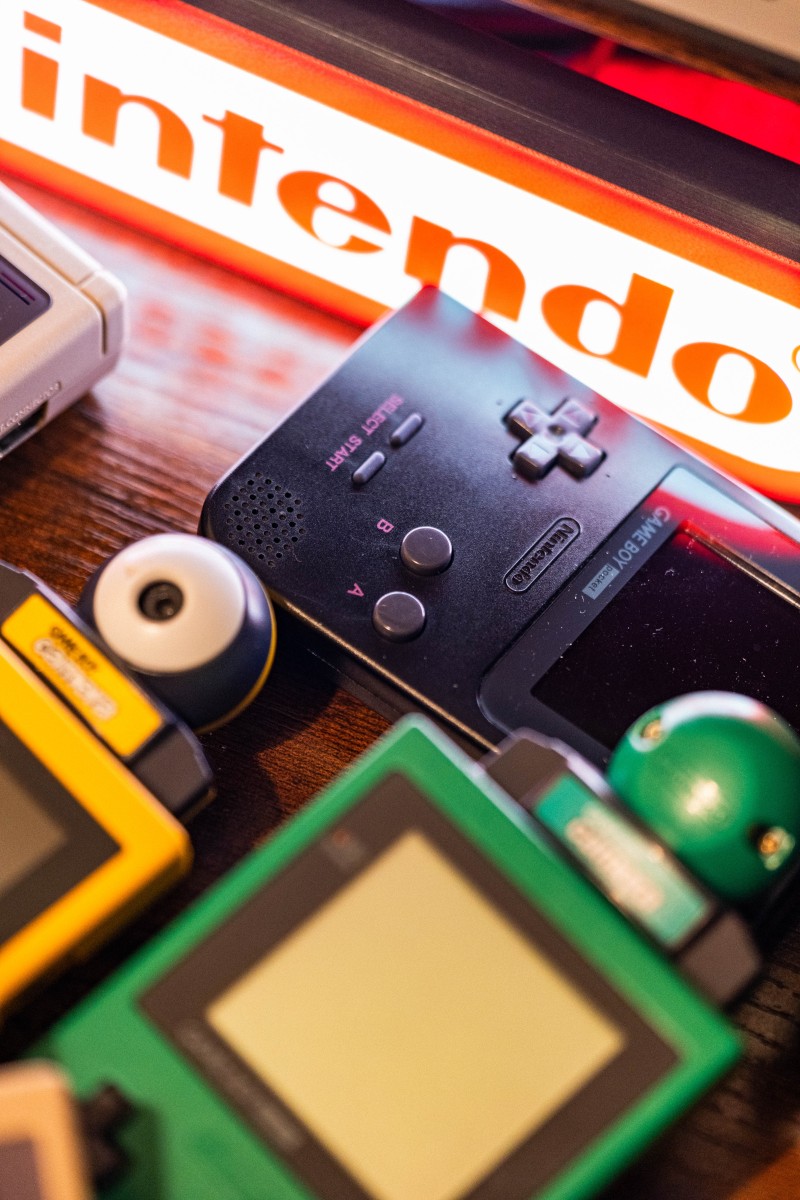
One controversial omission in the initial Game Boy Pocket was the power indicator LED. The original DMG-01 had a little red LED to warn you when batteries were running low; the first run of Pockets had no LED, which drew some criticism. Nintendo quickly corrected this in a hardware revision in early 1997, adding back the battery indicator light. That revision also introduced more case colours beyond the Pocket’s launch silver, including red, green, yellow, black, transparent clear, blue, and even a limited gold edition, and dropped the price further (to ~$54.99). The Game Boy Pocket successfully revitalized interest in the platform just as a new phenomenon, Pokémon, landed in 1996, which sent Game Boy demand skyrocketing again. (Nintendo even released a Japan-exclusive Game Boy Light in 1998 with an electroluminescent backlit screen, addressing the need for a low-light play option, but this model remained limited to the Japanese market.) By 1997, between the original Game Boy and the Pocket, Nintendo had sold over 64 million units worldwide, utterly dominating the handheld gaming sector.
Brick to pocket-sized marvel
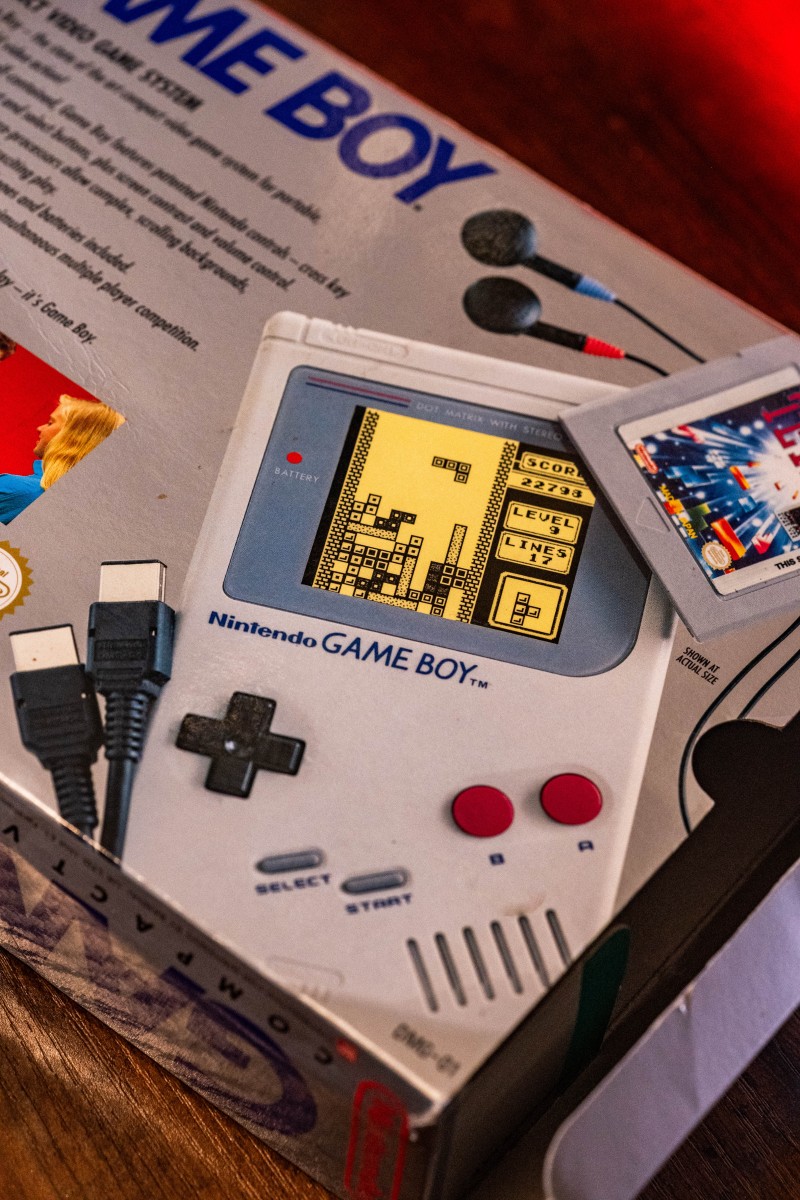
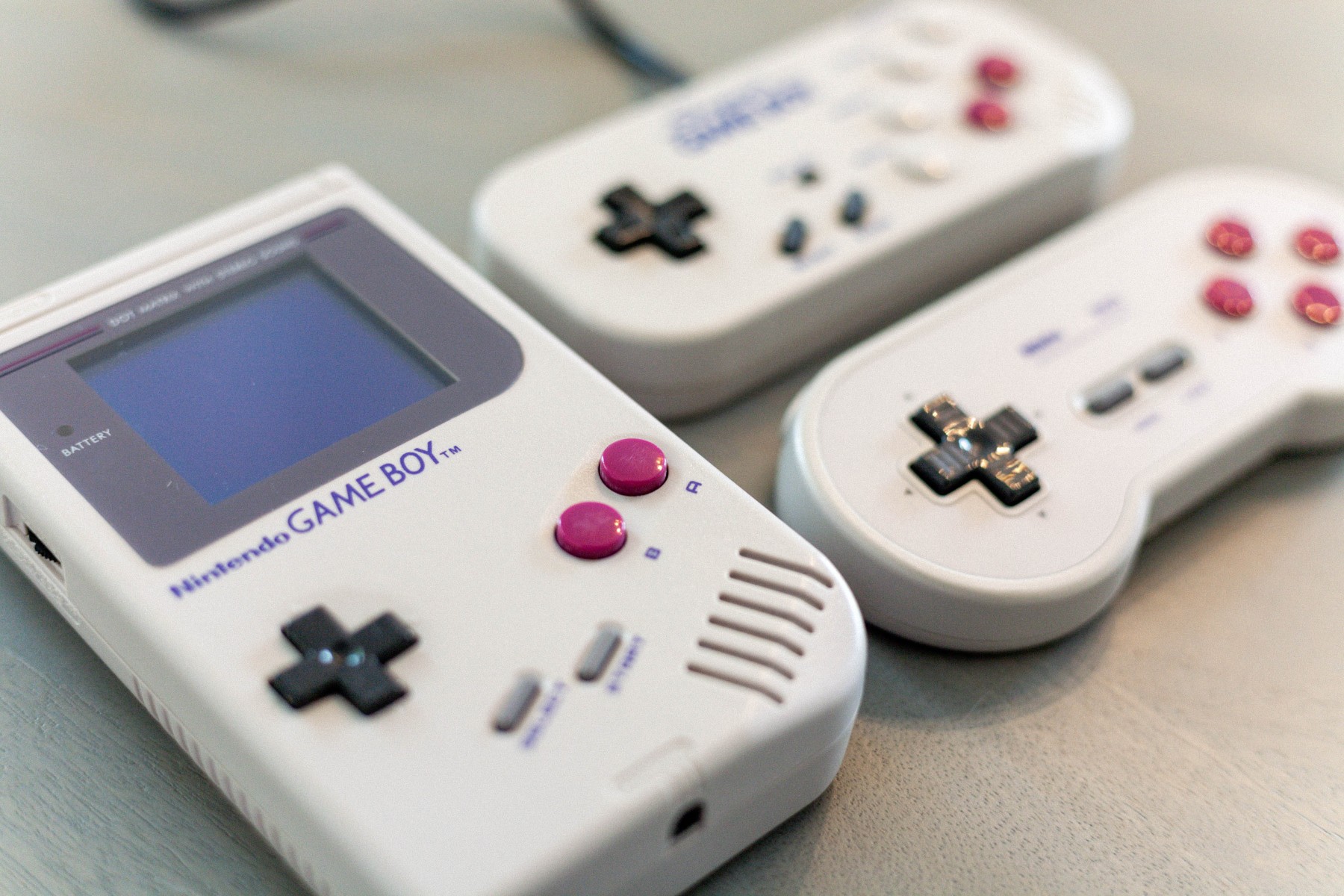
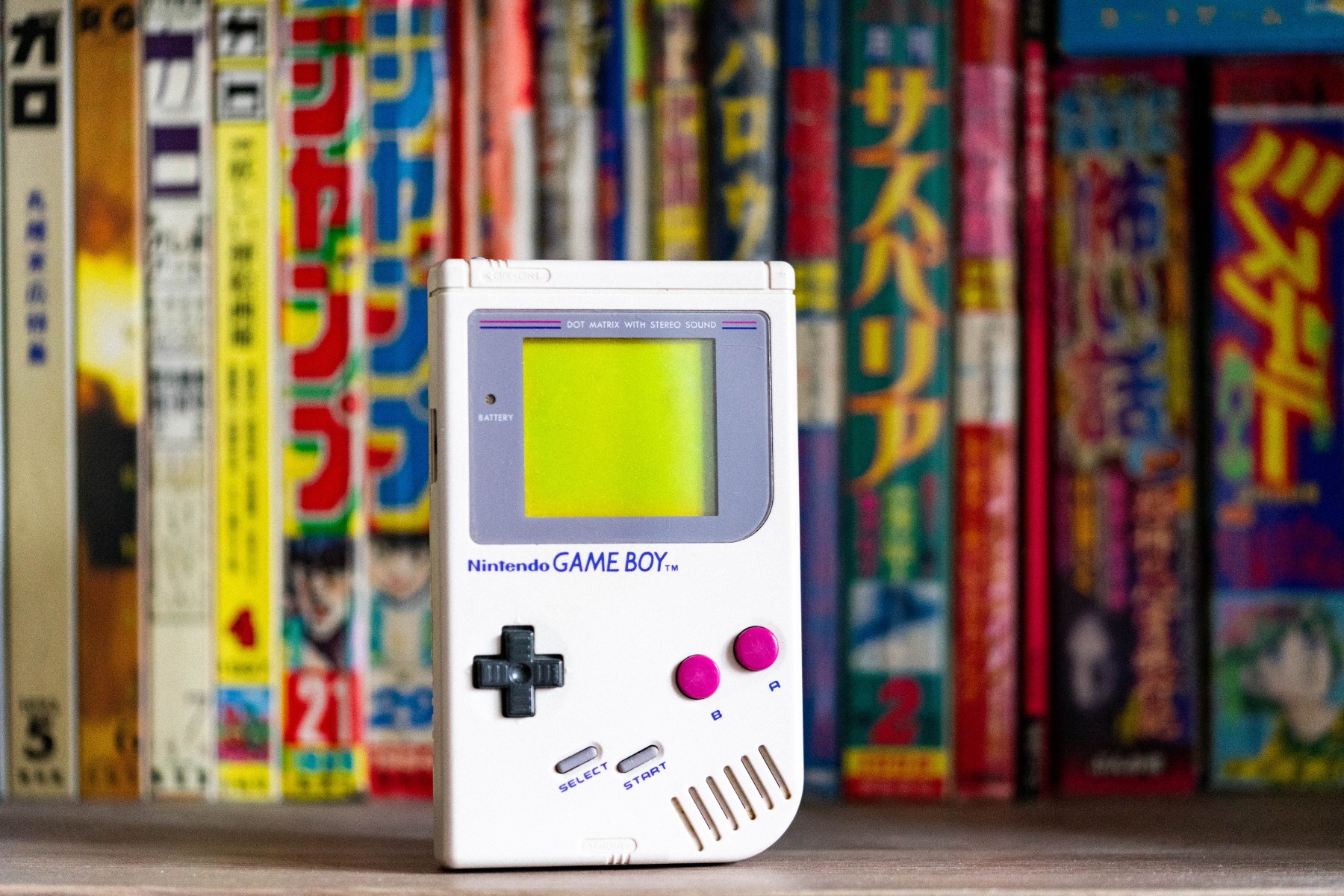
The original Game Boy DMG-01 was affectionately called “the brick”, a grey handheld about 148mm × 90mm × 32mm in size. It featured a sturdy grey plastic shell with curved corners and a distinctive curved bottom-right edge for ergonomics. The control layout was instantly recognisable: a directional D-Pad on the left, two action buttons (labelled A and B) on the right, plus START and SELECT buttons in the middle. On the sides, it had a volume dial and a contrast adjustment dial (to tweak LCD visibility). The top housed the game cartridge slot and a sliding power switch which locked the cartridge in place when on (preventing accidental removal). There was also a 3.5mm headphone jack providing stereo sound (the built-in single speaker was mono). The device was powered by 4×AA batteries, which gave it exceptional runtime, up to 20–30 hours of gameplay under optimal conditions. (Real-world usage with sound tended to yield around 10–15 hours, but compared to colour competitors that barely managed 3–5 hours, Game Boy’s endurance was a revelation.) For longer play at home, an optional AC adapter could be plugged into a DC jack on the side.
Internally, the Game Boy was modest but clever. The simplicity was intentional, keeping the specs low allowed Nintendo to use proven, power-efficient parts and made the system easy to program for. Graphics were handled by an integrated Picture Processing Unit capable of displaying a resolution of 160×144 pixels on screen. The LCD could show 4 shades of grey (or green) at a time, effectively a 2-bit greyscale palette. Though simple, in practice this allowed surprisingly detailed sprites and backgrounds for games, as seen in titles like The Legend of Zelda: Link’s Awakening.
The display itself was a reflective STN LCD, about 2.6 inches diagonal (66 mm). It had a distinctive greenish tint and, on the original model, notable motion blur (moving objects left faint trails). This “ghosting” became part of the Game Boy’s charm, though it made fast-action games more challenging, many players adapted and the blur even smoothed out animation in platformers. The Game Boy Pocket’s screen upgrade to a FSTN LCD greatly reduced ghosting and rendered pure black-on-white visuals. Both models relied on external light (no backlighting), so playing under a lamp or sunlight was necessary, a tradeoff that saved battery life.
For sound, the Game Boy included a programmable sound generator on the CPU. It featured 4 audio channels: two pulse (square wave) channels for melodies, one custom waveform channel, and one noise channel for percussion effects. In effect, the Game Boy’s sound hardware was akin to a portable chiptune synthesizer, and its bleeps and bloops became iconic in their own right. With headphones, players got stereo output (channels could be routed to the left or right output). Many classic game soundtracks, like the catchy Tetris Type-A theme or the Pokémon Red/Blue music, were composed with these simple waveforms and remain memorable to this day.
The link cable port was a defining feature that set Game Boy apart from earlier handhelds. On the DMG-01, a larger link connector allowed two Game Boys to link up for multiplayer, for example, two players could battle in Tetris or trade Pokémon. Up to 4 units could be connected using the Four Player Adapter (a hub accessory) for games that supported it, like F-1 Race. The Game Boy Pocket introduced a smaller link port; an adapter was needed to connect a Pocket to an original DMG due to the size difference. This smaller link connector became the standard on later Game Boy models. The EXT connector was that same link port, also used for compatible add-ons and could interface with devices like the Game Boy Printer (via the link cable interface).
In terms of core hardware, the Game Boy was the same globally, but there were some regional packaging differences and product variations worth noting. Japanese Game Boys were sold originally without a bundled game, whereas North American and European Game Boys came bundled with Tetris, as mentioned. The name “Game Boy” itself was consistent worldwide. One notable model difference was the Play It Loud! series of 1995, known as Game Boy Bros. in Japan, which offered the unit in multiple case colours for the first time. These colourful variants (red, yellow, green, black, blue, white, and clear) injected new life into the aging hardware by capitalizing on 90s fashion for bright colours.
The Game Boy Pocket (MGB-001) was a hardware revision, with a smaller body and improved screen. Later units restored the battery indicator LED absent from the first run. Its games remained compatible with the original handheld. The Super Game Boy’s slightly fast timing was a separate adapter issue, later addressed by the Super Game Boy 2; handheld Game Boys did not have different PAL and NTSC versions.
Overall, whether you were playing the grey brick Game Boy or the little Pocket, the gameplay experience was the same, Nintendo ensured full backward compatibility. The simplicity and consistency of the hardware across regions and revisions meant that a game cartridge bought in 1989 would run on a Game Boy Pocket in 1997 just fine. This stability was key to building the Game Boy’s massive library and customer loyalty.




Cultural impact in the 1990s
Upon release, the Game Boy was backed by aggressive and creative marketing in different regions, turning it from a mere gadget into a pop-culture phenomenon. In Japan, advertising emphasized the link to the hit Family Computer (Famicom) and the idea of taking games on the go, but Nintendo initially didn’t bundle a game, the device sold on the strength of the concept and games like Super Mario Land and Yakuman (a mahjong game) at launch. It still exceeded expectations, selling out quickly. One early sign of its broad appeal: Tetris topped Japan’s game charts in 1989 despite not being a typically “Japanese” genre, showing even Japanese commuters and older adults were hooked on Game Boy puzzle gaming.
In North America, the advertising leaned into portability and multiplayer. The line “Now You’re Playing With Portable Power!” echoed the NES campaign, while demonstrations of linked Tetris games made the cable easy to understand. A Game Boy could go where a television and console could not.
A colour screen made the Lynx and Game Gear exciting, but price, size, software and battery consumption mattered too. Nintendo’s monochrome display was a compromise you could see immediately. The games and the time you could spend with them made that compromise easier to accept.
Crucially, Tetris as the pack-in game in the West made the Game Boy a crossover hit. It wasn’t just kids begging for a Game Boy, adults were buying them too, hooked on Tetris during coffee breaks or business trips. The strategy of targeting beyond the teen male demographic paid off richly. By holiday 1989 in the U.S., Game Boys were in short supply due to high demand, becoming that year’s “hard-to-find” gift. Europe saw a staggered release by country in 1990-91, and similarly, Tetris fever helped the Game Boy sell millions across the continent. In the U.K., it launched with a big marketing push and the same Tetris bundle, and soon “Game Boy” became synonymous with handheld gaming. It was the gadget of the early ’90s in schoolyards and on commutes alike.
Reception in the media was initially mixed, some critics pointed out the “antiquated” monochrome screen and compared it unfavorably to colour backlit devices like Sega’s Game Gear, Atari Lynx, or NEC’s TurboExpress. But those critiques were drowned out by the Game Boy’s mass appeal and practicality. Gamers themselves didn’t mind the green screen once they were engrossed in games, and they loved the fact that they could actually carry the Game Boy around without constantly draining batteries. Over time, even skeptics acknowledged that the Game Boy’s affordability, ruggedness, and game lineup made it the winner of the handheld wars. A telling statistic: by the mid-1990s, Nintendo commanded an estimated 80-90% of the handheld console market, with Game Boy outselling all competitors many times over. The device was a global phenomenon, total sales of the Game Boy (and later Game Boy Color) would reach 118.7 million units by the time it was discontinued, placing it among the best-selling console families.
Why was the Game Boy a phenomenon despite limited power? In summary: it had the right games (Tetris, Mario, Zelda, Pokémon and hundreds more), incredible battery life, a friendly price, and Nintendo’s marketing genius behind it. Competitors like Lynx and Game Gear touted colour and tech specs but were too expensive and died in a few hours of play. Game Boy embraced “withered technology” and turned it into a strength: the 8-bit monochrome system was simple, but that made it reliable and long-lasting. It also benefited from Nintendo’s a large library with many games that worked in short sessions, perfect for portable use.
Culturally, the Game Boy defined portable gaming for a generation. It became an icon of the 1990s. Children would bring their Game Boys to school for recess or hide them under the desk, teenagers played them on family road trips, college students had them in dorms, and adults took them on airplanes. If the NES in the ’80s brought video games into the home, the Game Boy in the ’90s brought them into daily life everywhere. It wasn’t unusual to see a suited businessman engrossed in Tetris on a flight, or a parent sneaking a turn on their kid’s Game Boy. The device’s impact was so significant that it’s now enshrined in museums: an original 1989 Game Boy is on display at the Smithsonian’s National Museum of American History as a symbol of American technological and cultural history. (It was also inducted into the National Toy Hall of Fame in 2009, recognizing its toy-cultural significance.)
By 1996–1998, Pokémon arrived and deserves special mention. The release of Pokémon Red and Blue (and later Yellow) pushed Game Boy popularity to new heights. The games sold over 46 million copies globally in a few years, and they required players to connect and trade via link cable to fully complete their collections. This sparked schoolyard social scenes where kids gathered in groups with their Game Boys to battle and trade, a truly genius use of the link feature that turned the Game Boy into a community device rather than a solo experience. Pokémon mania in the late ’90s extended the life of the Game Boy platform until the Game Boy Color finally launched (in late 1998) to carry the torch. It’s no exaggeration to say the Game Boy became part of a generation’s identity, a unifying gadget that millions have nostalgic memories of.
Peripherals and accessories
We’ll talk more about some of these accessories on dedicated articles and videos, but, overall, the Game Boy had A LOT of accessories during its long lifetime.
Game Boy Camera & Printer
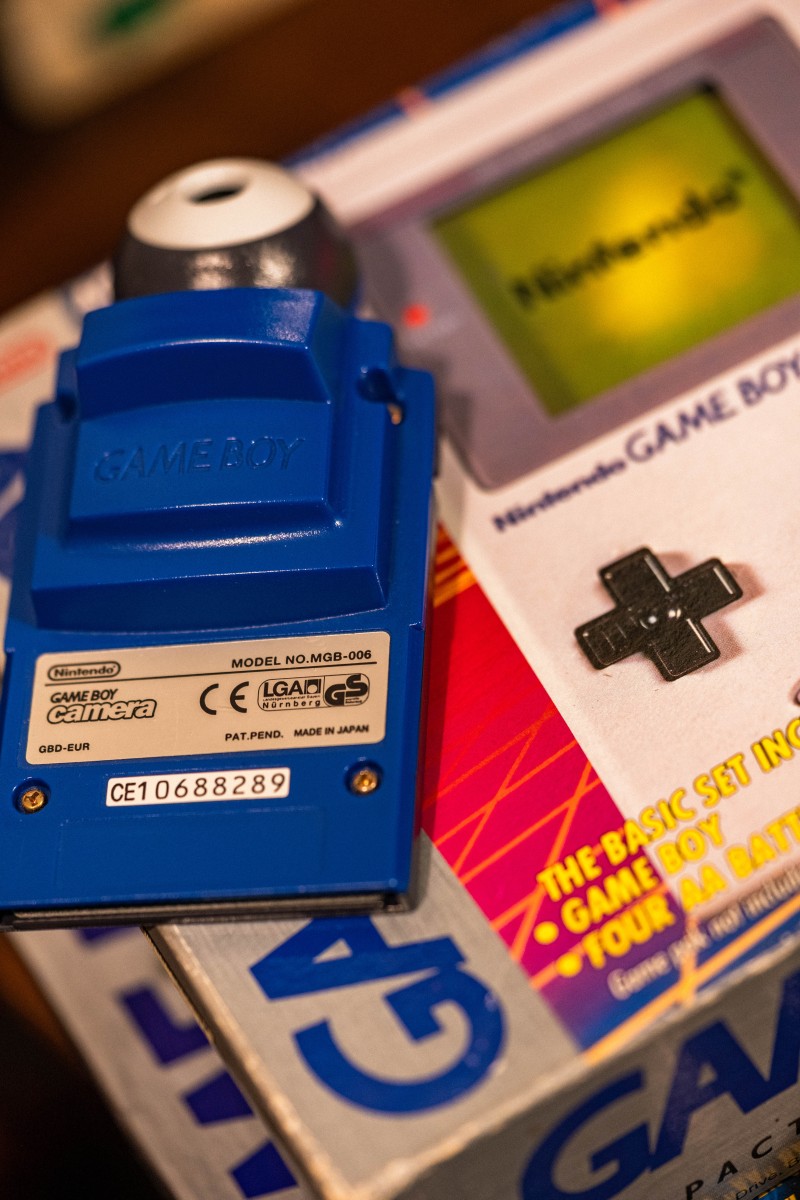
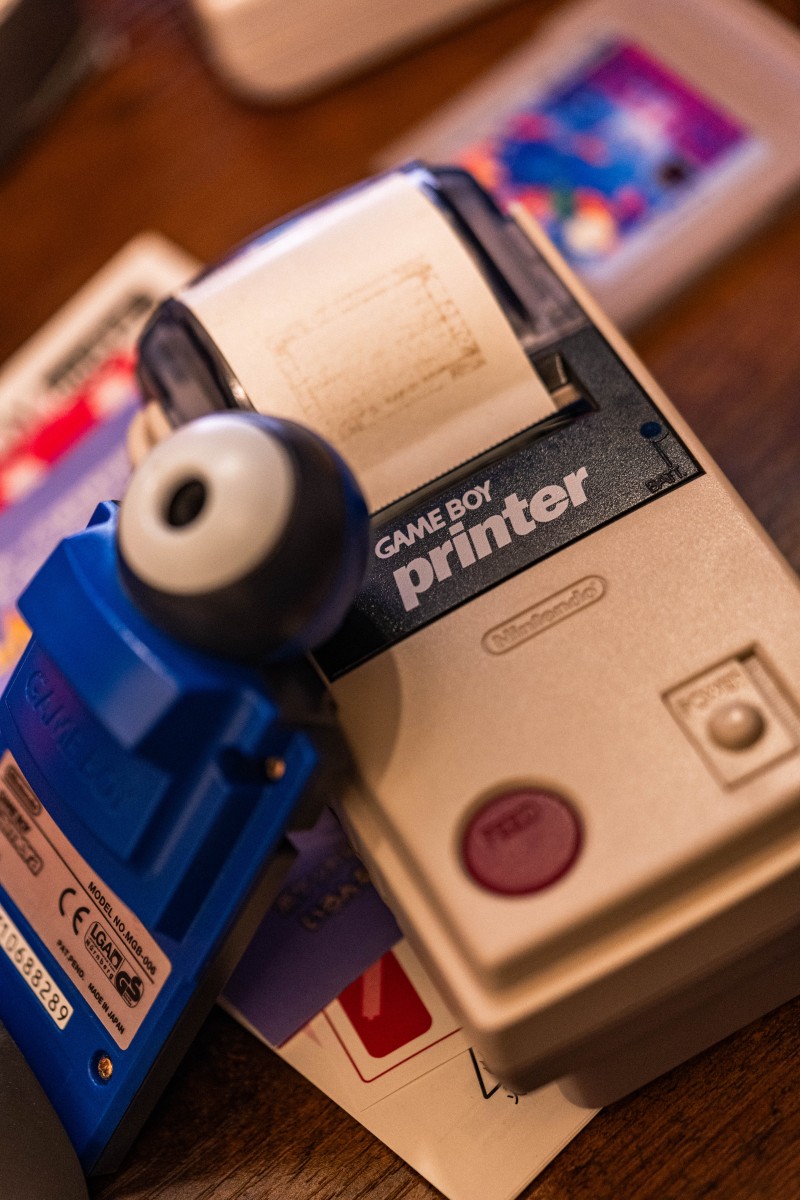
Launched in 1998, the Game Boy Camera was a tiny greyscale digital camera that snapped pixelated selfies and let users add stamps, doodles, and play quirky mini-games. It earned a Guinness World Record as the smallest digital camera at the time. Paired with the thermal Game Boy Printer, users could print photos on sticker paper. Some games like Pokémon Yellow and Zelda: Link’s Awakening DX even supported it. Today, it’s remembered fondly (and still used) for its charming lo-fi aesthetic and creative spirit.
Super Game Boy
Released in 1994, the Super Game Boy let you play Game Boy cartridges on a Super Nintendo with added color palettes, screen borders, and enhanced sound. Games like Donkey Kong ’94 and Kirby’s Dream Land 2 took advantage of these features. A Japan-only Super Game Boy 2 later added link cable support. It was a popular way to enjoy handheld classics on the big screen.
Link Cable & four-player adapter
The Game Link Cable (DMG-04) enabled head-to-head gaming and trading in titles like Tetris and Pokémon. The Four-Player Adapter (DMG-07), bundled with F-1 Race, supported up to four players in compatible games. These accessories turned the Game Boy into a social gaming device long before wireless multiplayer.
Screen Lights & Magnifiers
Before backlights, gamers relied on add-ons like the Light Boy, which combined magnifiers and lights to help see the screen in the dark. Other variations, like the Nyko Worm Light or all-in-one Handy Boy, were common. Though bulky, they were essential for nighttime play and remain part of the console’s retro charm.
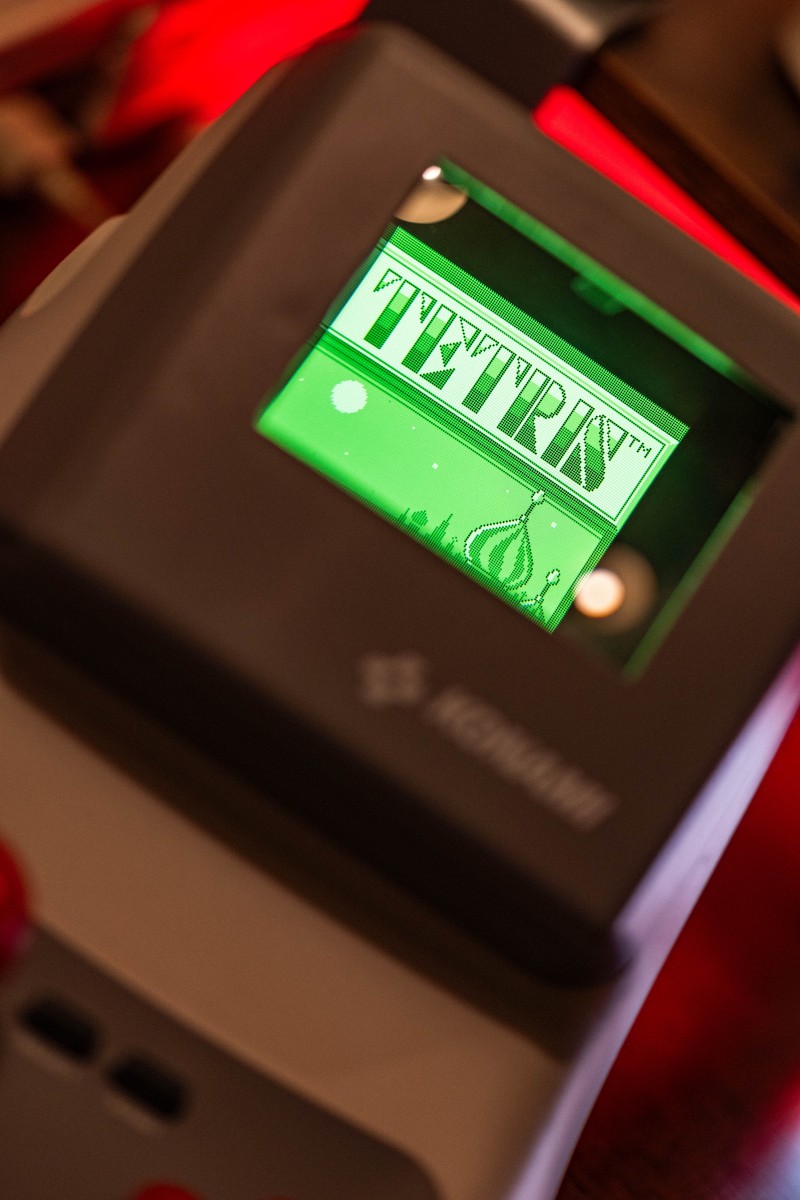
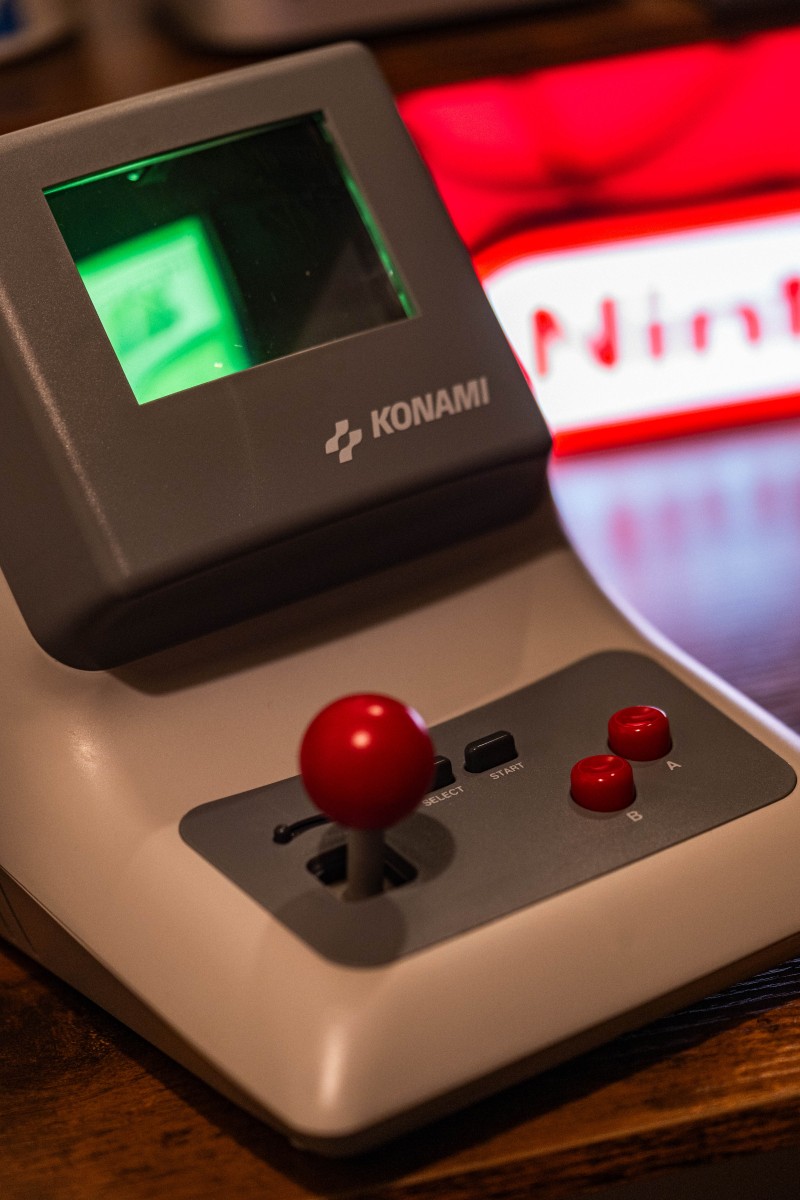
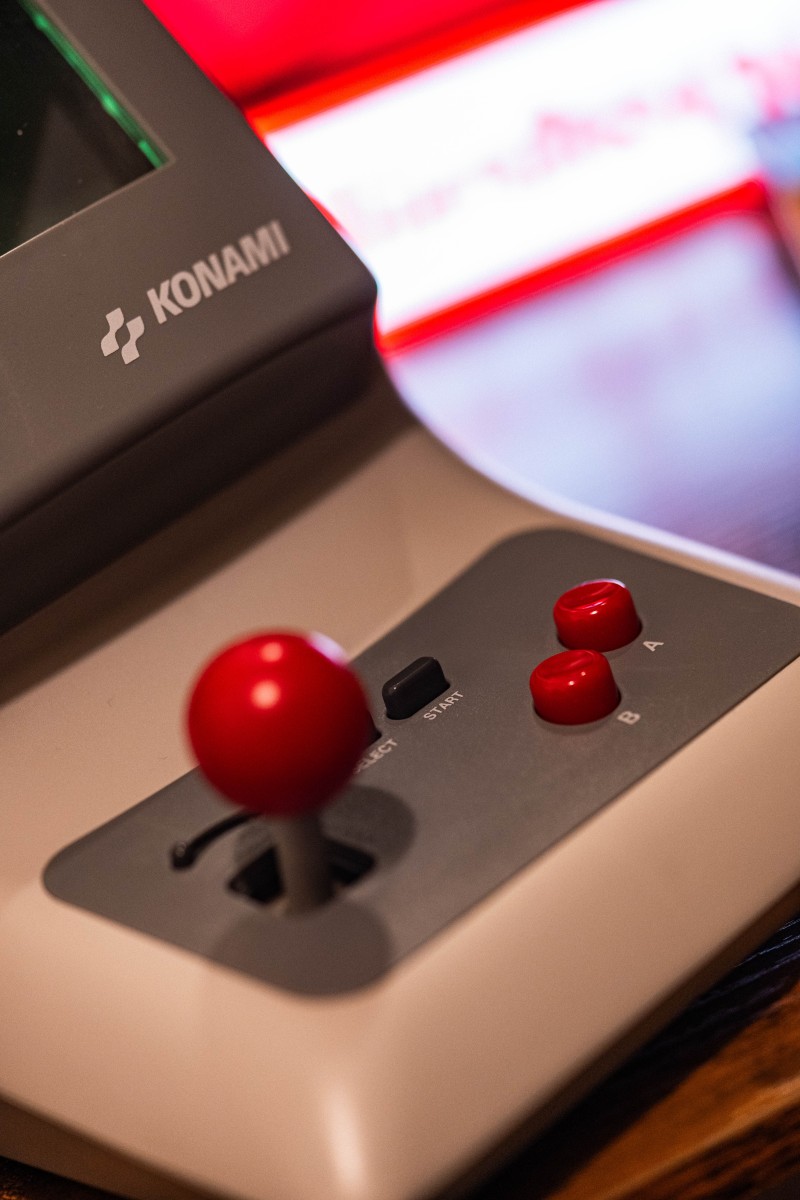
The Konami HyperBoy (RU-005) was a striking and ambitious accessory for the original Game Boy, turning the handheld into a miniature arcade machine. Released exclusively in Japan in the early ’90s, the HyperBoy featured a built-in joystick, stereo speakers, an integrated magnifying lens, and a light source, all housed in a bold, futuristic red-and-grey shell. Once docked, the Game Boy slotted into the unit and was transformed into something resembling a tabletop arcade cabinet, complete with tactile, clicky controls and amplified sound.
Similar to the HyperBoy, the Booster Boy was a chunky, all-in-one enhancement accessory designed to supercharge the original Game Boy’s functionality, and its size. Released by Saitek in the early 1990s, this peripheral enveloped the console in a bulky shell that added a larger magnifying lens, built-in lighting for better screen visibility, stereo speakers for boosted audio, and physical buttons that overlaid the original D-pad and A/B buttons to provide arcade-style responsiveness.
Other quirky add-ons
Some wild ideas turned into real products: a sonar fishing add-on (Pocket Sonar), FM radio receivers, sewing machine links, and the unreleased Work Boy PDA keyboard. Cheat tools like the Game Genie, car adapters, and battery packs rounded out an ecosystem of creative peripherals that extended the Game Boy’s life far beyond gaming.
Conclusion
Modern modders have transformed the original Game Boy into a retro powerhouse. IPS screen upgrades, backlights, USB-C charging, custom shells, and better audio components bring new life to aging units. Entirely custom builds and “Game Boy Macro” mods (repurposed DS consoles) reflect the scene’s creativity. These mods blend nostalgia with modern tech to make Game Boys more comfortable for modern use.
Vintage Game Boys, especially boxed or limited editions, are now coveted collectibles. Variants like the transparent “Play It Loud!” or regional exclusives draw serious attention. Original accessories and mint-condition games (like Pokémon Red or Zelda) can fetch high prices. Collectors often showcase their consoles as retro art, preserving them as cultural icons.
The Game Boy starred in ‘90s commercials, appeared in shows like The Simpsons, and symbolized tech-savvy youth. Nintendo’s stunts, like the walking Game Boy mascot, cemented its image in pop culture. Its silhouette still appears on t-shirts, memes, and collectibles as shorthand for retro gaming.
Two familiar tales highlight the Game Boy’s resilience: one survived a Gulf War bombing and still worked (once displayed at Nintendo’s New York store), and another went to space with a Russian cosmonaut in 1993, where it was used to play Tetris aboard Mir.
The Game Boy helped birth the chiptune scene thanks to software like LSDj and Nanoloop. Artists use it to compose 8-bit music, perform live, and celebrate its signature sound. Its pixel art inspired indie devs, retro design fans, and even LEGO sets, the Game Boy lives on as both an instrument and a design icon.
From film cameos to design inspiration for modern handhelds like the Playdate, the Game Boy remains a symbol of simplicity, durability, and childhood wonder. Its cultural and technological influence continues, reminding us how a little grey brick revolutionized portable entertainment.
But the Game Boy was also fundamental for Nintendo as a company, it reinforced it as a strong brand after the Famicom/NES, and began the empire of Nintendo as a popular video game company and its hegemony in the handheld gaming systems for the decades to come. While the competitors invested in raw power, Nintendo often chose more modest specifications and two steps ahead in terms of game library, ease of use, power consumption and… well, raw fun.
Stay curious. Stay nostalgic.
Because retro never dies, it just respawns.

Leave a Reply