

The Sega Master System was my first console ever when I was around 8. It has a special place in my video gaming memories.
The original Sega Master System console (also called the “Power Base”) is an underrated gem of the 8-bit era. If you grew up gaming in the mid-1980s, you remember the console wars. In playgrounds and living rooms, Nintendo’s NES reigned supreme. But off to the side, there was another kid on the block: a sleek and sharp black box that dared to challenge the giant. This is the story of the Sega Master System, the 8‑bit underdog that almost changed the game. It’s a tale of bold innovation, missed chances, and a legacy that refused to fade. Let’s dive into the rise, fall, and enduring impact of Sega’s first global console.

The Sega Mark III (1985): the Japanese foundation
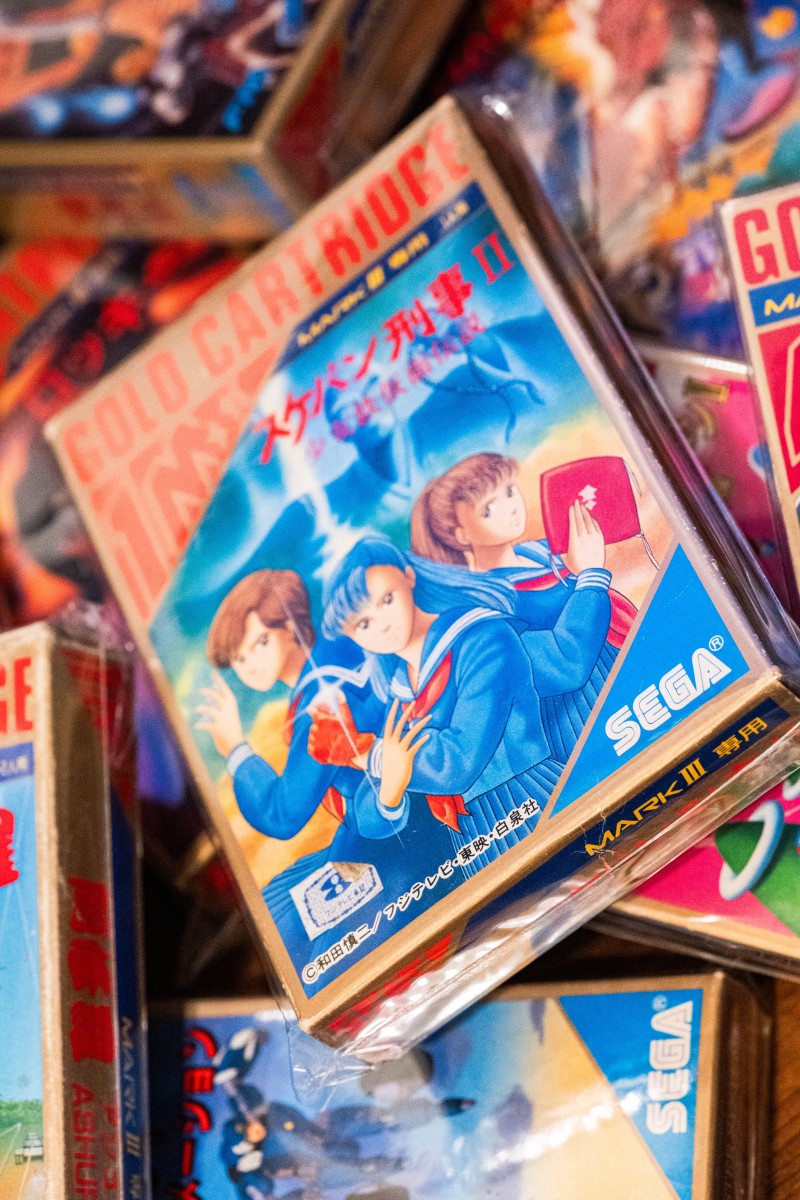
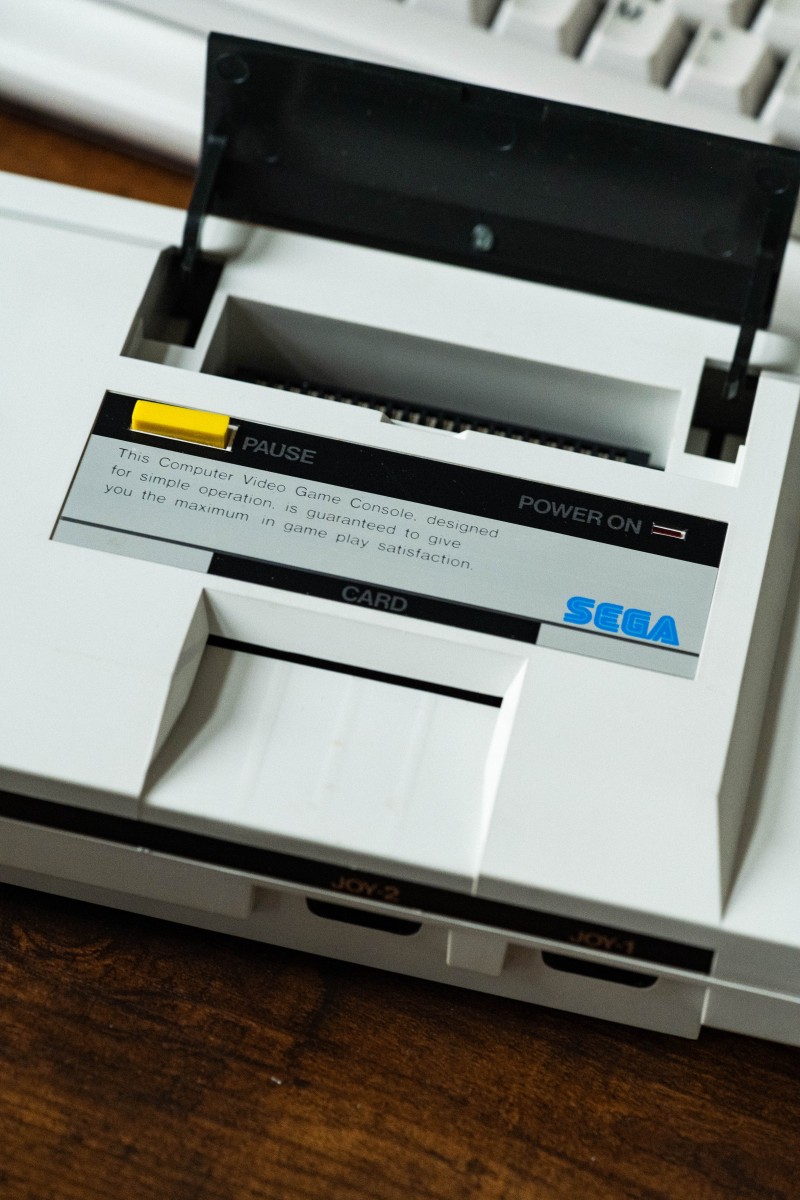
The story of the Master System begins in Japan, where it was introduced not as a new machine, but as the next evolution in Sega’s existing home console line. The original Japanese console was the Sega Mark III (MK-3000), released on October 20, 1985. Its design reflects its lineage as the direct successor to the SG-1000 and SG-1000 II consoles. These earlier systems leaned closer to affordable home computers, featuring optional accessories like keyboards and even printers. This heritage explains the Mark III’s boxy, functional aesthetic, which visually contrasts sharply with the sleeker design of its international successor. The Mark III models, however, were never released outside of Asia.
Technically, the Mark III was ambitious for its time, it was a beast. Sega’s console packed a faster processor and significantly more memory than the NES, about four times the system RAM and eight times the video RAM of its rival. This hardware muscle meant it could push more vibrant visuals: the Master System could display up to 32 colors on screen from a palette of 64, a bold leap beyond the NES’s typical color limit. In an era where gaming was defined by pixels and palettes, those extra colors really popped on a CRT TV.
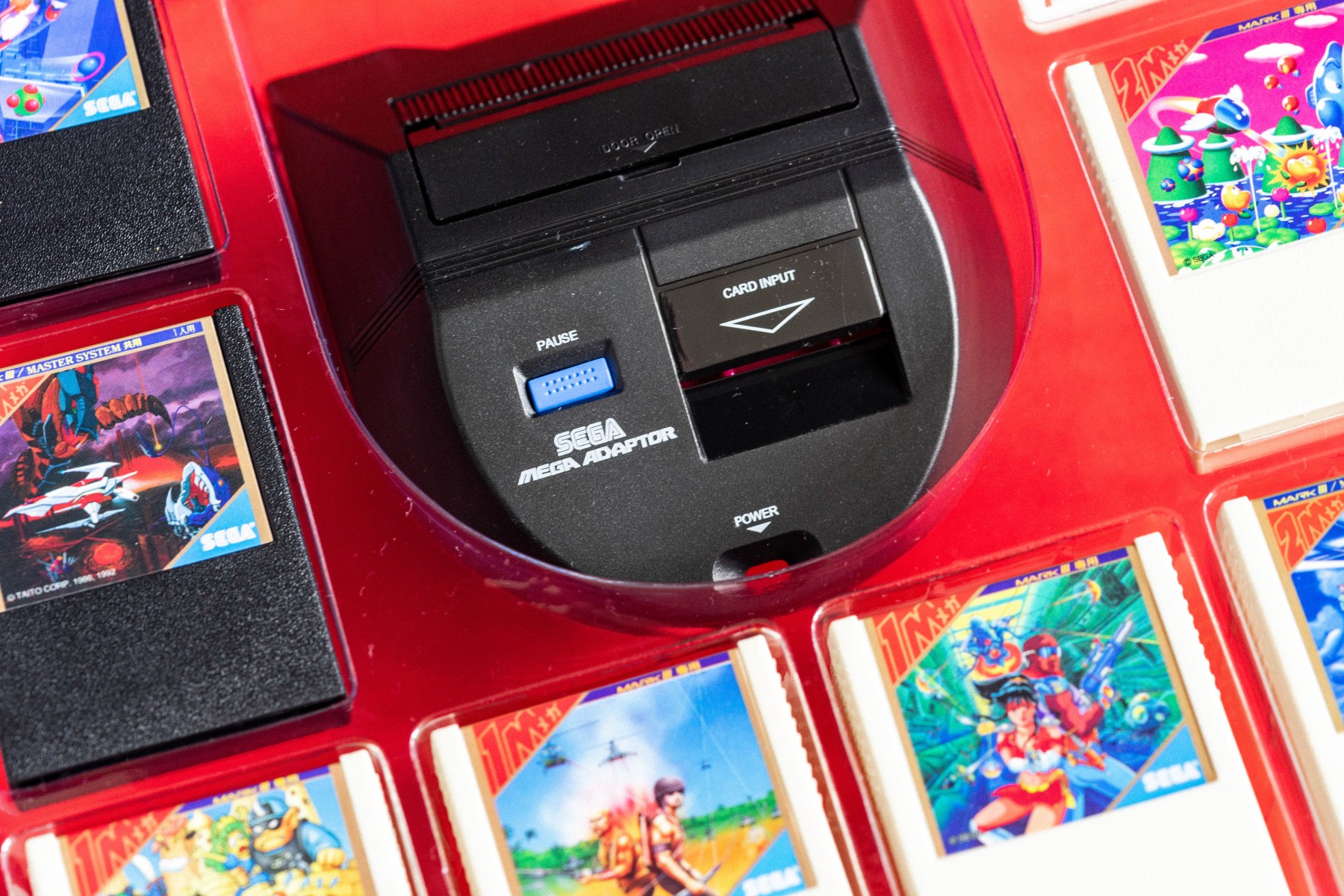
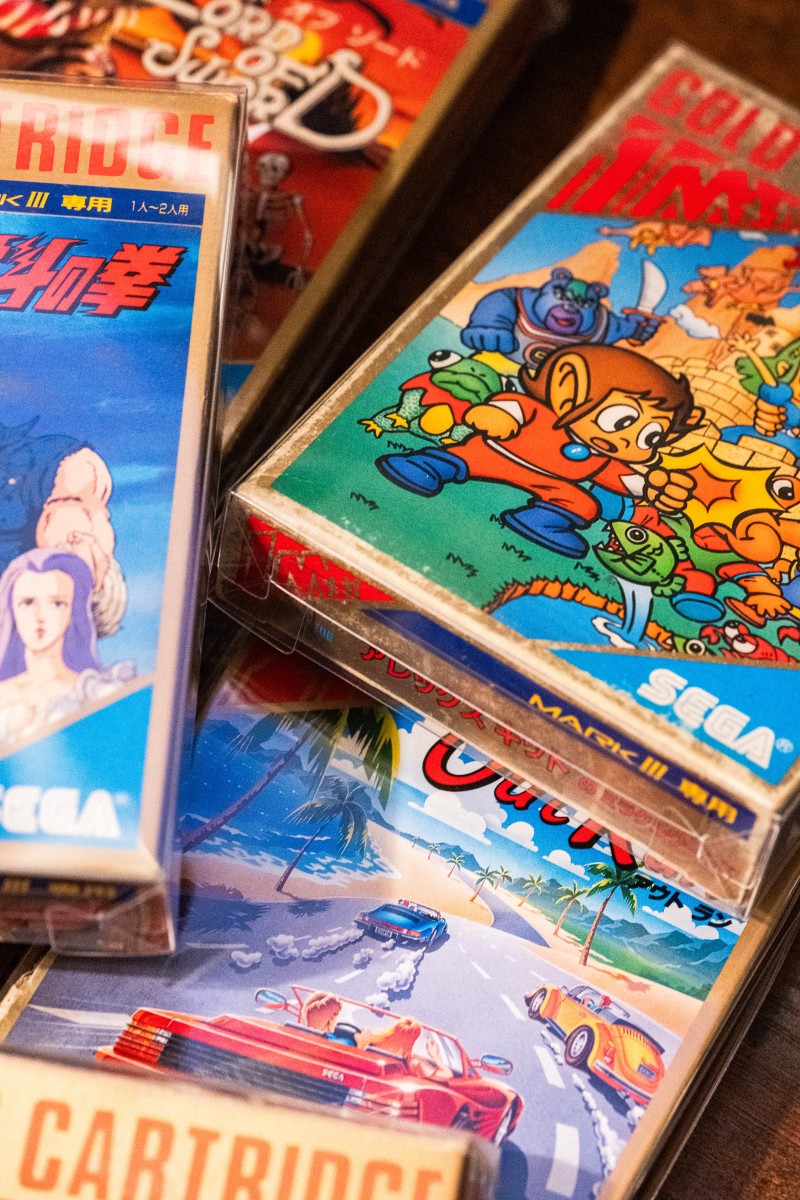
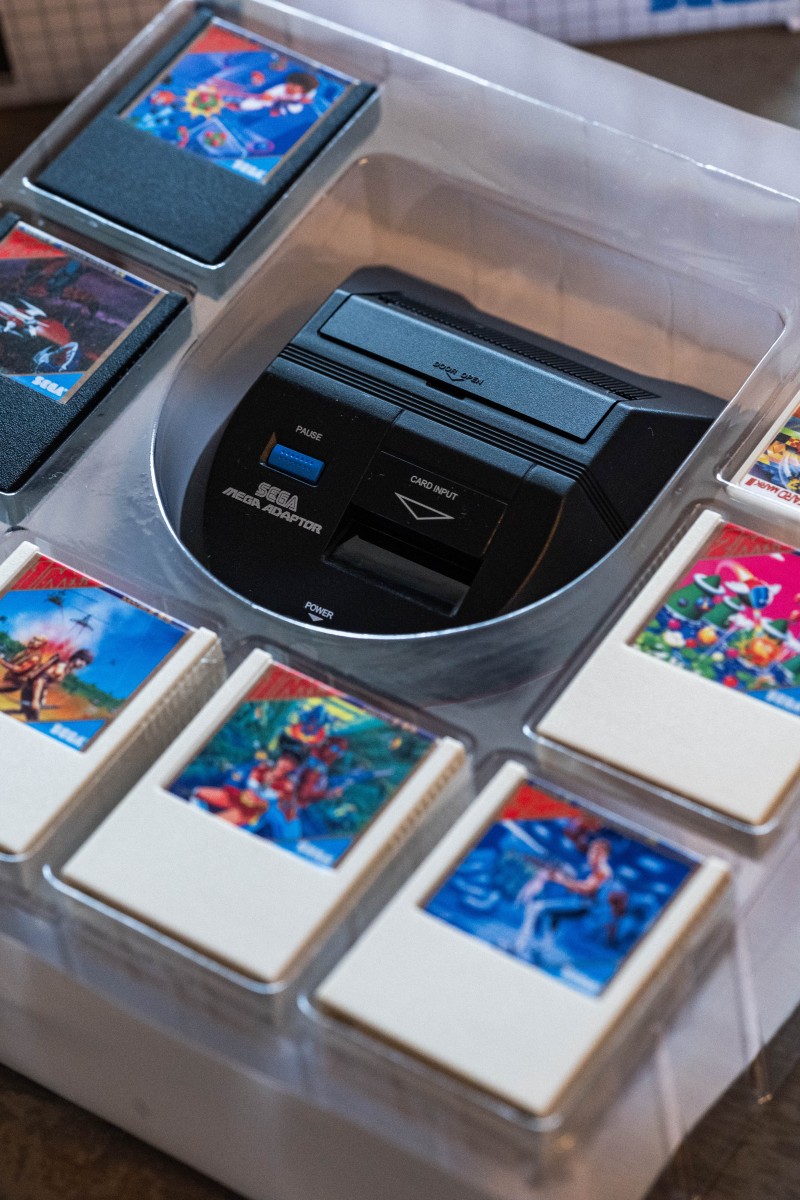
From its inception, the Mark III supported two distinct media formats: standard ROM cartridges and the credit card-sized Sega Card (or My Card) format (very similar to the NEC PC Engine Hu-Cards).
Despite its technical polish, the Mark III struggled immensely in its domestic market. Launched at ¥15,000, Sega entered a landscape already overwhelmingly dominated by Nintendo’s Famicom. Nintendo’s restrictive third-party exclusivity contracts ensured that many high-profile developers focused exclusively on the Famicom, starving the Mark III of crucial software support.
By 1989, the Sega Mark III had achieved sales of roughly 1.7 million units in Japan, while the Famicom had sold an estimated 19.35 million units in the same market. The limited success in Japan forced Sega to make a pivotal strategic decision: a complete pivot toward international distribution and a radical system redesign, becoming the Master System branding.
The Master System, the flagship model
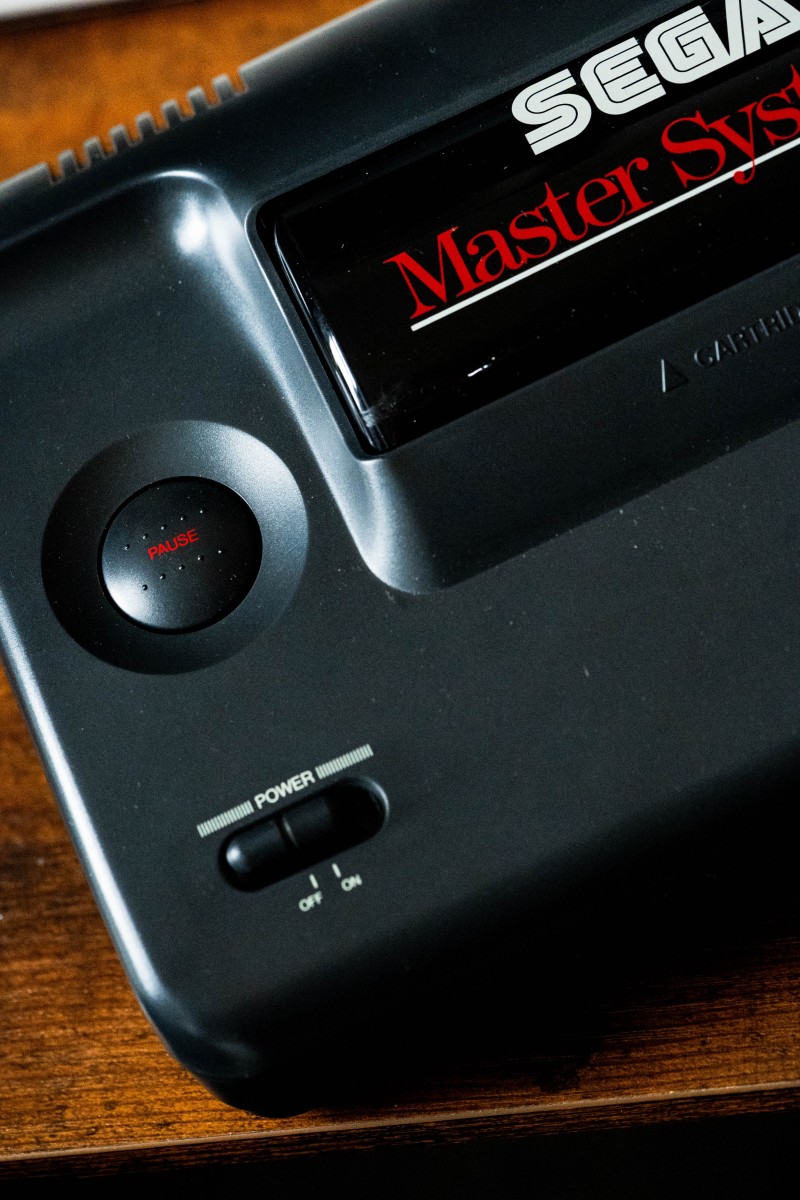
Right out of the gate, the Master System looked the part of a future-forward machine. The redesigned Master System I was released in North America in September 1986, and in Europe in August 1987. This console adopted a sleek, angular, and black aesthetic, a deliberate move to contrast with the “beige VCR design” of the NES and to position the system as technologically advanced and sophisticated. Introductory prices were set around $200 USD in North America and £99.95 in the UK.
The international sales narrative became a story of stark regional divergence. In North America, the launch struggled due to poor distribution. Because of Nintendo’s dominance and retailers’ scepticism, the Master System only achieved about 10% of the market share in the crucial NTSC region. In Europe, however, the strategy proved highly effective. Local partners, particularly Virgin Mastertronic in the UK, France, and Italy among others, had superior retail and distribution relationships than Nintendo. They marketed the Master System aggressively as “arcade games at the home” and a superior alternative to popular home computers like the Commodore 64 and ZX Spectrum. This strategic positioning led to far greater global success in Europe, South America, and Australia compared to the NES.
I remember in Italy, Sega’s marketing and TV adverts were very strong, relying on famous testimonials at the time, and even football players of the Italian national football team. I remember the Master System as a more advanced and newer console compared to my friends’ NES.
The Superior Japanese Re-release (1987)
Sega launched a new, final revision of the Master System in Japan on October 18, 1987. This unit incorporated every advanced feature available for the platform:
- A built-in Yamaha YM2413 FM audio chip
- A dedicated port for the Sega 3-D Glasses
- A rapid-fire switch for enhanced playability in action titles
Sega produced the definitive, technically superior version of the console (the Japanese MS1) yet strategically withheld this crucial advantage from the primary international markets (North America and Europe) where the bulk of sales were occurring.
The original Master System models (Mark III and Master System I) were designed to be feature-rich, supporting an ecosystem of peripherals that utilized its dual media format and multiple ports.
The Sega 3-D Glasses and stereo experience
One of the most innovative, if underutilized, accessories was the Sega 3-D Glasses. This peripheral offered one of the first consumer-grade stereoscopic 3D experiences available for a home console. The glasses functioned using LCD shutter technology, alternating the lens shutters between black and clear in synchronisation with the television’s refresh rate. This rapid alternating block created a stereoscopic image for the viewer, resulting in a three-dimensional effect in supported games.
Crucially, the compatibility of this accessory was tied directly to the card slot in the North American and European MS1 models, as the interface for the glasses utilized this port. The Japanese MS1, however, included a dedicated port for the accessory. Games such as Space Harrier 3-D, OutRun 3D, Maze Hunter, and Zaxxon 3D utilized both the 3D effect and, in regions where available, the enhanced FM audio, creating a unique technological showcase for the system.
Controllers and input
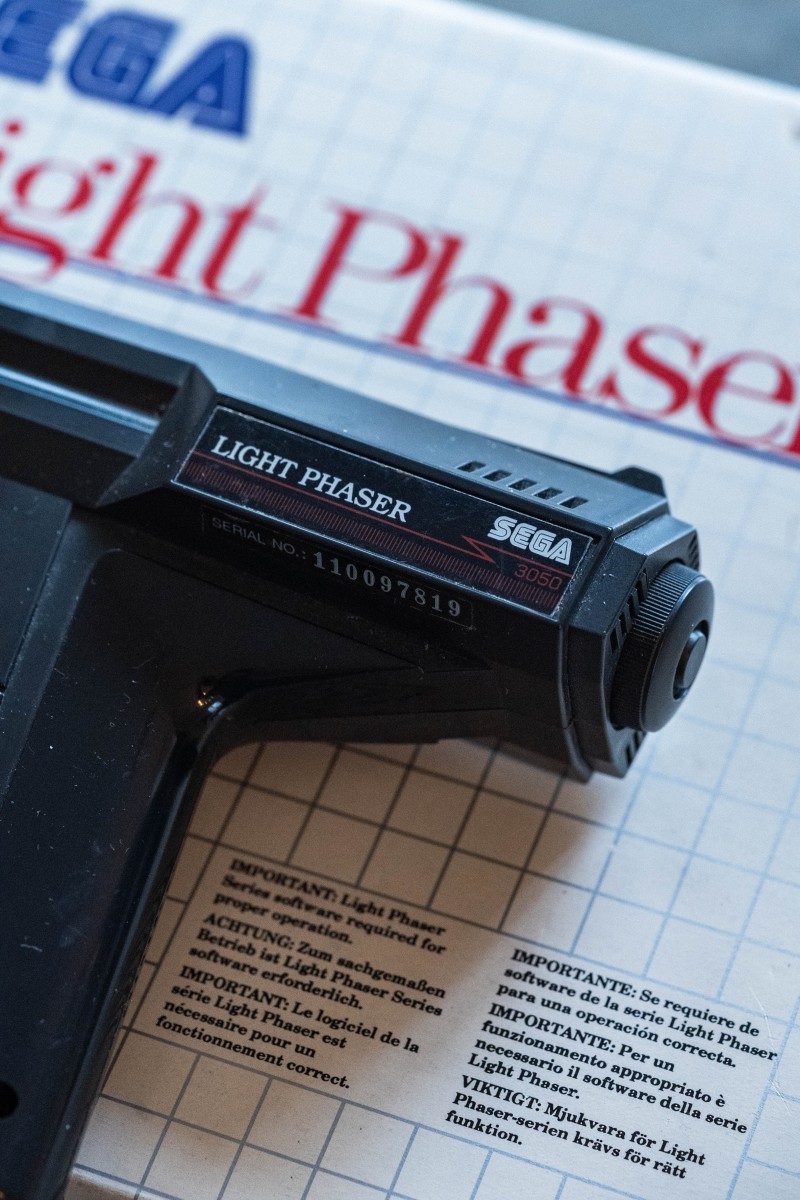
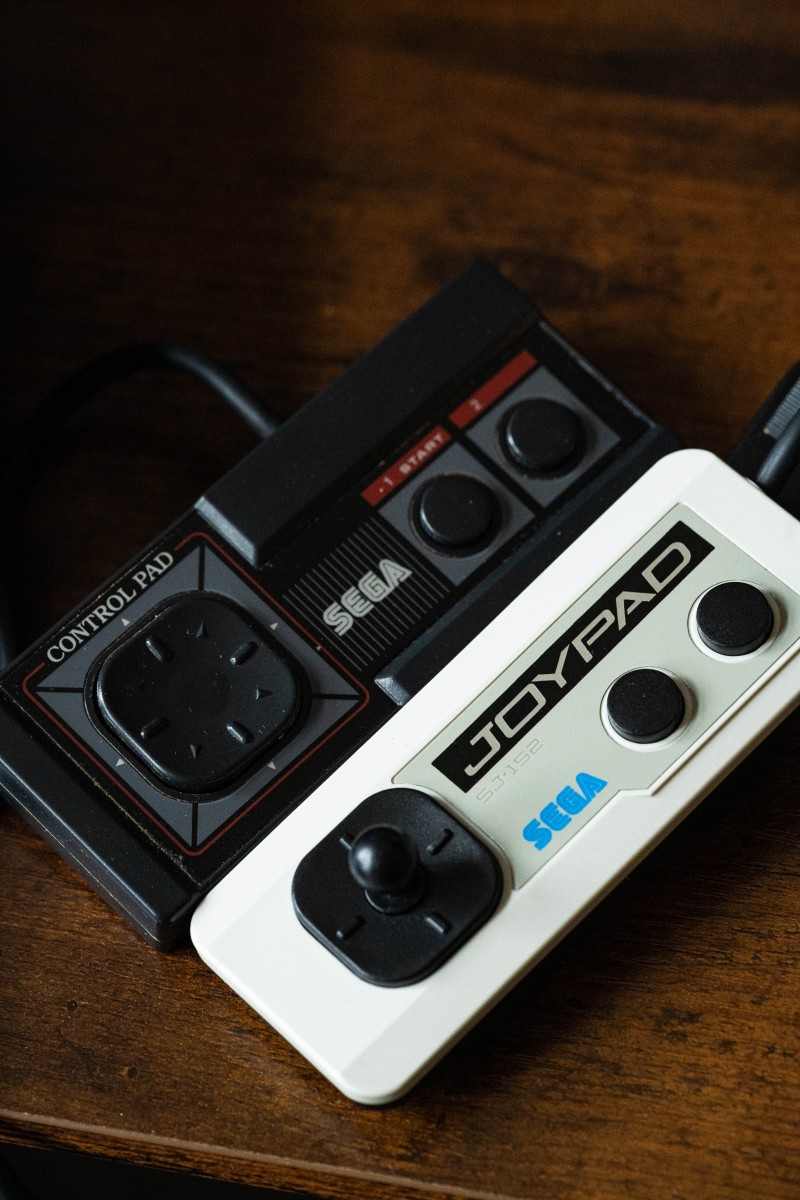
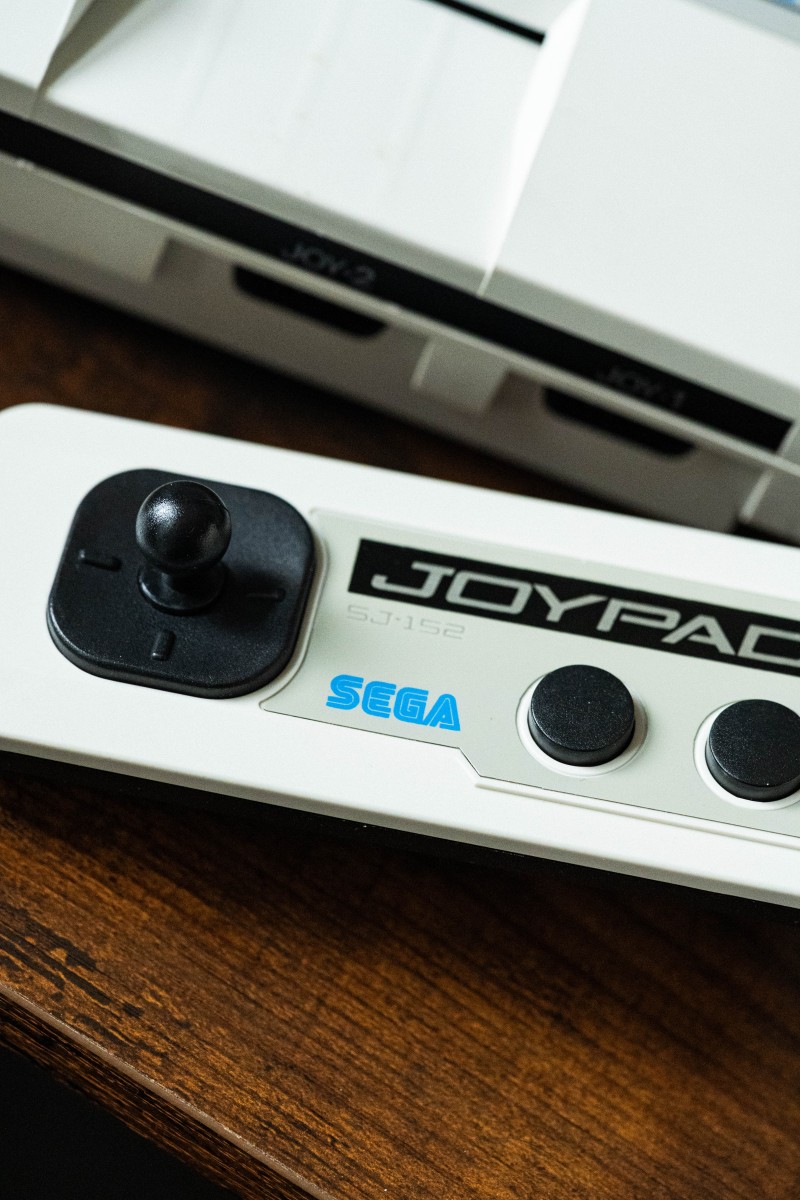
Beyond the standard two-button controller, the Master System supported several specialized input methods. The Light Phaser was Sega’s light gun, essential for games like Safari Hunt and Missile Defence 3D. For high-speed action games, the Rapid Fire Unit was a popular accessory. This small device was inserted inline between the controller and the console, adding independent, adjustable auto-fire capabilities for buttons 1 and 2. This accessory compensated for the absence of the built-in rapid-fire switch that was standard only on the Japanese MS1. Speciality controllers, such as the Sports Pad (a trackball used for sports titles), further expanded the system’s input versatility.
The Sega Card format failure
The existence of the card slot on the Mark III and MS1 models highlights the initial plan to offer a dual-format library. The Sega Card format was physically thin and credit card-sized. While substantially cheaper to manufacture than standard cartridges, the format was severely limited in storage capacity, typically holding only 32 KB. As games grew more complex in the mid-to-late 1980s, this limitation rendered the format quickly obsolete, leading Sega to exclusively focus on the higher-capacity ROM cartridges for distribution. Furthermore, the card format was largely region locked, preventing most Japanese cards (My Cards) from being played on non-Japanese hardware.
The Master System II (1990), simplicity and savings
As the 16-bit era dawned with the launch of the Sega Mega Drive (Genesis in the US), the Master System needed a dramatic overhaul to remain viable as a budget, entry-level console. This resulted in the cheaper Master System II.
Released around 1990 in North America, Europe, and Australasia, the Master System 2 was a pure cost-saving measure. It adopted a smaller, rounded, consumer-friendly aesthetic, but this redesign came at the expense of nearly all the Mark III and MS1’s defining advanced features:
Card slot removal: the key structural cut was the elimination of the Sega Card slot. This removal simultaneously killed compatibility with the Sega Card media format and rendered the console incompatible with the stereoscopic Sega 3-D Glasses.
Video output regression: in most North American, European, and Australian units, the cost reduction extended to the video circuitry. The high-quality RGB/A/V output port present on the Master System I was omitted, leaving only the lower-quality RF output.
No FM Sound: Like its international predecessors, the Master System 2 continued to lack the built-in YM2413 FM sound chip, relying solely on the basic audio.
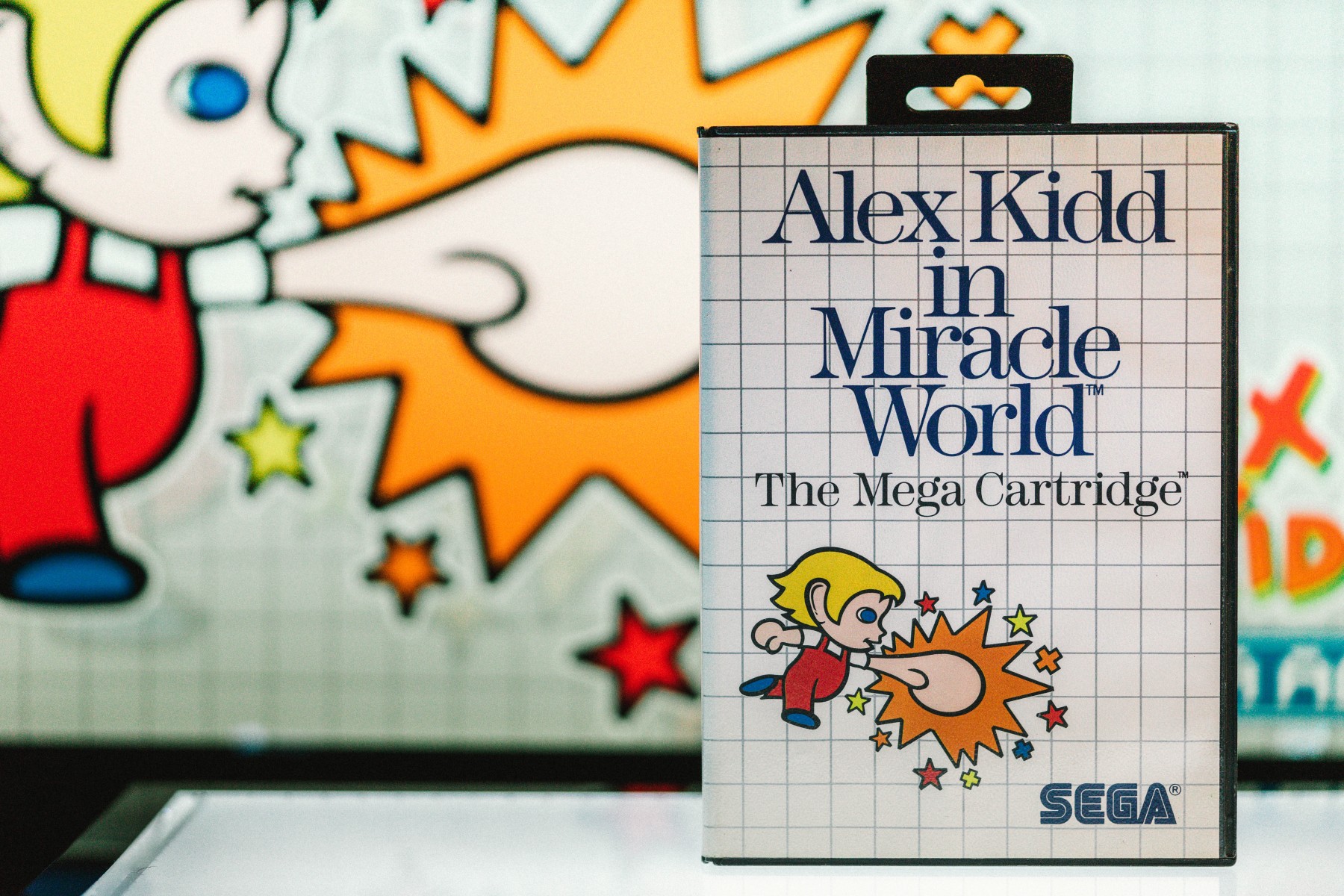
The built-in game strategy: Alex Kidd
To compensate for the severe reduction in hardware features, the Master System 2 introduced a flagship game built directly onto the motherboard ROM. My Master System 2 came with Alex Kidd in Miracle World built into the hardware. Switching on the console, it would boot directly to the game. This meant the console was immediately playable out of the box without purchasing a single cartridge, quite a good marketing move. This inclusion replaced the obscure, technical “Easter egg” minigame, Snail Maze, which was hidden within the BIOS of earlier Master System I units and accessed only by holding specific button combinations during the boot sequence.
Alex Kidd in Miracle World is a fun and colourful platformer, but despite its cheerful aesthetic, the game was notoriously challenging… very, very hard! It was my first video game (since it was included in my first console!), if I don’t count a random PONG clone that was in my home before that. The game is known for its demanding platforming and the unique, sometimes frustrating, “Janken” (rock-paper-scissors) boss battles (until you found the pre-defined pattern to beat those bosses). I remember finding the game terribly difficult and only thanks to the vital intervention of my older (much, much older) brother allowed us to see the end of the game. It was quite common at the time to have really difficult gameplay, almost as a way to extend its longevity.
In later PAL territories, the successful new mascot, Sonic the Hedgehog, sadly replaced Alex Kidd, resulting in Master System 2 variants that featured Sonic the Hedgehog built into the system.








Global dominance: Europe & Brazil
While the Master System failed to overturn the NES in Japan and North America, its story is defined by extraordinary success and unprecedented longevity in secondary markets. The platform is estimated to have sold between 10 and 13 million units worldwide (not counting post-1993 Brazilian sales).
Europe, particularly the UK, became the Master System’s largest market outside the Americas. European distributors successfully leveraged Nintendo’s perceived reluctance regarding the fragmented European market. Distributors like Virgin Mastertronic effectively positioned the console as a superior alternative to home computers, focusing on high-quality ports of Sega’s arcade library. This strategy secured a significant foothold, allowing the European region to accumulate the largest official library for the system, exceeding 300 licensed games, with releases continuing well into the mid-1990s.
The Tectoy Empire in Brazil
The ultimate narrative of the Master System’s endurance rests with Brazil. Launched in 1989, distribution was handled by the local company Tectoy, which engineered a relationship that allowed the console to remain active and licensed for decades. Tectoy is credited with selling over 8 million licensed Master System variants, a figure that nearly matches the official 10–13 million units sold by Sega worldwide. At its peak, Tectoy commanded an 80% market share of video games in Brazil.
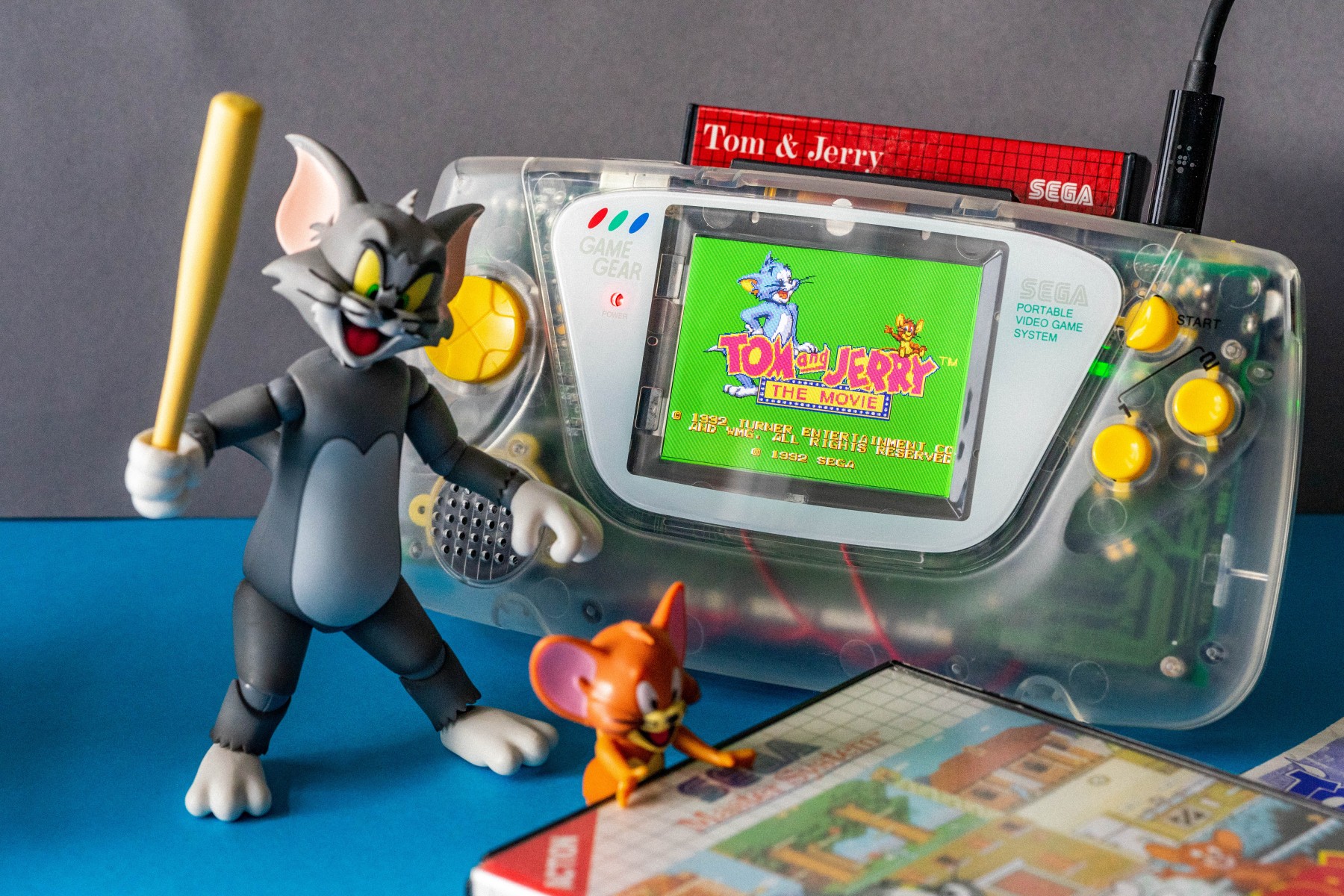
Tectoy maintained the platform’s viability through continued production, introducing unique hardware variants and engaging in extensive cultural localisation of software. In 1997, Tectoy even developed an 8-bit version of Street Fighter II for the Sega Master System, doing a pretty good job with it! The game was released only in Brazil, making original cartridges a sought-after item for collectors.
Secrets, Surprises, and Classic Games
A console lives and dies by its games, and the Master System had some real gems, even if they’re a bit forgotten today. This is the list I featured in the video (watch it here): a mix of games that I played on my original Master System 2 in the 90s, and some other games that I discovered later on.
Alex Kidd (Platformer)
Before Sonic the Hedgehog was born, Sega’s unofficial mascot was a monkey-like boy named Alex Kidd. This charming platformer had Alex punching enemies and munching on onigiri rice balls, and even introduced kids to the Japanese game of Jan-Ken-Pon (rock-paper-scissors) with its quirky boss fights.
Wonder Boy (Platformer)
Originally released in 1986, Wonder Boy on the Master System expanded the arcade game to 40 stages with new environments like deserts and clouds. While visually charming, its slippery controls remained a sticking point from the arcade version.
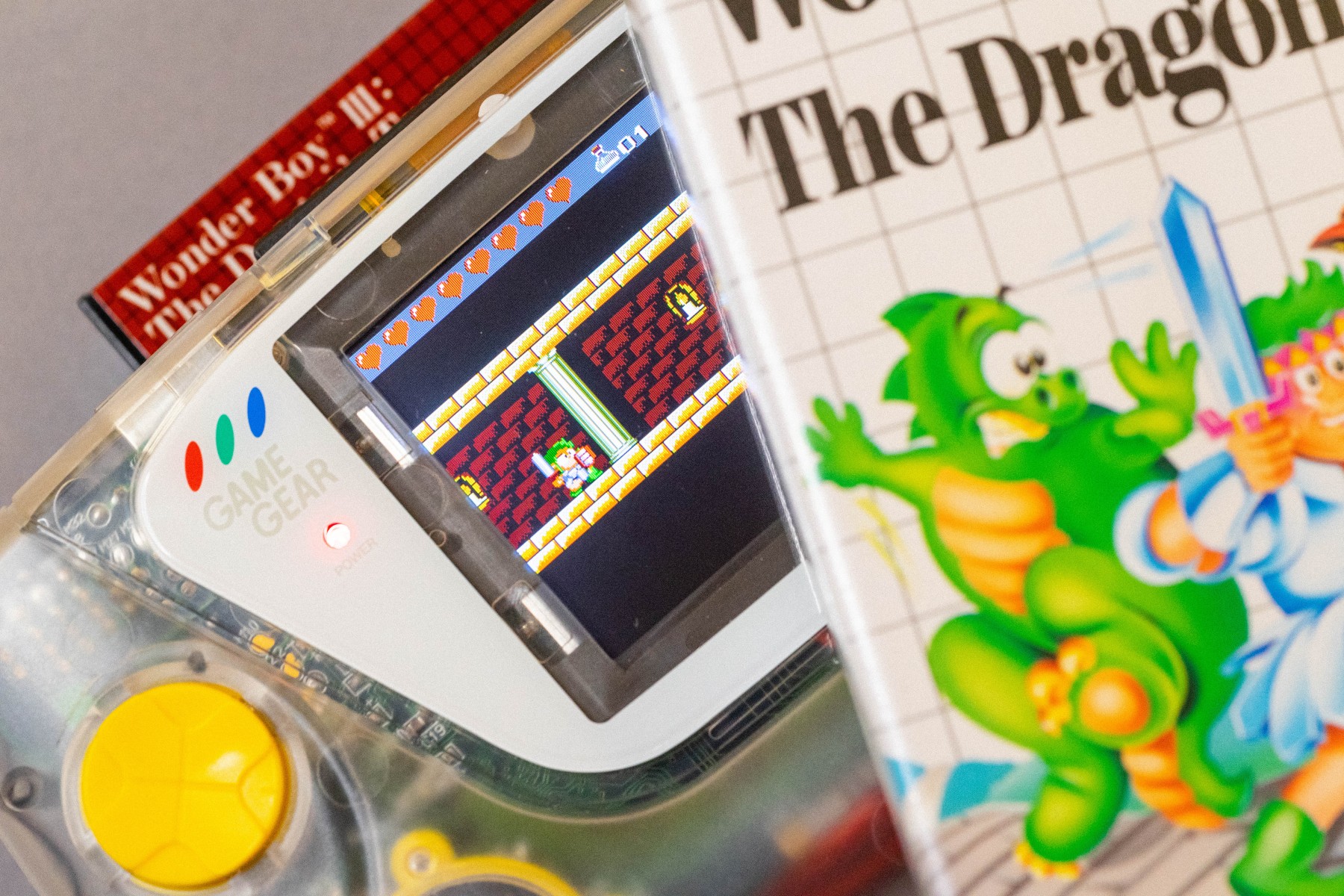
Wonder Boy III: The Dragon’s Trap (Action-Adventure)
A standout 1989 title, The Dragon’s Trap blended platforming with RPG elements. Wonder Boy, cursed into various animal forms, explores a non-linear world to break his curse. Its transformation mechanics and FM audio support (Japan-only) made it a technical and design milestone.
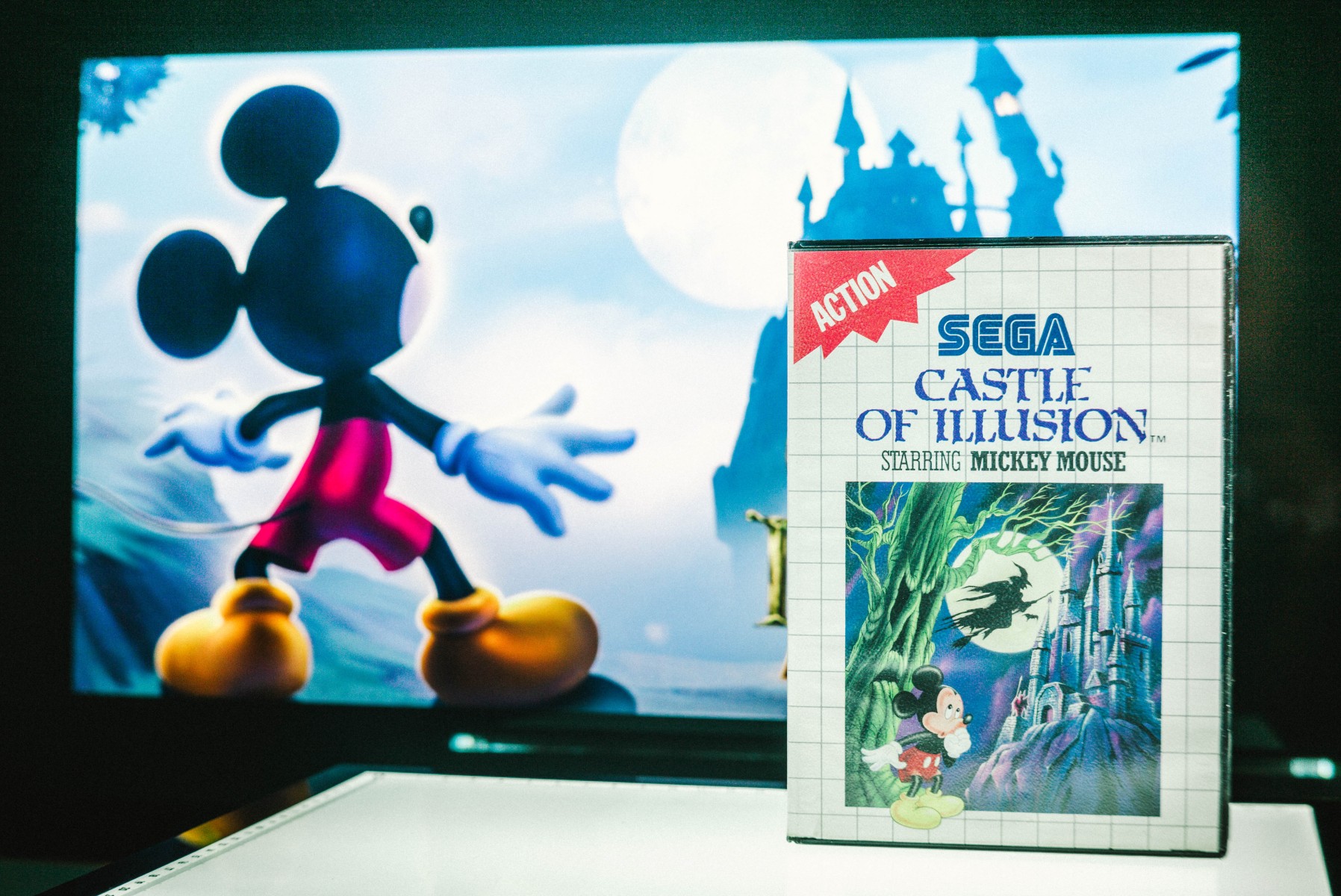
Castle of Illusion (Platformer)
One of the best games for the system. I prefer this version to the Sega Mega Drive’s one! Released in 1990, this Mickey Mouse adventure showcased the SMS’s graphical power with vibrant visuals, large bosses, and refined gameplay. It marked Sega’s push to rival Capcom’s Disney games on NES.
Land of Illusion (Platformer)
Following Castle, this game deepened the formula with item-based exploration and ability gating across 14 detailed levels. Its mix of platforming and light Metroidvania mechanics made it one of the SMS’s best-looking titles.
Zillion (Action/Exploration)
Zillion (1987) combined side-scrolling action with code-based puzzles inside an alien base. The hero’s gun inspired the design of the Light Phaser. You could switch between three characters, each with unique traits, adding depth to its non-linear progression.
Zillion II: The Tri Formation (Action/Shooter)
This sequel shifted to a more linear, shooter-heavy experience, ditching most of the first game’s puzzle elements. It featured enhanced FM audio for Mark III owners.
Kenseiden (Action-RPG)
This 1988 samurai platformer stood out for its Japanese setting, preserved Kanji stage names, and punishing difficulty. Featuring RPG elements and FM audio, it was often called “Castlevania in feudal Japan”.
Streets of Rage (Beat ’em Up)
The 1993 SMS port of Sega’s 16-bit hit kept solid visuals and gameplay speed, despite hardware limits. It dropped co-op and limited on-screen enemies, but included all three characters and even added a new boss.
Predator 2 (Action)
This 1992 tie-in offered fast-paced, side-scrolling shooting tuned for SMS hardware, favoring arcade-style reflexes over the Genesis version’s overhead approach.
Laser Ghost (Light Gun Shooter)
A 1991 Europe-only title, Laser Ghost used the Light Phaser in a ghost-hunting rescue story. Though not an arcade port, it showed Sega’s commitment to peripheral-based gameplay.
Ghost House (Platformer)
An early 1986 release, Ghost House featured Dracula fights and punishing difficulty. In Brazil, Tec Toy rebranded it with El Chapulín Colorado characters, reflecting Sega’s smart regional adaptations.
World Cup Italia ’90 (Sports)
A football game released in Europe and Brazil, it adapted the 16-bit World Championship Soccer to 8-bit, focusing on smooth gameplay and local appeal, including a rebrand as Super Futebol II. This is the first World Cup I remember watching on the tv, in those “notti magiche” in the summer 1990 in Italy… and I played this game a lot with my brother.
Conclusion
By the early 1990s, the 8-bit chapter of gaming was closing. Sega itself had launched the 16-bit Mega Drive/Genesis in 1988/1989, and a new generation of console wars with Nintendo was underway (this time, Sega would really give Nintendo a run for its money, but that’s a story for another time). It would have been easy for the Master System to fade into obscurity, a failed competitor left in Nintendo’s shadow. Yet, interestingly, its legacy only grew more impressive with time.
For one, thanks to its enormous longevity in places like Brazil, the Sega Master System is often cited as the longest-lived game console in history. Think about that – a machine born in the mid-80s that kept on selling, in one form or another, well into the 21st century. It even outlasted the production run of the legendary Atari 2600. This little console simply refused to die!
Perhaps even more important is how the Master System set the stage for Sega’s future. The lessons Sega learned from this bruising 8-bit battle were crucial to their later success. The Master System taught Sega how to court regional markets like Europe and Brazil, a strategy that would pay dividends in the 16-bit era. It also pushed Sega to cultivate its own franchises and characters – the experience making games like Alex Kidd and Phantasy Star in-house gave Sega confidence and creative know-how going forward.
In the end, the Sega Master System remains one of gaming history’s great “almost” legends. It almost dethroned Nintendo in the 8-bit era, but not quite, at least not globally. It almost gave us a mascot as beloved as Mario, Alex Kidd came close, but Sonic would steal that crown later. Yet in its own right, the Master System earned something perhaps more interesting: respect. Ask any gamer from Brazil or Europe in the late ’80s, and they’ll tell you the Master System was their console. Ask collectors and retro enthusiasts today, and they’ll speak fondly of its crisp graphics and unique library. Even in North America, there’s a growing appreciation for what the Master System was, a technically superb underdog. It may never have worn the 8-bit crown, but it earned a legacy far more enduring: the heart of an underdog and the soul of a pioneer. And in the grand tale of video game history, that makes the Sega Master System a true 8-bit legend.
Stay curious. Stay nostalgic.
Because retro never dies, it just respawns.


Leave a Reply