

Introduction
For Halloween, I’ve pulled together the retro horror games in my collection: 8-bit ghost stories, haunted-house adventures, RPGs, sound novels and 90s FMV experiments. Many come from Japan. Some are frightening; others are strange, beautiful or simply full of yokai. These are the games I wanted to spend a long, dark evening with.
You can even watch a video… I made it all very easy for you, didn’t I? Kindness, I guess.

How did I put together this list, you ask? Some games that are quite important for the horror genre, influential on later games (e.g. Sweet Home for the Famicom). Some games are a passion of mine (Cosmology of Kyoto), quite obscure rarities that deserve to be more broadly known (Dead of the Brain). Some others just have that great aesthetic, cute 8-bit-induced fear. I’m passionate about the Japanese Yokai, btw, so you’ll find some good examples of those ones in here (e.g. GeGeGe no Kitaro). Overall, I love Japanese horror, manga, anime, movies and ghost stories. So, to be scared, I prefer the silent look of an eye from behind a door to an easy jump scare.
Hope you enjoy, let me know what titles should be in this list! Let’s start.
The 7th Guest (PC, 1993)

A landmark in CD-ROM gaming, The 7th Guest is an interactive horror-themed puzzle adventure filled with full-motion video and pre-rendered 3D graphics. It was one of the first games released only on CD-ROM and gained fame for its creepy mansion setting and live-action ghost story. As the player solves 21 diabolical puzzles in a haunted house, ghostly FMV scenes unveil the fate of six guests lured there by the sinister toymaker Henry Stauf. The game’s technical achievements were huge: it sold over two million copies and, alongside Myst, became a killer app that drove CD-ROM adoption. Its mansion and video sequences made a striking demonstration of what a CD-ROM could hold. The 7th Guest also pushed boundaries with its adult tone and was one of the earliest games to use extensive voice-acted video clips in gameplay. The special edition I have, including a bonus VHS “Making of” tape with developer interviews… a fittingly retro package for this classic haunted-mansion puzzler. I mean look at this beauty, such a shame that games don’t come in this kind of packaging any more.
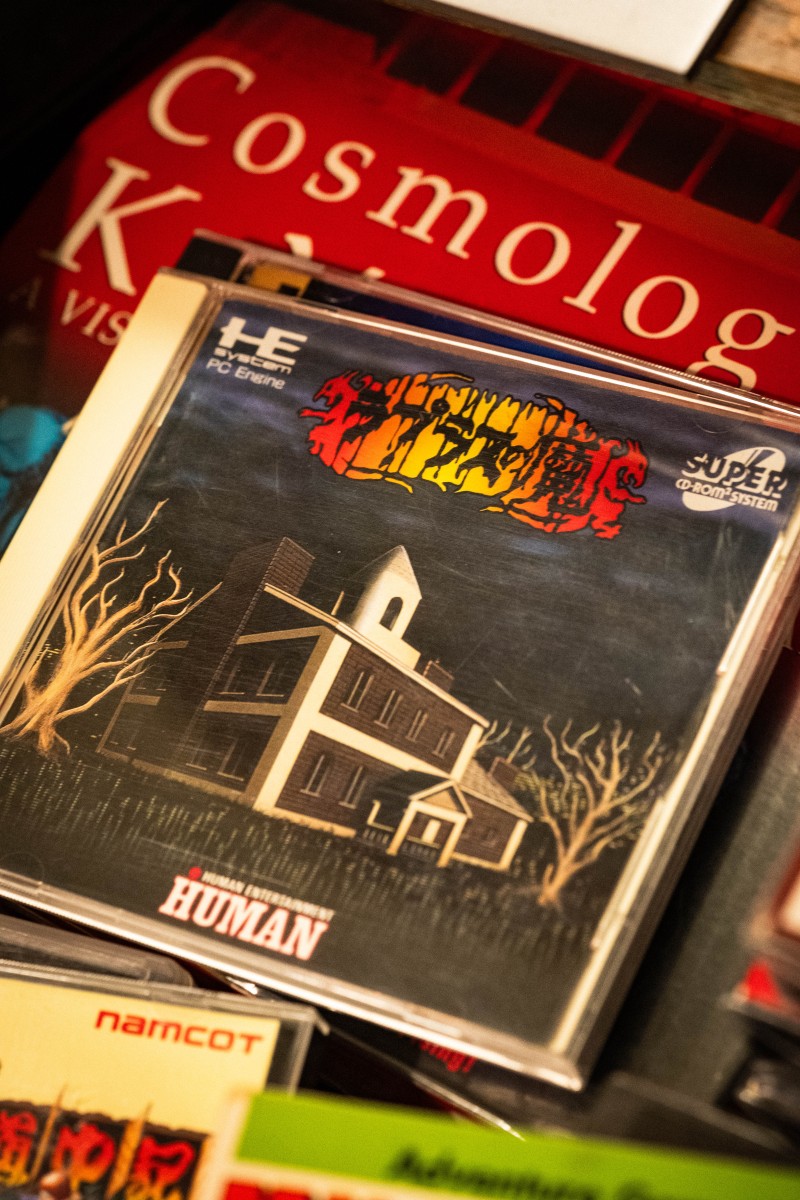
Dead of the Brain 1 & 2 (PC-98, 1992–93 – PC-Engine 1999)
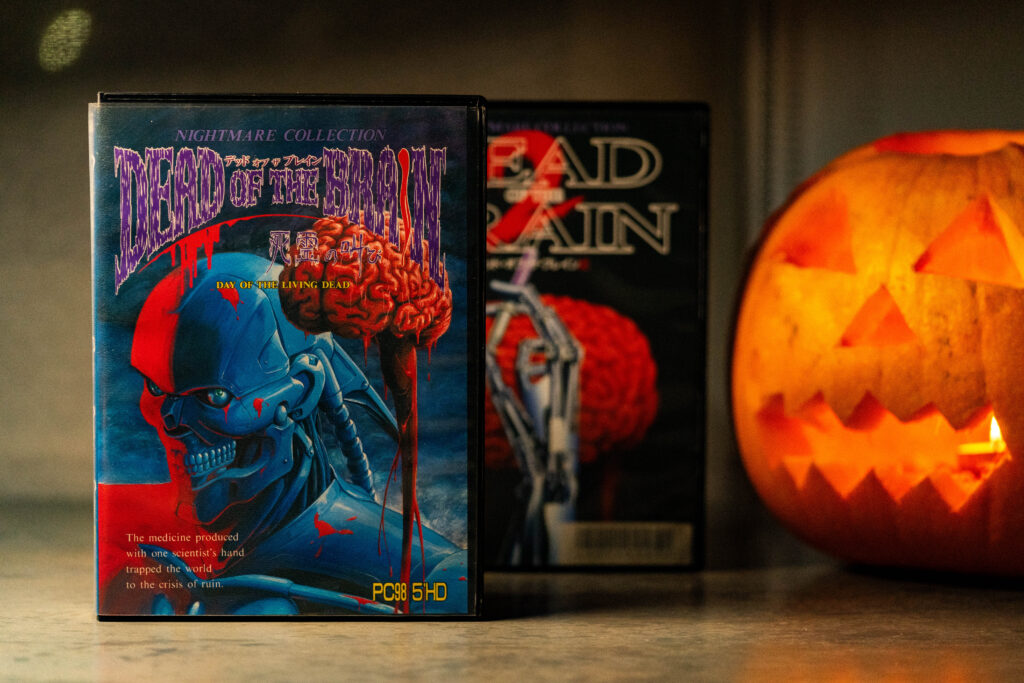
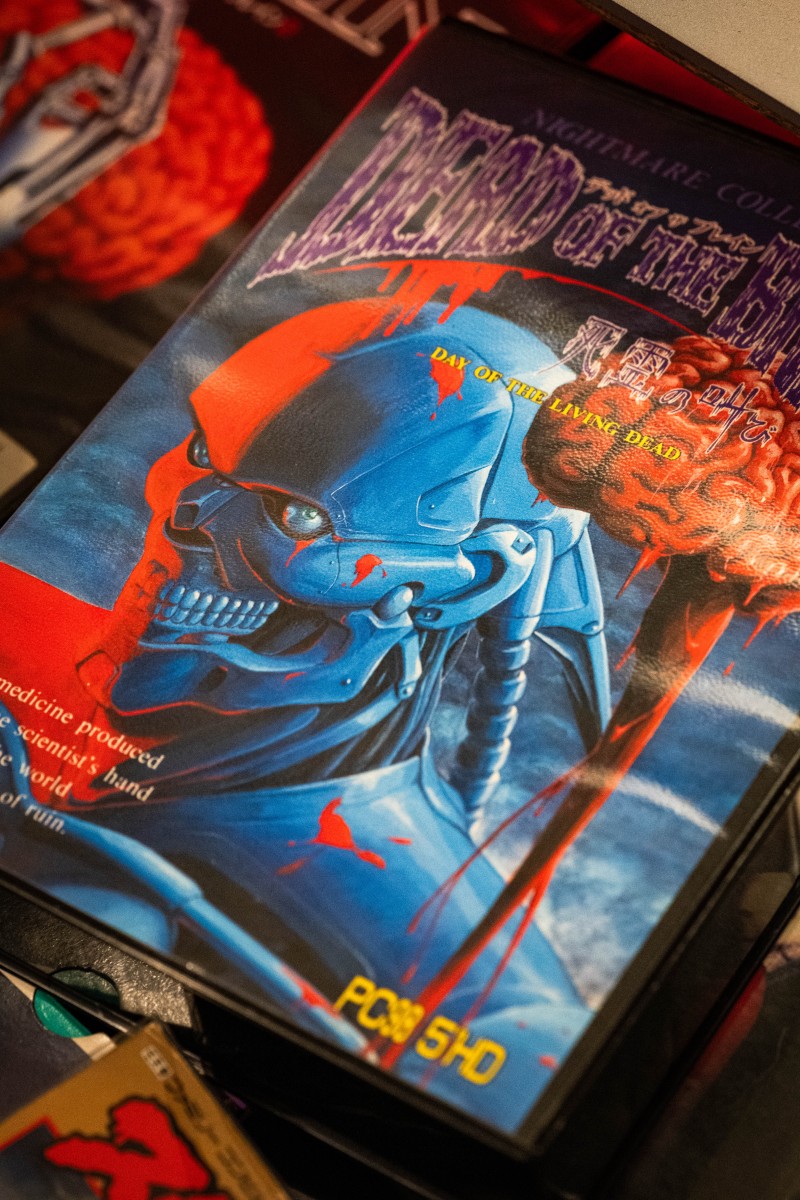
Dead of the Brain 1 and 2 are gory visual horror adventures for NEC PC-98 computers, developed by FairyTale. Essentially a zombie B-movie in game form, the story has a scientist’s serum bringing the dead to life, with unintended flesh-eating side effects. You play as Cole, a young man navigating laboratories, morgues, and zombie-infested streets to survive the outbreak. Gameplay is menu-based (look, move, use, etc.), typical of Japanese adventure games, but Dead of the Brain stands out for its fast-paced time-limited sequences, you often have only moments to choose an action to avoid a gruesome death. There are no complex puzzles; instead the tension comes from frantic decision-making and splatterpunk visuals. The series became a cult favourite and even jumped to consoles: in 1999, Dead of the Brain 1 & 2 were compiled on a PC-Engine Super CD. That version added voice acting and CD audio, and is notable as the last commercial PC-Engine CD release. Yes, a zombie game effectively closed out the PC-Engine’s life! For fans of campy horror, Dead of the Brain offers an over-the-top blend of Lucio Fulci-style gore and late-night schlock, all in charming 16-color PC-98 art. The pixel art is top tier, just like many other masterpiece artworks on the PC-88 and PC-98!
The Man Called Dracula (PC-98, 1992)

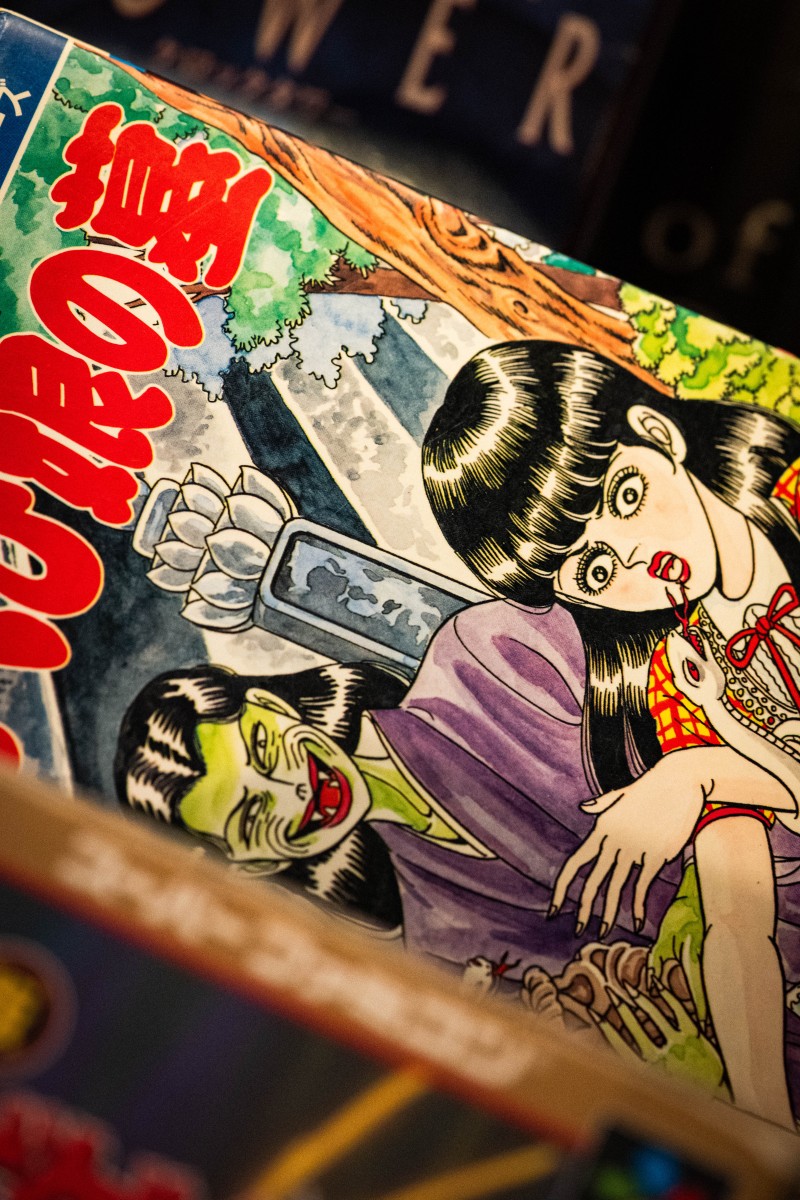
Also known as Dracula Hakushaku (“Count Dracula”), this is FairyTale’s NSFW take on Bram Stoker’s tale. The Man Called Dracula is a visual novel adventure that blends classic vampire lore with the erotic horror style popular on 90s Japanese PCs. You actually play as Dracula resurrected in 1990s Japan, seeking to reclaim your brides. The game’s subtitle “The Blood of Beautiful Girls is Dripping” gives an idea of its… NSFW tone, wink wink. As a PC-98 title, it features anime-style art and menu-based gameplay, but with more interactivity than a typical visual novel: you explore environments, collect items, and even use a special “Bite” command during the numerous seduction scenes. The content is for adults… expect plenty of vampiric erotic horror (the game’s famous for its multiple “brides” and explicit scenes). Notably, the protagonist’s multiple personalities (hinting at a form of madness) tie into an intriguing storyline that spans centuries. This was released on PC-98, X68000, and FM Towns in 1992-93, making it a contemporary of Dead of the Brain (the same developer, in fact). For collectors, it’s a piece of retro vampire media that lets you experience being Dracula himself, complete with gothic romance and gruesome ends for your prey. In one adjective: great!
Shadowgate (1987 Mac, Atari ST, NES, Game Boy Color)

An influential point-and-click adventure originally for Macintosh, Shadowgate is set in a monster-filled castle full of traps and tricky puzzles. It’s part of the MacVenture series and is known for its atmospheric text descriptions and constant danger. In fact, the game is notorious for the many gruesome ways you can die, almost any incorrect action results in instant death, often described with dark humour. For example, grab the wrong book and you might be sucked into space or melted by slime! One signature feature is the torch system: you must keep a lit torch in hand; if all torches burn out, you trip in the dark and break your neck… game over.
This clever mechanic creates a ticking clock in an otherwise slow-paced puzzle game. Shadowgate was popular enough to be ported widely: it hit the NES in 1989 (with a memorable chiptune soundtrack) and Game Boy Color in 1999. Interestingly, the NES version pushed the limits of Nintendo’s content guidelines by retaining the game’s morbid death descriptions (despite Nintendo’s usual censorship at the time). The Famicom release and others were essentially the same game with minor differences (the NES cartridge even came with a mini strategy guide due to its difficulty). Shadowgate’s legacy is seen in later games like Resident Evil (puzzles + danger), but even today, few adventures taunt the player with “sudden death around every corner” quite like this classic does. A classic masterpiece!
Uninvited (1986 Mac; Atari ST, NES)

Before Clock Tower or Resident Evil, this MacVenture title delivered a haunted house experience purely through text and still images. Uninvited casts you as a protagonist searching a spooky mansion for your missing sibling after a car crash outside. As you explore dusty hallways and hidden rooms, you encounter ghosts, demons, and a malevolent sorcerer’s legacy. The interface is point-and-click with a menu of verbs, and like Shadowgate, it’s very easy to get killed if you poke the wrong thing (angry spirits aren’t forgiving!). The game originally launched on Mac in black-and-white (1986) and was later colourised for Atari ST, Amiga, and finally ported to NES in 1991. The NES version made some notable changes: for example, the kidnapped younger brother character was changed to an older sister in the NES localisation.
They also removed the time-limit that was present in computer versions (on NES you only face a time limit if you pick up a cursed ruby, which you can drop to avoid it). Despite Nintendo’s censorship, Uninvited on NES still had creepy moments (a surprise ghost in a mirror made many kids jump!). It’s remembered for its atmospheric descriptions, e.g. finding a corpse with “skin dripping off its bones” was pretty hardcore for the ’80s. With its haunted mansion setting and item-based puzzles, Uninvited set the stage for console horror adventures to come. Highly recommended!
The Lurking Horror (Infocom, 1987)
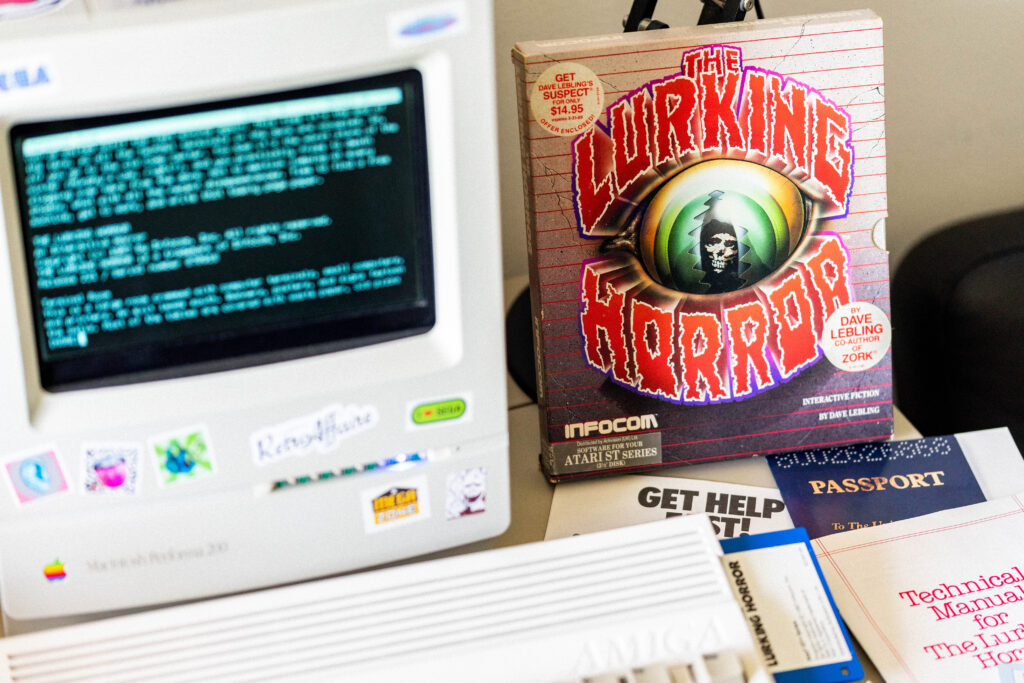
The Lurking Horror is a text adventure by Dave Lebling, published by Infocom in 1987. You’re a student at G.U.E. Tech, trapped on campus during a blizzard. The computer lab ought to be a place of fluorescent light and ordinary work. Instead, it leads you towards something Lovecraftian beneath the university.
You type commands and build the place in your head: tunnels, laboratories, doors you should perhaps leave closed. Some versions add sound effects, but the writing carries the fear. Infocom’s physical extras give the box another layer of atmosphere.
If you’ve ever been alone in a university building at night, this one knows how to make that familiar setting feel wrong. Despite having no pictures, it leaves you with images. Try it.
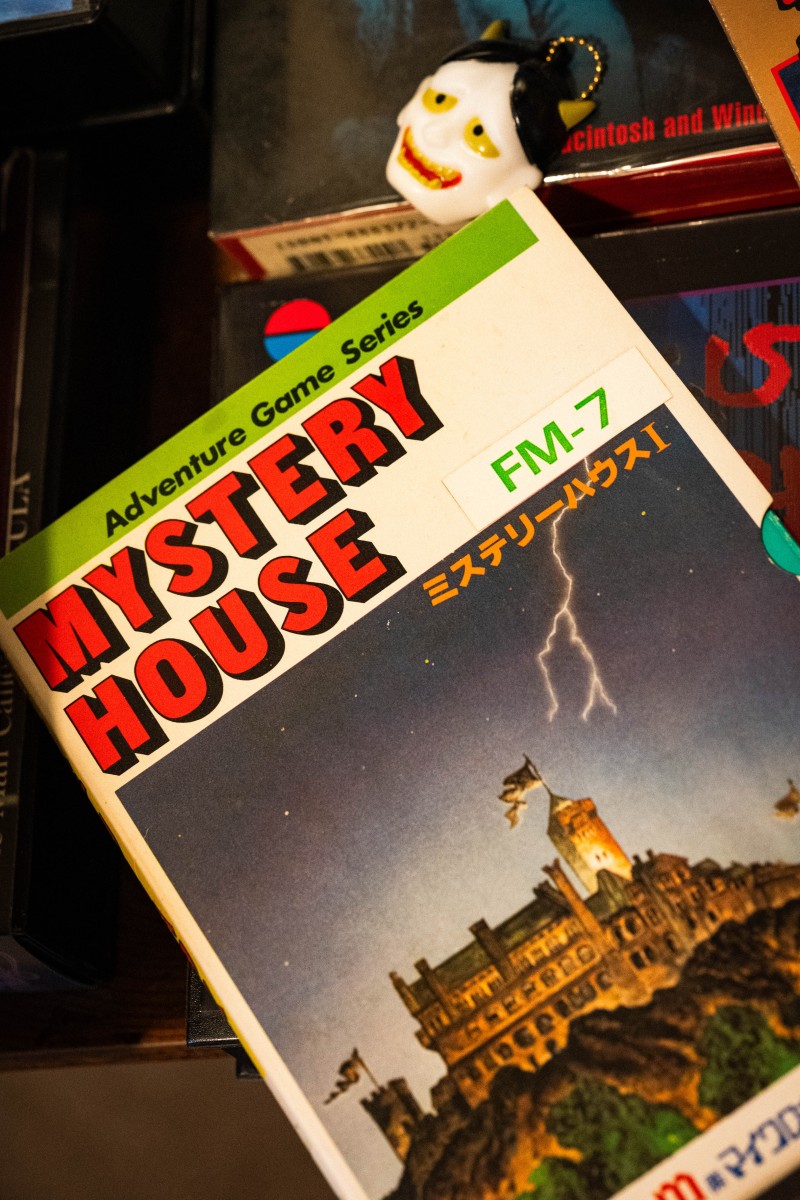
Mystery House (FM-7)

Mystery House takes this collection back to the early days of drawn rooms and typed commands. The name also has a complicated history: Roberta and Ken Williams made an Apple II adventure in 1980, while Micro Cabin released a different Japanese game with the same title in the early 1980s. Sharing a name does not make the Japanese release a port of Sierra’s game.
That spare presentation is part of the appeal of these early adventures: a few lines, a room, a command, and the suspicion that something is waiting beyond the next door.
Yōkai Tantei Chima Chima (MSX, 1984)

Shifting gears, here’s a lighthearted horror-themed action game. Yōkai Tantei Chima Chima (literally “Yokai Detective Chima Chima”) is a cute 1984 arcade-style game by Bothtec. You control Chima Chima, a one-eyed cyclops detective, who must save a girl from ghosts – a very cartoony premise. Gameplay is often compared to Pac-Man: you move through maze-like single-screen levels avoiding enemies, but Chima Chima fights back by shooting bouncing fireballs! The trick is these fireballs ricochet around the screen and can hit Chima Chima himself, so you have to time your shots carefully to blow up the pursuing yokai (Japanese ghouls) without blowing up your cyclops hero. Each stage is set in a haunted location, and you get bonus points for taking out multiple monsters with one blast.
The MSX version came out in 1985 and even had ports to other Japanese computers (FM-7, PC-98) in the 80s. A fun trivia: Chima Chima was born from a programming contest, it was a contest-winning amateur game that Bothtec picked up for publication. Decades later, it saw a revival as part of the Project EGG and was included on modern platforms like the Nintendo Switch in 2024, proving its enduring charm. With its colourful 8-bit sprites and arcade-y gameplay, this little-known title brings some levity to the collection, a reminder that not all “horror games” are about gore; sometimes it’s a googly-eyed cyclops tossing fireballs at ghosts. It’s a cute game if you are too scared to play other things, go on.
MARIA: The Curse of the Dollhouse (Windows 95, 1996)

MA-RI-A: Ningyōkan no Noroi, “The Curse of the Doll Mansion”, is one of the more obscure Windows 95 titles in this collection. Makoto Tezuka, Osamu Tezuka’s son, is credited with its original concept. Dolls and the promise of something wrong inside a house give it a natural place on this shelf.
It belongs to that period when a CD-ROM could feel like a doorway into an unfamiliar room: artwork, voices, images and the space to linger among them. The title and packaging are part of the attraction here, an invitation to a very particular kind of Japanese horror curiosity.
Terrors (WonderSwan, 1999) & Terrors 2 (2000)

On Bandai’s Japan-exclusive WonderSwan handheld, Terrors and Terrors 2 form a duo of spooky titles that function more like interactive horror story collections. These games belong to the “Novel Theatre” series, essentially Bandai’s term for visual novel / sound novel style games. Terrors (1999) was the first, presenting a selection of short horror stories (think of campfire ghost tales) that the player can experience in any order. You read through creepy situations with minimal interaction, occasionally making choices that lead to different endings (often bad ends!). Terrors 2 (2000) expanded the concept: it offers three unrelated ghost stories to start, and after you clear those, a fourth bonus episode unlocks.
Before the “colour” version, the WonderSwan was a monochrome handheld, so these kinds of games use static images and text, relying on writing and sound for atmosphere. Notably, Terrors 2 (that unlike the first one was in colour) tried some tech gimmicks: it supported the WonderGate device (a mobile connection) to change one scenario’s events based on real-world time of day, certain hauntings only happen at “night” unless the WonderGate says it’s daytime. It’s a neat idea, essentially a proto-AR feature, though purely optional and not game-changing. Presentation-wise, both games require you to hold the WonderSwan vertically (like reading a book) with an image at the top and text below. They deliver classic Japanese horror vibes, cursed schools, vengeful spirits, urban legends. If you enjoy J-horror anthologies like Kwaidan or Tales of the Unusual, Terrors on WonderSwan was basically that experience in portable form. It’s an example of how even a limited device can send a chill down your spine with just some text, grainy images, and your imagination.
Uzumaki: Denshi Kaiki-hen (WonderSwan, 2000)

Junji Ito’s infamous Uzumaki manga (about a town cursed by spiral patterns) inspired two distinct WonderSwan games. The first, Uzumaki: Denshi Kaiki-hen (“Electronic Strange Tales”), was released in February 2000. This one is a visual novel that closely follows the events of the manga. You play as high schooler Kirie Goshima and witness the story’s episodes, from people becoming snail-creatures to spiral shapes possessing the populace. Essentially it’s a narrative adventure: you read through dialogue and descriptions, accompanied by manga-style illustrations on the WonderSwan’s small screen. There may be occasional choices or interactive segments, but it mostly retells Ito’s story in a linear fashion. Fans appreciated seeing Ito’s eerie artwork adapted into pixel form, and the manga’s images remain its main attraction. Denshi Kaiki-hen effectively lets you carry Junji Ito’s horror in your pocket, a treat (or torment!) for manga devotees.
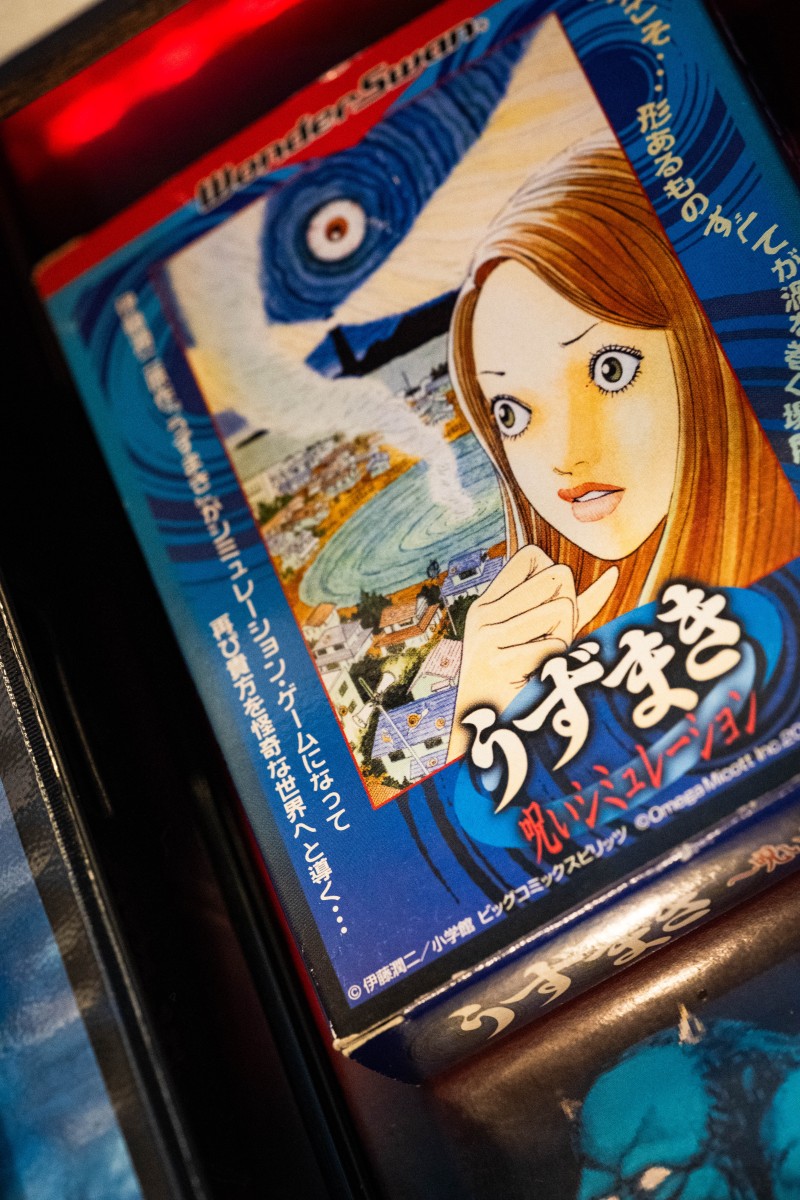
Uzumaki: Noroi Simulation (WonderSwan, 2000)

Released just one month after the first WonderSwan game, Uzumaki: Noroi Simulation (“Spiral Curse Simulation”) took a completely different approach to Ito’s material. Rather than retelling the plot, it made an original strategy/simulation game out of the spiral curse concept. Here, you are tasked by an evil “Spiral Master” to spread the curse across the town of Kurouzu-cho, essentially, you’re working for the dark side! The gameplay involves moving through town locations, using cursed objects and tactics to maximise the spiral infection. The goal is to engulf the entire town in spiral madness while finding hidden items to increase your “Spiral Power”. It’s an unusual twist: whereas the manga’s heroes try to escape the curse, this game lets you be the one causing the horror.
As you corrupt various characters, you’ll trigger events pulled from the manga (like schoolkids turning into snails or villagers obsessing over whirlpools). There’s even a quirky mini-game included where you control one of the snail-people in a simple action sequence. This experimental title is a great example of how flexible Junji Ito’s horror can be: Noroi Simulation is part strategy game, part collection of creepy vignettes. Between the two Uzumaki games, WonderSwan owners in 2000 got to experience that spiral-fuelled insanity in both story and gameplay forms. And if you manage to beat Noroi Simulation, consider yourself a true agent of the curse… Mwahahaha (spiral laughs).
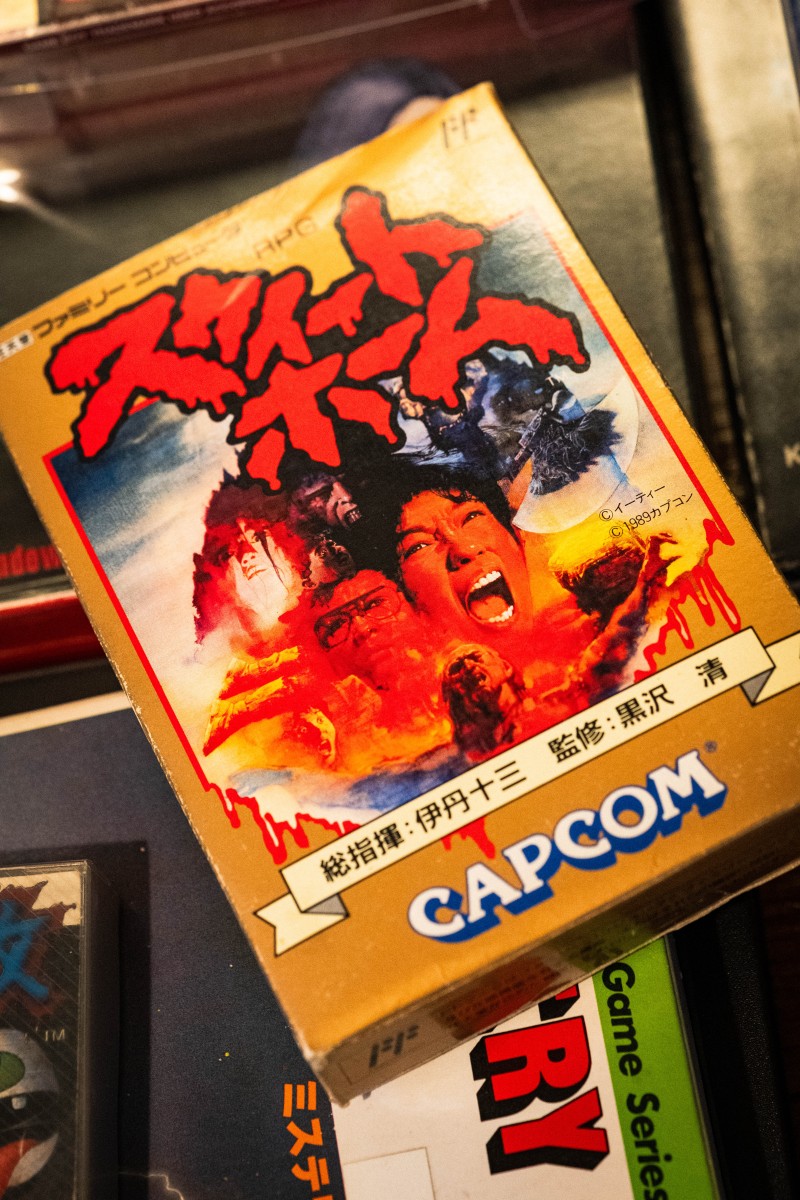
Sweet Home (Famicom, 1989)

A true gem of 8-bit horror, Sweet Home is often cited as a precursor to Resident Evil, and for good reason. Developed by Capcom for the Famicom in 1989, it’s a horror RPG based on a Japanese film of the same name. The game follows five filmmakers who become trapped in an abandoned mansion while searching for precious fresco paintings. Each character has unique tools (camera, lighter, first-aid kit, etc.) and you can split them into teams to solve puzzles and fight off the mansion’s supernatural inhabitants. Despite the 8-bit format, Sweet Home manages a genuinely creepy atmosphere: you’ll encounter ghosts, zombies, and deadly traps as you explore. It introduced mechanics that later surfaced in survival horror: limited inventory slots, managing health with scarce items, and even permadeath for characters.
If one of the five dies, they are gone for the rest of the game, and you must continue with the survivors, multiple endings reflect who escapes alive. The mansion layout acts as an interconnected maze (an early form of Metroidvania-style exploration), with locked doors and shortcuts that loop back… sound familiar, Resident Evil fans? Indeed, Resident Evil’s creator Shinji Mikami has admitted Sweet Home inspired the design of the original RE (right down to the door-loading screens). Sweet Home was never released outside Japan (likely due to its gruesome imagery and the limited appeal of RPGs abroad at the time). But a fan translation exists, and the game has gained a big cult following. It’s fascinating to play and realize this 1989 RPG pioneered ideas like item-based puzzles and mansion backtracking years before “survival horror” was a genre. Truly a historical piece, plus it has a fantastic 8-bit soundtrack that will haunt you!
GeGeGe no Kitaro: Yōkai Daimakyō (Famicom, 1986)

The world of GeGeGe no Kitarō has seen many video game adaptations. The Famicom’s Yōkai Daimakyō (“Great Specter Demon World”, 1986) is one of the earliest and most beloved. Developed by TOSE and published by Bandai, it’s a side-scrolling action-platformer where you play as Kitaro, the young yokai boy who defends humanity from mischievous spirits. In the game, Kitaro journeys through several spooky realms (cemeteries, haunted forests, even hellish underworlds) to ultimately confront powerful bosses drawn from Shigeru Mizuki’s manga. He attacks by throwing projectiles (in the Japanese version, they’re depicted as finger bullets or geta sandals – Kitaro’s signature weapon). Notably, when this game was released in the West on NES, it was heavily altered and released as Ninja Kid, sadly… all references to Kitaro were removed since the character wasn’t known outside Japan.
But the core gameplay remained: you select different “missions” from an overhead map, each mission being an action stage where you defeat yokai and grab scrolls or items. Clear enough missions and you unlock the final stage. The Famicom version sold extremely well in Japan (over a million copies, a big hit for Bandai) and is fondly remembered for its catchy chiptune music and fun if somewhat repetitive gameplay. It’s basically Mario meets Yokai, colourful, a bit chaotic, and filled with folklore creatures. As a Kitaro fan, it’s delightful to see characters like Medama-Oyaji (Kitaro’s eyeball father) or Nezumi-Otoko appear in 8-bit form. If you ever played Ninja Kid on NES, know that you were actually playing GeGeGe no Kitaro, just with a mask on! This game’s inclusion in the collection highlights the lighter, adventure-fantasy side of Japanese horror media.
GeGeGe no Kitaro: Fukkatsu! Tenma-Daiō (Super Famicom, 1993)

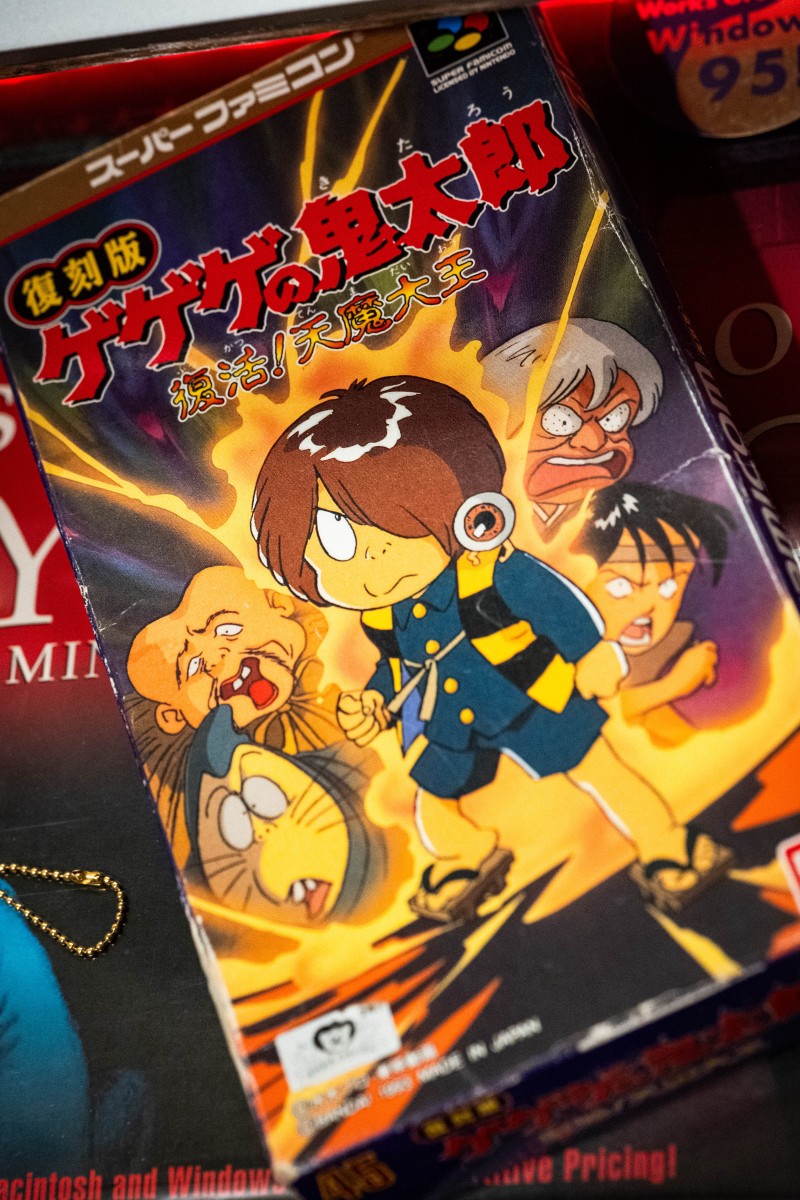
Jumping ahead, this Super Famicom title translates to “GeGeGe no Kitaro: Revival of the Demon Lord”. It’s a 1993 action game where an ancient evil (the Tenma-Daiō or Demon King) has been resurrected, and Kitaro must stop him. The gameplay is classic side-scrolling action, but with 16-bit flair: colourful graphics and bigger sprites compared to the Famicom days. Kitaro can use his yokai powers and items like the magic chanchanko vest or his extending hair. The levels take you through yokai-filled locales with mini-bosses and set-piece encounters featuring characters from the manga/anime. Fukkatsu! Tenma-Daiō is considered a solid platformer for fans, with an original story supervised by Shigeru Mizuki: this game is notable for featuring lots of Mizuki’s yokai designs in 16-bit form and for having anime-style cutscenes. Playing it feels like an interactive episode of the anime, including appearances by Kitaro’s pals like Neko-Musume and enemies like Western monster Back Beard. While not the hardest game, it’s fun and filled with Mizuki’s trademark yokai charm. As a historical piece, it shows how Kitaro games evolved from the 8-bit to 16-bit era, becoming more narrative-driven and graphically rich.
Castlevania: Dracula X – Rondo of Blood (PC Engine CD, 1993)

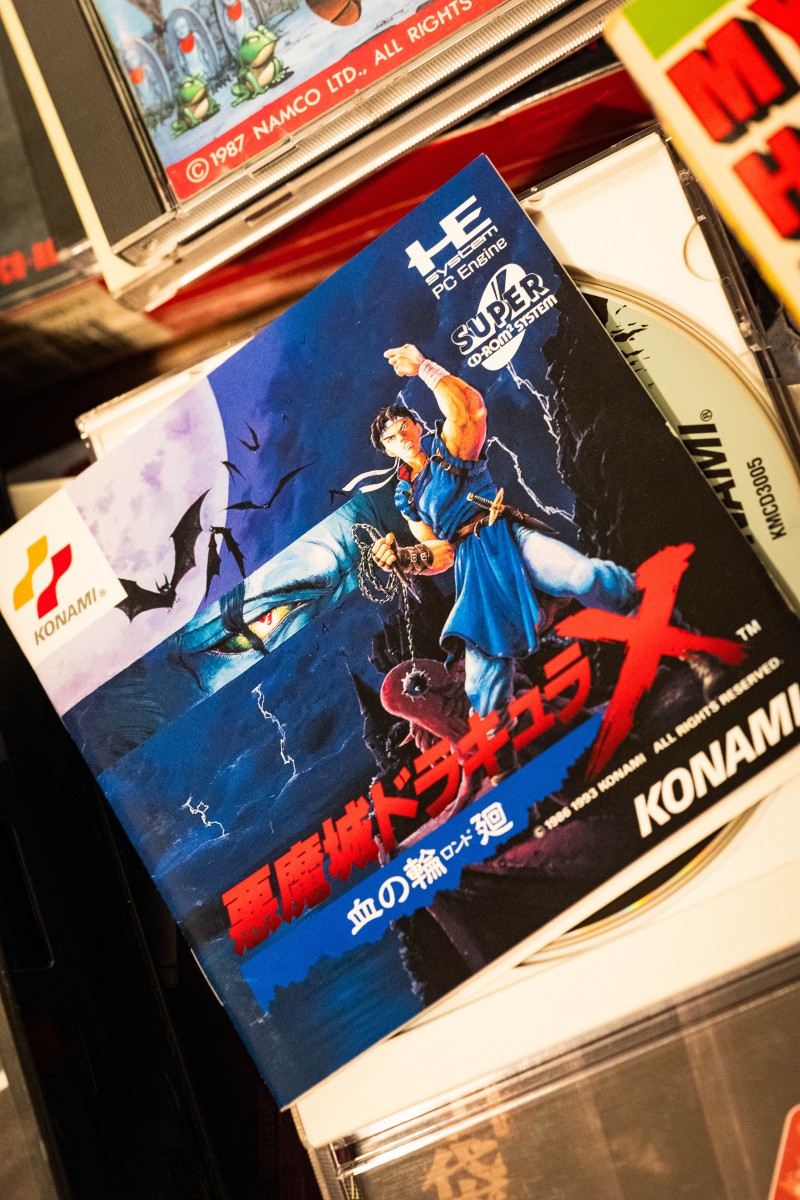
One of the crown jewels of this list, Akumajō Dracula X: Chi no Rondo (Rondo of Blood) is often hailed as one of the best classic Castlevania games, and I agree. Released exclusively in Japan for the PC Engine Super CD-ROM² system in 1993, it was a showcase of what CD games could do for the franchise. This Castlevania stars Richter Belmont on a quest to rescue his beloved Annette from Dracula, introducing anime-style cutscenes and CD-quality music to the series. The game features fully voiced dialogue (in Japanese) and animated story scenes, which were a revelation for fans used to simple text intros. The soundtrack is redbook audio, meaning actual studio-quality renditions of famous Castlevania tracks, it sounds fantastic.
Gameplay-wise, it sticks to the tried-and-true formula of whipping through Gothic stages, but Rondo added alternate routes and hidden levels, plus the ability to unlock Maria Renard (a 12-year-old girl armed with doves and magic) as a playable character. Maria, who attacks with cute animal sub-weapons, was a fresh addition that quickly became a fan favourite. Rondo of Blood remained a Japan-only legend for many years (it wasn’t officially released in English until decades later), which gave it a certain mystique. Import gamers praised its level design and difficulty balance, and the fact that it was a direct predecessor to Symphony of the Night (Richter and Maria both reappear in SotN).
Another fun bit: the CD includes a hidden minigame (Akumajō Dracula Peke) that only boots if you run it without the right system card, a little Easter egg for PC Engine fans. In short, Dracula X: Rondo of Blood is a masterpiece of 2D action with classic horror trappings, vampires, haunted castles, and an absolutely killer soundtrack. It’s no wonder this game is often the pride of many retro collections, if you play this during your Halloween night, expect cheers from Castlevania aficionados! Super recommended.
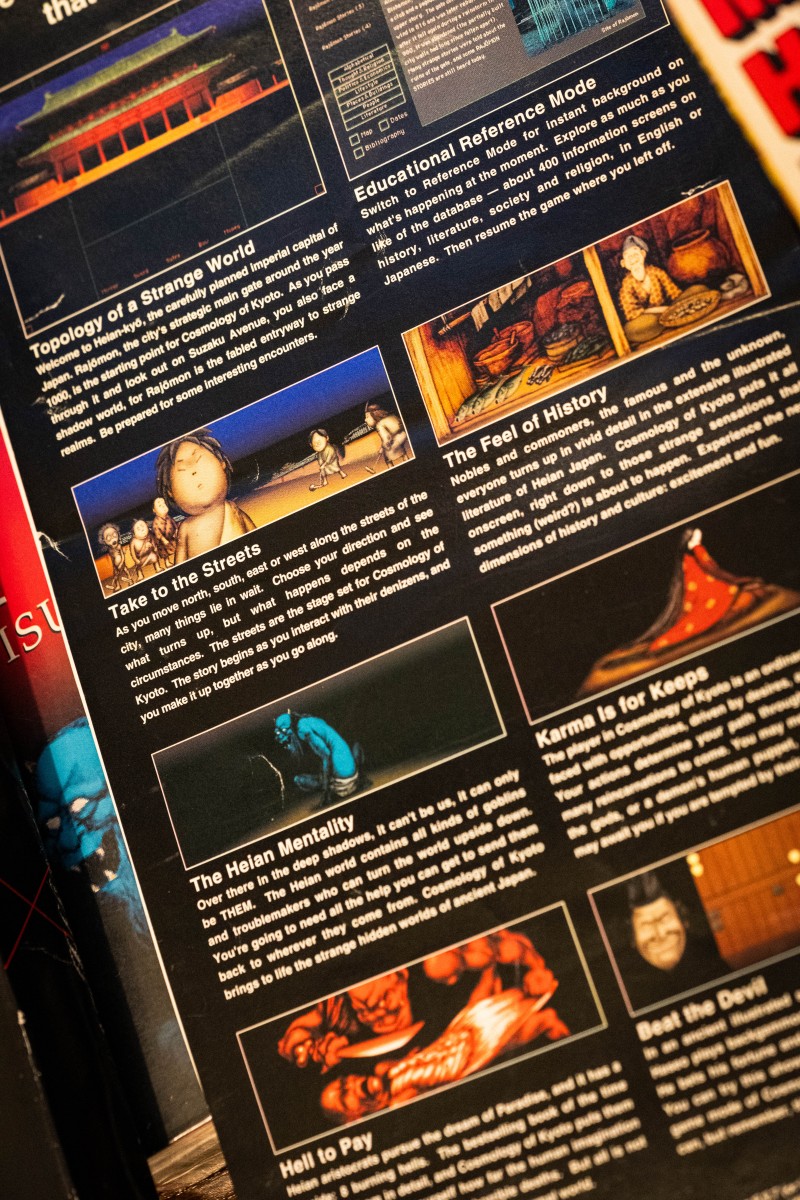
Cosmology of Kyoto (Mac, PC, 1993)
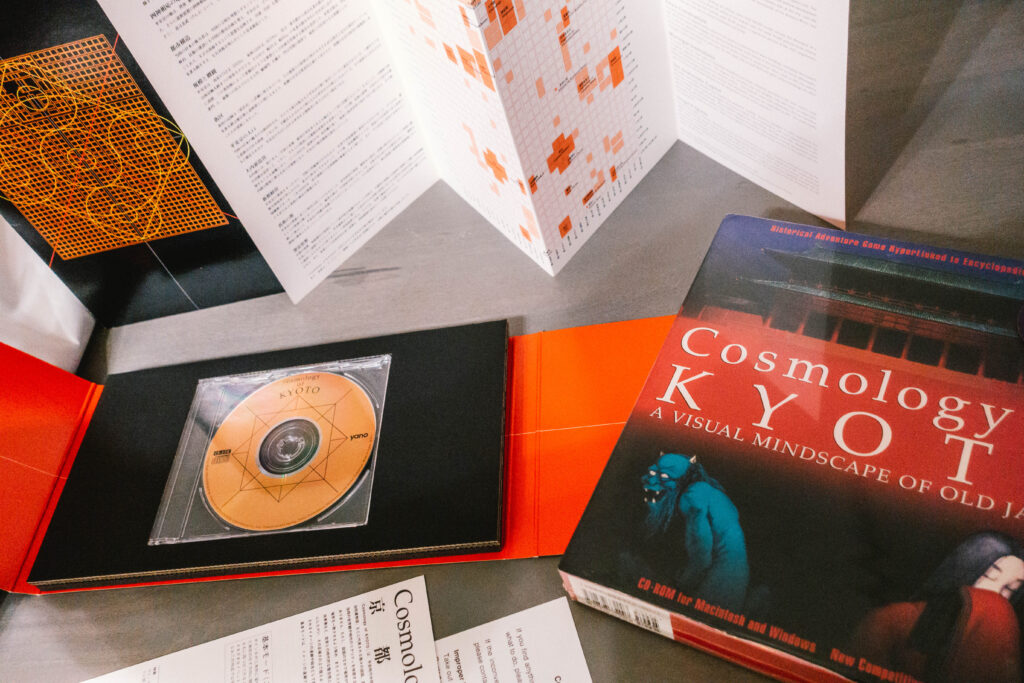
I LOVE This… “game”. One of the most unusual entries, The Cosmology of Kyoto (京都千年物語) is an edutainment horror adventure/documentary game: a tour of the dark side of ancient Japan. It’s a point-and-click adventure set in Heian-era Kyoto (10th–11th century), and it strives for historical and mythological authenticity. The game is nonlinear and open-world: you wander the streets of Kyoto in first-person, with the freedom to enter temples, talk to townsfolk, and stumble upon bizarre incidents and creatures. There isn’t a singular goal; instead, the “point” is to experience medieval Japanese life and afterlife. And I do mean afterlife, because this game is famous for how frequently your character can die and go to Buddhist hell.
For example, you might turn down the wrong alley, get murdered by robbers or angry yokai, and suddenly find yourself in one of the many Hells of torturous punishment from Buddhist cosmology. The game features gruesome visuals of these tortures, being boiled, flayed, etc., all depicted in macabre art, which you must endure until your soul is reborn (reincarnated) back into the world. This karma system is literally a gameplay mechanic: if you behaved badly, you might even reincarnate as a dog instead of a human! Don’t worry, you can continue the game as a dog, albeit with different interactions. Cosmology of Kyoto is fully voice-acted in Japanese (with English text in the Western release), and comes with an extensive in-game encyclopedia about Heian customs, locations, and folklore.
It wasn’t a commercial hit, but critics adored it: it’s haunting, educational, and surreal. The packaging itself is legendary: the US “big box” had eerie art and a hefty manual full of cultural notes, while the Japanese version had a different cover and title (“Kyoto Sennen Monogatari”). My collection boasts two copies with different packaging (the Japanese and English editions). Cosmology of Kyoto is not about jump scares; it’s about immersing you in the spiritual fears of a bygone era, from hungry ghosts to wrathful deities, an experience unlike any other game. Do yourself a favour: play it! This is the game that made me fall in love with Japanese folklore.
Nosferatu (Super Famicom, 1994)
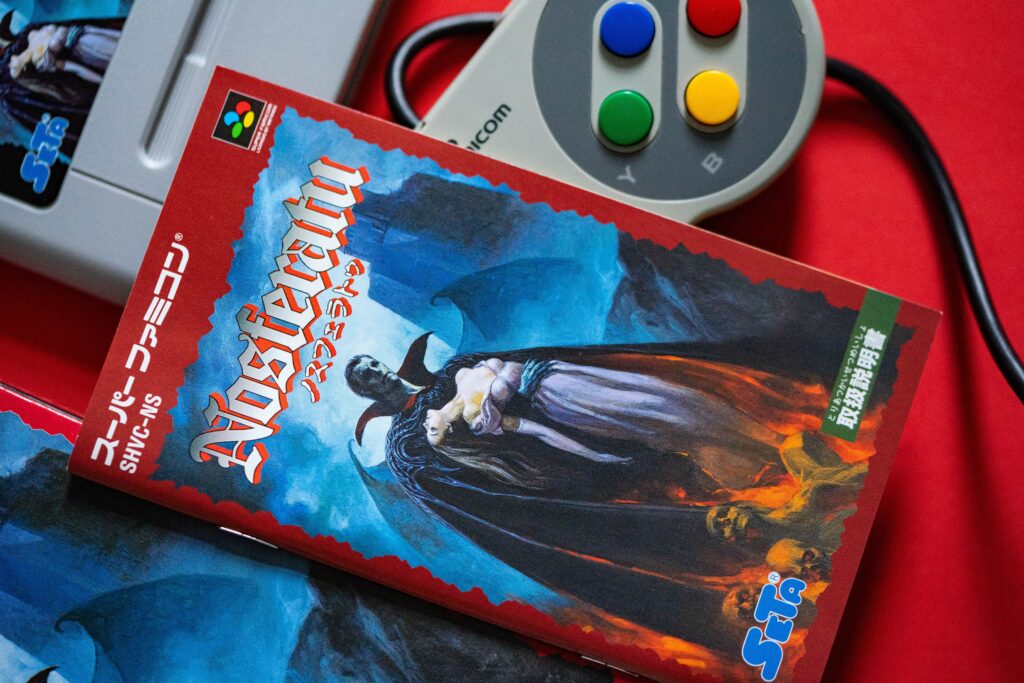
A cult classic action game, Nosferatu for Super NES (by SETA) is often described as “Prince of Persia meets Castlevania”. You play as a young man who ventures into a vampire’s castle to rescue your kidnapped fiancée, essentially a nod to the original Dracula plot, though the main villain here is named Nosferatu. The gameplay is a side-view platformer with cinematic platformer mechanics: your character can run, jump, grab ledges, and do acrobatic moves much like the Prince in Prince of Persia. What sets Nosferatu apart is its hand-to-hand combat. Instead of wielding a whip or sword, the hero fights classic monsters (werewolves, zombies, gargoyles, etc.) using punches, kicks, and even Street Fighter-like special moves.
It feels like a beat ’em up embedded in a platform adventure. There’s also a time limit element, you have only a certain number of in-game hours (displayed via an on-screen clock) to reach Nosferatu’s lair, adding tension (the clock can be extended by finding hourglass power-ups). The atmosphere is great: moody music, detailed gothic backgrounds and smooth rotoscoped animation on the characters. Nosferatu pushed the SNES graphically with large sprites and even some gore (defeated monsters sometimes melt or explode). One memorable enemy is a hulking Frankenstein’s monster you fistfight in a dungeon! The game can be unforgiving, as missed jumps or hits drain your limited life (shown by the on-screen health gauge). Nosferatu wasn’t widely known in its time (released late in 1994 with little fanfare and it never got a European release), but it has since gained a following for its unique blend of horror and fighting. It’s also one of the few SNES games that really tried to capture a cinematic horror feel in gameplay. It’s not great control wise, but worth a look for everything else on Halloween night!
Clock Tower (Super Famicom, 1995)

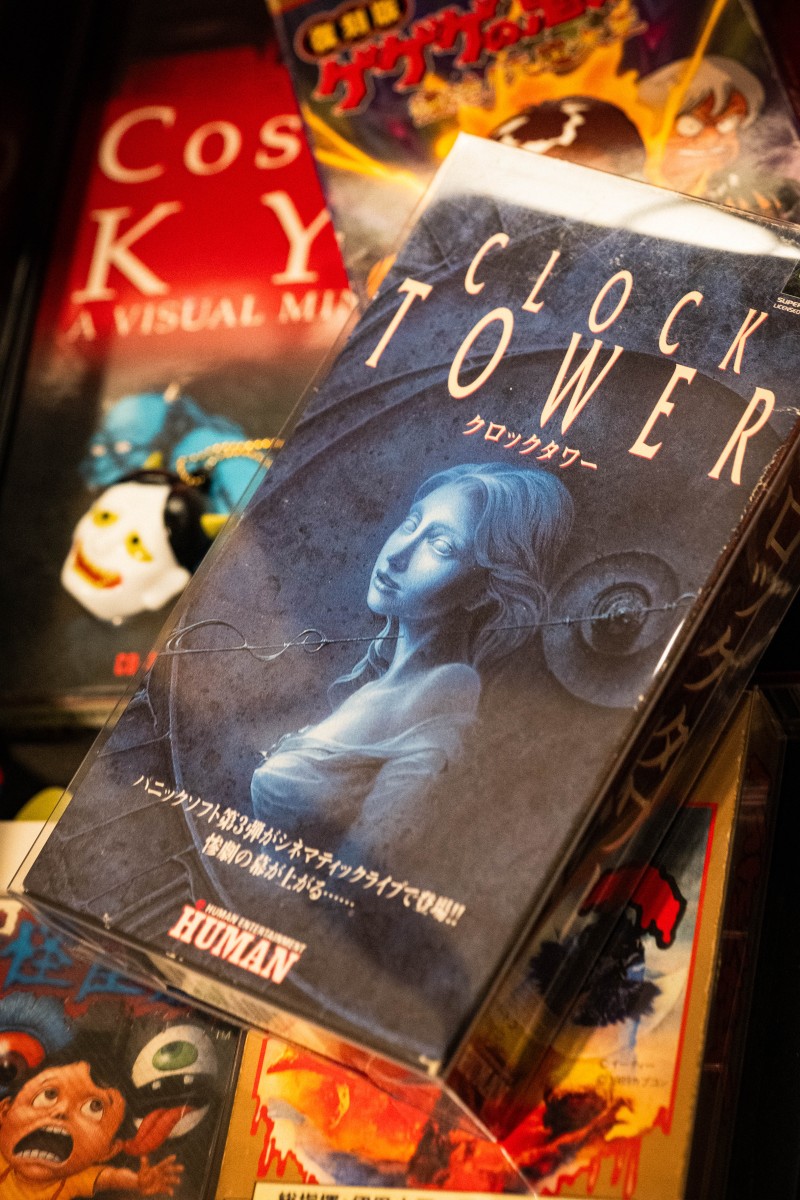
Widely regarded as a pioneer of point-and-click survival horror, the original Clock Tower on Super Famicom is a slow-burn, nerve-wracking experience. It’s essentially a playable slasher film: you are Jennifer Simpson, an orphan girl adopted (with some friends) by a wealthy recluse in Norway, only to find yourselves trapped in his mansion with a murderous Scissorman on the loose. The game’s famous villain, a deformed little boy wielding giant scissors, stalks Jennifer throughout the mansion and, unlike most games of the era, you cannot fight back. Your only options are to run, hide, or use the environment to slow him down. This creates incredible tension, as audio cues and an on-screen panic meter (the “stress” meter) let you know Scissorman is near. Clock Tower plays as a point-and-click adventure: you move Jennifer by clicking destinations and interact with objects to solve puzzles.
But when Scissorman bursts out (sometimes through a window or from a closet unexpectedly), the game shifts to panic: you frantically search for a hiding spot (like under bed or inside a crate) and pray he doesn’t find you. Its design was heavily inspired by Italian horror films, especially Dario Argento’s Phenomena. In fact, Jennifer’s design is based on Jennifer Connelly and the scenario of a young girl in a foreign mansion mirrors that movie. The Super Famicom version never left Japan officially, but it gathered a fanbase via import. It featured multiple endings (A through H) depending on player choices and which characters survive. Clock Tower: The First Fear (the later PlayStation port) added some enhancements, but the SFC original is where it all started.
This game is responsible for the “stalk-er” subgenre of horror games, you can draw a line from Clock Tower to titles like Haunting Ground and Outlast. It was bold in 1995: no combat, just pure hide-and-seek terror. One of the most iconic moments is discovering the corpse of a friend in a bathroom, only for Scissorman to suddenly lunge out, a scene that has traumatized 16-bit gamers for decades. For this collection, Clock Tower brings genuine fear factor, albeit in 16-bit, even on the Super Famicom.
Clock Tower (WonderSwan, 1999)

After the success of Clock Tower on console, the story made its way to the handheld WonderSwan in 1999. Titled Clock Tower on WonderSwan, it’s essentially a portable version of the original Clock Tower story (Jennifer vs. Scissorman in the Barrows Mansion), with some adjustments for the monochrome handheld. Impressively, they managed to cram the entire point-and-click adventure into the small device, though naturally with simplified graphics. One notable change: the WonderSwan version has no pause function (perhaps due to technical limits or oversight) and some UI differences, e.g., the lack of a visible panic meter HUD on the small screen. It’s also monochrome (WonderSwan was black & white), which oddly adds to the atmosphere: the game feels like an old black-and-white horror film.
To fit on the handheld, certain backgrounds and scenes were redrawn or cut, but all the multiple endings and key events remained intact. It’s quite a rarity, since the WonderSwan wasn’t widely sold outside Japan. Clock Tower WS is more of a collector’s piece, playing a point-and-click with only D-pad and buttons on a tiny screen is a challenge, but as a fan of the series I appreciate having a “go-anywhere” version of Jennifer’s nightmare. It also demonstrates how popular these horror franchises were in Japan, enough to spawn handheld spin-offs. Overall, Clock Tower on WonderSwan is the same terrifying hide-and-seek ordeal, just shrunk down, imagine trying to hide from Scissorman on the school bus or under the covers, with that tiny speaker churning out the eerie chase music. Truly, horror in the palm of your hand!
Mizuki Shigeru’s Yōkai Hyakki Yakō (Super Famicom, 1995)

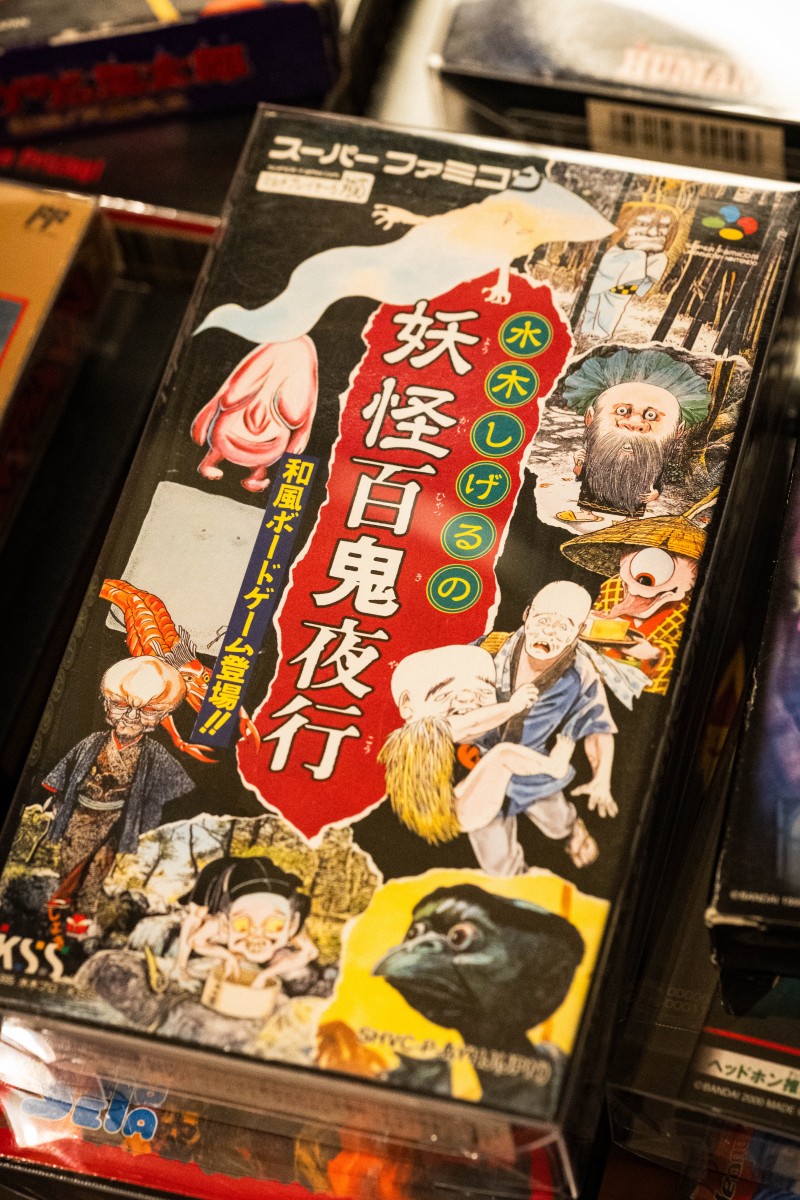
Not all horror games are about fighting or fleeing, some are about having fun with friends. Mizuki Shigeru no Yōkai Hyakki Yakō (published by KSS in late 1995) is essentially a yokai-themed digital board game for up to 4 players. Think of it as Mario Party meets haunted house, or as the game itself suggests, “Momotaro Dentetsu (a famous board-game series) but with yokai”. In this game, you choose from four yokai characters and then take turns moving around a board that represents various regions of Japan. The premise is that it’s a competition among yokai: whoever gathers the most spiritual energy (reikyoku) and reaches the goal will become the next Lord of Hell.
Along the way, you land on different event squares that can trigger mini-games, battles, or encounters with other yokai. For example, you might have to answer a yokai trivia question, fight a minor spirit in a simple turn-based battle, or possibly gain an ally yokai. True to the title “Hyakki Yakō” (Night Parade of 100 Demons), loads of traditional yokai make appearances: Kappa, Tengu, Rokurokubi, you name it, they are there. The game features illustrations by Shigeru Mizuki, giving it an authentic manga art style despite being a digital board game. It’s also friendly in tone, despite the spooky theme, it’s meant for all ages (in fact, the packaging looks almost educational).
Players roam across Japan’s map, “collecting” yokai much like one might collect monsters in Pokémon (this was before Pokémon, by the way). The ultimate aim is to have more yokai under your command and thus more spiritual power than your rivals, by the time you reach the finish. One neat aspect: the game uses the Super Famicom’s sound to create a kind of festival drum and flute music mixed with eerie noises, capturing that folkloric ghost story ambiance. It may not be as adrenaline-pumping as others on this list, but it’s a celebration of Japanese ghost lore. For fans of GeGeGe no Kitaro, this game is basically a love letter from Mizuki, chock-full of his creations. Gather some friends, roll the virtual dice, and get ready for a night parade of one hundred demons!
Yōkai Yashiki (Famicom Disk System, 1987)

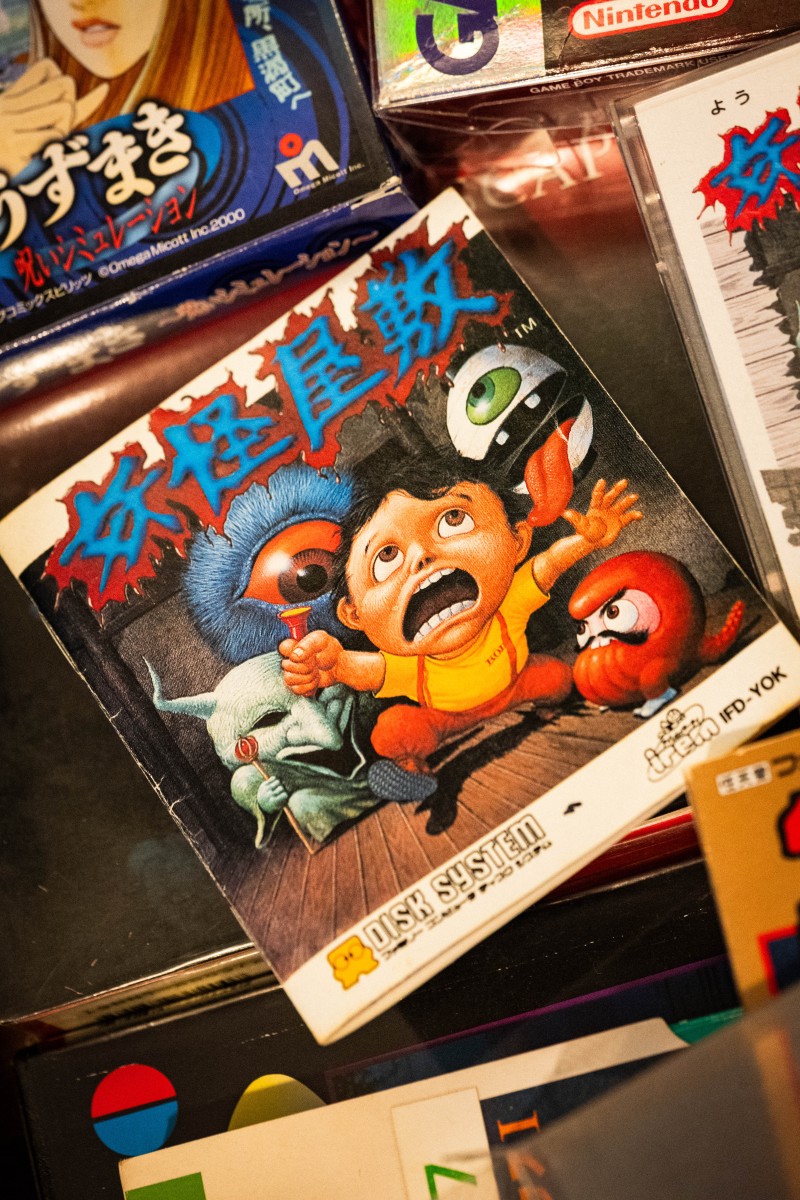
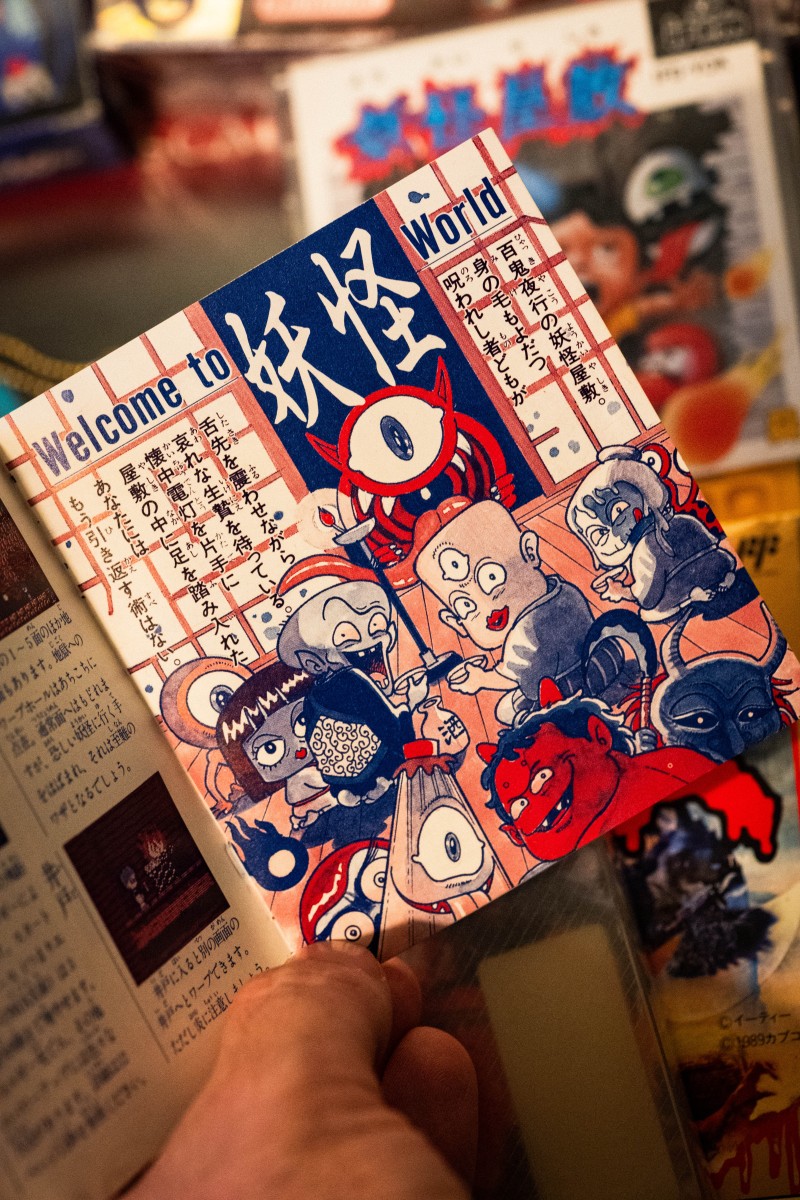
Going back to the Famicom Disk System era, Yōkai Yashiki (“Ghost Mansion”) is a charming hybrid of platformer and adventure. Originally an MSX title by Casio in 1986, it was enhanced and published by Irem on the FDS in 1987 with improved graphics and design. The game puts you in the role of a boy armed with a flashlight, venturing into a haunted mansion filled with Japanese monsters. The goal in each area is to find a sacred talisman; there are five stages in total, each culminating in a boss encounter once you’ve collected that stage’s talisman. What makes Yōkai Yashiki interesting is its mix of exploration and action: it’s side-scrolling and you can jump like a platformer, but you’re also searching rooms for hidden items and navigating a bit of a maze, a very early example of a Metroidvania-lite design.
The flashlight is your sole “weapon”: its beam can vanquish minor ghosts and ghouls, but it’s powered by batteries which effectively serve as your life meter. As you take damage (or simply over time), the batteries drain and the flashlight’s range shortens, a clever mechanic that ties light to life. If your batteries die, you’re helpless in the dark! You can find battery refills (to extend your life and light) as well as other items in the mansion’s nooks. The FDS version added more puzzles and completely redrew the maps from the MSX, making it a deeper game. There’s virtually no text, so despite being Japan-only it’s very playable without language barrier, which might be why some older Western gamers recall it as an import gem, sometimes under the fan-translated name “Ghost Manor”.
The vibe of Yōkai Yashiki is more spooky-fun than terrifying: cartoony yokai like yūrei (ghosts similar to the one from the Ring movie) and yuki-onna (snow spirits) appear as enemies. Still, creeping through its pixelated mansion can feel tense, especially when your light grows dim. Yōkai Yashiki represents the early days of console horror, when 8-bit developers had to get creative with mechanics to evoke fear. Plus, that flashlight mechanic is an ancestor of the flashlights we see in many modern horror games, proof that good ideas don’t die, they respawn. If you play this, consider dimming the lights… that’s when the yokai like to come out to play!
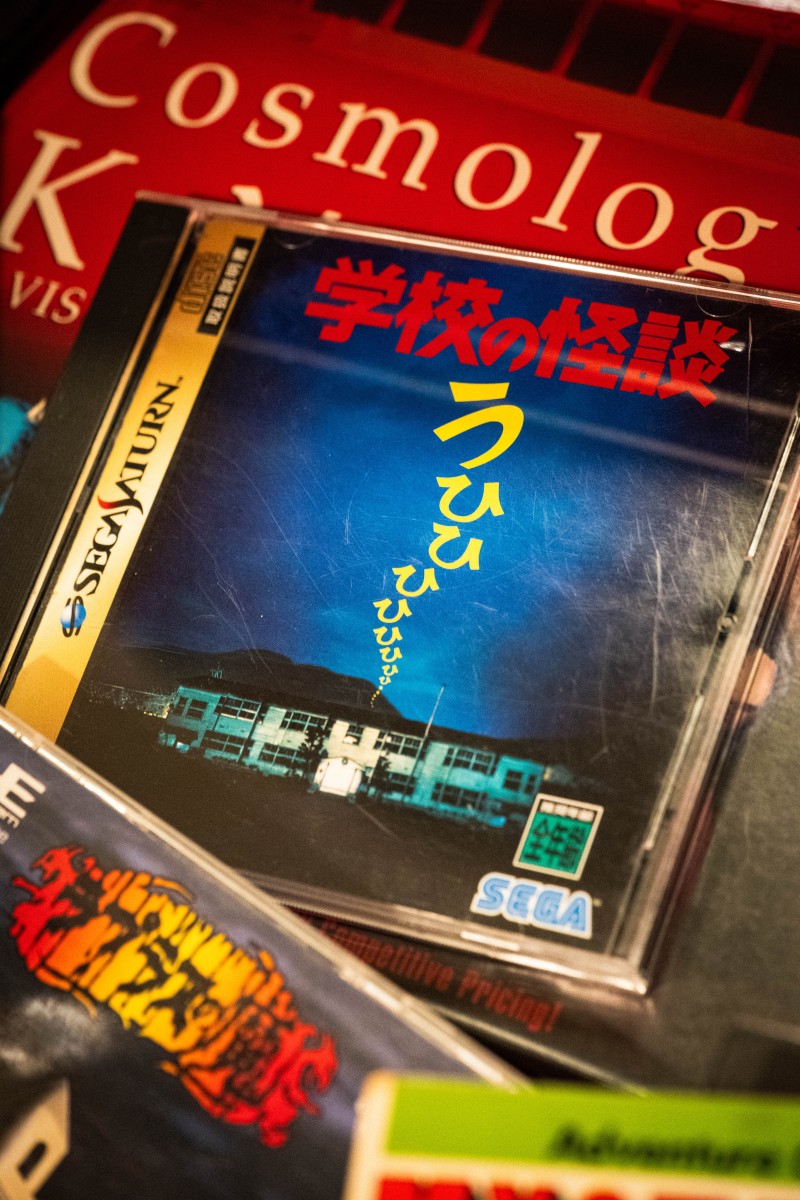
Gakkō no Kaidan (Sega Saturn, 1995)
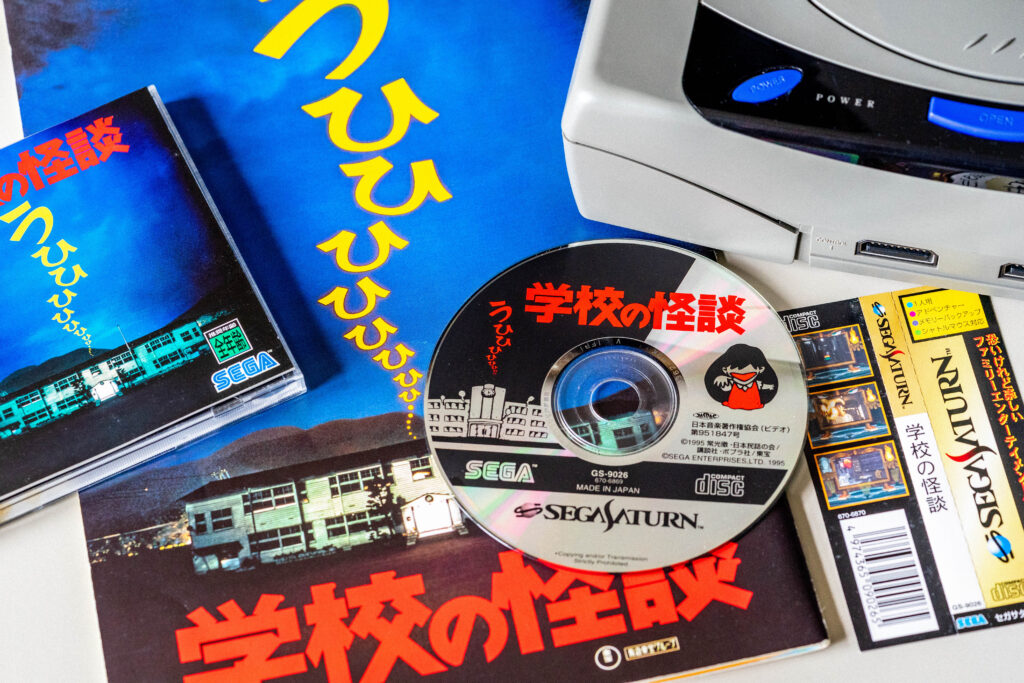
Based on the hit Japanese film series School Ghost Stories, Gakkō no Kaidan for Sega Saturn is a full-motion-video adventure that blurs the line between game and movie. Released in 1995 (about a week after the first Gakkō no Kaidan live-action movie hit theaters) it’s a tie-in that uses actual footage from the film to drive its scares. The game is a horror interactive movie: you watch scenes (of schoolchildren encountering various ghosts in a school at night) and occasionally make choices or perform simple actions to progress. Essentially, it’s a compilation of ghost story vignettes, based on Japanese schoolyard urban legends like Hanako-san (the ghost in the girls’ bathroom) and other spooky tales that happen on campus.
The Saturn game’s subtitle could be “Don’t rely only on the video!”, hinting that the player must do more than passively watch; you might have to click on clues or solve very light puzzles during the FMV sequences. This title is part of what fans jokingly call the “Saturn Suspense Theater”, Sega in the 90s had a few interactive horror games across several platforms. Gakkō no Kaidan stands out for being full-screen live action, which was novel then. While it’s not heavy on gameplay, the atmosphere is effectively creepy, bolstered by the fact that it’s literally scenes of a horror movie on your console. Playing it feels like being inside a Japanese ghost anthology.
It’s also interesting as a media crossover: it was one of the first times a movie’s footage was reused in a console game in Japan. The game didn’t get an international release (the movie itself did, under the title Haunted School), but it’s fairly straightforward if you understand basic Japanese or know the story, you can follow along and enjoy it. The Saturn’s 2D rendering of video actually gives it a grainy, grindhouse vibe which, if anything, makes the ghost scenes scarier. Including Gakkō no Kaidan in the collection highlights the multi-media approach to horror: not just original games but games that repurpose cinema to spook you interactively. Plus, it taps into the rich vein of school-based ghost lore, a staple of Japanese horror that resonates with childhood memories of telling ghost stories at school with friends.
Laplace’s Demon (Laplace no Ma, PC Engine CD, 1993)
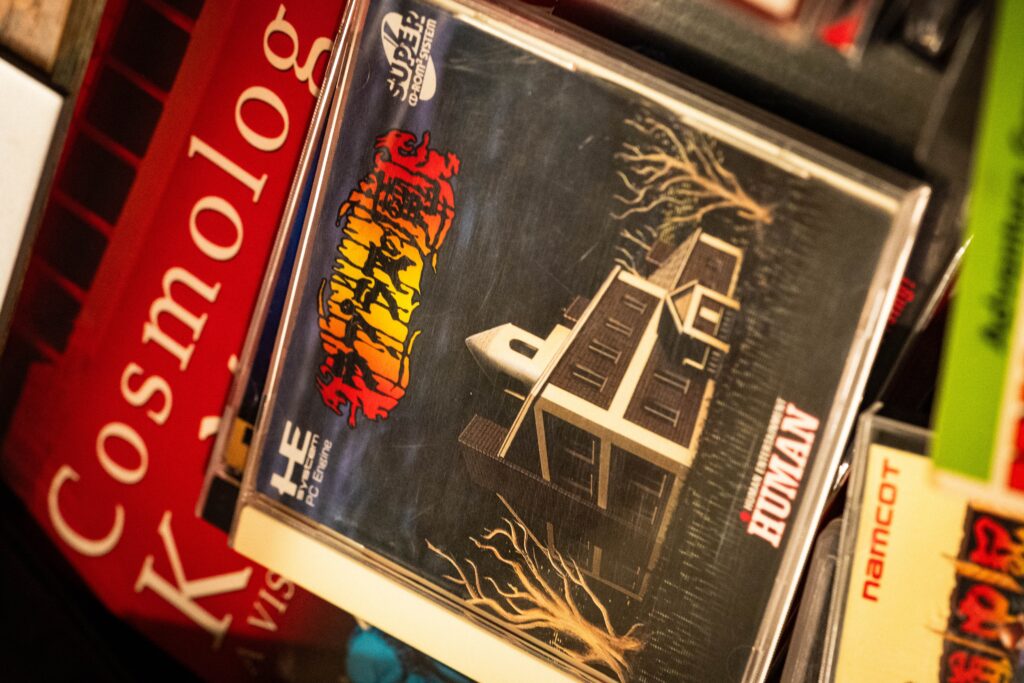
A unique blend of RPG and horror, Laplace no Ma (literally “Demon of Laplace”) takes inspiration from Lovecraftian fiction and tabletop RPGs like Call of Cthulhu. It originally debuted in 1987 on Japanese PCs (PC-88/98) and gained a cult following for its setting: a 1920s American town called Newcam (in Massachusetts) where a mansion is rumored to be haunted by dark magic. You create a party of investigators, maybe a detective, a scientist, a journalist, even an occultist, and then dungeon-crawl through the mansion and surrounding areas fighting monsters. It’s turn-based combat in first-person view, similar to Wizardry, but the enemies are zombies, demons, and eldritch abominations. In 1993, Human Entertainment (yes, the Clock Tower developers) remade Laplace no Ma for the PC Engine Super CD, greatly enhancing it.
Changes in the PCE CD remake include completely redrawn 16-bit graphics and monster art, an arranged CD soundtrack, cutscene illustrations and even voiced narration in parts. They also eased the notorious difficulty: the original had a cruel feature of erasing your save if your party TPK’ed (total party kill), the remake mercifully got rid of that, no longer wiping your save upon death! The mansion in the game is essentially one big maze full of traps and locked doors, so mapping and exploration are key. As you progress, you uncover a plot involving a cult trying to summon a Great Old One (a very Cthulhu-esque scenario). The Laplace’s Demon title refers to a concept of determinism, but in-game it’s more literal, you might just face a powerful demon from the dimension of Laplace!
It’s packed with horror references: you’ll see nods to Dracula, Frankenstein, and many Mythos creatures. The PC Engine version even has ambient silence with only footstep sounds while walking the mansion halls, adding to the dread. One minute you’re solving a Scooby-Doo style mystery, the next you’re fighting an incarnation of Death. For RPG fans, it’s a fascinating genre hybrid, sometimes dubbed a “survival horror RPG” avant la lettre. Laplace no Ma also later got a SNES port in 1995 (by Vic Tokai), but the PC Engine CD version in this collection is arguably the definitive edition for its multimedia enhancements. Horror was not limited to action or adventure, even RPGs embraced the dark and macabre, complete with level grinding against poltergeists! It’s quite satisfying to see your party go from barely surviving ghost attacks to blasting away eldritch horrors with spells and flamethrowers. Truly a dungeon crawl through a haunted mansion.
Yōkai Dōchūki (PC Engine, 1988)

One of Namco’s earliest titles for the PC Engine, Yokai Dochuki (localized as Shadow Land) is a whimsical platformer that sends a kid through the Buddhist afterlife. In this arcade game (1987) and its 1988 PC Engine port, you play as Tarosuke, a mischievous boy who dies and must journey through Jigoku (Hell) itself, seeking an audience with Buddha to determine his fate. Along the way, Tarosuke travels through five regions of the afterlife, each filled with yokai and oni inspired by Japanese folklore. Despite the premise, the tone is more comedic fantasy than horror, Tarosuke can fire ki energy bullets from his hands to dispatch enemies and the visuals are colourful and cute rather than gory.
Still, the theme is quite novel: instead of a cheery Mario kingdom, you’re in a cartoonish version of Hell! The PC Engine version is notable because it was one of the first third-party games on the system (Namco was an early supporter). It’s also an enhanced version of the arcade: it adds new levels and changes some stage designs. One fun feature: the game has multiple endings depending on your score/karma. Depending on how many good deeds (or bad deeds) Tarosuke does, Buddha will decide different fates, he might get reincarnated rich, or get sent back as a frog, or even ascend to paradise. It was pretty unusual to see that kind of moral system in a 80s platform game!
In terms of gameplay, Yōkai Dōchūki is a side-scroller with light platforming and shooting. Tarosuke faces bosses that are often humourous takes on yokai, like a giant floating Daruma doll, etc. Culturally, it’s an interesting artifact because it shows how Japanese developers incorporated folklore into games even for young audiences: teaching about the concept of the Buddhist Hell in a not-so-scary way. The PC Engine port was later re-released on Virtual Console, evidence of its beloved status. Don’t underestimate Tarosuke’s journey though: Shadow Land can be tricky, and who knows, maybe Tarosuke’s ultimate fate will be decided by you!
Jitsuwa Kaidan: Shin Mimi Bukuro, Ichi no Shō (PSP, 2005)

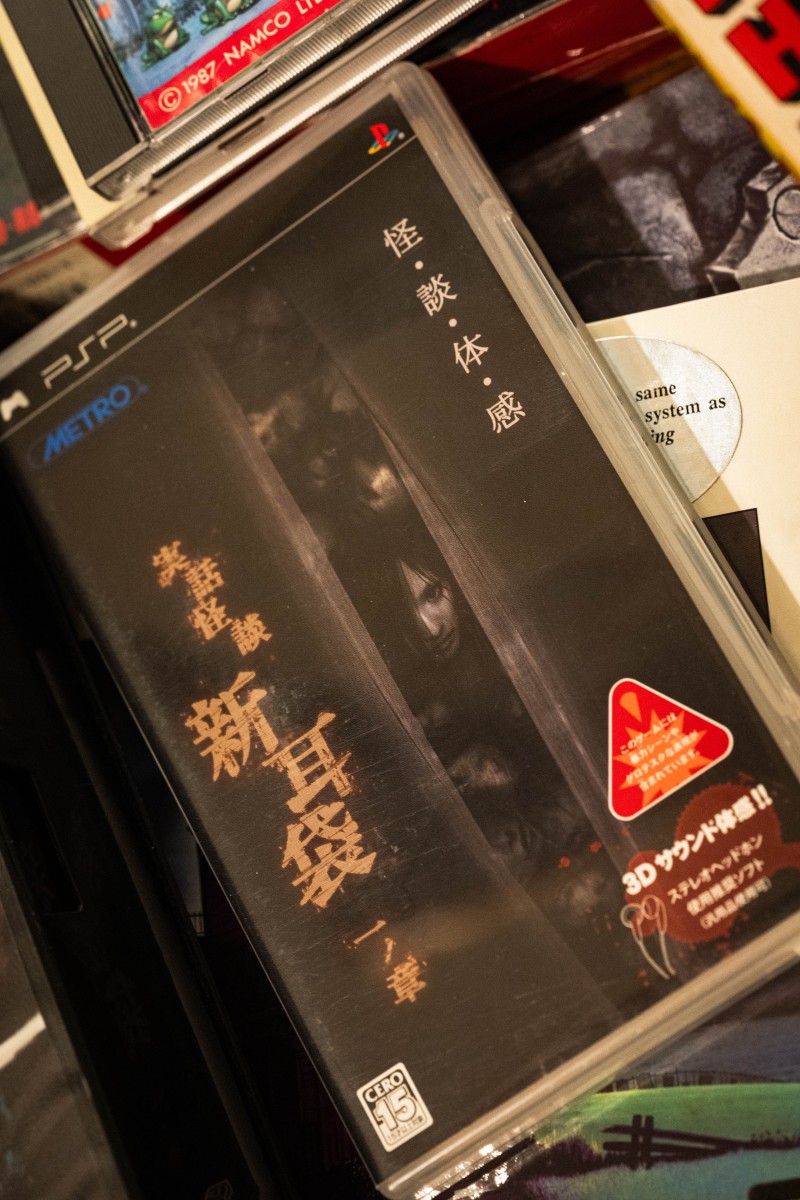
Rounding out the collection is a modern (only 20 years ago, in 2005) take on Japanese ghost storytelling. Jitsuwa Kaidan “Shin Mimi Bukuro” Ichi no Shō translates to “True Story Ghost Tales ‘New Earbags’, Volume 1”. Shin Mimi Bukuro (New Ear Bag) is actually the title of a famous book and TV series of purportedly true ghost anecdotes. This PSP title is essentially a ghost story anthology in game form. It contains 50 short horror stories (presented as chapters you can select) that are fully narrated with voice-over, accompanied by text and minimal visuals. The format is like a sound novel/kinetic novel, you mostly listen and read; there’s little interaction beyond picking the story and maybe some mild branching or replay options.
What makes it effective is the audio design: it was one of the first PSP games to use the system’s 3D sound feature. If you play with headphones, sounds will move around you, making it feel like ghosts are behind you or whispering in your ear. This, combined with eerie sound effects and music, creates a chilling atmosphere. The narrations are done by veteran voice actors who know how to tell a spooky tale with perfect timing. Stories range from classic school ghost legends, to urban myths, to personal accounts of inexplicable encounters, each only a few minutes long, perfect for a quick scare on the go. There’s even a “hidden footage” or bonus mode after collecting all stories.
So in a way, it’s part story library, part collector game. Jitsuwa Kaidan Shin Mimi Bukuro shows how the centuries-old oral tradition of ghost storytelling adapted to modern tech: from campfire to console. Also, by 2005 the handheld’s graphical capabilities weren’t the focus here, it was pure audio and imagination, proving that sometimes the scariest graphics are in your mind. But careful, some of these tales are truly hair-raising.
Bonus games: LCD handheld
House of Evil (悪霊の館, 1982), Bandai LSI handheld
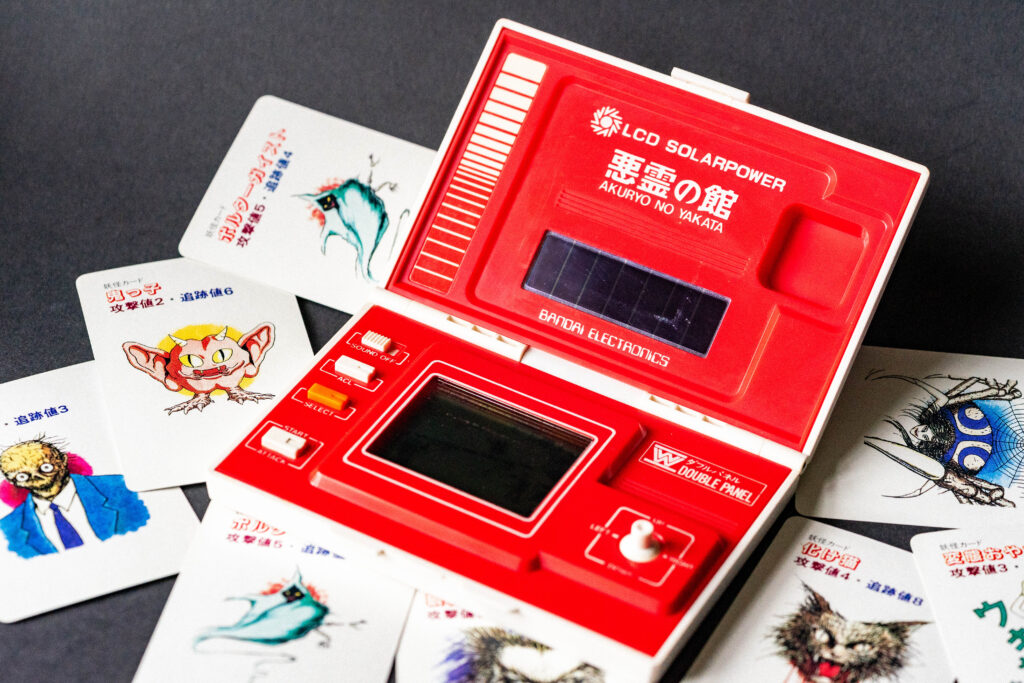
House of Evil (悪霊の館) is a Japanese LSI (large-scale integration) handheld game from Bandai’s early electronic-game era. It’s part of a wave of compact horror-themed electronic games that attempted to capture the atmosphere of haunted houses and supernatural horror in a minimalist LCD format. A game that not only gave kids ghostly thrills but also delighted parents by ditching the need for batteries! Indeed, it’s powered by sunlight. This Bandai LCD handheld is a “spooky” portable adventure, as long as you have enough daylight! A perfect horror vibe for Halloween… except you might end up playing it out in the sun, which kind of kills the atmosphere. The gameplay appears to involve moving through rooms of a cursed mansion or haunted structure, avoiding traps and battling evil spirits or ghosts, though exact mechanics are difficult to confirm due to the game’s rarity.
What stands out is the moody aesthetic: the black casing, eerie box art, and occult-like title font give it a genuinely creepy feel for such a basic system. It’s become a niche collector’s item, especially among fans of Japanese horror, LSI handhelds, or Bandai’s pre-digital horror toys. Very few units surface online, and boxed versions with the original artwork and manual are especially prized. In style, it fits alongside other horror oddities like the GeGeGe no Kitaro handhelds or Doraemon’s Ghost Mansion, though it leans more toward a darker, adult horror vibe.
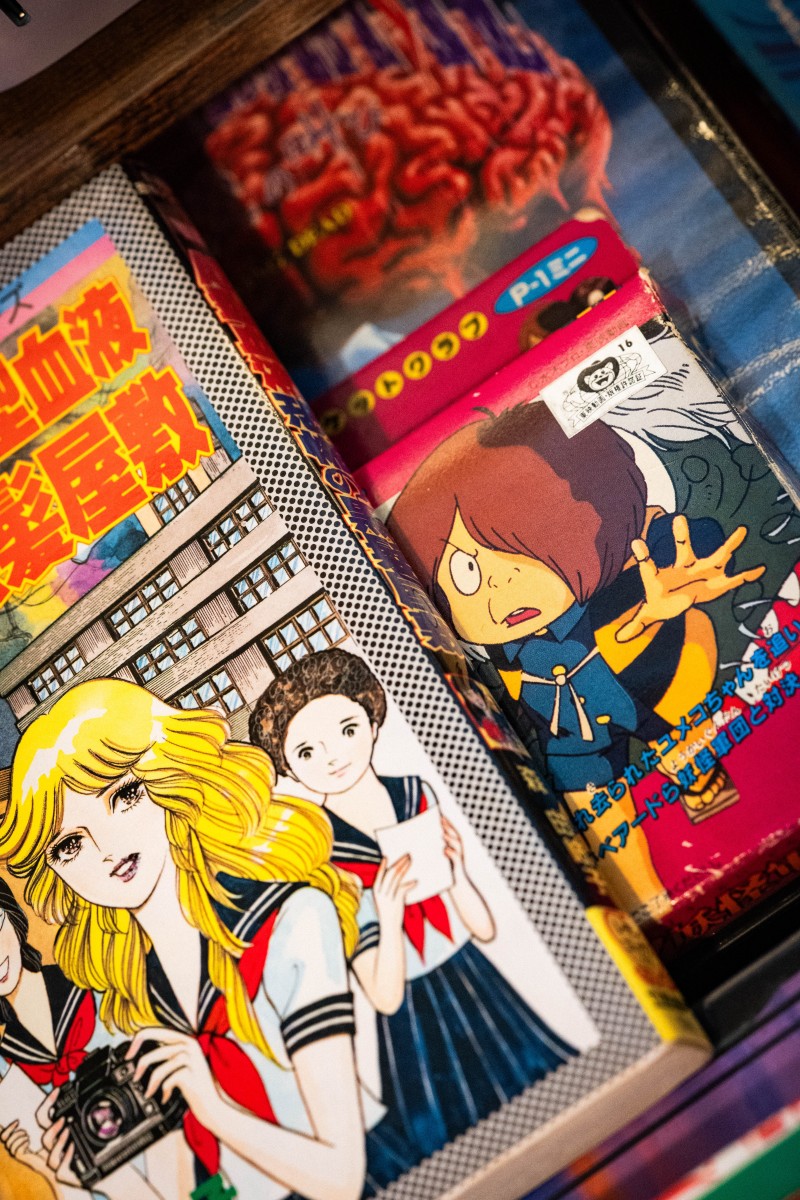
GeGeGe no Kitaro, Bandai LSI handheld

An interesting collectible in this lineup is a vintage GeGeGe no Kitarō LSI handheld game. “LSI game” refers to those standalone electronic LCD or VFD handhelds popular in the early 1980s. Bandai produced a GeGeGe no Kitaro: Yokai Great War (妖怪大戦争) handheld, from the early 1990s, to tie in with Kitaro’s anime films. In this device, you guide Kitaro (Shigeru Mizuki’s famous yokai-boy hero) as he fights off hordes of yokai. The gameplay is simple LED/LCD action, think along the lines of Game & Watch devices, but with a horror-comedy twist. You will see Kitaro move between a few positions, dodging or shooting at classic creatures like the one-eyed umbrella ghost or the wall monster Nurikabe. These handhelds have primitive “graphics” (preset light-up sprites), yet the charm is undeniable. For this Halloween list, the Kitaro LSI game represents a slice of nostalgic fun: imagine a kid gripping this little device under the covers, the beeps and boops of Kitaro battling monsters sounding in the dark. It’s a reminder that horror-themed gaming isn’t just on consoles and PCs, it even haunted the handheld toys of yesteryear.
Sound novels
Wait, what? You want more? Ok ok, Halloween’s night is long and dark. After all this playing, you can read this article about the sound novels on the Super Famicom, there are quite a few fitting horror stories in there, too!
Conclusion
Some of these games make you run. Others ask you to read, listen, map a mansion or decide which door to open. That variety is why I keep collecting them. A few pixels or a page of text can leave as much room for fear as a room full of moving images.
For me, the quietest ones often stay longest: the folklore in Kyoto, the words beneath G.U.E. Tech, a glimpse of something on the other side of a door. Pick the kind of fear you enjoy, and let me know what else belongs on the shelf.
Happy Halloween, and watch out for that Scissorman behind you… 🎃✂️
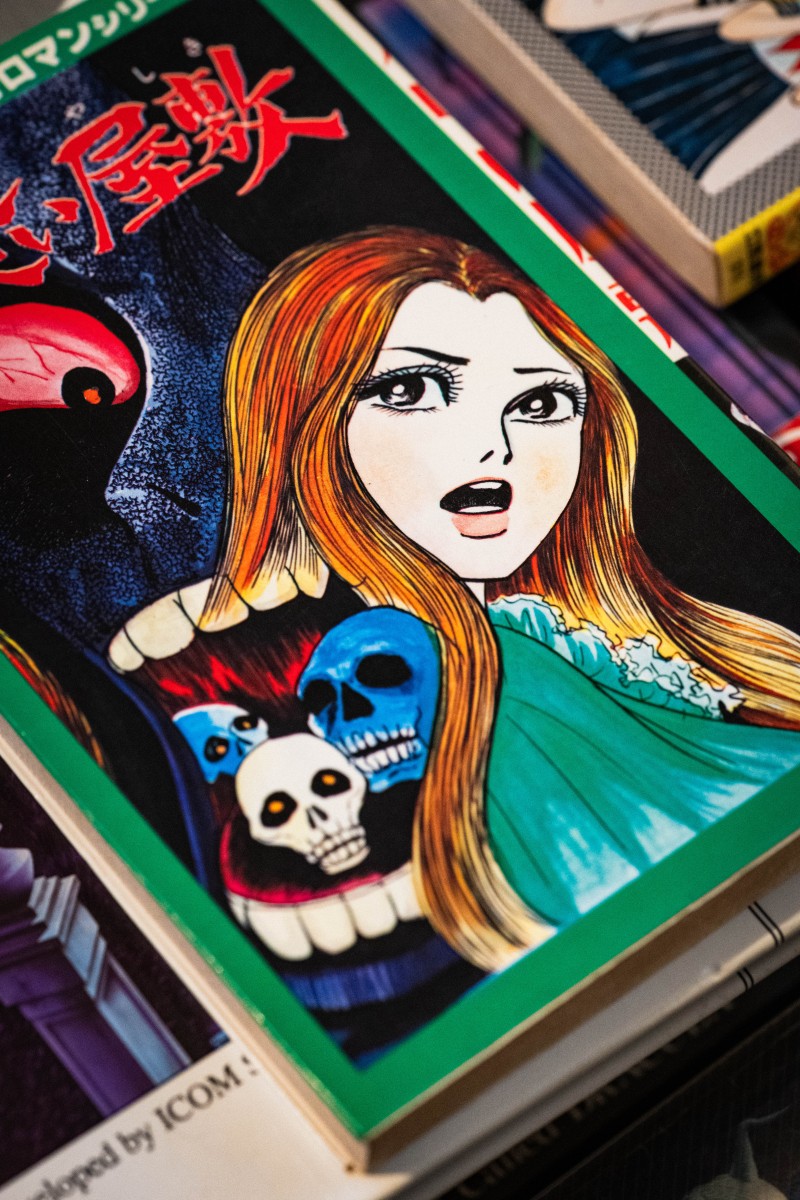

Stay curious. Stay nostalgic.
Because retro never dies, it just respawns.
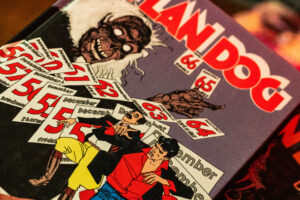


I love that SNES Kitaro game. It has great graphics and music, and the boss fights are very challenging. Actually each stage is a straight boss fight from start to finish.
From a Kitaro fan to another, never enough of Kitaro’s games! Imagine how cool it would be an old school-designed Kitaro’s world, but in immersive 3D on the PS5. As much as I love the 8/16bit and also the PS1 Kitaro games, it would be cool.