

Before visual novels became a cultural phenomenon, before anime-inspired dating sims filled shelves and app stores, there were the Sound Novels: a uniquely Japanese sub-genre of adventure games that blended minimal visuals, evocative sound design and interactive storytelling.
Chunsoft established the Sound Novel format with Otogirisou in 1992. Text filled the screen while images, music and sound effects shaped the atmosphere. Other publishers explored similar ideas, giving the Super Famicom a small but fascinating shelf of stories to read.
Alongside the platformers and shooters were cartridges that invited you to read, listen and decide.
What exactly is a Sound Novel?
Think of it as an interactive book, where the story unfolds through text, sound, and minimal imagery (often just still backgrounds) and the player’s choices steer the plot. Unlike traditional visual novels (which later emphasised character art and animation), Sound Novels relied on atmosphere and imagination. They were made to be read at night, with headphones on, letting the eerie sound effects and sparse visuals pull you into their world.
The collection: nine Stories, nine worlds
In our first teaser reel (Instagram, 21 May 2023), we showcase the nine titles in this Super Famicom collection, a system more commonly associated with colourful platformers than slow-burning horror or philosophical sci-fi. Yet these cartridges turned the console into a storytelling machine, whispering tales through 16-bit speakers.
Here’s a glimpse of these literary artefacts, in order of appearance:
1️⃣ Getsumen no Anubis (月面のアヌビス, “Anubis of the Moon’s Surface”)
A haunting sci-fi mystery set on the moon: a perfect blend of cosmic tension and human drama. The title alone sounds like it was written by a poet staring into the void.
Read more about this game
Getsumen no Anubis (月面のアヌビス, Anubis of the Moon’s Surface) from 1995, a sci-fi horror visual novel.
The main characters in the game, with default names Keisuke and Kaori, are astronauts residing in a lunar laboratory. Alongside them, a group of American soldiers also occupies the facility. As the story unfolds, unsettling events start happening, posing a threat to everyone’s lives. While the game offers multiple scenarios, one scenario specifically delves into the horror genre. In this particular storyline, enigmatic space parasites come into play, capable of infiltrating and controlling individuals. As a result, the protagonist and subsequently the player becomes increasingly suspicious of the other characters.
2️⃣ Tsukikomori (つきこもり)
One of the harder titles to find in this collection. This psychological thriller explores themes of isolation and obsession, like reading a Murakami novel in pixel form.
Read more about this game
Tsukikomori (Late Night, 晦-つきこもり), again by Pandora Box and published by Banpresto in 1996. This title is also the rarest among the whole 9-game series. Another J-horror adventure sound novel where you listen to the ghost stories told by six relatives who have gathered for their grandmother’s memorial service. The content of the main story changes according to the order in which you listen to the ghost stories, with multiple bad endings waiting for you. This title was distributed on the Virtual Console, for the Wii in 2012 and the Wii U in 2016 .
3️⃣ Gakkou De Atta Kowai Hanashi (学校であった怖い話, “Scary Stories from School”)
A cult favourite. Picture a late-night gathering of students sharing ghost stories, except this time you decide how the tales unfold. Perfectly Japanese, perfectly chilling.
Read more about this game
Gakkou De Atta Kowai Hanashi (学校であった怖い話, “Scary Stories from School”), by Pandora Box, published by Banpresto from 1995. We are talking about a Japanese horror adventure game that uses digitalised photographs. School horrors is a whole horror genre in Japan, this is the first title of a long series that was also published for other future platforms (such as the PlayStation).
The main character, from a high school newspaper, goes through the game listening to the scary stories of six other characters. The scenarios of the game change depending on the order of the stories. Highly recommended, the classic J-horror school in a sound novel format.
Tsukikomori, the next related game, is also in this collection.
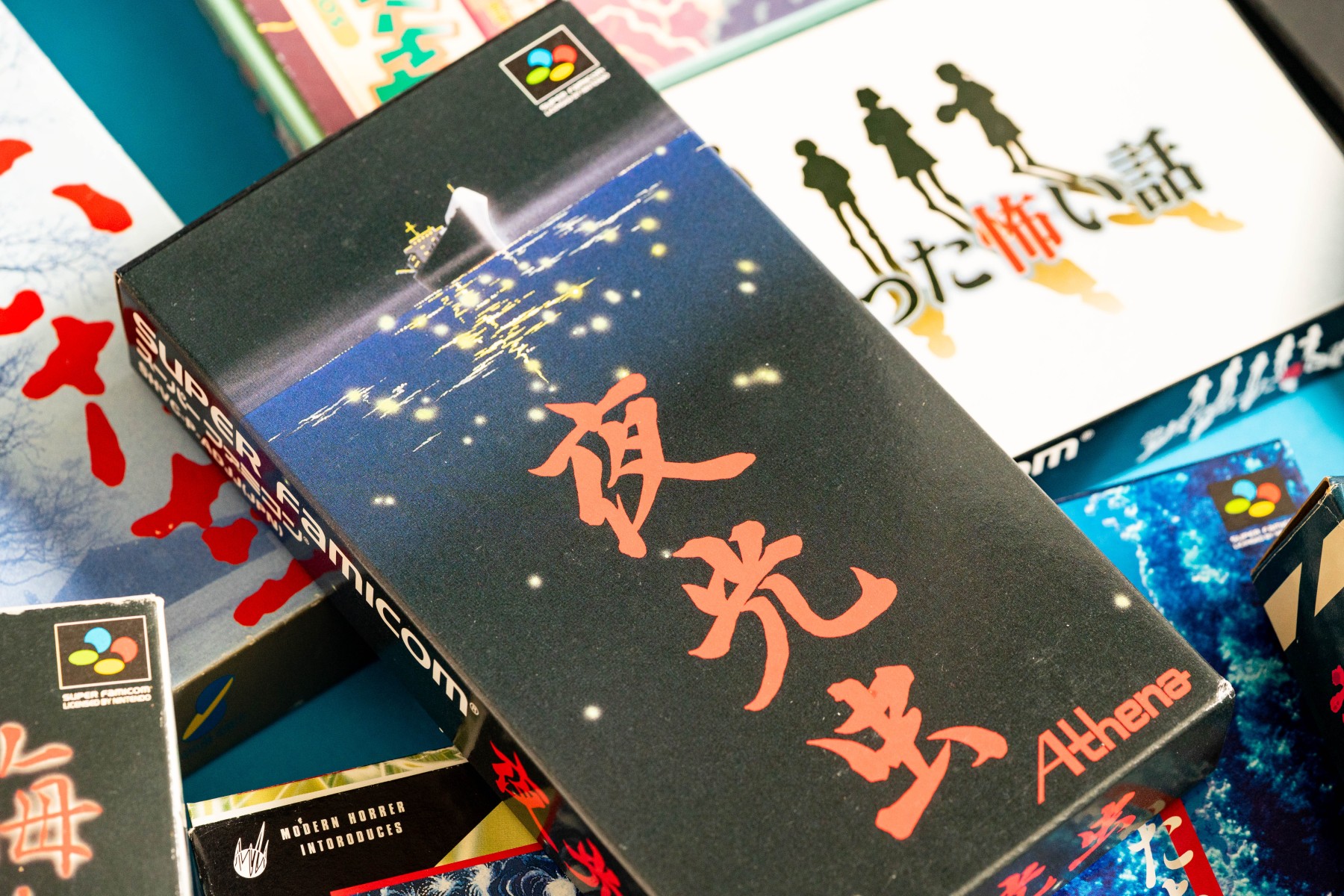
4️⃣ Yakouchuu (夜光虫, “Noctiluca”)
Named after a bioluminescent sea creature, this one dives deep into mystery and paranoia. The eerie blue glow of its ocean setting sets the tone for a tense narrative.
Read more about this game
Yakouchuu (夜光虫, “Noctiluca”, 1995) was published by Athena. Its title refers to a bioluminescent organism associated with sea sparkle, which suits a mystery set aboard a ship.
You guide the captain of the Diana through a branching story. Text, backgrounds and sound effects do the work, while your choices determine what happens to the crew. It later reached Game Boy Color, and an N64 sequel followed.
5️⃣ Majotachi no Nemuri (魔女たちの眠り, “Sleep of the Witches”)
Dark, dreamlike, and full of occult overtones. You can almost smell the candle wax and ink of ancient tomes as you read through it.
Read more about this game
Majotachi no Nemuri (魔女たちの眠り, Sleep of the Witches). A sound novel adventure game released in 1995 by Pack-In Video.
The story is based on Jiro Akagawa’s novel with the same name, published 10 years earlier in 1985. The main character, Tsuda (but you can change the name), encounters a murder case in a village deep in the mountains after receiving a mysterious phone call. This game was later ported to the PlayStation in 1999.
The story is quite compelling: the main character is an office worker who, one day, receives a strange phone call. It was a woman’s voice saying, “Help me… I’ll be killed.” A nostalgic familiar voice. The next day, he wakes up from a strange dream, after which he learns from a newspaper article that the voice belonged to a woman who was his childhood friend. The main character drives to a village deep in the mountains where she was a teacher. A closed town surrounded by a deep forest, where he will experience unimaginable terror. Pretty cool, no?
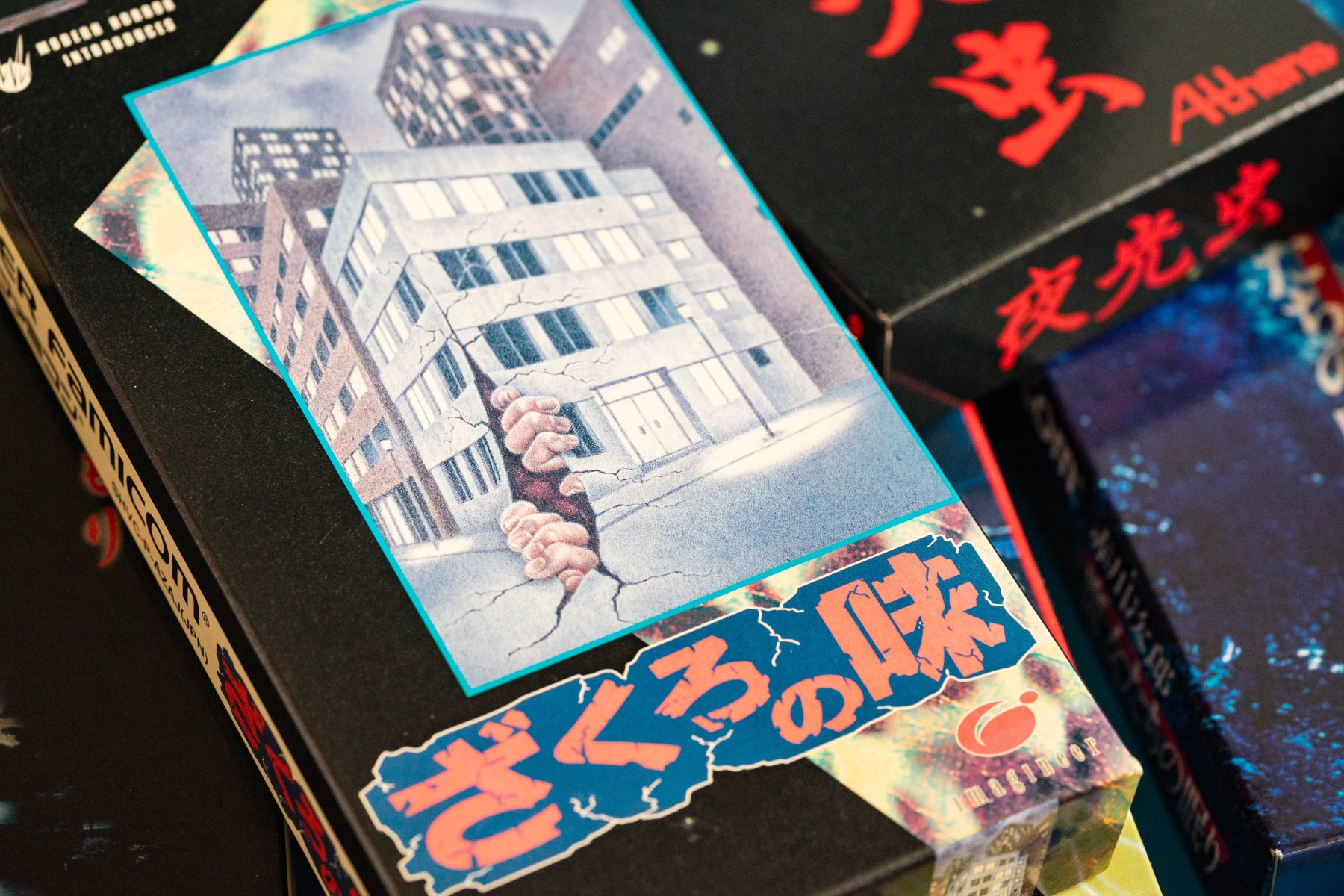
6️⃣ Zakuro no Aji (ざくろの味, “Taste of Pomegranate”)
An office building sinks after an earthquake. What begins as a search for escape can branch into very different kinds of danger.
Read more about this game
Zakuro no Aji (ざくろの味, Taste of Pomegranate). A sound novel adventure game released in 1995 by Imagineer.
This visual novel is very aesthetically appealing because it uses a mix of pixel art and photograph static background with sound effects and music to create the atmosphere, while the protagonists are represented as silhouettes.
It’s a sister product release with the previously seen “Anubis on the Moon” (entry number 1), which was released on the same day by the same company
The game’s story concerns a five-story office block that suddenly sinks into the ground after a major earthquake. The protagonist, Domon, and the other office drones are initially panicked, and decide to look for a way out. As Domon makes his way to the basement, any one of a number of different situations can occur dependent on how the player answered some multiple choice questions earlier on. There are a total of 4 scenario branches.
7️⃣ Otogirisou (弟切草, “Hypericum Erectum”)
The one that started it all. Released in 1992, it’s widely considered the first true Sound Novel. A gothic horror masterpiece full of twists, atmosphere, and existential dread.
Read more about this game
Otogirisō (弟切草, lit. St John’s wort). Released in 1992 (Japan only of course) by the usual Chunsoft. The story has a few related movies and novels, Its setup is familiar horror territory. The plot is also a classic horror one: two passengers survive a car crash and go to a nearby mansion. Nobody answers the doorbell and they cannot find anyone in the house… but they hear things lurking in the shadows (of course!).
Depending on the choices you make, the story unfolds differently, and each route can reach a different ending. Unlike many of the other sound novels for the Super Famicom, the graphics and animations use 16-bit bitmaps instead of pre-rendered images.
A revised version later appeared on PlayStation.
8️⃣ Kamaitachi no Yoru (かまいたちの夜, “Night of the Kamaitachi”)
The crown jewel of the genre. Set in a snowbound lodge, this murder mystery plays like Agatha Christie meets Twin Peaks, complete with branching paths and a chilling soundtrack.
Read more about this game
Kamaitachi no Yoru (かまいたちの夜 – ), developed and published by the usual Chunsoft in 1994.
The game is the second sound novel by Chunsoft (after Otogirisou) and brought other companies to develop similar games. It’s a horror mystery game set in a secluded mountain inn. The guests are cut off by a blizzard when a murder turns the inn into a place of suspicion. The game features suspenseful storytelling, atmospheric visuals, and a haunting soundtrack.
The term “sound novel” was a registered trademark of Chunsoft, but it is now used to describe a genre of games that combine visual storytelling with music and sound effects. Kamaitachi no Yoru is considered to be one of the defining games of the genre.
In 2017 a remake of Kamaitachi no Yoru titled Kamaitachi no Yoru: Rinne Saisei was released for the PlayStation Vita. The remake features updated graphics, voice acting, and a new scenario. It was ported to Windows in 2018.
Kamaitachi no Yoru had a major impact on the development of the visual novel genre. It inspired other companies to develop similar games, and it helped to popularise the genre in Japan. Kamaitachi no Yoru is still considered to be one of the best sound novels ever made, and it remains a popular game among fans of the genre.
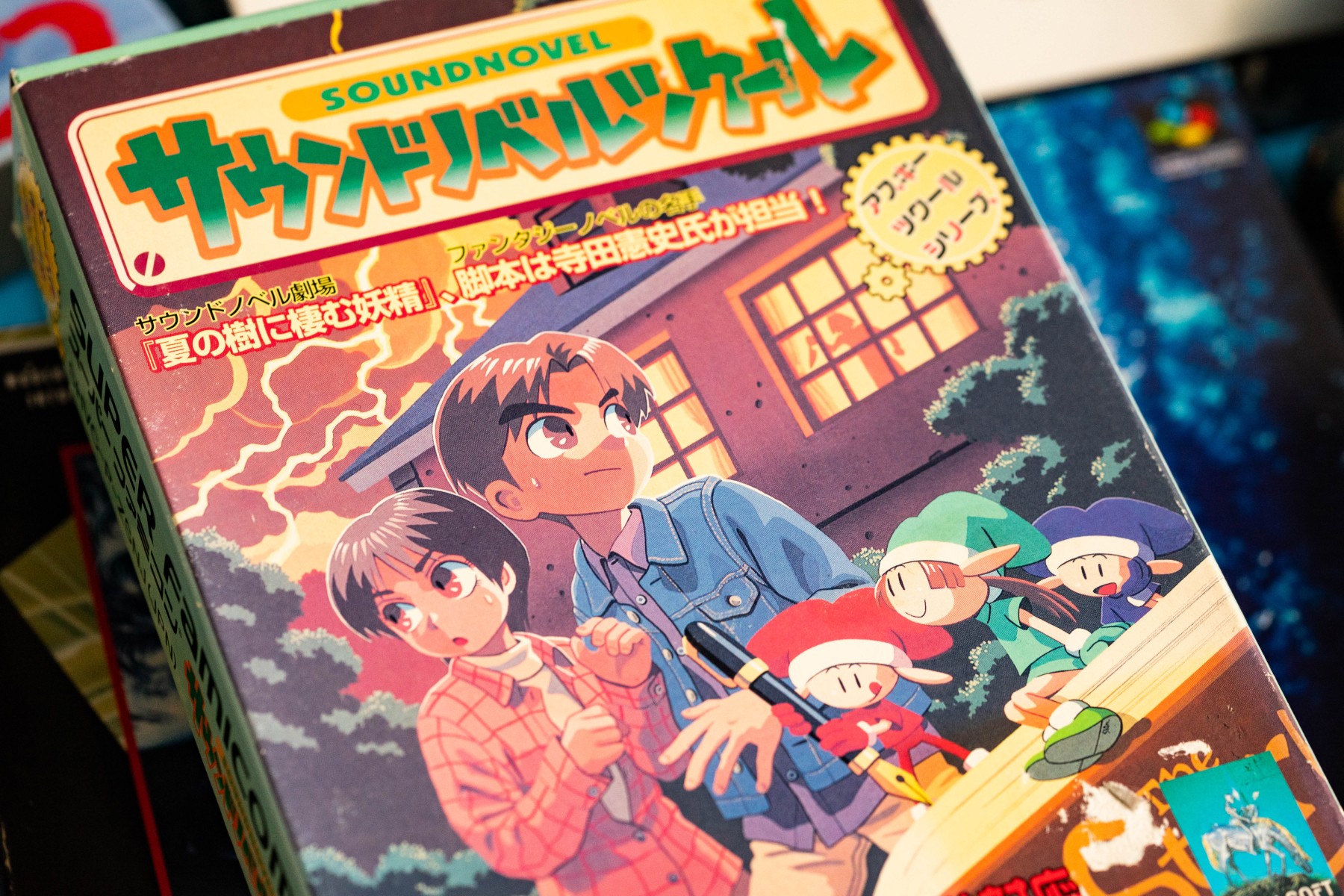
9️⃣ Sound Novel Tsukuru (サウンドノベルつくる, “Sound Novel Creator”)
The ultimate meta-release. This cartridge lets you create your own Sound Novels, a rare example of early 90s user-generated storytelling. Think of it as RPG Maker’s eerie cousin.
Read more about this game
Sound-Novel Tsūkuru (サウンドノベルツクール, ASCII, 1996), a Satellaview-compatible slotted cartridge game belonging to ASCII’s Tsukūru series. As the Japanese title suggests (with the verb “Tsukuru”: create), this is software to create your own sound novels.
You can create an original sound novel by combining various instructions, images and music. In addition to pre-prepared images and music, you can also use your own creations. How cool is that?! It includes 60 types of background graphics, 28 types of human silhouettes, 7 types of production effects, 60 types of BGM, and 256 types of sound effects.
Sound-Novel Tsukūru utilised 8M Memory Packs to store data that was downloaded from the BS-X cartridge. This data, which was broadcast between June 30, 1996 and August 30, 1997, served as the foundation for the game’s narrative and gameplay. St.GIGA, a satellite broadcasting service, provided the downloadable data to Satellaview subscribers.
A sequel was released for the Sony PlayStation and the SEGA Saturn.
The Sound Novels represent a bridge between literature and interactivity, the point where storytelling evolved from the printed page to the flickering screen. They invited players to listen, think, and feel rather than just react. And while their pixelated fonts and moody backgrounds might look quaint today, the emotions they evoke, suspense, loneliness, curiosity, remain timeless.





Leave a Reply