

Introduction
If you experienced football from the mid-80s to the mid-00s, you already know the truth: the 90s were arguably the sport’s highest peak. Not just in terms of trophies and fame, but in pure talent, creativity, technique, and personality. It was an era of impossible goals, brutal tackles, and players who felt larger than life.
Looking back, I did not realise how lucky I was. I grew up watching legends like Maradona, Roberto Baggio, Van Basten, Gullit, Maldini, Batistuta, Ronaldo (il Fenomeno), Zidane, Totti, Del Piero, Zola, Buffon… and that is still only scratching the surface.
And yes, my football nostalgia is heavily Italian-centric. I’m biased, I’m Italian, but Serie A genuinely felt like the centre of the football universe back then. It was completely normal to see world-class talent arrive every season, and just as normal to see new stars rising to replace the giants.
But football passion was not only lived in stadiums. It was lived in bedrooms too: on CRT monitors, between floppy disks, and through long loading screens that felt endless.
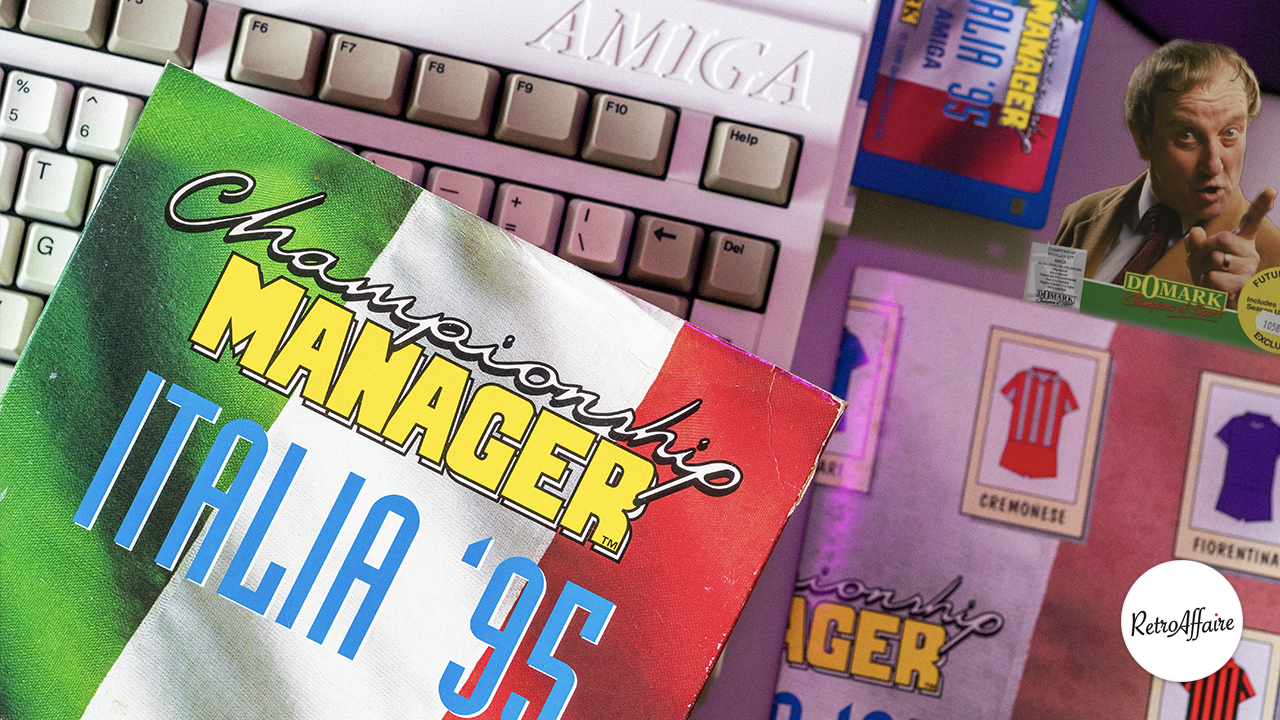
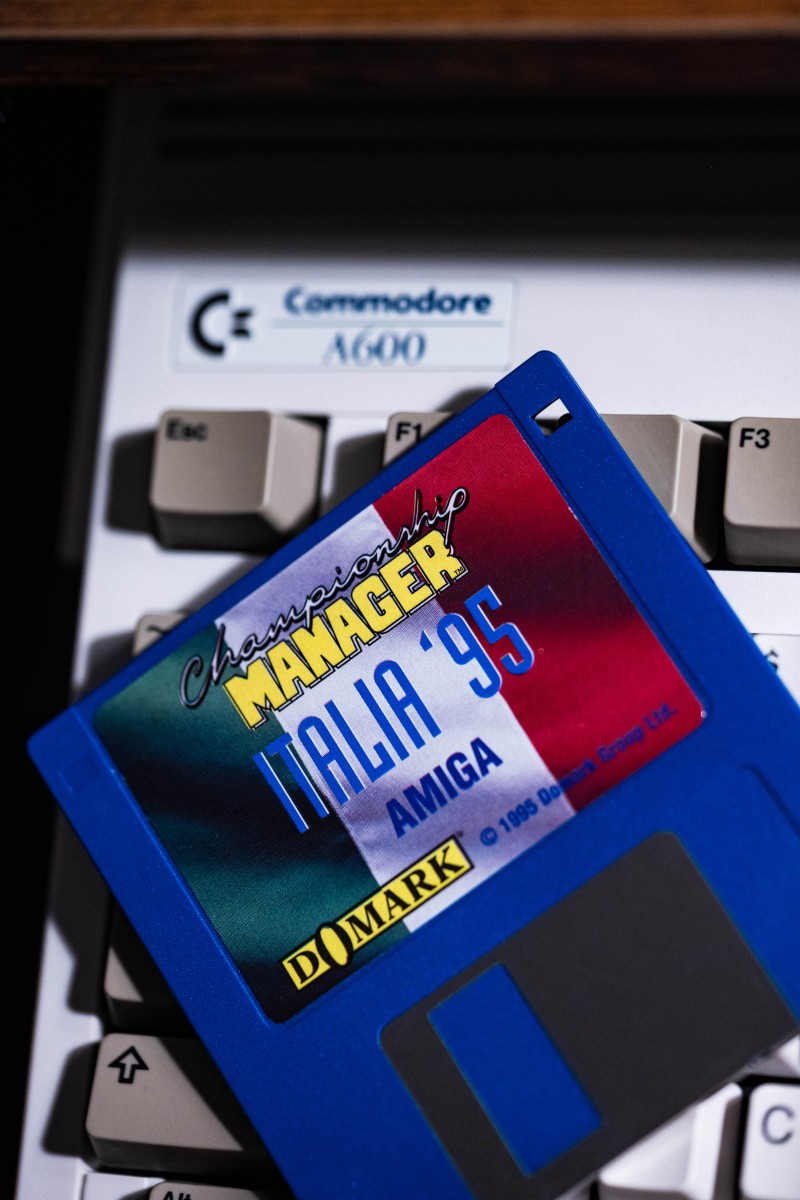
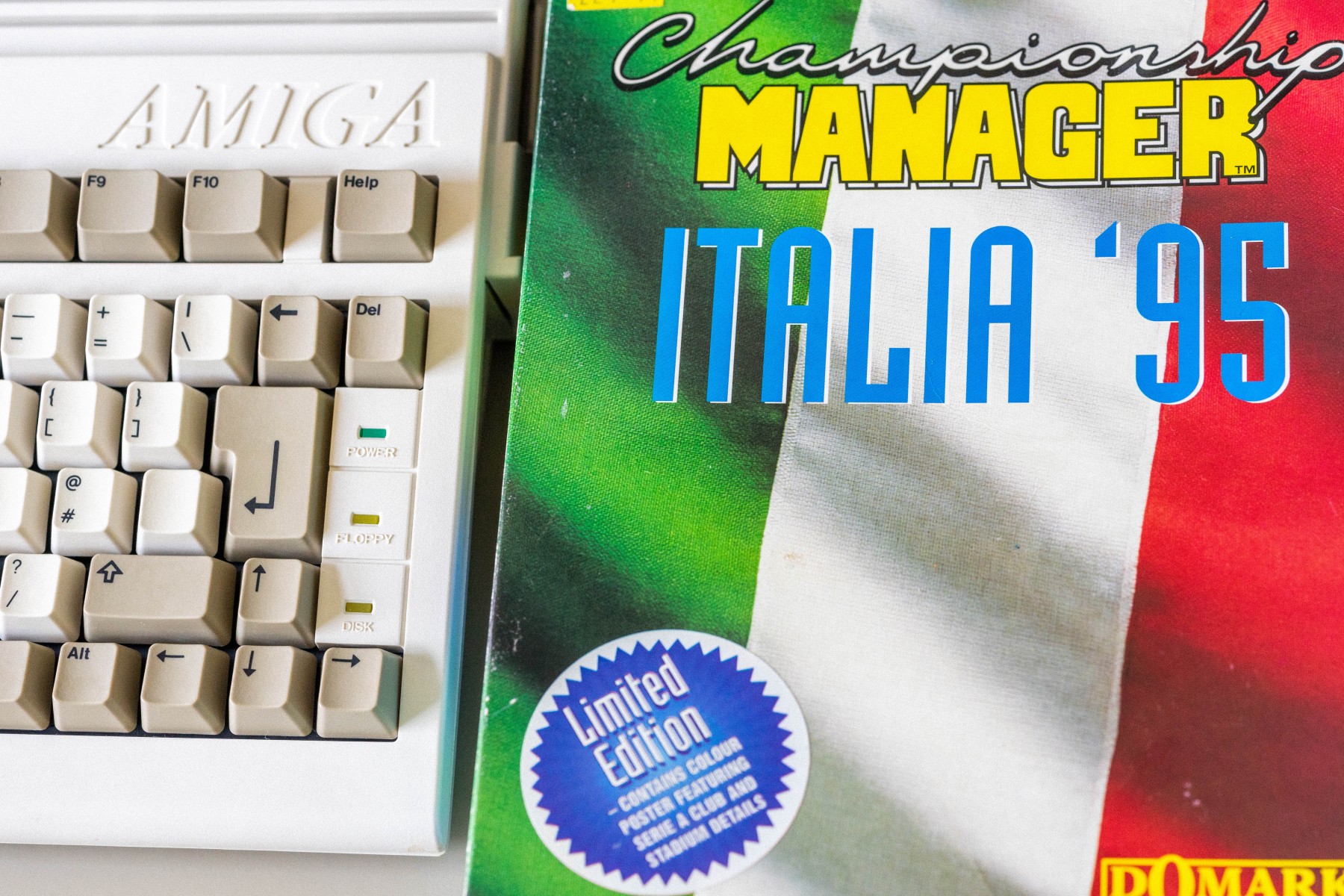
For me, that world had a name: Championship Manager Italia 95 (and Sensible Soccer, but that’s a story for another time). CM Italia 95 was not simply a game. It was a true extension of my football obsession. I played it relentlessly on DOS, sometimes even in multiplayer sessions with my brother and friends, up to four players, which was simply incredible. We argued about tactics and transfers like we were running real clubs.
And no matter what happened, my Fiorentina would never sell Gabriel Batistuta. Not at any price.
But let’s start from the beginning…
Championship Manager ’92 (1992)
Before the series found its solid shape with Championship Manager ’93, there was the very first Championship Manager released in 1992. Developed by Paul and Oliver Collyer (operating as Intelek) and published by Domark, this original title laid down the basic framework of the franchise: squad selection, tactics, transfers, and weekly progression. But it was still rudimentary compared with what would come later. In CM92, many elements that now feel essential were either missing or very basic: real player names weren’t used, meaning players appeared only as generic names rather than recognizable footballers. In CM92 you didn’t have the possibility to arrange your friendly games, foreign players weren’t available, the manager salary wasn’t there, as well as selecting a win bonus or penalty takers, or the man of the match concept… all features that were introduced in CM93, a well refined game in comparison.
The first game had already found the part that mattered: choose a squad, make decisions and wait to see what happened. CM93 gave that framework more detail, especially once the names on the screen became footballers I recognised.



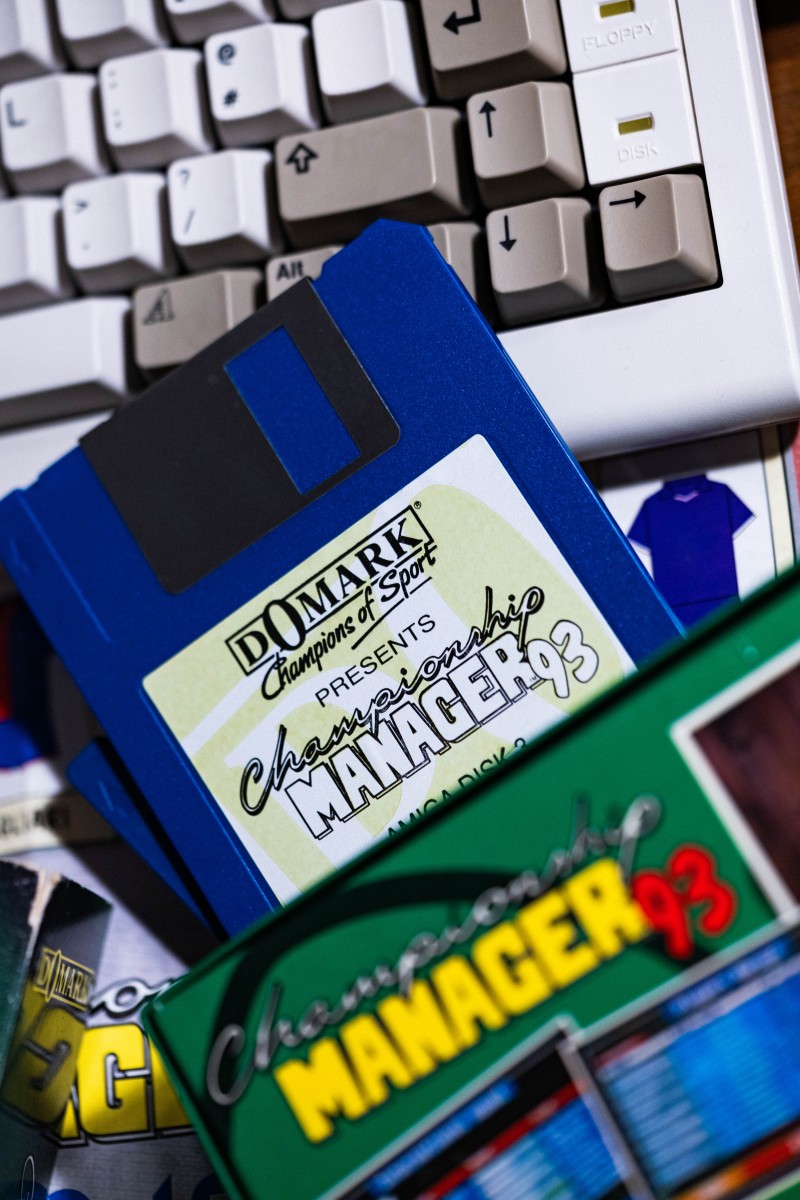




Championship Manager ’93 (1993)
Championship Manager ’93 was released in 1993 as the second instalment of the series, a year after the original 1992 game. It was developed by Paul and Oliver Collyer (operating as Sports Interactive, then known as Intelek) and published by Domark. The game was available on the Amiga (as well as MS-DOS and Atari ST). Notably, the codebase was rewritten from BASIC to C for this edition, improving performance and load times.
Championship Manager ’93 introduced several groundbreaking features for its time:
- For the first time, the game included a database of real-life players, eliminating the generated fake names of its predecessor. This authenticity was a major leap, bringing CM in line with competitors and greatly enhancing immersion.
- The match engine saw much more in-match commentary (richer textual play-by-play) and even the addition of injury time after 90 minutes, small touches that added realism to each fixture. Scoring a goal in the injury time is always a great feeling!
- Managers could now scout and sign from a list of selected foreign-based players, a feature that broadened the talent pool beyond the domestic league (the list wasn’t exhaustive in the base game, a point that would be addressed in a later update).
- The interface and presentation were spruced up with eight different background pictures (imagery behind the text menus) and significantly improved loading times, making the experience smoother. The game also tracked more player awards and implemented the newly formed FA Premier League structure, reflecting the real-world change in English football hierarchy.
Championship Manager ’93 cemented the series’ growing fanbase on the Amiga and PC. By incorporating real players and deep stats, it delivered an greater detail for football management sims of the era. The game’s success spurred a whole ecosystem of updates and spin-offs, from data disks to foreign-league editions. In fact, the popularity of CM’93 (and its follow-ups) helped the franchise sell an audience that kept asking for updated squads and new league editions.
Culturally, CM’93 arrived just as football was stepping into a new modern era (the Premier League era), and the game captured that moment by letting fans dive into management with authenticity. Many players have fond memories of the minimalist presentation, no music, minimal graphics, yet being completely engrossed in the text-based drama of managing their squad. It was a proof of concept that a deep, numbers-driven simulation could be as compelling as an action game, laying the groundwork for the management genre’s boom in the later ’90s.
Trivia: An interesting footnote is that CM’93’s development was a bedroom project for the Collyer brothers, who turned their hobby into a career. The game’s leap to real player data was aided by fan contributions, hobbyists like Andy Haynes (credited for data research) helped compile accurate team rosters. Also, because the growing database became one of the series’ defining features. Lastly, the success of CM’93 directly led to the creation of expansion disks and international versions, showing the developers how hungry players were for more content, a trend that continues in sports games to this day.
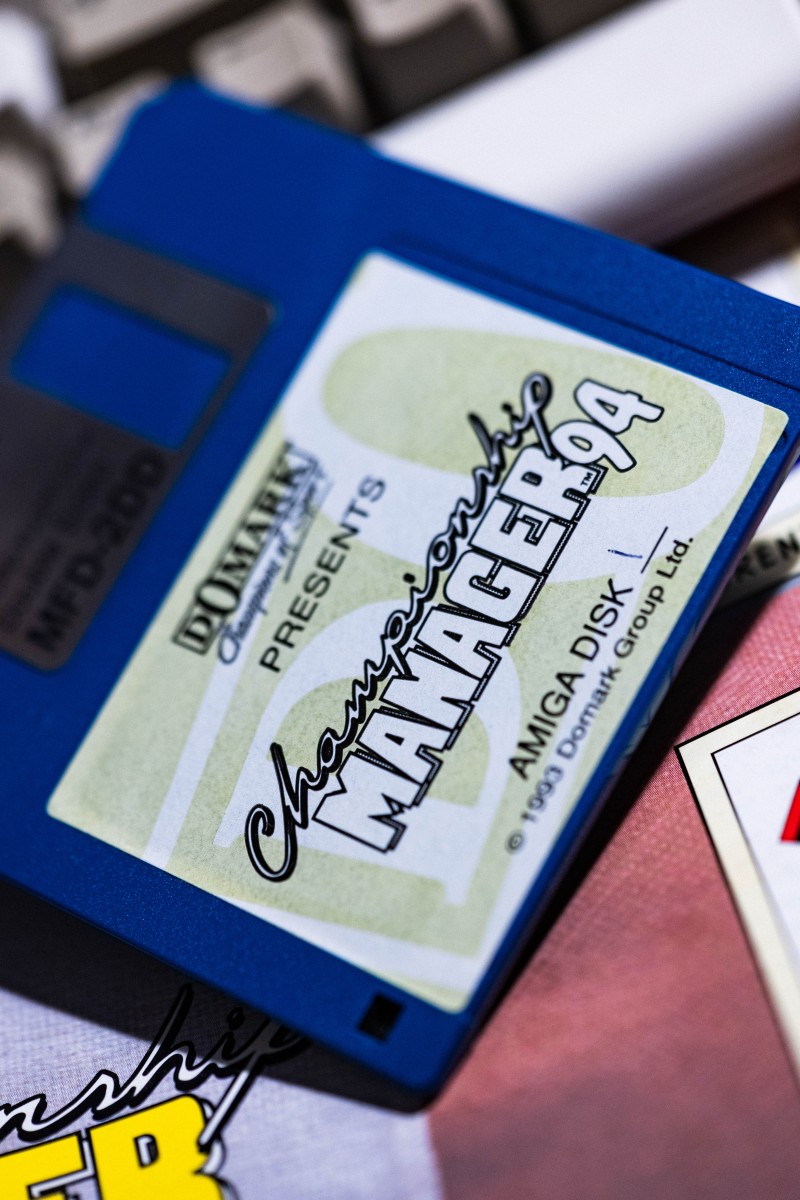
Championship Manager ’94 (1994 Expansion)
Championship Manager ’94 is essentially a data-disk expansion (or enhanced re-release) for CM’93, published in 1994. Often referred to as the “End of 1994 Season” update, it was available on Amiga and added onto the CM’93 engine. The expansion could be obtained in two ways: as a standalone End of Season Edition (a full game package including the updated data) or as an upgrade disk for owners of CM’93. In either case, it required the Amiga’s 3 disks (one more than the original’s 2 disks) to accommodate the new data.
Rather than introducing major new gameplay mechanics, CM’94’s focus was on up-to-date content and some fine-tuning:
- The expansion updated every club’s roster, transfers, promotions/relegations, and managerial changes to reflect the start of the 1993/94 season. It essentially brought the game’s database in line with real-world football as of summer 1993, and later an End of Season variant even included all the January transfers and final stats for the completed 93/94 season.
- Under the hood, CM’94 acted as a patch to the original game. Some bugs were squashed and minor improvements made (Sports Interactive referred to these as “Enhancement Packs” when releasing on PC). For example, any lingering issues from the initial release (such as the season-end freeze bug) were addressed in these updates, making the game more stable. The fundamental gameplay and text-match engine did not change dramatically; it was more about refinement and fresh statistics.
Some versions of CM’94 are famous among fans for an Easter egg that has since become legend. The presence of two fictional players to the database: Mark Collis (a striker) and Ferah Orosco (a defender), both appearing for lowly Cambridge United in Division 3. Unbeknownst to most players initially, these two had outrageously high stats and could develop into world-beaters if signed. They were essentially the first “hidden gems” or fictional superstars in the CM/Football Manager series. Collis and Orosco were names of people on the dev team (Collis was a developer’s real surname, and Ferah Orosco an alias of another). This cheeky inclusion delighted those who discovered it, and it has been confirmed as the earliest instance of fictional players becoming legends in the franchise.
Trivia: A common question is whether CM’94 was a standalone game or just a patch – in reality, it was both. You could mail your CM’93 disks and £7.99 to Intelek to get them updated, or buy a fresh “Championship Manager ’94” off the shelf. On the Amiga, this came on three floppies versus the original two. Also, not widely known, Championship Manager ’94 (the Amiga version) marked the last CM release on the Amiga platform – future installments (like CM2 in 1995) would be PC-centric, so this expansion was the swan song for Amiga CM fans. It kept the Amiga community playing a bit longer before the series moved fully to DOS/Windows.
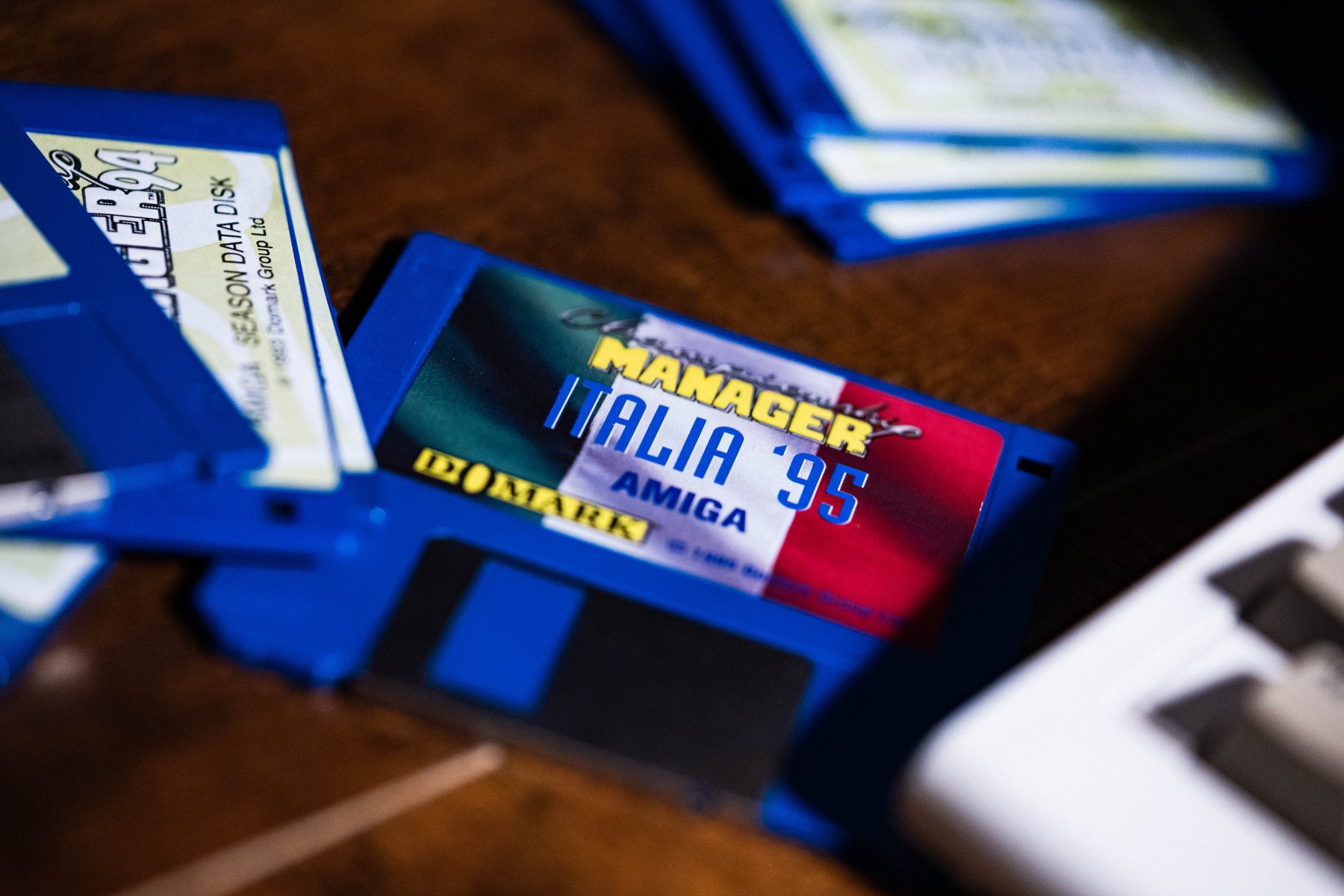
Championship Manager Italia (1993)
Alongside Championship Manager 93 and its updates refined the original formula, it was only a matter of time before the series expanded into something more tailored for specific football cultures. And in the early 90s, no country demanded that treatment more than Italy. Championship Manager Italia (1993) was essentially the first step in bringing the CM obsession into a Serie A and Serie B focused universe, built for a market where football wasn’t just popular, it was a religion.
This edition captured the uniquely Italian atmosphere of the time: historic clubs, fierce rivalries, and a league packed with world-class talent. It was still rooted in the same simple CM engine, but the shift in focus was important, because it made the game feel closer to home for Italian fans. More than just a spin-off, CM Italia 93 was the bridge between the UK-born Championship Manager concept and the fully Italianised experience that would soon reach its most popular form with Championship Manager Italia 95.
Overall, CM Italia 93 and CM Italia 95 are very similar games, the user interface and the gameplay is mostly the same. For a football fan, it’s great to play both versions because you can enjoy different databases of football players and teams. For example, Maradona is still available in 1993, and I signed him for my Fiorentina that at the time was in Serie B, to be promoted in Serie A and win the league together with Gabriel Batistuta.
But here’s the game I played endlessly when I was a young football fan, supporting Fiorentina…
Championship Manager Italia ’95 (1995)
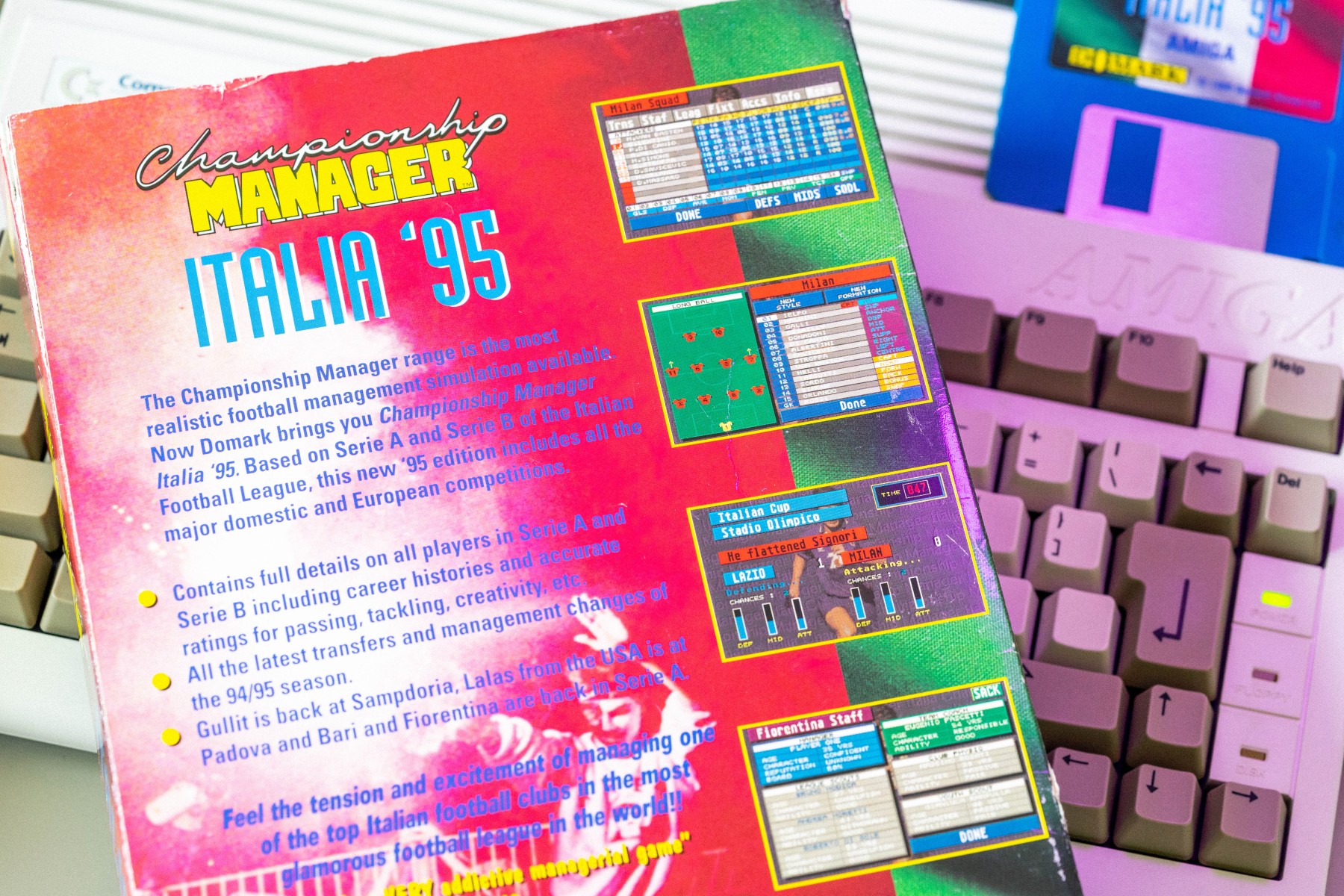
After the original Championship Manager Italia from 1993, in 1995 a “seasonal update” was released: Championship Manager Italia ’95, which updated the Italian game for the 1994/95 season. CM Italia ’95 was the refresh that brought the Italian database and rules up to date, ensuring fans of Serie A and B had the latest squads.
The Italia version was built on the CM’93/94 engine, so it shared the look, feel, and core mechanics of the English game. It was released on Amiga (and DOS) and offered in English language, interestingly, not Italian, since it was aimed partly at the British/European market fascinated by Serie A’s glamour at the time.
While the interface and engine in CM Italia were very similar to the standard Championship Manager, the content and some gameplay rules were tailored to Italian football:
- You could manage clubs in Italy’s top division (Serie A) or second division (Serie B). Unlike the English CM which had four divisions, the Italian version’s two-division setup meant a shorter league pyramid (sadly, no serie C).
- The developers implemented the distinctive rules and regulations of Italian leagues. For example, Italy in the mid-90s had a limited number of foreign players allowed per team (commonly a club could field no more than three non-Italians). CM Italia mirrored this, managers had to contend with restrictions on foreign signings and matchday squad selection, a twist that could leave some high-profile foreign players stuck in reserves if over the quota. Additionally, the Italian transfer system at the time operated on defined windows (a summer mercato and a shorter mid-season window) rather than England’s then year-round transfer market. CM Italia introduced a restrictive transfer window mechanic: you couldn’t buy or sell players freely all season, only during the appropriate periods.
- Italian football in the 90s was famous for its defensive tactics, and CM Italia subtly reflects this in the gameplay. Players noticed that AI-managed Italian teams often played more cautiously and produced fewer goals on average than their English counterparts. A weekend in Serie A might see multiple 0–0 or 1–0 results, which is true to the era’s reputation. This meant that grinding out results with a solid defence could be a viable strategy, and breaking down opposition might be harder, effectively simulating the “catenaccio” style Italy was known for.
- The game’s database was filled with the real squads, player names, and club information for Italy. From giants like Juventus and AC Milan down to the smaller Serie B teams, all were represented with accurate stats. The background images in the menu were also updated, for instance you might see Italian stadium scenes or players in Serie A kits as the backdrops, adding flavour. Apart from that, the menus and text remained in English. Commentary text would mention Italian competitions (like the Coppa Italia or European fixtures for Italian teams) appropriately.
Championship Manager Italia was significant as an early example of the Championship Manager series branching out internationally. It arrived at a time when Serie A was arguably the world’s most glamorous league, early 90s Italian football featured superstars and was broadcast widely (indeed, the UK’s Football Italia TV show had just ignited British interest in Serie A). This game allowed fans to immerse themselves in that world. In the UK, many who bought CM Italia were Anglophone fans of Italian soccer who relished the chance to manage clubs like Milan, Inter, Juventus, Fiorentina, Roma or Napoli. The release demonstrated the demand for foreign league management sims, paving the way for Championship Manager to later include multiple leagues in one game. It also showed Sports Interactive that localised versions could succeed; besides Italy, they even made a Norway-specific edition (CM Norge) around the same time. Commercially, CM Italia contributed to the strong sales of the franchise’s early years. While exact figures for Italia ’95 alone aren’t known, the Italian edition brought the series to players who wanted to manage a different football world.
Trivia: Championship Manager Italia was produced with the help of Italian football experts, for example, the game credits list Giancarlo Rinaldi and the magazine World Soccer for data research, ensuring the Italian player stats and details were as accurate as possible. Fans have speculated that the rise of Serie A’s popularity (with star players like Baggio, Batistuta, Van Basten etc. in that era) influenced the Collyers to make this spin-off, essentially riding the wave of “calcio” fever. Interestingly, this split-off approach (separate game for Italy) was temporary; a few years later, the Championship Manager 2 engine would integrate an Italian league as an add-on, and by CM3, multiple leagues could be managed in one game. So Italia ’95 stands as a unique product of its time. Championship Manager Italia was the progenitor of an entire lineage of Italian-focused management games, including influencing competitors (for instance, around the same time Gremlin Graphics released Premier Manager Italia in 1994, and Ubisoft created Guy Roux Manager for the French market using the CM engine). It was truly the start of the management genre recognizing the global appeal of running foreign clubs.
The (not-so-secret) cheats we all used
Of course, no discussion about Championship Manager (Italia 95 and the others) would be complete without mentioning the little tricks that every player eventually discovered, and shamelessly abused.
The most infamous one was the legendary 3-3-1-3 formation, a tactical setup that, for reasons still unexplained, could turn even an average team into an unstoppable machine, often delivering ridiculous winning streaks and a winning streaks that felt almost unfair (matches against foreign teams still felt unbalanced to me). But tactics were only half the story. Like many players back then, I also learned to “game the system” during the initial team selection: instead of picking only my club, I would select three additional top teams, just to access their squads and use them as a transfer playground. It became the perfect way to offload unwanted players and buy great ones at suspiciously friendly prices, almost like a football black market.
It wasn’t exactly fair, I know… but the game itself almost pushed you in that direction. Transfer windows were really short and limited, squad size restrictions were strict, and perhaps most frustrating of all, selling players felt painfully difficult. The transfer market in CM Italia 95 was brief, shallow, and strangely quiet, player movement was low, offers were rare, and building a dream squad “legitimately” could take forever. In the end, these cheats became part of the experience: not just shortcuts, but survival tools in a game that often felt as unforgiving as real football.
Conclusion
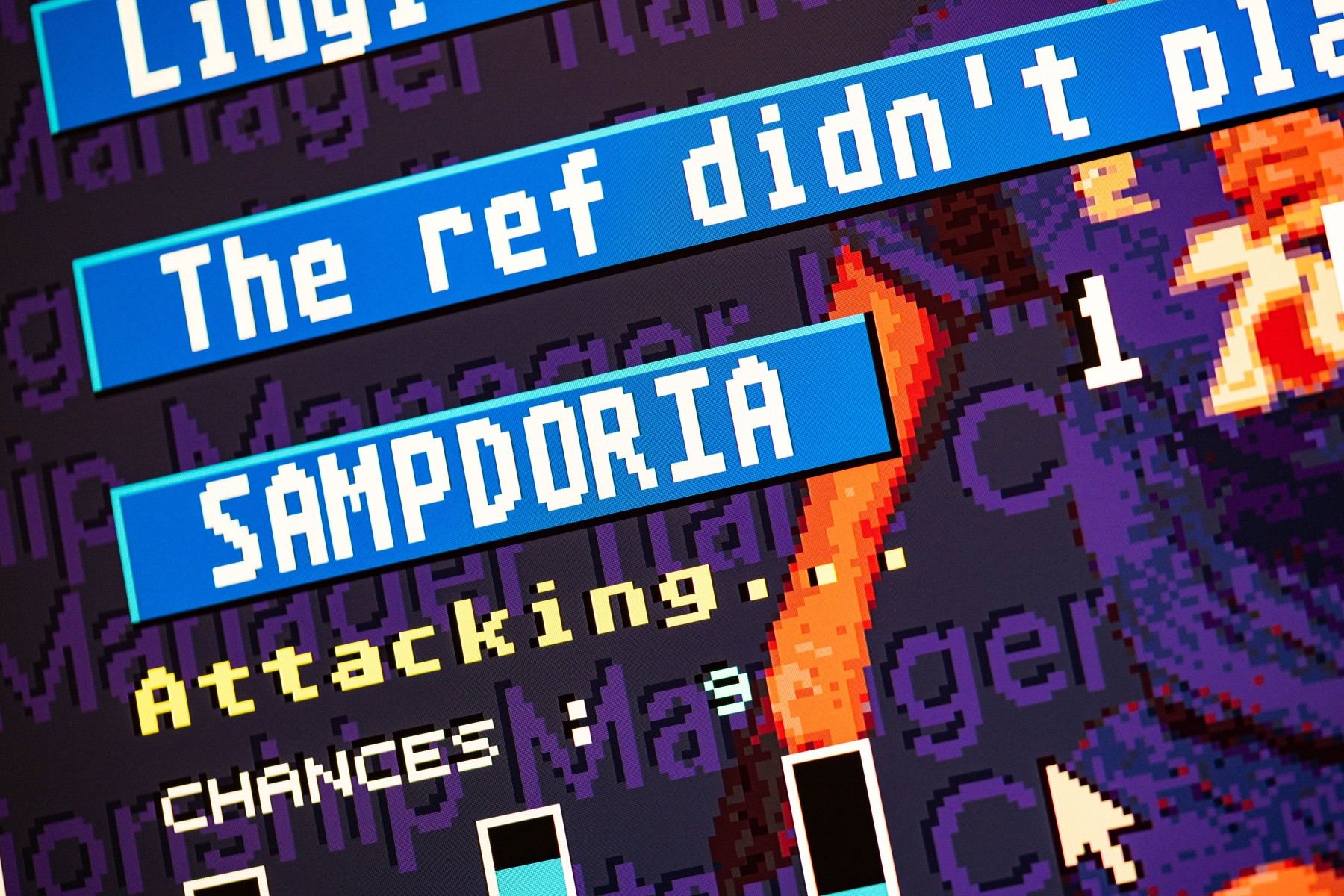
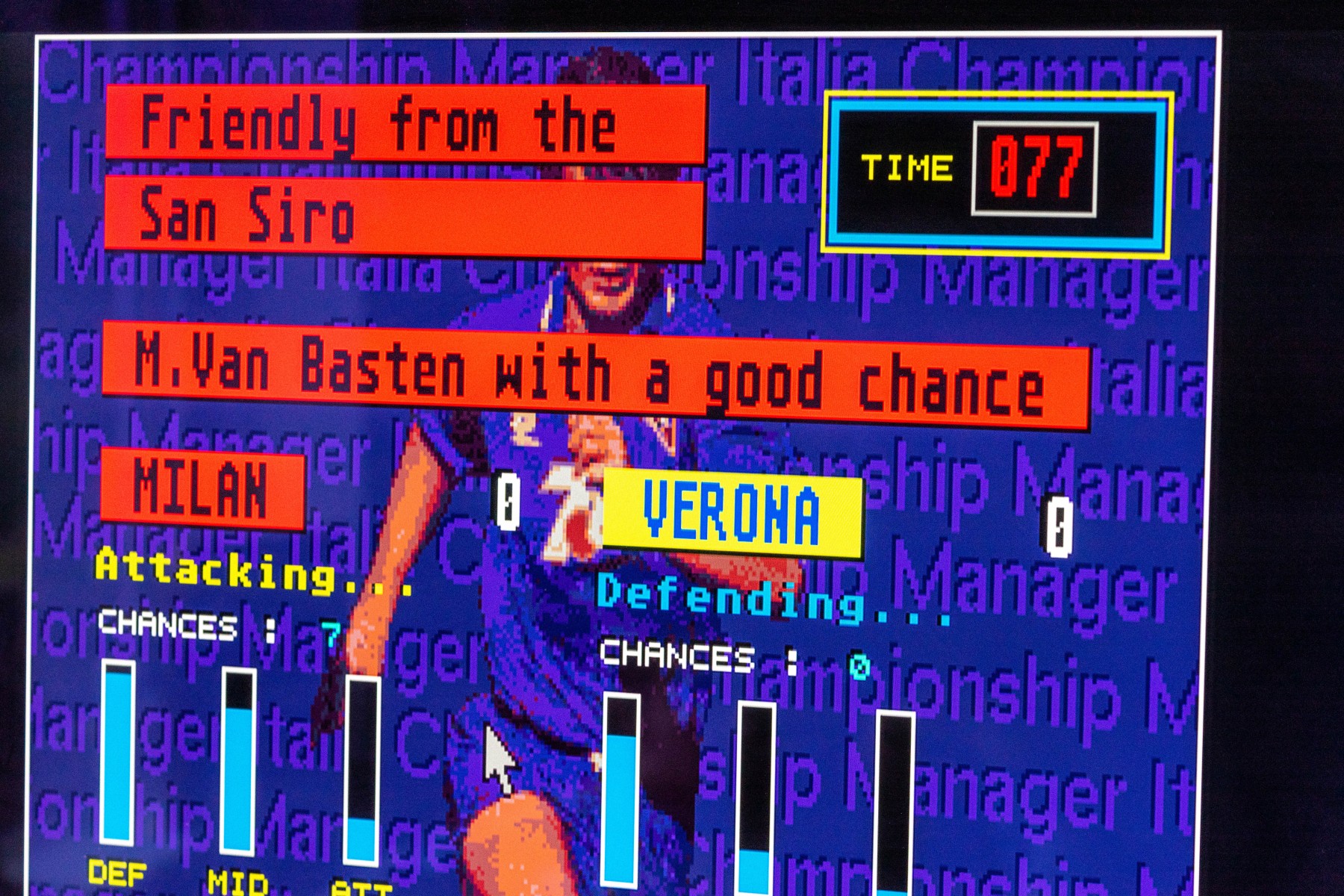
Looking back today, it is almost hard to explain how powerful these games felt. Championship Manager was not flashy, it had no cinematic cutscenes, no 3D stadiums, no player faces, not even proper animations, the matches were 3 bars going up and down, with predefined sentences. And yet, it was one of the most immersive football experiences you could possibly have, because the real match was never on the screen, it was always happening in your head.
From the early simplicity of CM92, to the more refined CM93 and CM94 updates, and finally to the Italian-focused universe of CM Italia 95, the series captured something that modern games sometimes struggle to recreate: imagination, patience, and passion. It was football reduced to pure strategy, pure decisions, pure dreams. And simpler… simpler time, but also simpler mechanics. I don’t need to manage the toilet flows of the stadiums (ok I’m exaggerating) like in the modern football manager games…
And maybe that is why Championship Manager Italia 95 still feels special today. It brings back of a golden era when Serie A was packed with legends, when every transfer rumour felt like a headline, and when a season could last weeks, not because the game demanded it, but because we wanted it to.
For many of us, this was not simply gaming. It was a ritual. A lifestyle. A second football life, played late at night, under the glow of a CRT monitor, saving onto floppy disks, and convincing ourselves that yes, maybe this year Fiorentina could actually win the league.
Because in Championship Manager, anything was possible. As long as you believed in your tactics.
Stay curious. Stay nostalgic.
Because retro never dies, it just respawns.



I’ve never played Football Manager, but the way of playing reminds me of the pre-internet BBS days. I used to play games daily on BBS. There was a dungeon adventure game with no graphics, just simple text showing your stats and how you battled other players.
Very cool, I never used BBS, but looks very cool for the time. Simple text games could still be very cool and engaging with a good story. Similar to the Infocom games!