
Introduction
The PC Engine, known in North America as the TurboGrafx-16, was developed by Hudson Soft and NEC and released in Japan in 1987. It arrived before the Mega Drive and Super Famicom, with an 8-bit CPU and graphics that placed it firmly in the conversation about the next generation. At roughly 14 cm square, the little white console looked almost too small to hold those arcade games.
For me, growing up in Italy, it was a console I knew through magazine screenshots long before I ever saw one in person.

In Japan, the PC Engine had support from Hudson, Namco and, later, Konami. Its library grew around arcade conversions, shooters and games that rarely reached the magazines I could buy in Italy. NEC kept producing different versions of the machine: revised home consoles, CD-ROM drives, the GT and the LT. The family became wonderfully confusing. Half the fun today is working out how all those pieces fit together.
Abroad, the story was different. The TurboGrafx-16 reached North America in 1989, but never found the audience the PC Engine had in Japan. In Europe, imports were the way many players encountered it.
I never saw one in real life in Italy, neither the PC Engine nor the TurboGrafx-16, sadly. I learned about it through magazine articles and reviews of import games, where it was almost always called PC Engine. For me, it was a dream console: mysterious, exotic, and visible only in screenshots of games I couldn’t find locally.
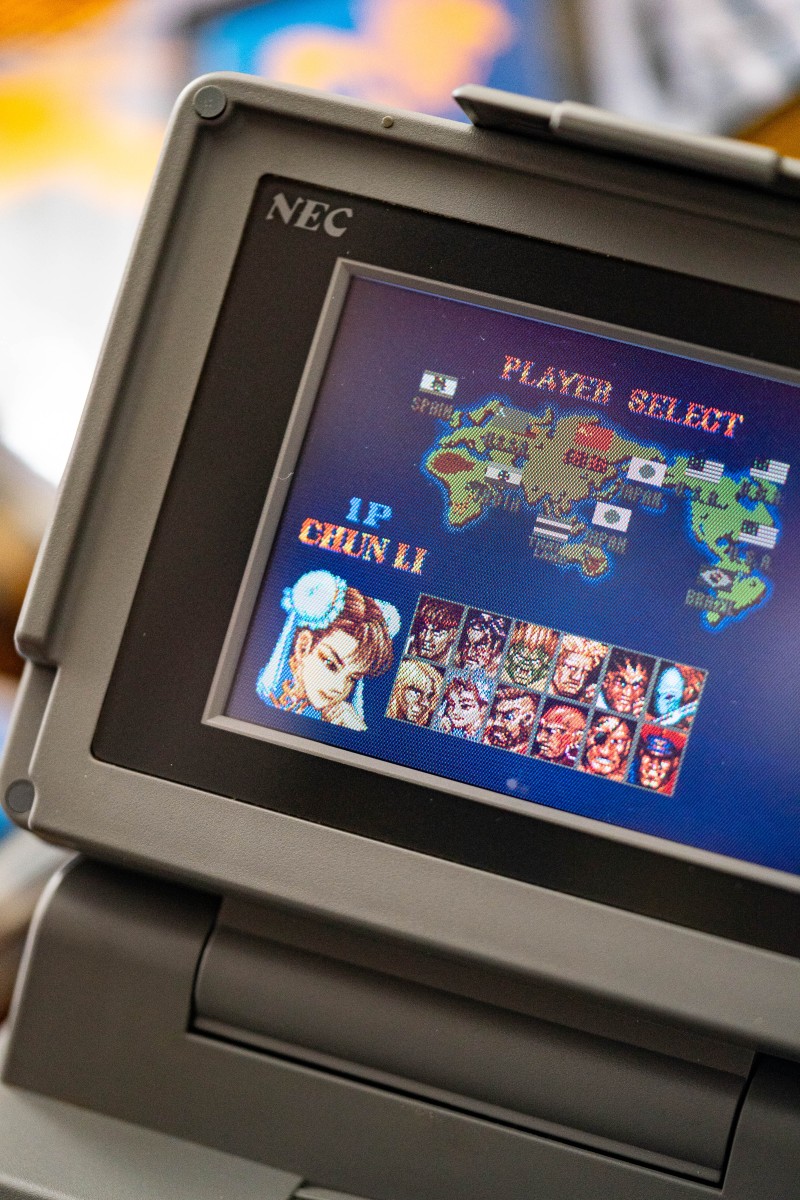
The idea of playing Street Fighter II at home, or even on a PC Engine GT, was mind-blowing. I knew what a Game Boy could do. This seemed to belong to a different world.
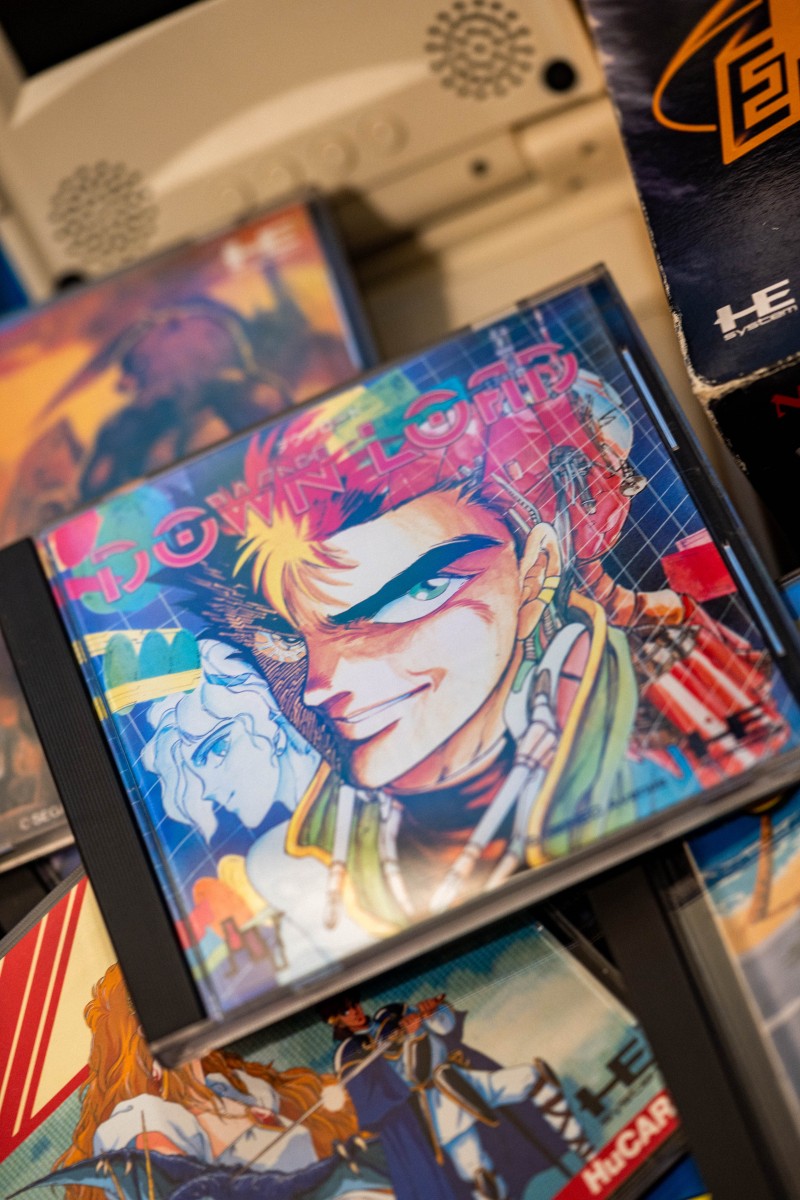
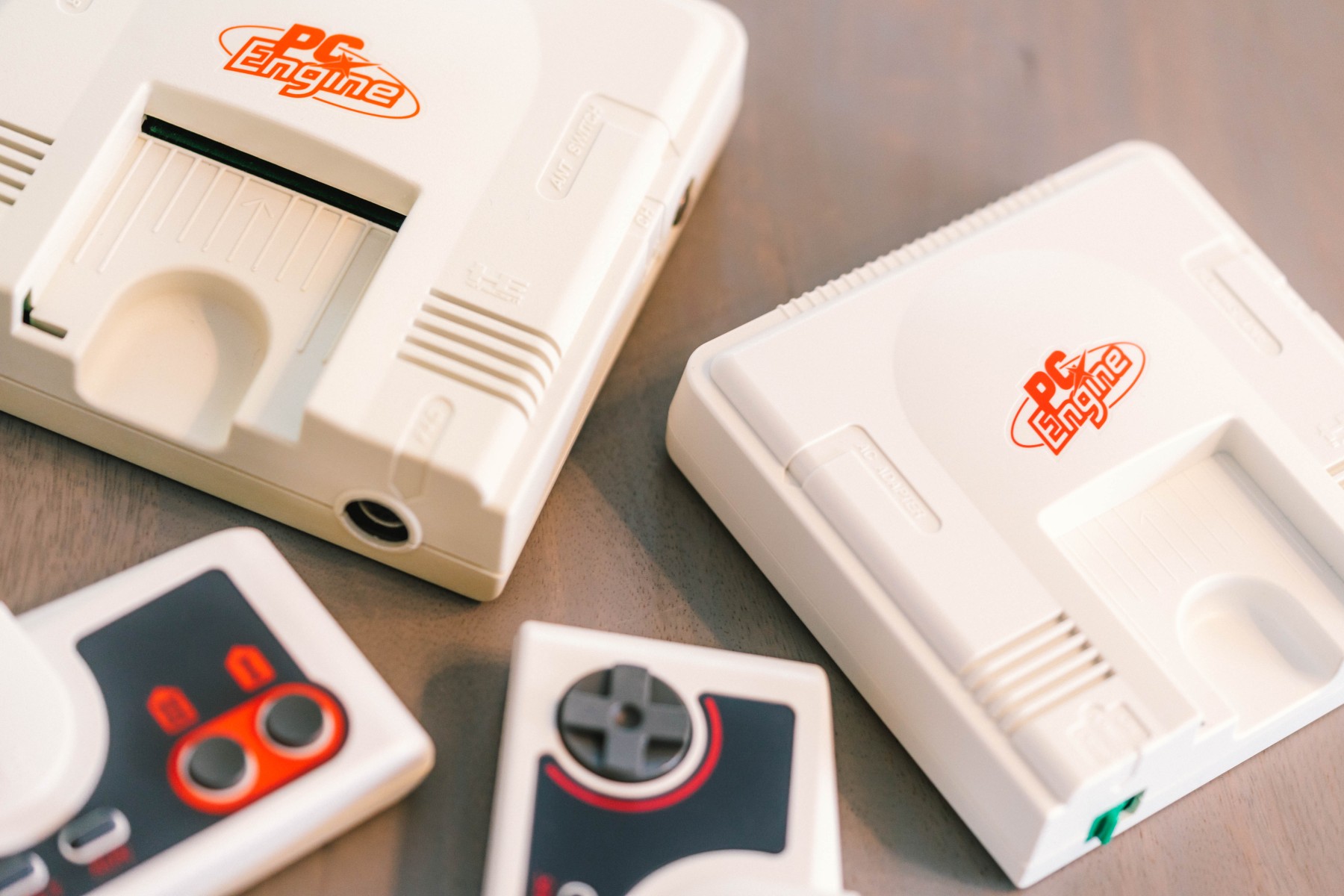
This is the PC Engine hardware I have in my collection: the original white console, the handheld GT, the flip-screen LT and the accessories I use with them. The CD and Duo machines deserve another story.
The games here are Japanese releases that I enjoy, including After Burner II, Bonk’s Adventure, Splatterhouse and Street Fighter II’: Champion Edition. They’re the games that finally let me step beyond those magazine screenshots. Consider this a love letter to the little white box I could only admire from afar.


My console variants and accessories
PC Engine (original white model, 1987)
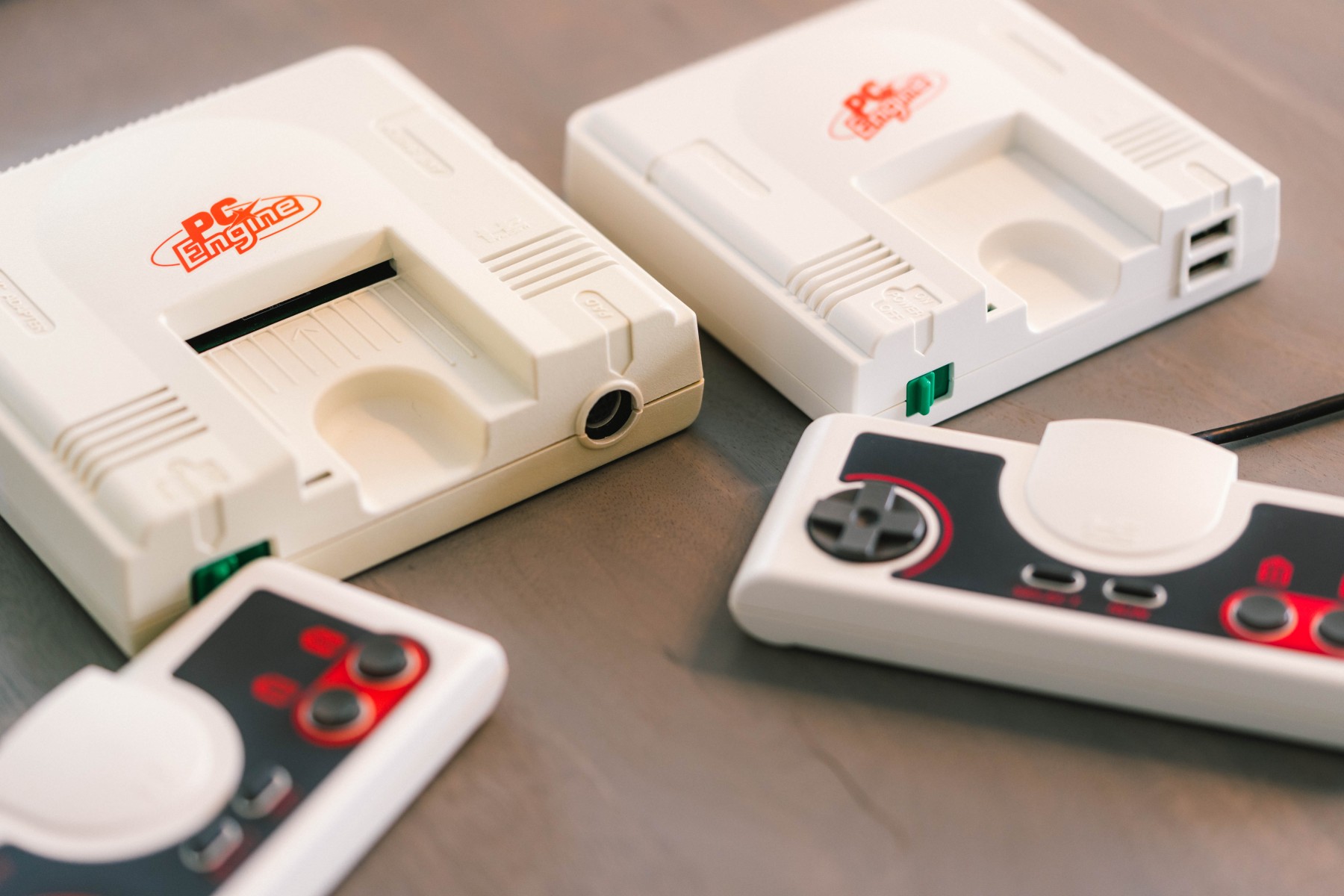
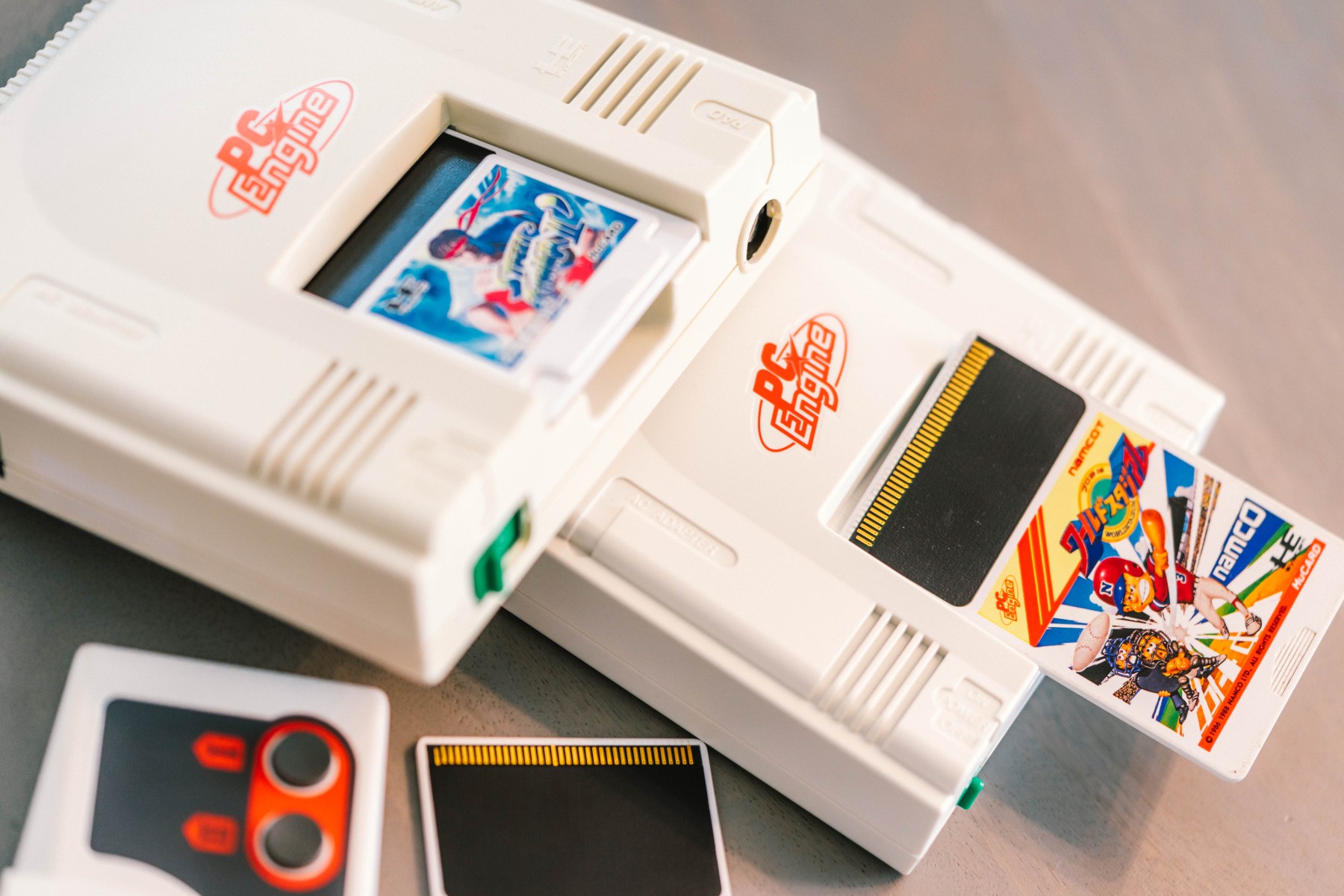
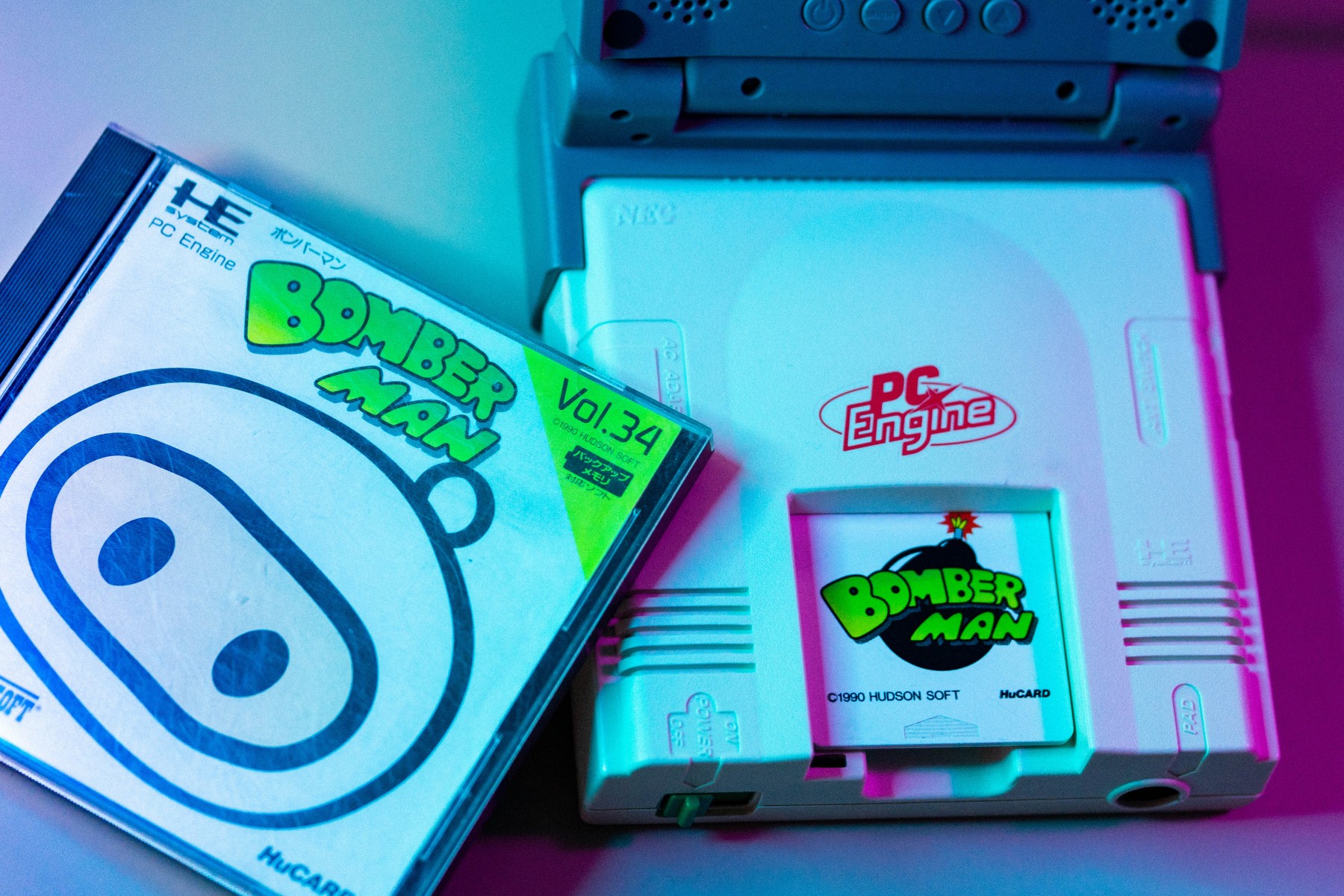
This is the original PC Engine console. What’s not to love? A small white rectangular unit from 1987, co-created by Hudson Soft and NEC. It measures about 14 × 14 cm, yet its games looked a long way ahead of what I knew from the Famicom and NES.
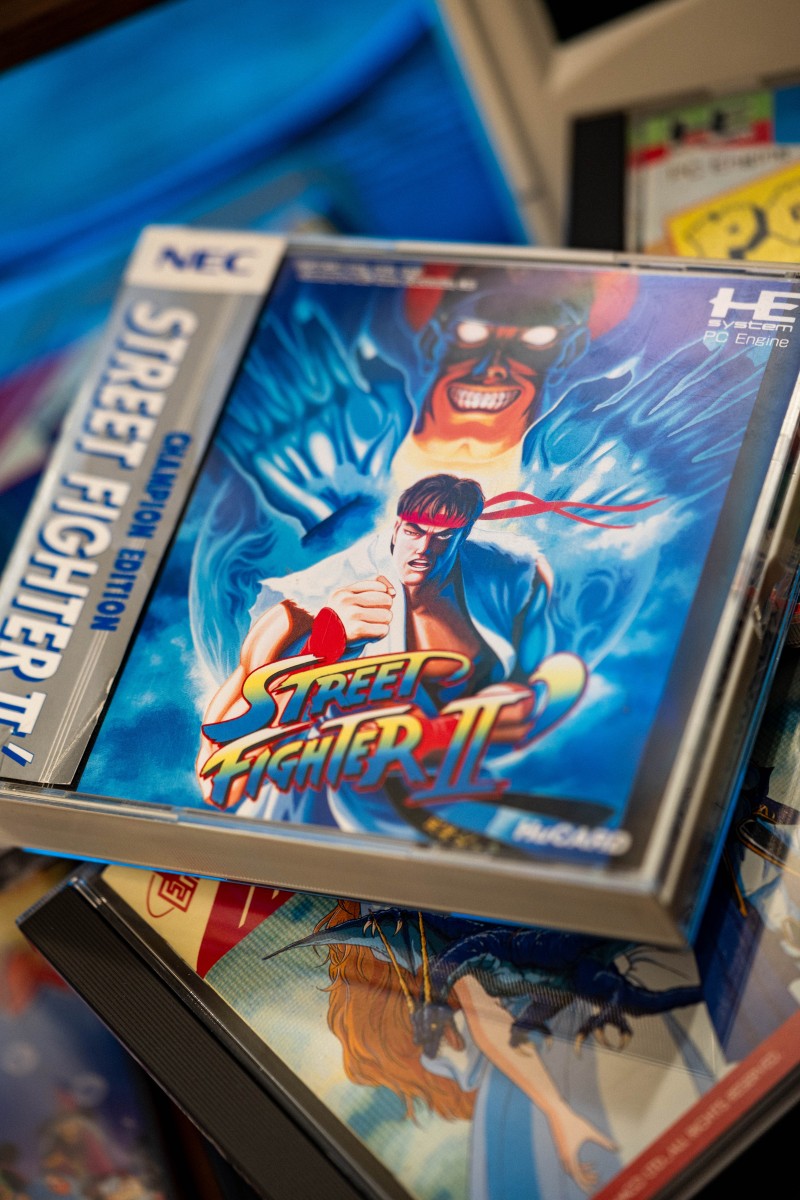
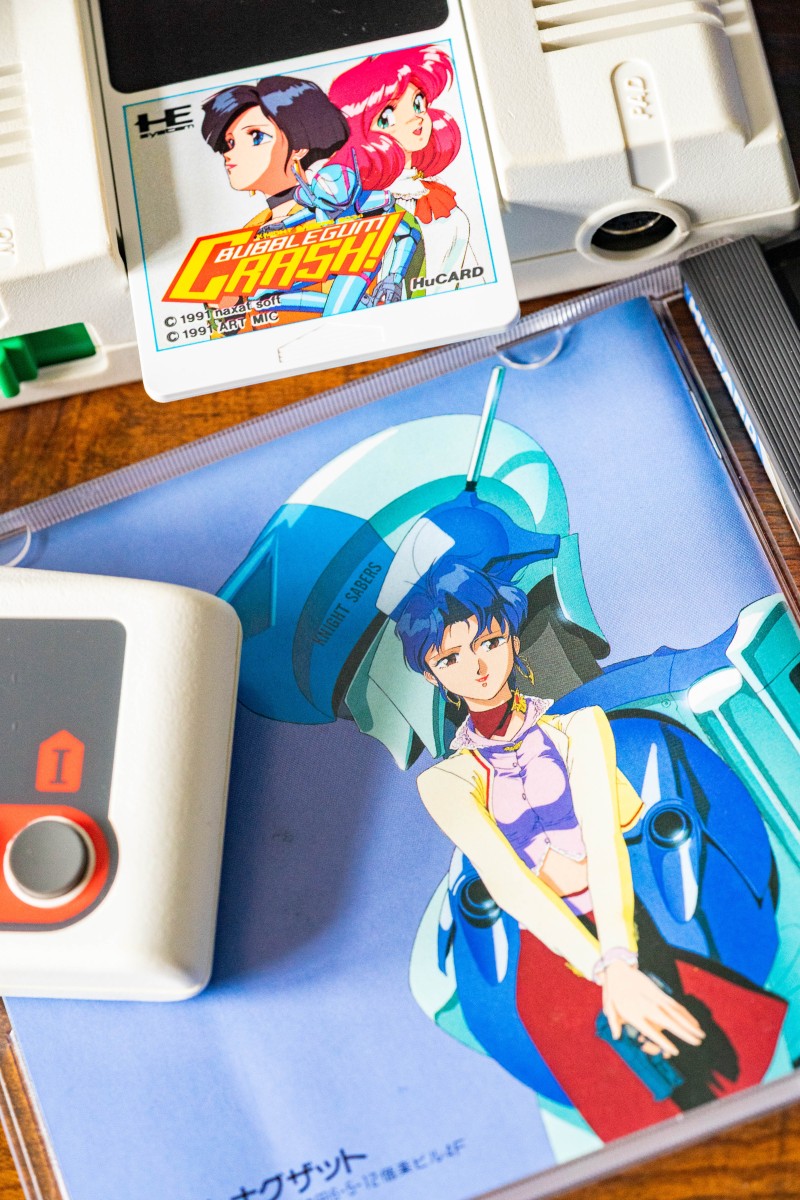
Games came on credit-card-sized ROM cartridges called HuCards, or TurboChips in the West. I love that format. Street Fighter II’ filled a 20-megabit card, and I still find it hard to believe that so much game fits into something so thin.
Out of the box, the original PC Engine had only RF video output, through the television’s aerial connection. The expansion port at the back gave it a route to better video and to the CD-ROM² system.
Little did NEC know that the same port would still be giving the console new attachments almost 40 years later! The white PC Engine remained useful as those add-ons arrived. For North America, NEC put the hardware into a much larger black case and changed the cartridge region. I still prefer the little white Japanese unit, for all its awkwardness when you try to connect it to a modern display.
The PC Engine used a HuC6280 CPU running at up to about 7.16 MHz, with separate chips handling the video display and colour output. Its standard graphics hardware had one scrolling background plane and sprites; apparent extra layers in games came from programming tricks. The SuperGrafx later added a second video display controller.
The hardware helps explain the games, but a list of bits only gets you so far. Put an arcade conversion on that little machine and you can see why it caused so much excitement.
PC Engine AV Booster
The AV Booster plugs into the PC Engine’s rear expansion port and adds composite video and stereo audio outputs: the familiar yellow, red and white RCA sockets. That gives the original white console a cleaner alternative to RF.
It almost doubles the length of the console, though. So much for keeping the tiny white box tiny. Still, being able to connect it directly to a television was a useful trade-off.
Modern third-party adapters can do the same job in a smaller package, and some also provide RGB output. The AV Booster belongs to the original hardware story, when getting a better picture meant adding another piece to the back of the console.
PC Engine GT (TurboExpress, 1990)
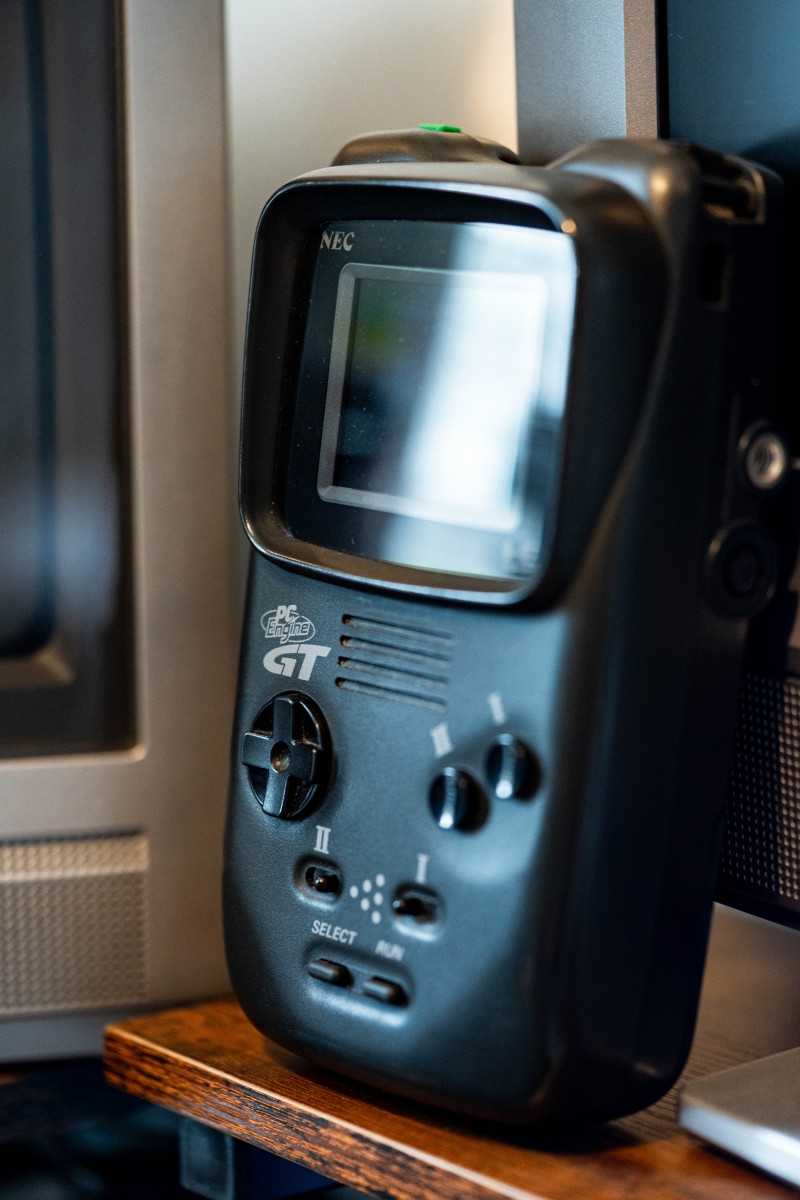
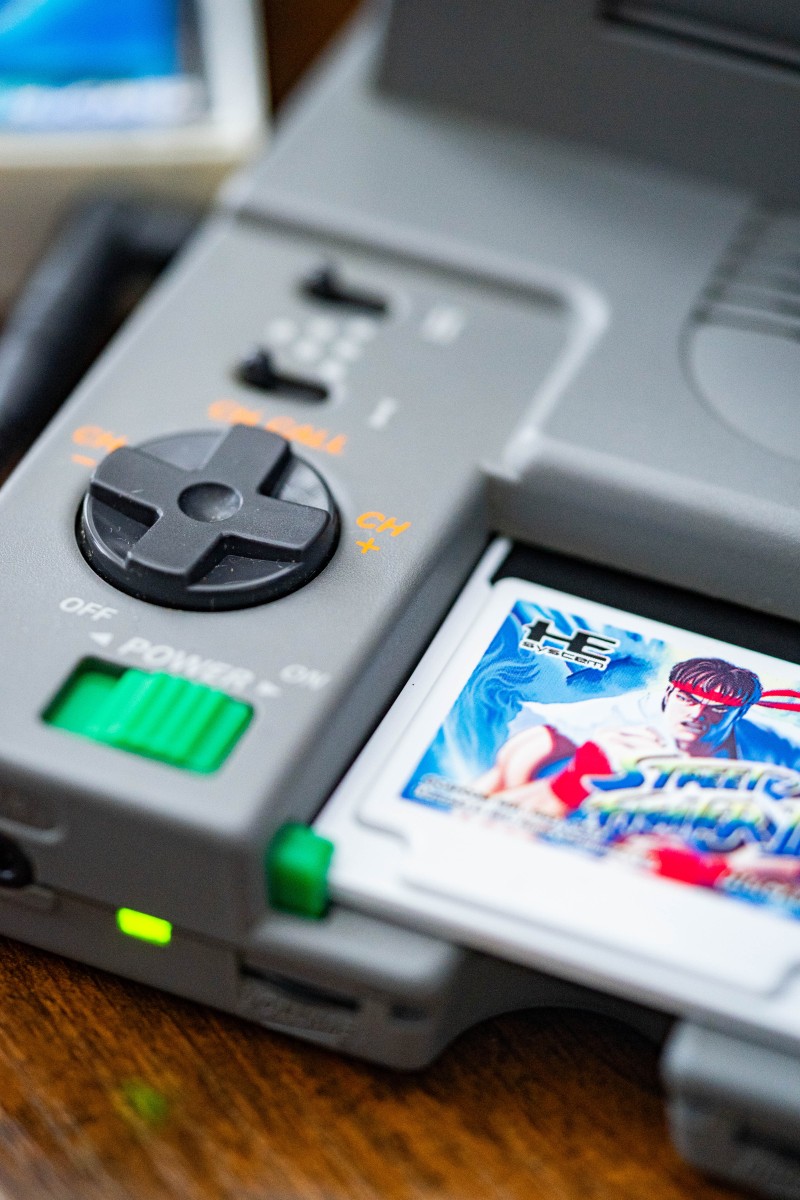
In 1990, NEC took the PC Engine portable with the PC Engine GT in Japan, known as the TurboExpress in the US. It could play the same region’s HuCards as the home console. How cool is that?
It had a small, backlit colour screen, and I prefer its display to those of the original Lynx and Game Gear. Seeing those home-console graphics in your hands was an extraordinary prospect in the early ’90s.
The ability to take your home-console games with you was almost unheard of then. Now, I know it’s hard to put this in perspective if you didn’t experience it first-hand… but imagine 1993, being able to play Street Fighter II’ Champion Edition in the palm of your hand. Not a simplified handheld version: the same HuCard you could put in the home machine.
In my opinion, the conversion stands comfortably beside the original SNES Street Fighter II. The idea would have blown my mind at the time. I wasn’t aware of the GT; otherwise I know I would have done the impossible to get it. The awkward part was the GT’s two action buttons, but at home the PC Engine had a much better six-button pad for Street Fighter.
The GT had two familiar problems: price and battery life. It was an expensive way to play, and it used 6 AA batteries, which didn’t last long with that colour screen. Surprise, surprise!
There was a television tuner add-on and a link cable for compatible games. The appeal for me is still the same: the home console’s HuCards, taken out of the living room. Years later, Sega would do something similar with the Nomad. The GT was the machine I would have wanted to take everywhere, if I’d known it existed. The TV tuner belongs to that same ambition: games and analogue television on a single device, long before that seemed ordinary.
PC Engine LT (Laptop Form, 1991)
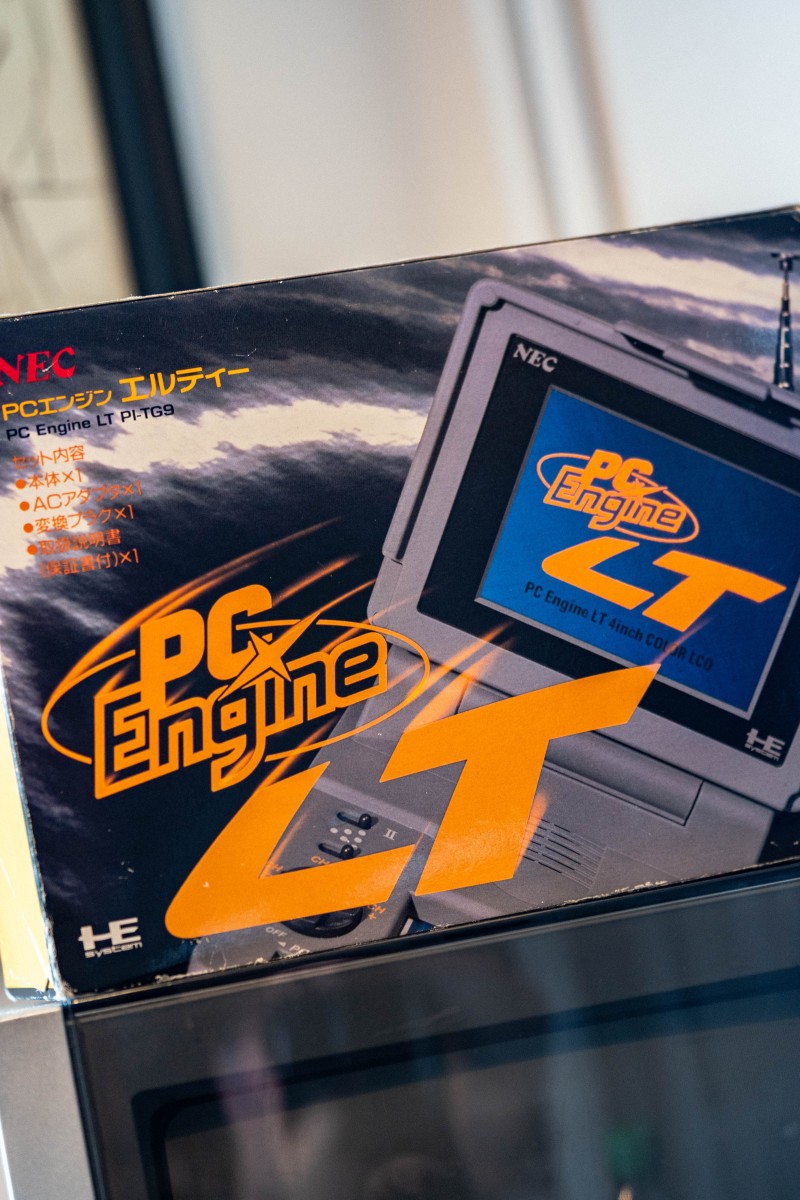
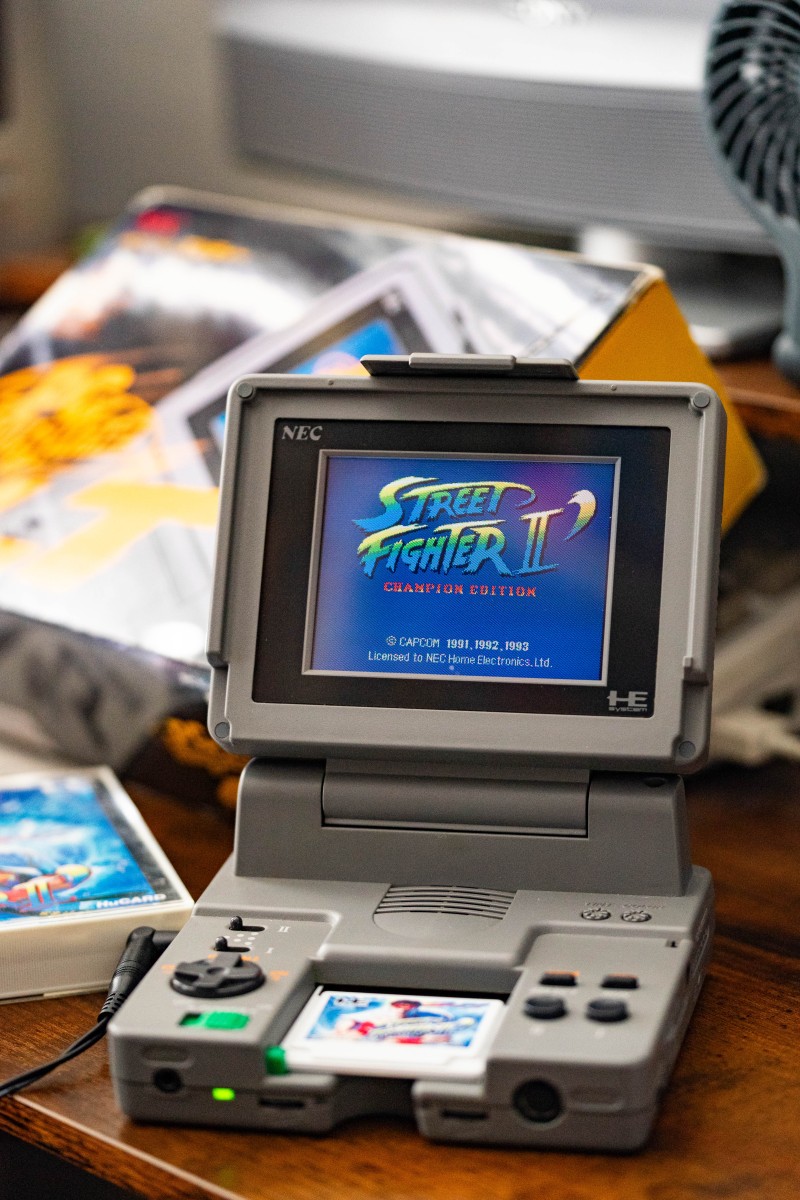
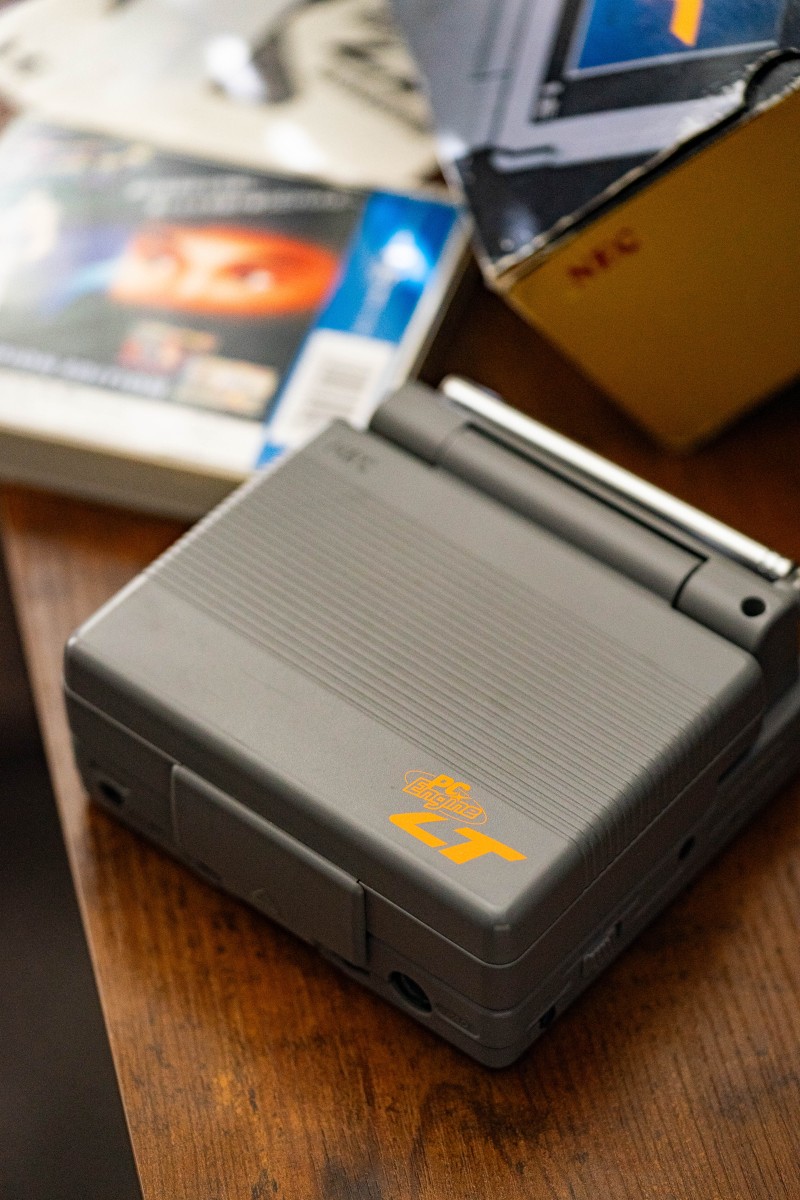
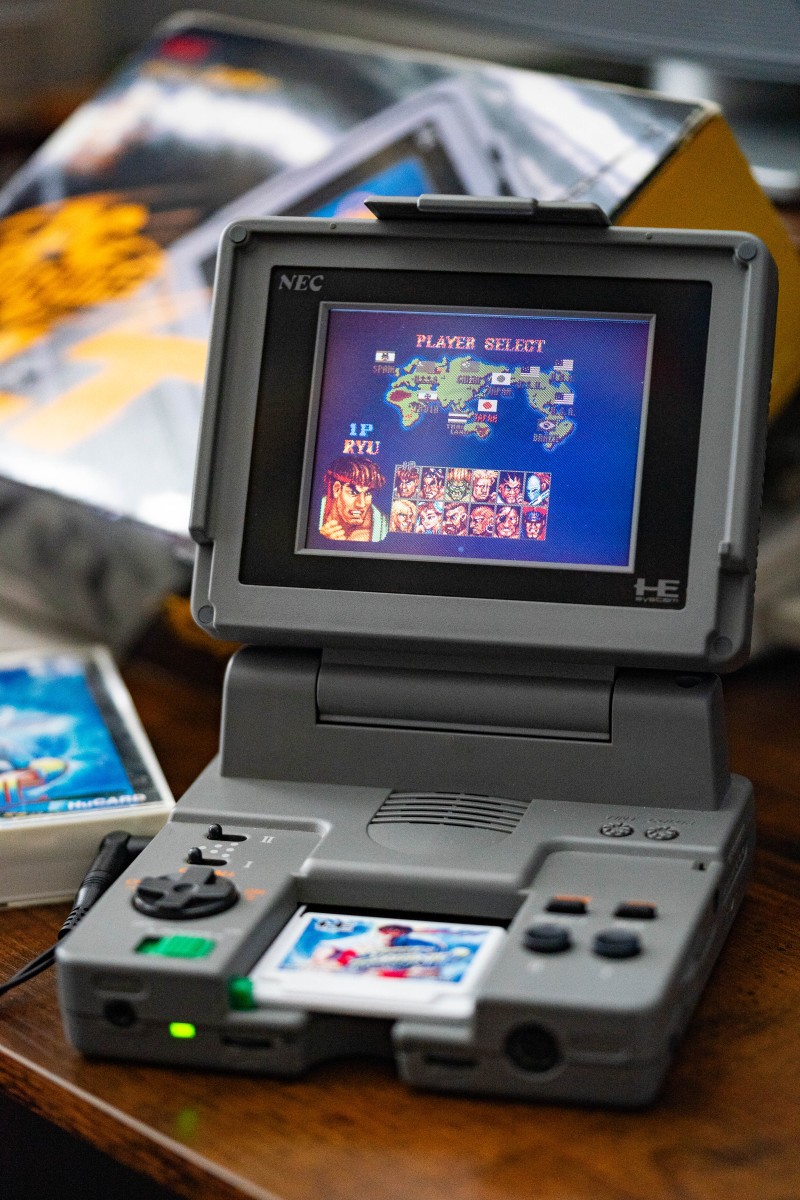
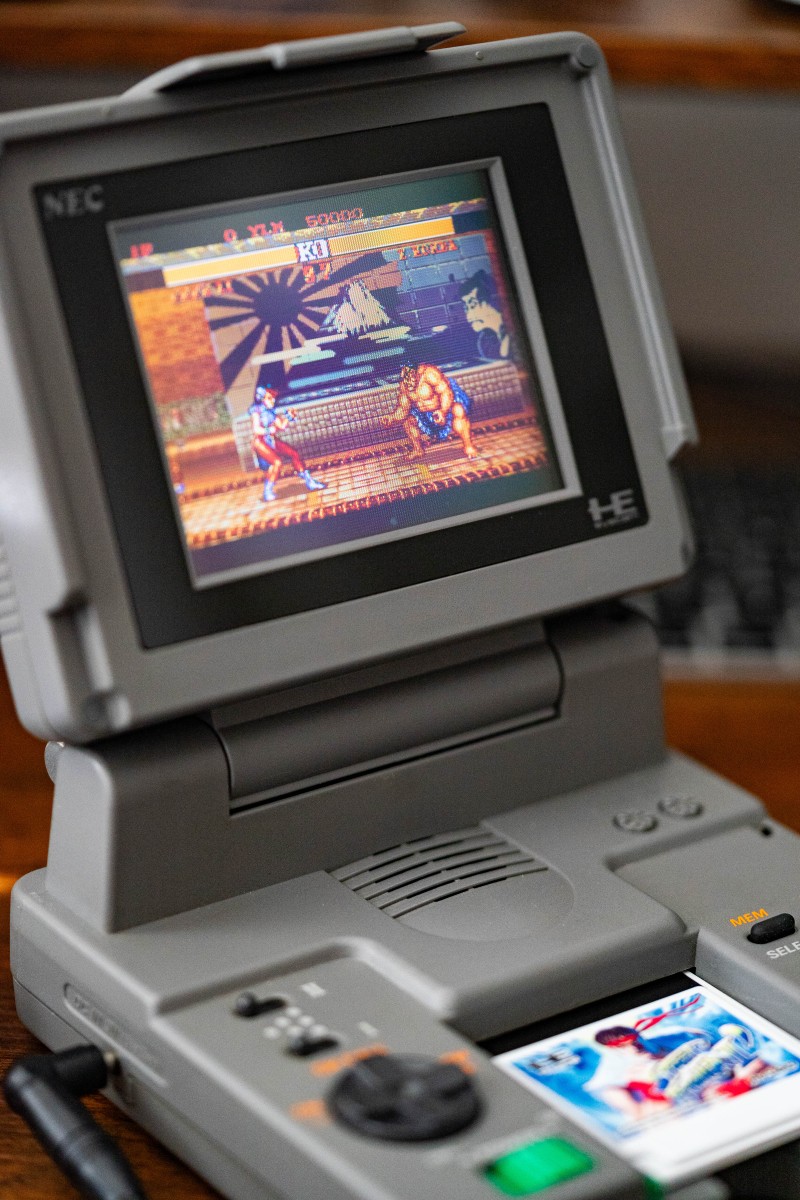
Perhaps the rarest and… expensive… member of this family in my collection is the PC Engine LT, released in Japan in 1991. The “LT” stands for Laptop, and the design makes the name obvious: a small PC Engine with a flip-up screen and speakers. I mean, how cool is that?!
You don’t need a separate television. Open the lid and play the same region’s HuCards on the built-in display. It looks portable, but it still needs an AC power supply. That odd halfway point between a home console and a handheld is part of what makes it so appealing to me.
A console with its own monitor would have been useful when someone else wanted the family television. The LT was far beyond an ordinary console budget, though. That price is part of what makes it such an extravagant object to look back on: an entire PC Engine folded into a tiny clamshell.
The LT plays the same HuCards as a regular Japanese PC Engine. It also keeps the rear expansion connection, so the screen doesn’t cut it off from the rest of the family. You can build a CD setup around it, although the required interface and adapter depend on which CD-ROM unit you use.
That gives it a very different character from a sealed handheld: lift the lid for a self-contained console, then look behind it and find the same possibility of adding more hardware. It was definitely one of my most wanted holy grails growing up. I’m super happy to have it, boxed and recapped, in my collection.
The PC Engine IPS LCD Monitor module
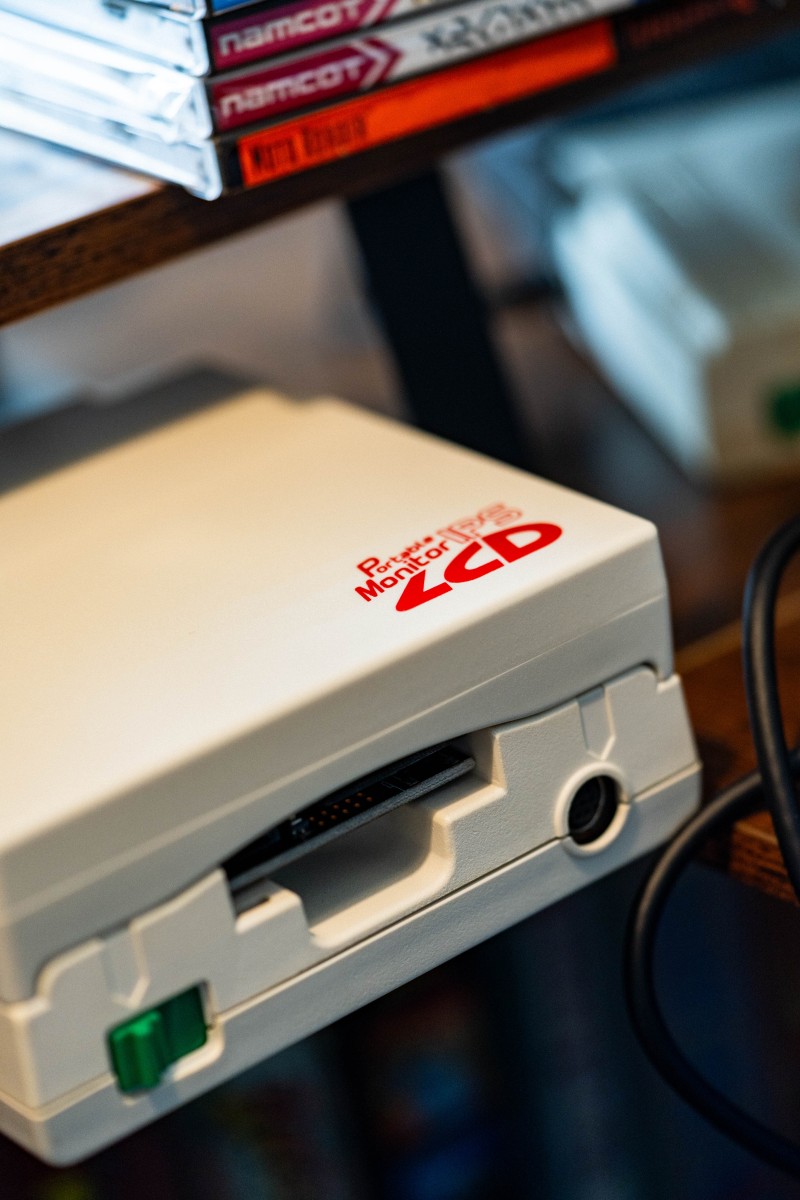
You want the experience of the LT without spending a lot (understandable)… then, this PCE用ポータブルモニター IPS LCD is for you (no, it’s not an affiliate link 😀 ). It’s a modern aftermarket accessory designed to give the original PC Engine its own screen. It features a crisp 4.3-inch IPS screen with switchable 4:3 and 16:9 aspect ratios (but who wants a stretched video?!), offering both HDMI and composite output options. The unit mounts directly onto the console, on the expansion port, turning the humble PC Engine into a compact all-in-one system, almost like a spiritual successor to the LT model. It also supports power from a mobile battery, making it viable for tabletop or portable setups. It gets close to the little tabletop setup I wanted from the LT. Earlier versions used a non-IPS display and a grey case (to match the later Core Grafx consoles), this IPS version is white like the original PC Engine.
Avenue Pad 6 (6-Button Controller, 1993)
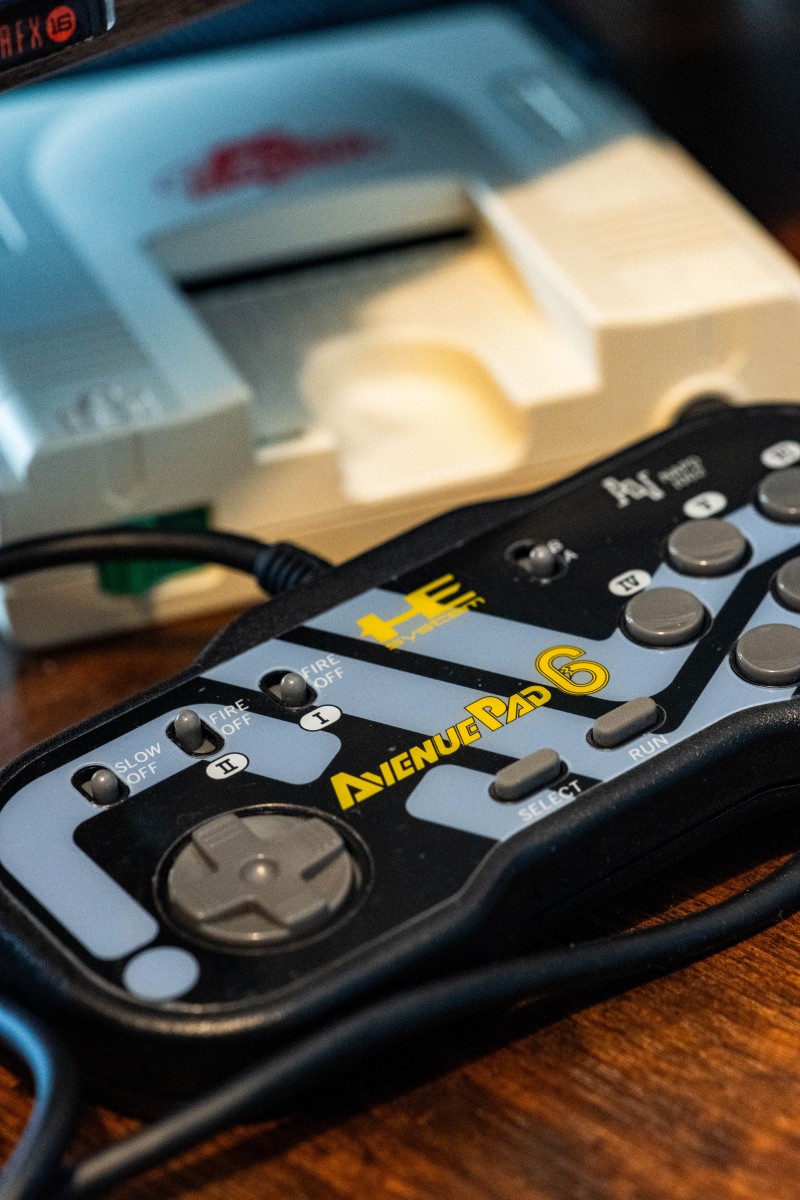
By 1992, fighting games had exploded in popularity thanks to Street Fighter II, and the PC Engine was about to receive its own port of Street Fighter II’: Champion Edition. One problem: the standard PC Engine controller (like a Nintendo pad) had only two action buttons (I and II), whereas Street Fighter II needed six buttons (for three punch and three kick strengths). That is where the Avenue Pad 6 comes in. This was an officially licensed 6-button controller for the PC Engine released by NEC Avenue in 1993. It featured a layout similar to Sega’s Genesis/Mega Drive six-button pad, with two rows of three action buttons, plus the usual Select and Run buttons and turbo switches.
The Avenue Pad 6 was designed specifically with Street Fighter II in mind. In fact, it launched concurrently with the PC Engine version of SFII’ (June 1993) to ensure players could fully enjoy the game. With this pad, you could assign all six punch/kick attacks to individual buttons, rather than using the awkward toggle method (Capcom had programmed SFII to use the Select button to switch between punch and kick modes if a 2-button pad was used… a clunky workaround, albeit effective). For Street Fighter II, having each attack on its own button made a real difference.
Street Fighter II’ Champion Edition is the reason I wanted the Avenue Pad 6: separate buttons for the three punches and three kicks, rather than switching a smaller set of buttons between them. Other compatible games, such as Fatal Fury 2, can also use the extra controls. For ordinary two-button HuCard games, the earlier pad still does its job. The six-button pad is another piece of that particular Street Fighter dream finally fitting together.
Terraonion Super SD System 3 (2017)
The Terraonion Super SD System 3 is a modern expansion-port accessory that combines HuCard loading, CD-ROM emulation and RGB video output. It also works with the CoreGrafx models and SuperGrafx. It is one way to make the old hardware easier to use without replacing the console itself.
HuCard images in .pce format and CD game images in .cue format go on a microSD card. The menu lets you choose a game, and the device supplies the CD interface and extra memory needed by CD-ROM², Super CD-ROM² and Arcade CD-ROM² software.
You still need the appropriate System Card BIOS files on the microSD card; those files are separate from the hardware. It saves you from relying on a working optical drive or fitting a physical System Card for each setup.
The SSDS3 also provides RGB video output. It taps into the expansion port signals to output true RGB video (as well as composite and stereo audio via a Genesis 2-compatible AV port). The separate Super HD System 3 Pro adds HDMI, but I prefer the RGB version. Solid product, but I must say Terraonion’s support is very disappointing in my experience (hello? Can you reply to my emails?).
Turbo EverDrive
For loading HuCard games, there is also the Turbo EverDrive from Krikzz. It goes into the HuCard slot and lets you keep game images on a microSD card. That is useful when you want to play without repeatedly handling the original cards.
The model matters. The older Turbo EverDrive v2 is for HuCard loading; the Pro has additional functions, including CD-ROM² support and HuCard save states. Those extra features do not belong to every cartridge called Turbo EverDrive.
Games I recommend on the PC Engine
The PC Engine is almost 40. I don’t want to add noise and recommend you the usual 20 top-rated games, you can google that… As I did for the other platforms we looked at, I recommend what I like.
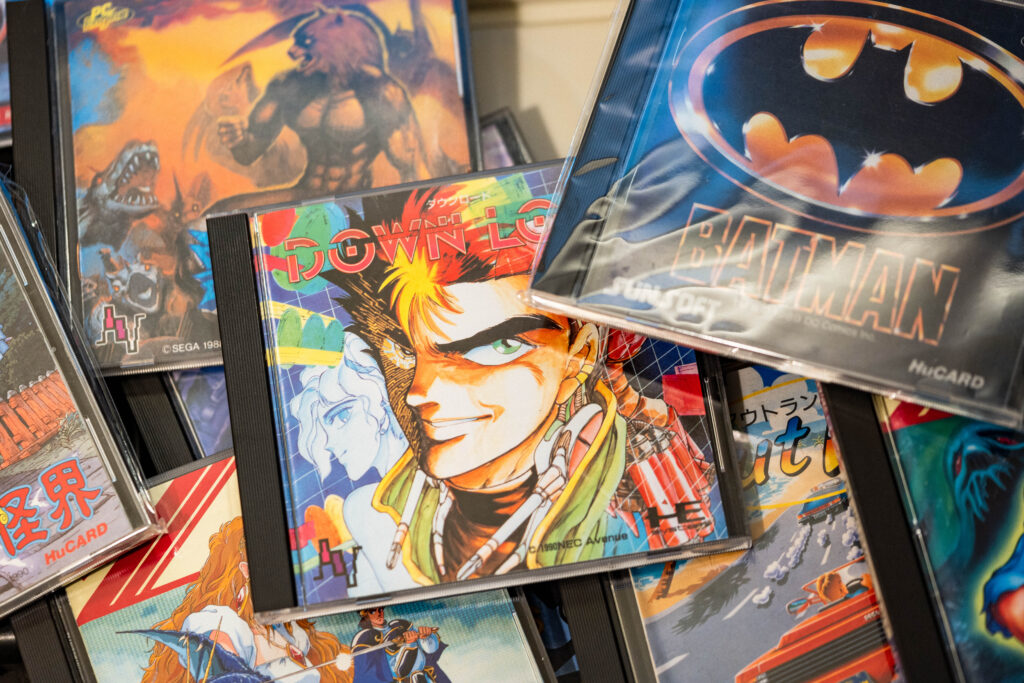
- Batman (Sunsoft, 1990). Unlike Sunsoft’s platformers on NES or Genesis, this Japan-only Batman is a top-down maze game. Think Pac-Man with batarangs: navigate stages, grab items, defeat thugs. It’s a curious spin on the license, turning Batman into a puzzle-action hero. Obscure, but collectible.
- After Burner II (NEC Avenue/Sega, 1990). Sega’s high-speed jet shooter wasn’t easy to shrink down, but this version nailed the arcade vibe. Speedy scrolling, incoming missiles, refuelling sequences, even the horizon gradient survived. It plays shockingly well despite occasional slowdown (especially in the canyon level). A technical win.
- Super Volleyball (Video System/Micronics, 1990). Simple visuals, but excellent mechanics. This side-view volleyball sim was responsive and surprisingly intense in 2-player mode. You could dig, spike, and block smoothly. Not flashy, but one of the strongest sports titles on the platform. I played the Mega Drive version a lot back in the day, fun game.
- Yōkai Dōchūki (Namco, 1988). Featured in the horror game list I recommended for Halloween, a whimsical journey through hell based on Japanese folklore. You play Tarosuke, a boy in the underworld full of cheeky yokai. Multiple endings, colourful art, and a lighthearted take on the afterlife. A great early example of PC Engine’s arcade pedigree.
- Download (NEC Avenue, 1990). Amazing game! A gritty cyberpunk shooter where you’re a hacker turned pilot in a future dystopia. Fast-paced, with edgy cutscenes and Engrish-laced signage. Mature for its time, it even inspired an anime OVA. The parallax effects look great, and the game puts up a fight. One I recommend to shooter fans.
- Altered Beast (Asmik/Sega, 1989). This early Sega port brought beast-transforming action to the PC Engine. Playable and complete, but with downgraded backgrounds and missing effects. Still, for a HuCard, it was impressive and gave NEC a cool factor by hosting Sega’s brawlers outside their own consoles.
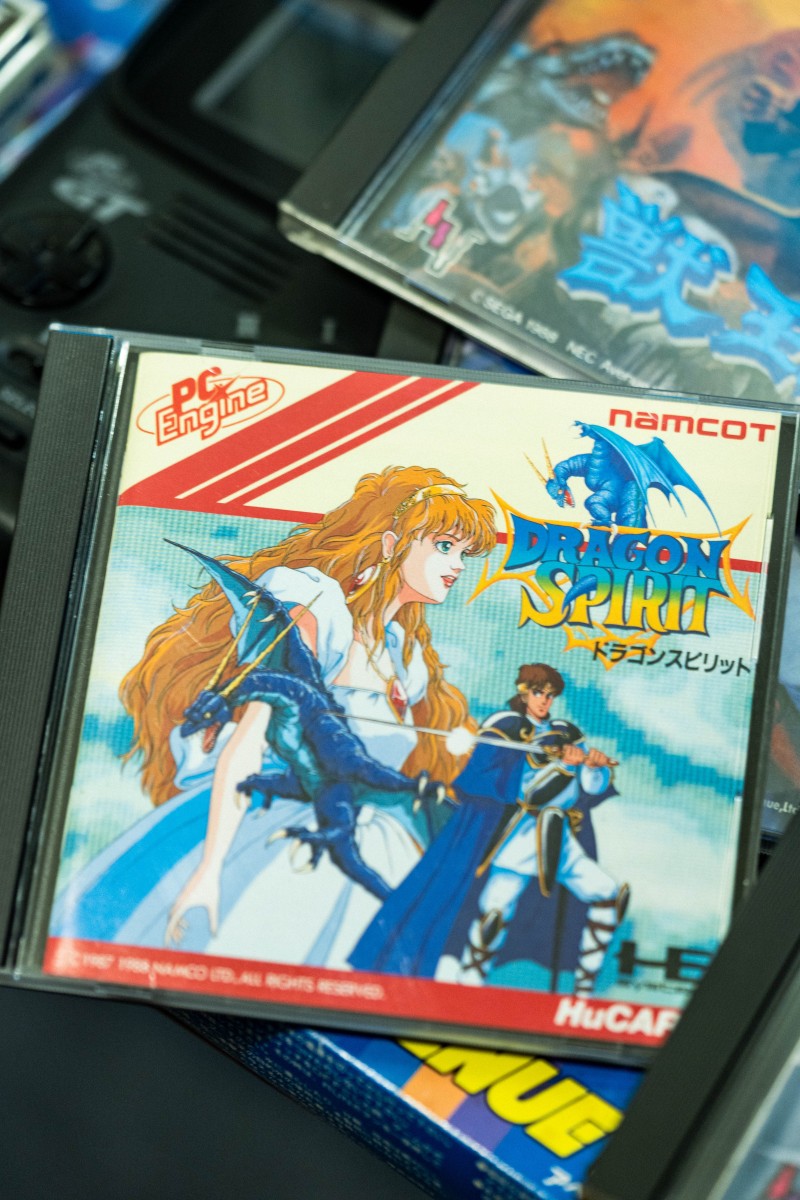
- Dragon Spirit (Namco, 1988). A very solid vertical shooter with dual-layer firepower: fireballs and bombs. Vivid graphics and layered backgrounds gave it real arcade fidelity. Challenging, but satisfying, one of the better early shooters and proof the console could handle more than platformers.
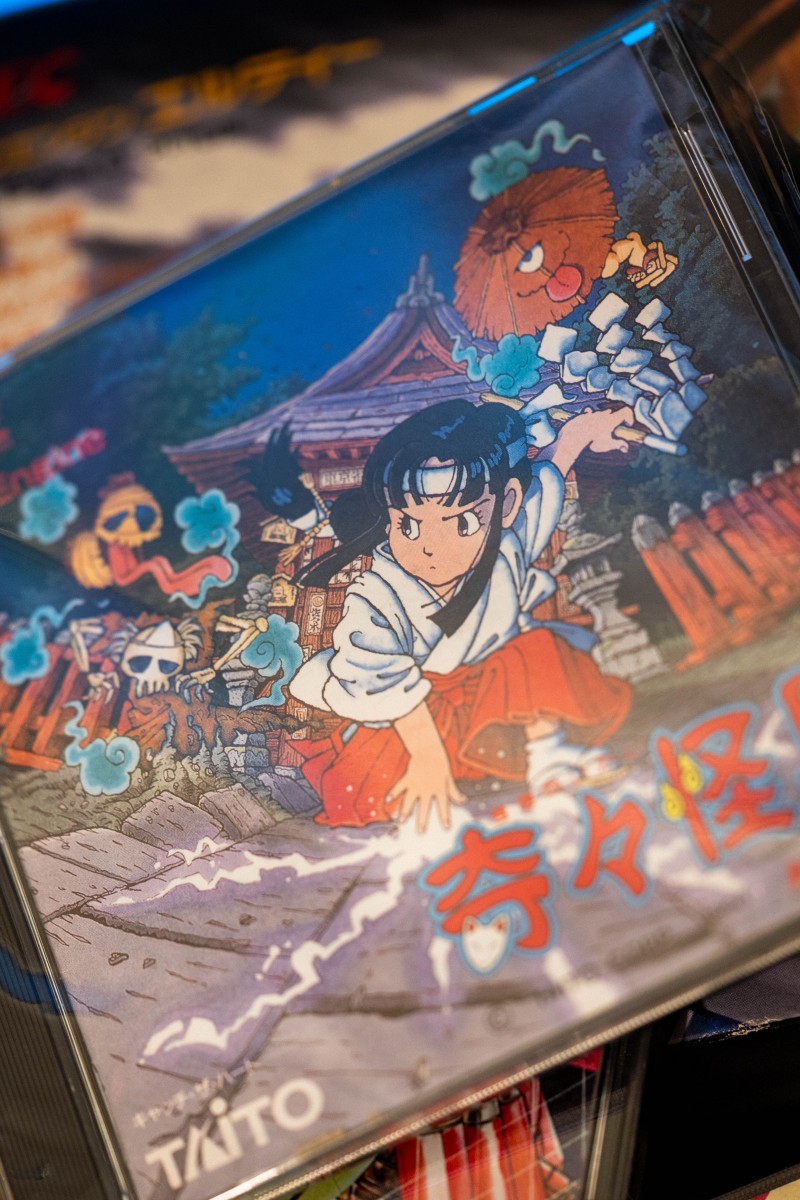
- Kiki Kaikai (Taito, 1990). The forerunner to Pocky & Rocky. You play a shrine maiden flinging ofuda at yokai. A top-down shooter set in a mystical Japan. The port is solid, if single-player only. Charming and unique, one of the more distinctive folklore-themed games on the system.
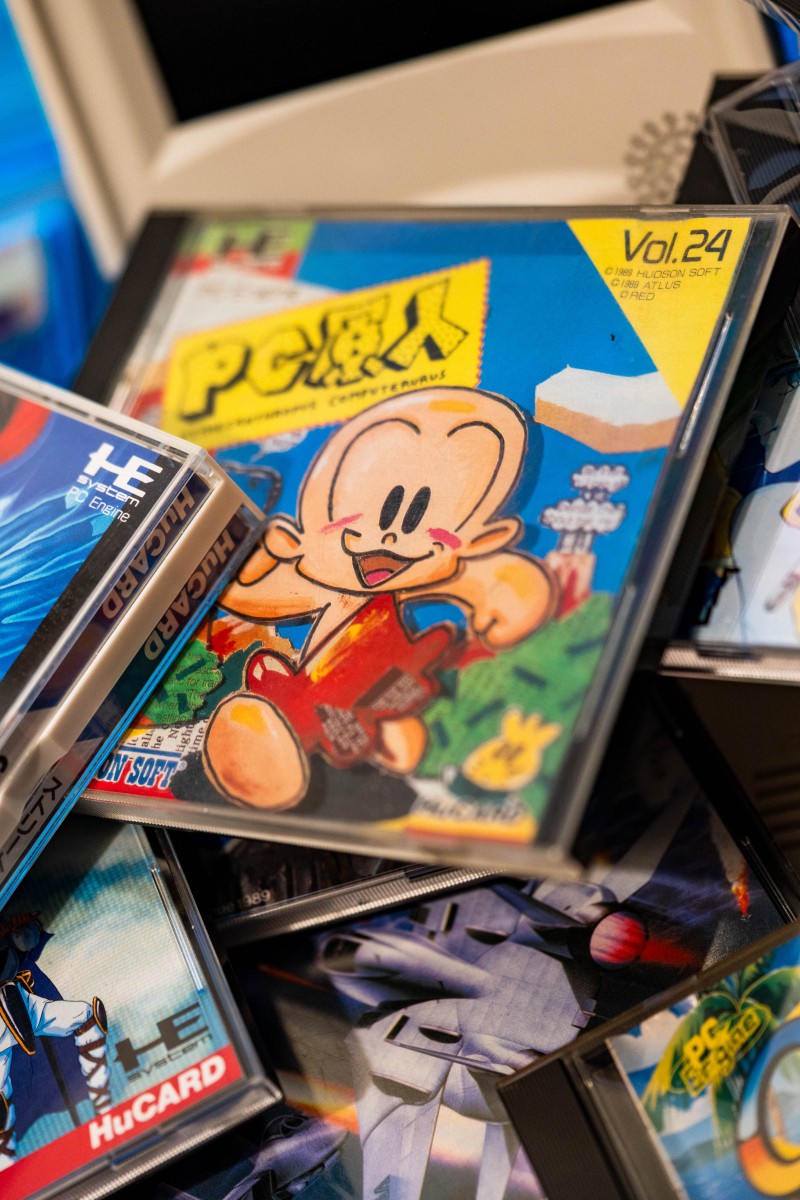
- Bonk’s Adventure (Hudson/Red, 1989). The PC Engine’s own caveman mascot, with a giant head and lots of attitude. Headbutt everything, bite walls, and smile while doing it. Bonk wasn’t just cute, his game had tight controls and creative levels. A system-seller.
- OutRun (NEC Avenue/Sega, 1990). Another ambitious Sega port. The fast scrolling was simulated with tricks, not perfect, but passable. The music is all there, the branching routes are intact, and the vibe is right. A good adaptation with a few rough edges (engine sounds especially). Still a blast.
- Shinobi (Asmik/Sega, 1989). A lean but tough port of the ninja classic. The bonus stages and parts of the arcade game are missing. Slightly tweaked layouts and some brutal difficulty spikes. Visuals are faithful, and the music works well. It’s not the arcade, but it’s close enough for fans.
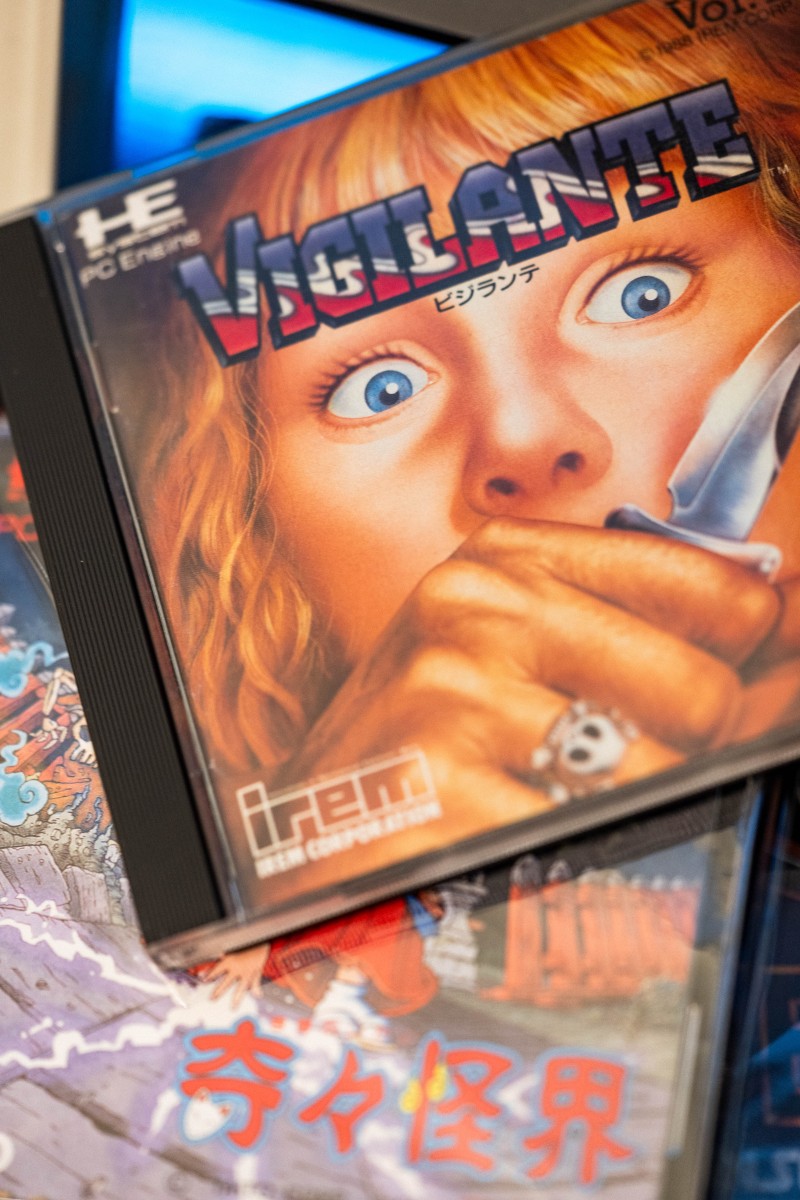
- Vigilante (Irem, 1988). Gritty street-fighting, Irem-style. Simple left-to-right beat ’em up where you fight a gang to save your girlfriend. Arcade-like visuals and smooth action for 1988. Not deep, but short, intense, and perfect for a quick brawl. A solid early title.
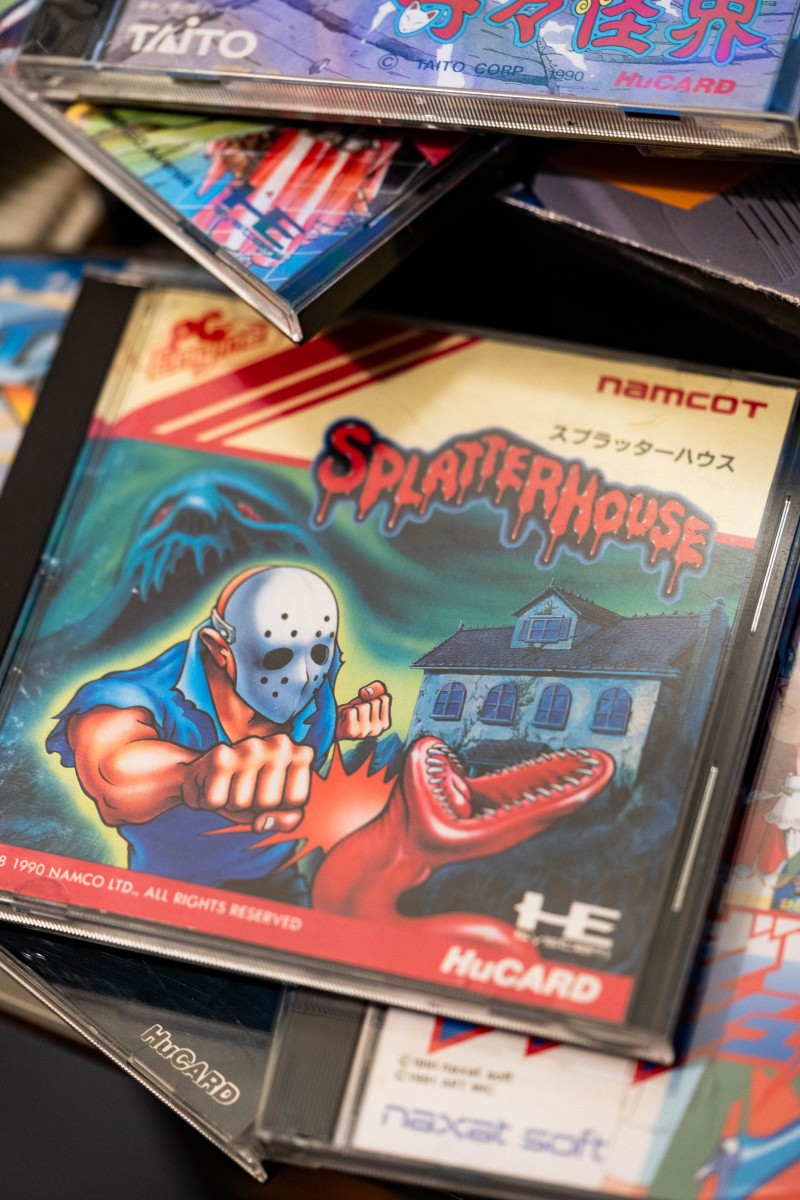
- Splatterhouse (Namco, 1990). The game that made parents nervous. Gore, monsters, and horror film vibes. It plays like a violent side-scroller with boss fights and giant womb-creatures. The Japanese version kept Rick’s white mask (Jason-style), while the U.S. got a red one. Still shocking, still great.
- Märchen Maze (Namco, 1990). An Alice in Wonderland-themed action game that ditches the arcade’s isometric view for overhead play. You shoot bubbles to knock enemies off floating platforms. Quirky, cute, and often overlooked, it shows the system’s range, from gore to fairy tales.
- Street Fighter II’: Champion Edition (Capcom/NEC, 1993). Silence please… in front of you, one of my favourite releases on the PC Engine. The Japanese HuCard version has all 12 Champion Edition fighters, including the four bosses, on a 20-megabit card. Seeing it run on the little PC Engine still amazes me. With the Avenue Pad 6, it is a conversion I enjoy as much for the way it plays as for the object itself. The graphics and animation have compromises, but the game feels responsive, and the music survives the trip well. This is the HuCard I would have wanted most when the PC Engine was still a distant thing in magazines.
Conclusion
For a gamer in Italy around 1990, the PC Engine was almost mythical. I saw it through magazine pages: a little white console surrounded by screenshots of games that looked a generation ahead of what I knew. The machines in those photographs were real, but they felt very far away.
Now I have the original console, the GT, the LT and the HuCards in my collection. The hardware is still small; the space it occupies in my memories is rather larger.
I still wonder what might have happened if the PC Engine had found a wider audience outside Japan. Would Bonk have become as familiar as Mario or Sonic? Would more of those games have reached the shops near me?
There is no answer, of course. But the library is here to play now, with its shooters, arcade conversions and odd little discoveries. The original hardware and accessories such as the SSDS3 let me spend time with the games I once knew only from screenshots.
There are more ways to explore that library now, including the PC Engine mini released in 2020. Magazine scans, manuals and the work of preservation communities also make it easier to understand the objects and games. I like being able to return to the pages that once made the machine seem so mysterious, then put the actual HuCard into the slot.
For those of us who grew up dreaming about the PC Engine, playing it now can feel like solving a childhood mystery. There is the console from the photograph. There is the game from the import review. And there you are, finally able to play it.
I still love the strange hardware ideas, the HuCards and the sight of Street Fighter II on that GT screen. Getting hold of the machines answered the practical question. It has done very little to reduce the curiosity that made me want them in the first place.
Stay curious. Stay nostalgic.
Because retro never dies, it just respawns.

Leave a Reply