

For a generation of gamers who grew up in the 80s and 90s, the word “portable” brought up two realities. The first was the Game Boy, a grey brick promising a dot-matrix future. The second was the Tiger handheld, a piece of plastic that, with its tinny, repetitive sound, blip, blip, bleeep, guaranteed you’d regret your purchase within ten minutes.
And yet, these glorified calculators were everywhere I looked as a child. In Italy, I knew them as GIG Tiger: small handhelds with a familiar film or game on the front, usually cheaper than a cartridge-based console.
The familiar logo did much of the selling. A child could recognise Sonic, Batman or Ryu before knowing anything about the game inside.

The seduction: license, price, and illusion
The success of GIG Tiger rested on a diabolical triangle, a mix of low-pricing, smart licences and great packaging and graphics to create the illusion of an arcade experience. Tiger handhelds cost a fraction of the price of a Game Boy or a Game Gear. If your grandparents wanted to buy you an “electronic” gift without taking out a second mortgage, the choice inevitably fell on the plastic casing with the familiar logo. Tiger made those characters affordable as an electronic toy.
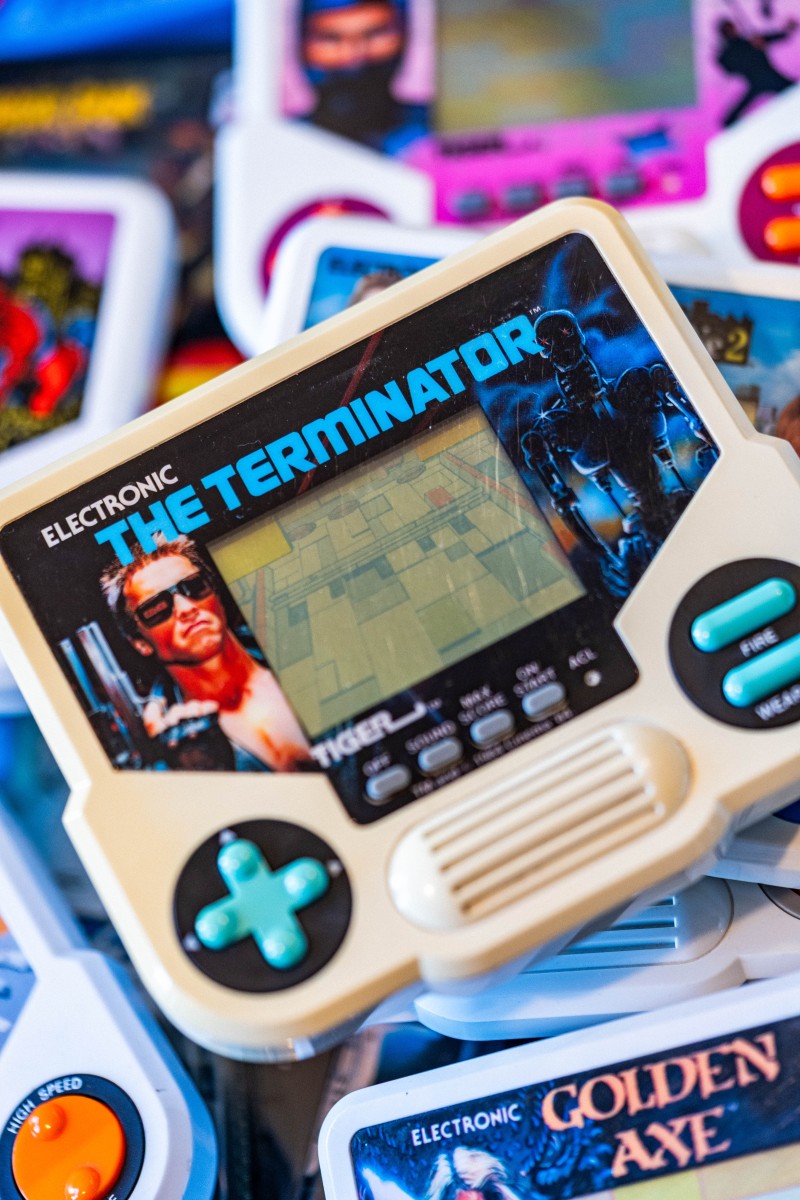
The licences in my collection tell the story: they had Sega arcade hits (Altered Beast, Golden Axe, Space Harrier), movie tie-ins (Jurassic Park, Robocop, Terminator), and, of course, the fighting game giants (Street Fighter II, Mortal Kombat). You bought the device for the logo, for the packaging, for the… dream… not the game (and boy, it was clear soon after you started playing with one of these Tiger games).
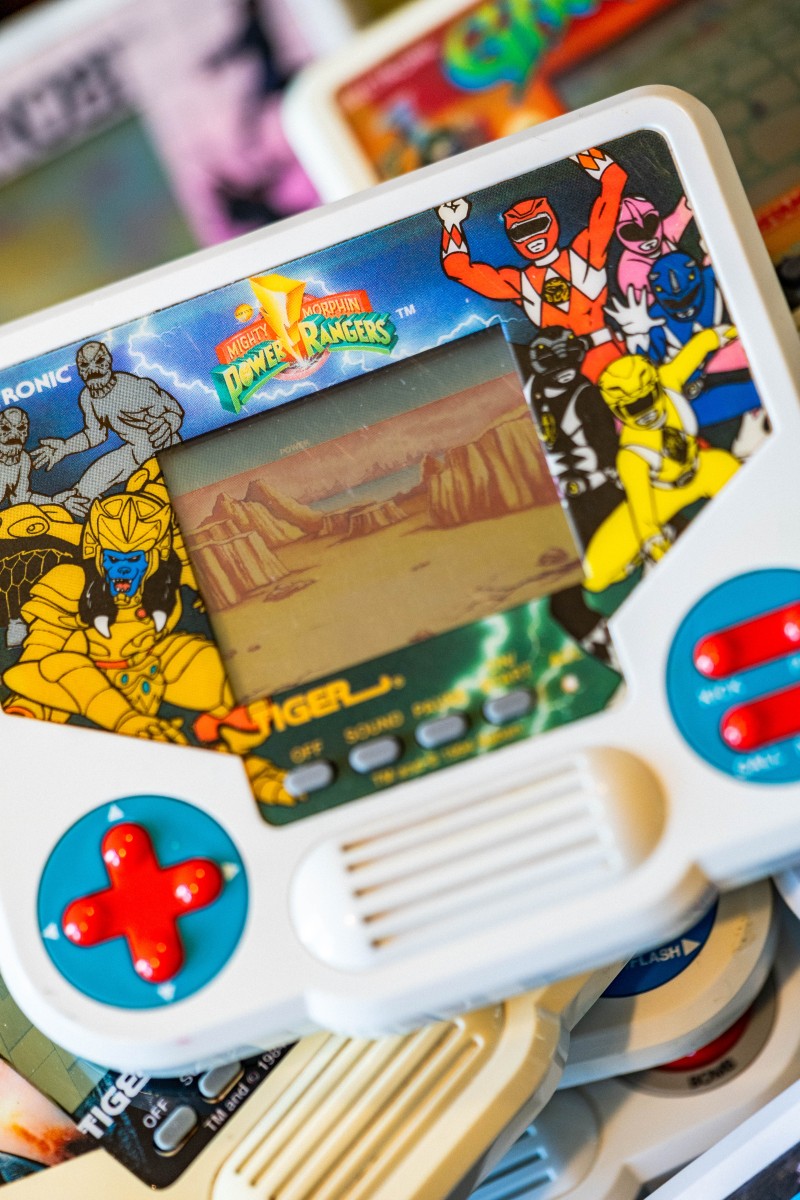
All of this packed in a low-cost technology product. If you ever wondered why Sonic couldn’t really run fast, or why Ryu in Street Fighter II could only occupy five fixed positions… Tigers used a Segmented LCD screen, just like your calculator. The “sprites” weren’t dynamic pixels (like on a Game Boy) but pre-printed images on the screen. Movement was created by sequentially lighting up these static designs, creating an optical illusion, like a digital flip-book.
Nintendo had already used segmented LCD screens in the Game & Watch. Tiger’s early handhelds also predated the Game Boy; the licensed models I remember shared toy shelves with Nintendo’s machine in the 1990s.
New films and arcade hits kept giving Tiger new characters to put on those cases. The game inside could be basic, but the picture on the front promised the world I had just seen on television or in an arcade.
They also fitted in a pocket. You could take one to school or play while somebody else used the family television. Their speaker was small; whether it was quiet was another matter.
In retrospect, the gaming experience on a Tiger was an implicit pact: mechanical limitations were accepted in exchange for an immediate association with a beloved franchise (and lasting batteries!). The value lay in the possession of the licensed item and the ability to play, even if rudimentarily, with the characters. This was a big deal for a kid in the 90s with no Internet around.
How do I know? Well I was one of those kids!
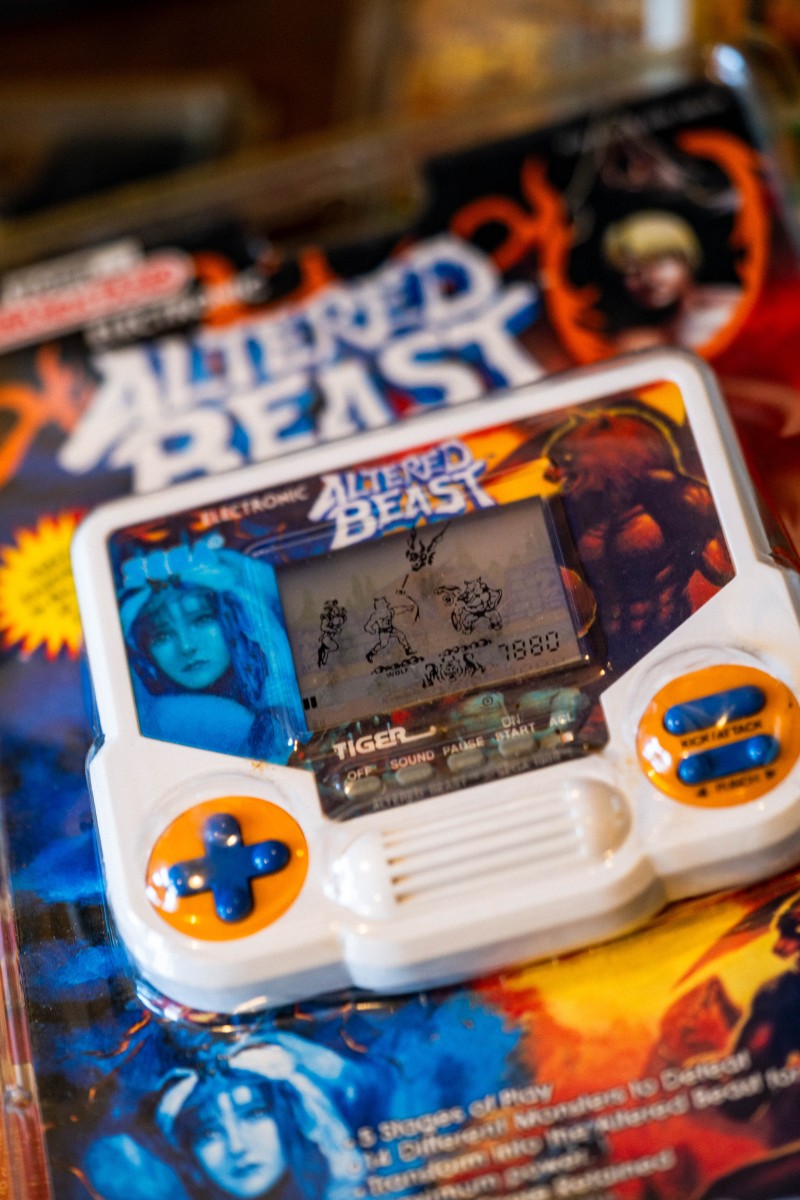
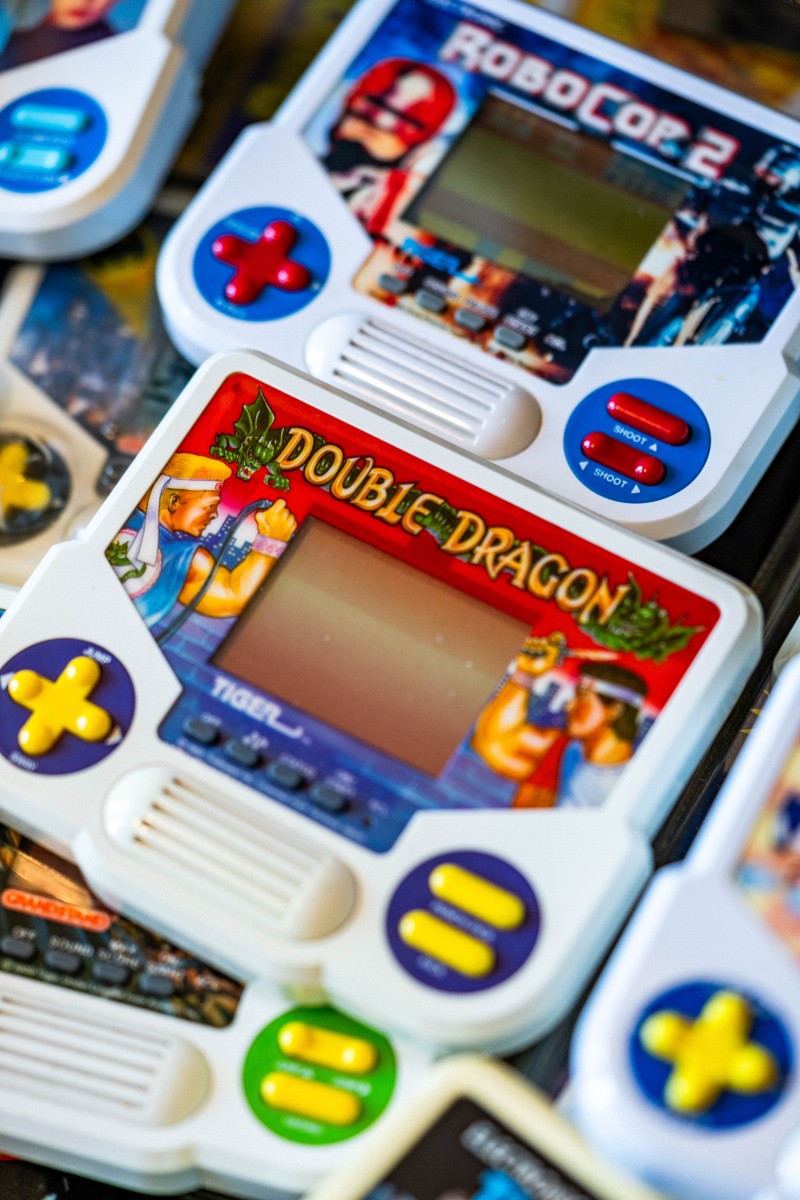
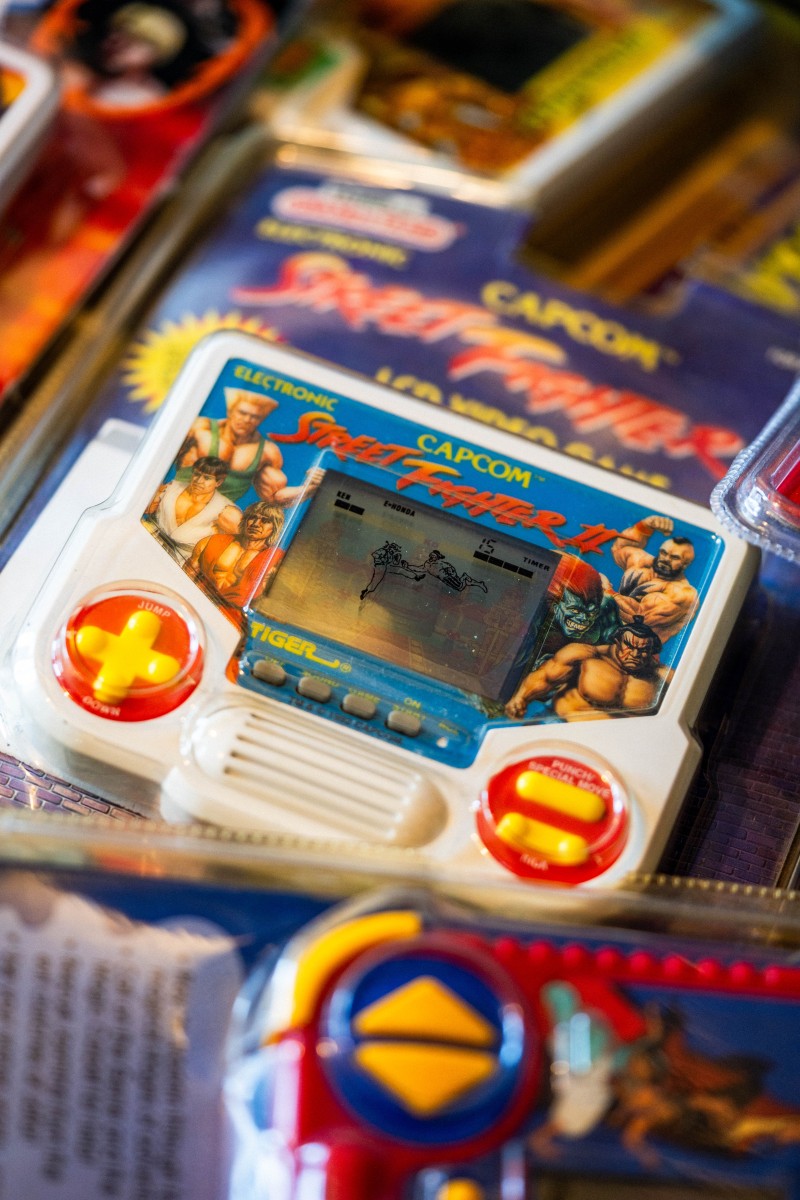


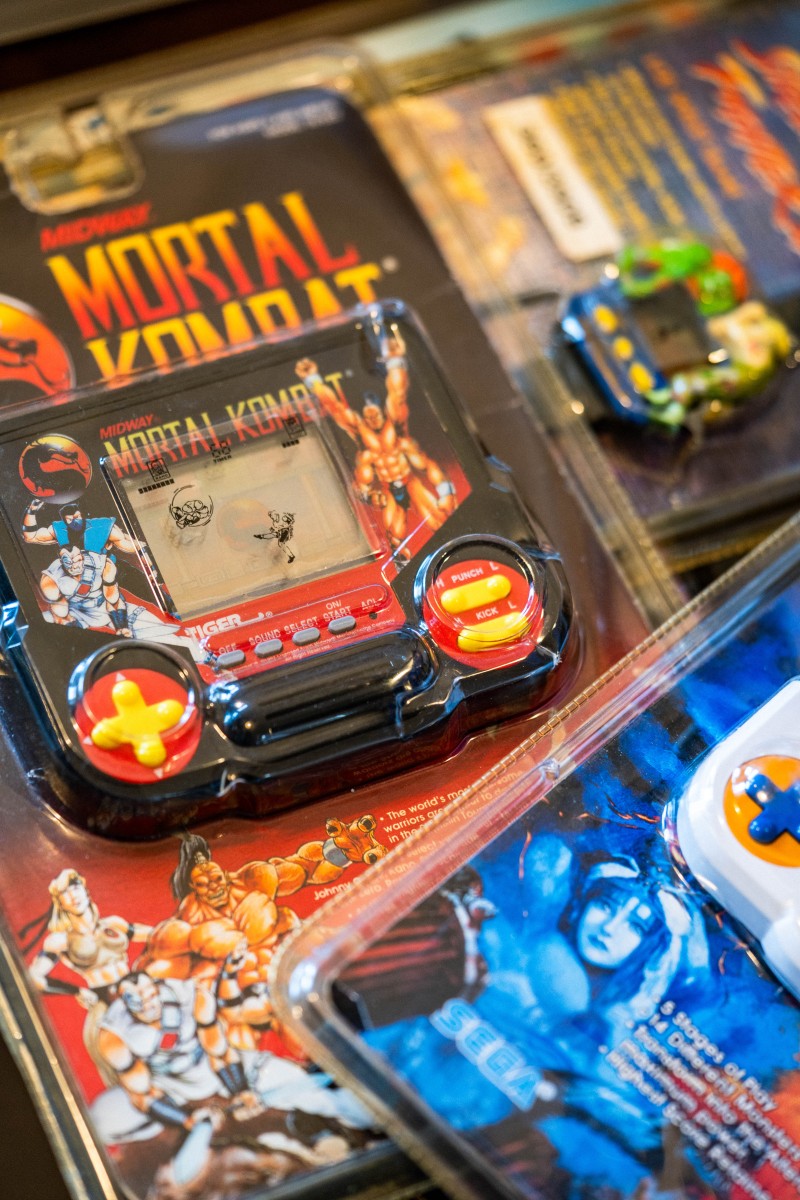

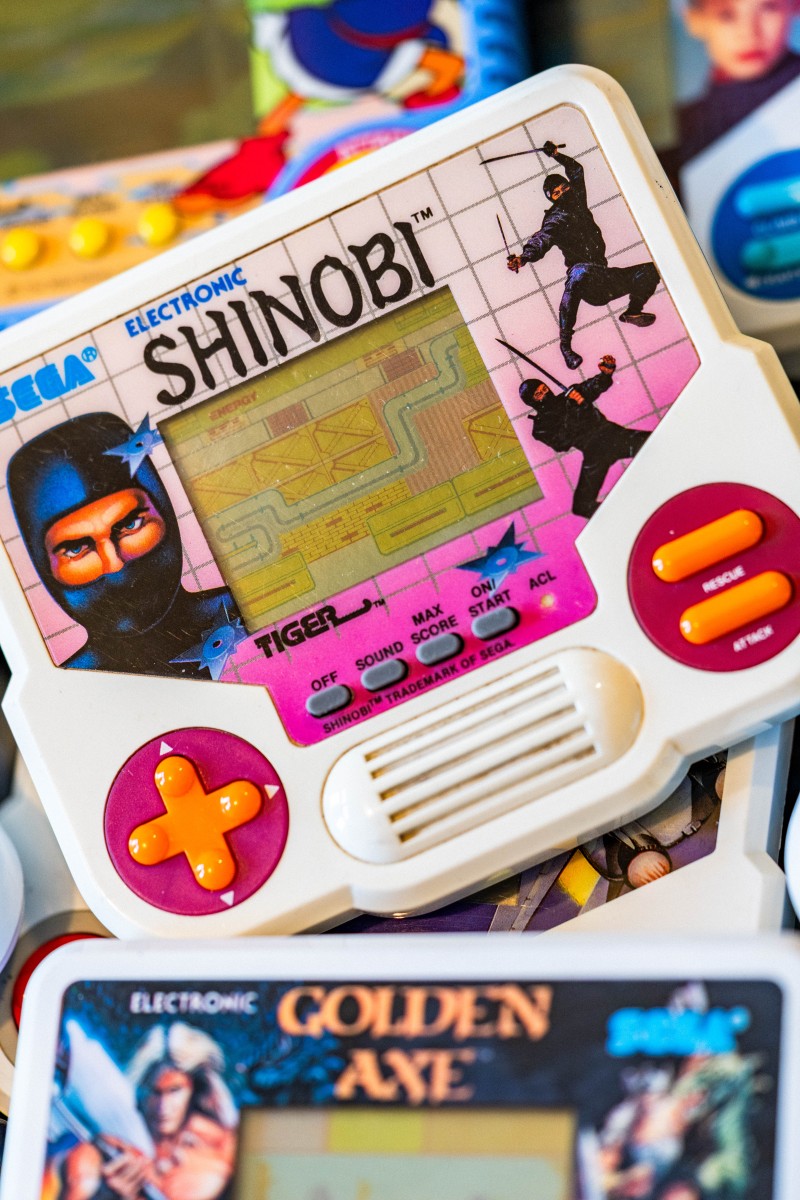
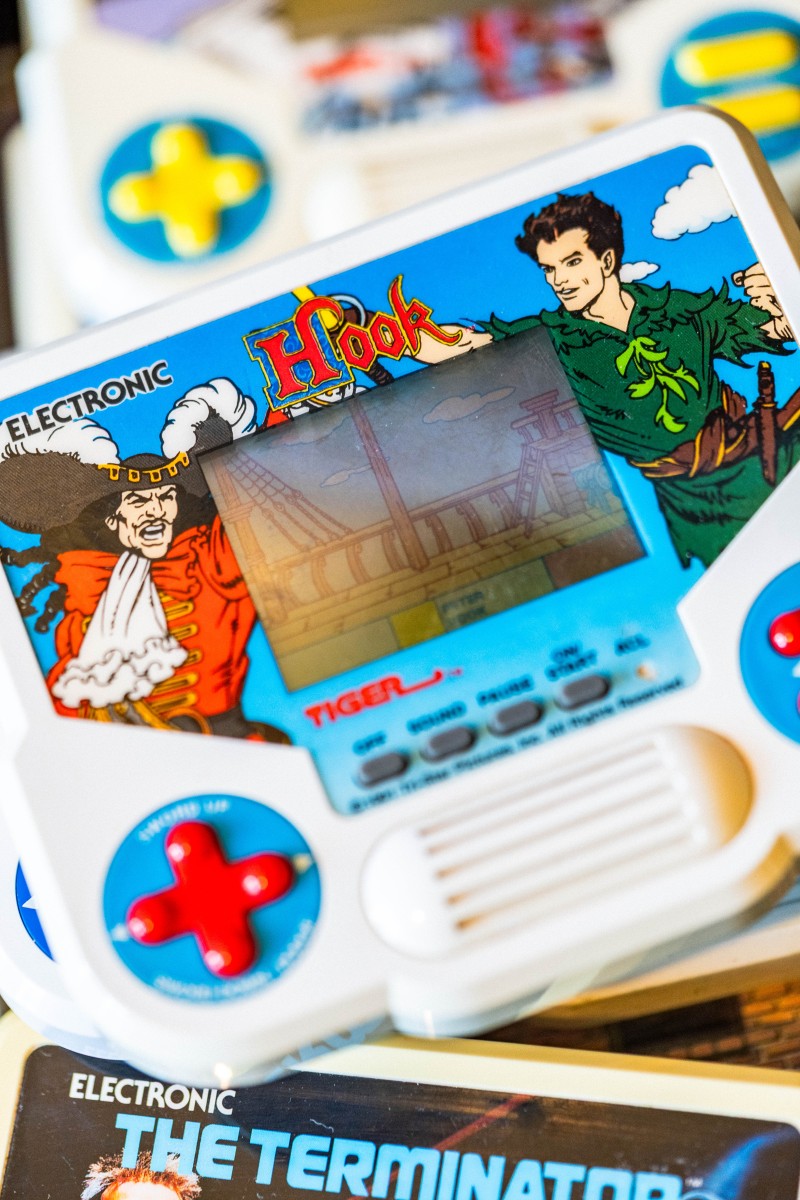
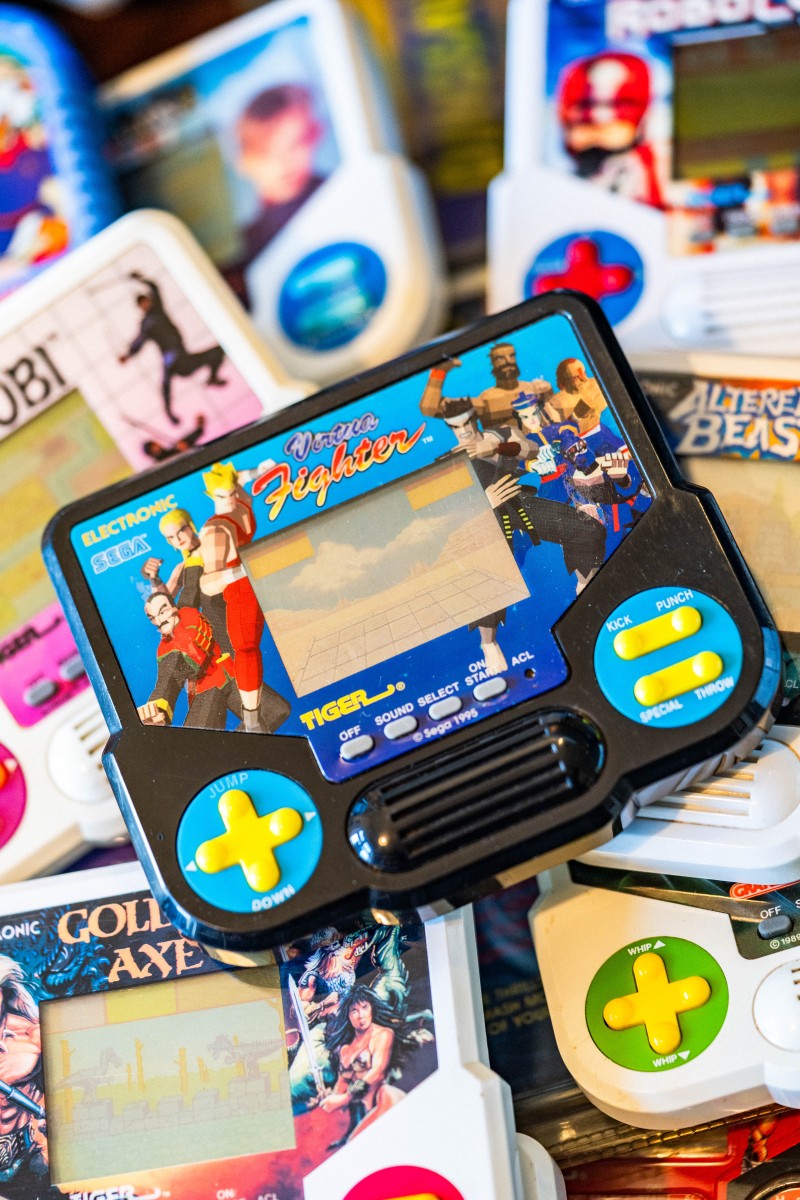
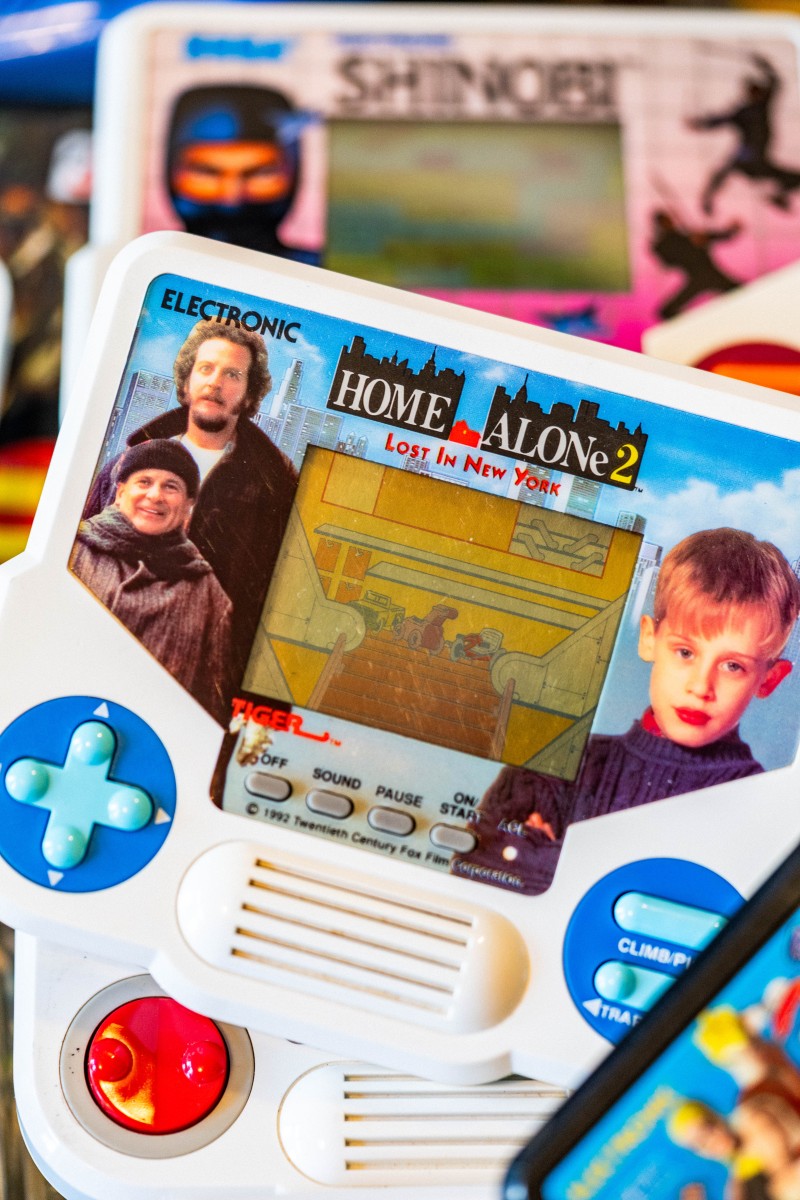

Some games now!
Altered Beast & Golden Axe
Sega’s iconic beat ’em ups, known for side-scrolling brawls, magic attacks, and, in Altered Beast, mythic transformations… became static sequences of fixed screens. Combat was reduced to timing and position rather than movement, and Golden Axe’s spell system shrank to a single, one-off blast.
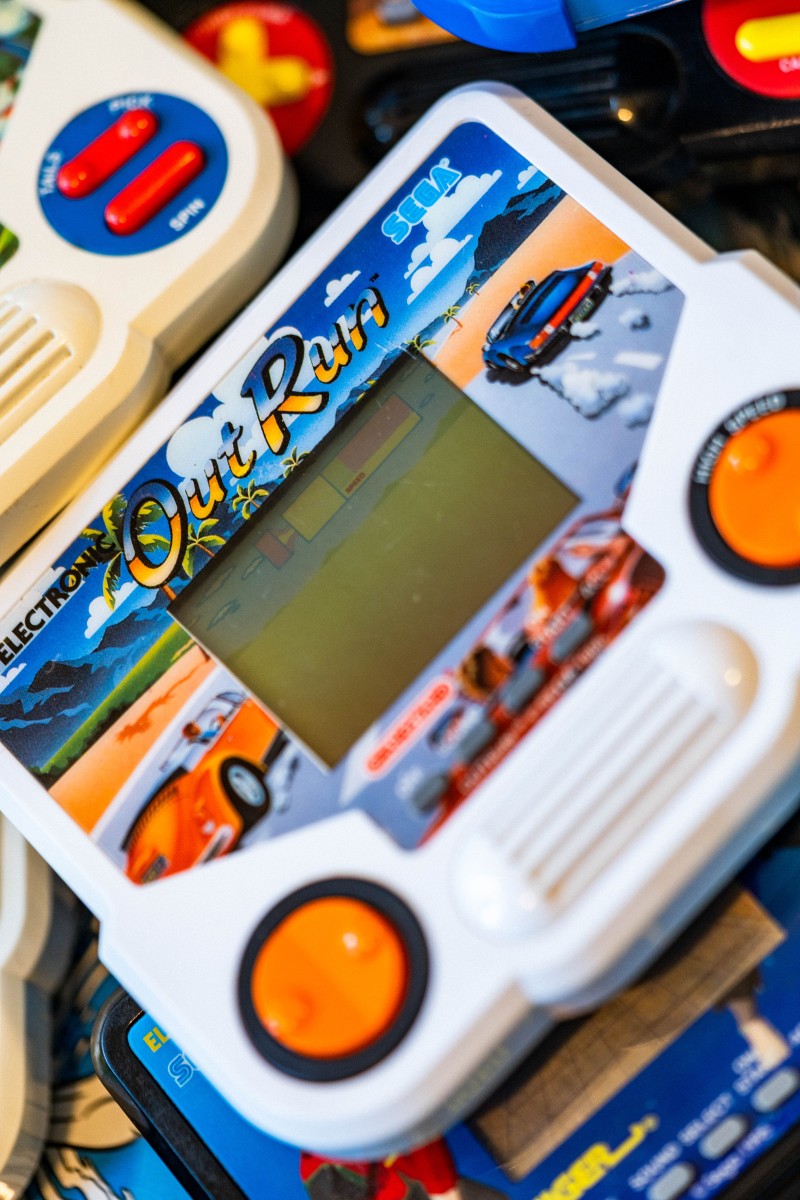
Space Harrier, After Burner & OutRun
These pseudo-3D flying and racing games were among the toughest to adapt. Tiger’s versions replaced scrolling landscapes with repeating obstacle patterns that tested reflexes more than immersion. A few After Burner “deluxe” tabletop editions offered slightly flashier visuals, but the illusion of speed was gone on a handful of fixed LCD positions.
Street Fighter II, Mortal Kombat & Virtua Fighter (and watch versions)
The original Street Fighter II thrived on six-button precision and deep combos, impossible on a handheld with two buttons and fixed sprites. Players simply struck as sprites overlapped, with Ryu and Zangief standing in for a whole roster. The watch editions of Street Fighter II and Virtua Fighter pushed miniaturisation to absurdity, becoming fashion novelties more than playable games.
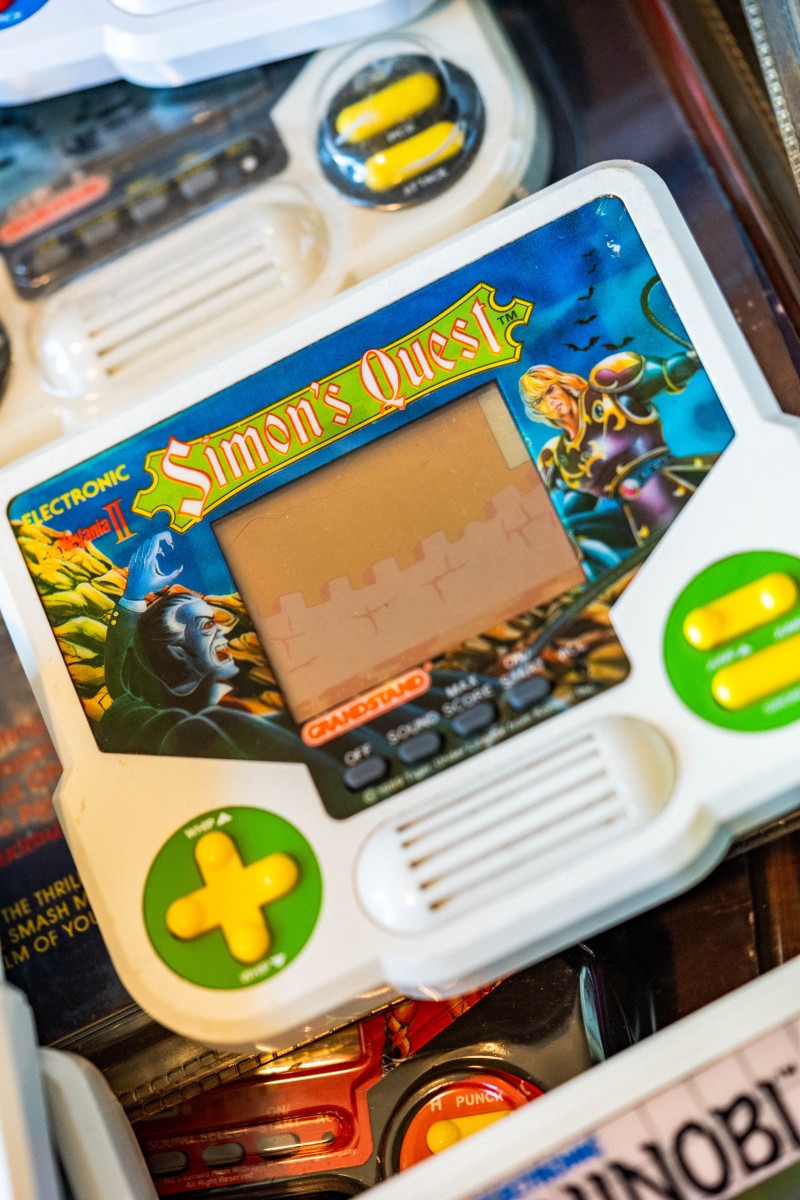
Castlevania II: Simon’s Quest
The ambitious NES sequel (1988) mixed action with RPG exploration. Tiger’s 1988/89 version stripped away the open world entirely, compressing it into short, linear action stages, a ghost of its source material.
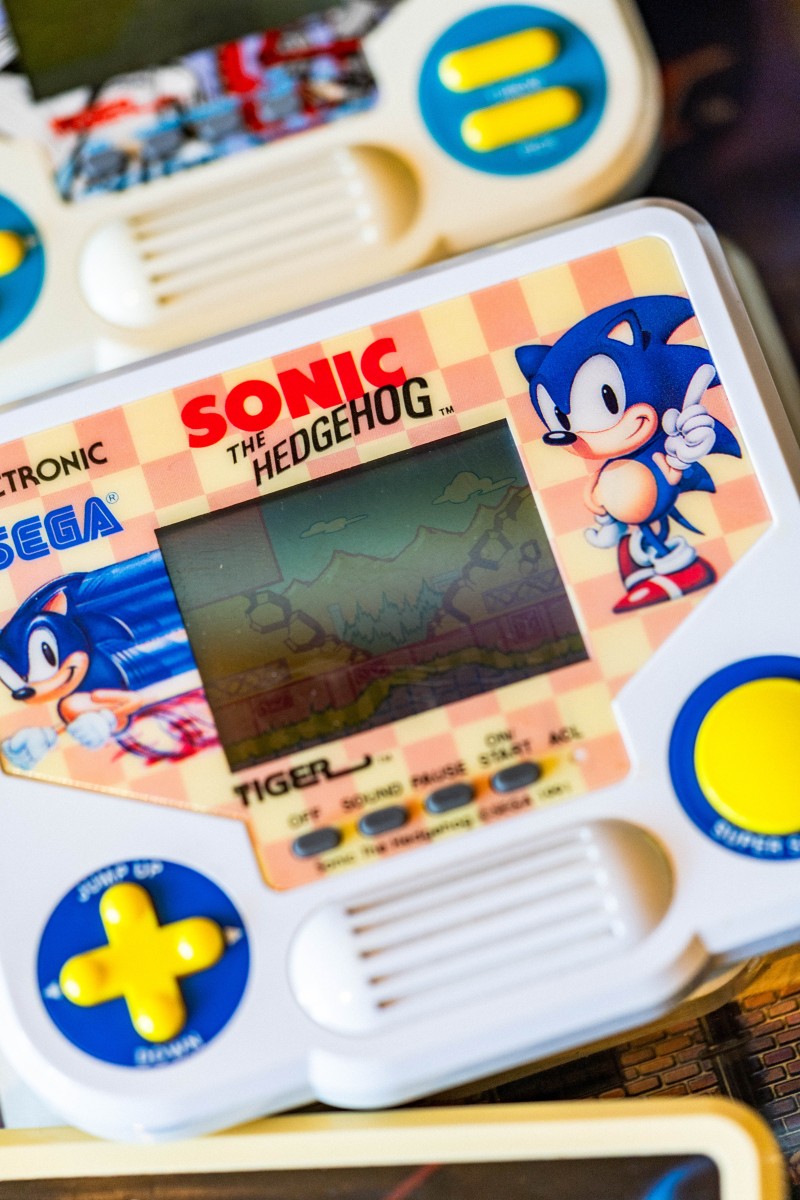
Sonic the Hedgehog (1, 2, 3)
Sonic’s design revolved around speed and momentum, two things LCD screens couldn’t deliver. What remained were timed jumps and obstacle dodges on static backgrounds, betraying the very spirit of the franchise.
Aladdin & DuckTales
Disney’s platformers adapted slightly better, thanks to simpler, side-scrolling levels. Still, Tiger’s conversions flattened the worlds into repetitive, minimal layouts that sacrificed the charm of the originals.
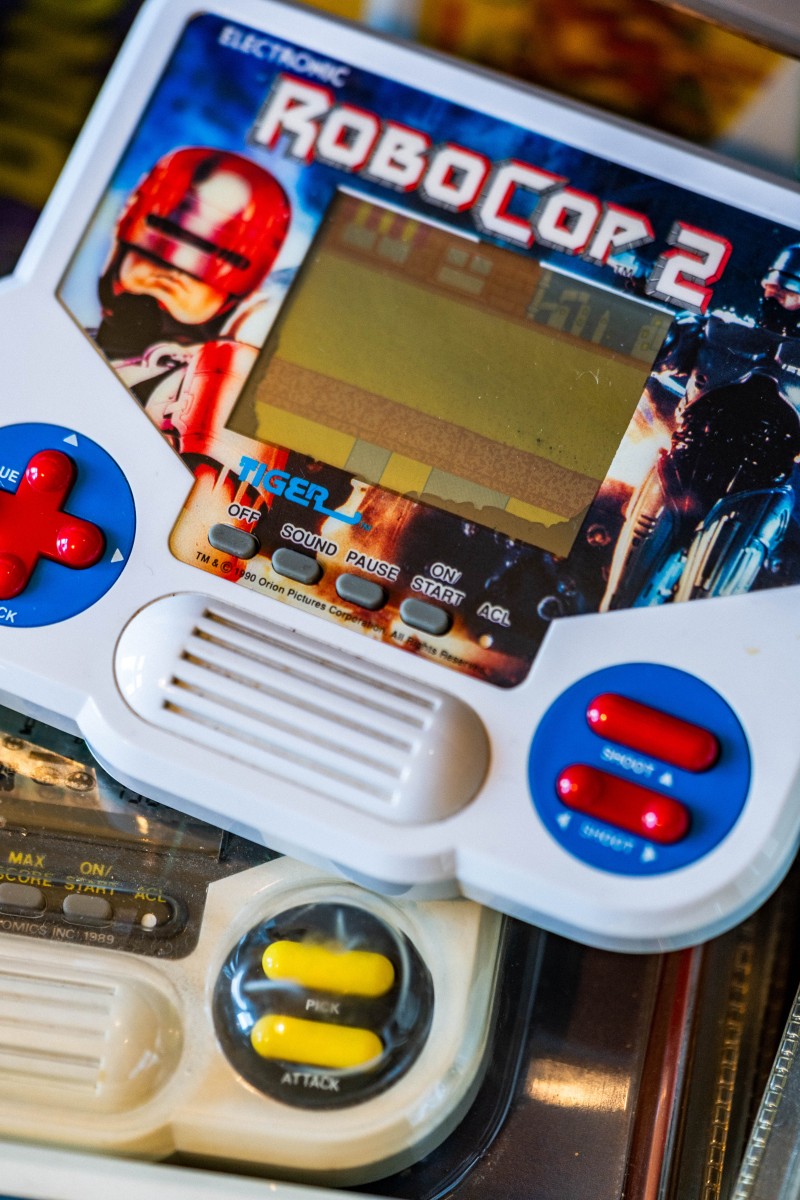
Robocop 2, Jurassic Park, Batman & Terminator
These highlight Tiger’s knack for seizing film licences fast. Gameplay was almost irrelevant; the draw was the box art and logo, a handheld souvenir of a blockbuster.
Baseball & Wrestling
Following Tiger’s early sports successes, these generic titles prioritised catalogue variety over realism. Unbranded or loosely tied to licences, they filled shelves and cemented Tiger’s market presence.
The logo and characters often made a stronger first impression than the gameplay. I recognised the world on the box before I found out how little of it could move on the screen.
Conclusion
This collection belongs to the toy shops I remember in Italy: Sega characters, film posters and arcade promises, all squeezed onto fixed LCD screens. Some disappointed me almost immediately. I kept wanting the next one anyway.
To make this post, video and photos I went through all my Tiger Electronic Games and I was overwhelmed by the same smell of plastic that you could experience the first time you opened the packaging. It was a real “Proust’s Madeleine” moment. For a second, I was a kid, with my new Tiger, in the 90s… hoping that, at least this time, expectations would be met for good gameplay… well, let’s say that I collected these Tiger Games for this nostalgia, rather than to actually play with them!
Stay curious. Stay nostalgic.
Because retro never dies, it just respawns.

You buy them 99% for the logo and artwork, and only 1% for the gameplay.
Totally 😀 The force of branding and marketing was strong in these ones!