
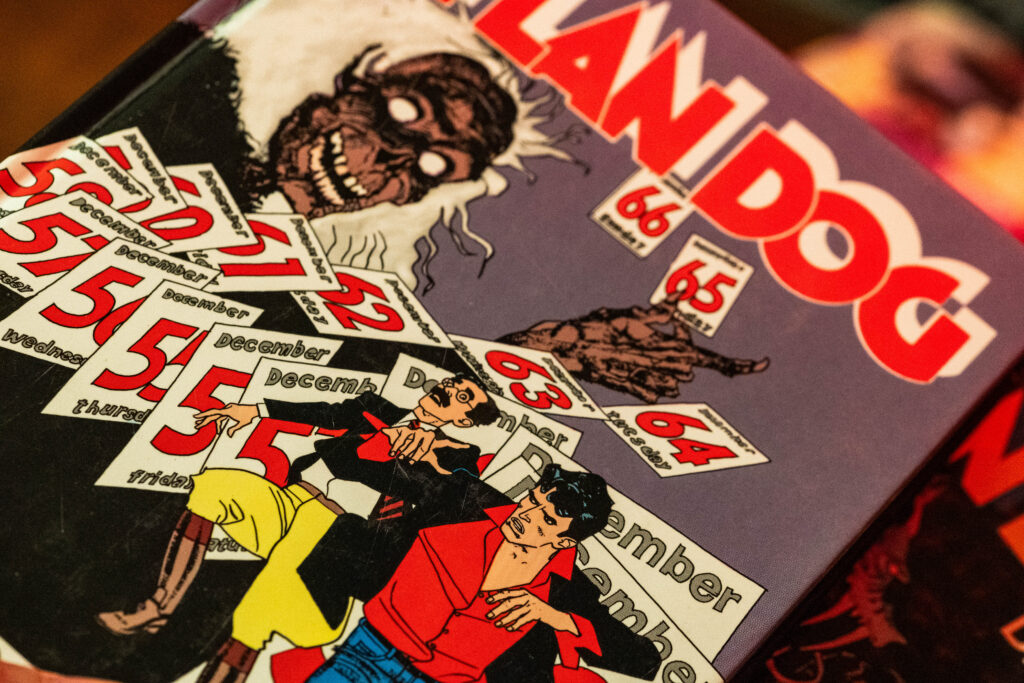
There’s a street in Paddington called Craven Road. Takeaways, a couple of hotels, people walking fast. I’ve been there. I went because of number 7.
Number 7 Craven Road is where a nightmare investigator lives. His doorbell doesn’t ring, it screams. His assistant looks like Groucho Marx and cracks jokes during autopsies. He drives a white Beetle that barely starts, plate DYD 666, and he’s been building the same model galleon for 40 years without ever quite finishing it.
His name is Dylan Dog. He’s English, and he was invented in Milan. If you grew up in Italy you already know all this. If you didn’t, there’s still a decent chance you’ve bumped into him without knowing. A cult horror film from 1994 with Rupert Everett in a graveyard. An American comic in 1999 with Mike Mignola covers. A Batman crossover in 2024.
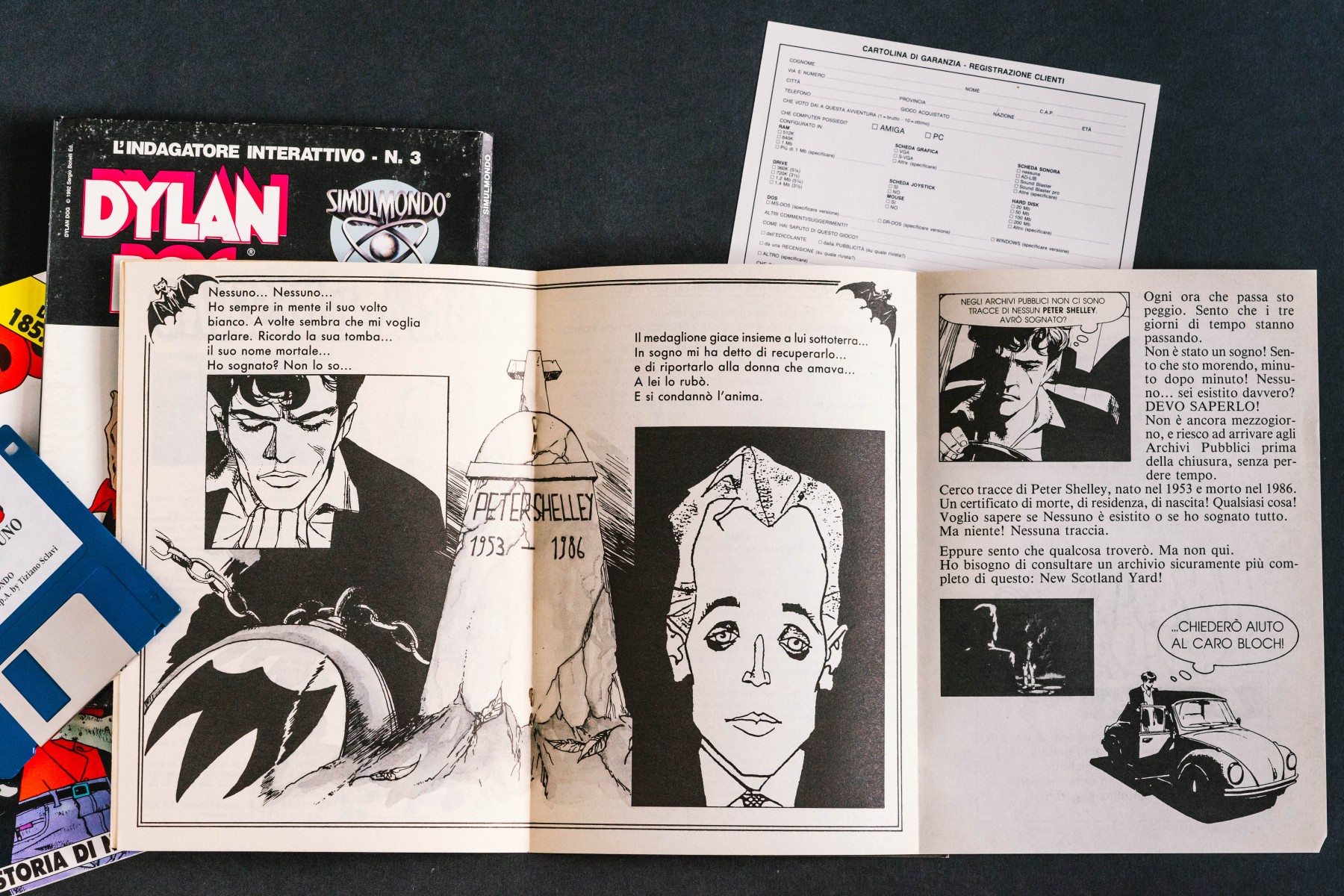
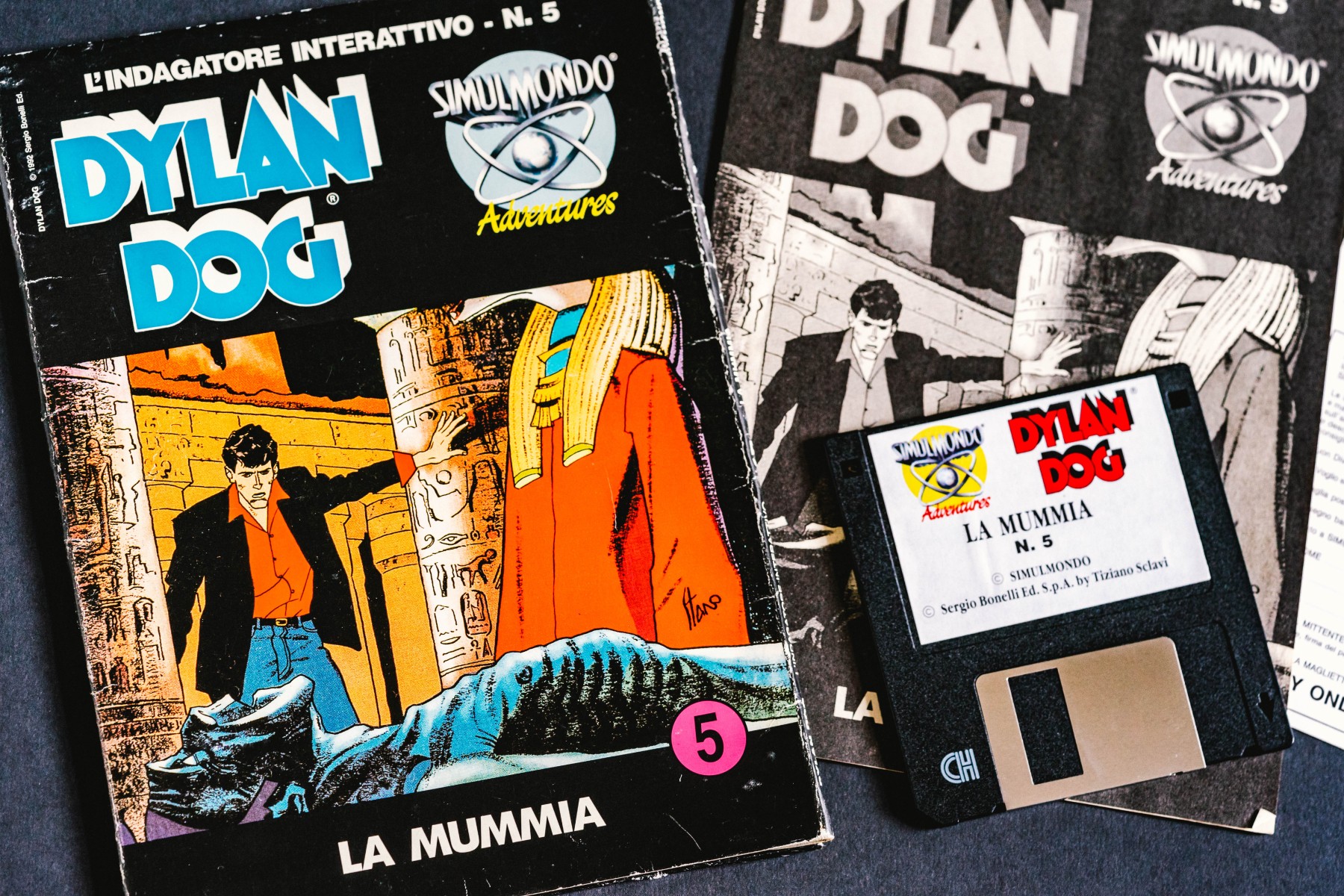
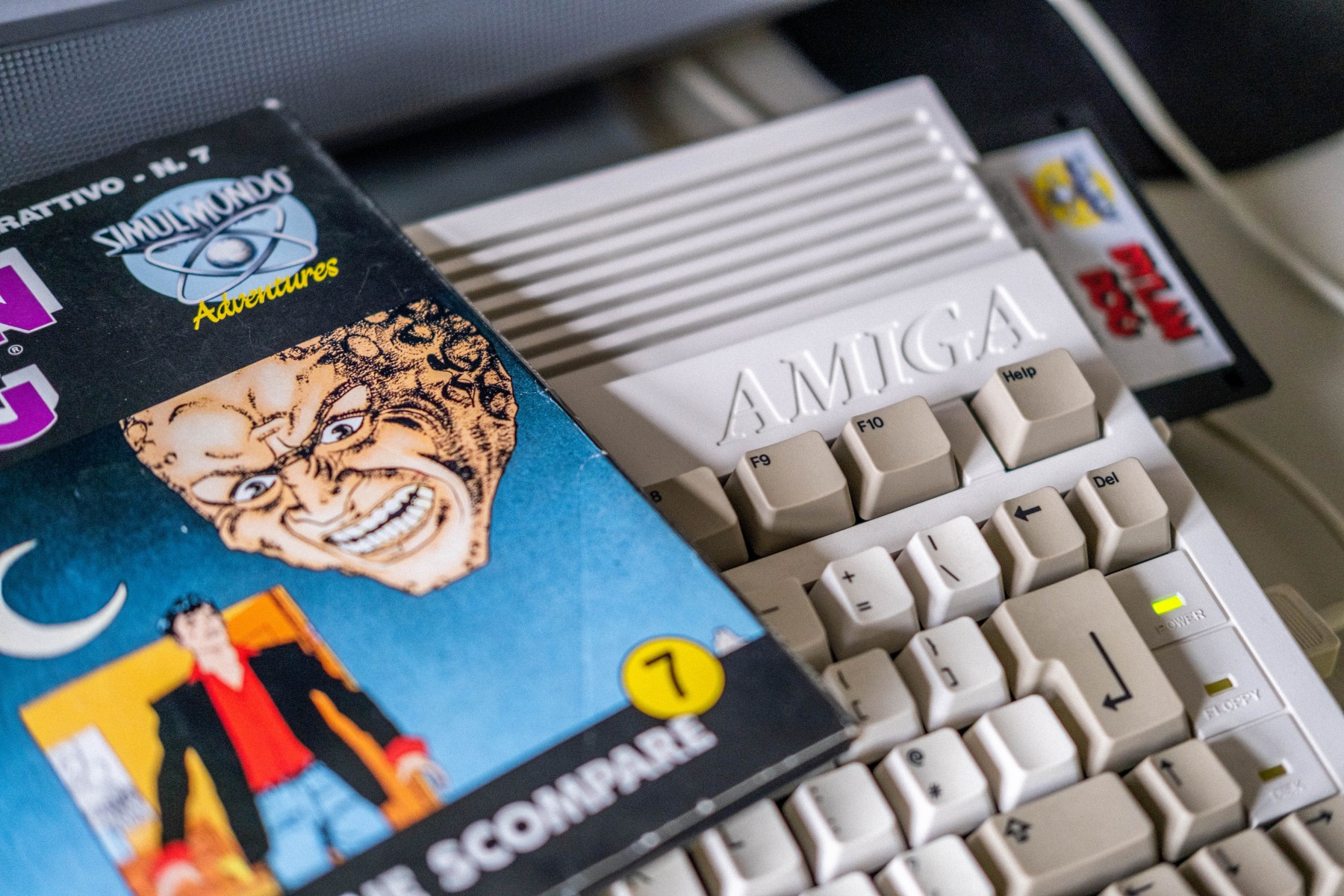
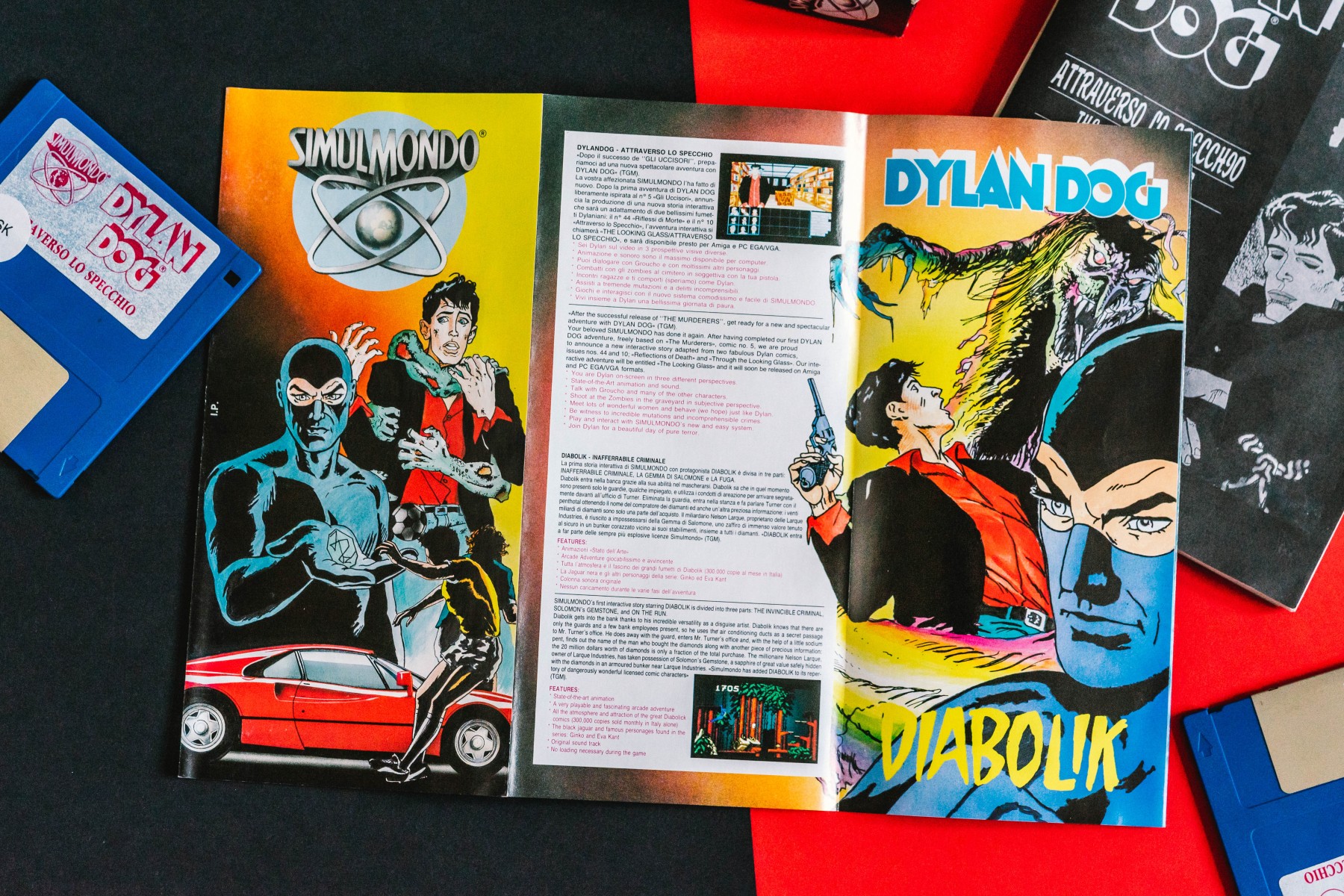
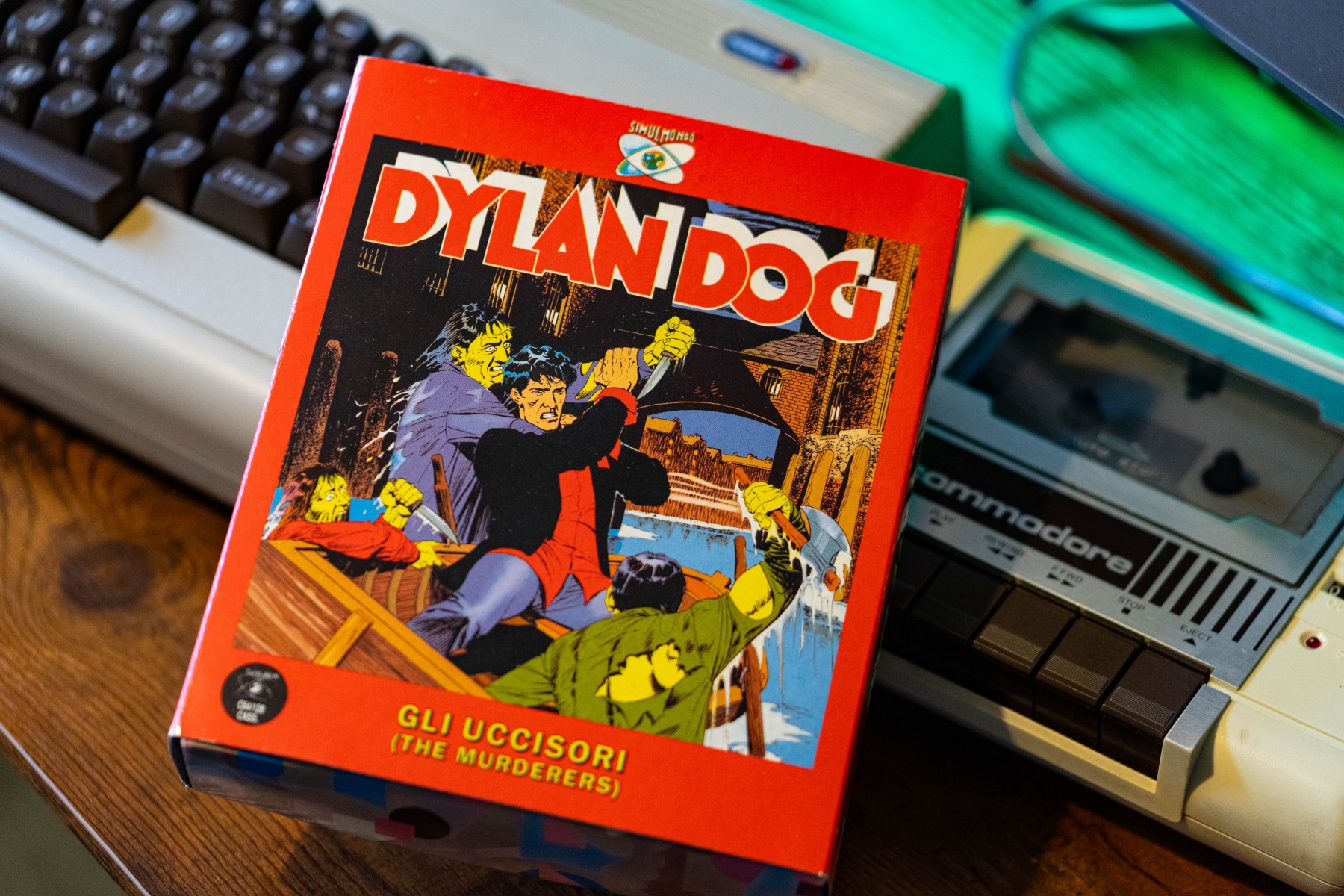
But this article is about the part almost nobody outside Italy saw. For about 18 months in the early 90s, you could buy Dylan Dog video games at the newsstand. A new one every month, next to the sweets. I have 10 of them. There are 17. That’s the story I want to tell.
My brother’s shelf
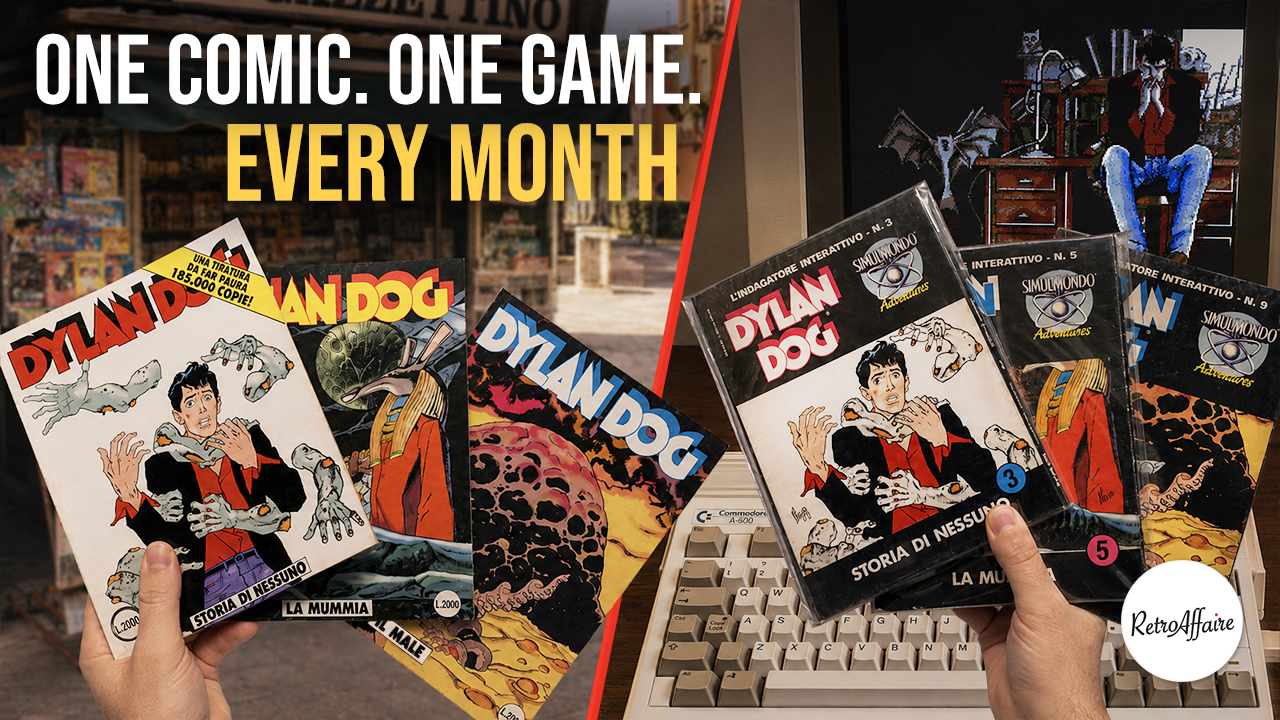
I was 9. My brother was 18. Every month he came back from the newsstand with a comic that had a zombie or a corpse on the cover. He read it, put it on the shelf, went out. And I took it down. Nobody stopped me. These were the 90s, no age rating, no warning, and my parents never looked closely enough at one to know what was inside. So at 9 I read dismembered bodies, sex scenes, suicide, old people dying alone in flats nobody visited. I wouldn’t hand that to my son. Let me be clear about that.
But I read it, and 36 years later I still read it. Part of why, if I’m honest, was that I knew it wasn’t for me. It lived on my brother’s shelf and I wasn’t supposed to touch it, so it was contraband. And contraband is worth a thousand times more than anything your parents buy you. I even had the Dylan Dog school diary. Zombies on the cover. I remember handing it to my teacher one afternoon and watching her face while she looked at it. She didn’t say anything. She didn’t have to. I could feel the judgement land on me.
Dead on the newsstand
Here’s the part the 40th-anniversary posts leave out. It flopped. Issue 1 went on sale on 26 September 1986. Cover by Claudio Villa, story by Tiziano Sclavi, the dead coming back to life in a Scottish village. The title, L’alba dei morti viventi, is a Romero nod, Dawn of the Living Dead. And it landed on the newsstand and did almost nothing. The distributor rang Bonelli and told them the book was dead.
It makes sense if you know what Bonelli was in 1986. Tex Willer had been going since 1948, and Tex does not have doubts. Cowboys, explorers, adventure heroes who win. And then this: a horror comic, in a country that didn’t really do horror comics, even if it had Dario Argento in the cinema.
Then, slowly, it moved. Word of mouth, the way things moved before the internet, by physically handing someone a thing. Bonelli started reprinting the early issues because new readers wanted to start from the beginning. That’s how I got in. By 1990 the series was 4 years old, and I read issue 1 in a reprint. It’s the only way a 9-year-old arriving late could start at the start.
By the early 90s it was selling over half a million copies a month, some months beating Tex. At Bonelli that was roughly a new band outselling the label’s biggest act.
A hero who gets it wrong
Every hero I had at 9 was good at things. Tex wins. Diabolik wins, and when he seems to be losing it turns out you just hadn’t understood the plan yet. Dylan Dog is wrong, very often. He takes the cases nobody else will, he’s not the expert who knows everything, and he gets there through what the comic calls his fifth sense and a half. He’s an ex-policeman who left Scotland Yard and drank his way through the years after. He plays the clarinet badly, always the same piece. He falls in love with his clients, every time, and it never works. He walked away from a career to do the thing he cared about, in a rented flat, always broke.
He misreads people. He fails to save them. Someone dies because he got it wrong, and then he tries again. I was 9 and I had no framework for a hero like that. I think that’s why the comic mattered so much to a couple of generations of Italian kids. Not a perfect hero. A person.
The face, if you recognise it, belongs to Rupert Everett, at least in the early interpretation. Hold on to that, because it comes back at the end in a way I still find hard to believe.
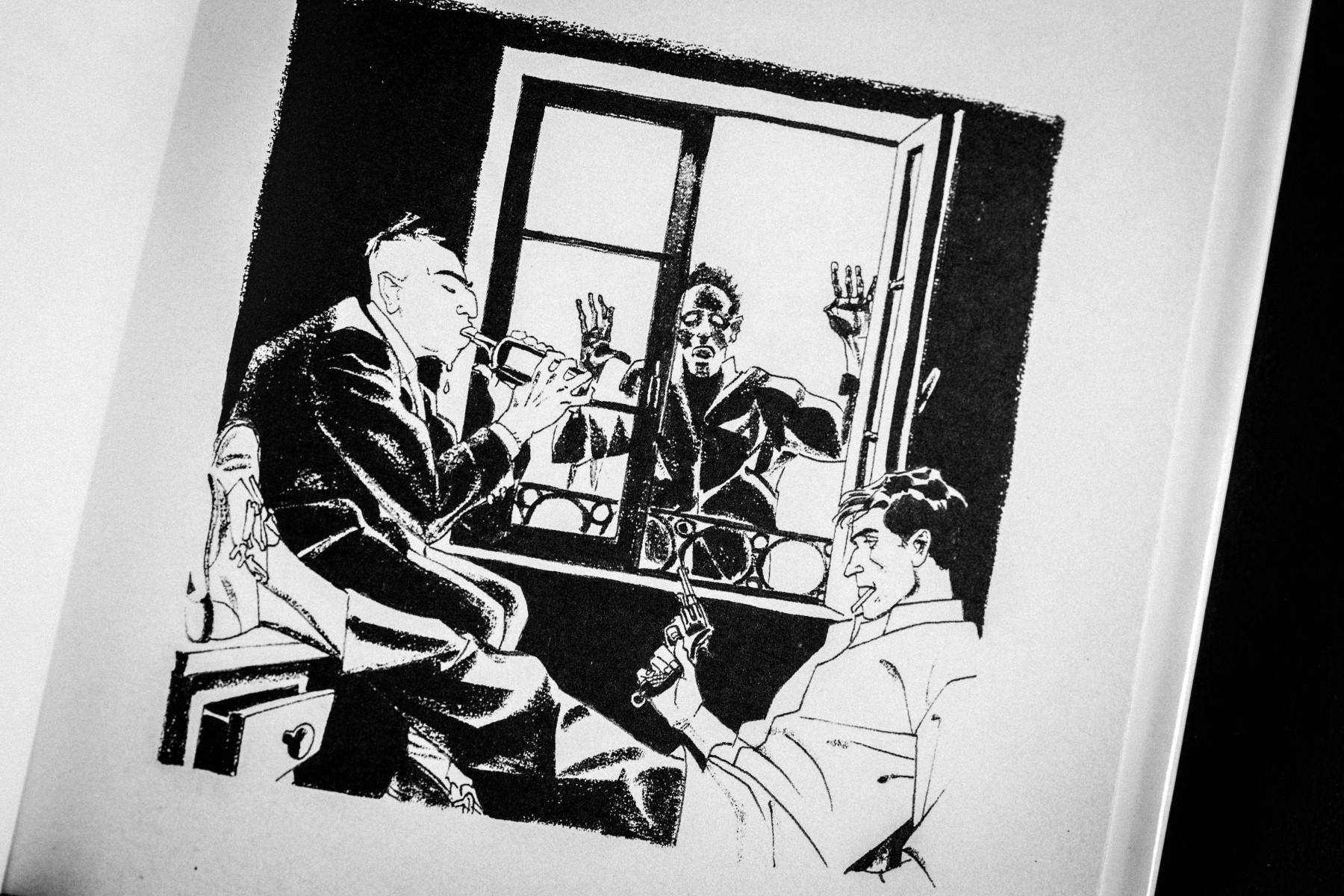
And underneath it all there’s Sclavi’s writing, which mixes gore and supernatural with real grief and real life in a way that shouldn’t work and does. The references are everywhere and never in your face: Romero, Argento, Carpenter, Poe, Lovecraft, King. There’s even one that runs from an Italian songwriter, Fabrizio De André, back to Edgar Lee Masters and the Spoon River Anthology. I absorbed it at 9 as just something Dylan Dog said. The light came on about 20 years later.
The first game nobody talks about
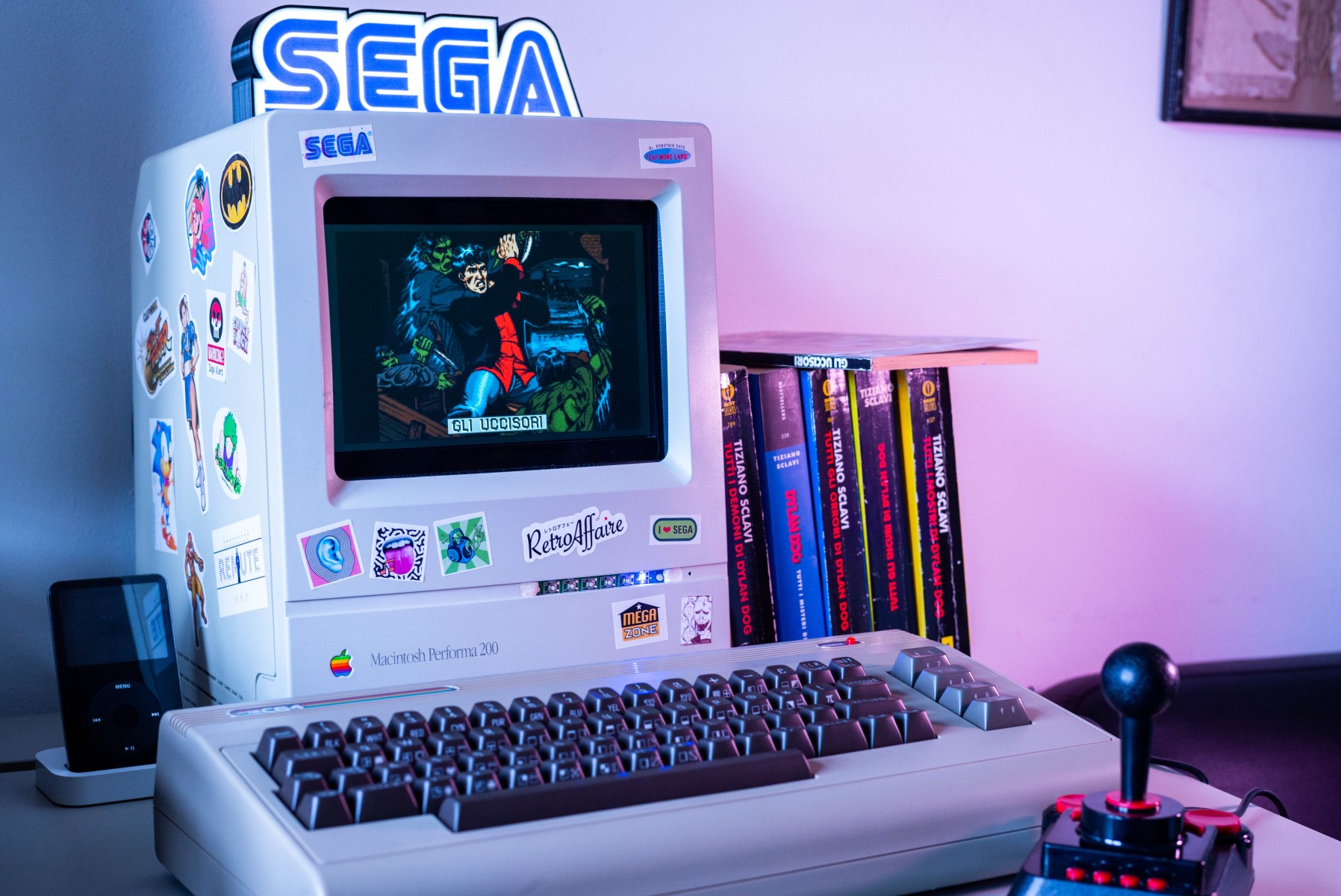
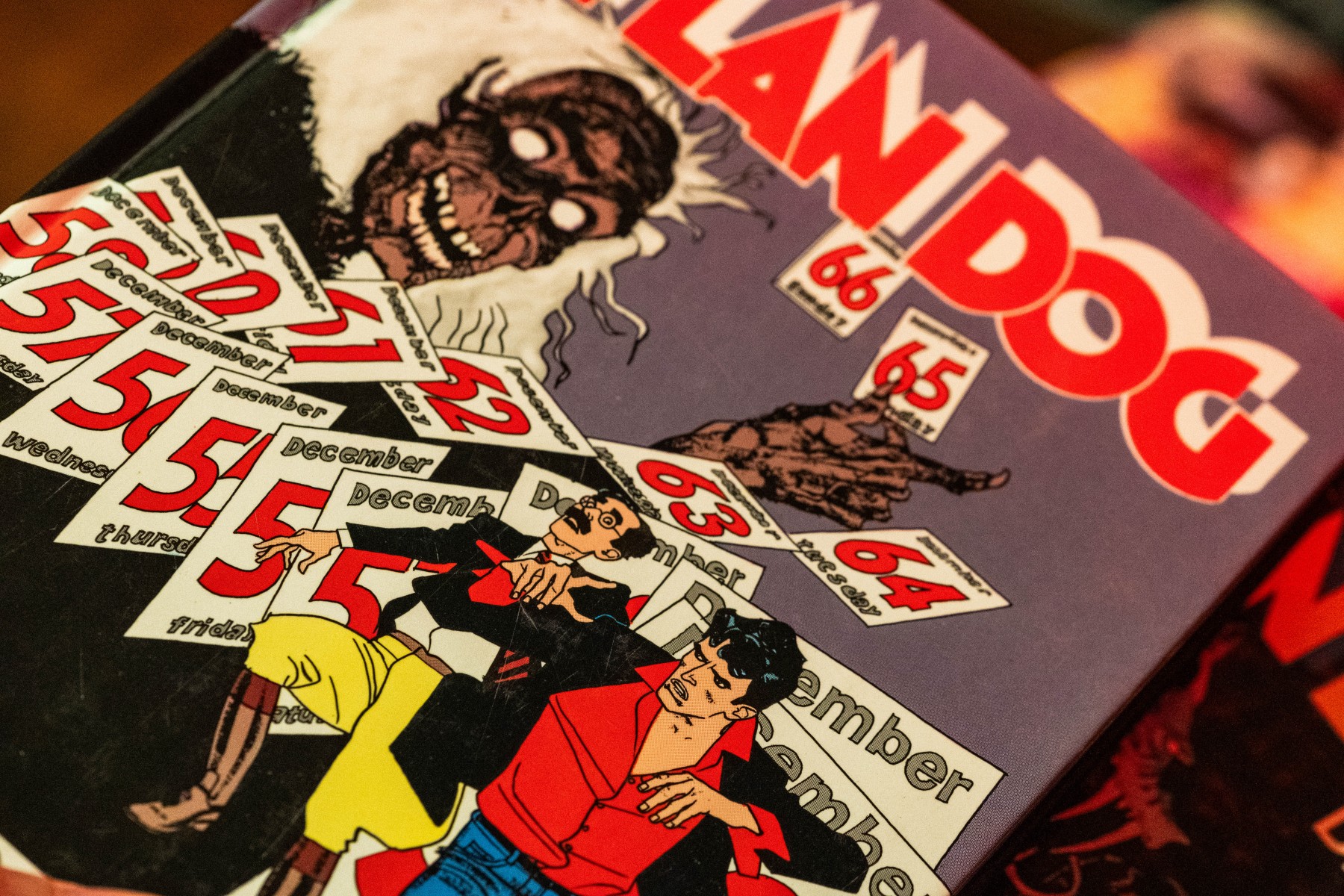
By 1992 the comic had stopped being a comic. T-shirts, specials, exhibitions, a tarot deck illustrated by Angelo Stano, notebooks, pens, badges, lighters, which is funny because Dylan doesn’t smoke. It was on bedroom walls. It was the thing you carried to look like you had an interior life.
And when something gets that big, somebody makes a video game out of it. Except somebody already had, 4 years earlier, and almost nobody tells this part.
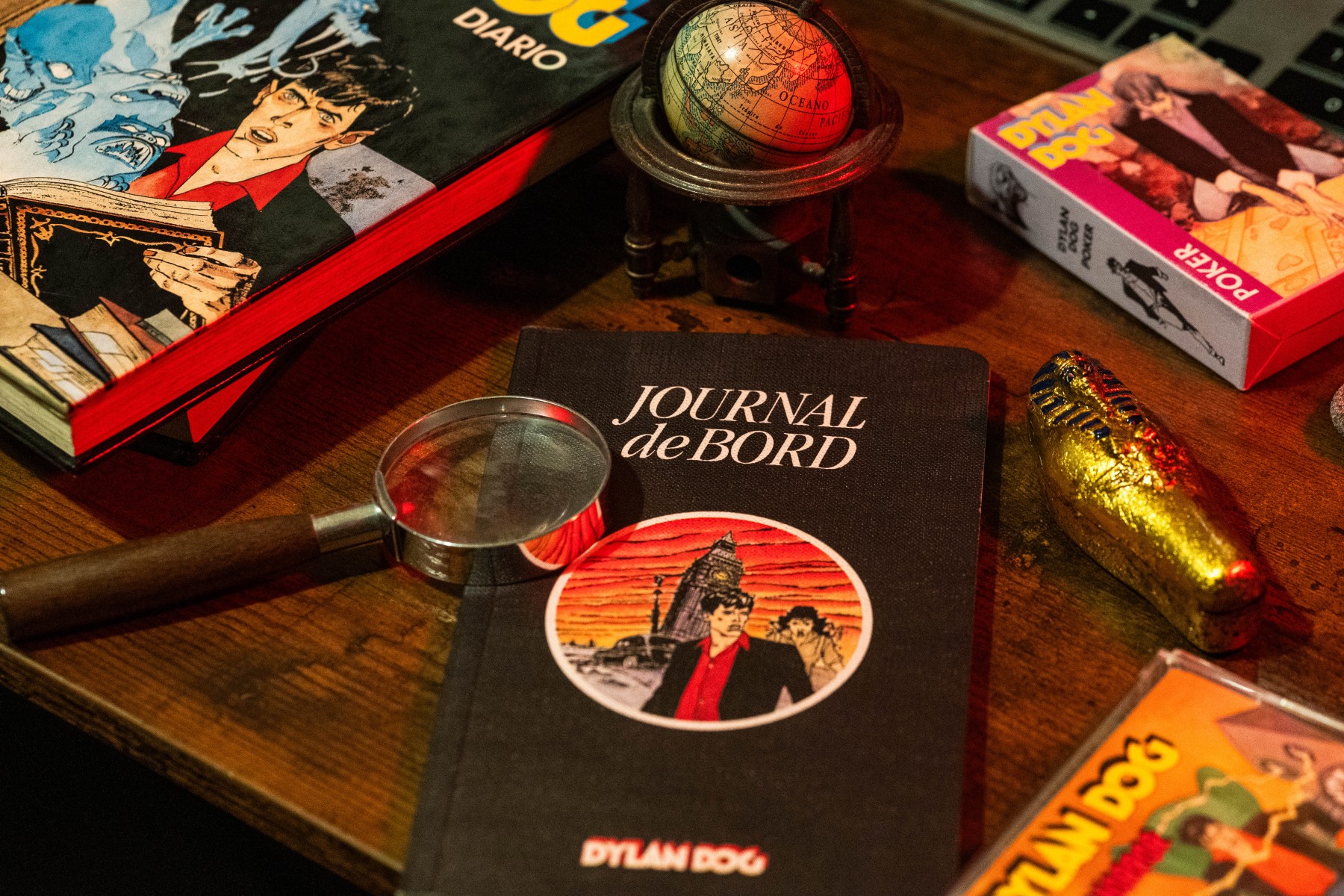
1988. The comic is 2 years old and already big enough to license. A publisher called Systems Editoriale, the people behind the Italian Commodore magazine, put out Knights of the Full Moon on the Commodore 64, named after issue 3. It’s an interactive fiction: text on one side, and on the other a window showing actual panels from the comic. You read, you hit a fork, you choose, the story branches. A gamebook on a disc, and a faithful one. The pixel art is simple but it does a real job of replicating the original drawings. Today it’s very rare.
There was a second game in the same package: Dylan Dog and the Castle of Illusion. Not Mickey Mouse, this time. A simple action game, a bit like Pocky & Rocky, built to get Dylan moving on screen. I finished it in one go.
Here’s the bit that matters. Knights of the Full Moon says “issue 1 of a series” right on the cover. A run of Dylan Dog games, published like a magazine, by a magazine publisher. There was never an issue 2.
Keep that in mind, because in 1992 somebody had the same idea all over again.
Simulmondo
Simulmondo was a software house in Bologna, founded by Francesco Carlà. They made around 150 games across the C64, Amiga, DOS and Atari ST, and they were one of very few Italian studios doing anything at scale at all. Mostly sports.
They also had a habit worth knowing about. They made I Play 3D Soccer, a football game where you control one player, from behind, in 3D, at a point when every other football game on earth was a top-down view of 22 sprites. The English Wikipedia page for Striker still credits I Play 3D Soccer as coming first. It’s also fairly miserable to actually play. You spend a lot of it alone, asking for a pass from teammates who ignore you. That’s the company in one game: first to the idea, some distance behind on the execution.
Simulmondo got the licences. Tex and Dylan Dog from Bonelli, Diabolik, even Spider-Man from Marvel for the whole of Europe. The first Dylan Dog game was The Murderers, 1992, on C64, Amiga and DOS, loosely based on issue 5. Dylan gets invited to a mansion, the wine is poisoned, and some of the guests are the killers. You navigate the rooms, gather keys, fight your way out. If it reminds you of Prince of Persia, that’s not an accident, the animation and the movement borrow from it, just less smoothly. The gameplay is stiff. But the atmosphere holds: the gothic mood of the comic comes through, and the artwork drags a lot of quality into the game with it.
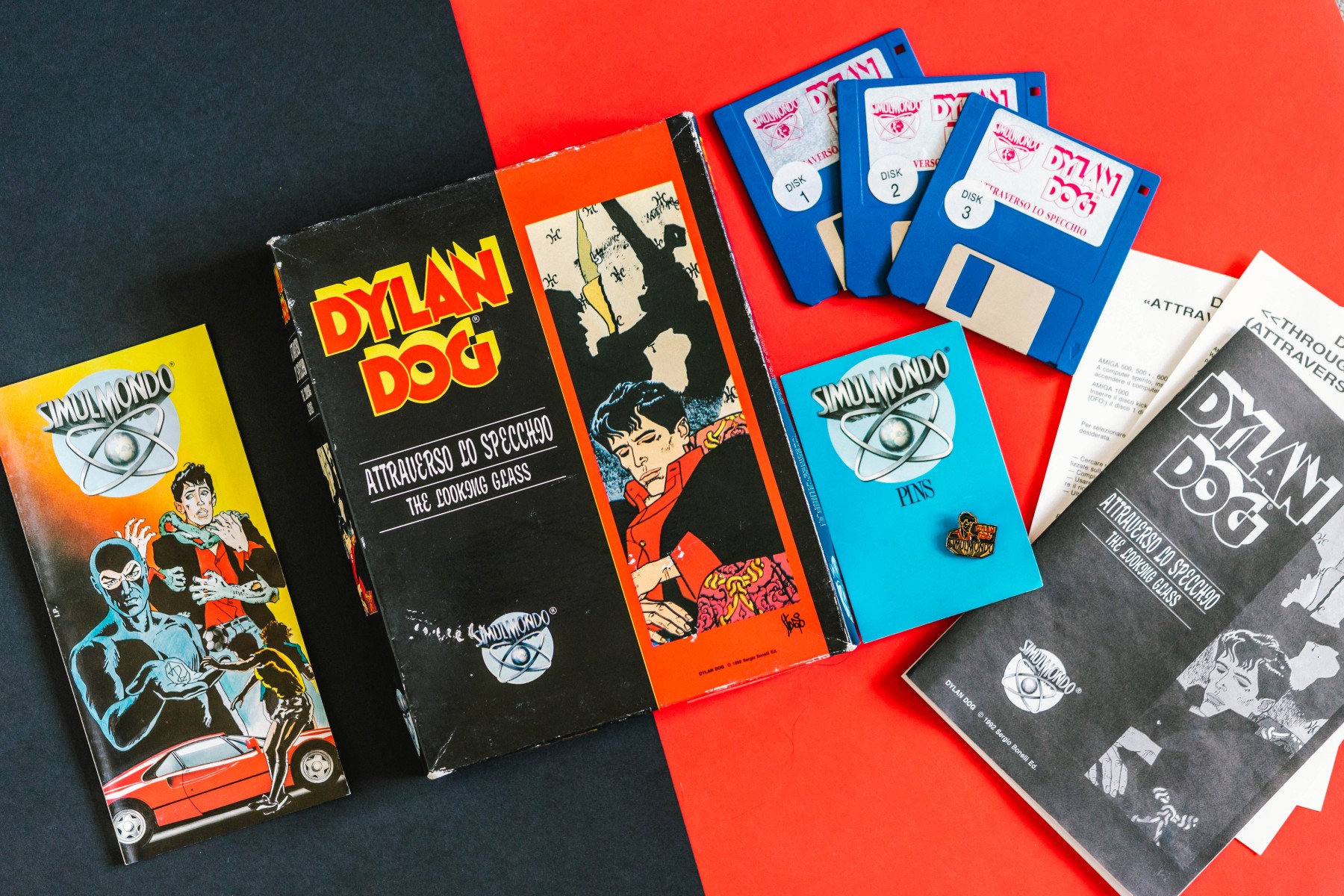
Then there’s the one I actually recommend. Dylan Dog: Through the Looking Glass, early 1993, named after issue 10, and a completely different animal. A point-and-click that drops the slasher-mansion setup and dives straight into Lovecraft, the Necronomicon, an apocalypse triggered by a murdered archaeologist. The interface is odd, a textless mouse system where left click examines and double right click interacts, and it takes a while to get. But the pixel art is beautiful even now, the atmosphere is deep, and the writing is sharp. It even handles failure gracefully: run out of a day without progressing and it resets you to the start of that day instead of killing you, which doubles as a hint that you’re going the wrong way. It’s one of the very few Simulmondo games translated into English. If you take one thing from this whole story, play that one.
They tried it twice
So Simulmondo had an idea for the three licences they were carrying. The comics came out monthly, at the newsstand, cheap. Why not the games?
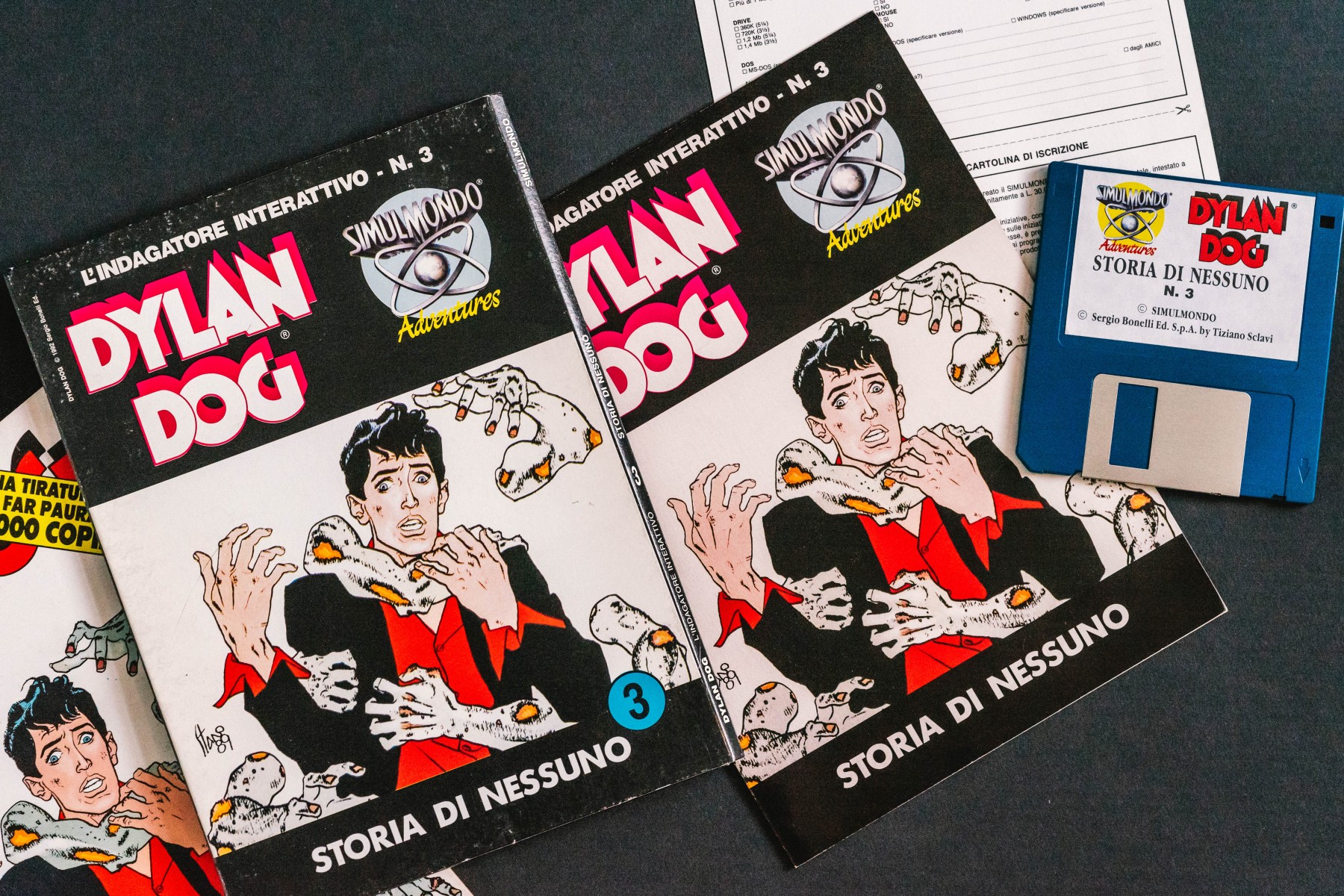
For about 16,000 lire, roughly 17 pounds in today’s money, every month you could buy a new episode. Nobody was selling games like this in 1992. Decades before episodic gaming was a normal thing anyone did, a company in Bologna was shipping one a month to newsagents, because that’s how the comic worked and they saw no reason software should be different.
The first one sold well. Which is where it goes wrong, in a way you can see from outside and absolutely cannot see from inside when the first one sells. A game took Simulmondo roughly 6 months to get from project to master. The newsstand needed a finished game every 30 days. And they were running three licences at once. So how did they manage it?
They didn’t make a new game each time. They made one and re-dressed it. Same engine, same fixed screens, same fight, same animations, with new maps and new sprites on top. Change the layout, draw a couple of interstitial screens, swap the character for the next licence, ship it. If you happened to read all four comics, you were buying four games a month, and under the paint they were the same game. Sometimes they shipped with bugs, and sometimes Simulmondo had to post a second, fixed copy out to the people who’d bought the broken one.
17 Dylan Dog episodes came out between 1992 and 1993. I have 10. And let me be honest, because I love these and they are not good. Every one is the same shape: a platformer with a bit of adventure on top, no scrolling, so you hit the edge of the screen and it stops to load the next room. The combat is stiff. Dylan jumps like a man who has never previously jumped, though to be fair he doesn’t jump much in the comic either, so maybe it’s realistic.
But I was 10, with an Amiga and a comic I was obsessed with, and once a month I could walk to the newsagent and buy the next one. Not wait for a birthday. Not save for three months. And I admire what Simulmondo tried to do, because they were trying to get better. The later episodes push past the platformer: maps to navigate, more of the city, more dialogue, more story. That was the right direction. By 1993 they probably couldn’t keep up with the rhythm, but they were iterating up, not down. That’s commitment, and it’s why they matter to Italian video game history even though the games themselves are rough.
Simulmondo was effectively gone from the mainstream by 1994. The newsstand games were the beginning of the end. I wish they’d pushed harder on exporting them. The Bonelli partnership ended there.
There’s one more Dylan Dog game, Horror Luna Park, from 1999, by Rizzoli New Media, off a Sclavi story. A CD-ROM adventure, a different decade and a different Dylan Dog altogether. I’m only mentioning it to close the loop; it isn’t part of the story I wanted to tell.
The movie
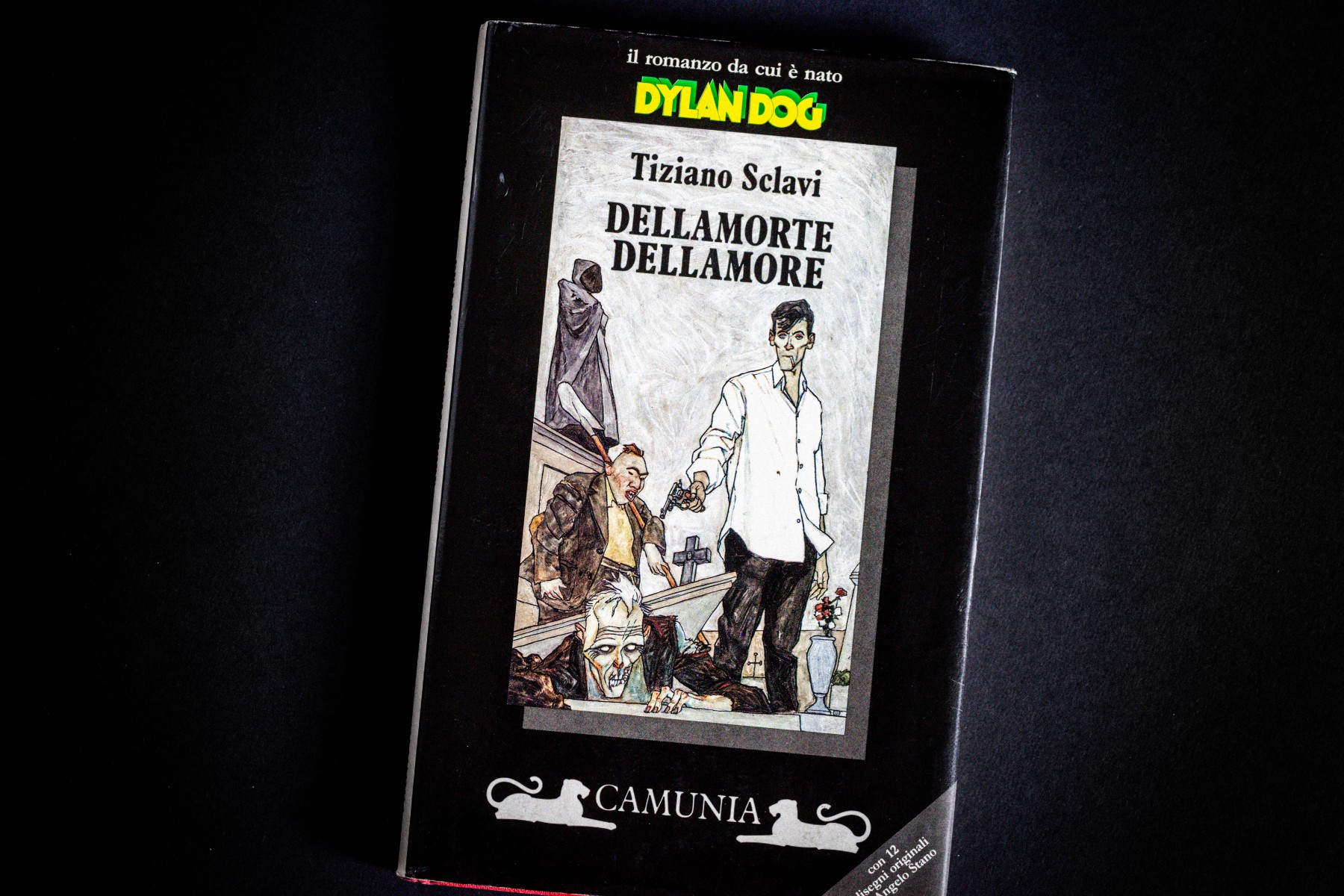
March 1994. I was 12, and I went to the cinema to see the Dylan Dog film. It wasn’t the Dylan Dog film. It was Dellamorte Dellamore, directed by Michele Soavi, Cemetery Man in English, with Rupert Everett as a cemetery caretaker called Francesco Dellamorte. My brother explained afterwards that it wasn’t really him, that this was the character Dylan came from. At 12, that was not a satisfying answer.
Here’s the actual sequence, and it took me 20 years to understand it. Sclavi wrote a novel about Francesco Dellamorte in 1983, 3 years before Dylan Dog existed. It sat in a drawer. There was going to be a comic version in 1985, drawn by Claudio Villa, but the magazine folded. The project died; the artist didn’t. Villa went to Bonelli and drew Dylan Dog, using Rupert Everett’s face. The novel was finally published in 1991, on the back of Dylan Dog’s success. And in 1994 Soavi cast Everett as Dellamorte, the character the whole thing had grown out of.
The face went into the comic. 8 years later it came back to play the character the comic came from. I was 12 and I thought the film had got it wrong. It was the other way round.
Still here
This is where I stop, because this is where the games stop. And because this is where my own first phase with Dylan Dog stops too: 1986 to 1994, my brother’s shelf, the reprints, the newsstand, the disks, a film I was too young for and watched anyway. Not because the comic stopped. There’s a whole club of Italians who quit at issue 100, and I know some of them, and I’m not one. I still buy it. Every time I go back to Italy I come home with at least the latest issue, because living over here it’s the only way I can.
Which is its own strange loop. An Italian in London, buying an Italian comic about an Englishman in London, from an Italian newsagent, to bring back to London. 40 years ago this week, a distributor rang Bonelli and told them the book was dead on the newsstand. It’s still here.
Watch the full video on RetroAffaire
Stay curious. Stay nostalgic.
Because retro never dies, it just respawns.

Leave a Reply