

Introduction
In September 1989 (36 years ago, help!), Atari Corporation released the Lynx, the world’s first handheld game console with a colour LCD screen. This ambitious portable system was co-developed by the seasoned game creators at Epyx and arrived just months after Nintendo’s monochrome Game Boy. It immediately stood out with its bright backlit display and impressive graphics capabilities. Today, 36 years later, we look back at the Atari Lynx: a handheld that was ahead of its time in many, many ways… yet, ultimately became an underdog in the handheld wars of the early ’90s. In this retrospective, we’ll explore the Lynx’s history, its innovative hardware and game library, its tough competition against the Game Boy and Sega’s Game Gear, and the enduring affection it still receives from retro enthusiasts: a cult classic portable that didn’t quite get the spotlight it deserved, but remains a beloved piece of gaming history. Let’s go!

The history of the Atari Lynx
The Lynx’s story begins with Epyx, a California game developer riding high on hits like California Games in the late ’80s. In 1986, Epyx tasked two former Amiga designers, R.J. Mical and Dave Needle (former designers from the Amiga), to create a groundbreaking portable gaming system. Their project, originally codenamed “Handy” (bit weird) aimed to deliver arcade-quality action in the palm of your hand. Epyx unveiled the Handy at the Winter CES show in January 1989, catching the attention of Atari Corporation, who was looking to re-enter the console market. They also got the attention from SEGA! In an alternate universe, we have the SEGA Lynx instead of the Game Gear.
Facing financial trouble, Epyx partnered with Atari to bring the handheld to production. Atari would handle manufacturing and marketing, while Epyx contributed game development. By the time of release, Atari had taken full control (Epyx even went bankrupt shortly after) and the Handy was officially reborn as the Atari Lynx.
The Lynx launched in North America in September 1989 at a price of $179.99, with a bundled game (the mighty California Games) to showcase its multiplayer and sports mini-games fun. Initial reception was positive: a portable that could display up to 16 colours at once, with sprite-scaling (zoom, rotation…) graphics and a backlit screen. Early adopters were impressed by what felt like a “mini arcade” in their hands. In 1989? It was. Atari initially shipped 50,000 units in a limited test market (New York City), and reportedly sold 90% of that stock in the first month. By the end of 1990, the Lynx had sold roughly 500,000 units in the US, a decent start for a newcomer.
Sadly, the good times didn’t last. In 1990, the Lynx rolled out to Europe and other regions (hitting the UK in 1990 and Japan by early 1991), but it was entering an increasingly crowded arena. Nintendo’s Game Boy was already a runaway hit globally, and in 1991 Sega launched the Game Gear, another colour handheld competitor. Atari tried to keep momentum by introducing a hardware revision (the Lynx Mark II) in mid-1991 and cutting prices, but the Lynx struggled to break into the mainstream. By late 1991, total Lynx sales were hovering under the million-unit mark, far behind the Game Boy’s tens of millions. After 1992, Atari’s attention shifted toward its new home console (the ill-fated Jaguar), and support for the Lynx dwindled. Official game development ceased by 1994, and the Lynx was formally discontinued in 1995. In the end, estimates of the Lynx’s total sales vary, but most put it in the ballpark of just 1–2 million units worldwide… a modest figure next to its big rivals.
Hardware details
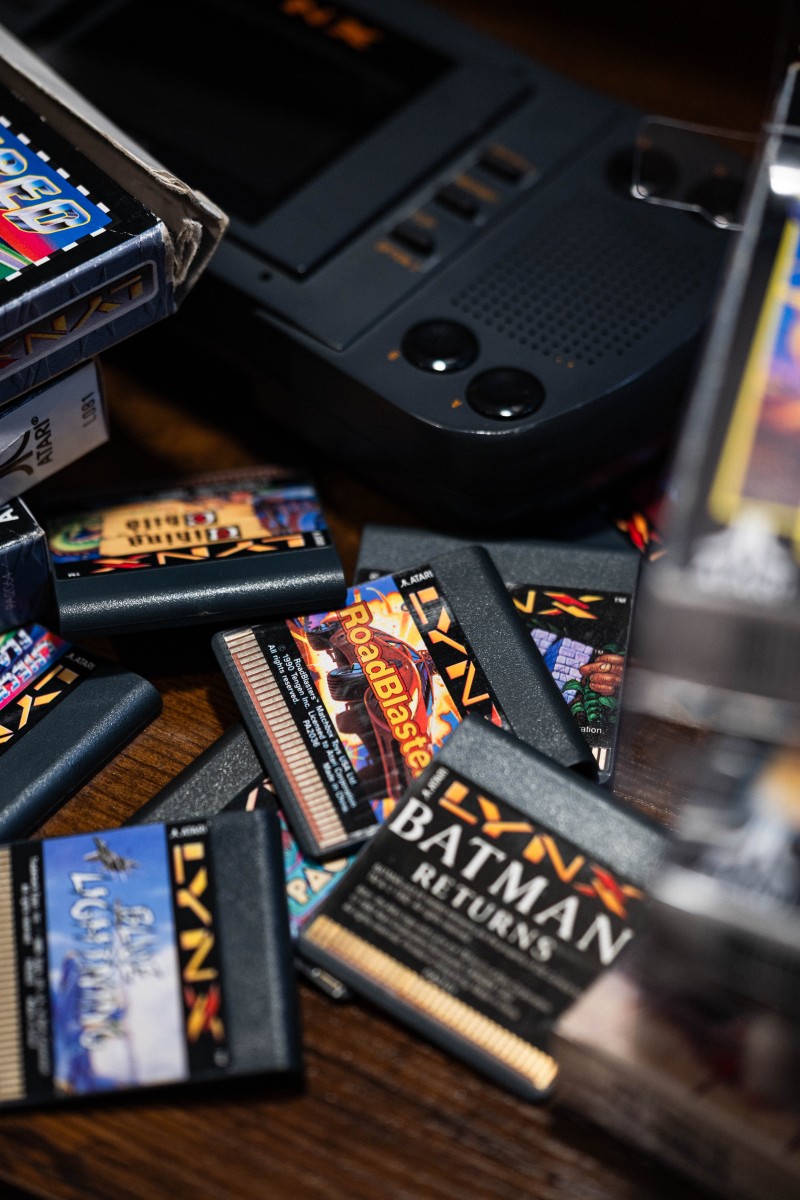
What made the Atari Lynx so special in 1989 was its forward-thinking hardware design. At its core, the Lynx was powered by a custom chipset co-created by its Amiga-veteran engineers. It combined an 8-bit CPU (a 65C02 variant running at 4 MHz) with a 16-bit graphics co-processor nicknamed “Suzy”. This combo allowed the Lynx to do things unheard of on other handhelds of the time: hardware sprite scaling, rotation, and distortion effects were built-in, meaning the Lynx could handle pseudo-3D visuals and smooth zooming animations that the Game Boy (and the Game Gear) couldn’t dream of. The system could display a standard resolution of 160×102 pixels, and while only 16 colours could be shown on screen at once, those colours could be picked from a vast 4,096-color palette. The 3.5-inch TFT LCD was backlit, a huge advantage for playing in any lighting conditions, and it was the first-ever colour, backlit screen on a handheld console. The visuals were striking for 1989: games like Blue Lightning (a fighter-jet action title, similar to After Burner) wowed players with their arcade-like scaling fighter jets and terrains, showcasing the Lynx’s technical muscle.
Audio was another strong point. The Lynx featured a 4-channel sound system with digitized stereo sound (a rarity then). The original Lynx model had a mono speaker and mono output, but it could drive stereo sound through its ComLynx port or later hardware revisions. The upgraded Lynx Mark II model introduced true stereo headphone output, delighting players who enjoyed the rich chip-tunes and sound effects in games. Some Lynx games took full advantage of stereo panning effects, for example hearing an enemy approach from the left or right side.
In terms of controls and form-factor, the Lynx was built for comfort and even ambidextrous play. The console had a unique feature: a “flip screen” option for left-handed gamers. By holding down specific buttons (Pause + Option 2) you could invert the screen orientation 180° and swap the D-pad and face buttons, allowing the Lynx to be played effectively upside-down. This was a thoughtful addition, essentially the Lynx was two controllers in one, catering to both righties and lefties (an innovation still rare in handheld design). The Lynx also sported a ComLynx port for networking multiple units. Incredibly, the system supported daisy-chaining up to 8 or even 16 consoles for multiplayer games (though practically, most games that used linking were 2-player, with a handful like Todd’s Adventures in Slime World supporting up to 8 players co-op). Still, the idea of linking eight handhelds in 1989 was pretty mind-blowing, anticipating the LAN party vibe years before it became common.
One often overlooked but remarkably forward-thinking feature of the Lynx was its ability to support vertical gameplay orientation (or tate mode). Titles like Gauntlet: The Third Encounter were designed to be played with the console held upright, rather than in the traditional horizontal grip. This vertical mode made full use of the Lynx’s screen dimensions and offered a fresh, immersive way to experience certain games. It was a clever and unconventional design choice that wouldn’t be seen again in handheld gaming until much later, arguably not until the advent of systems like the Nintendo Switch. Once again, the Lynx proved it was well ahead of its time.
All this advanced tech did come with a cost, literally and figuratively. The Lynx was a large device for a “portable” handhel, especially the original model (often called Lynx Mark I). The Mark I unit measured about 27cm (over 10.5 inches) long, with a wide, rectangular shape needed to fit its sizeable screen and hardware. It certainly wasn’t fitting in a pocket (most kids carried it in a backpack or in the official Lynx carry case). The weight (over 500g with batteries) made it heftier than the brick-like original Game Boy. Power consumption was another Achilles’ heel: the Lynx required 6× AA batteries to run, like the SEGA Game Gear, and it would exhaust them in roughly 3 to 4 hours of play. The later Lynx Mark II model improved battery life slightly (around 4–5 hours, still on 6 AAs), but compared to the Game Boy which could run 30+ hours on 4 AAs. Many Lynx owners have memories of sitting near an outlet or car lighter with the AC adapter to prolong their game sessions, or constantly swapping in fresh alkalines. The power issue was common to colour backlit handhelds of the era (the Game Gear, for instance, managed only ~3 hours on 6 AAs), but it earned the Lynx a reputation for devouring batteries quickly.
Technically, the Lynx was a marvel: a 16-bit graphics engine, forward-looking features like fast sprite rendering and multiplayer networking, all in 1989. Its hardware design showed what the future of handheld gaming could be, essentially trying to deliver a miniaturized arcade experience. But as we’ll see, cutting-edge specs weren’t enough to secure victory in the marketplace.




Variants and accessories
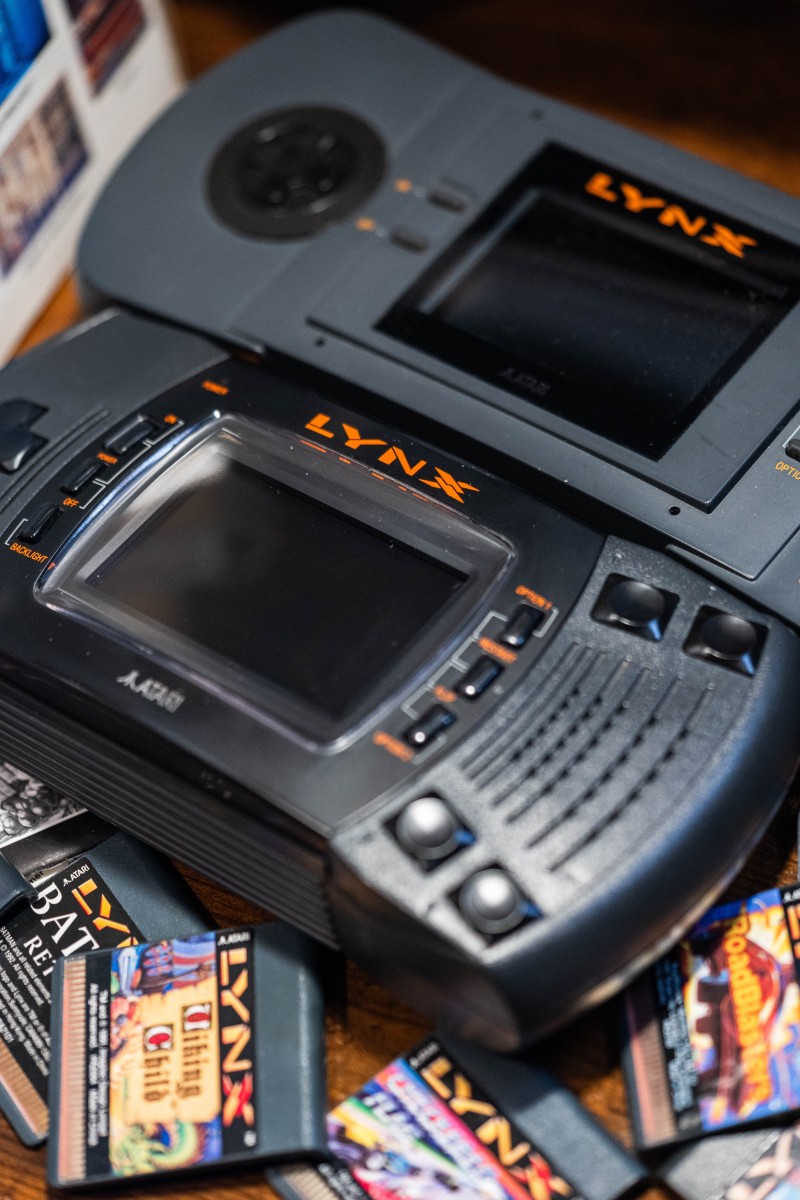
Atari released two major versions of the Lynx hardware during its lifespan, commonly referred to as the Mark I and Mark II models. The original Lynx (Model 1) came out in 1989 and has a distinctive, angular design: it’s larger and has a flat front face with ridged grips. Two years later, in late 1991, Atari introduced the Lynx II, a slightly smaller and more curved redesign. Beyond the change in looks, the Lynx Mark II brought a few welcome improvements and tweaks:
- Better power management: the Lynx II could get about 4–6 hours of gameplay on 6 AA batteries, versus roughly 3–4 hours on the original model. It also added a new power save option, a button to turn off the backlight mid-game to conserve energy (though, of course, turning off the backlight essentially made the screen nearly impossible to see, so this feature was of limited use!).
- Enhanced display: while the core screen technology was the same, the Lynx II’s screen was often said to be a bit “clearer” or improved in quality (I don’t think there’s a lot of difference). Some users found the contrast slightly better.
- Stereo sound: the original Lynx had only a mono headphone jack and mono speaker. The Lynx II introduced a stereo headphone jack, allowing stereo output for games that supported it.
- Ergonomics: The Lynx Mark II is noticeably smaller and lighter compared to the hefty original. It featured comfortable rubber grip inserts on the back, making it easier to hold for long sessions. The controls were also adjusted slightly; for example, the Lynx I’s circular D-pad was replaced with a more precise plus-shaped D-pad on the Lynx Mark II, and the option buttons were made more ergonomic.
Aside from the consoles themselves, Atari supported the Lynx with a modest lineup of official accessories (and of course, third parties added a few as well). Some of the notable ones included:
- ComLynx Cable: a cable used to link two (or more) Lynx units for multiplayer gaming. The Lynx had a unique network capability, and the ComLynx cable enabled head-to-head play on games like California Games, Checkered Flag, Rampart, and cooperative play in Slime World. Up to eight Lynxes could be chained together via multiple cables for certain titles, a feature well ahead of its time.
- AC Adapter and Car Charger: Given the Lynx’s appetite for batteries, the official 9V AC adapter was practically a must-have for home use. Similarly, a Car Lighter Adapter (for 12V DC) was available so you could game in the backseat on road trips without draining batteries. Many a 90s kid remembers being tethered to a wall outlet or car dash as they played their Lynx on long sessions!
- Battery Pack: Atari released a rechargeable battery pack to extend playtime. This pack could be clipped to your belt or placed nearby and plugged into the Lynx’s power jack, providing a few extra hours of portable energy. It added bulk, but for hardcore Lynx gamers it was worth it to keep Hydra or Gauntlet running just a bit longer.
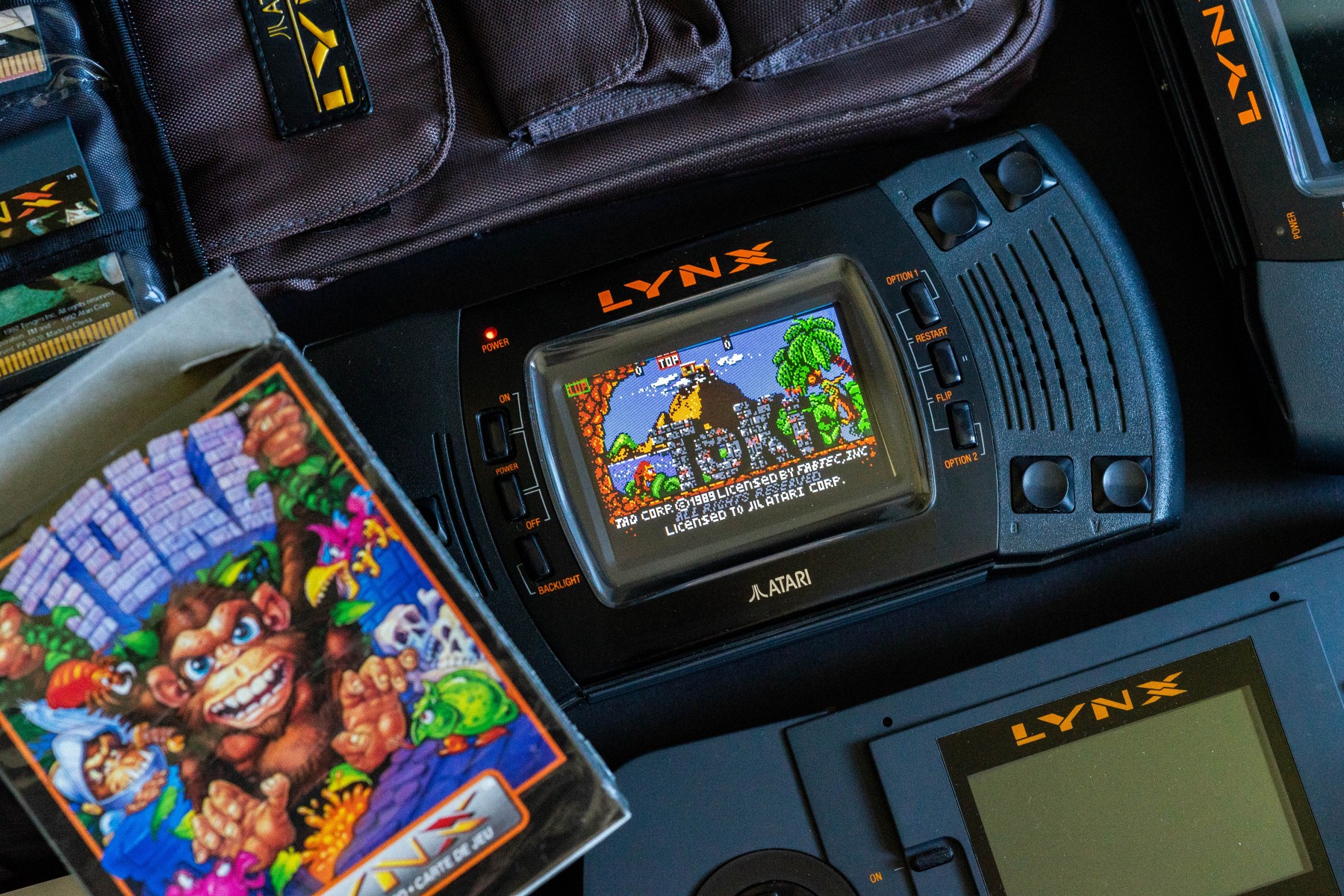
- Official Carrying Cases: Atari offered two types of carry cases for the Lynx. One was a large nylon briefcase-style bag that could fit the Lynx console (even the larger Model 1), plus multiple game cartridges, the power adapter, and other accessories. There was also a smaller Lynx pouch, a form-fitting soft case (with the Atari Lynx logo) that snugly protected the console itself. Both were popular add-ons, not only to transport the Lynx easily, but also to store it safely (that screen needed protection). Many Lynx fans still cherish these official cases as part of their collection: they’re a real blast of nostalgia, emblazoned with 90s Atari branding… I have 2 of the big bags and 1 small case.
Unlike Sega’s Game Gear, which saw many wild third-party add-ons (TV tuners, giant magnifier lenses, etc.), the Lynx’s accessory ecosystem was relatively modest. There were some third-party screen magnifiers and car holders, but overall, Atari’s approach was focused on the essentials: linking consoles, providing power, and carrying the system around. The two hardware revisions (Lynx I and II) didn’t introduce incompatibilities: all Lynx games run on both models, and accessories largely worked across both as well. For collectors, both versions of the Lynx are worth having: some prefer the chunky original for its quirky 80s aesthetic (and slightly larger screen housing), while others love the Lynx II for its improved comfort and reliability. In fact, I fondly remembers trading his Lynx II with a friend’s Lynx I for a while, just because I adored the look of the original model!
Competitors and market challenges
The Atari Lynx entered a fiercely competitive handheld market in the early ’90s, where the Nintendo Game Boy already dominated. Despite its technical superiority, the Lynx struggled against the Game Boy’s simpler design, lower price, long battery life, and unmatched first-party support.
Sega Game Gear posed another challenge, offering similar specs to the Lynx with a backlit color screen and a larger game library, backed by hit franchises like Sonic, Mickey Mouse, Mortal Kombat, Streets of Rage and many others. Although the Lynx slightly edged out the Game Gear in battery life, Sega’s marketing power and broader retail presence helped it secure second place behind Nintendo.
Other contenders like the NEC TurboExpress/PC Engine GT were even pricier and had limited impact. In the end, the Lynx’s combination of high cost, short battery life, limited third-party support, and Atari’s dwindling resources made it difficult to compete. Yet for those who owned one, it remained a beloved underdog with unique features that set it apart… even if most kids on the playground never saw one in the wild.
Game library and legacy
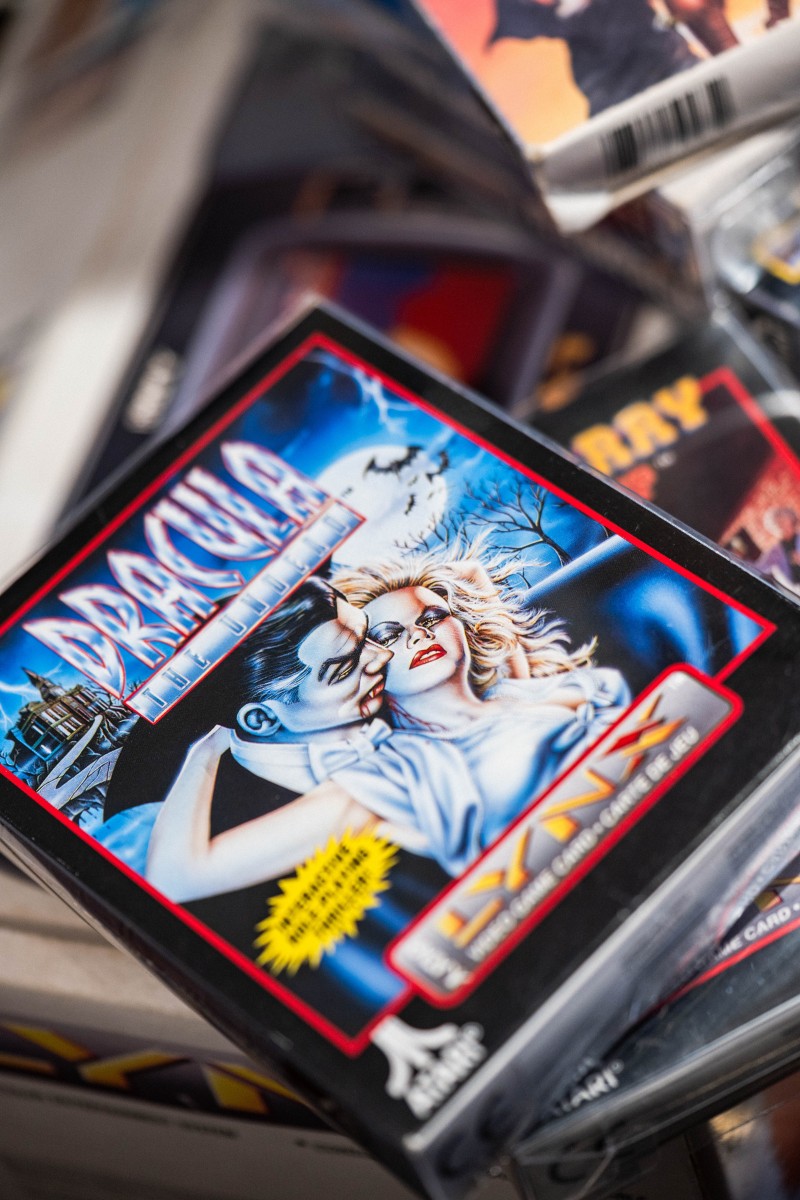
Despite its relatively short commercial life, the Atari Lynx managed to amass a library of around 70 official games during 1989–1994. I own most of them, I still need to haunt down 3 games to complete the library in my collection.
While small next to the hundreds of titles on Game Boy, the Lynx’s catalog was filled with creative and technically impressive games that have earned a place in retro gaming lore. Atari and Epyx provided many of the launch titles, which really showed off what the Lynx could do. For example, Blue Lightning (1989) was a fighter jet combat game inspired by Sega’s After Burner, featuring faux-3D graphics and smoothly scaling aircraft. California Games (1989), which many early Lynx units were bundled with, let players compete in surfing, BMX biking, half-pipe skating and more. It’s one of my favourite games of the platform, even if I just play BMX and Surfing. In 36 years, I never understood how to skate. Another standout was Chip’s Challenge (1989), an addictive top-down puzzle game (guide Chip through mazes to collect computer chips) that was a perfect portable brainteaser.
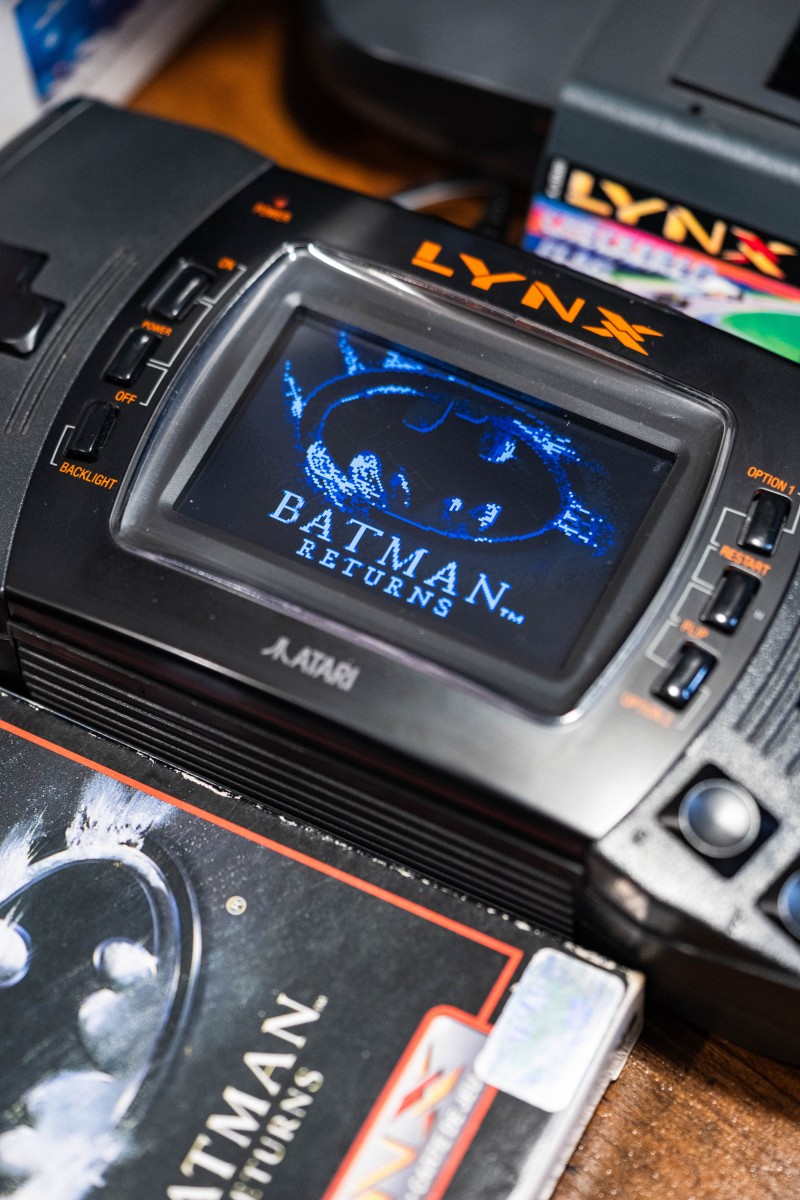
Throughout 1990-1993, the Lynx saw a mix of arcade ports, original games, and even some ambitious genre experiments. Notable games included Todd’s Adventures in Slime World (a cooperative platform adventure supporting up to 8 players via ComLynx), Warbirds (a World War I biplane dogfighting sim in pseudo-3D, with support for linked multiplayer dogfights, not bad), Rampart (the best portable version of the castle-defense arcade hit, complete with link-cable multiplayer), Gates of Zendocon (a side-scrolling sci-fi shooter with over 50 levels, and one of the pack-in titles in some regions), Electrocop (a forward-scrolling 3D maze shooter that felt like a tech demo for polygon-style graphics, very impressive), Klax (a puzzle game which was a pack-in for the Lynx II set, famous for the slogan “It is the nineties and there is time for Klax”), and Batman Returns (a side-scrolling action game with impressive graphics for the time). Many of the Lynx’s games were conversions of popular arcade or computer titles, Atari licensed hits like Rampage, Gauntlet: The Third Encounter, Paperboy, APB and Ms. Pac-Man to bolster the library. While these were often excellent ports (having color and arcade-like sound gave Lynx a leg up over Game Boy versions), the system lacked the exclusive killer-app characters that Nintendo and Sega had. There was no Mario or Sonic equivalent on Lynx; instead, its identity was tied to these eclectic arcade experiences and Epyx’s computer game heritage.
By 1993, new Lynx releases were drying up as Atari’s focus shifted and third-party support waned. The final official Atari-published game was Battlezone 2000 in 1995 (released in very limited quantities). Interestingly, a few additional games trickled out after the Lynx’s “death”: independent publisher Telegames released three Lynx titles between 1997 and 2000, including Bubble Trouble and Super Asteroids/Missile Command (yeah I don’t have these two), selling them via mail-order to the hardcore fans who were still out there. This extended the Lynx’s life just a bit and hinted at the dedicated community that the Lynx had earned.
Over the years, the Lynx’s legacy has become that of a “forgotten pioneer”: a device that introduced features now standard in handheld gaming, but which few at the time got to fully appreciate. Its influence can be seen in how later portables evolved. Culturally, the Lynx didn’t penetrate pop culture the way Game Boy or even Game Gear did… you won’t spot it much in ’90s movies or hear it referenced in cartoons of the day. Yet among gaming enthusiasts, the Lynx gained a cult following (I’m one of those). It was that cool gadget only a few kids had, but those who did swore by its coolness. Owning a Lynx in the ’90s instantly made you a bit different, you were the kid who didn’t follow the Nintendo crowd.
Modern mods and the Lynx revival
The Atari Lynx may have been a commercial underdog, but it has experienced a kind of small resurrection in the hands of enthusiasts and modders in the decades since. Just as with other retro consoles, a passionate fan community has kept the Lynx alive and even improved it with modern technology.
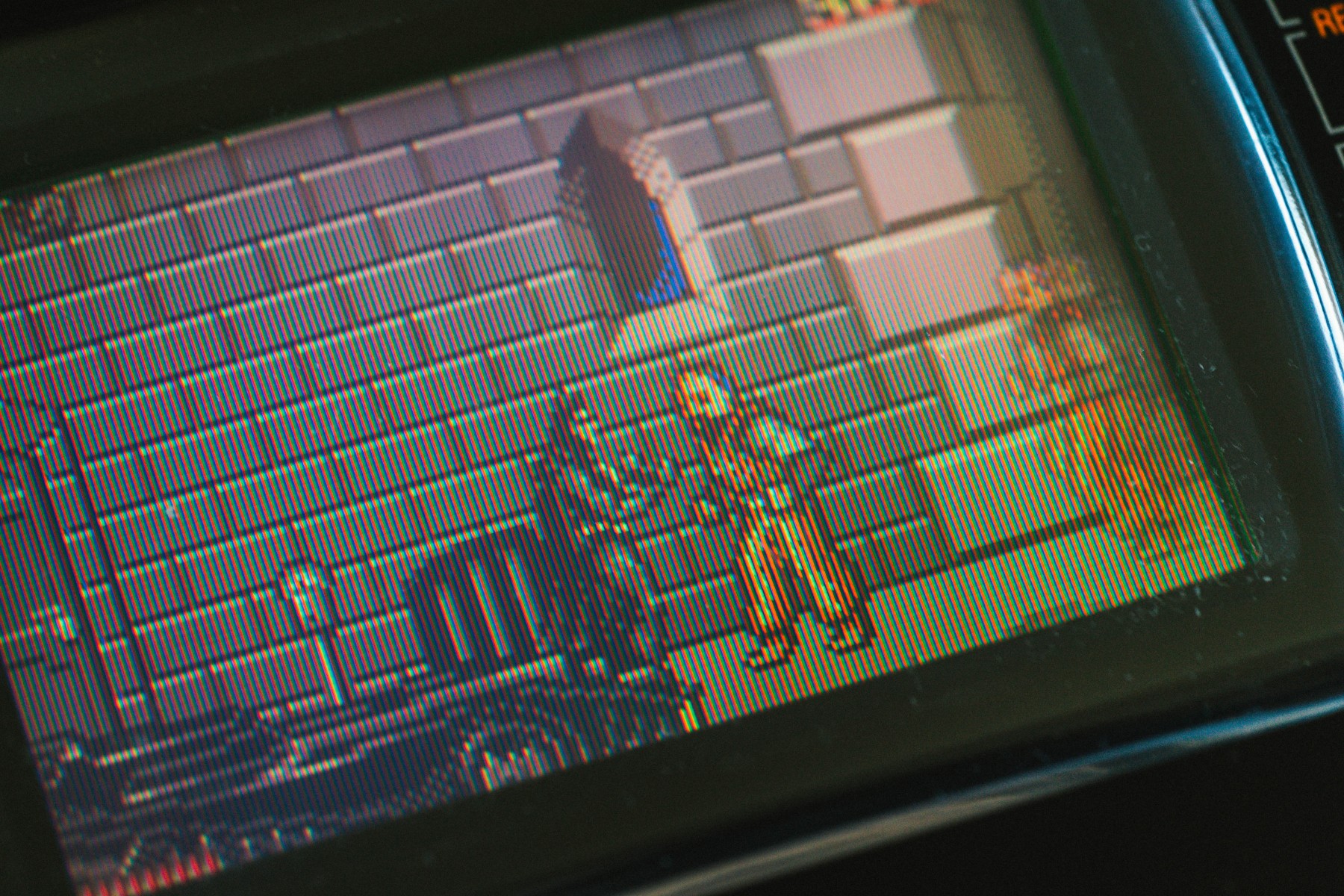
One of the most popular upgrades is the LCD screen mod. The Lynx’s original LCD, while groundbreaking in 1989, looks quite dim and ghosty by today’s standards (and many units have aging screens that have only gotten blurrier). Modern mod kits, such as the famed McWill LCD mod, allow you to replace the Lynx screen with a crisp modern display. The difference is night and day (quite literally) the new screens are much brighter, with better contrast and no motion blur, making the games far more enjoyable to play today. As a bonus, these modern screens tend to draw less power than the old backlight lamps, often effectively doubling the battery life of the Lynx after installation. Some mods even add cool features like VGA output (allowing you to hook your Lynx up to a monitor or TV).
The game media has seen a revival too. Back in the day, Lynx games came on ROM cartridges ranging from 128KB to 1MB in size. Today, fans have developed flash cartridges and SD card adapters that let you carry the entire library (and homebrew titles) on one cart. Devices like the RetroHQ Lynx GameDrive or BennVenn’s carts provide an easy way for collectors to play their games without swapping fragile vintage carts, and also to enjoy newly developed games. Yes – new games! – the Lynx has an active homebrew scene. Throughout the 2000s and 2010s, dedicated developers released new titles and even finished prototypes that were left incomplete in the ’90s. For instance, hobbyist publisher Songbird Productions acquired rights to several unfinished Lynx projects and has published them in physical cartridge form. Notably, in 2022 Songbird released Quadromania (a previously unreleased puzzle game), and in 2025 they even announced plans to finish and release Ultravore, an unreleased one-on-one fighting game originally started in 1993. The fact that we’re seeing brand-new releases (in 2024–2025!) for the Lynx is a testament to the small but fervent fanbase keeping the console alive.
Moreover, modern technology has provided new ways to experience Lynx games beyond the original hardware. A prime example is the Analogue Pocket, a high-end FPGA-based modern handheld. In 2022, Analogue released an adapter that allows original Lynx cartridges to be played on the Pocket. This means you can pop in a Lynx game and enjoy it on a razor-sharp modern screen with perfect emulation of the hardware, effectively giving the Lynx library a new lease on life for those lucky enough to have this device (I show this adapter in the video).
Personal memories and reflections
I had an Atari Lynx in the early 90s and I have a very personal attachment to this underappreciated handheld. I remember having the Game Boy first, then sold to finance the Game Gear, then sold to buy the Lynx, I believe, but could be the other way round… I don’t remember, it was a while ago! But in an era when most of my friends were either plunking away at grayscale Tetris on their Game Boys or (if they were lucky) racing through Sonic on a Game Gear, I was the odd kid proudly toting an Atari Lynx. And I loved every minute with it (I even had 1, one, friend with another Lynx!).
One of my fondest memories is actually trading my Lynx with a school friend for a short period, I had the sleeker Lynx Mark II and he owned the original Lynx Mark I. We swapped because, quite simply, I was in love with the Mark I’s design! I found it cleaner and more elegant, even nicer to use. For a few weeks, then of course, eventually we traded back… This kind of swap might seem silly, but as kids we were just excited to try out every version of the console. It speaks to how much we appreciated the Lynx hardware itself, not just the games.
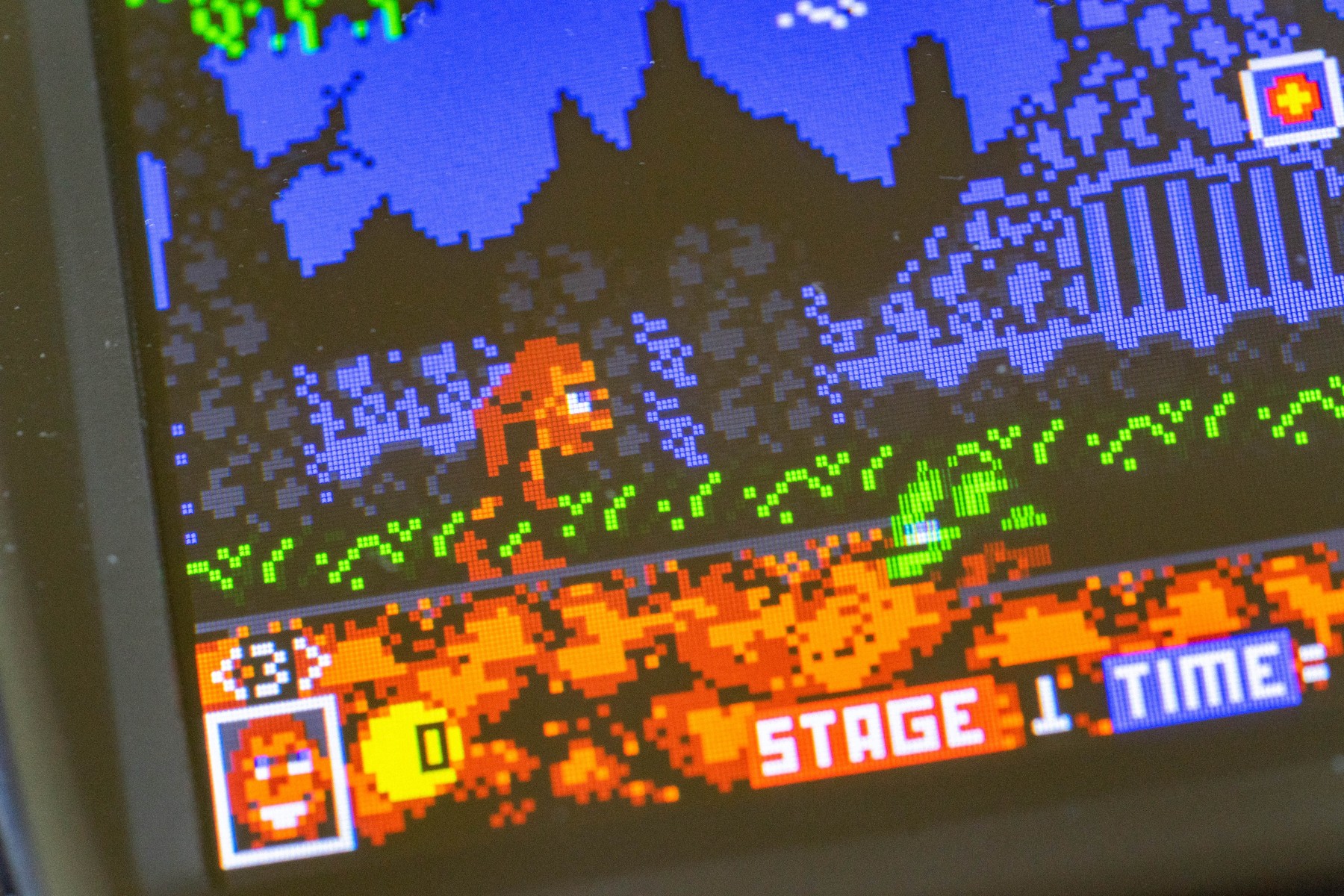
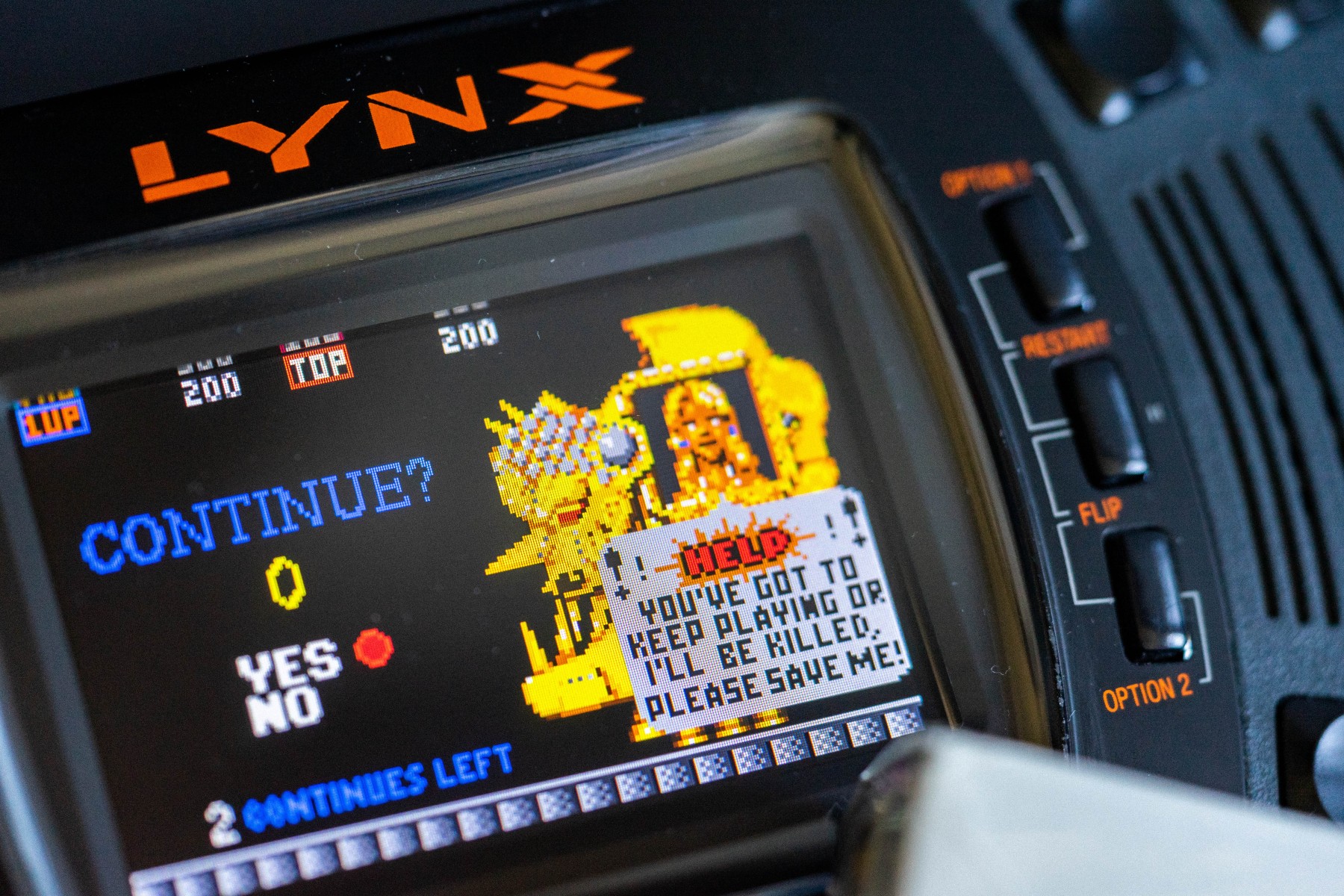
I also vividly remember owning the official Atari Lynx carry case, in fact, I had (and have) both the large travel bag and the smaller pouch. The large case was almost as big as a briefcase to my young eyes; it could hold the console, a stack of game cartridges, and even the AC adapter and ComLynx cable. I used to pack it up whenever I went on a family trip, proudly slinging it over my shoulder. Pulling out the Lynx during long car rides (with the car adapter plugged in). I could immerse myself in Toki (probably the best arcade conversion!) or try to beat my high score in Blue Lightning while ignoring the hours on the road. The smaller Lynx pouch was more for everyday use; I’d use it when I just wanted to bring the Lynx (and maybe a couple of carts) to a friend’s house down the street. These accessories might seem trivial, but they’re tied to memories, the sight of that Lynx logo on the bag still instantly takes me back to being a kid in the 90s.
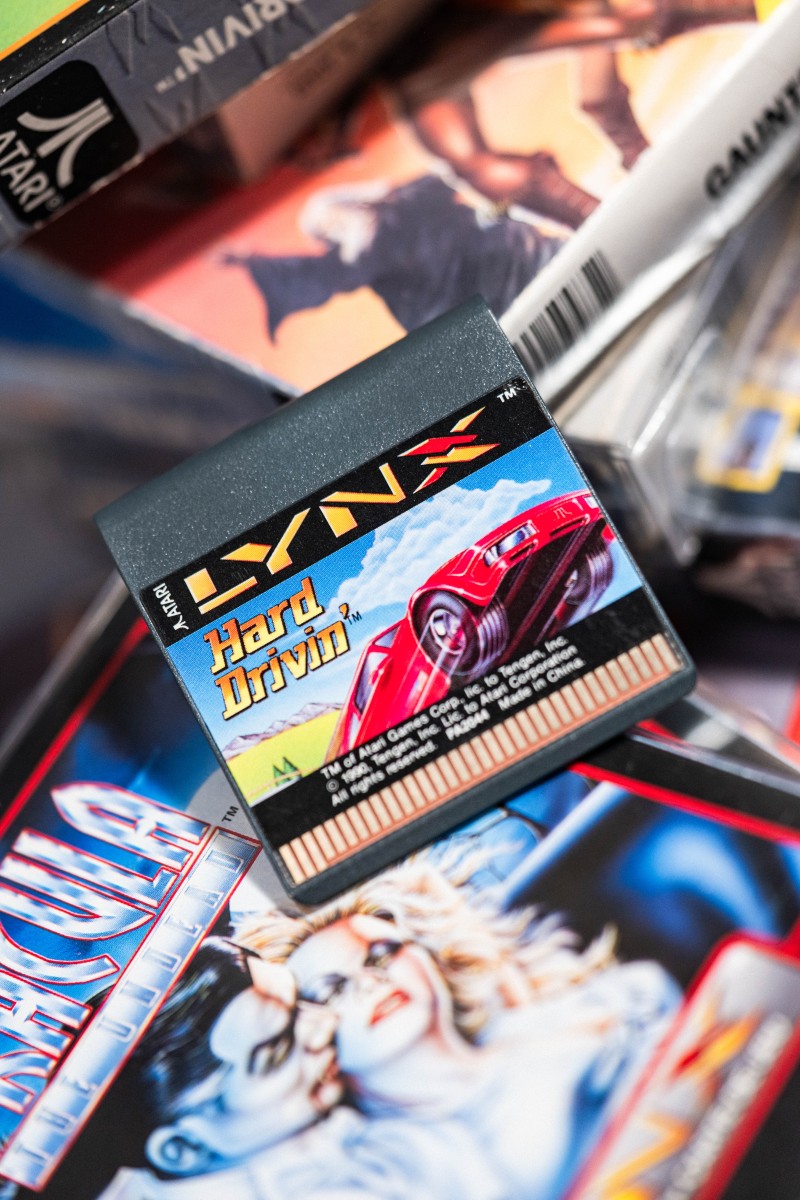
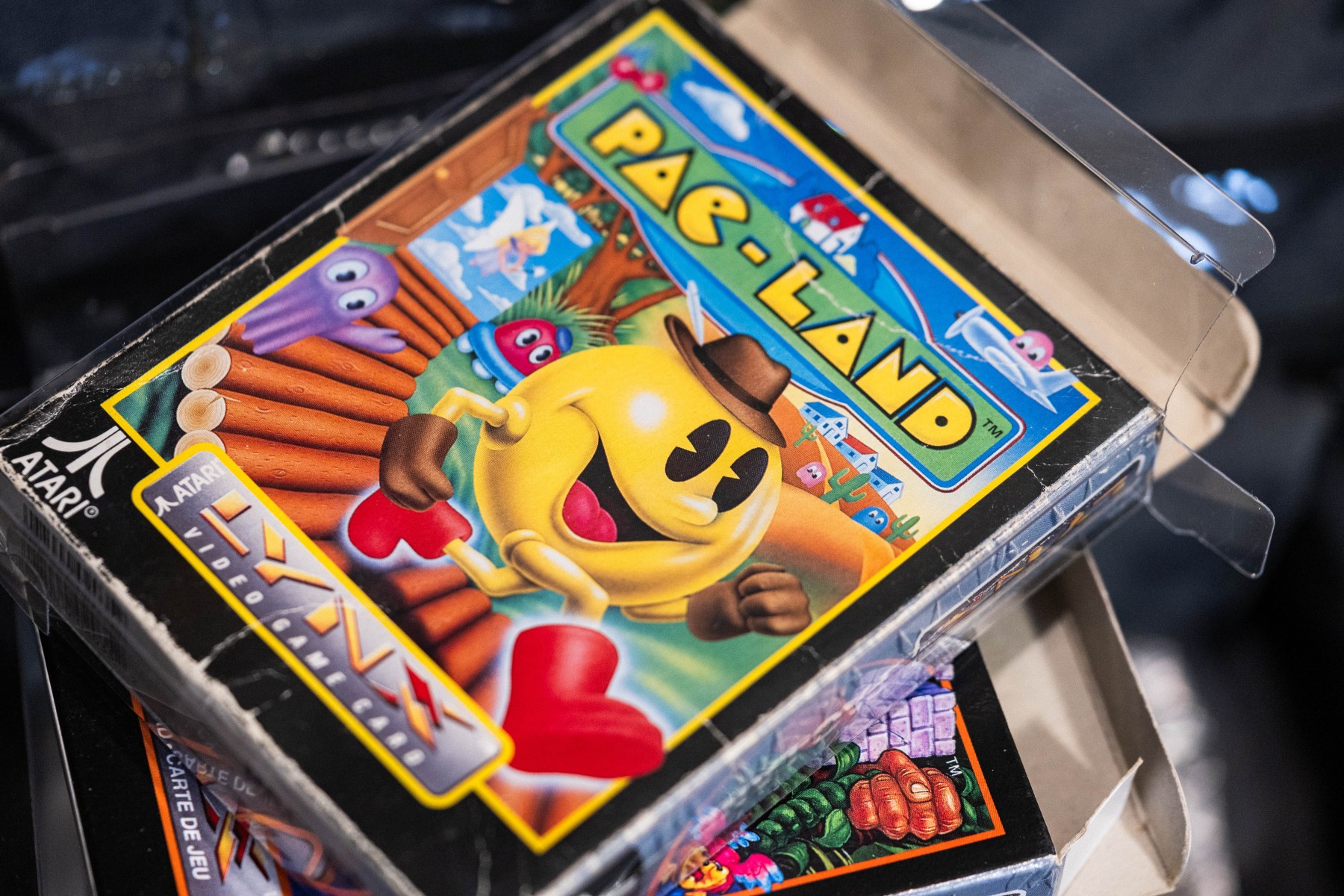
Game-wise, I had a modest collection back then (though today I’ve managed to collect almost every Lynx game released, only a few elude me!). The games I did have, I played to death. California Games was a constant favorite, especially the surfing and the BMX and the Surfing; I got absurdly good at both of them (in the video not so much, but to be fair to myself it’s not easy to play and record). Pac Land, Batman Returns (jeez that’s difficult), Warbirds, Blue Lightning, Checkered Flag, Hard Drivin’, Rampart, Viking Child, RoadBlasters, and Toki… These are the games I remember playing back in the day, and remember fondly… all of them apart from World Class Fussball/Soccer. Jeez what at S**ITSHOW.
Looking back, I truly consider the Atari Lynx a great handheld that never got its due. It sat in an uncomfortable spot between the Game Boy’s simplicity and the Game Gear’s marketing hype and it just never captured the market despite its merits. But for those of us who did own one, the Lynx was a treasured device. It felt like our little secret, a powerful, colorful gaming system that only a select few knew about. To this day, I feel it deserved better. Atari had actually crafted a superb piece of hardware with some genuinely fantastic games, but timing and competition were not in its favor.
In 2025, as we reflect on 36 years of the Atari Lynx, it’s heartwarming to see it remembered so fondly. I still occasionally fire up my Lynx (now with a modern LCD mod) or play Lynx games via the Analogue Pocket, and it amazes me how those old feelings come rushing back. The Lynx may be a forgotten innovator to the wider world, but to me and its community of fans, it will always hold a special place. Here’s to the Atari Lynx: the portable wonder that proved that sometimes the best gaming memories come from the most unlikely of consoles.
Stay curious. Stay nostalgic.
Because retro never dies, it just respawns.


Leave a Reply