
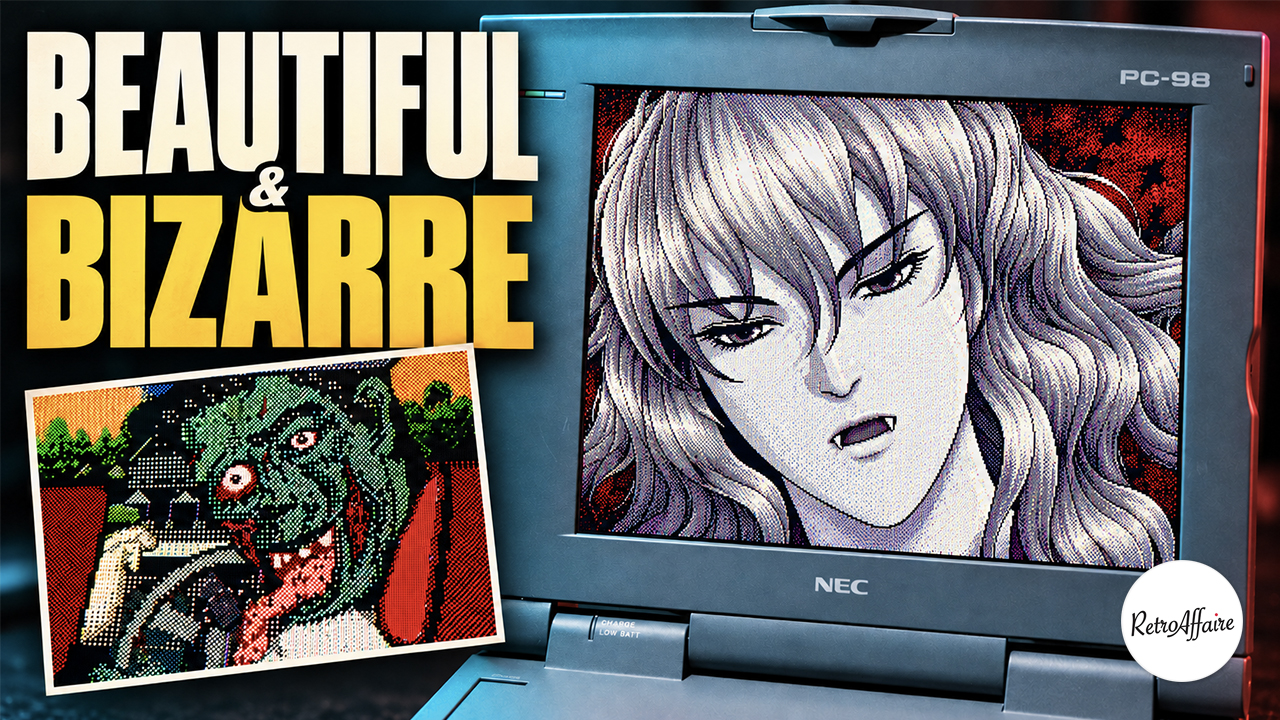
There’s a little Japanese town that looks quite welcoming. Then your taxi driver turns into a monster.
I rather like that about these old NEC adventures. You can be admiring the pixel art one moment and wondering what on earth you’ve walked into the next. Finding the command that gets you out of trouble can take considerably longer.
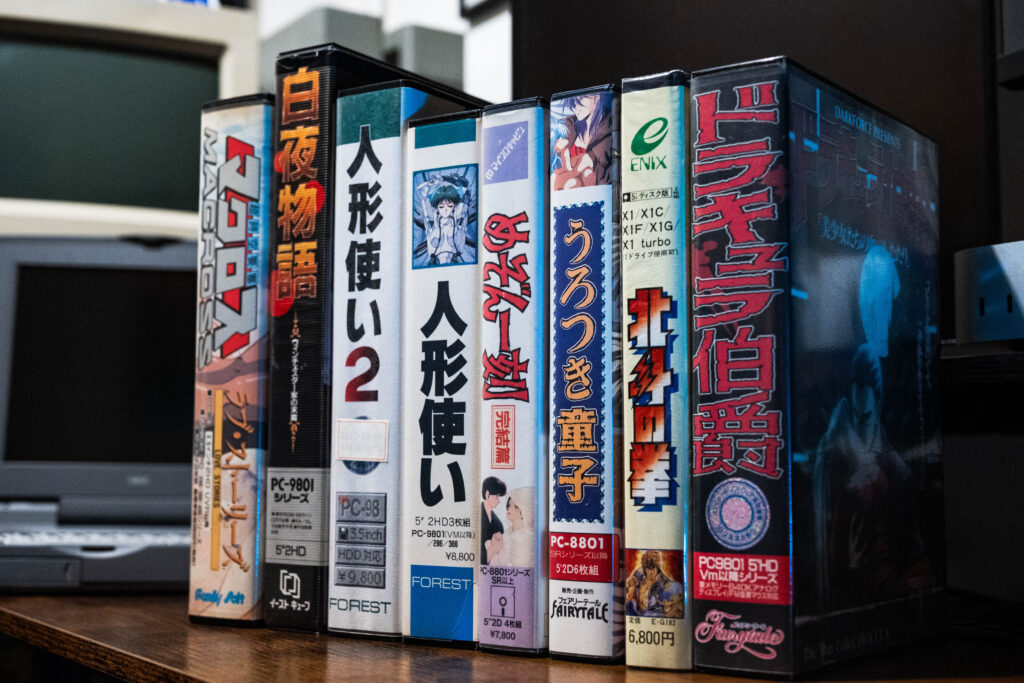
I’ve been drawn to the PC-88 and PC-98 since I started visiting Japan in 2001. The games looked like illustrations I could step inside, with faces and colours that stayed with me long after I’d put a box back on the shelf. Over the years, quite a few of those boxes have come home with me.
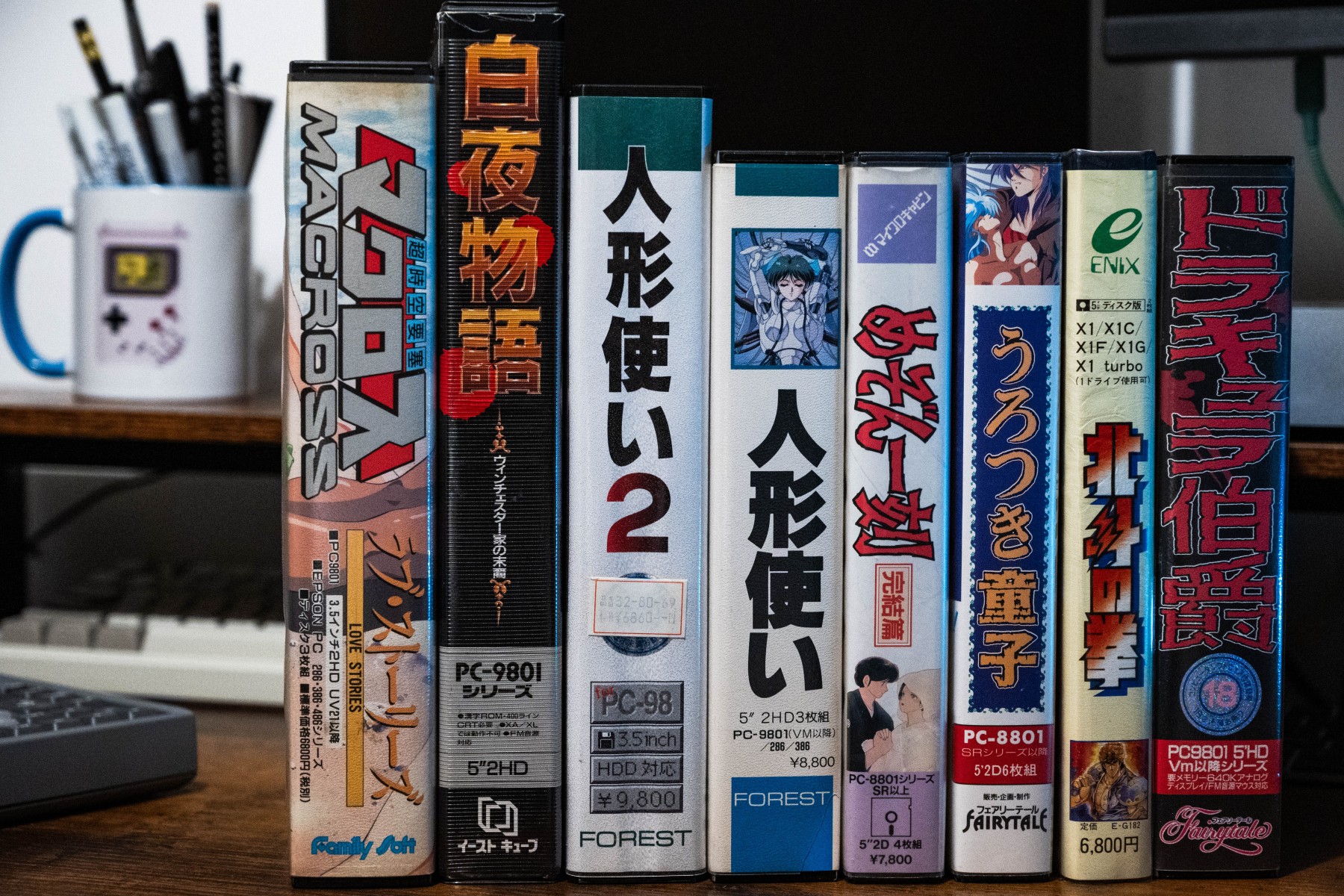
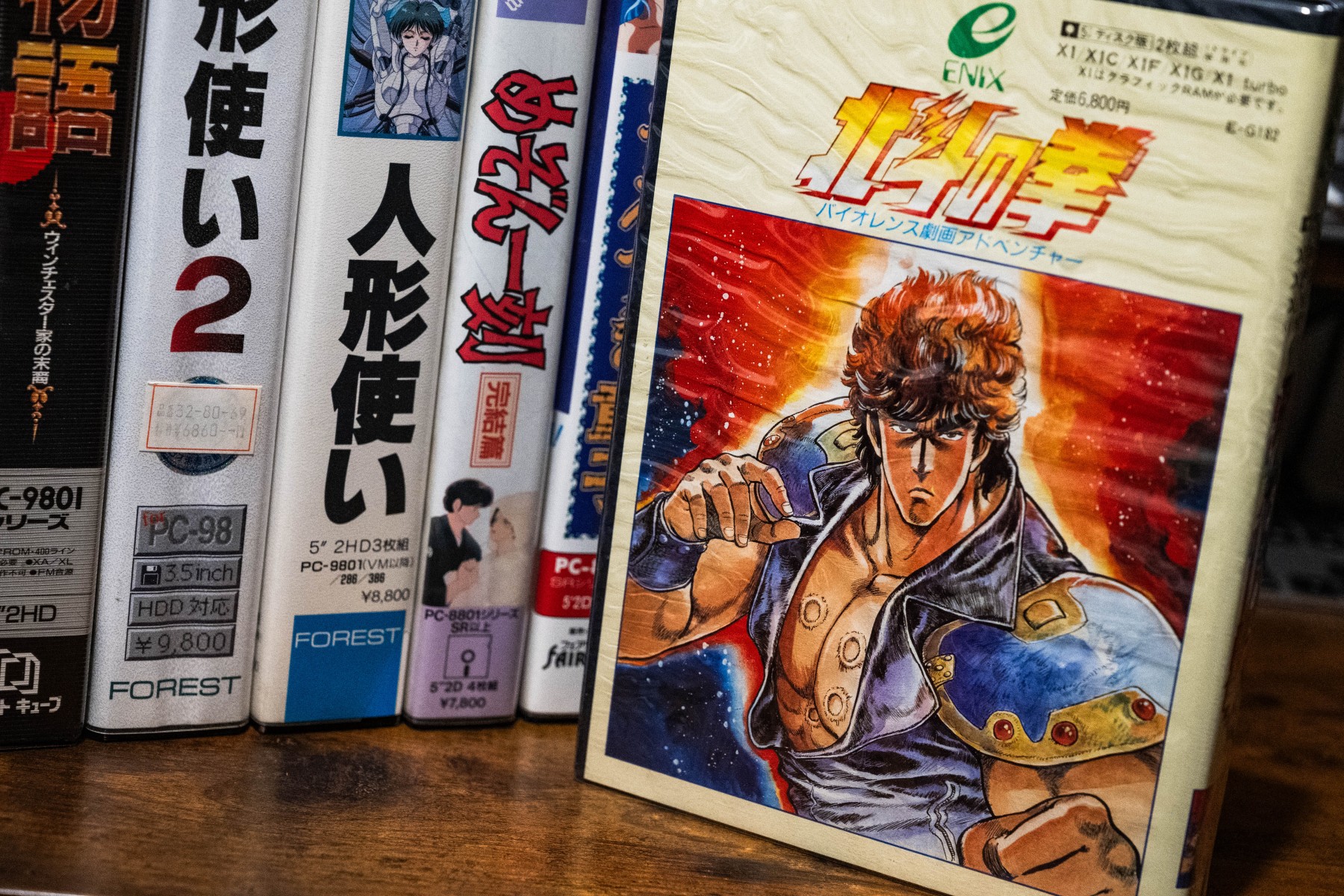
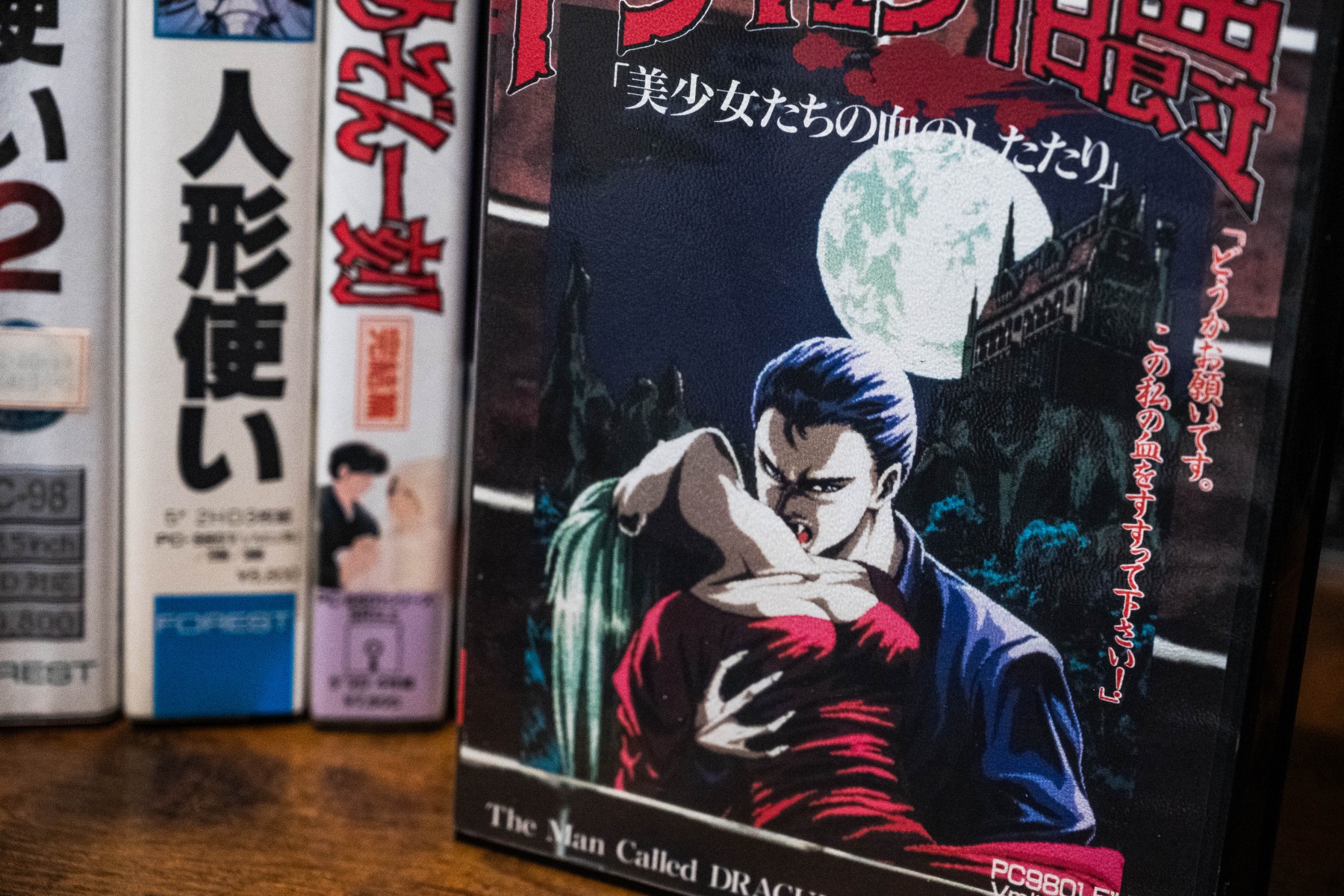
For this video, I chose three games from my collection: Hokuto no Ken, Dracula Hakushaku and Byakuya Monogatari. I wanted to spend some time inside those pictures. First, I had to put the computer back together.
Watch Japan’s Other Gaming World: NEC PC-98 & PC-88 on YouTube.
A little NEC I could bring home
Importing a complete desktop setup from Japan meant finding room for the computer and its monitor, then getting both here intact. A little 98NOTE Light seemed a much more manageable proposition. It cost me £67.
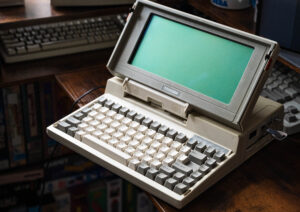
Mine is a PC-9821Lt/540A, announced in February 1995, with a 50MHz 486DX2 processor and a 9.5-inch colour TFT screen. The keyboard fills most of its width, with a little thumb ball above it. It’s a lovely compact thing.
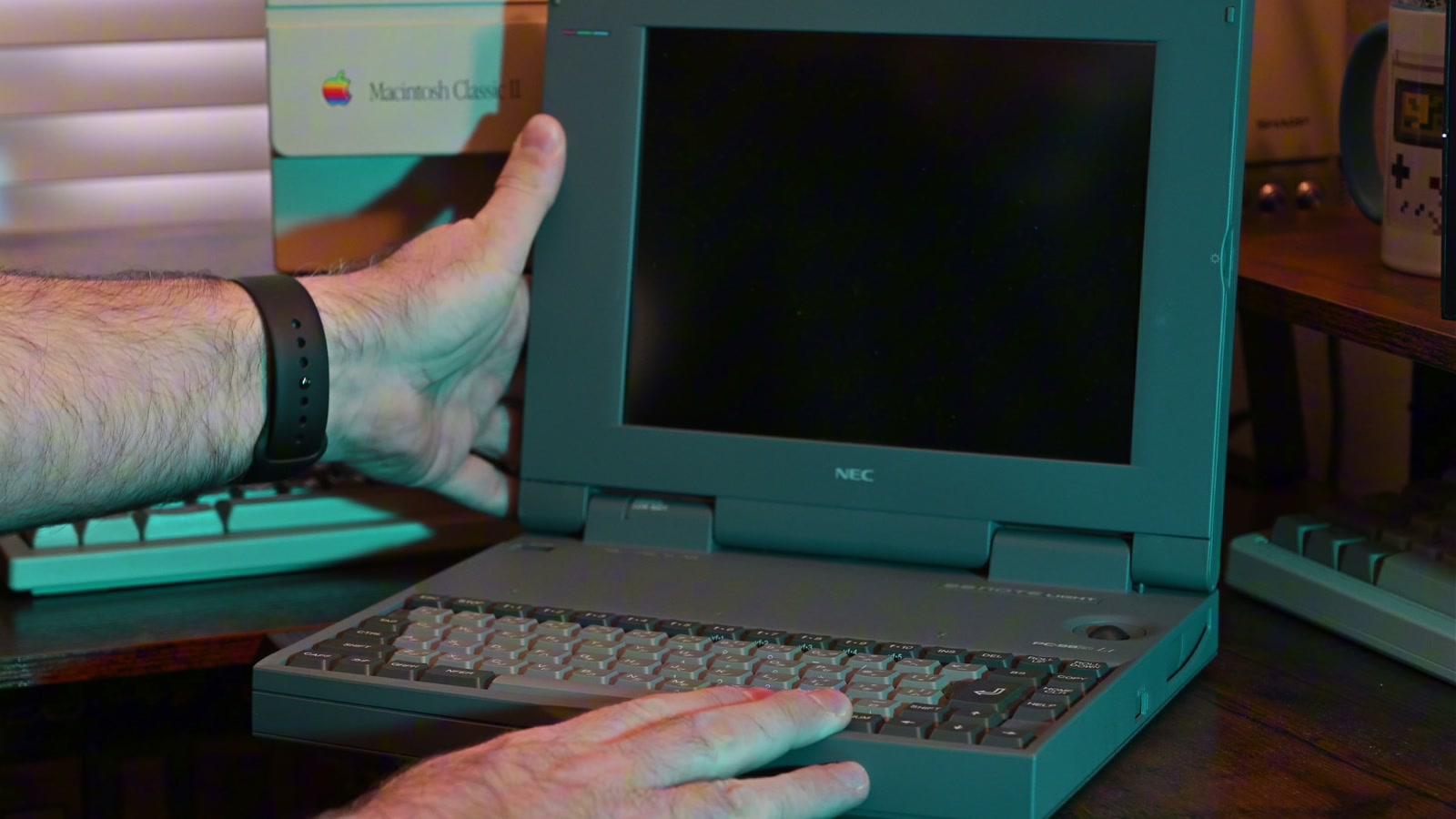
The PC-88 and PC-98 were different computer families, so the platform written on a game box matters. This laptop belongs to the later PC-98 line, whose first PC-9801 appeared in 1982. Japanese-language processing and business software helped establish the family, alongside the publishers and software companies that built a culture around it.
Even my particular laptop had a fairly serious original brief. NEC’s specification sheet lists Windows 3.1 and office applications for the 540A, plus an external floppy drive. The restored example I bought had a CompactFlash card replacing the hard disk and a choice of Windows 95, Windows 3.1 or DOS. Another CF card, in a PCMCIA adapter, gives me a convenient way to transfer files.
Unfortunately, it arrived with broken plastic around the screen hinge. The threaded inserts had come away with their mounting points, and opening the lid made matters worse. My first attempt with JB Weld Plastic Bonder and Milliput didn’t hold; I had to go back in and bond the bracket area more directly.
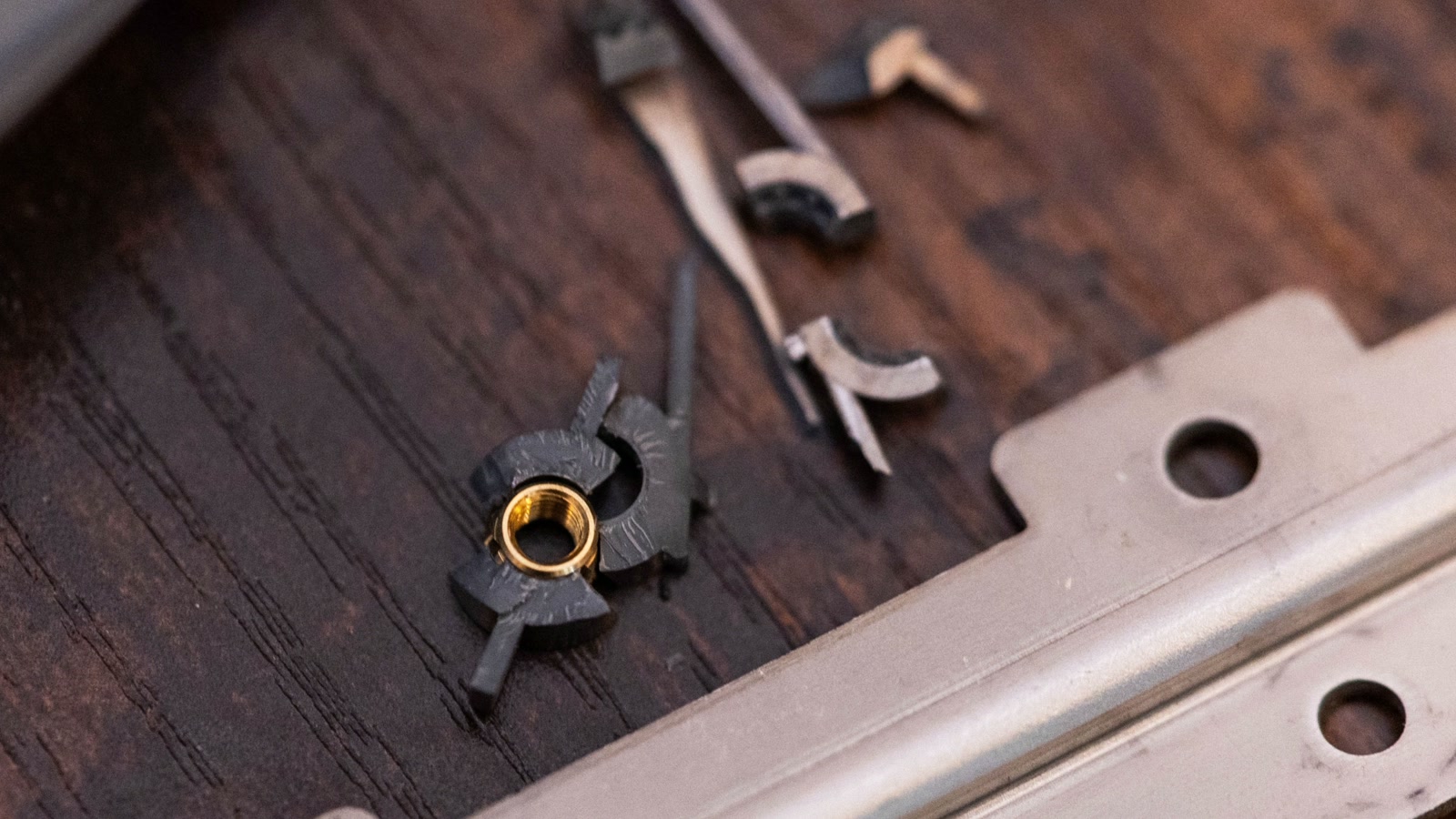
I got it together well enough to film, although the casing has since started opening around the hinge again. That’s disappointing after all the work. For these sessions, I kept the machine open on the desk and treated the lid very gently.
With no floppy drive connected, I also needed a way to supply the games’ disks. Codex helped prepare launch files using virtual floppies loaded into memory. There were errors to photograph and settings to correct before anything resembling an adventure appeared. By then, I was very ready for Kenshiro.
Kenshiro, with some assistance
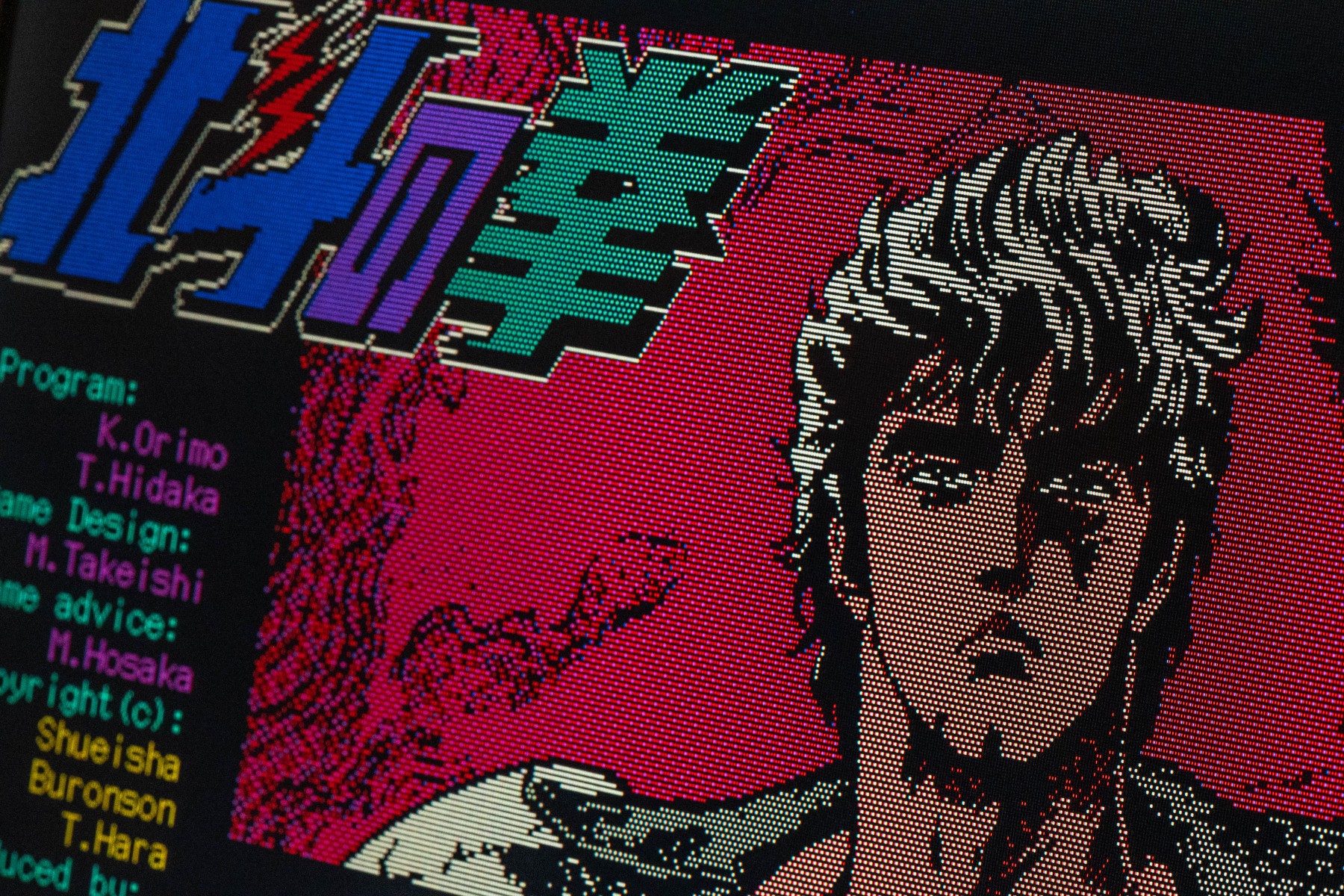
Enix’s Hokuto no Ken puts a surprising amount of administration between the punches. You look around, ask questions and get Bat to help while Kenshiro waits for you to understand the menu.
I enjoyed that more than I expected. The portraits carry so much of the manga’s character, and I kept stopping to look at the shading in a face or a piece of clothing. Then a fight arrived, and my ability to appreciate the artwork proved considerably better than my ability to hit anything.
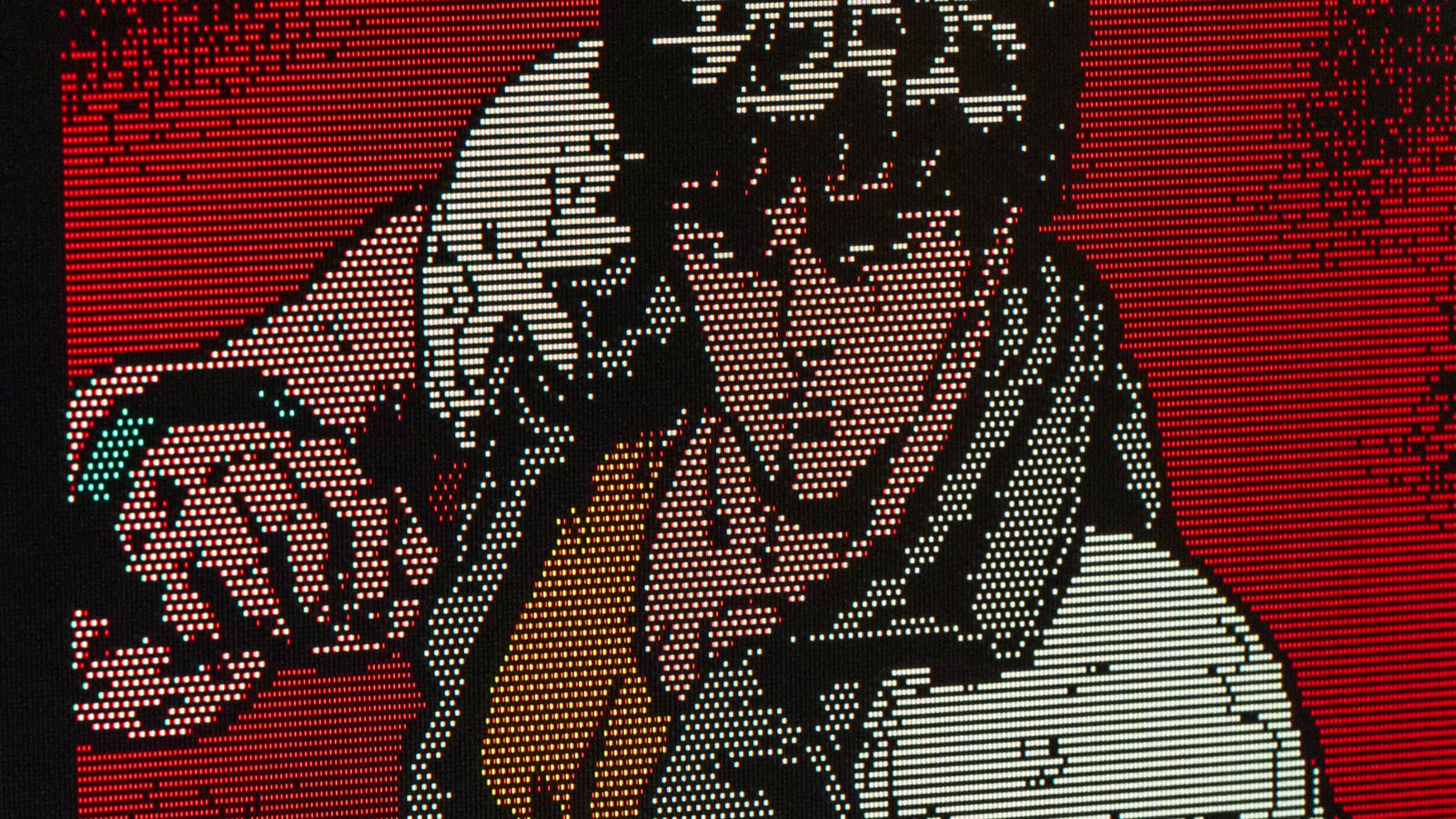
For recording, I used a modified copy with a sound compatibility adjustment and a key that triggers victory in the first fight. The victory animation is the game’s own. My Hokuto Shinken needed technical support, and the shortcut let me see what came next. I still managed to lose further on.
While I was making the video, LOGiN from June 1986 arrived from Japan. I found two pieces about Ken inside. Having those pages beside a game I’d just struggled through made the magazine feel wonderfully relevant again. The coverage includes the PC-8801 version; the gameplay I’m showing is PC-98, while my boxed copy shown in the video is for the X1turbo.
I also brought out Weekly Shonen Jump, issue 26 from 1986, for its Kenshiro cover, and POPCOM from May 1993. These are things I want to keep looking through alongside the software. Sometimes a printed picture gets me back to the computer.
Dracula’s rather misleading crosses
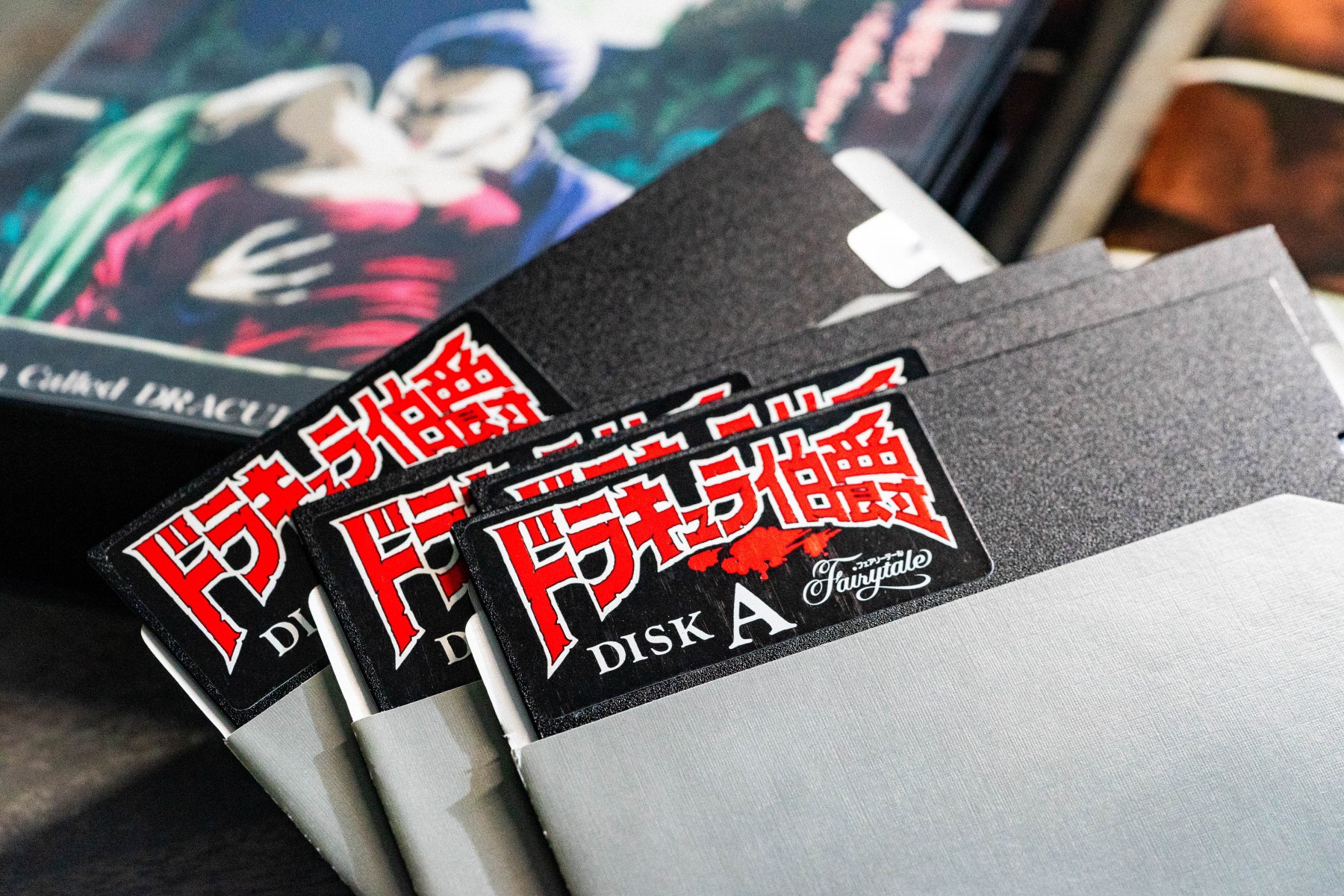
Dracula Hakushaku began by offering me two crosses. New game and load game, perhaps?
They were the sound options. A promising start to my career as a vampire.
FairyTale’s adult adventure drew me in with its artwork. The decorated frame around the scene, the columns and the little action icons make the interface feel like part of the castle. Even when I was getting nowhere, there was usually a doorway or a face worth studying.
The adult scenes soon became more explicit than the story I wanted to record. I’ve cut or obscured that material in the video, and concentrated on the setting and the interaction. Eventually I reached a sliding-tile puzzle, which was a welcome change: here, at least, I could see the problem in front of me.
It’s an awkward game to share in a video on YouTube, but its visual appeal is easy to understand. I can admire the drawings and still avoid certain scenes.
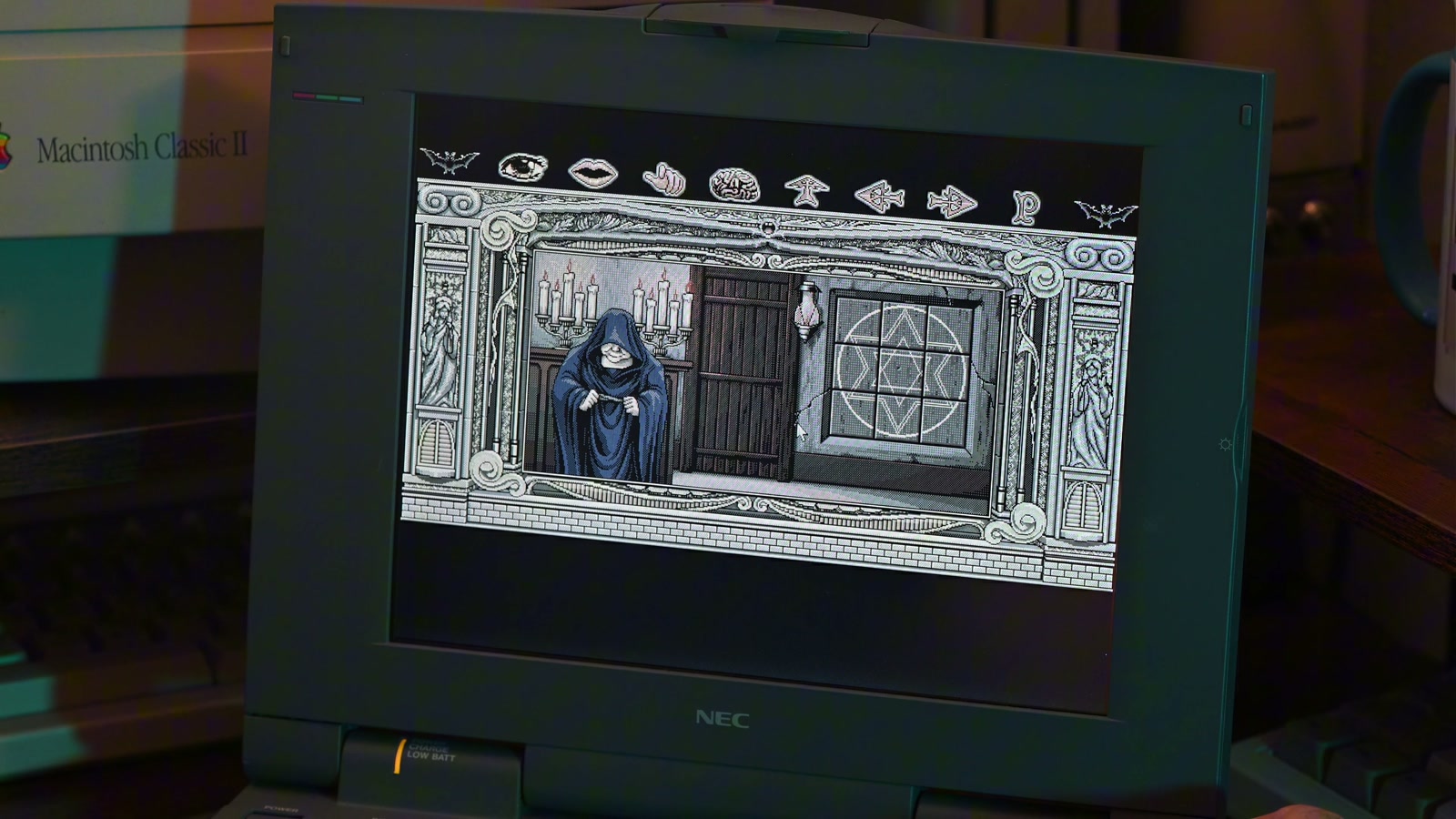
A town I got to know rather too well
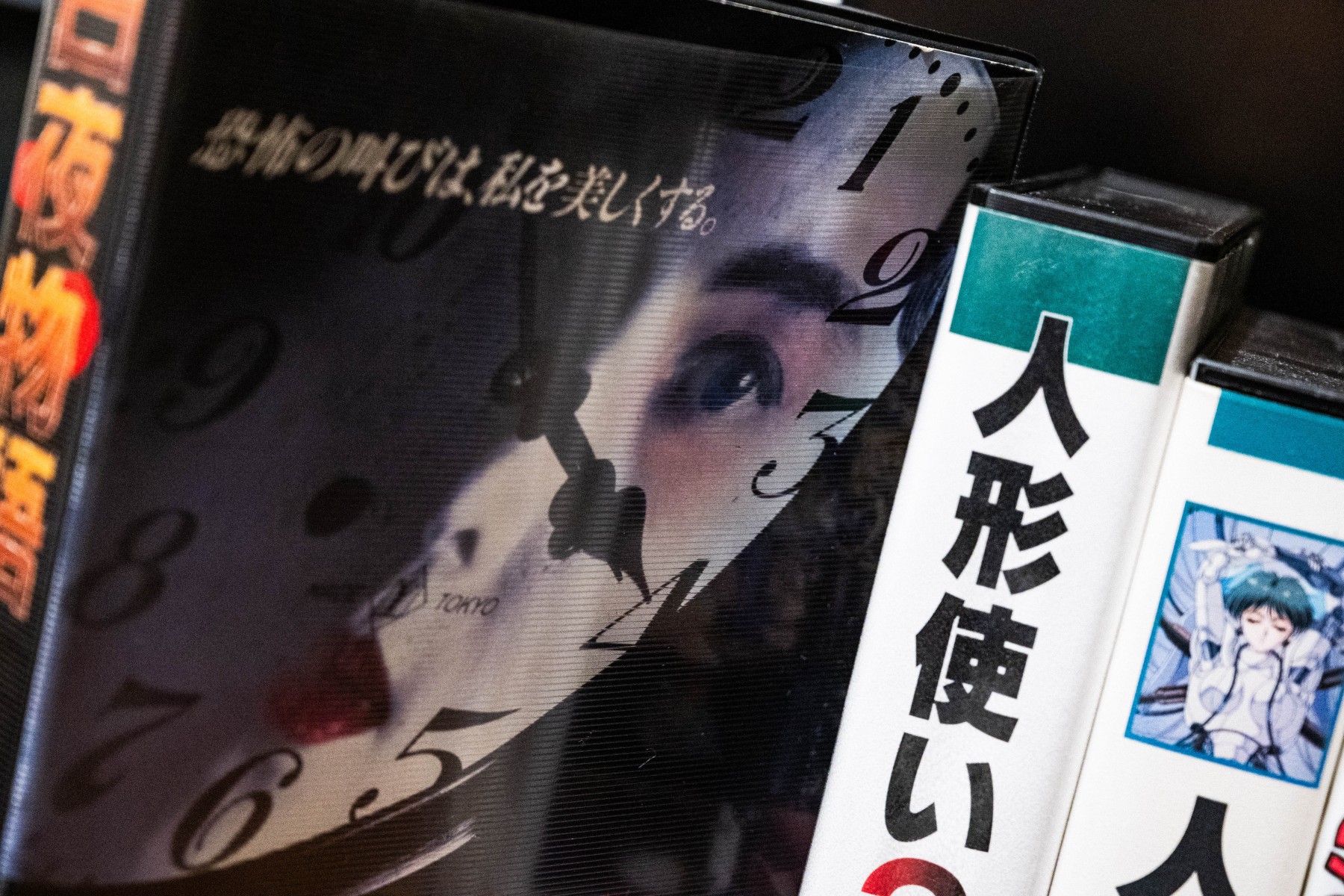
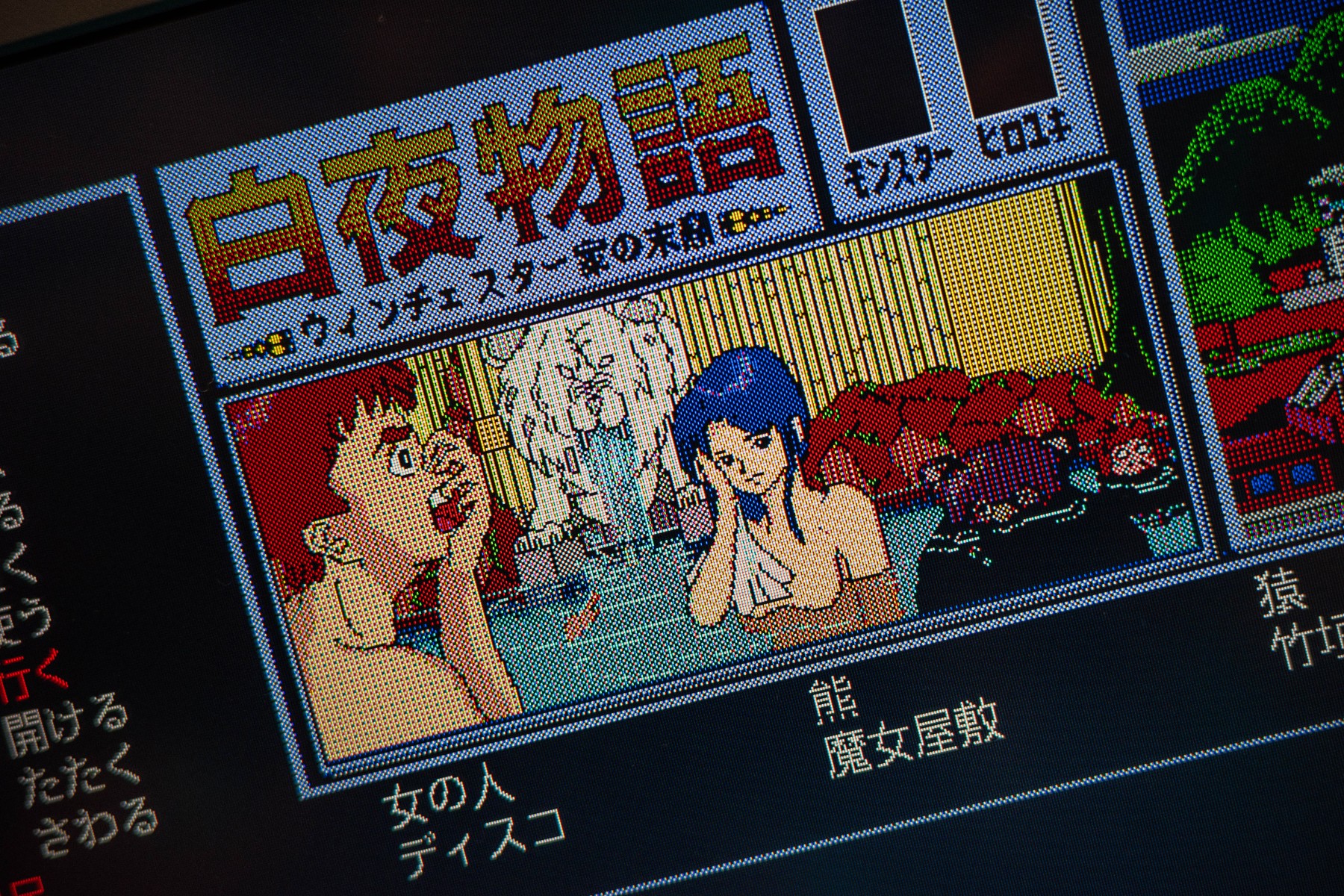
Byakuya Monogatari has bright colours, a small map and a park that initially looks quite cheerful. Its subtitle refers to the descendants of the Winchester family, and I found a book inside the game telling its version of Sarah Winchester’s story. A strange house and an illustrated mystery were a very appealing combination.
The spirit scope lets you see things that were hidden. I like the way that changes your relationship with a familiar screen: somewhere you’ve already examined suddenly gives you another person to talk to.
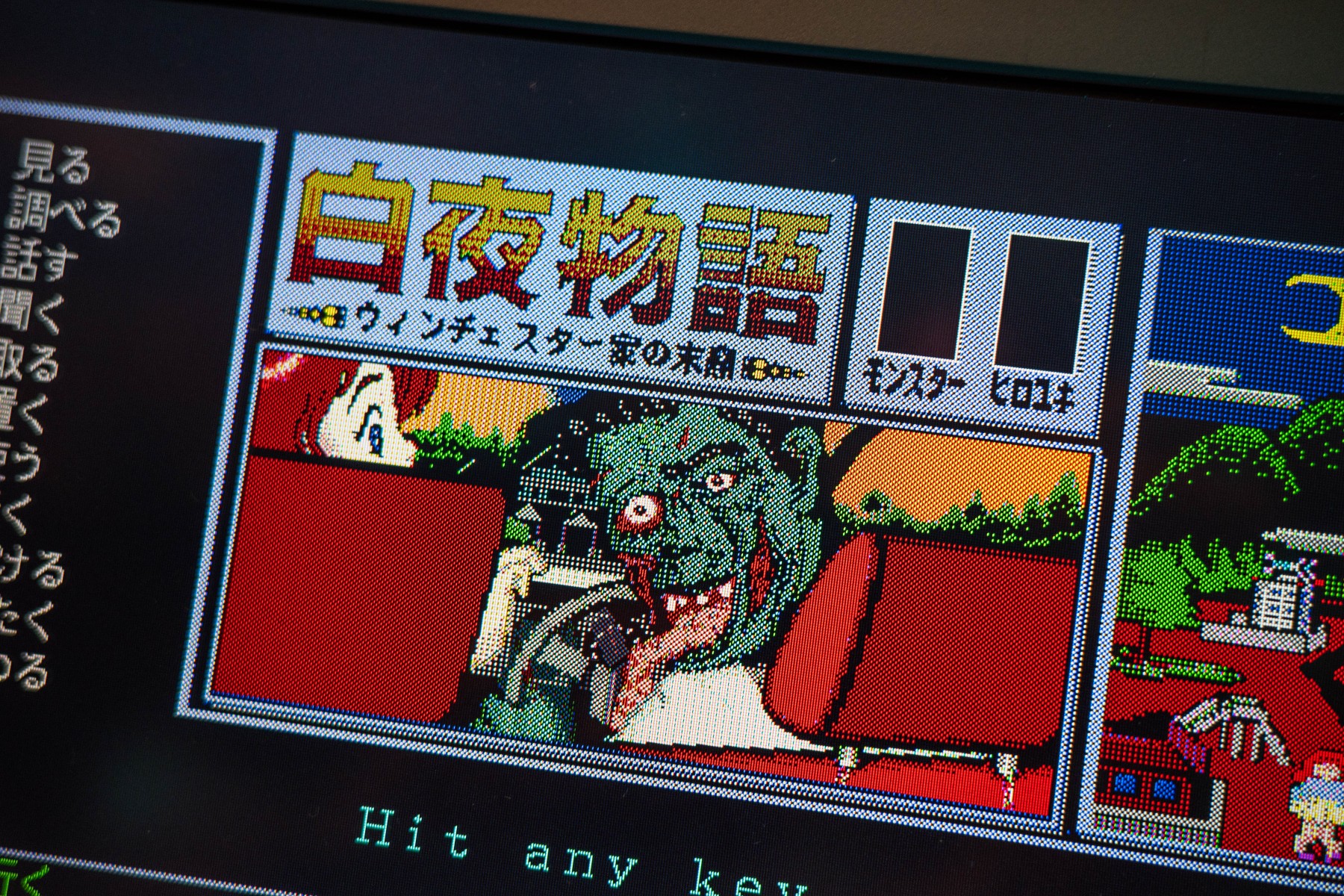
Actually getting anywhere was harder. I spent a long time trying to reach a disco that wasn’t appearing among my destinations. Back to the park, back to the school, another attempt with the commands. When I finally made progress, the taxi driver turned into a monster. There he was, filling the picture with exactly the sort of grotesque expression I’d wanted to see.
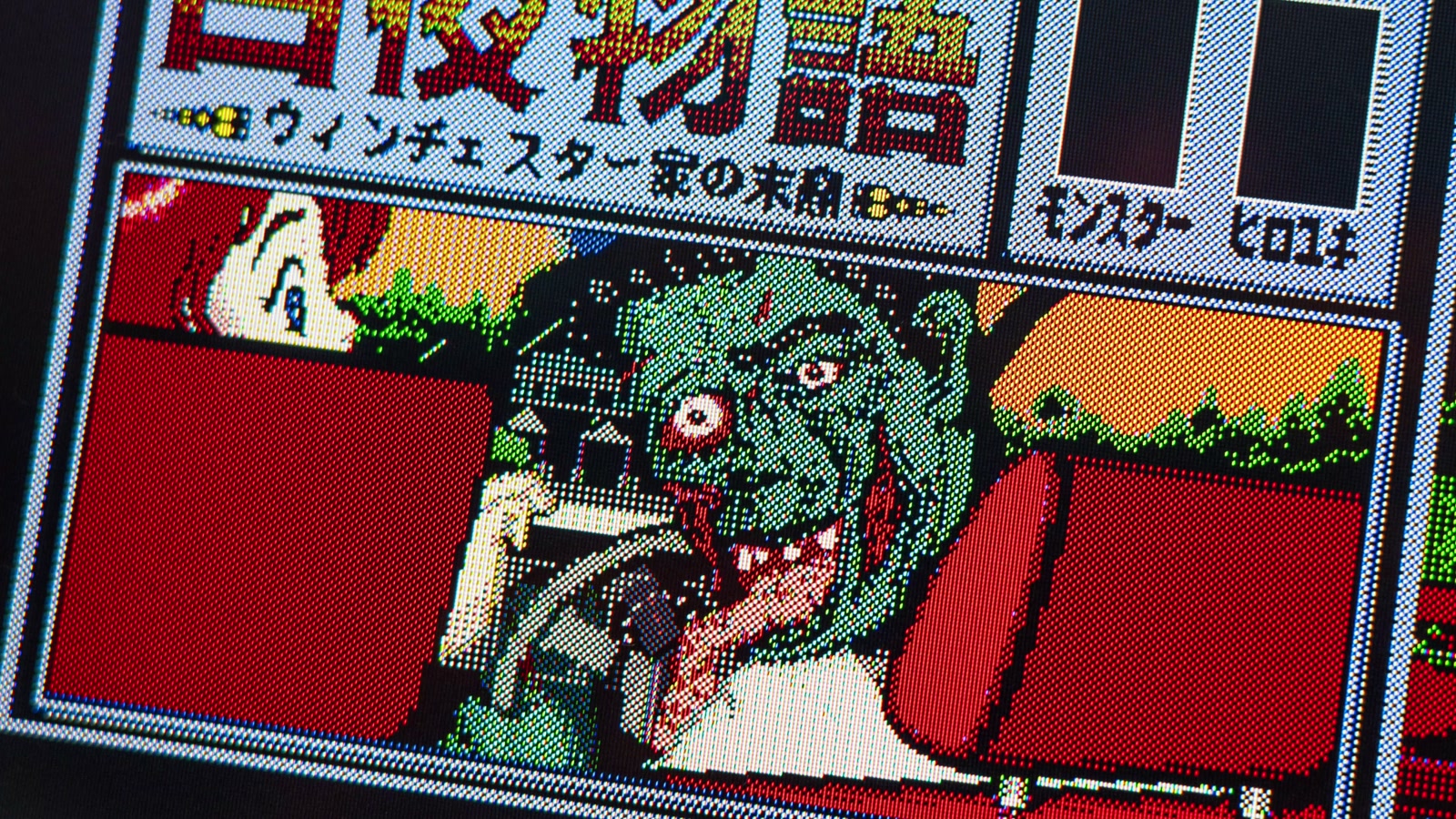
Later, a wardrobe and another monster brought my session to a confused halt. I haven’t finished these games, and I wouldn’t pretend this is a walkthrough. I did come away remembering that little town rather well.
Staying for the next picture
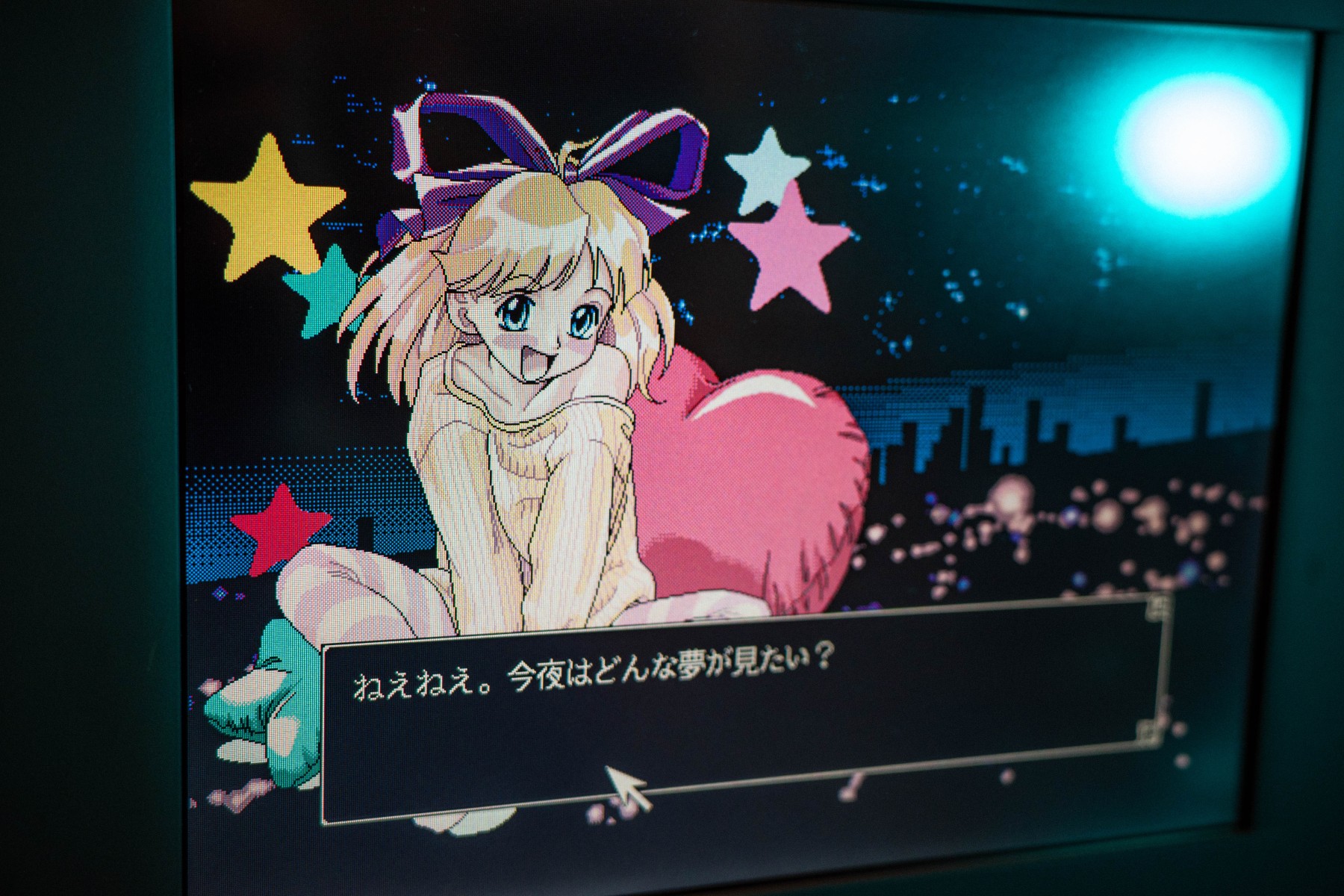
All three games ask you to choose actions, read replies and work out what the picture is withholding. I recognised some of that rhythm from Dead of the Brain, which I’d already spent time with on the Sharp X68000. It can be absorbing, and it can leave me staring at a menu with absolutely no idea what to try next.
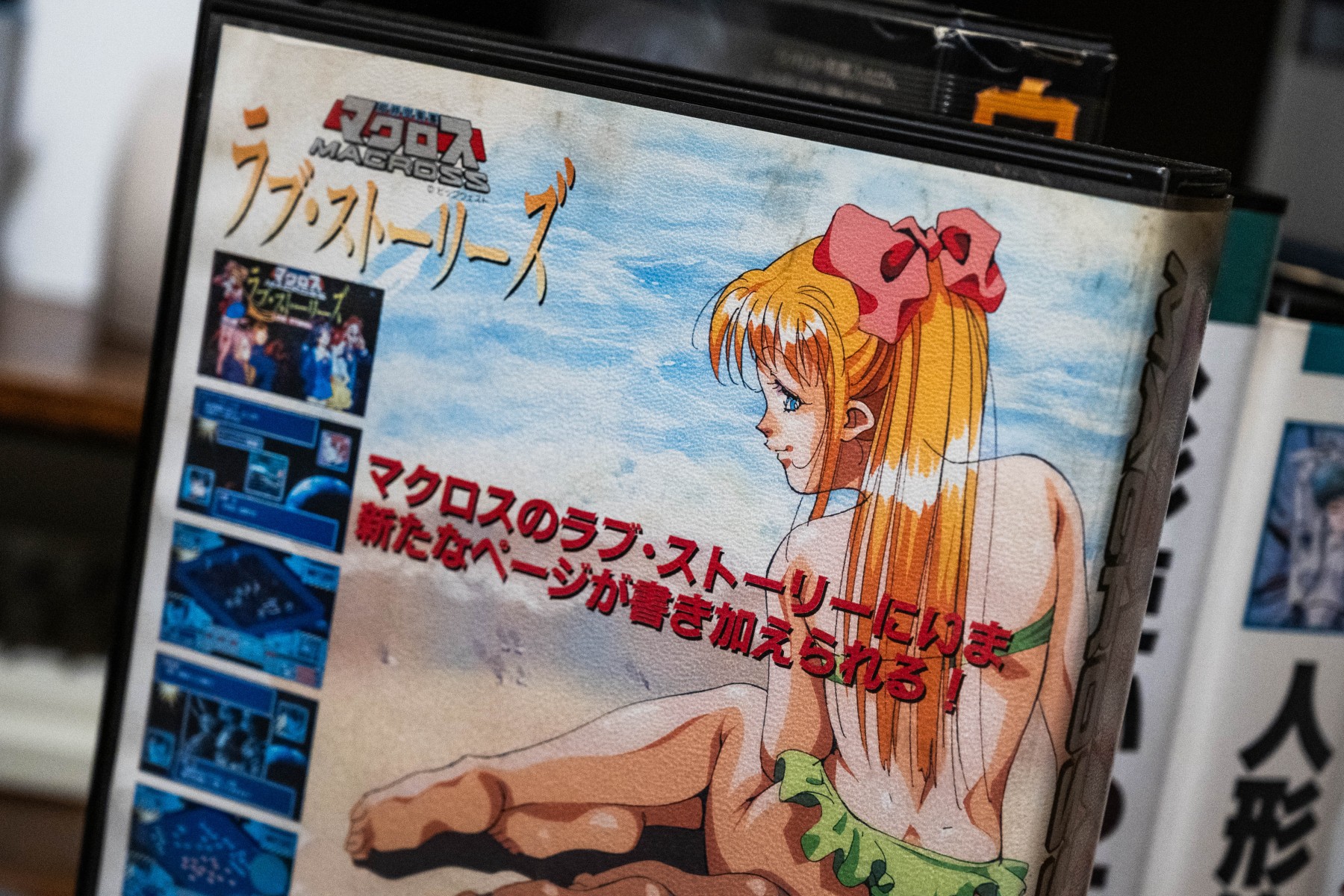
There’s more variety on the shelf, including Macross Love Stories and Maison Ikkoku. For these sessions, though, these three adventures gave me plenty to wrestle with. The attraction of their artwork survived my rather uneven progress through them.
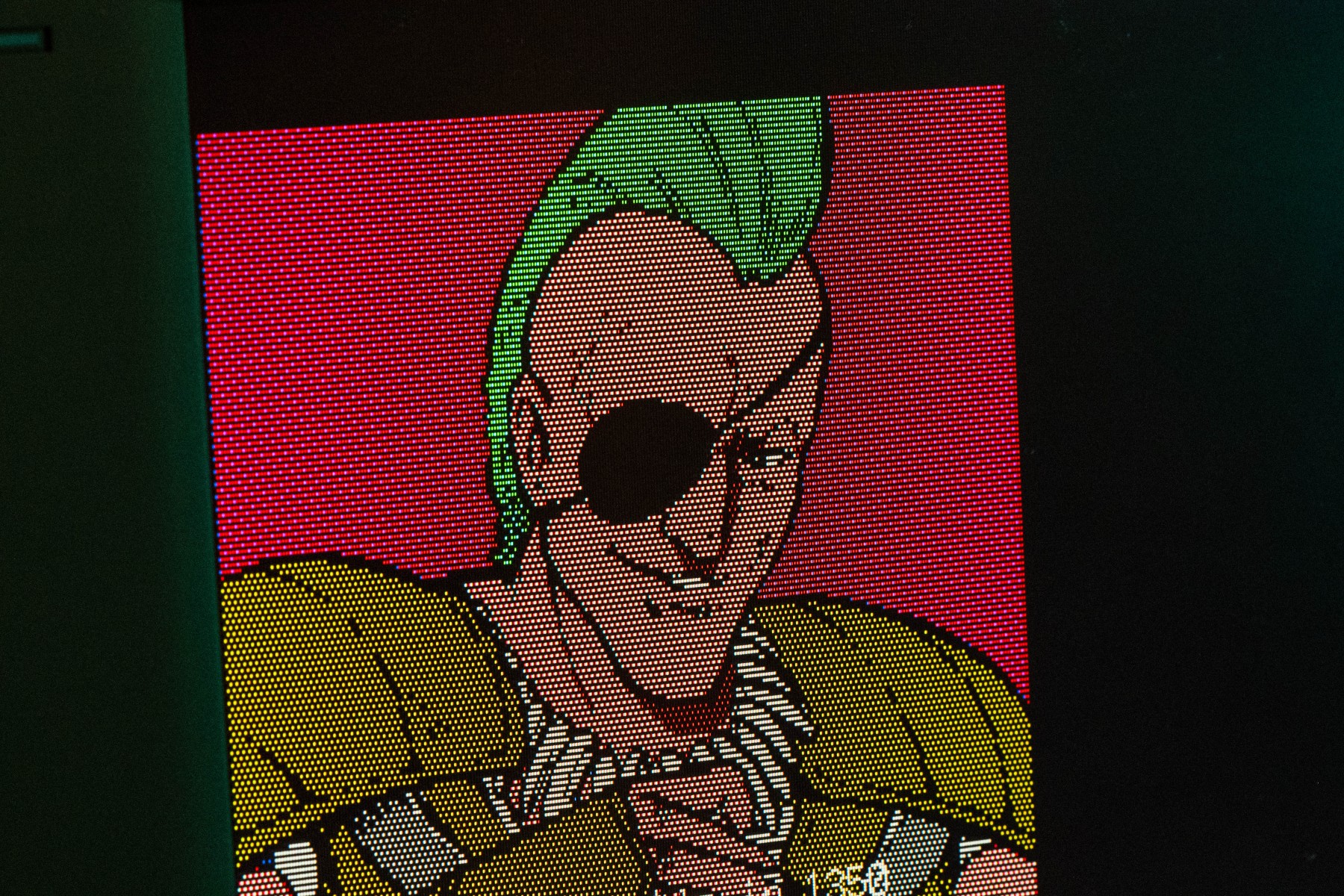
After spending so long getting the laptop to work, I could spend a little longer looking at how a handful of coloured dots had become the shadow on someone’s face. I still wanted to see the next picture.

Stay curious. Stay nostalgic.
Because retro never dies, it just respawns.
Leave a Reply