

Ad / Affiliate disclosure: this post contains affiliate links. If you sign up or buy through them, I may earn a commission at no extra cost to you.
A package arrived from Japan when I filmed this video. Inside: games, a mouse, some old magazines, and a good excuse to talk about one of the most interesting home computers that most of the world never heard of.
The parcel came courtesy of JPFans (sponsor), a platform that lets you buy directly from Japanese marketplaces like Mercari, which generally don’t ship outside Japan, or make it complicated enough that most people give up. I’ll come back to how it works. First, the box.

The X68000Z, briefly
Before getting into what I bought, some context on what it’s all for. The X68000Z Mini is Zuiki’s 2023 reimagining of the Sharp X68000, a home computer that launched in Japan in 1987 and never officially left the country. It was expensive, powerful for its time, and built around a premise that almost no other platform could match: near-perfect arcade ports. Street Fighter II, Final Fight, Gradius, the X68000 versions were as close to the arcade original as you could get at home, helped by hardware with strong arcade-style graphics and sound.
I picked up the Mini while travelling in Japan, since it wasn’t sold overseas at the time. The basic version comes with the computer itself and a joystick. There are more elaborate bundles: a keyboard replica, a monitor replica that puts a modern LCD inside a CRT-style shell, but I went minimal and gentle to my luggage. And then used JPFans to fill in the gaps.
I’ll dedicate a full video to the Mini and the original X68000 separately, so this isn’t the place to go deep on the hardware. What I want to show here is what the game library looks like when you can actually access it.
What was in the box
The packaging from JPFans is genuinely careful. Everything arrived individually wrapped, and for older items especially, that matters.
Fatal Fury Trilogy was the first thing I pulled out. Three games: Fatal Fury, Fatal Fury 2, and Fatal Fury Special, in a single collection. The packaging Zuiki uses for these games is something I keep noticing: the outer case contains a smaller case shaped like a 5.25-inch floppy disk, which in turn holds the SD card. It’s a bit of a matryoshka, but it works, and it says something about who these products are made for. These aren’t budget releases. Someone thought about this.
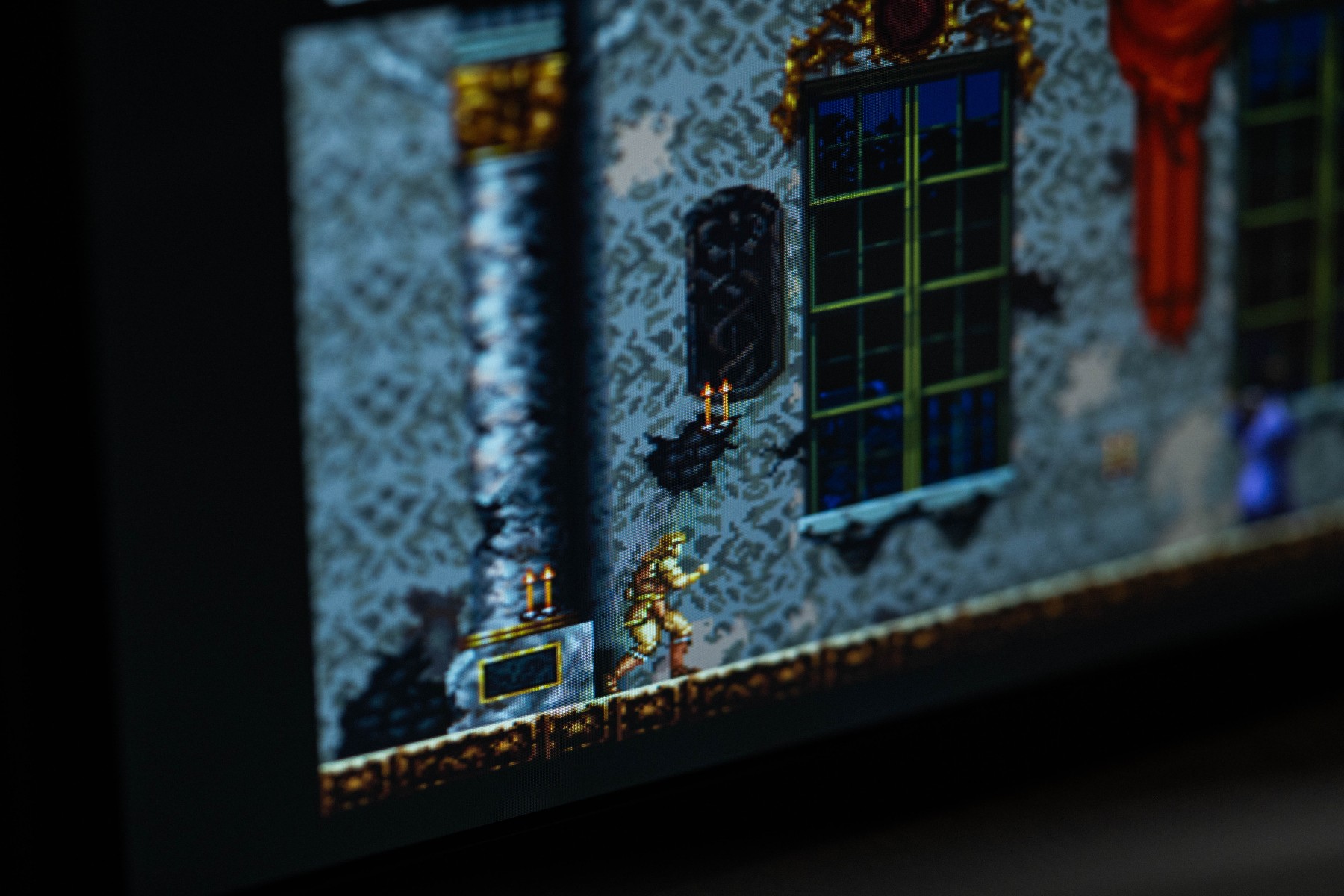
Akumajo Dracula and Quarth come as a Deluxe Pack, a Zuiki reissue licensed from Konami Digital Entertainment. Two very different games sharing one case. Akumajo Dracula is the X68000 version of Castlevania, originally released in 1993. Quarth is a 1989 Konami arcade puzzle shooter: blocks fall from above, you fire pieces upward to form rectangles and clear them. Simple concept, surprisingly hard to put down. An unusual pairing, but the pack is well put together.
The FZ Senki Axis / Granada Pack covers both major titles from Wolf Team, known for cinematic intros and complex multilayer scrolling, solid 16-bit action that doesn’t get enough attention outside Japan. Some former Wolf Team developers later founded tri-Ace. Wolf Team itself followed a different company history.
Then the X68000Z Game Collection Vol.1, which is the most straightforward purchase: Zuiki’s official compilation, a curated entry point into the library.




The mouse
I ordered the X68000Z mouse replica through JPFans alongside everything else. It keeps the original’s unusual second role: turn it over, open the cover and it becomes a trackball. That option belongs to the character of the X68000 as much as the twin-tower case does.
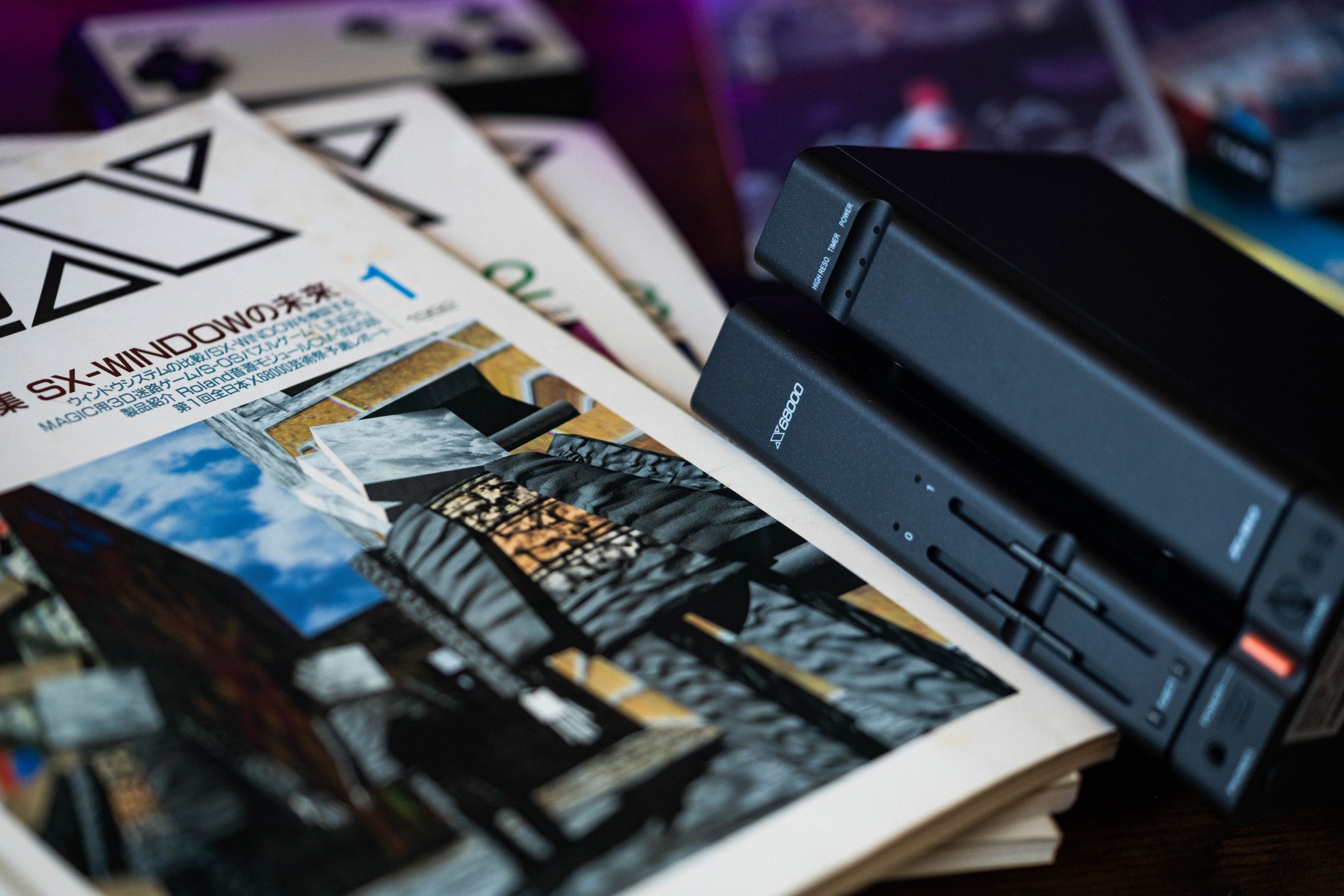
The Oh!X, magazine
Five issues of Oh!X, the Sharp home computer magazine published by SoftBank from 1982 to 1995. It started as Oh!MZ and switched to Oh!X in 1987 as the X68000 became central to its coverage. Issues 1, 2, 8, and 10 from 1992, and issue 5 from 1993, right at the peak of the machine’s relevance.
I collect these kinds of magazines because they work as time capsules. The advertisements alone tell you a lot: what hardware variations existed, what software was available, what the community cared about. Oh!X went further than most, programming tutorials, hardware modification guides, game source code listings, developer interviews. It was written for people who used the machine seriously.
Those early-1990s issues sit close to the period of the X68000’s compact models. Seeing Zuiki’s Mini beside that older hardware is part of what makes the magazines useful: they give the little replica a context.
How JPFans works
Mercari Japan and similar platforms are enormous. The selection of X68000 software that circulates there is something you simply can’t find in Europe, and when you do find it, the prices reflect the import premium. JPFans removes the barrier.
The process: search the platform, find the listing and ask JPFans to buy it on your behalf. Japanese search terms can help. Items go to its warehouse before international shipping.
At the time of this review, the published proxy fee is ¥300 per item. Domestic delivery, international shipping and other services can add to the cost. The electronics inspection described on its site checks appearance, not whether a machine powers on or works. Read the listing and the available inspection options with that distinction in mind.
There’s also customs. My own parcels to the UK have usually been straightforward, but that is my experience, not a guarantee. Before ordering, work out the total for your destination, including shipping and any import taxes or charges. Consolidating items may help with shipping, depending on the contents and service you choose.
If you use my affiliate link below, check the current welcome offers and their conditions when you register.
👉 https://jpfans.com/register/?ref=800265122 [Affiliate link]
Castlevania on the X68000
The Akumajo Dracula Deluxe Pack deserves a bit more attention, so here it is. The original X68000 Castlevania came out in 1993. It was a remake of the 1986 NES game, but the hardware gap between the two platforms meant Konami could rebuild it almost entirely. Around half the levels were altered or entirely new compared to the NES version. The sub-weapons were expanded. The controls were tighter. The FM audio, processed through the Yamaha sound chip built into the X68000, is one of the most frequently cited reasons people still talk about this version.
It was a Japanese exclusive. Konami eventually ported it to PlayStation in 2001 as Castlevania Chronicles, and for that release they brought in Ayami Kojima to redesign Simon Belmont, giving him the long pink hair and red leather armour that looks almost nothing like the original pixel art. The PlayStation version kept the classic mode as an option, so the contrast is right there.
The Zuiki reissue from 2024 adds save states, which I used more than I’d like to admit. The game is hard in the way most Castlevania games are hard, not arbitrary, but unforgiving. If you want to make it harder, enter NOMIS at the name screen (Simon backwards) and you’ll start with one bar of health. I don’t recommend it.
One last detail: the candles. I break them almost automatically, looking for hearts or sub-weapons before the next difficult stretch. It’s a small Castlevania ritual, and this version gives me plenty of reason to keep doing it.
Final thoughts
The X68000Z Mini is clearly made by people who care about the original machine. The emulation quality, the attention to the hardware details, the packaging decisions Zuiki has made for the game releases, none of this feels like a cash-in on nostalgia. It feels like a genuine attempt to make an obscure platform accessible.
If you’re curious about the machine itself, I’ve also written about the original hardware and my setup in the Sharp X68000 article.
And if you want to start building your own X68000Z library, JPFans is where I’d start looking.
Watch the full video on the RetroAffaire YouTube channel.
Stay curious. Stay nostalgic.
Because retro never dies, it just respawns.
Leave a Reply