
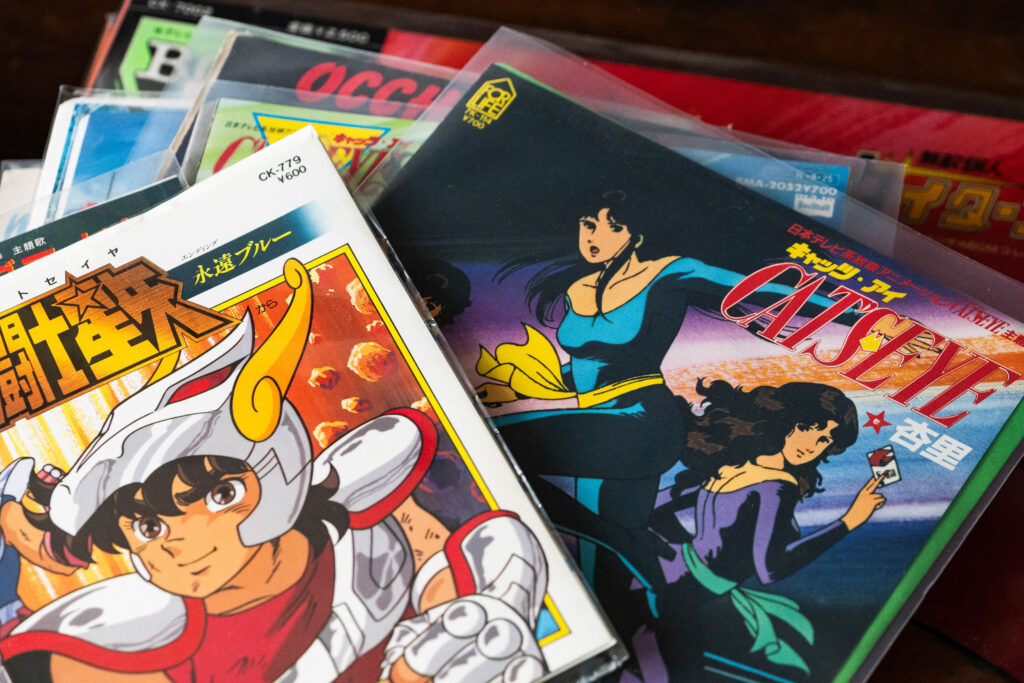
I grew up in Italy in the 1980s. And like most Italian children of that decade, my afternoons belonged to Japan. Nobody planned it, it simply happened. Show after show, channel after channel, until an entire generation had absorbed a foreign mythology as its own.
Kenshiro (Hokuto no Ken). Mazinga (Mazinger). Goldrake (Grendizer). Gundam. Holly e Benji (Captain Tsubasa). Occhi di Gatto (Cat’s eye). I Cavalieri dello Zodiaco (Saint Seiya).
These characters set the rhythm of my Italian childhood, the theme songs everyone knew by heart, the background noise between school and dinner. What most of us didn’t think about at the time was that behind each of those opening themes, there was a physical object: a pressed piece of vinyl, or a cassette tape, manufactured in Japan and sometimes in Italy, carrying music that would outlast the broadcasts by decades.
What I have in front of me today is the physical residue of that era. 38 vinyl records and cassette tapes, Japanese pressings, Italian pressings, soundtracks, singles, children’s records, drama LPs, collected because they represent something a stream or download cannot reproduce for me. A specific moment in time when two countries, without fully realising it, built a shared culture.

Super robots: where it all began
The story starts on the 4th of April 1978, when RAI Rete 2 broadcast the first episode of what Italian television called Atlas UFO Robot, known in Japan as UFO Robot Grendizer, created by Go Nagai. In Italy it became Goldrake. And nothing was quite the same again.
The impact is difficult to overstate. The Italian theme, a march-like piece performed over footage of a massive robot piloted by a young alien refugee named Actarus, sold over a million copies as a single. A million copies. Of a television theme song. In 1978. The Cetra pressing in this collection is the document of that moment.
What followed was a wave. Great Mazinger followed in the same wave of robot anime, Go Nagai again, this time with a new pilot named Tetsuya Tsurugi battling the Mikene Empire. Like Goldrake, its Italian theme was entirely original composition, not a translation. Italian record labels had decided these anime were significant enough to warrant their own music. They were right.
The Japanese originals tell a different story. The Mazinger Z EP on Fan Fan Record, manufactured before the show had reached the rest of the world, carries the original 1972 identity of the franchise. Held in your hands, it is a small, slightly worn piece of vinyl with a weight that has nothing to do with its size.
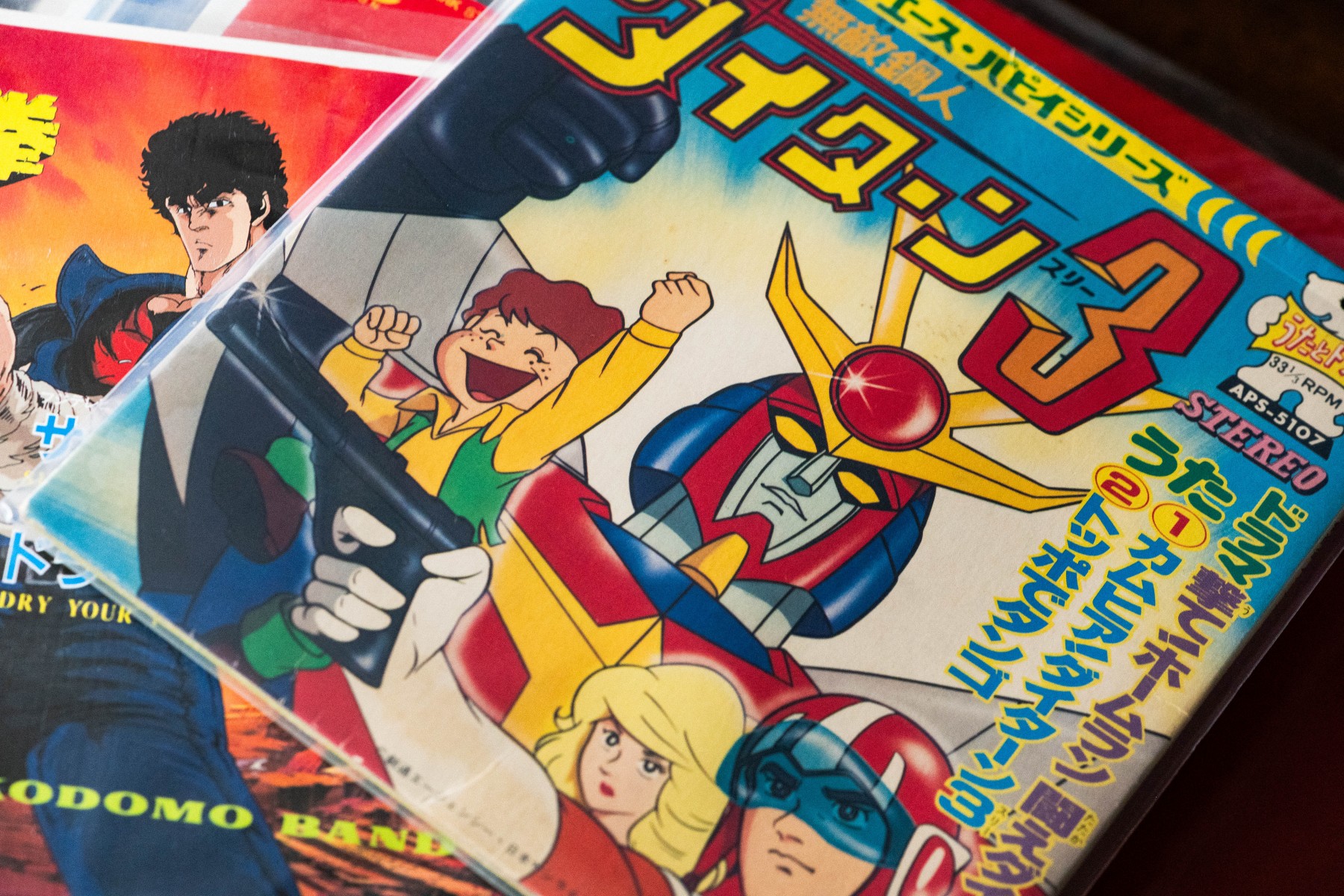
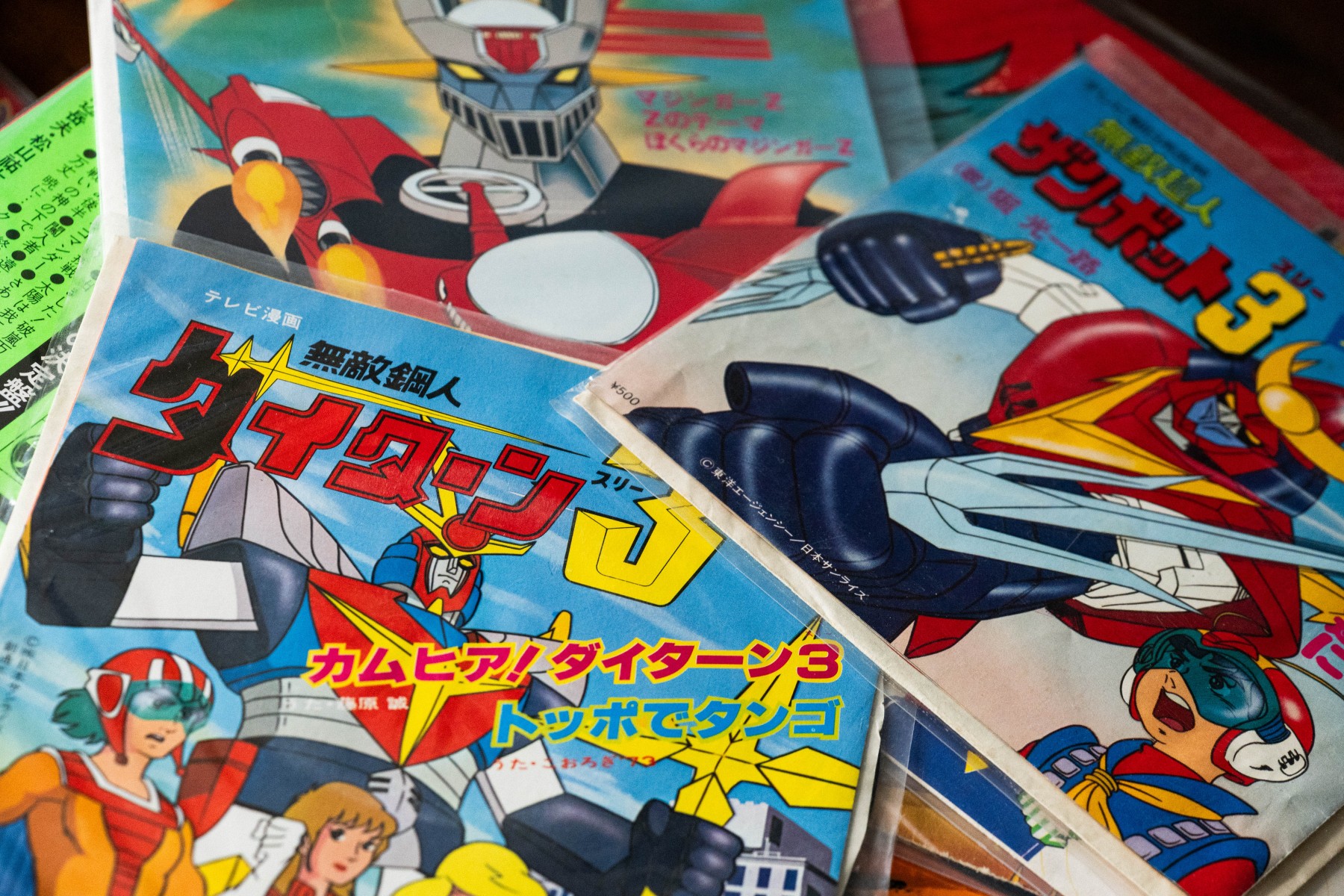
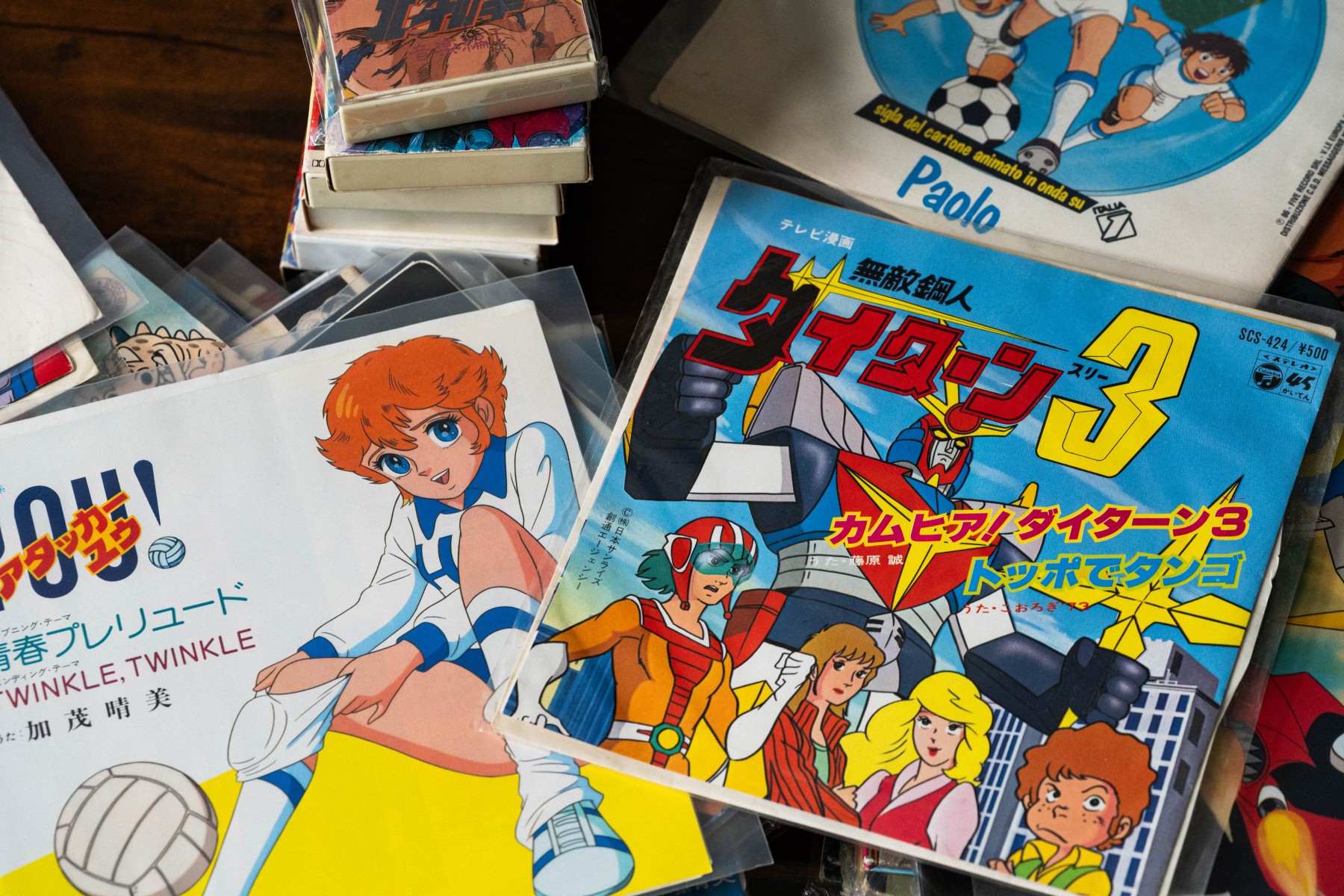
Then Zambot 3 (1977) and Daitarn 3 (1978), both directed by Yoshiyuki Tomino, both occupying different registers. Zambot 3 is the grimmer of the two: characters die, the emotional stakes are personal, the show was considered difficult to export. Daitarn 3 is lighter, more humorous, but still Tomino. The Daitarn 3 collection here includes a Sonorama Ace Baby Series mini-LP, a small-format children’s record running at 33⅓ rpm, combining drama tracks performed by the voice cast with the theme songs. A compact combination of songs and spoken scenes. The Italian song for Daitarn 3 is still one of the best rock songs of the era 🙂
Then the genre pivots. Mobile Suit Gundam first aired in Japan from April 1979 to January 1980. Italy broadcast it in February 1980, soon after the Japanese run ended.
Gundam abandoned the super robot template. The mobile suits are not mythological weapons, they are machines. Manufactured, mass-produced, flawed, piloted by teenagers who are frightened and sometimes wrong. The war is between human factions, each with their own ideology. The protagonist, Amuro Ray, does not become a hero. He becomes a soldier.
The King Records compilation cassette featuring Gundam, Daitarn 3, and Zambot 3 on a single tape is the kind of product that captures that transitional moment: three Tomino shows, three different emotional registers, pressed onto six tracks for ¥1,000. The LP Senjo-de (“On the Battlefield”) is the second Gundam soundtrack album, with cover illustration by character designer Yoshikazu Yasuhiko.






Hokuto no Ken: Kenshiro era
I should be honest: the Hokuto no Ken section of this collection is disproportionate. I am aware of this. It is not accidental, I’m a big fan.
Hokuto no Ken, Ken il Guerriero in Italy, Fist of the North Star in English, aired in Japan on Fuji TV from October 1984, running for 109 episodes. Italy received it from 1988. The premise: distant future, nuclear war, civilisation collapsed. Into this world steps Kenshiro, the successor to an ancient martial art that allows him to destroy people from the inside by striking their pressure points. The music is extraordinary. Not because it is subtle, but because it is perfectly calibrated to the material.
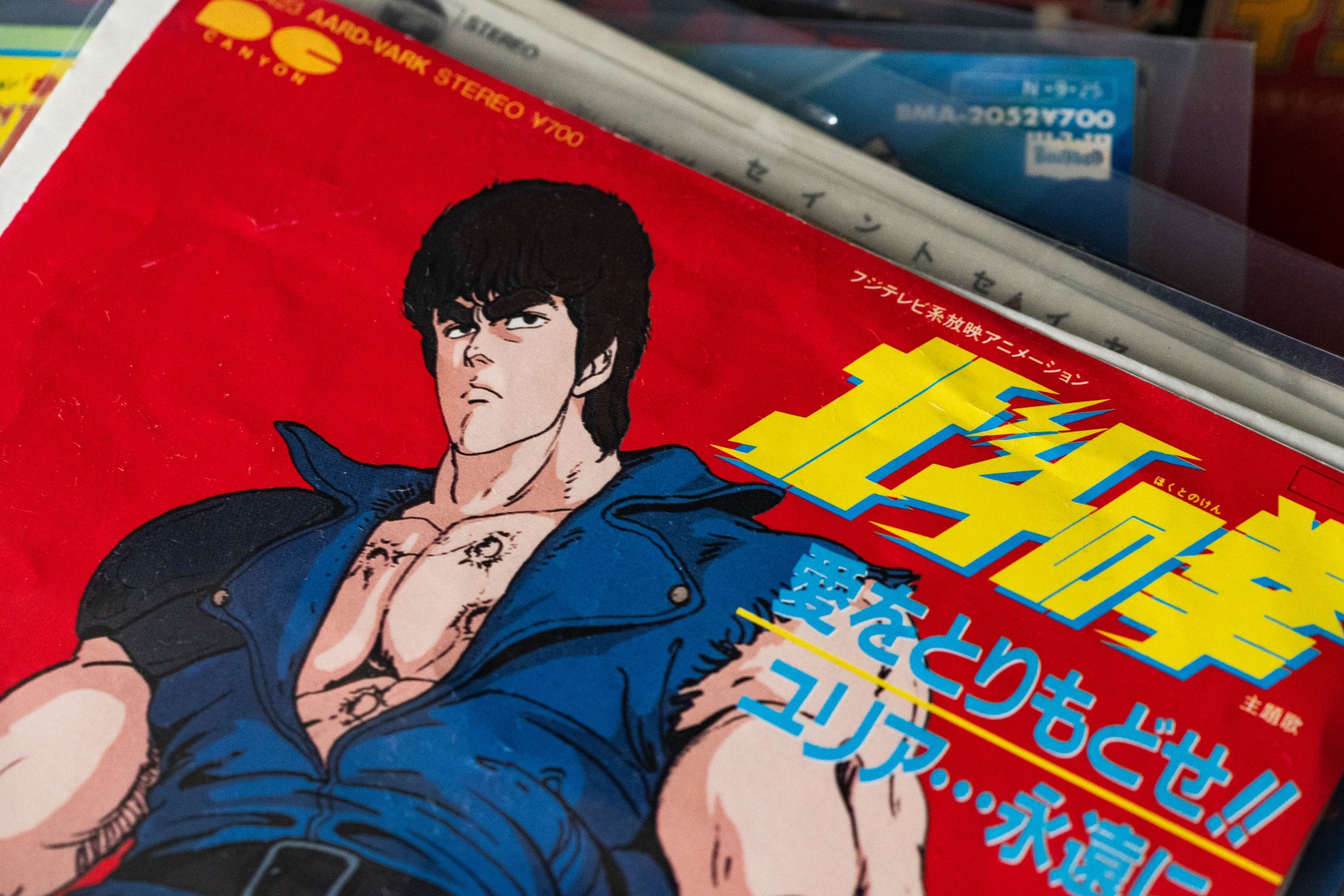
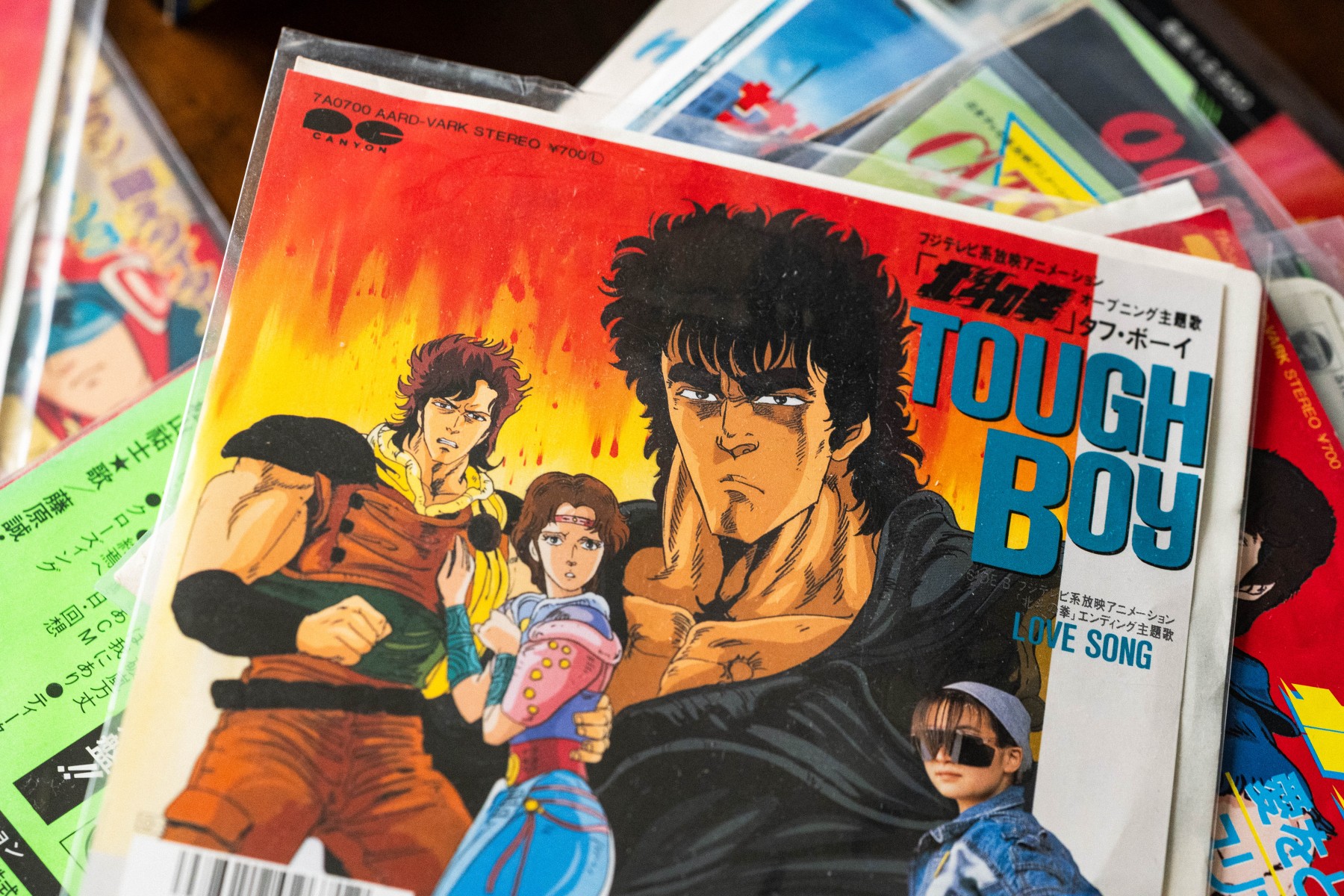
The TV singles tell the story in three acts. First: 「愛をとりもどせ!!」by Crystal King — the iconic first opening, “You wa SHOCK,” released in October 1984. Crystal King’s two-vocalist contrast (raw verses, operatic chorus) suits a show about exploding people with unusual precision. Second: Silent Survivor by Kodomo Band, drier, more muscular, the second opening. Third: Tough Boy by TOM★CAT, opening theme for the second series (1987), harder and more angular as the show moved into new narrative territory.
Then the LPs. The 拳のバラード series, three volumes across 1984–85, the primary TV series OST release, orchestral BGM and vocal themes finally allowed to stand on their own. Then the drama omnibus LP for the first arc: a vinyl record that retells key scenes using the original voice cast, 神谷明 as Kenshiro, 古川登志夫 as Shin, 山本百合子 as Yuria, woven with the music. Crystal King appear. Music and dialogue sharing the same grooves. If you’ve never held a Japanese drama LP, it is difficult to explain what it represents.
The 1986 theatrical film generated one of the more complete audio release sets in this collection. The Music Edition LP, 18 BGM tracks, score by Katsuhisa Hattori, Kodomo Band themes. The Drama Edition LP, the film retold in audio. And the Pony cassettes: the Drama Edition split across two tapes, because the content was simply too long for one, plus the sealed TV Music Edition cassette.
The Other Side: Shōjo and Beyond
Not everything in this collection involves men who can kill with a single touch. There is another Japan that arrived in Italian living rooms during the same years — and it arrived on the same channels, often in the same afternoon slot.
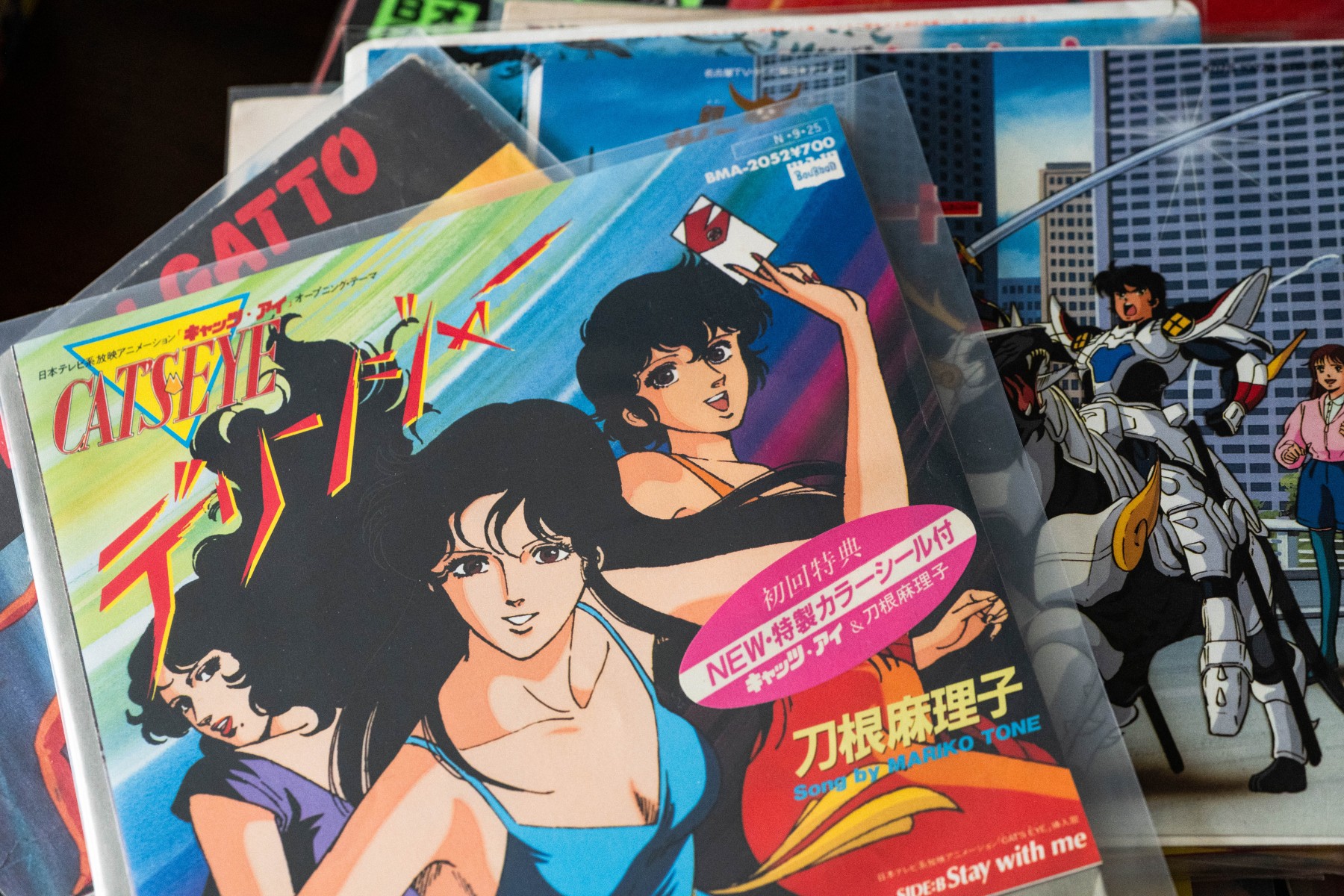
Cat’s Eye (Italian version, Occhi di Gatto) generated three records in this collection: the Series 1 Japanese opening by Anri (number one on the Oricon chart in August 1983, with an arrangement by Kazuo Otani that aged unusually well); the Series 2 single by Mariko Tone; and the Italian Fininvest pressing, same title, entirely different sonic world. This comparison, in one hand, is a small lesson in how cultural translation works: same images, same story, completely different music, sung by the great Cristina D’Avena.
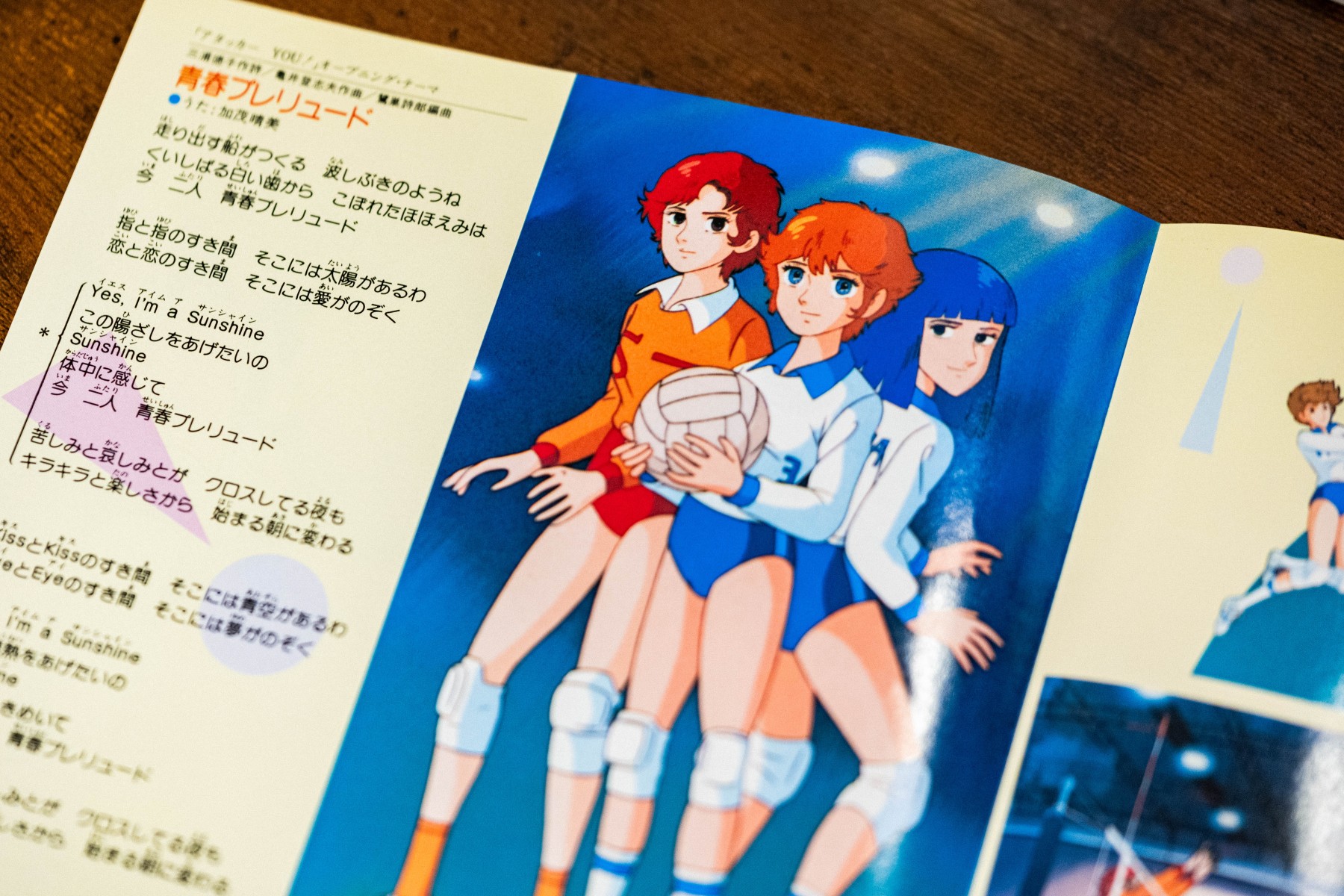
Attacker You! (Mila e Shiro, Italy 1986) is a volleyball anime from 1984, represented here by the Japanese Victor EP, the original rather than the Cristina D’Avena adaptation.
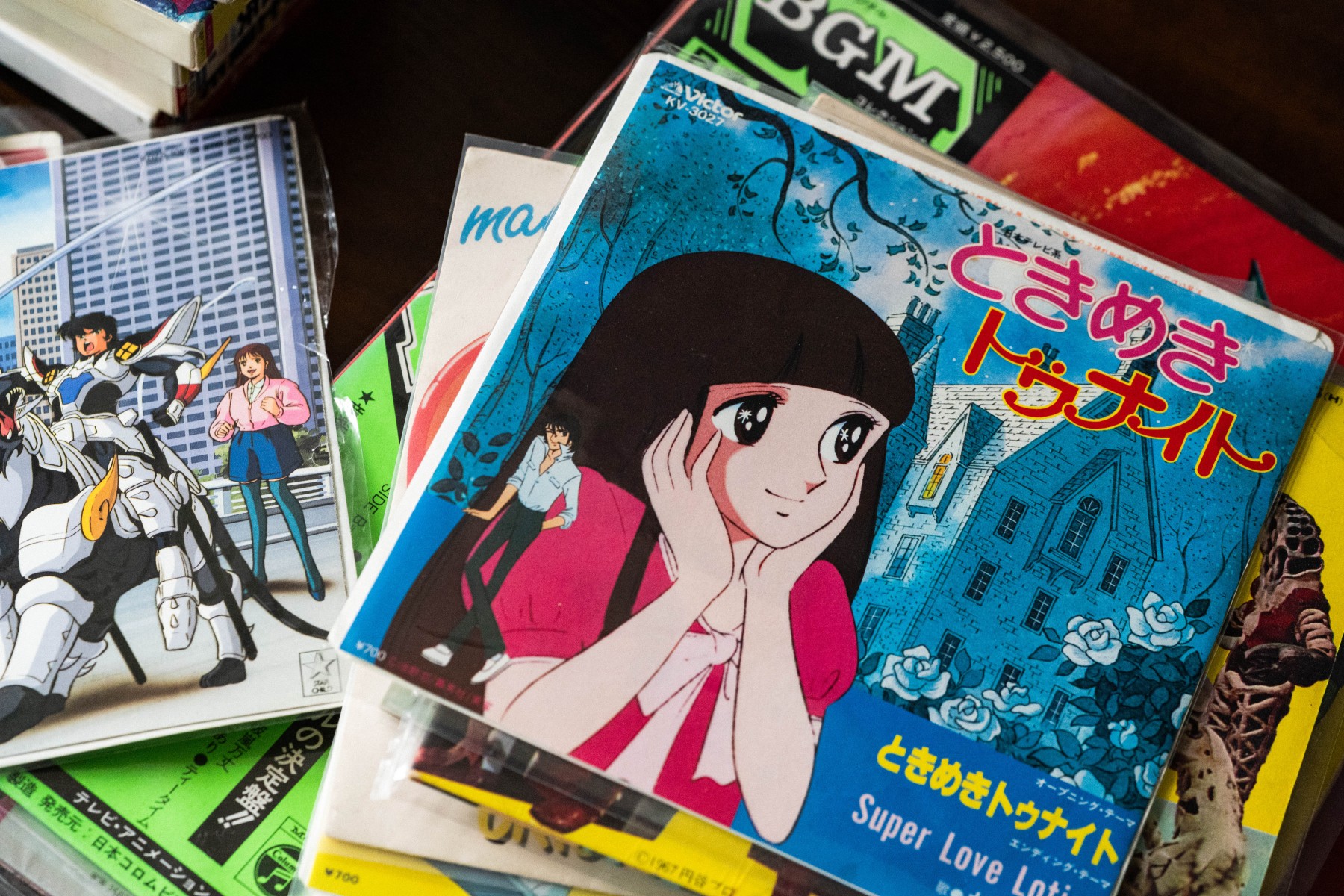
Tokimeki Tonight (Ransie la strega) is the 1982 romantic comedy about a girl whose father is a vampire and whose mother is a werewolf, who can transform into anything she bites. Light, characteristically of its decade, a quieter corner of the collection.
The Five Records double A-side is one of the more interesting objects here: Magica, Magica Emi on Side A, the Italian sigla for Magical Emi, performed by Cristina D’Avena, and Holly e Benji due fuoriclasse on Side B, the Italian sigla for Captain Tsubasa, performed by Paolo. Two shows, one 7-inch, one afternoon in front of the television. Captain Tsubasa had an outsized cultural impact in Italy: several professional Italian footballers of the 1990s cited it as a formative influence. Football from a cartoon. That also tells you something about the decade.
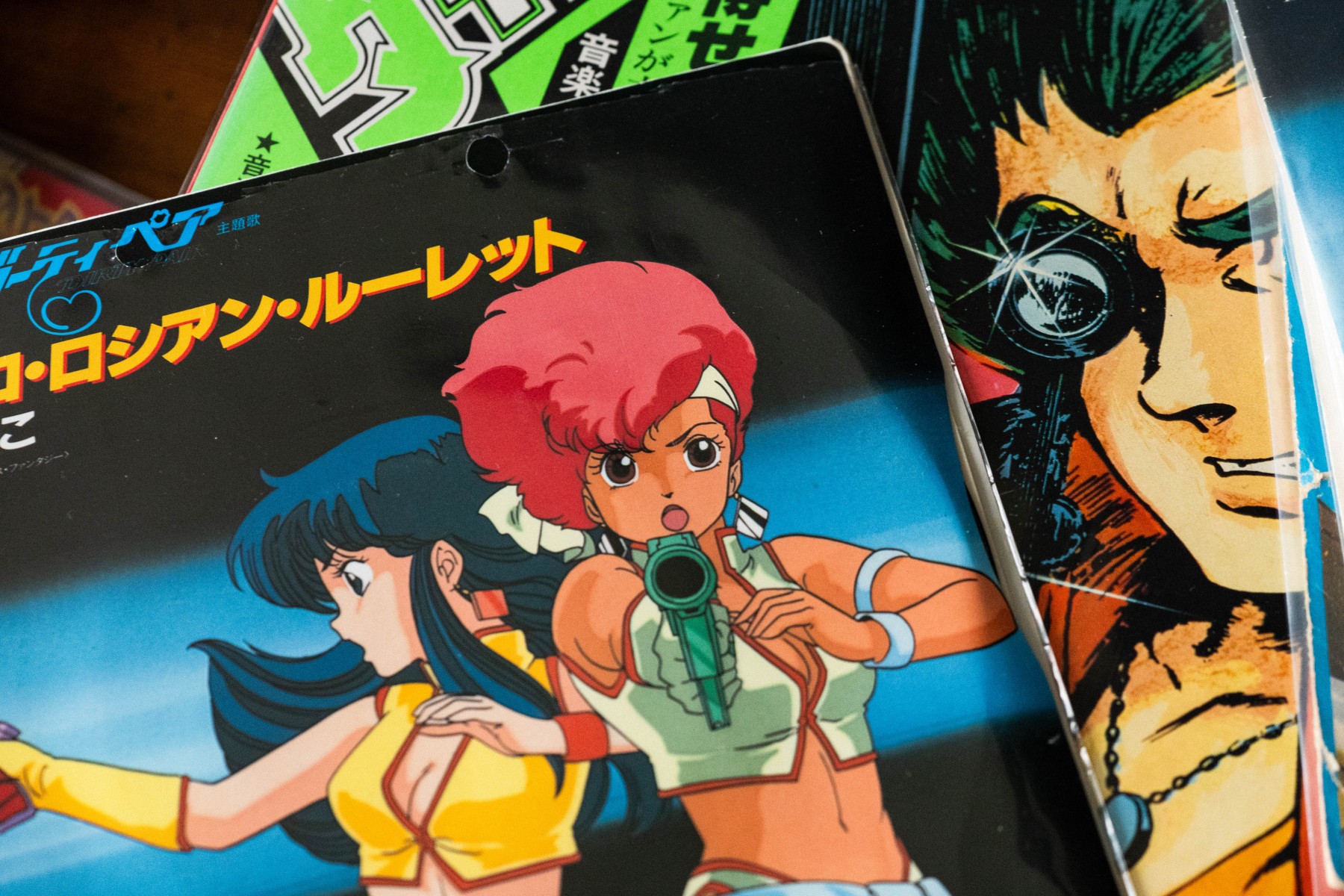
Dirty Pair (1985) is represented by a Japanese Victor pressing, because the show never reached mainstream Italian broadcast. It exists in the collection as a reminder that not everything travelled. Some things stayed Japanese.
Samurai Troopers (I 5 Samurai, Italy 1990) bridges the super robot tradition with Shintoist mythology, five young men in legendary armour, opening theme by Hiroko Moriguchi, who also provided music for the Gundam universe.
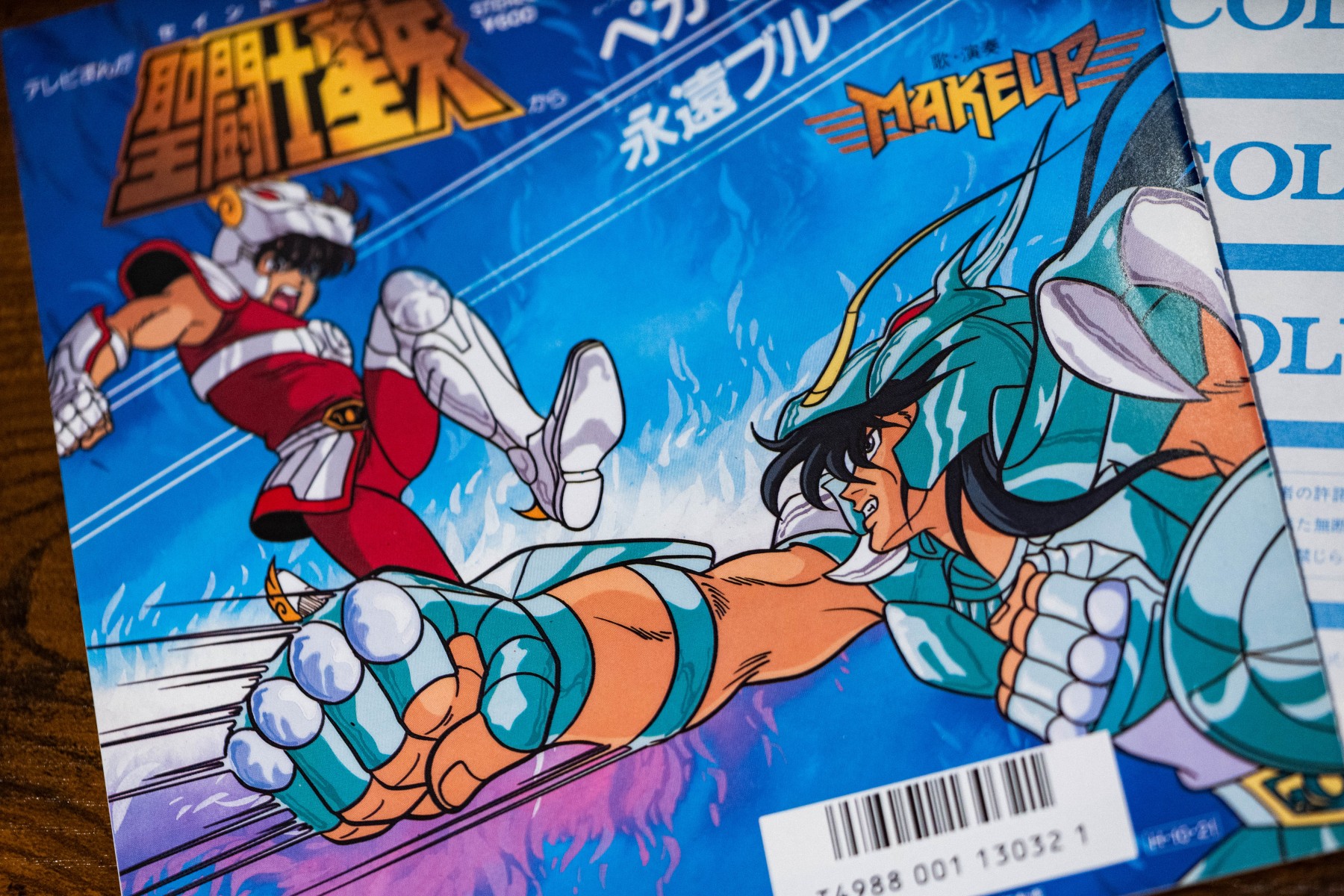
I Cavalieri dello Zodiaco arrived in Italy in March 1990 on Odeon TV. A generation that had grown up on Goldrake and Ken il Guerriero was old enough for something with more emotional and mythological complexity. Saint Seiya provided both: five young men serving the goddess Athena, each wearing a mystical Cloth around a constellation, fighting through Greek, Norse, Hindu, and Buddhist mythology simultaneously.
The Columbia EP is the original Japanese pressing of Pegasus Fantasy by Make-Up, the opening theme that does not build slowly but begins at full altitude and stays there. Written by Machiko Ryu, composed by Nobuo Yamada and Hiroaki Matsuzawa. B-side: Eien Blue, Eternal Blue. The two Columbia cassettes, the hit song collections, two volumes, represent the show at full franchise momentum: the kind of product that only gets made when a property has already proven its reach.
Japanese oddities
Not everything here belongs to the 1980s. Some of this collection reaches back further, to the original wave of Japanese animation, to the prehistory of the genre.
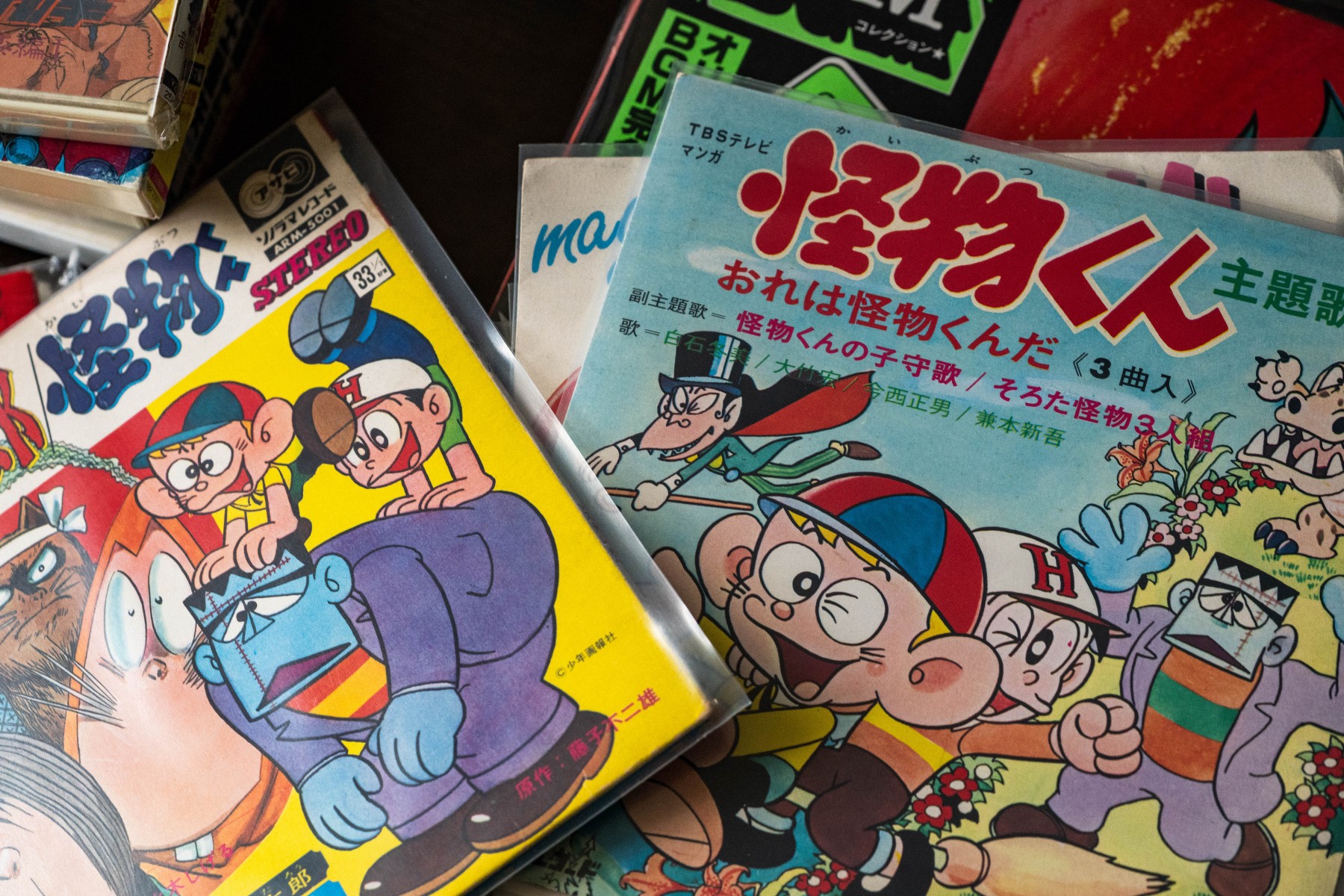
The oldest record in the collection is a 1968 Teichiku EP for Kaibutsu-kun (Carletto il principe dei mostri) created by Fujiko Fujio A, first adapted for television in April of that year. Holding it is a different experience from holding a 1984 Canyon Records single. Lighter, older, slightly foxed at the edges. The vinyl itself sounds different, a warmth that comes partly from age, partly from the production standards of a 1968 Japanese children’s record. Three tracks: main theme, lullaby, comedic piece. Simple, direct, completely of its moment.
GeGeGe no Kitaro, created by Shigeru Mizuki, first aired January 1968, is represented by two records. A Sonorama split single pairing the Kitaro theme with Kaibutsu-kun. And a King Records Grand Parade compilation that adds Ultraseven and Mighty Jack to the mix. The compilation is a document of a specific moment in Japanese children’s television. Four shows, one record, one era.
Conclusion
Roughly three decades of Japanese animation, distilled into 38 physical objects. From a 1968 EP to the hard rock themes of the 1980s. From a 1968 children’s record with a ghost boy to a 1986 rock opera about men in constellation armour. From Italian pressings of Italian themes to Japanese originals that I didn’t hear on Italian television.
All of it arrived, somehow, in Italian children’s afternoons. All of it became part of a generation’s internal furniture. And all of it, eventually, left a groove in the vinyl, literal or otherwise.
If you remember any of these shows, or if you are encountering them for the first time through the music, there is something here worth lingering on.
I leave you with two more masterpieces of Italian anime song (sadly, I don’t have records or tapes for them): L’Uomo Tigre (Tiger Mask) and Galaxy Express 999. Ciao!
Stay curious. Stay nostalgic.
Because retro never dies, it just respawns.
Leave a Reply