
The first time I watched Katsuhiro Otomo’s Akira, I couldn’t get over the fact that people had drawn those movements by hand. I still can’t, really. There is so much happening in an image, and then it moves, and all those carefully placed details have to come along with it.
There were voices waiting for those drawings, too. At a Tokyo International Film Festival talk in 2019, Mitsuo Iwata and Nozomu Sasaki, the voices of Kaneda and Tetsuo, recalled recording their performances before the animation was finished. Otomo showed them his storyboards to guide the scenes. Iwata compared the process to radio drama. Even the breathing had room to find its own rhythm.
Somewhere between that astonishment and the collection I have now, Akira acquired quite a lot of shelf space.
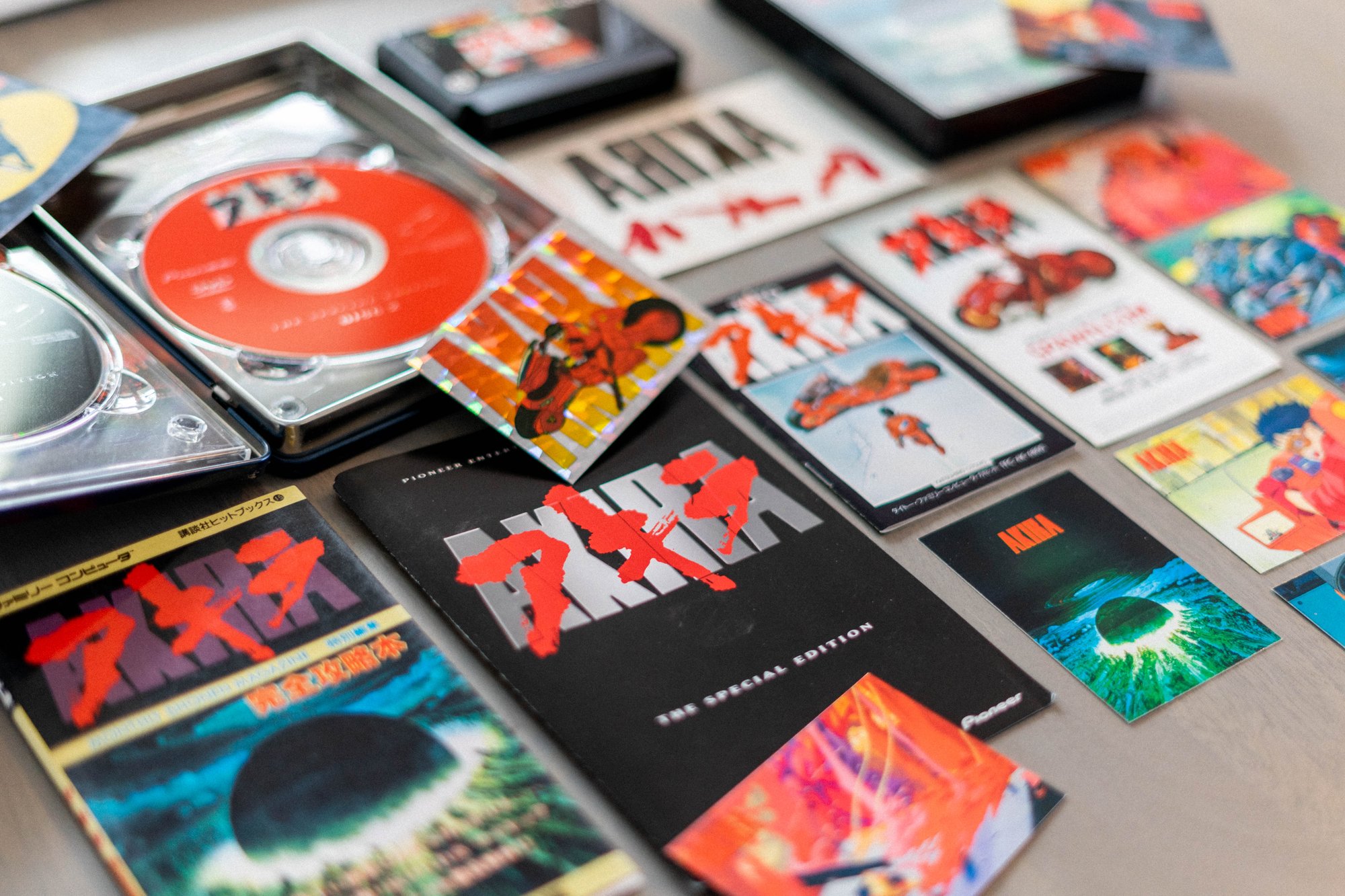
There are several editions of the film, including the metal DVD case and the 30th-anniversary Blu-ray. The manga has its own substantial cardboard home in the 35th-anniversary box set. Kaneda’s bike turns up in miniature, and the games carry the same name into machines with very different ideas about what to do with it.
A little longer with the drawing
The manga gives you time to be nosy. You can follow a line of windows, look back at a face, or spend longer on a panel than the action apparently requires. The city will wait while you look. On screen, it is already somewhere else.
I like having both sorts of time available. The film pulls you through; a book can stay open beside you. The 35th-anniversary set counts from the manga’s debut in 1982; the film followed in 1988. Its six hardback volumes and Akira Club have a proper home behind red and black panels with buildings on the inside. Even the box has a city in it. Collectors can become surprisingly articulate about cardboard.
I also have Akira Art of Wall, by Otomo and collage artist Kosuke Kawamura. Its three concertina books reproduce the collages displayed on the construction hoardings around Shibuya PARCO; a fourth documents the project. PARCO counts 22.7 metres of artwork across both sides of the three concertina books. Drawings from a fictional city had become part of a real building site. Now those walls fold back into a silver box. Bringing a piece of Tokyo home starts to sound like a furniture problem.
A place for Kaneda
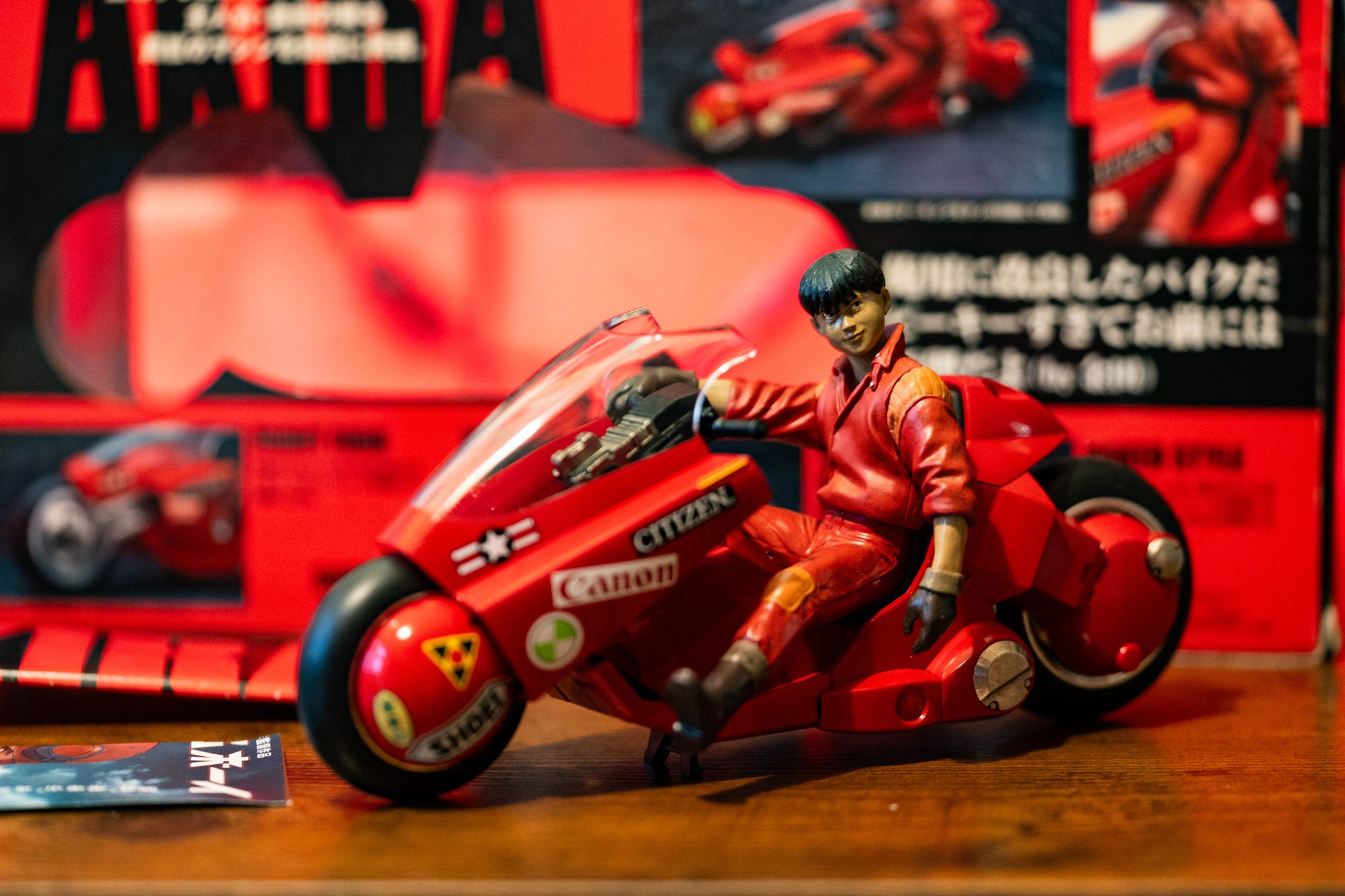
The figures make that urge to stop and look rather literal. I have the little Bandai bike kit, with 1:35 printed on its box, and the much larger Soul of Popynica version. On the red bodywork, Canon and Citizen are still there. Familiar names attached to a machine from an impossible future.
When I posted the Soul of Popynica bike, I described its appeal fairly honestly: “You’re an adult now, you pay taxes, and you deserve a die-cast bike.” An entirely reasonable purchasing philosophy, provided nobody asks how many bikes it covers.
It looks fast even when it’s parked. The low seat and that long red body seem to have carried some of the film’s momentum onto the shelf.
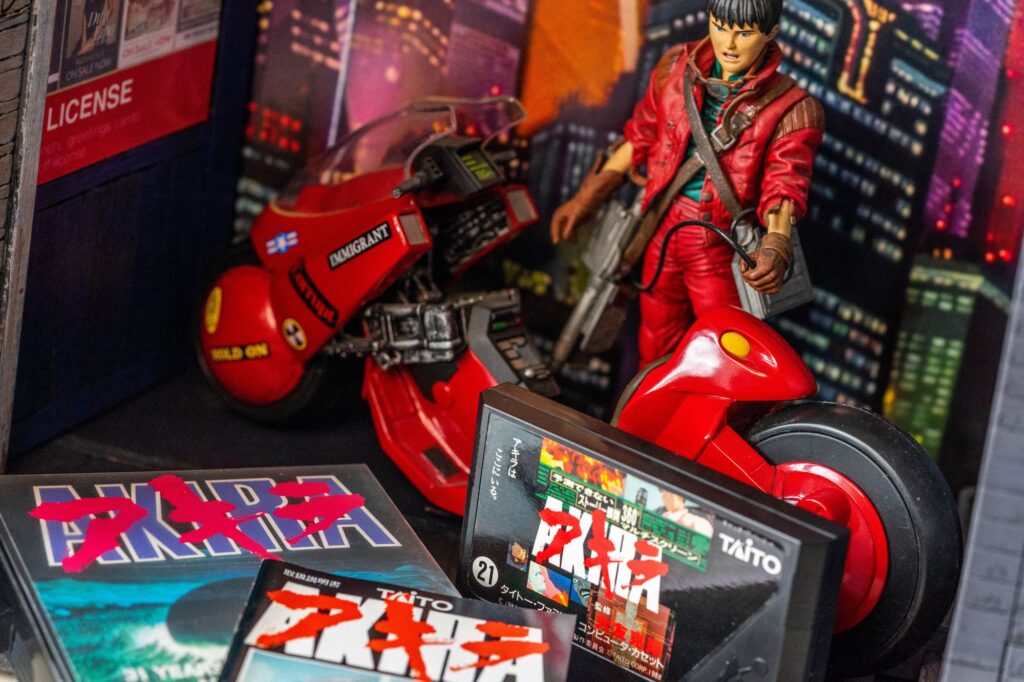
With the McFarlane figures, I went a little further and made a diorama. In the photographs I posted in 2021, Kaneda stands beside his bike against a backdrop of buildings, with the Famicom game in front. Apparently, owning the motorcycle had led to providing it with a neighbourhood.
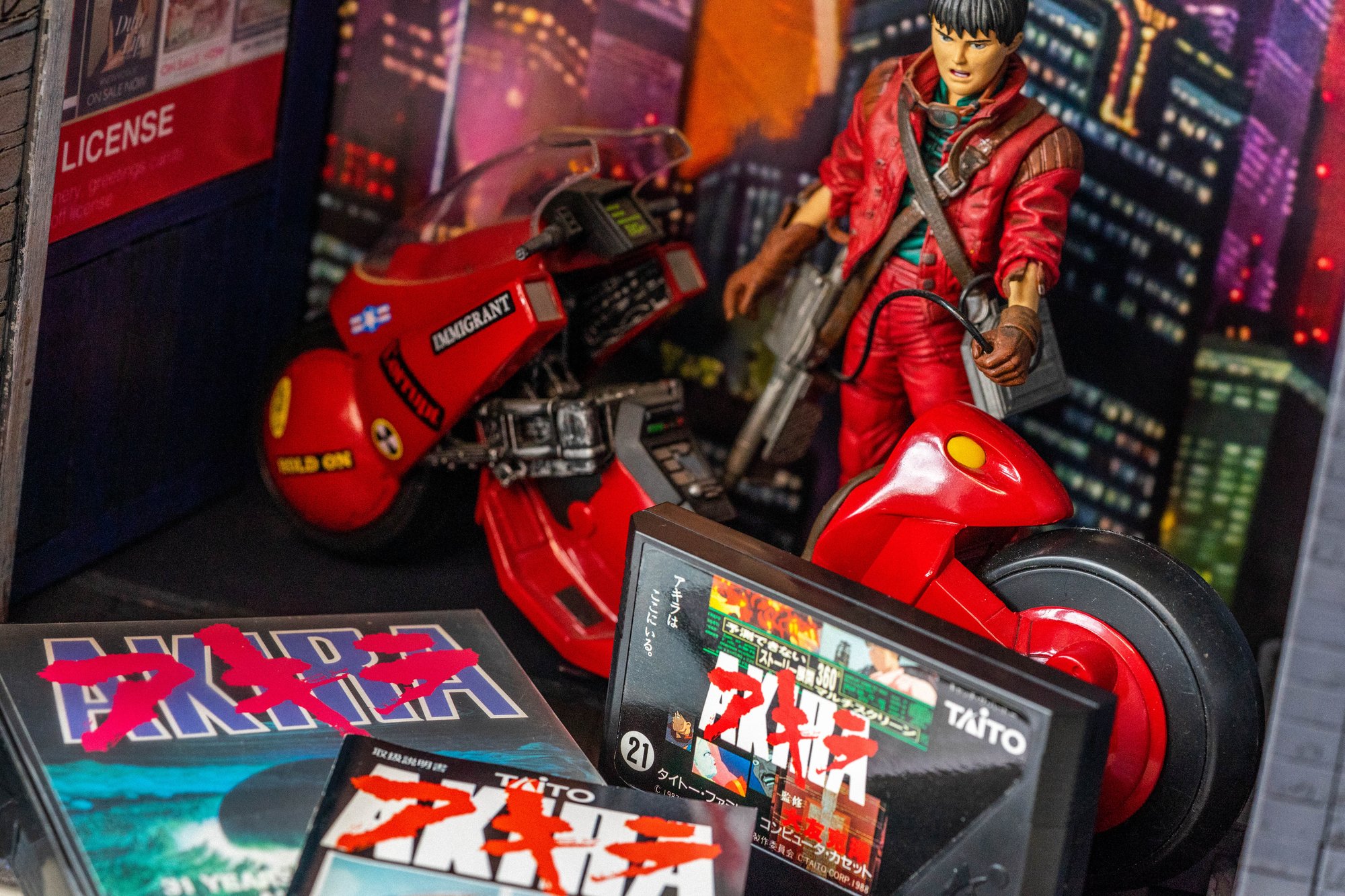
Then the Famicom cartridge gets involved, and the image starts moving again, on its own terms.
Neo-Tokyo, waiting for a command
Taito’s Akira for the Famicom works largely through illustrated scenes, dialogue and choices. On the Panasonic’s curved screen, faces hang against black, with Japanese text beneath them. An awful lot of trouble can fit inside that little rectangle of glass.
I really like the pixel art in this one. I said so in that old post, while also wishing we’d had a better Akira game. Those small portraits still have their expressions. You can enjoy the work of fitting Kaneda’s face into an eight-bit image and wish the game around it had done more for him.
On the Amiga, the box makes a much louder entrance. Kaneda stands on the front with his weapon, beneath a warning that Neo-Tokyo is about to explode. A circle beside his head announces a collector’s T-shirt. Sadly, my copy came without it.
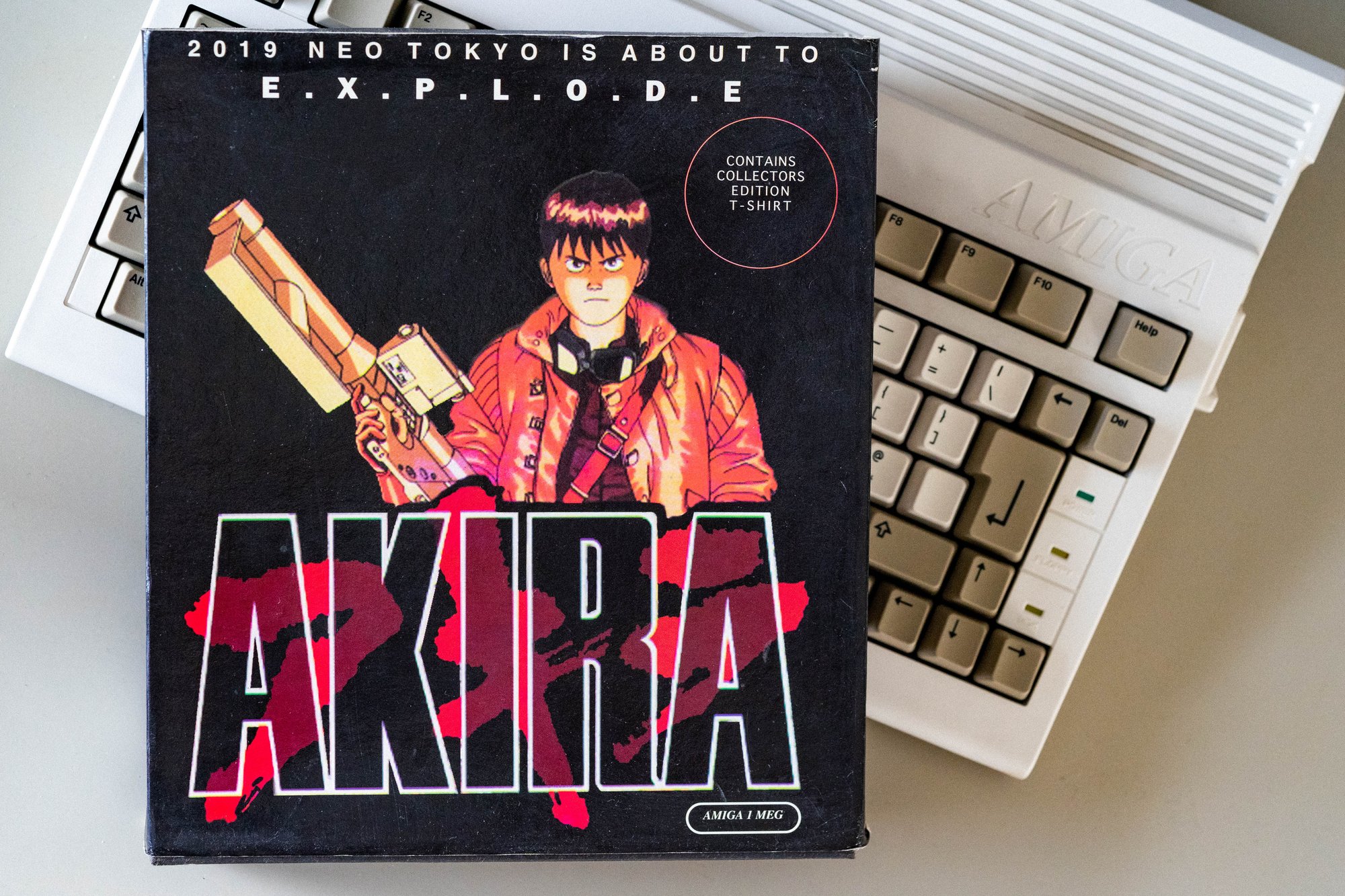
The manual brings the catastrophe down to tasks a joystick can manage: steer the bike, watch the fuel, find a way through the hospital. Film images sit beside game screenshots on the back of the box. The journey between them is visible before the computer is switched on.
I called it a poor action/platform game when I posted it, despite liking the pixel art. The box is doing a lot of work here. It can promise you the whole of Akira; the game has to decide what happens when you push right.
Coming Christmas, 1994
Some of the most curious things in the collection are the promotional cards I posted in 2019. They’re from 1994, with images from the film and manga, and plenty of confidence about what comes next. One advertises Akira games for Genesis, Super Nintendo, Game Boy, Game Gear and Sega CD. “Coming Christmas, 1994.” A lot to promise on the back of a small card.
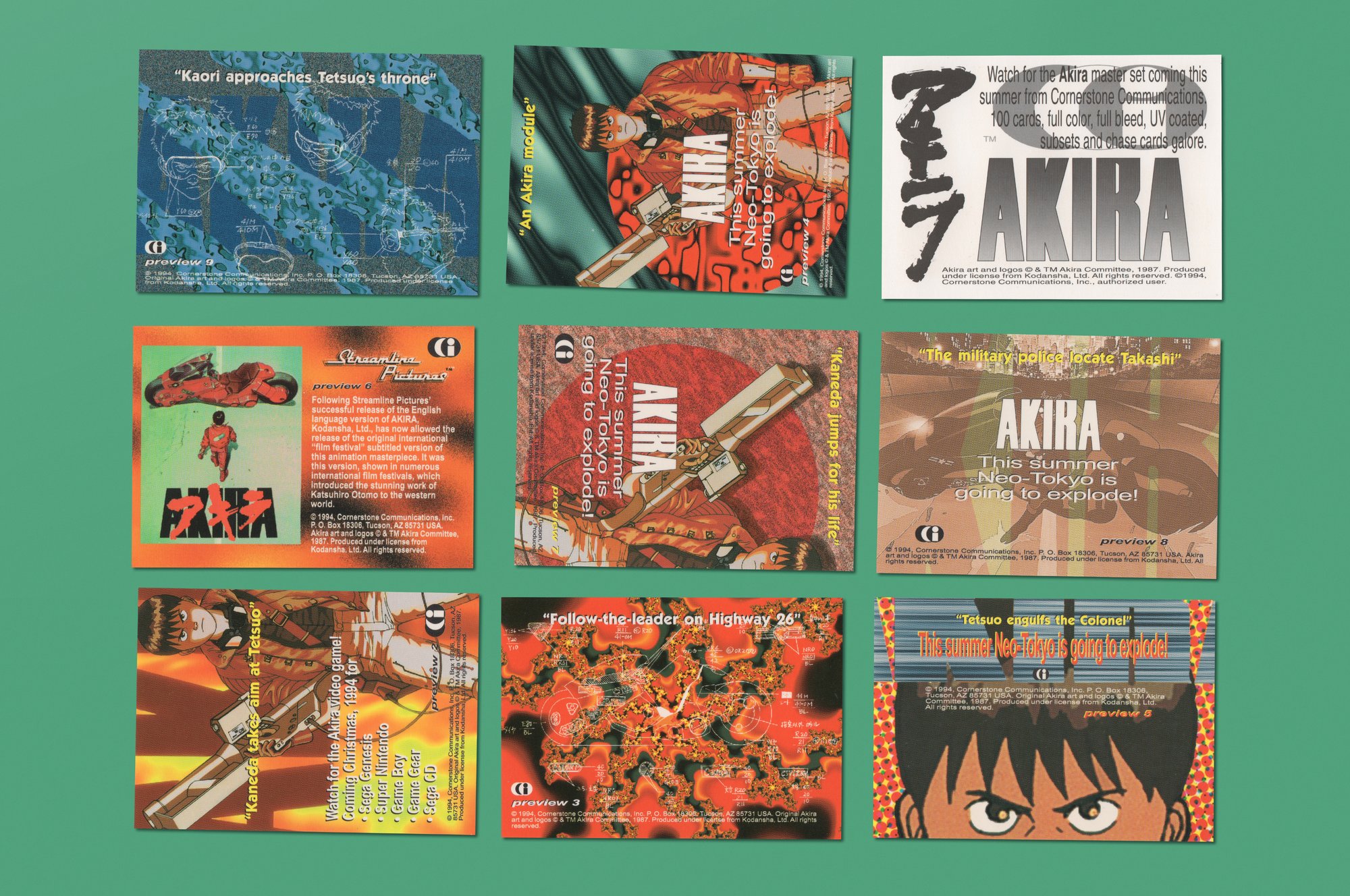
The Mega Drive game never reached the shops. A surviving prototype was eventually preserved and released by Hidden Palace on Christmas Day 2019. Twenty-five years after the Christmas printed on the card, there was finally a build to explore, unfinished and prone to crashing. By then, we were living in the year that the film had imagined.
I like finding something like that among the booklets and boxes. You turn over a card to look at the other side and find a future that never quite happened. It makes the missing T-shirt seem a fairly modest disappointment.
That first astonishment is still the part I care about. All the work it took to make those drawings move, and the feeling of watching something that seemed almost unreasonable to have made by hand. A tiny motorcycle is a strange thing to come out of that feeling. Yet here it is, with its little Canon sticker, and I still want a closer look.
Stay curious. Stay nostalgic.
Because retro never dies, it just respawns.
Leave a Reply