
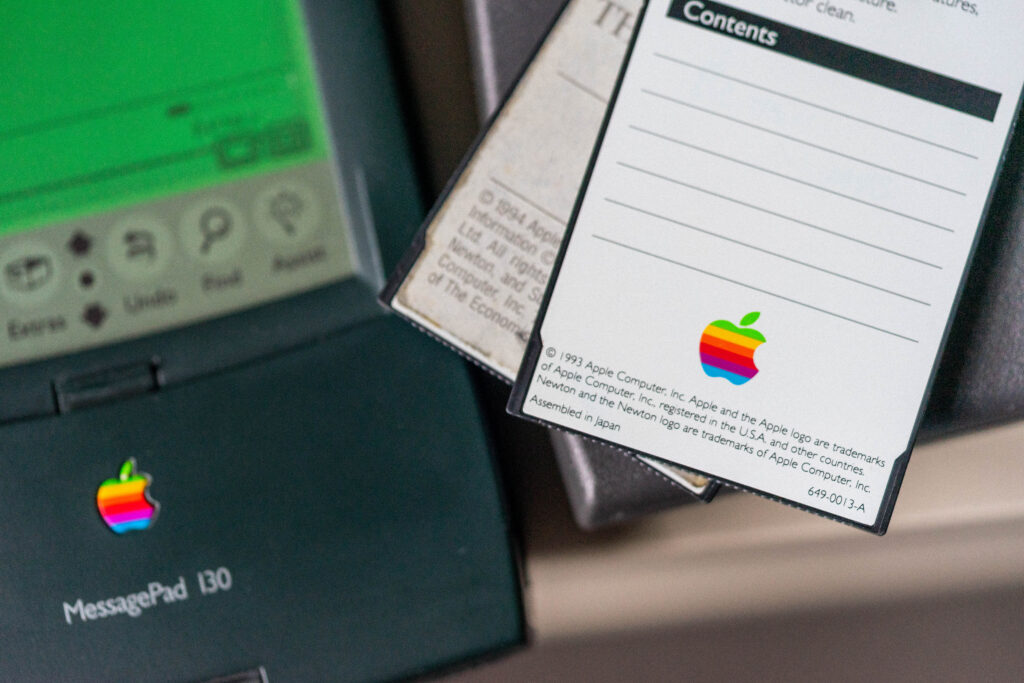
I spent 2 days trying to put one game on an Apple Newton. I have a Mac mini, a PowerBook from the exact same era, a PowerBoog G3 Pismo, floppy disks, PCMCIA cards, serial cables, and a stack of blank CDs that turned up halfway through. I lost.
Getting a single file onto a Newton in 2026 is one of the hardest simple things I’ve ever tried to do. And somewhere around hour ten, watching a 1996 PowerBook fall asleep on its own mid-transfer for the fourth time, it hit me how easy this is now. You move a file from one machine to another without touching a cable and you don’t even think about it. The Newton comes from the moment right before that became true.
It’s also one of the reasons the thing you’re probably reading this on exists. Both of those are true, and that’s the whole story.
A professional device, for the price
I saw a Newton for the first time in a magazine in 1995. I was about 14, and the price alone told me I was never going to own one.
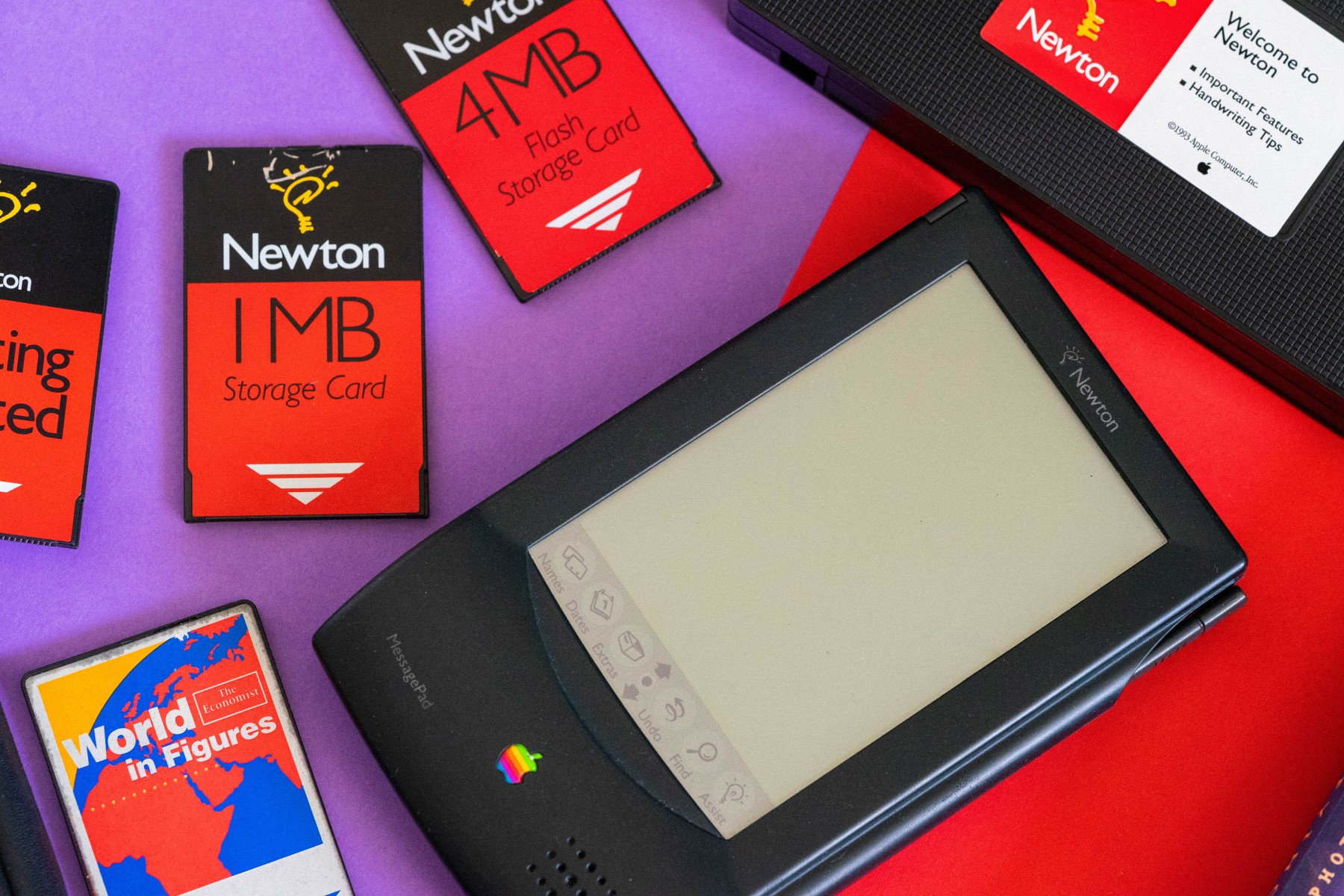
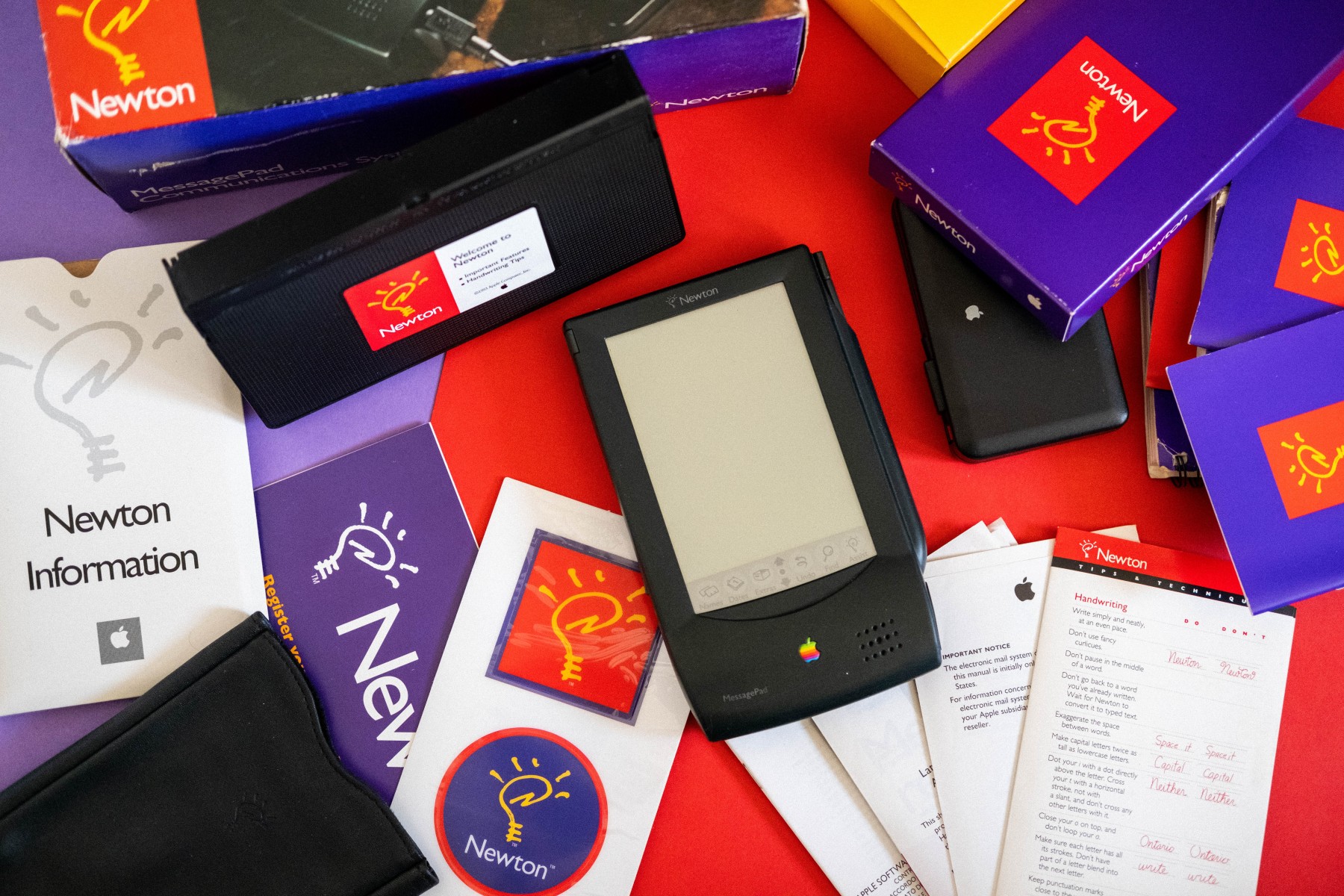
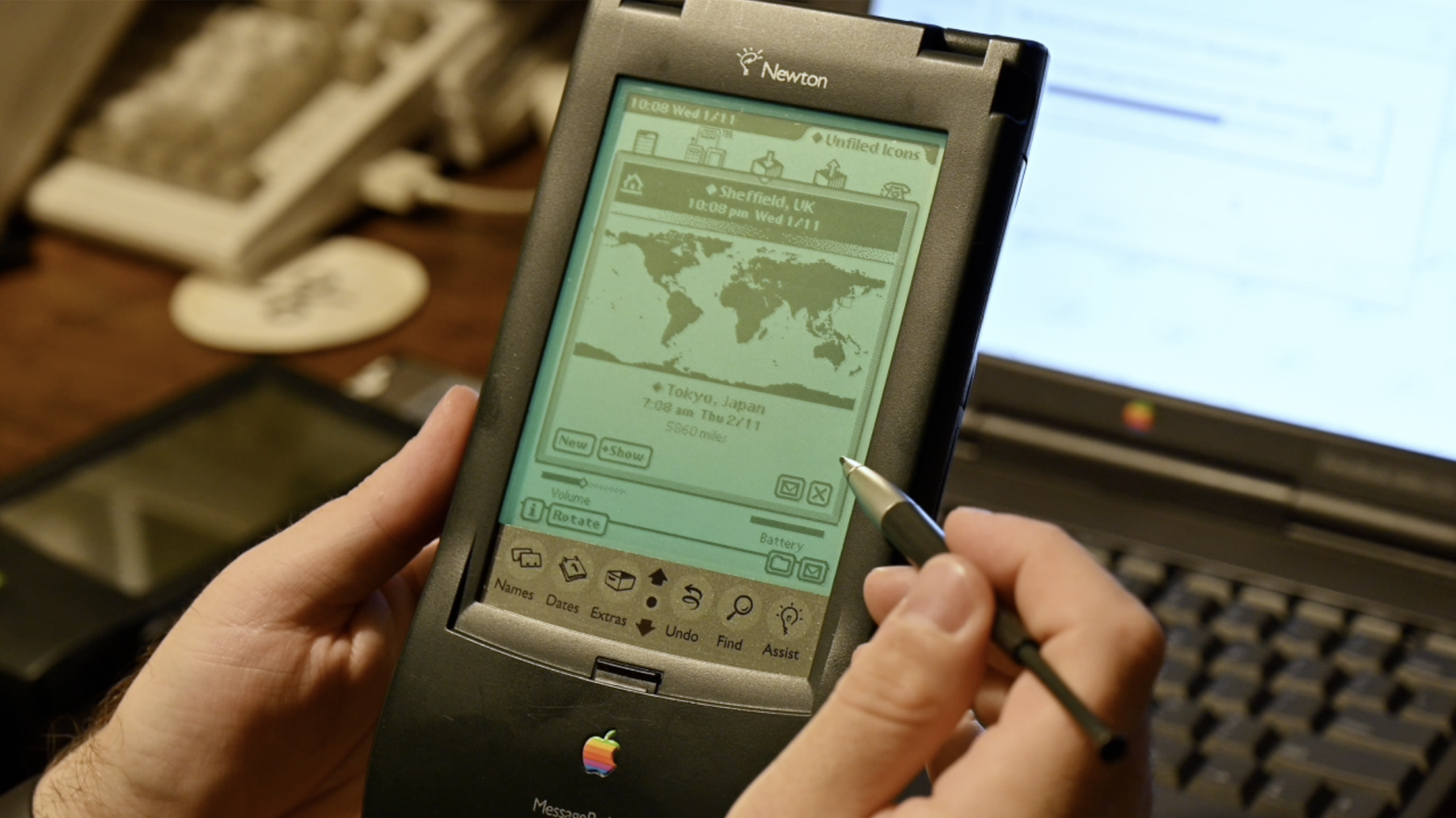
Apple in 1995 was not the Apple you know. It was a niche brand in trouble, making strange expensive things that didn’t quite work, with a lineup of computers that competed with each other more than with anyone else. The Newton was the strangest of the lot. A tablet you wrote on with a pen, in 1993, that tried to read your handwriting. It cost almost 700 dollars at launch. That was a professional tool, priced like one, and it was not for a kid whose comics came off his brother’s shelf.
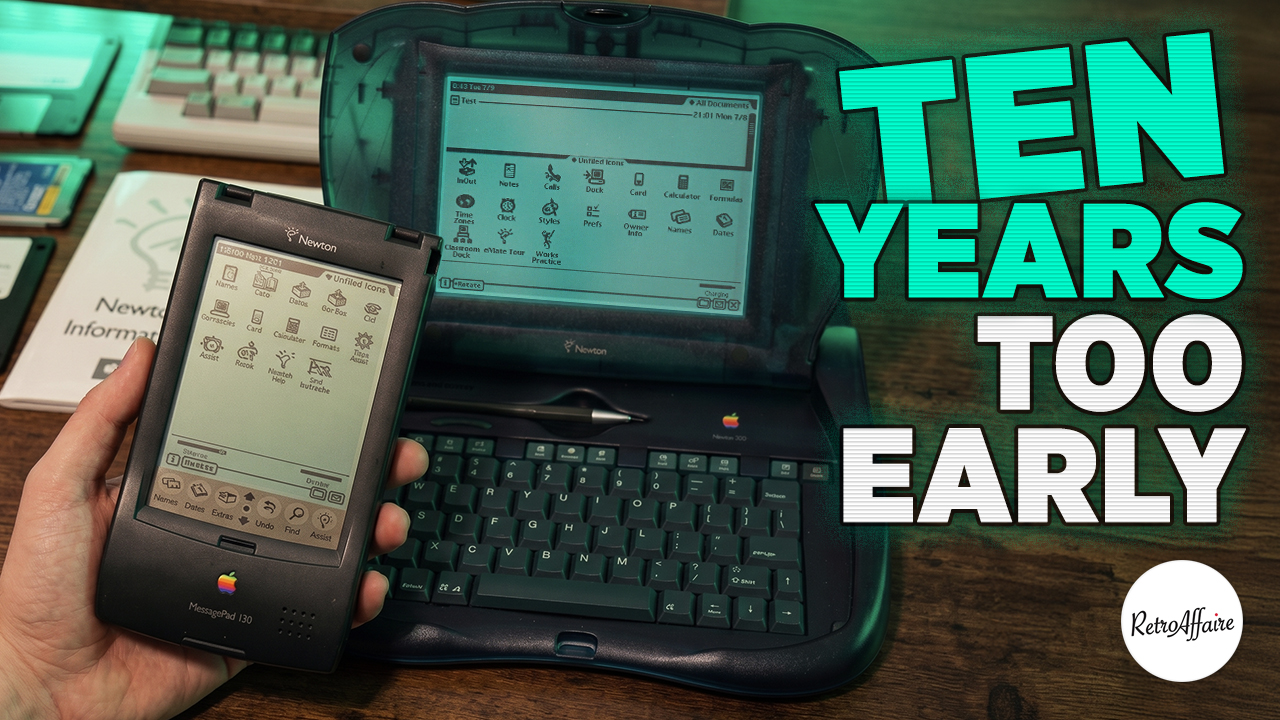
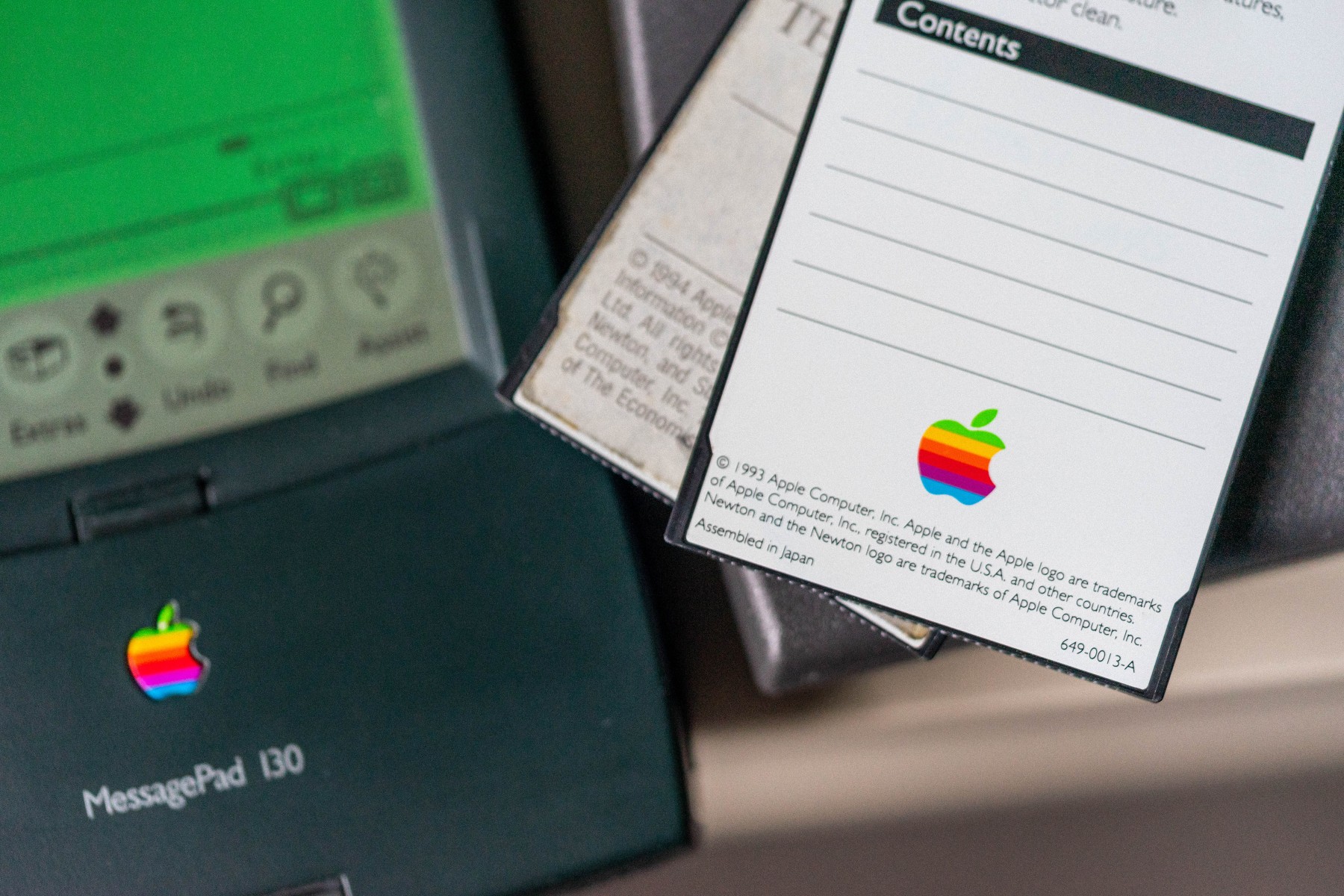
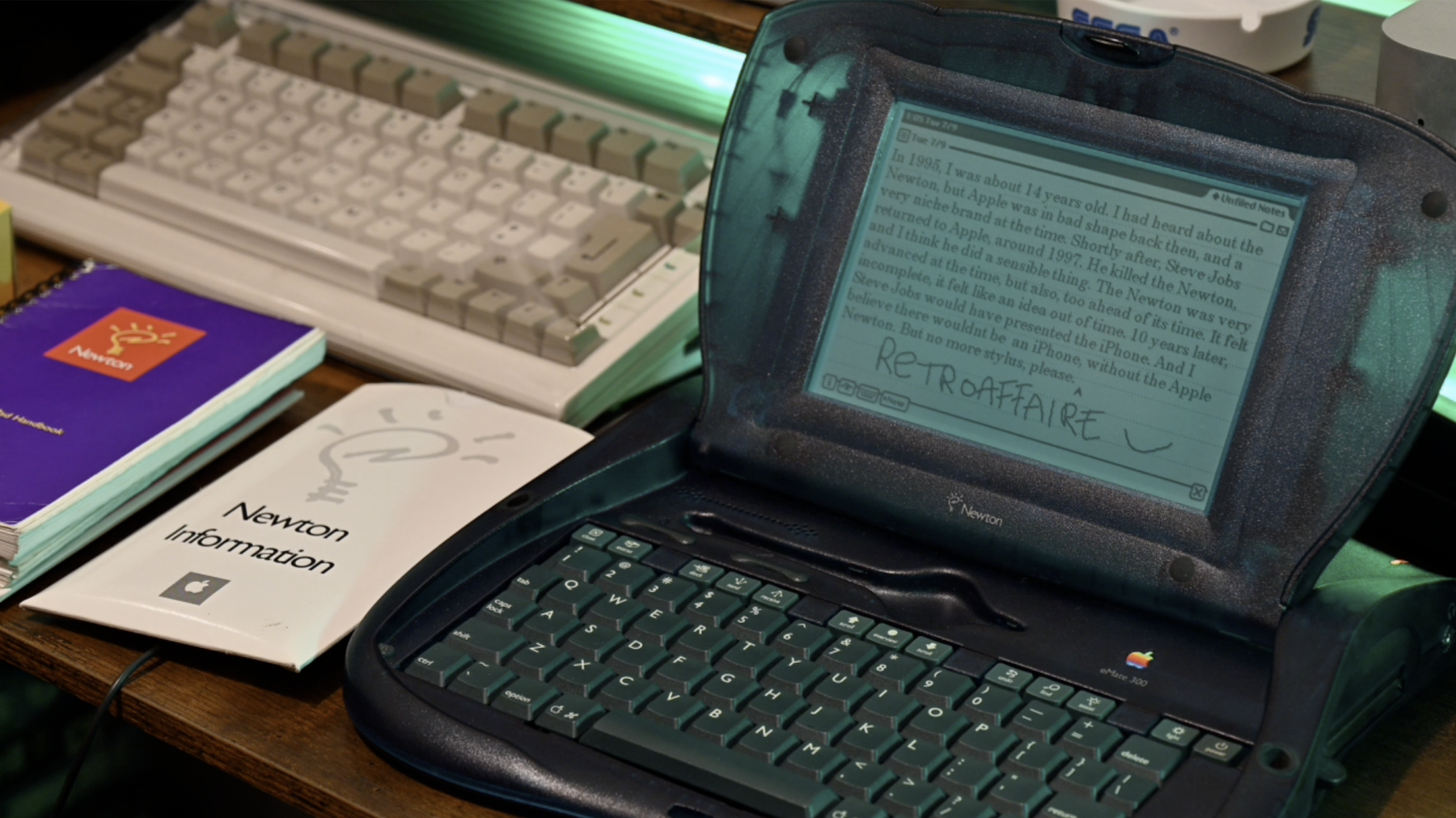
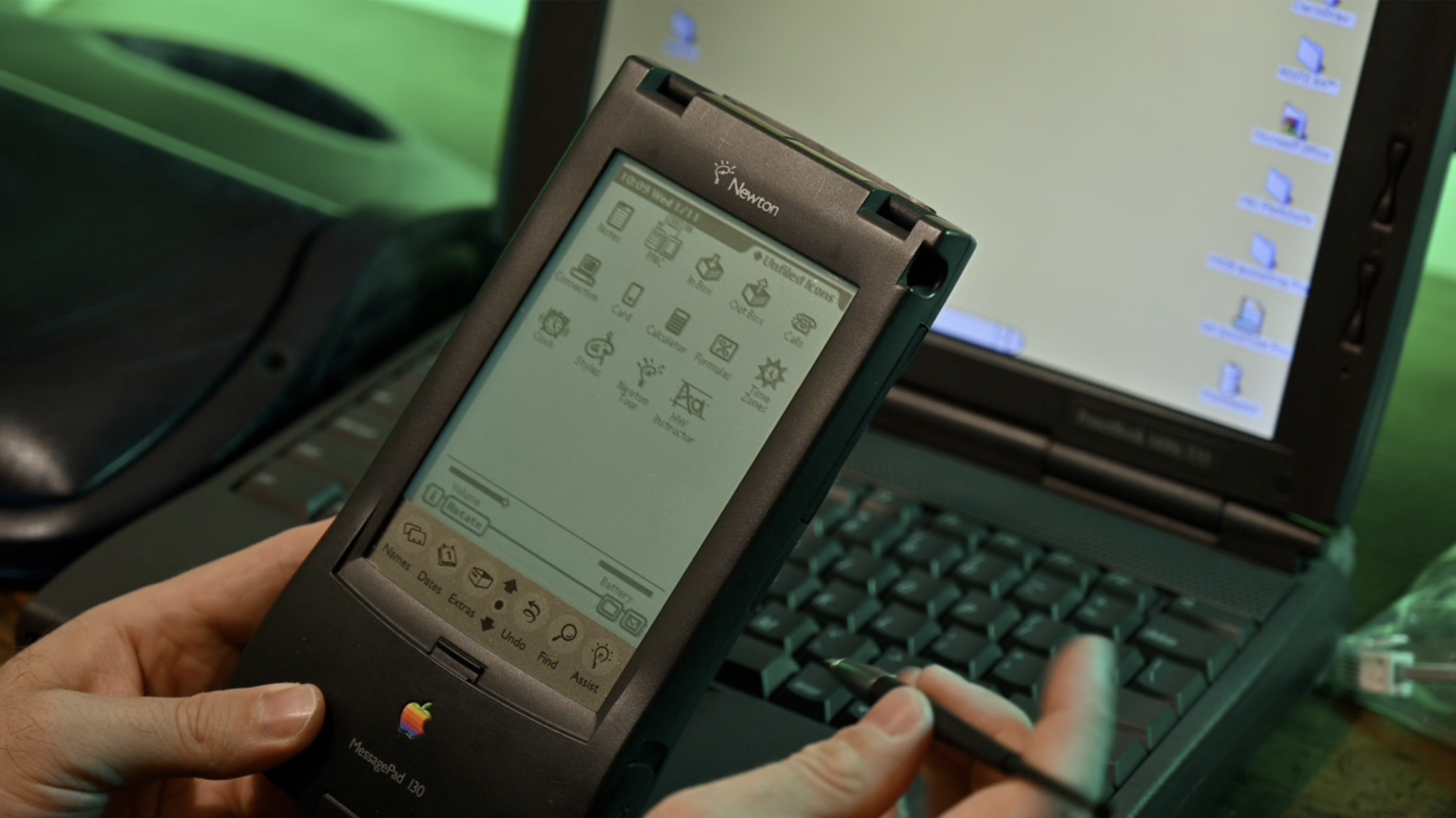
I have 3 of them now. The MessagePad 100, the MessagePad 130, and the eMate 300 from 1997. The eMate is the one that stops people. It’s the only Newton with a real keyboard, it was built for schools, and it looks like the future because it sort of was. That translucent aquamarine plastic turned up a year or two later on the first iMac and the first iBook. The clamshell, the handle, the whole idea of a friendly device you carry around: Apple got there properly 10 years later, and put it in your pocket.
The backlight on the later models glows a soft green-blue that reminds me of the Game Boy Light, the backlit Game Boy that only came out in Japan in 1998. Same era, same idea, same slightly unreal glow.
The device that couldn’t read
Here’s what the Newton did, and why people laughed.
You wrote on the screen, and it turned your handwriting into text. When it worked it felt like magic. When it didn’t, it turned “beat up Martin” into “eat up Martha”, which is a real joke from a real episode of The Simpsons (“Lisa on Ice”, 1994). A bully dictates a memo, the Newton mangles it, he throws the thing across the room. For a lot of people, that gag was the Newton. The gadget that couldn’t read.
To be fair to it, there was a learning curve, and it went both ways. You learned how it read, it learned how you wrote. On the MessagePad 130 the recognition is noticeably better than on the 100. But the damage was done, and the press had already decided.
Now look past the joke at what it was actually reaching for in 1993. A touchscreen. A stylus. Handwriting recognition. Notes, calendar, contacts, fax, a modem, all in one thing you held in your hand. Then look at what’s in your hand right now.
The Newton wasn’t bad. It was early. It arrived before the batteries, the screens and the chips could carry the idea, so it felt incomplete, because it was. The idea was whole. The world around it wasn’t built yet.
Steve Jobs kills it
Jobs came back to Apple in 1997, with the company months from going under, and he cut everything that wasn’t load-bearing. People inside started saying a project had been “Steved” when it vanished overnight.
The Newton was one of them. In February 1998 he killed the whole line, the MessagePad and the eMate together. Around 200,000 Newtons had sold across 5 years. Not enough for a company that couldn’t afford a single passenger.
And I think he was right. It was a drain, chasing something the technology couldn’t deliver yet. Killing it was the sensible call.
But the idea didn’t die, and neither did the R&D. It went underground for 10 years and came back finished. In 2007 Jobs held up a phone with a touchscreen, no keyboard, and no stylus, and one of the biggest laughs of that keynote was him asking who wants a stylus. The Newton had a stylus.
Here’s the part I love. Years later, Apple engineers said that while they were building the iPhone keyboard, “eat up Martha” was a phrase that went round the hallways. The Simpsons joke that buried the Newton’s reputation in 1994 was still haunting the people building its successor in 2007. They were terrified of shipping another one. The man who cancelled the Newton built the iPhone on top of it, and the joke came along for the ride.
The part where I lose
So I wanted to run some software on it. On a normal retro machine you find the files, get them on a disk, load them. How hard can it be.
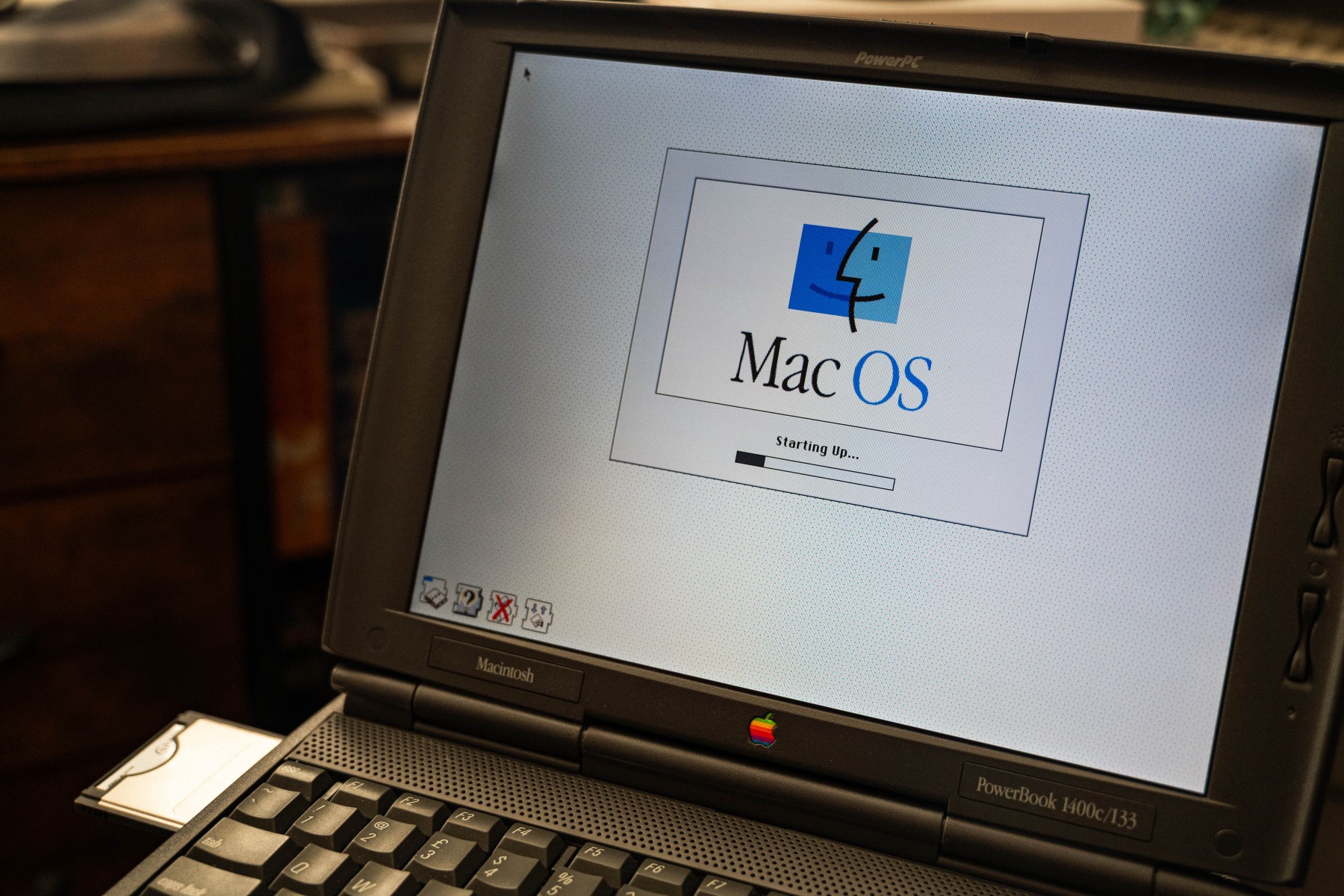
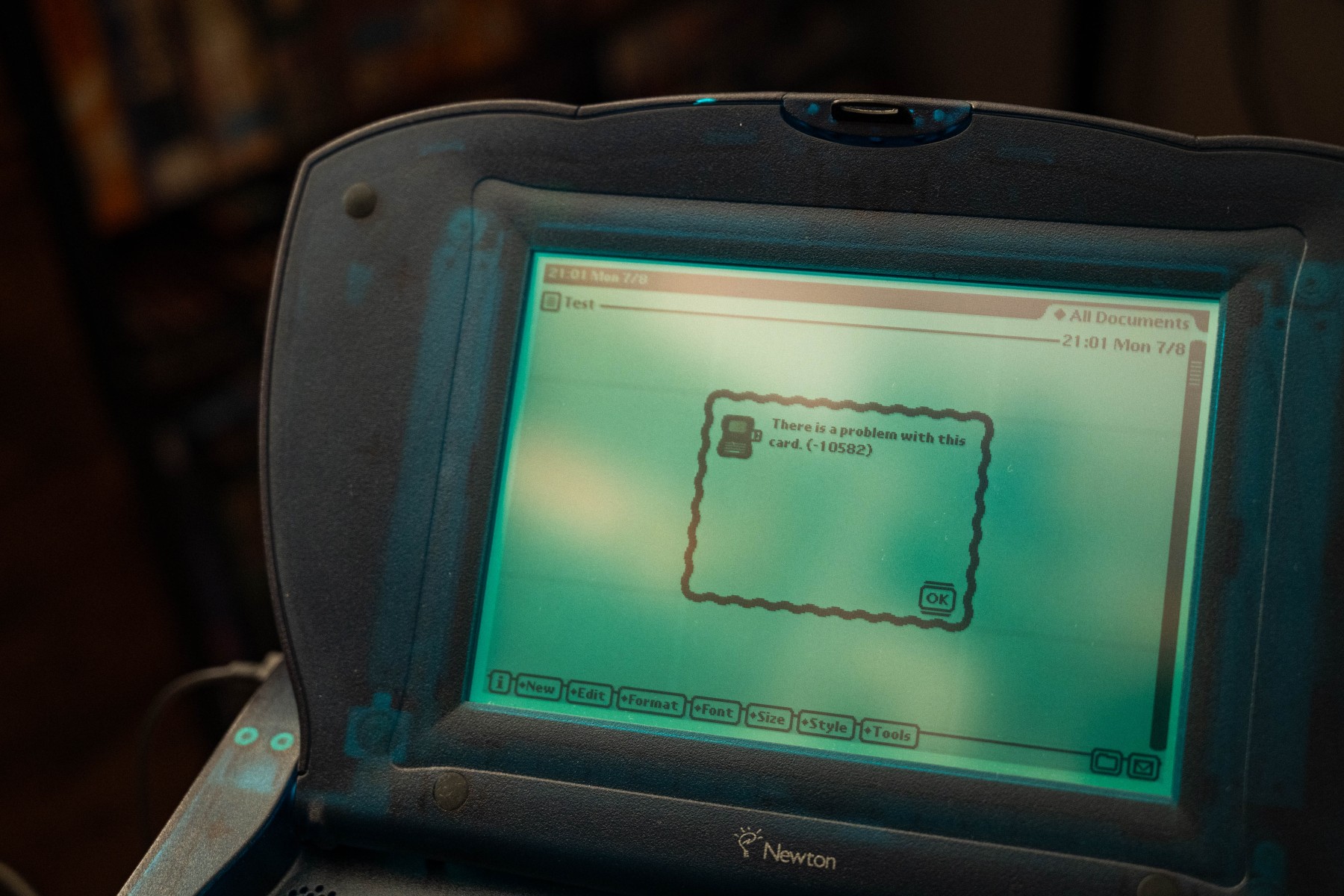
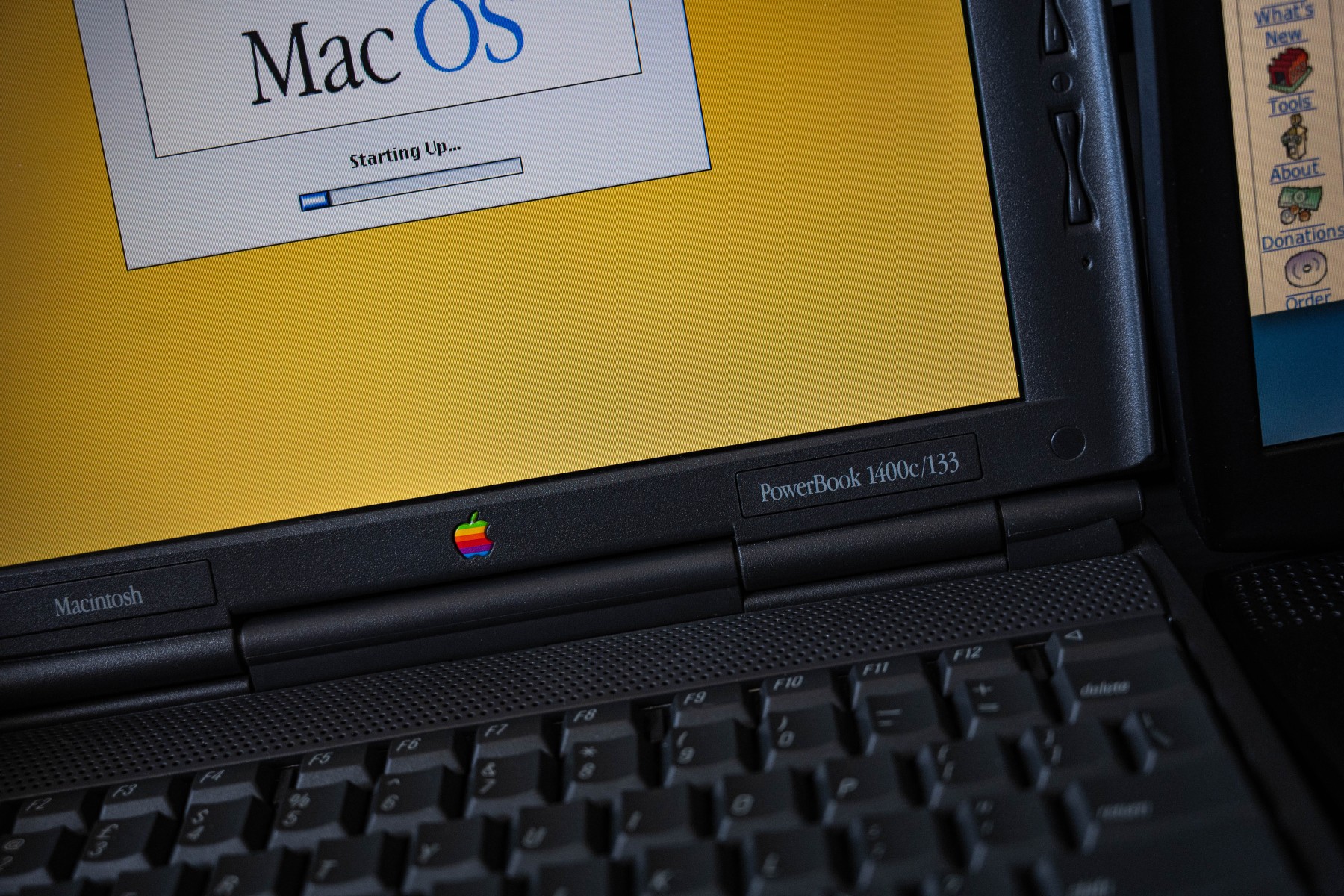
Very hard, as it turns out. The Newton connects to nothing modern. You need the Newton Connection Utility, which needs a Mac from the right era, the right cable, and a port no computer has had in 20 years. I tried the PowerBook 1400, which is exactly period-correct. I tried the Pismo, a G3 with USB, hoping it could bridge the gap between the modern Mac and the old one. I got the MessagePad 100 talking to the PowerBook through the Connection Utility, but only for backups. No software would go across. Different file systems, different formatting, different cables. Nothing.
Then the PowerBook started dropping into sudden sleep mid-transfer, and that was that. 2 days, 4 machines, every format I own, and I couldn’t put one file on a device from 1997.
So I gave up, and I cheated. I emulated it, because it was the only way I was going to see these games. And honestly, we’re not missing much.
Newtris is Tetris, and it works, which is more than some of the others manage. Kung-Fu is the one exception, it’s actually kind of fun once you fight the controls, a bit like Street Fighter on the Game Boy. Bomber has you flattening what looks like a city, and I genuinely couldn’t tell if I was the hero or the villain. Remote Town wants to be SimCity and I could not work out what was happening in it. Bricks is a breakout clone whose bricks spell the word “buy”, which I did not. Ghost Hunter had a great name and nothing I could understand behind it. And Yahtzee, a text adventure, which is exactly my kind of thing, wouldn’t let me start a game at all.
So that’s the lost software library of the Apple Newton. A Tetris, a breakout clone, and one decent kung-fu game. The 2 days of cables and dead PowerBooks were protecting me the whole time.
No more stylus
Jobs killed this line in 1998, and I still think he was right to. But he never really got rid of it. He took the pen away and waited 10 years for the technology to catch up to the idea.
That’s the thing the Newton taught me, sitting on my desk refusing to accept a file 30 years after it was built. You can have the best idea in the room, but if the world around it isn’t ready, if the batteries and the screens and the chips can’t carry it yet, then a great idea out of its time is just as stuck as a bad one. The Newton pushed the industry toward something, the way a few things do, and then stepped aside before it could enjoy it.
No more stylus, he said. Mine’s still in its slot.
Stay curious. Stay nostalgic.
Because retro never dies, it just respawns.
Leave a Reply