

Some machines earn their place in history by being powerful. The Toshiba Libretto earned it by being brave.In 1996, Toshiba asked a question that still feels ambitious today: how small can a real PC actually get?
Not a PDA. Not a handheld organiser running some stripped-down proprietary system. A proper IBM-compatible Windows machine, keyboard, trackpoint, operating system, compressed into something you could slip into a jacket pocket. The answer was the Toshiba Libretto. And thirty years later, it still feels slightly impossible.

A Machine That Shouldn’t Exist
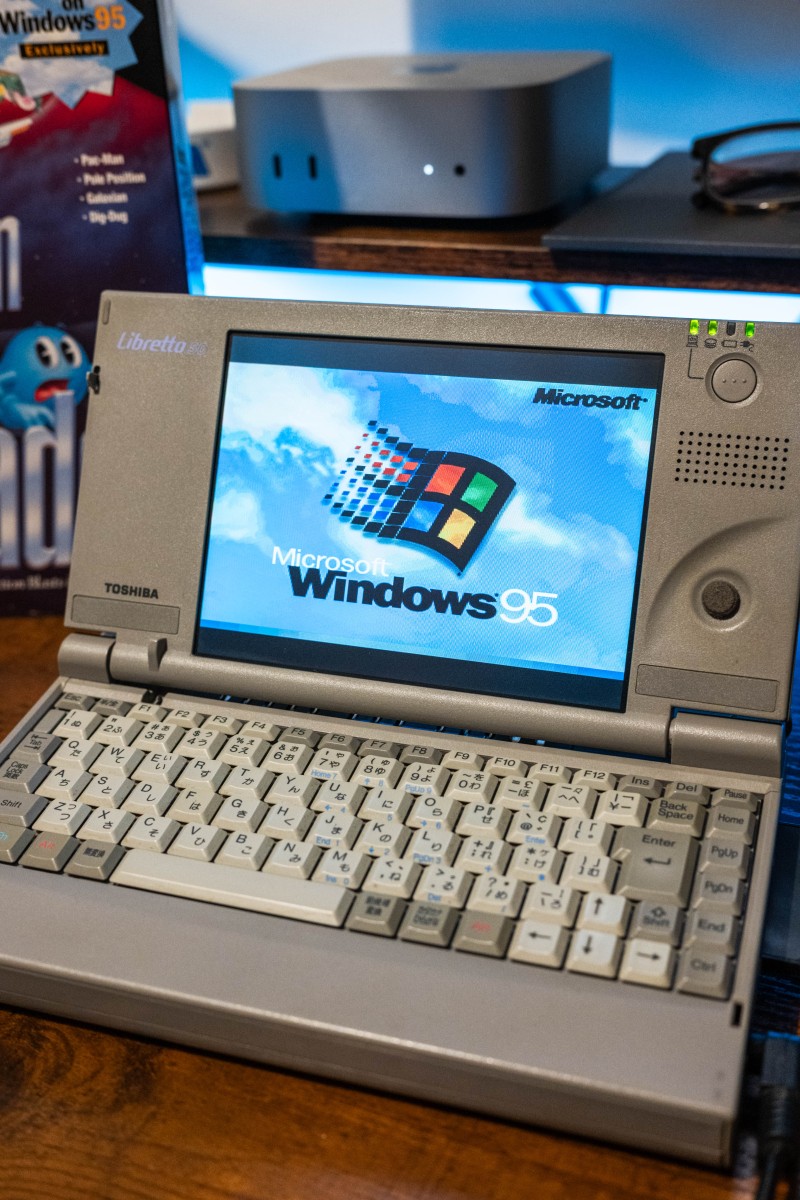
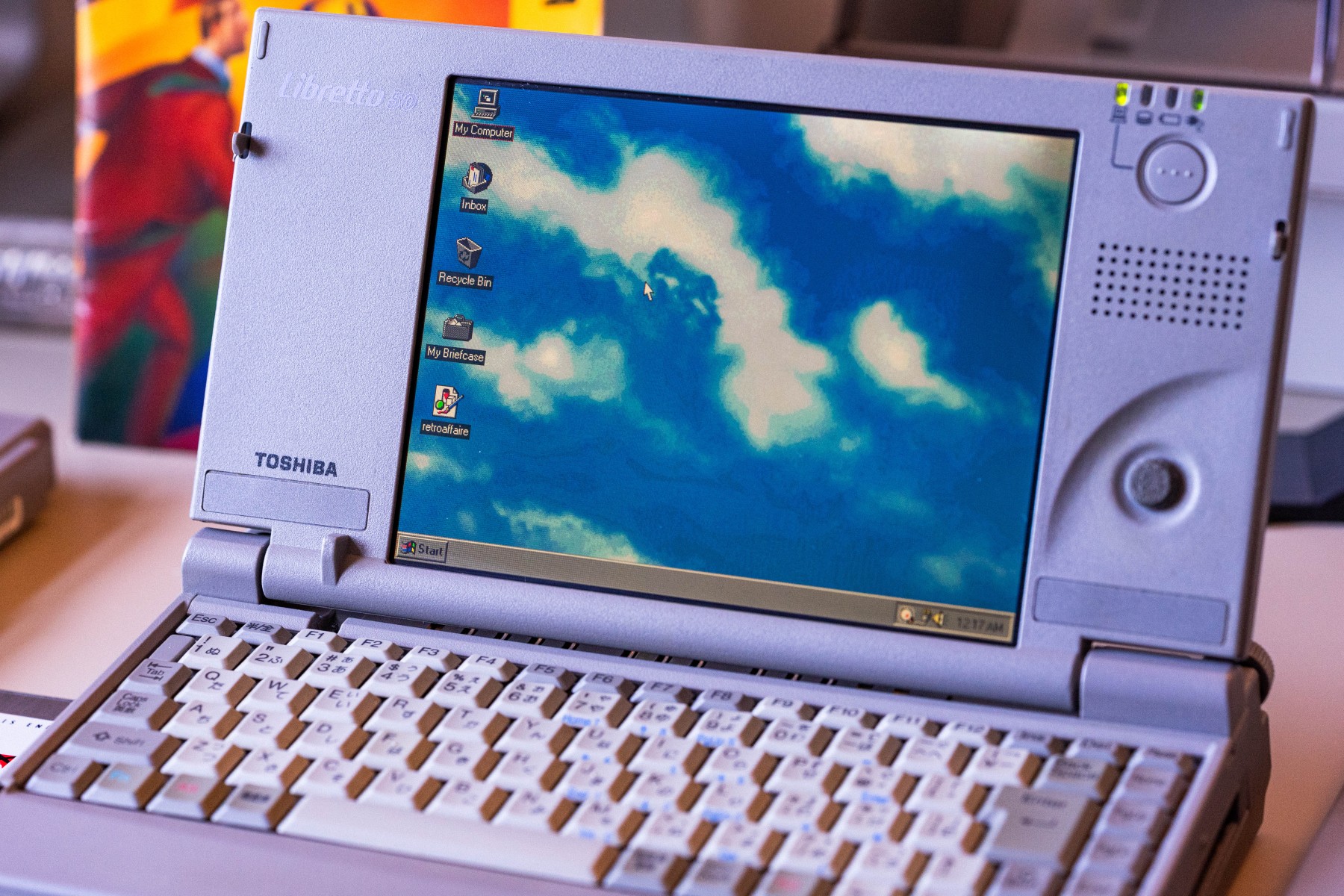
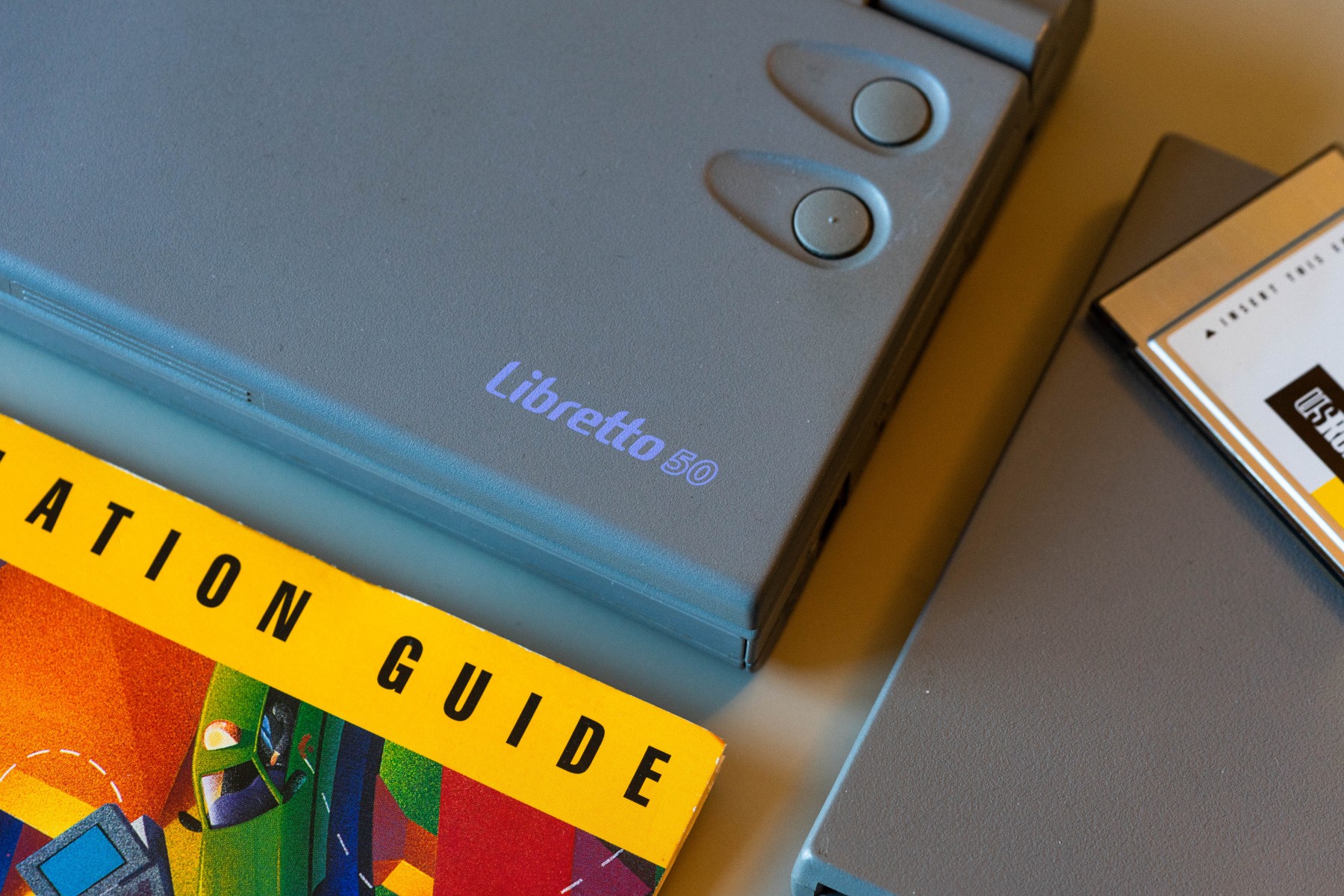
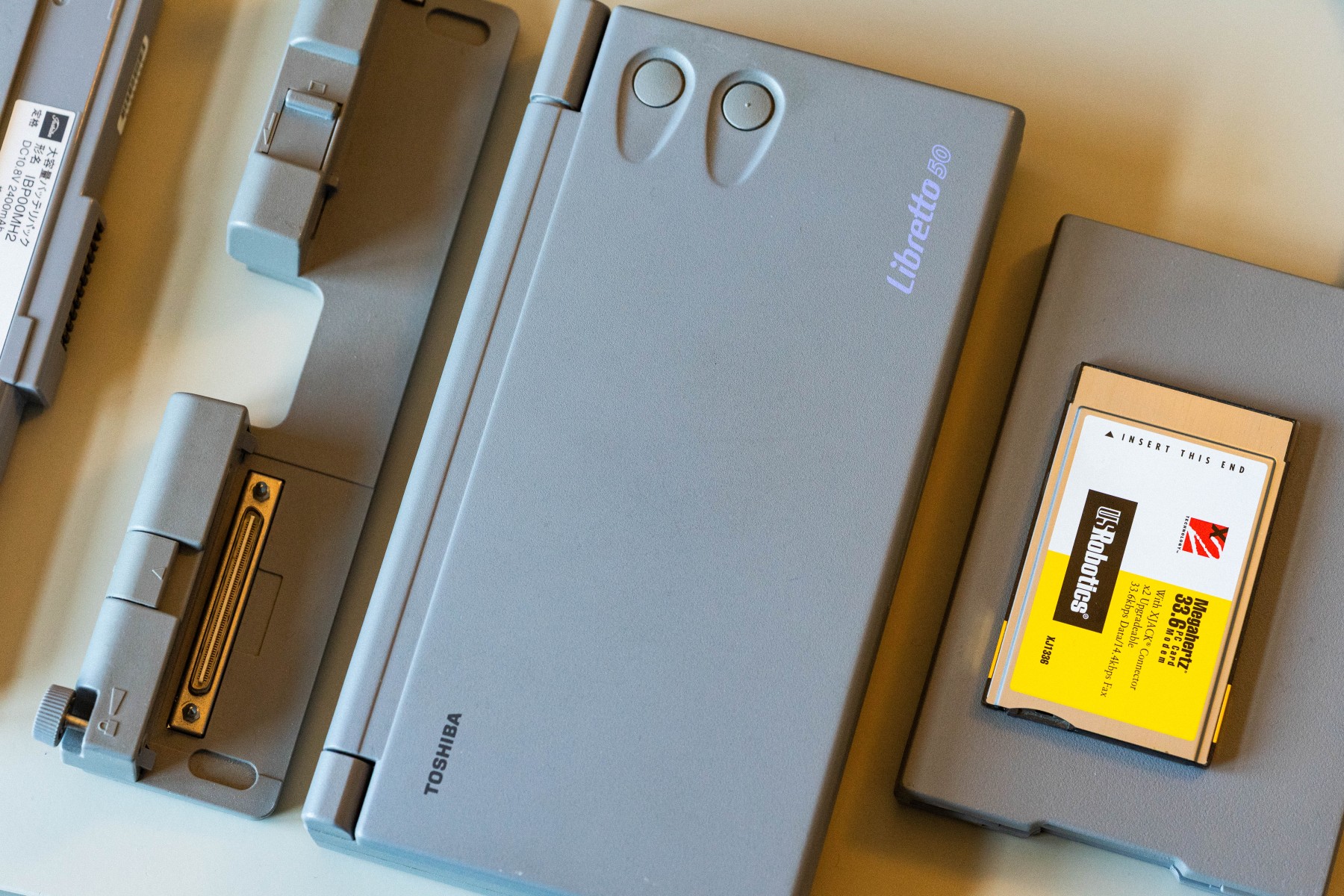
The Libretto 50CT runs a Pentium 75MHz processor, 16 megabytes of RAM, and a 6.1-inch screen. Its keyboard is so small that typing on it sits somewhere between a skill and a form of meditation. The Libretto family began in Japan with the 20 in April 1996. The Pentium-based Libretto 50 followed in January 1997 and reached Western markets as the 50CT.
There’s a word I associate with it: kodawari, a particular dedication to getting something right. The Libretto makes that idea tangible for me. The tiny keyboard is awkward, the screen is small, yet the whole machine feels deliberately made to be this size.
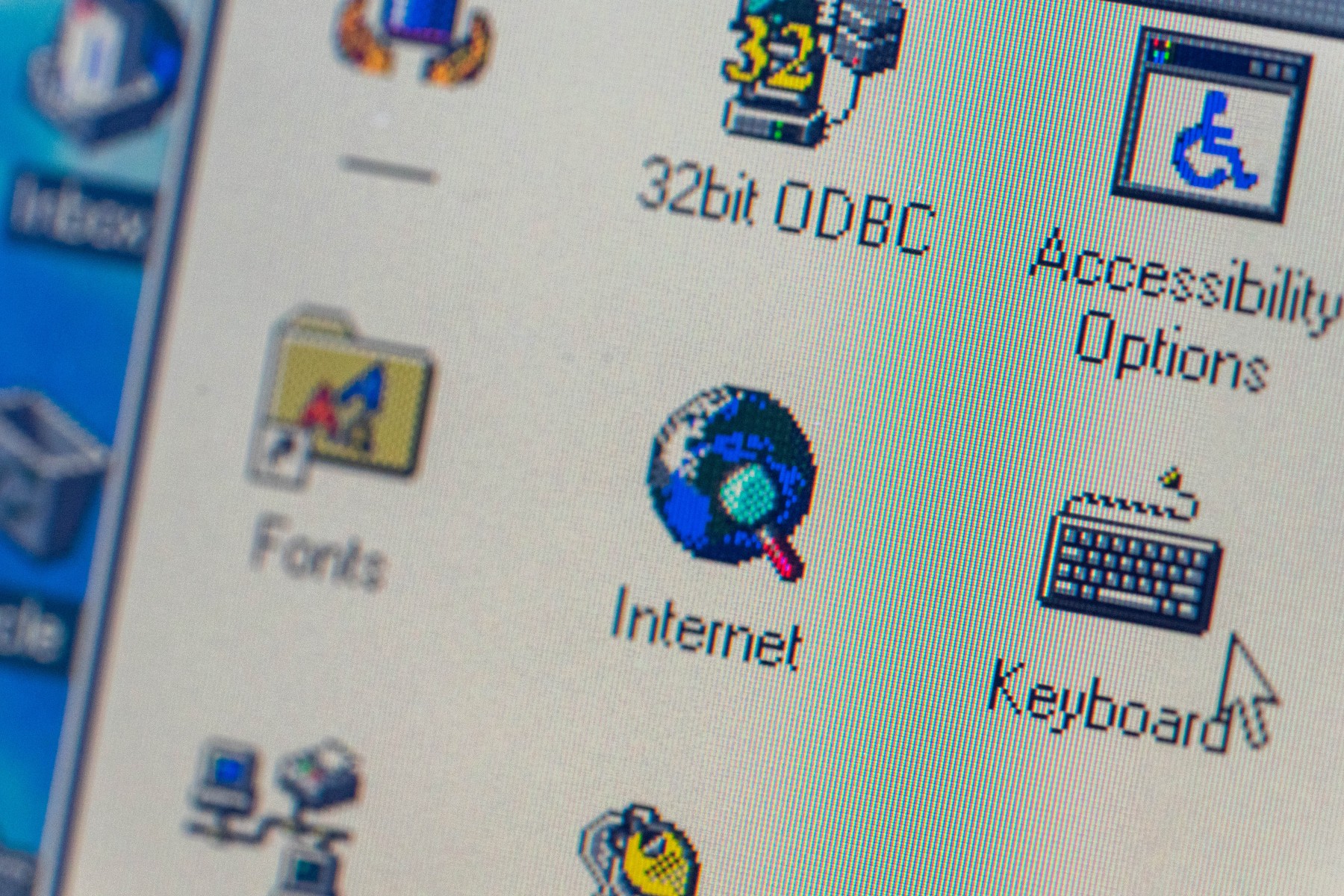
Windows 95 on a screen this small is a strange and beautiful thing. The interface wasn’t designed for it. The icons feel oversized. The taskbar takes up a meaningful portion of real estate. But it works. It runs. And that still feels, each time, slightly miraculous.
The Hard Drive Problem
Here’s the uncomfortable truth about machines this old: the original hard drives can fail, and many now need attention. The Libretto 50CT uses a 2.5-inch IDE spinning disk, the kind that, after nearly thirty years, has a story to tell through its bearings. You can hear it sometimes. A faint clicking. A whirring that takes too long to settle. Or silence where there should be spin.
The HDD of my Libretto needed some attention… The solution that’s become common in the retro computing world is one I find genuinely satisfying, because it feels philosophically right for a machine like this: CompactFlash cards with an IDE adapter. A compatible card and adapter can appear to the IDE controller as a hard drive: no moving parts, no spindle noise, and enough speed for this Windows 95 setup. Compatibility and usable capacity still depend on the card, adapter and BIOS. You can see my quick tutorial in the video as well.
There’s something poetic about it. You’re taking flash memory technology and translating it back into the language an ancient IDE controller can understand. The machine has no idea. It just sees a hard drive. And the Libretto, now running from solid-state storage, feels different, lighter somehow, even though the weight hasn’t changed.

Three Games, Three Kinds of Adventure
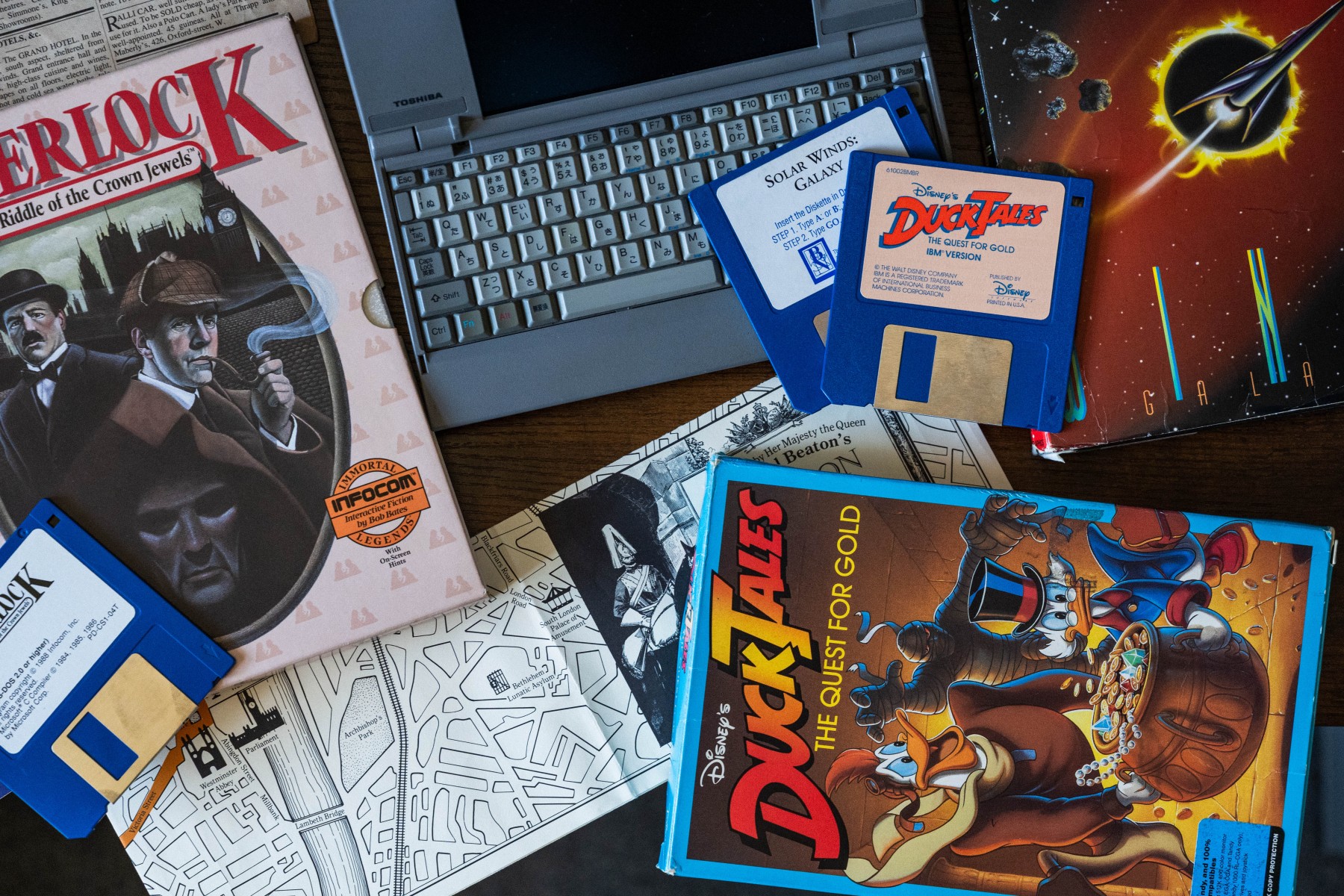
Once the machine is running, the question becomes: what do you actually do with it? I wanted to choose three games that said something specific, not the obvious choices, but the interesting ones. Three titles that shared something with the machine itself: a spirit of going somewhere unexpected.
DuckTales: The Quest for Gold (1990)
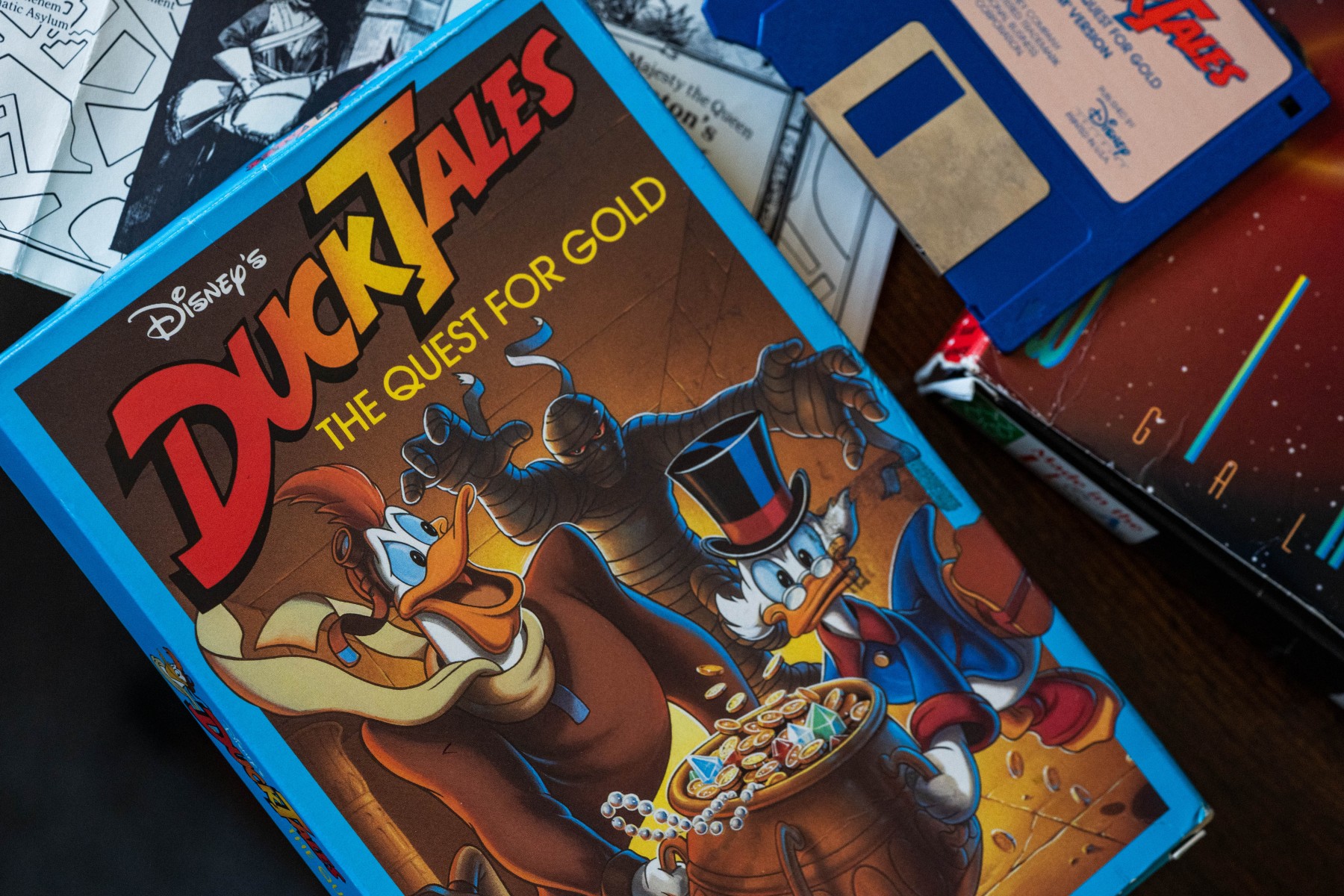
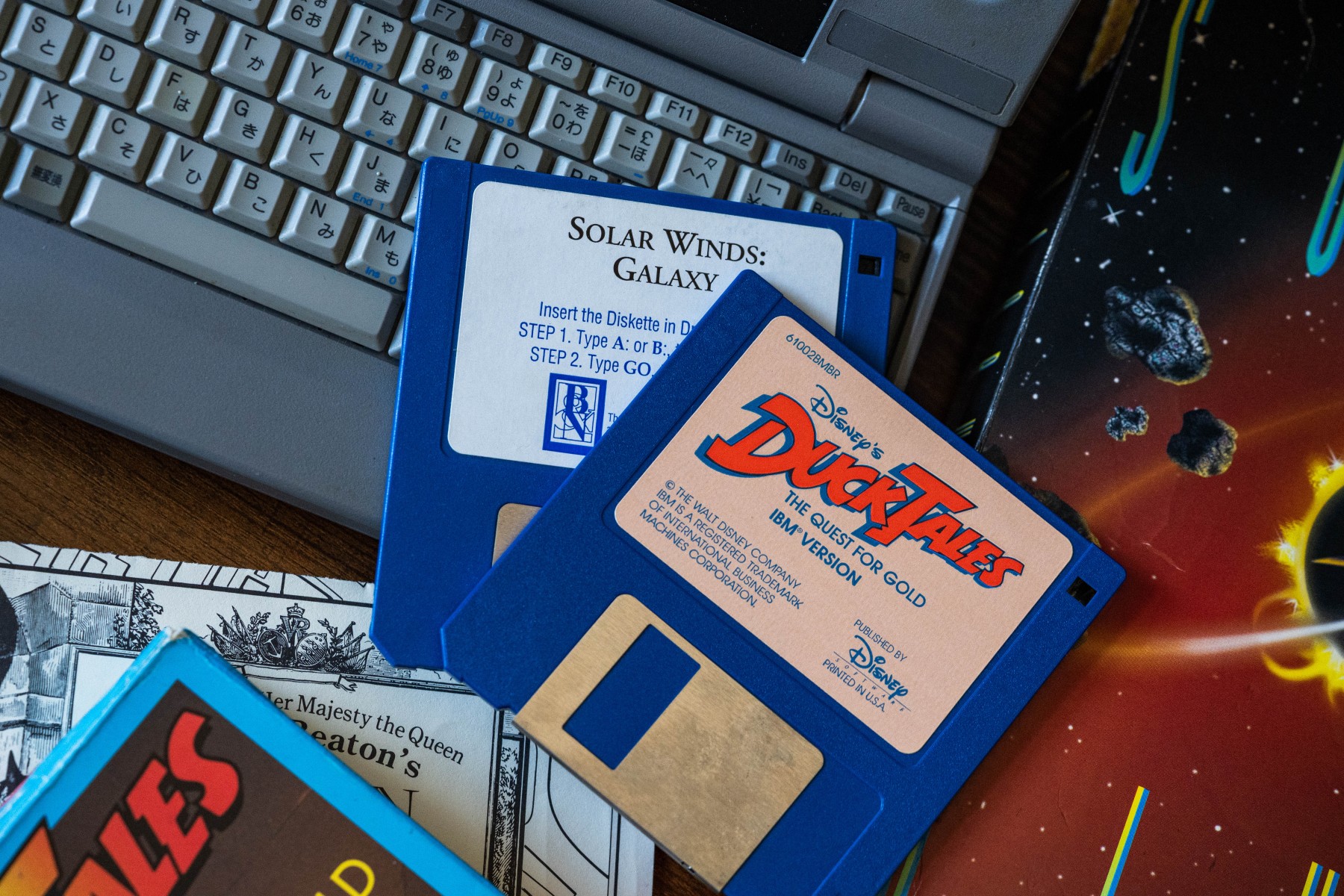
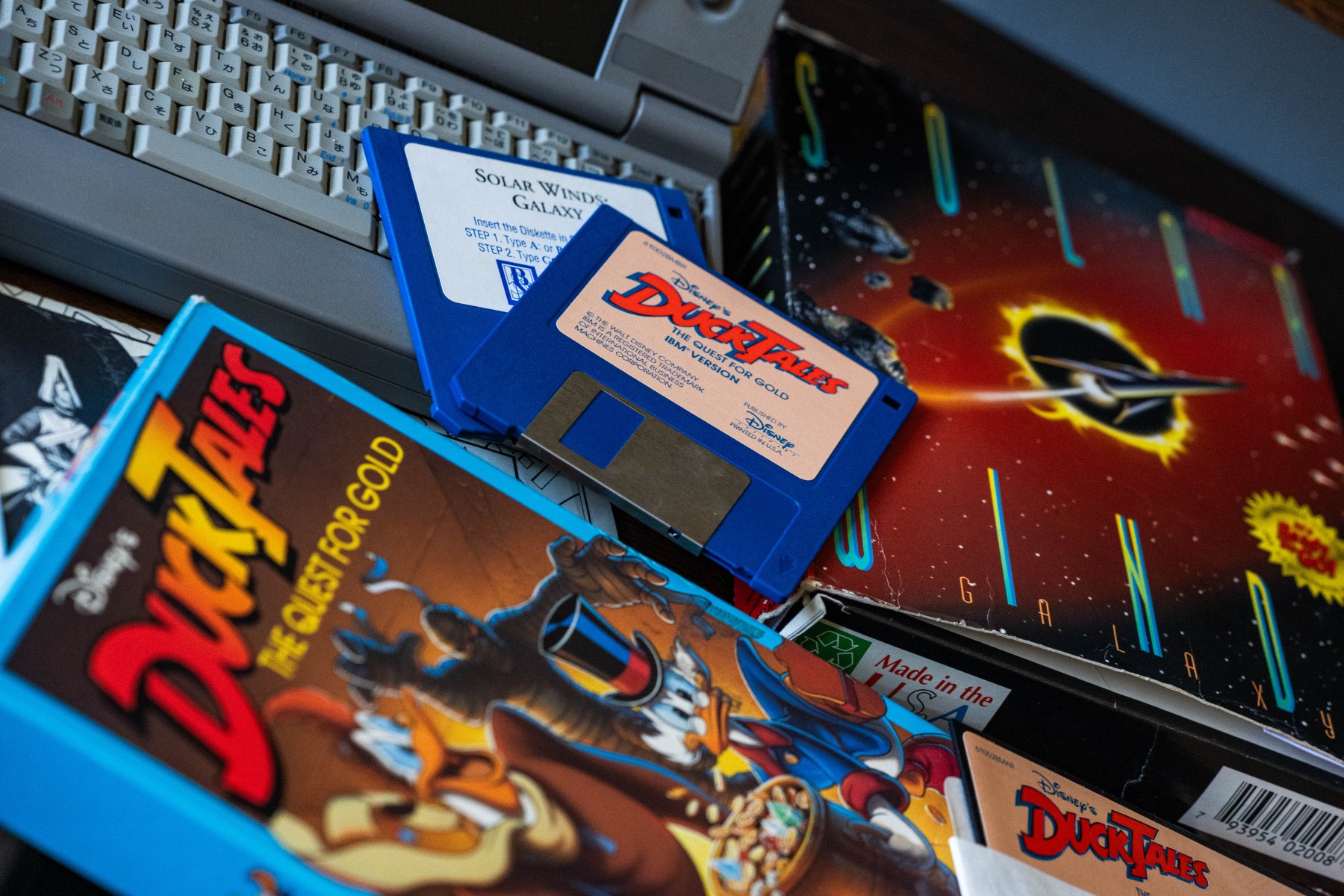
Most people know the NES DuckTales. Fewer know this one. DuckTales: The Quest for Gold is a PC original from 1990, a treasure-hunting adventure with several kinds of action stages developed by Incredible Technologies, published by Disney, set across a globe-spanning map with Scrooge McDuck racing against Flintheart Glomgold. It’s a different game from the NES version, and the one I hear mentioned less often.
On a machine this small, in a window this size, there’s something perfectly proportioned about it. Scrooge McDuck fits the Libretto. Both are compact, slightly eccentric, and more sophisticated than they first appear. It also runs flawlessly, no configuration required, no compatibility gymnastics. Just a game from 1990, alive and working, on a PC from 1997, in 2026. That continuity still surprises me every time.
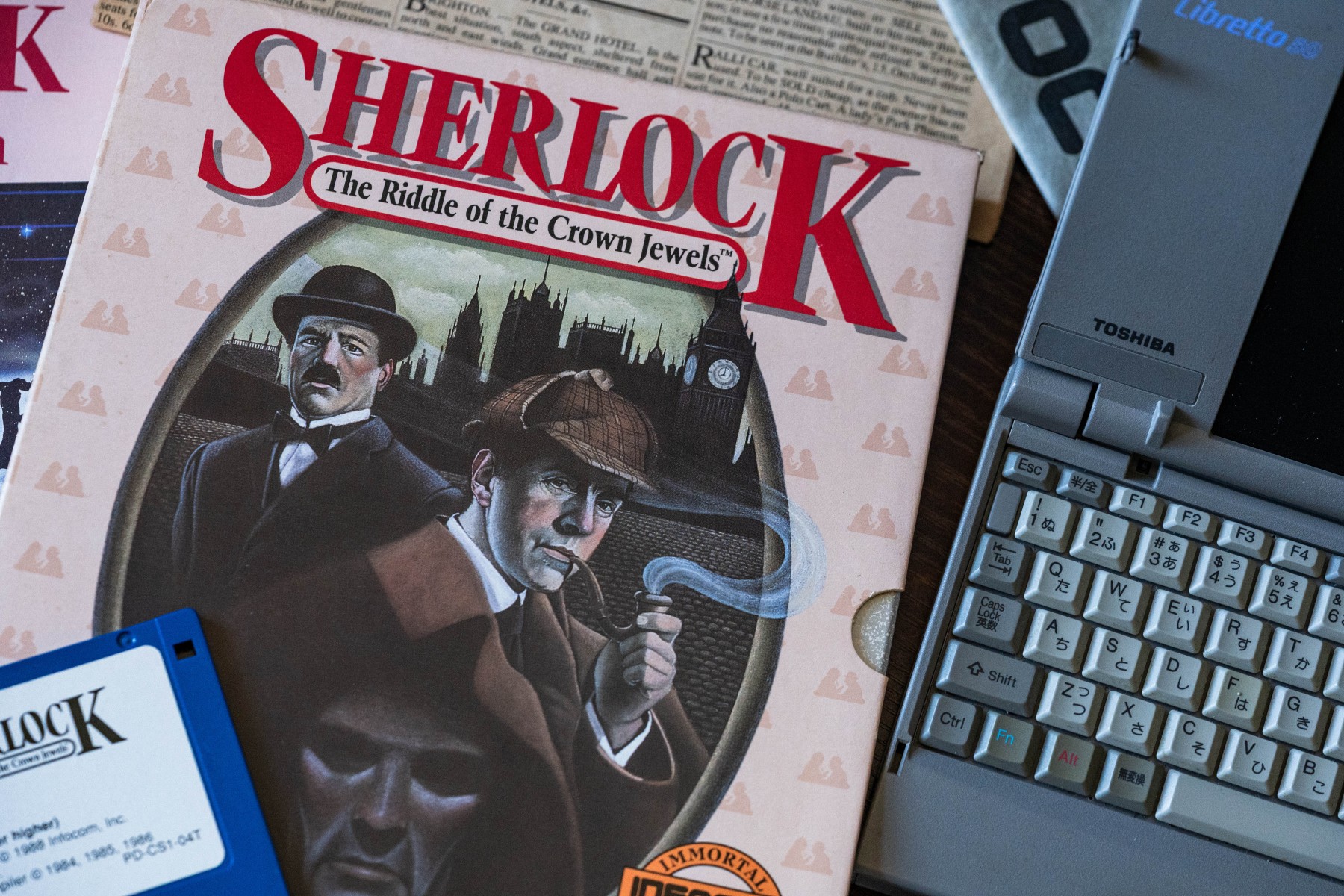
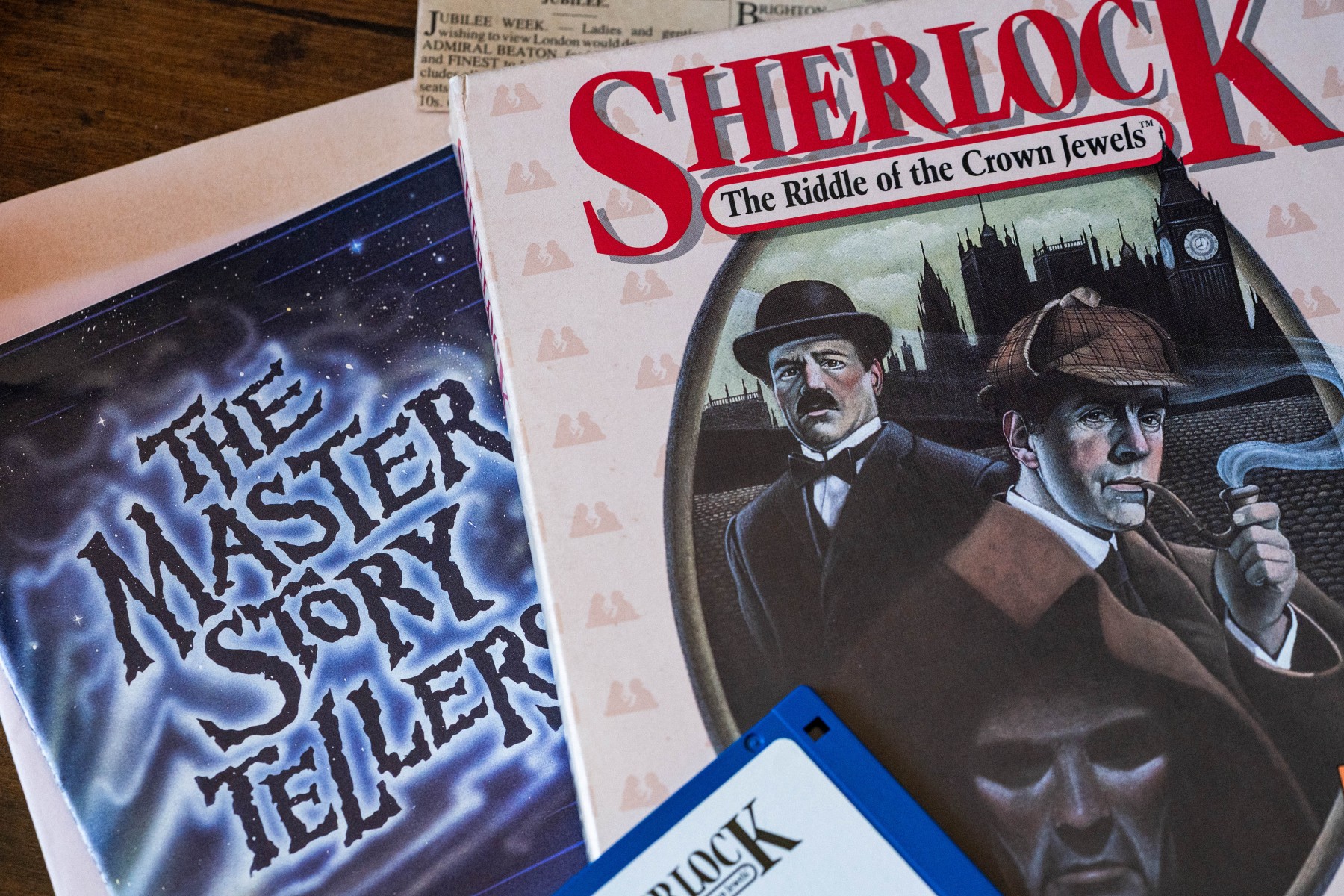
Sherlock: The Riddle of the Crown Jewels (Infocom)
The second game is an argument. An argument that a 6.1-inch screen, running an Infocom text adventure, on a machine you could fit in a jacket pocket, is one of the most intimate reading experiences you can have with a computer.
Sherlock, developed by Infocom and written by Bob Bates, is a mystery set in Victorian London, you play as Watson, accompanying Holmes through a case involving the stolen Crown Jewels. Text adventures are unfashionable. I know this. They ask something of you that most modern entertainment doesn’t: active imagination, patience, a willingness to read rather than watch. But on the Libretto, Sherlock feels exactly right. You’re holding a pocket-sized Victorian mystery in your hands. The interface disappears. It’s just you, and Holmes, and London, rendered in text. Infocom games were always more literature than game, and there’s something about playing literature on this improbable little machine that feels almost like the point.
Solar Winds (Epic MegaGames, 1993)
The third game is personal. Solar Winds is a space shooter with RPG elements, you pilot a lone spacecraft through a universe of planets, alien civilisations, and diplomatic choices. It was shareware, distributed freely, finding its way onto family computers in the early nineties. Mine was one of them.
I was one of those kids. And I had a particular relationship with this game that I’ve never quite forgotten. I didn’t own a PC. My brother did. Solar Winds had what I thought was a problem: the universe was enormous, the distances between star systems were real distances, and my ship moved slowly. I didn’t know there was a warp drive at some point in the game, I didn’t have it yet. I just saw a galaxy to explore and a ship that moved at what felt like walking pace, and I thought, if I leave it running overnight, maybe I’ll get somewhere worth going.
So I did. I left my brother’s PC running through the night, the fan spinning, the screen glowing, the little ship moving one pixel at a time through the dark, because I wanted to know what was out there. My brother found out about it and stopped my plan before completion… sadly, but understandably, in 1993.
That instinct, the need to know what’s out there, even if it takes all night, even if you have to leave the machine running while you sleep, doesn’t really go away. It just finds new forms. These days, NASA’s Artemis II mission sent humans further from Earth than anyone has gone, surpassing Apollo 13’s distance record. Four astronauts. A trajectory around the Moon. The same fundamental question I was asking as a child in front of my brother’s PC: what’s out there, and how do we get to it?
Solar Winds understood that feeling. It wasn’t a sophisticated game, but it knew that space is supposed to feel vast, and that the right response to vastness isn’t frustration. It’s patience. And curiosity.
What the Libretto and These Three Games Have in Common
DuckTales crossed oceans in search of treasure that history forgot. Sherlock navigated Victorian London one typed command at a time. Solar Winds crossed a galaxy, slowly, deliberately, a bunch of pixels at a time, because the unknown was worth reaching.
The Toshiba Libretto was the same kind of thing. A machine that said: here is somewhere new. Here is a form that doesn’t yet exist. Here is a bet on the future, made in miniature. Some machines earn their place in a collection by being important. Some earn it by being valuable. The Libretto earns it by being, still, slightly ahead of its time, and by being the right size for exactly this kind of adventure.
Watch the full video on the RetroAffaire YouTube channel.
Stay curious. Stay nostalgic.
Because retro never dies, it just respawns.
This actually feels like the netbooks from the mid to late 2000s. Toshiba was way ahead of its time.
Very ahead, every time I use it it’s amazing to think that it’s a full PC from 1996