

Published alongside the RetroAffaire video. If you haven’t watched it yet, consider treating it as a companion that fills in a few gaps the video doesn’t have time for.
The 15th of July, 1983. Two companies launched products in Japan on the same day. One of them became the dominant force in home gaming for the better part of a decade. The other did not. Nintendo released the Family Computer. SEGA released the SG-1000 and, alongside it, something that tends to get forgotten in the retelling: a home computer. Not a games console. A computer, followed by the SC-3000H with an improved keyboard, aimed at Japanese families who wanted a machine that could sit in the study as well as the living room.
This is the story of the SEGA SC-3000H.

The Machine
To understand what SEGA was attempting in 1983, you have to understand where they were positioned. They were, at this point, primarily an arcade company, Zaxxon, Frogger, Monaco GP. Their hardware filled game centres across Japan, the United States, and Europe. They knew how to build things that worked under pressure. The home market was a different proposition and in 1983, a genuinely uncertain one.
The Commodore 64 had been introduced in 1982. The ZX Spectrum was already building a significant user base in the UK. The MSX standard, a consortium-driven attempt to create a common home computer architecture involving Sony, Panasonic, Philips and others, was being formalised. Nobody had yet settled the question of what a home computer actually was, or who it was for.
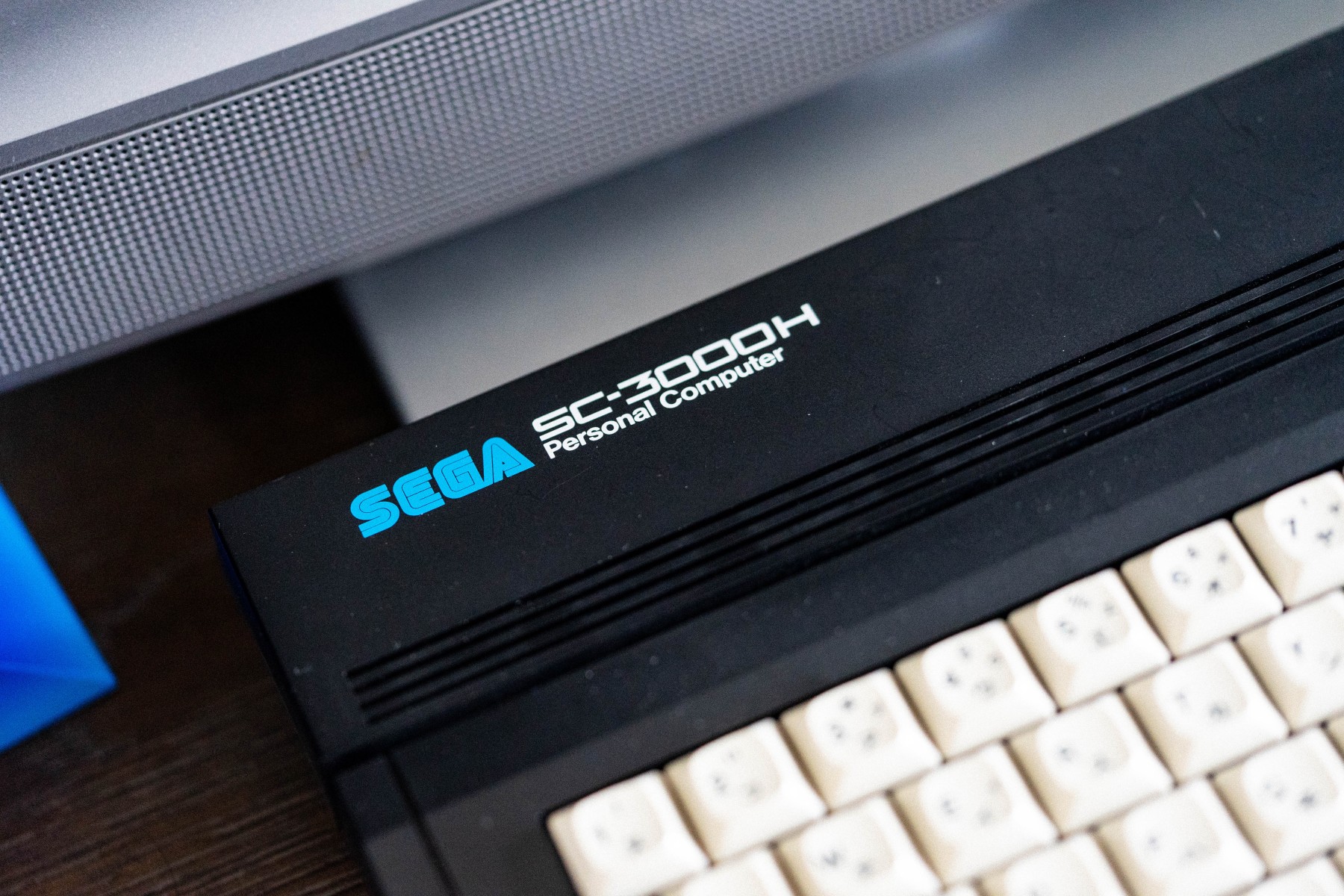
SEGA’s answer was the SC-3000. The “SC” stood for Sega Computer. It used a Z80-family processor and graphics related to the SG-1000, with BASIC and additional working memory supplied through cartridges. The standard machine had a rubber keyboard; the SC-3000H replaced it with firmer keys. That is the version in my collection, and the keyboard changes how the whole proposition feels: a machine you might actually sit down and type on.
The interesting detail is the cartridge slot. Because the cartridges that fit the SC-3000H were exactly the same ones used by the SG-1000 console launching on the same day. Same hardware, two form factors, one positioned as a games machine (but with accessories, it could have a keyboard and BASIC), one as a computer that also played games. A strategy with a certain commercial logic: reach more households by being more things. A strategy that also, in retrospect, reveals a company that was not entirely sure which market it was competing in.
The Ecosystem
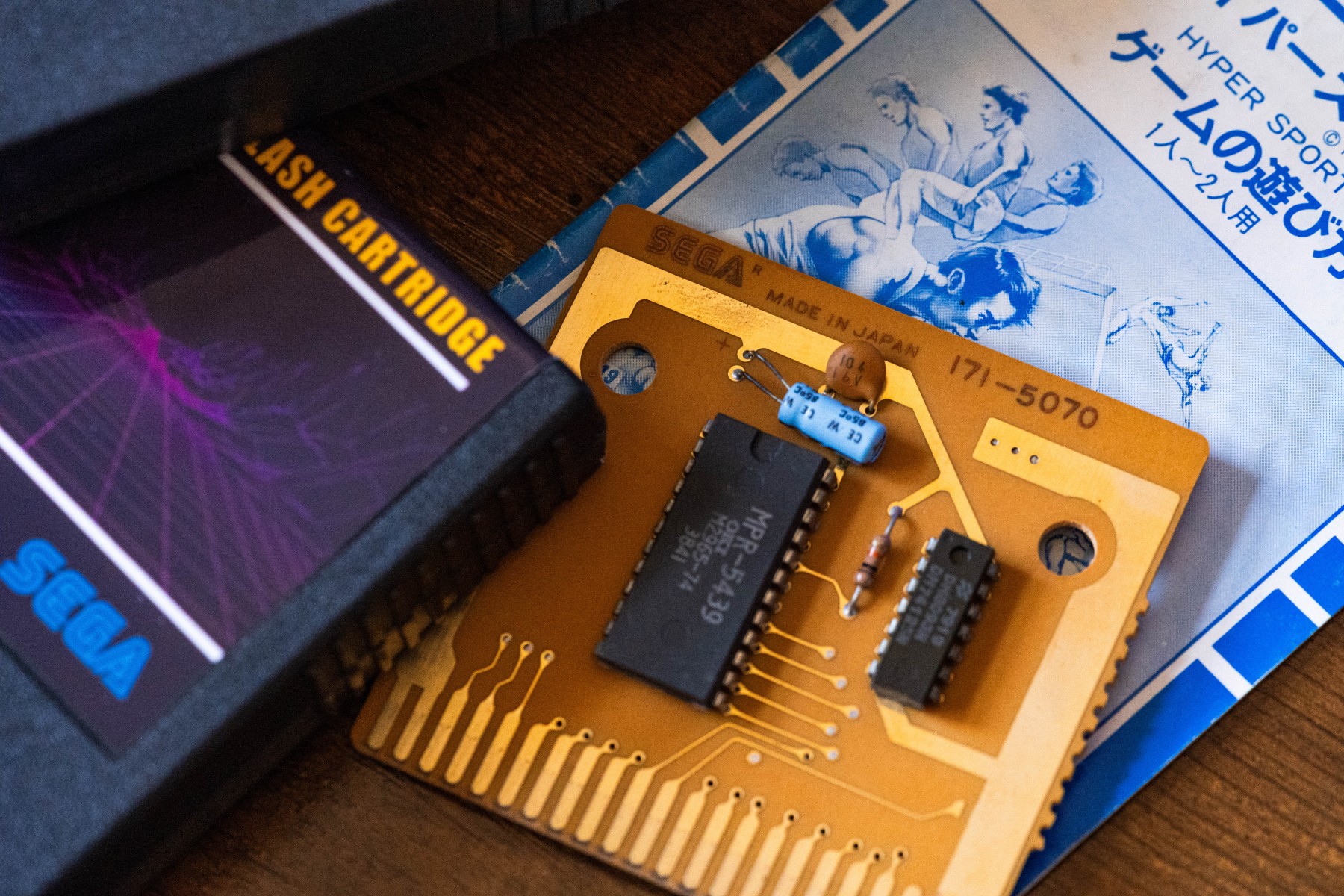
The library later gained a second format alongside cartridges. The cartridge was the established format, familiar, substantial, the physical object you hand someone across a counter. Alongside it, SEGA introduced the Sega My Card: a credit-card-sized piece of hardware, thin enough to carry in a wallet, containing enough ROM for a complete game. The economic argument was straightforward: smaller format, cheaper production, lower retail price. The Card Catcher adapter allowed the SC-3000H to read My Card software through its cartridge port.
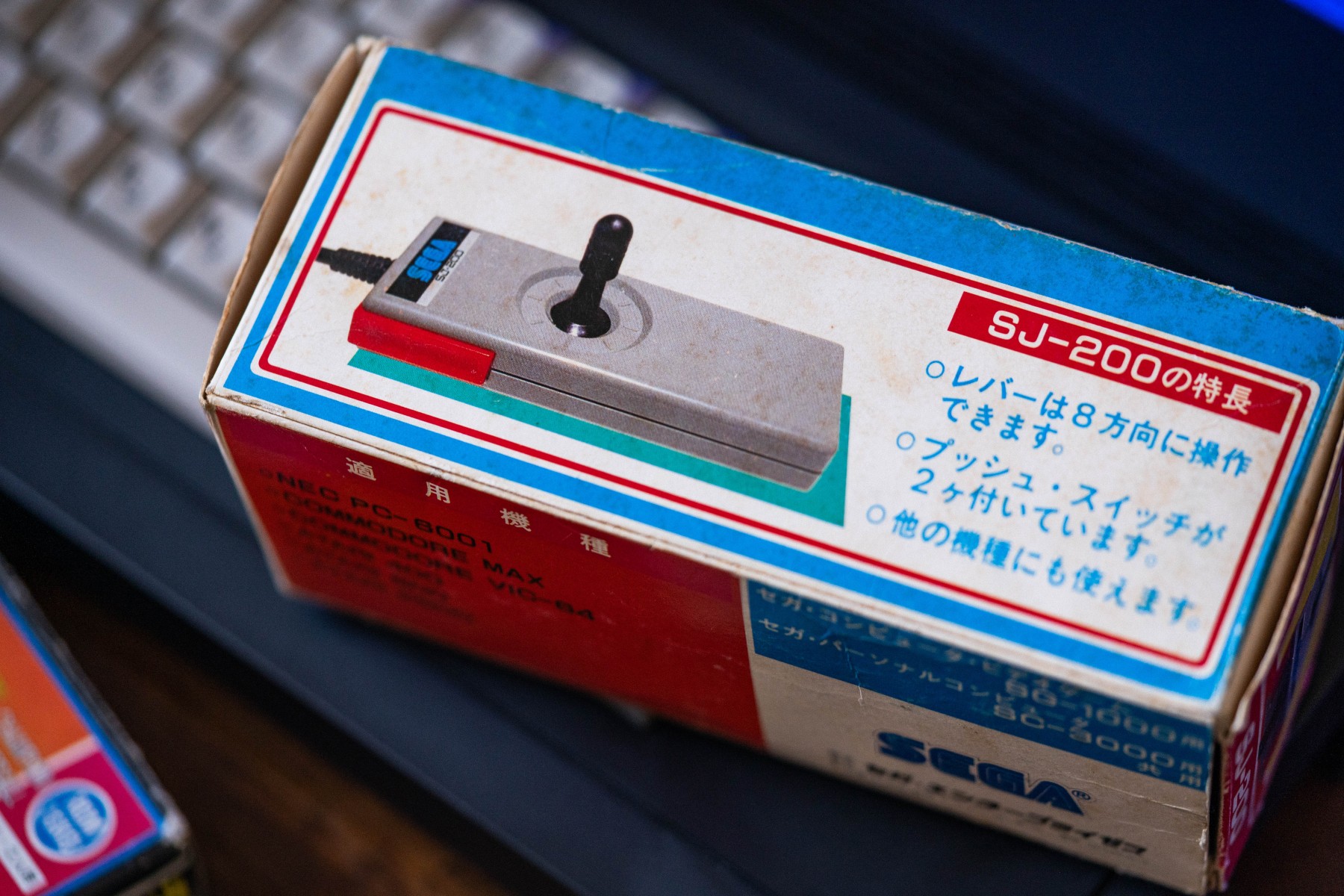
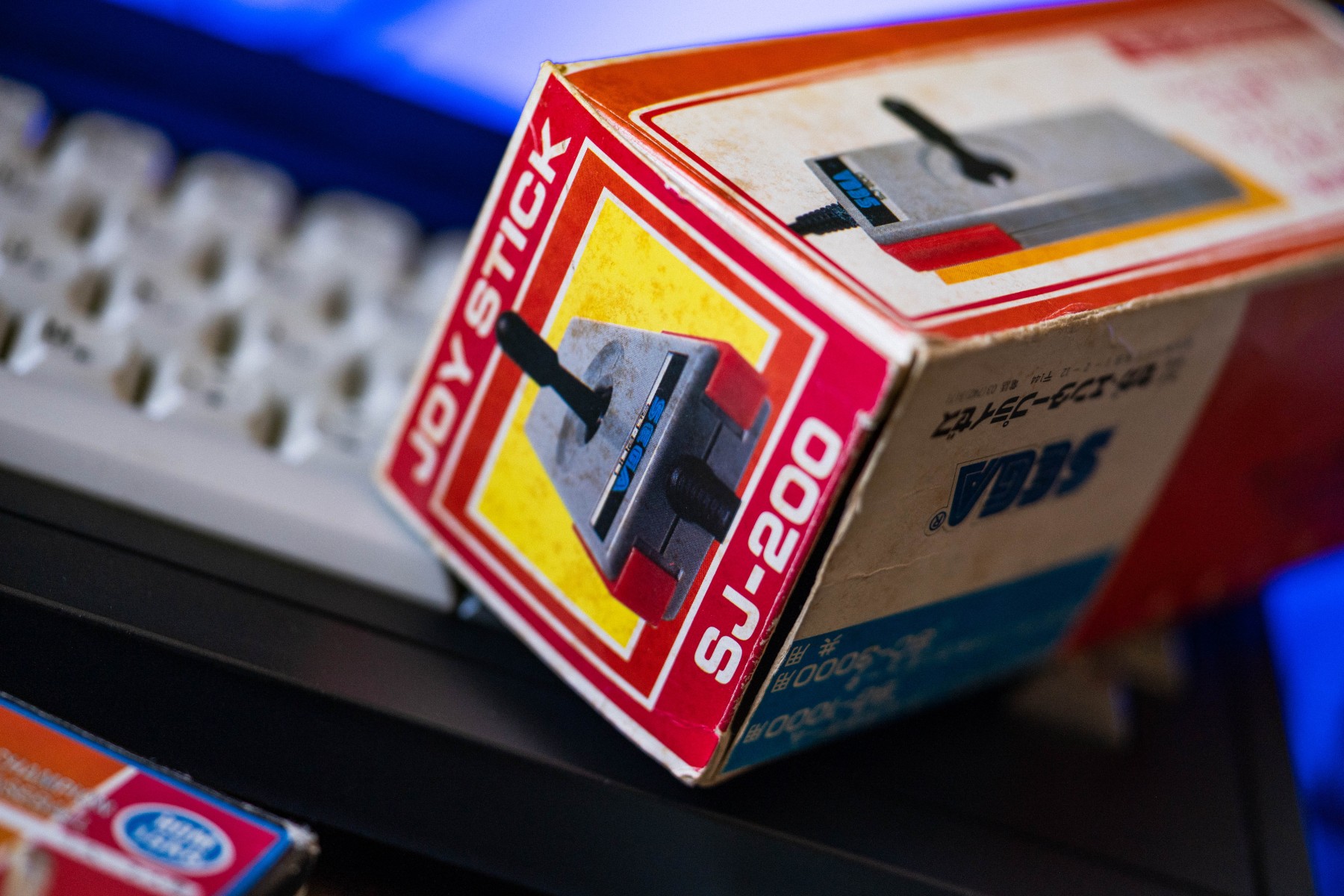
But it is the SC-3000’s software catalogue that reveals the machine’s real ambitions. SEGA produced nearly thirty non-game software titles for the computer. Almost all of them are educational. Chuugaku 1-Nen and Chuugaku 2-Nen, Junior High School Year One and Year Two curriculum software. Shougaku 4, 5, 6-Nen for elementary level. Kagaku: Gensokigou Master, for learning the periodic table. Nihonshi Nenpyou and Sekaishi Nenpyou, Japanese and World History timelines. A Music Editor. BASIC cartridges for writing your own programmes. And, for balance: Uranai Angel Cutie, a fortune-telling programme. Because apparently education and horoscopes address the same household. This was not accidental. The machine was marketed explicitly to Japanese families who wanted a computer that could help their children study. The games were the justification; the textbooks were the sales pitch. Consider what this required of SEGA’s identity in 1983: the same company whose name was on Zaxxon arcade cabinets was simultaneously asking parents to trust them with their children’s school curriculum. That combination of arcade games and schoolwork is what makes the catalogue interesting to me.









The Games
The SG-1000 library runs to roughly seventy titles across the console’s commercial life, modest against the Famicom’s catalogue during the same period. What it occasionally lacks in breadth, it makes up for in clarity. These are games that knew exactly what they were.
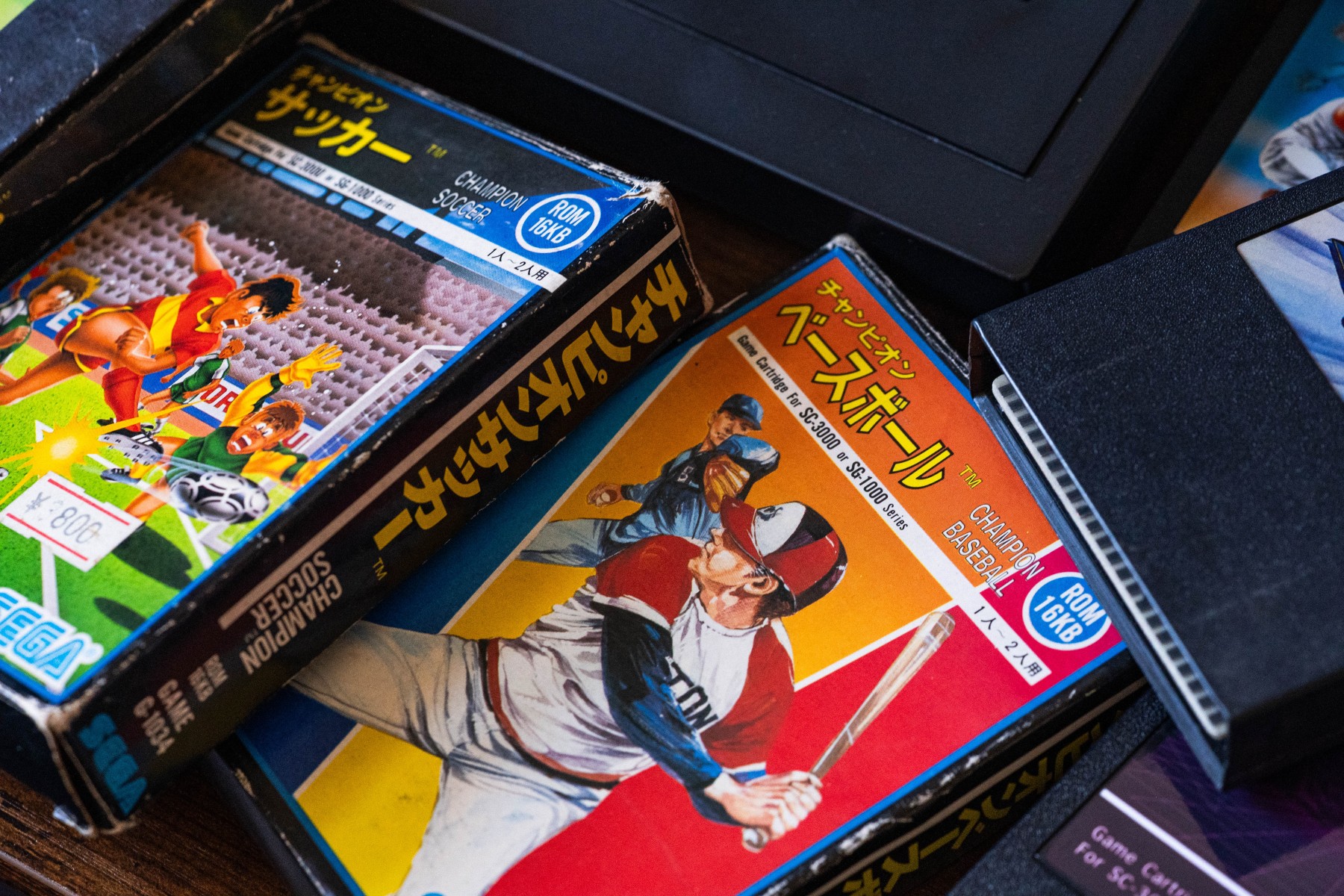
The Champion series — Champion Baseball, Champion Soccer, Champion Tennis and Champion Ice Hockey — gives an early SG-1000 collection a familiar core. The rules are recognisable before you switch the machine on. The games differ in how closely they follow Sega’s arcade catalogue, but all make sense as small, self-contained sporting contests.
GP World takes the racing genre, an understood requirement for any early platform, and demonstrates what the SG-1000 hardware could manage at speed. A different beast from the pole position comparisons it inevitably invites, but an honest attempt.
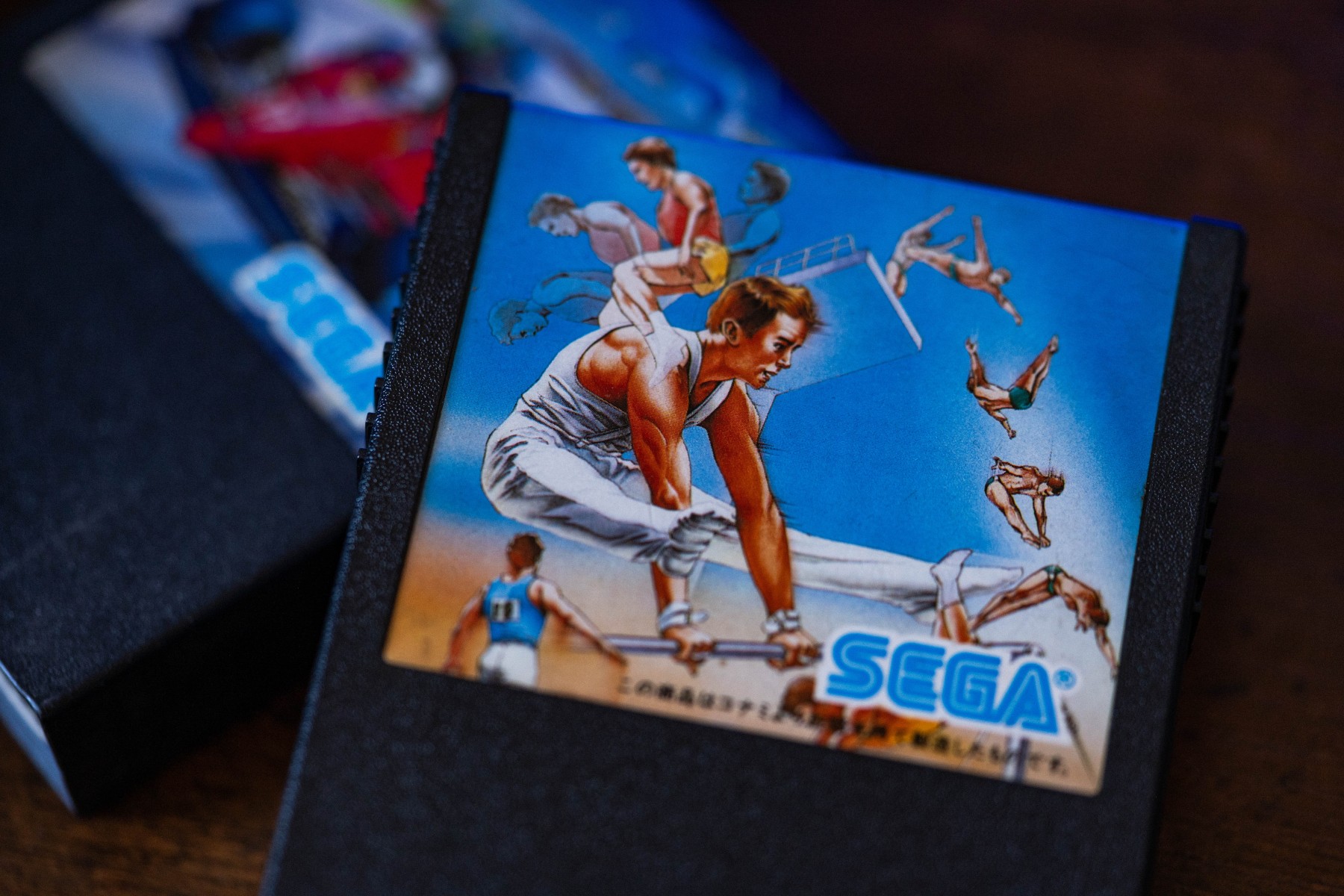
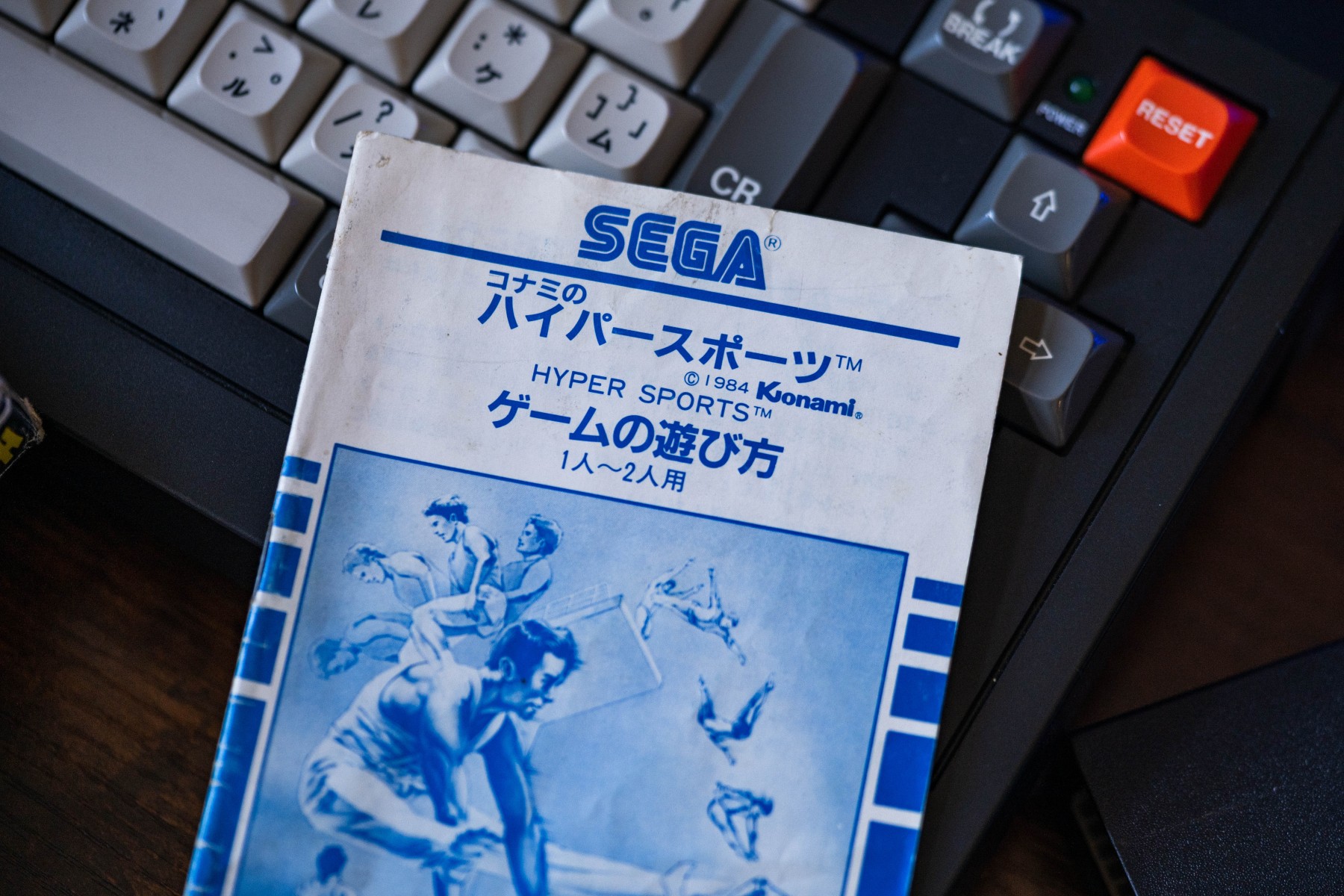
Hyper Sports brings Konami’s multi-event sports to Sega hardware. Button mashing, timing and competitive play fit the machine well. A licensed arcade conversion doesn’t, by itself, tell us how attractive the SG-1000 was to independent publishers, but it does give the library a different kind of sports game.
Zaxxon is the arcade port that carries its own particular weight in the context of this machine. This is SEGA’s own coin-op, the isometric shooter that established their name internationally. Having it on the SG-1000 is SEGA bringing their own arcade catalogue home systematically. It is also, quietly, a demonstration of the hardware’s ability to manage the isometric perspective that made the original notable.
Borderline dates from 1983 and represents the same logic: one of SEGA’s earliest arcade releases, an overhead ground combat game converted directly to the new platform. The SG-1000’s first year was largely about translating the coin-op catalogue, starting from the beginning.
Bank Panic is one of the genuine surprises of the library. You play a sheriff defending three bank windows simultaneously from robbers, the timing of each confrontation requiring real precision. An arcade game, originally by Sanritsu, that translated unusually well to the home format.
Girl’s Garden deserves a line to itself: this was one of the early works of Yuji Naka, who would later lead the team that created Sonic the Hedgehog. A game about a girl collecting flowers while avoiding a bear, its gentle sensibility sits at odds with much of the surrounding library. Knowing what came next for its designer gives it a particular retrospective weight.
Ninja Princess puts you in command of a female ninja through vertically scrolling stages of increasing difficulty both for its protagonist and for its pace. It holds up as one of the more energetic entries in the early library.
Elevator Action, ported from Taito’s arcade original, is one of the SG-1000’s better third-party conversions. The concept, a spy descending through a building via elevators, eliminating enemies, collecting documents, translates well to the home format, and the port captures most of what made the arcade version work.
Flicky is a direct conversion of SEGA’s arcade game, a small blue bird rescuing chicks while avoiding cats. Warm, colourful, uncharacteristically gentle for a platform mostly associated with shooting and sport. One of the library’s most characterful titles.
The Castle is an exploration game from the wider Japanese computer scene. A platform exploration game navigating a medieval structure, modest against what the Famicom was producing simultaneously, but earnest.
Bomb Jack from Tehkan, is a caped hero collecting bombs while enemy characters patrol the screen. Simple in concept, genuinely difficult in execution, and one of several successful late third-party conversions that gave the SG-1000 its most memorable final chapter.
Pitfall II carries Activision’s character onto Sega’s hardware through Sega’s arcade interpretation. It belongs beside the other conversions, but it isn’t evidence that Activision itself was choosing the SG-1000 as an export platform.
The SD-1000 Multigame Card I use is a modern way to explore the library. It puts several games within reach without swapping an original cartridge each time. That convenience belongs to collecting and using the machine today, rather than Sega’s original 1980s sales strategy.
The Chapter Before
I have already made a video on the SEGA Mark III and the Master System, the hardware that came after this. If you have seen that video, you know how the story continued: a cleaner, more focused machine. A games console, without apology.
The SC-3000H is the chapter before that chapter. It is the record of SEGA deciding, in 1983, that they could be more than an arcade company, that they could have a presence in the home that went beyond entertainment. That they could sit alongside the Spectrum, the Commodore, the MSX, in a space that households were beginning to take seriously.
They were not wrong to try. A console and computer sharing a library was an interesting proposition. The Famicom launched on the same day with Donkey Kong among its games; Sega was offering games, BASIC and schoolwork in different combinations. Looking back, I find that uncertainty part of the SC-3000’s appeal.
What I find, holding this machine, is not regret exactly. It is something more like recognition. The SC-3000H is the record of a company thinking carefully about what it wanted to be, and being overtaken, not by carelessness, but by the shape of the market that emerged.
That happens. It happened to SEGA more than once.
The full video, hardware, software, flash cart demo, and the 1983 context in more detail is on the RetroAffaire YouTube channel. If the SC-3000 and SG-1000 are new to you, the earlier video on the Mark III and Master System covers what came next.
Stay curious. Stay nostalgic.
Because retro never dies, it just respawns.
Leave a Reply